Dollfußsiedlung & Fischersiedlung
Weingartnerstrasse
Worth knowing
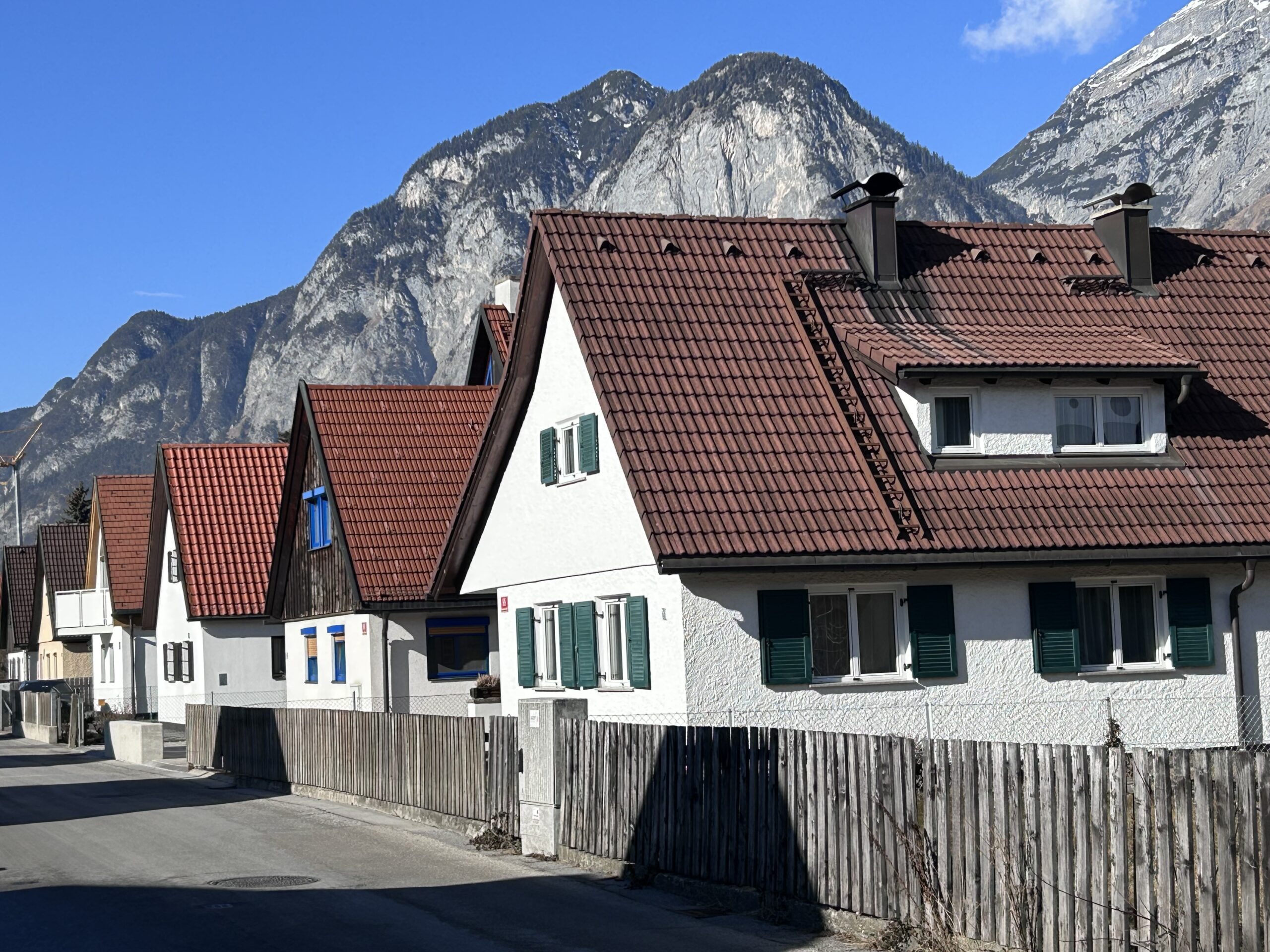
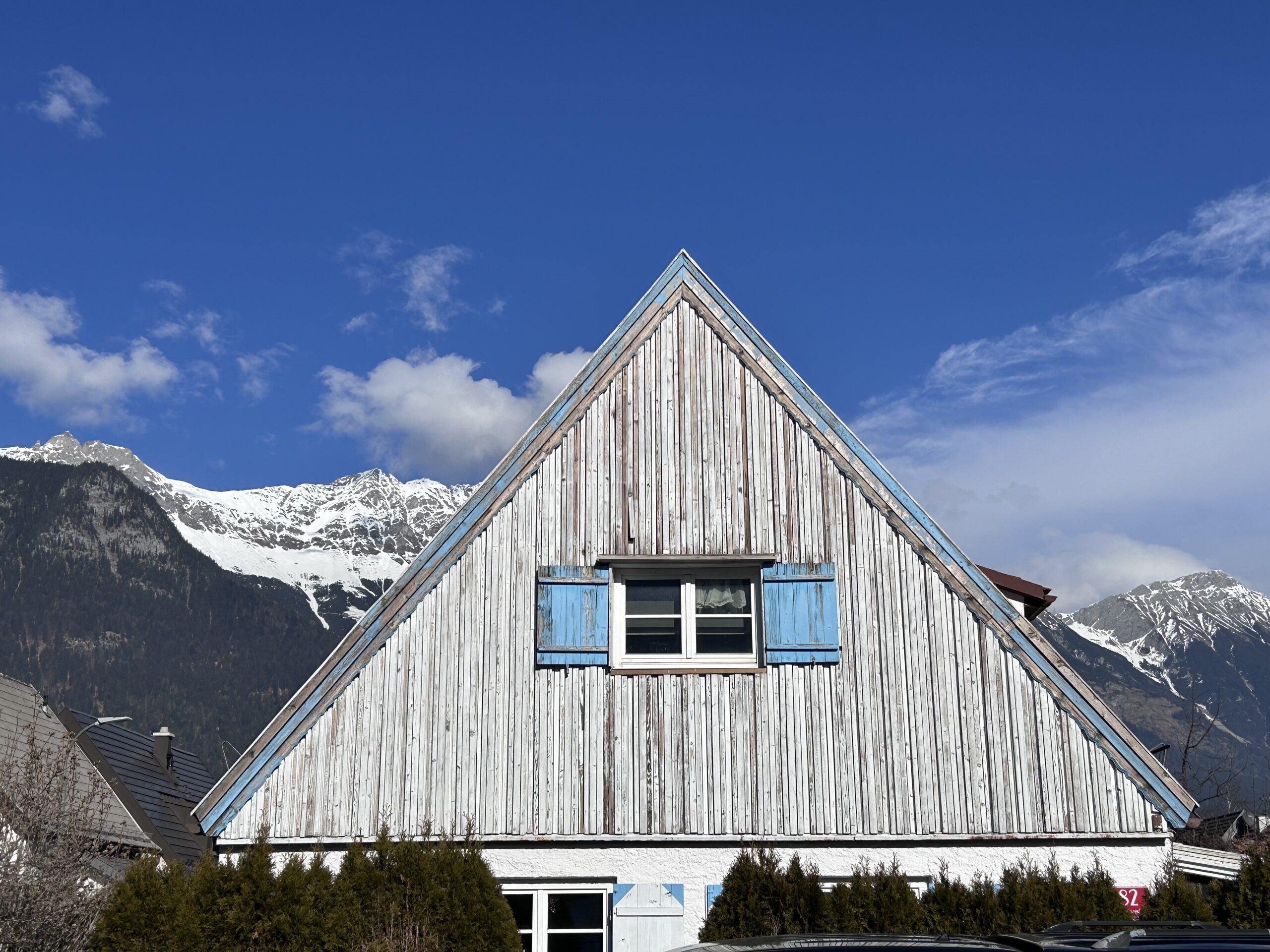
The neatly arranged little houses in Sieglanger, with their front gardens along the quiet street, are reminiscent of a 1950s American suburb. Unlike the suburbs on the other side of the Atlantic, however, this settlement was built before the war. In the early 1930s—when the misery of the post-war years had been replaced by the hardship of the global economic crisis—Innsbruck found itself in a dilemma. The city’s coffers were empty, yet the influx of people moving to Innsbruck continued to rise. People came to the city in search of work, even though unemployment here was also extraordinarily high by today’s standards. According to estimates, in the early 1930s every fourth adult Austrian was unemployed. Inflation, which had destroyed much of the population’s wealth, added to the difficulties. Several shack settlements and houses like the Bocksiedlung developed wildly and without any planning. To counteract this urban planning chaos, the municipality—under Mayor Franz Fischer and Federal Chancellor Engelbert Dollfuß—began expanding public housing. For this, however, the city needed financial support from the Republic, as it could not fund the plans on its own. Innsbruck secured advance financing for the planned “outskirts settlement initiatives for the unemployed for supplementary income purposes” from the Federal Housing and Settlement Fund. The buildings that were constructed reflected the ideological principles of the Austrofascist regime of the Austrian corporative state under Chancellor Engelbert Dollfuß and his successor Kurt Schuschnigg. Unlike the large housing complexes modeled after the widely despised Red Vienna, the small detached houses with front gardens were intended to evoke a rural idyll. Private property, it was believed, provided security, contentment, and loyalty to the state, and would steer people away from the “evils of socialism.” By restricting municipal housing allocation, the federal government also expanded its political influence at the local level. Jakob Alberts, the city’s director of construction, implemented the project from 1934 onwards—this time without his usual collaborator, the Social Democratic–leaning architect Theodor Prachensky. Architecturally and ideologically, this settlement in the western part of the city stood in stark contrast to projects like the Mandelsberger settlement in Wilten or the Pembaur block in Pradl. Small animal stalls were planned between the houses, enabling a degree of self-sufficiency in combination with the gardens. The ideal of the rural Catholic family as the nucleus of society was intended to oppose the socialist ideal of a large republican community. Following the same model, further houses were built between 1934 and 1937 in the Lohbach settlement at Ulfiswiese and the Hörtnagl settlement near Allerheiligenhöfe. In the 1950s, Innsbruck’s bishop Paulus Rusch adopted the idea of small-house settlements with self-sufficiency gardens—this time to promote Christian communal life—when developing Höttinger Au. Future residents contributed to building their own homes. To qualify for one of the coveted housing units, one had to be a member of the Vaterländische Front, the all-dominant unity party. One of the settlements was named Fischersiedlung after Innsbruck’s mayor Franz Fischer. The second, built by the construction company Heim from Sieglanger No. 61–93, was named Dr.-Dollfuß-Siedlung. Its current name came with the regime change: in 1938, the National Socialist mayor Egon Denz renamed the houses Sieglangersiedlung. Despite many renovations, the little houses with their distinctive pointed roofs—common mainly in eastern Austria—still exist in many places today. Individual alterations and extensions have somewhat diminished the uniform character of the buildings, but the underlying coherence remains recognizable. Today, Sieglanger is no longer a social housing settlement but a respectable middle-class district on Innsbruck’s western edge. The association Traditionsgemeinschaft Sieglanger preserves the spirit and sense of community of the original settlers to the present day.
The Bocksiedlung and Austrofascism
In addition to hunger, political polarisation characterised people's lives in the 1920s and 1930s. Although the collapse of the monarchy had brought about a republic, the two major popular parties, the Social Democrats and the Christian Socials, were as hostile to each other as two scorpions. Both parties set up paramilitary blocs to back up their political agenda with violence on the streets if necessary. The Republican Defence League on the side of the Social Democrats and various Christian-social or even monarchist-orientated Home defenceFor the sake of simplicity, the different groups will be summarised under this collective term, were like civil war parties. Many politicians and functionaries on both sides had fought at the front during the war and were correspondingly militarised. The Tiroler Heimatwehr was able to rely on better infrastructure and a political network in rural Tyrol thanks to the support of the Catholic Church. On 12 November 1928, the tenth anniversary of the founding of the Republic, 18,000 members of the Austrian armed forces marched through the city on the First All-Austrian Homeland March to underline their superiority on the highest holiday of the domestic social democracies. The Styrian troops were quartered in Wilten Abbey, among other places.
From 1930, the NSDAP also became increasingly present in the public sphere. It was able to gain supporters, particularly among students and young, disillusioned workers. By 1932, the party already had 2,500 members in Innsbruck. There were repeated violent clashes between the opposing political groups. The so-called Höttinger Saalschlacht Hötting was not yet part of Innsbruck at that time. The community was mainly inhabited by labourers. In this red National Socialists planned a rally in the Tyrolean bastion at the Gasthof Golden Beara meeting place for the Social Democrats. This provocation ended in a fight that resulted in over 30 people being injured and one death from a stab wound on the National Socialist side. The riots spread throughout the city, with the injured even clashing in the hospital. Only with the help of the gendarmerie and the army was it possible to separate the opponents.
After years of civil war-like conditions, the Christian Socialists under Chancellor Engelbert Dollfuß (1892 - 1934) prevailed in 1933 and eliminated parliament. There was no significant fighting in Innsbruck. On 15 March, the party house of the Social Democratic Labour Party Tyrol im Hotel Sonne The Republican Protection League leader Gustav Kuprian was arrested for high treason and the individual groups disarmed. Dollfuß's goal was to establish the so-called Austrian corporative statea one-party state without opposition, curtailing elementary rights such as freedom of the press and freedom of assembly. In Tyrol in 1933, the Tiroler Wochenzeitung was newly founded to function as a party organ. The entire state apparatus was to be organised along the lines of Mussolini's fascism in Italy under the Vaterländischen Front united: Anti-socialist, authoritarian, conservative in its view of society, anti-democratic, anti-Semitic and militarised. The Innsbruck municipal council was reduced from 40 to 28 members. Instead of free elections, they were appointed by the provincial governor, which meant that only conservative councillors were represented.
Dollfuß was extremely popular in Tyrol, as pictures of the packed square in front of the Hofburg during one of his speeches in 1933 show. His policies were the closest thing to the Habsburg monarchy. His political course was supported by the Catholic Church. This gave him access to infrastructure, press organs and front organisations. Against the hated socialists, the Patriotic Front with their paramilitary units. They did not shy away from repression and acts of violence against life and limb and the facilities of political opponents. Socialists, social democrats, trade unionists and communists were repeatedly arrested. In 1934, members of the Heimwehr destroyed the monument to the Social Democrat Martin Rapoldi in Kranebitten. The press was politically controlled and censored. The articles glorified the idyllic rural life. Families with many children were supported financially. The segregation of the sexes in schools and the reorganisation of the curriculum for girls, combined with pre-military training for boys, was in the interests of a large part of the population. The traditionally orientated cultural policy, with which Austria presented itself as the better Germany under the anti-clerical National Socialist leadership appealed to the conservative part of society. As early as 1931, some Tyrolean mayors had joined forces to have the entry ban for the Habsburgs lifted, so the unspoken long-term goal of reinstalling the monarchy by the Christian Socials enjoyed broad support.
On 25 July 1934, the banned National Socialists attempted a coup in Vienna, in which Dollfuß was killed. There was also an attempted coup in Innsbruck. A policeman was shot dead in Herrengasse when a group of National Socialists attempted to take control of the city. Hitler, who had not ordered the attacks, distanced himself, and the Austrian groups of the banned party were restricted as a result. In Innsbruck, the "Verfügung des Regierungskommissärs der Landeshauptstadt Tirols“ der Platz vor dem Tiroler Landestheater als Dollfußplatz led. Dollfuß had met with the Tyrolean Heimwehr leader Richard Steidle at a rally here two weeks before his death. Steidle himself had been the victim of political violence on several occasions. In 1932, he was attacked on the tram after the Höttinger Saalschlacht, and the following year he was the victim of an assassination attempt in front of his house in Leopoldstraße. After the NSDAP seized power, he was sent to Buchenhausen concentration camp, where he died in 1940.
Dollfuß' successor as Chancellor Kurt Schuschnigg (1897 - 1977) was a Tyrolean by birth and a member of the Innsbruck student fraternity Austria. He ran a law firm in Innsbruck for a long time. In 1930, he founded a paramilitary unit called Ostmärkische Sturmscharenwhich formed the counterweight of the Christian Socials to the radical Heimwehr groups. After the February Uprising in 1934, as Minister of Justice in the Dollfuß cabinet, he was jointly responsible for the execution of several Social Democrats.
However, Austrofascism was unable to turn the tide in the 1930s, especially economically. The economic crisis, which also hit Austria in 1931 and fuelled the radical, populist policies of the NSDAP, hit hard. State investment in major infrastructure projects came to a standstill. The unemployment rate in 1933 was 25%. The restriction of social welfare, which was introduced at the beginning of the First Republick was introduced had dramatic effects. The long-term unemployed were excluded from receiving social benefits as "Discontinued" excluded. Poverty caused the crime rate to rise, and robberies, muggings and thefts became more frequent.
As in previous decades, the housing situation was a particular problem. Despite the city's efforts to create modern living space, many Innsbruck residents still lived in shacks. Bathrooms or one bedroom per person were the exception. Since the great growth of Innsbruck from the 1880s onwards, the housing situation was precarious for many people. The railways, industrialisation, refugees from the German-speaking regions of Italy and the economic crisis had pushed Innsbruck to the brink of the possible. After Vienna, Innsbruck had the second highest number of residents per house. Rents for housing were so high that workers often slept in stages in order to share the costs. Although new blocks of flats and homeless shelters were built, especially in Pradl, such as the workers' hostel in Amthorstraße in 1907, the hostel in Hunoldstraße and the Pembaurblock, this was not enough to deal with the situation. Out of this need and despair, several shanty towns and settlements emerged on the outskirts of the city, founded by the marginalised, the desperate and those left behind who found no place in the system. In the prisoner-of-war camp in the Höttinger Au, people took up residence in the barracks after they had been invalided out. The best known and most notorious to this day was the Bocksiedlung on the site of today's Reichenau. From 1930, several families settled in barracks and caravans between the airport, which was located there at the time, and the barracks of the Reichenau concentration camp. The legend of its origins speaks of Otto and Josefa Rauth as the founders, whose caravan was stranded here. Rauth was not only economically poor, but also morally poor as an avowed communist in Tyrolean terms. His raft, the Noah's Ark, which he wanted to use to reach the Soviet Union via the Inn and Danube, anchored in front of Gasthof Sandwirt.
Gradually, an area emerged on the edge of both the town and society, which was run by the unofficial mayor of the estate, Johann Bock (1900 - 1975), like an independent commune. He regulated the agendas in his sphere of influence in a rough and ready manner.
The Bockala had a terrible reputation among the good citizens of the city. And despite all the historical smoothing and nostalgia, probably not without good reason. As helpful and supportive as the often eccentric residents of the estate could be among themselves, physical violence and petty crime were commonplace. Excessive alcohol consumption was common practice. The streets were unpaved. There was no running water, sewage system or sanitary facilities, nor was there a regular electricity supply. Even the supply of drinking water was precarious for a long time, which brought with it the constant risk of epidemics.
Many, but not all, of the residents were unemployed or criminals. In many cases, it was people who had fallen through the system who settled in the Bocksiedlung. Having the wrong party membership could be enough to prevent you from getting a flat in Innsbruck in the 1930s. Karl Jaworak, who carried out an assassination attempt on Federal Chancellor Prelate Ignaz Seipel in 1924, lived at Reichenau 5a from 1958 after his imprisonment and deportation to a concentration camp during the Nazi regime.
The furnishings of the Bocksiedlung dwellings were just as heterogeneous as the inhabitants. There were caravans and circus wagons, wooden barracks, corrugated iron huts, brick and concrete houses. The Bocksiedlung also had no fixed boundaries. Bockala In Innsbruck, being a citizen was a social status that largely originated in the imagination of the population.
Within the settlement, the houses and carriages built were rented out and sold. With the toleration of the city of Innsbruck, inherited values were created. The residents cultivated self-sufficient gardens and kept livestock, and dogs and cats were also on the menu in meagre times.
The air raids of the Second World War exacerbated the housing situation in Innsbruck and left the Bocksiedlung grow. At its peak, there are said to have been around 50 accommodations. The barracks of the Reichenau concentration camp were also used as sleeping quarters after the last imprisoned National Socialists held there were transferred or released, although the concentration camp was not part of the Bocksiedlung in the narrower sense.
The beginning of the end was the 1964 Olympic Games and a fire in the settlement a year earlier. Malicious tongues claim that this was set to speed up the eviction. In 1967, Mayor Alois Lugger and Johann Bock negotiated the next steps and compensation from the municipality for the eviction, reportedly in an alcohol-fuelled atmosphere. In 1976, the last quarters were evacuated due to hygienic deficiencies.
Many former residents of the Bocksiedlung were relocated to municipal flats in Pradl, the Reichenau and in the O-Village quartered here. The customs of the Bocksiedlung lived on for a number of years, which accounts for the poor reputation of the urban apartment blocks in these neighbourhoods to this day.
A reappraisal of what many historians call the Austrofascism has hardly ever happened in Austria. In the church of St Jakob im Defereggen in East Tyrol or in the parish church of Fritzens, for example, pictures of Dollfuß as the protector of the Catholic Church can still be seen, more or less without comment. In many respects, the legacy of the divided situation of the interwar period extends to the present day. To this day, there are red and black motorists' clubs, sports associations, rescue organisations and alpine associations whose roots go back to this period.
The history of the Bocksiedlung was compiled in many interviews and painstaking detail work by the city archives for the book "Bocksiedlung. A piece of Innsbruck" of the city archive.
A republic is born
Few eras are more difficult to grasp than the interwar period. The Roaring TwentiesJazz and automobiles come to mind, as do inflation and the economic crisis. In big cities like Berlin, young ladies behaved as Flappers mit Bubikopf, Zigarette und kurzen Röcken zu den neuen Klängen lasziv, Innsbrucks Bevölkerung gehörte als Teil der jungen Republik Österreich zum größten Teil zur Fraktion Armut, Wirtschaftskrise und politischer Polarisierung. Schon die Ausrufung der Republik am Parlament in Wien vor über 100.000 mehr oder minder begeisterten, vor allem aber verunsicherten Menschen verlief mit Tumulten, Schießereien, zwei Toten und 40 Verletzten alles andere als reibungsfrei. Wie es nach dem Ende der Monarchie und dem Wegfall eines großen Teils des Staatsterritoriums weitergehen sollte, wusste niemand. Das neue Österreich erschien zu klein und nicht lebensfähig. Der Beamtenstaat des k.u.k. Reiches setzte sich nahtlos unter neuer Fahne und Namen durch. Die Bundesländer als Nachfolger der alten Kronländer erhielten in der Verfassung im Rahmen des Föderalismus viel Spielraum in Gesetzgebung und Verwaltung. Die Begeisterung für den neuen Staat hielt sich aber in der Bevölkerung in Grenzen. Nicht nur, dass die Versorgungslage nach dem Wegfall des allergrößten Teils des ehemaligen Riesenreiches der Habsburger miserabel war, die Menschen misstrauten dem Grundgedanken der Republik. Die Monarchie war nicht perfekt gewesen, mit dem Gedanken von Demokratie konnten aber nur die allerwenigsten etwas anfangen. Anstatt Untertan des Kaisers war man nun zwar Bürger, allerdings nur Bürger eines Zwergstaates mit überdimensionierter und in den Bundesländern wenig geliebter Hauptstadt anstatt eines großen Reiches. In den ehemaligen Kronländern, die zum großen Teil christlich-sozial regiert wurden, sprach man gerne vom Viennese water headwho was fed by the yields of the industrious rural population.
Other federal states also toyed with the idea of seceding from the Republic after the plan to join Germany, which was supported by all parties, was prohibited by the victorious powers of the First World War. The Tyrolean plans, however, were particularly spectacular. From a neutral Alpine state with other federal states, a free state consisting of Tyrol and Bavaria or from Kufstein to Salurn, an annexation to Switzerland and even a Catholic church state under papal leadership, there were many ideas. The most obvious solution was particularly popular. In Tyrol, feeling German was nothing new. So why not align oneself politically with the big brother in the north? This desire was particularly pronounced among urban elites and students. The annexation to Germany was approved by 98% in a vote in Tyrol, but never materialised.
Instead of becoming part of Germany, they were subject to the unloved Wallschen. Italian troops occupied Innsbruck for almost two years after the end of the war. At the peace negotiations in Paris, the Brenner Pass was declared the new border. The historic Tyrol was divided in two. The military was stationed at the Brenner Pass to secure a border that had never existed before and was perceived as unnatural and unjust. In 1924, the Innsbruck municipal council decided to name squares and streets around the main railway station after South Tyrolean towns. Bozner Platz, Brixnerstrasse and Salurnerstrasse still bear their names today. Many people on both sides of the Brenner felt betrayed. Although the war was far from won, they did not see themselves as losers to Italy. Hatred of Italians reached its peak in the interwar period, even if the occupying troops were emphatically lenient. A passage from the short story collection "The front above the peaks" by the National Socialist author Karl Springenschmid from the 1930s reflects the general mood:
"The young girl says, 'Becoming Italian would be the worst thing.
Old Tappeiner just nods and grumbles: "I know it myself and we all know it: becoming a whale would be the worst thing."
Trouble also loomed in domestic politics. The revolution in Russia and the ensuing civil war with millions of deaths, expropriation and a complete reversal of the system cast its long shadow all the way to Austria. The prospect of Soviet conditions machte den Menschen Angst. Österreich war tief gespalten. Hauptstadt und Bundesländer, Stadt und Land, Bürger, Arbeiter und Bauern – im Vakuum der ersten Nachkriegsjahre wollte jede Gruppe die Zukunft nach ihren Vorstellungen gestalten. Die Kulturkämpfe der späten Monarchie zwischen Konservativen, Liberalen und Sozialisten setzte sich nahtlos fort. Die Kluft bestand nicht nur auf politischer Ebene. Moral, Familie, Freizeitgestaltung, Erziehung, Glaube, Rechtsverständnis – jeder Lebensbereich war betroffen. Wer sollte regieren? Wie sollten Vermögen, Rechte und Pflichten verteilt werden. Ein kommunistischer Umsturz war besonders in Tirol keine reale Gefahr, ließ sich aber medial gut als Bedrohung instrumentalisieren, um die Sozialdemokratie in Verruf zu bringen. 1919 hatte sich in Innsbruck zwar ein Workers', farmers' and soldiers' council nach sowjetischem Vorbild ausgerufen, sein Einfluss blieb aber gering und wurde von keiner Partei unterstützt. Ab 1920 bildeten sich offiziell sogenannten Soldatenräte, die aber christlich-sozial dominiert waren. Das bäuerliche und bürgerliche Lager rechts der Mitte militarisierte sich mit der Tiroler Heimatwehr professioneller und konnte sich über stärkeren Zulauf freuen als linke Gruppen, auch dank kirchlicher Unterstützung. Die Sozialdemokratie wurde von den Kirchkanzeln herab und in konservativen Medien als Jewish Party and homeless traitors to their country. They were all too readily blamed for the lost war and its consequences. The Tiroler Anzeiger summarised the people's fears in a nutshell: "Woe to the Christian people if the Jews=Socialists win the elections!".
With the new municipal council regulations of 1919, which provided for universal suffrage for all adults, the Innsbruck municipal council comprised 40 members. Of the 24,644 citizens called to the ballot box, an incredible 24,060 exercised their right to vote. Three women were already represented in the first municipal council with free elections. While in the rural districts the Tyrolean People's Party as a merger of Farmers' Union, People's Association und Catholic Labour Despite the strong headwinds in Innsbruck, the Social Democrats under the leadership of Martin Rapoldi were always able to win between 30 and 50% of the vote in the first elections in 1919. The fact that the Social Democrats did not succeed in winning the mayor's seat was due to the majorities in the municipal council formed by alliances with other parties. Liberals and Tyrolean People's Party was at least as hostile to social democracy as he was to the federal capital Vienna and the Italian occupiers.
But high politics was only the framework of the actual misery. The as Spanish flu This epidemic, which has gone down in history, also took its toll in Innsbruck in the years following the war. Exact figures were not recorded, but the number of deaths worldwide is estimated at 27 - 50 million. In Innsbruck, at the height of the Spanish flu epidemic, it is estimated that around 100 people fell victim to the disease every day. Many Innsbruck residents had not returned home from the battlefields and were missing as fathers, husbands and labourers. Many of those who had made it back were wounded and scarred by the horrors of war. As late as February 1920, the „Tyrolean Committee of the Siberians" im Gasthof Breinößl "...in favour of the fund for the repatriation of our prisoners of war..." organised a charity evening. Long after the war, the province of Tyrol still needed help from abroad to feed the population. Under the heading "Significant expansion of the American children's aid programme in Tyrol" was published on 9 April 1921 in the Innsbrucker Nachrichten to read: "Taking into account the needs of the province of Tyrol, the American representatives for Austria have most generously increased the daily number of meals to 18,000 portions.“
Then there was unemployment. Civil servants and public sector employees in particular lost their jobs after the League of Nations linked its loan to severe austerity measures. Salaries in the public sector were cut. There were repeated strikes. Tourism as an economic factor was non-existent due to the problems in the neighbouring countries, which were also shaken by the war. The construction industry, which had been booming before the war, collapsed completely. Innsbruck's largest company Huter & Söhne hatte 1913 über 700 Mitarbeiter, am Höhepunkt der Wirtschaftskrise 1933 waren es nur noch 18. Der Mittelstand brach zu einem guten Teil zusammen. Der durchschnittliche Innsbrucker war mittellos und mangelernährt. Oft konnten nicht mehr als 800 Kalorien pro Tag zusammengekratzt werden. Die Kriminalitätsrate war in diesem Klima der Armut höher als je zuvor. Viele Menschen verloren ihre Bleibe. 1922 waren in Innsbruck 3000 Familien auf Wohnungssuche trotz eines städtischen Notwohnungsprogrammes, das bereits mehrere Jahre in Kraft war. In alle verfügbaren Objekte wurden Wohnungen gebaut. Am 11. Februar 1921 fand sich in einer langen Liste in den Innsbrucker Nachrichten on the individual projects that were run, including this item:
„The municipal hospital abandoned the epidemic barracks in Pradl and made them available to the municipality for the construction of emergency flats. The necessary loan of 295 K (note: crowns) was approved for the construction of 7 emergency flats.“
Very little happened in the first few years. Then politics awoke from its lethargy. The crown, a relic from the monarchy, was replaced by the schilling as Austria's official currency on 1 January 1925. The old currency had lost more than 95% of its value against the dollar between 1918 and 1922, or the pre-war exchange rate. Innsbruck, like many other Austrian municipalities, began to print its own money. The amount of money in circulation rose from 12 billion crowns to over 3 trillion crowns between 1920 and 1922. The result was an epochal inflation.
With the currency reorganisation following the League of Nations loan under Chancellor Ignaz Seipel, not only banks and citizens picked themselves up, but public building contracts also increased again. Innsbruck modernised itself. There was what economists call a false boom. This short-lived economic recovery was a Bubble, However, the city of Innsbruck was awarded major projects such as the Tivoli, the municipal indoor swimming pool, the high road to the Hungerburg, the mountain railways to the Isel and the Nordkette, new schools and apartment blocks. The town bought Lake Achensee and, as the main shareholder of TIWAG, built the power station in Jenbach. The first airport was built in Reichenau in 1925, which also involved Innsbruck in air traffic 65 years after the opening of the railway line. In 1930, the university bridge connected the hospital in Wilten and the Höttinger Au. The Pembaur Bridge and the Prince Eugene Bridge were built on the River Sill. The signature of the new, large mass parties in the design of these projects cannot be overlooked.
The first republic was a difficult birth from the remnants of the former monarchy and it was not to last long. Despite the post-war problems, however, a lot of positive things also happened in the First Republic. Subjects became citizens. What began in the time of Maria Theresa was now continued under new auspices. The change from subject to citizen was characterised not only by a new right to vote, but above all by the increased care of the state. State regulations, schools, kindergartens, labour offices, hospitals and municipal housing estates replaced the benevolence of the landlord, sovereigns, wealthy citizens, the monarchy and the church.
To this day, much of the Austrian state and Innsbruck's cityscape and infrastructure are based on what emerged after the collapse of the monarchy. In Innsbruck, there are no conscious memorials to the emergence of the First Republic in Austria. The listed residential complexes such as the Slaughterhouse blockthe Pembaurblock or the Mandelsbergerblock oder die Pembaur School are contemporary witnesses turned to stone. Every year since 1925, World Savings Day has commemorated the introduction of the schilling. Children and adults should be educated to handle money responsibly.