Leopoldstraße & Wiltener Platzl
Leopoldstrasse
Worth knowing
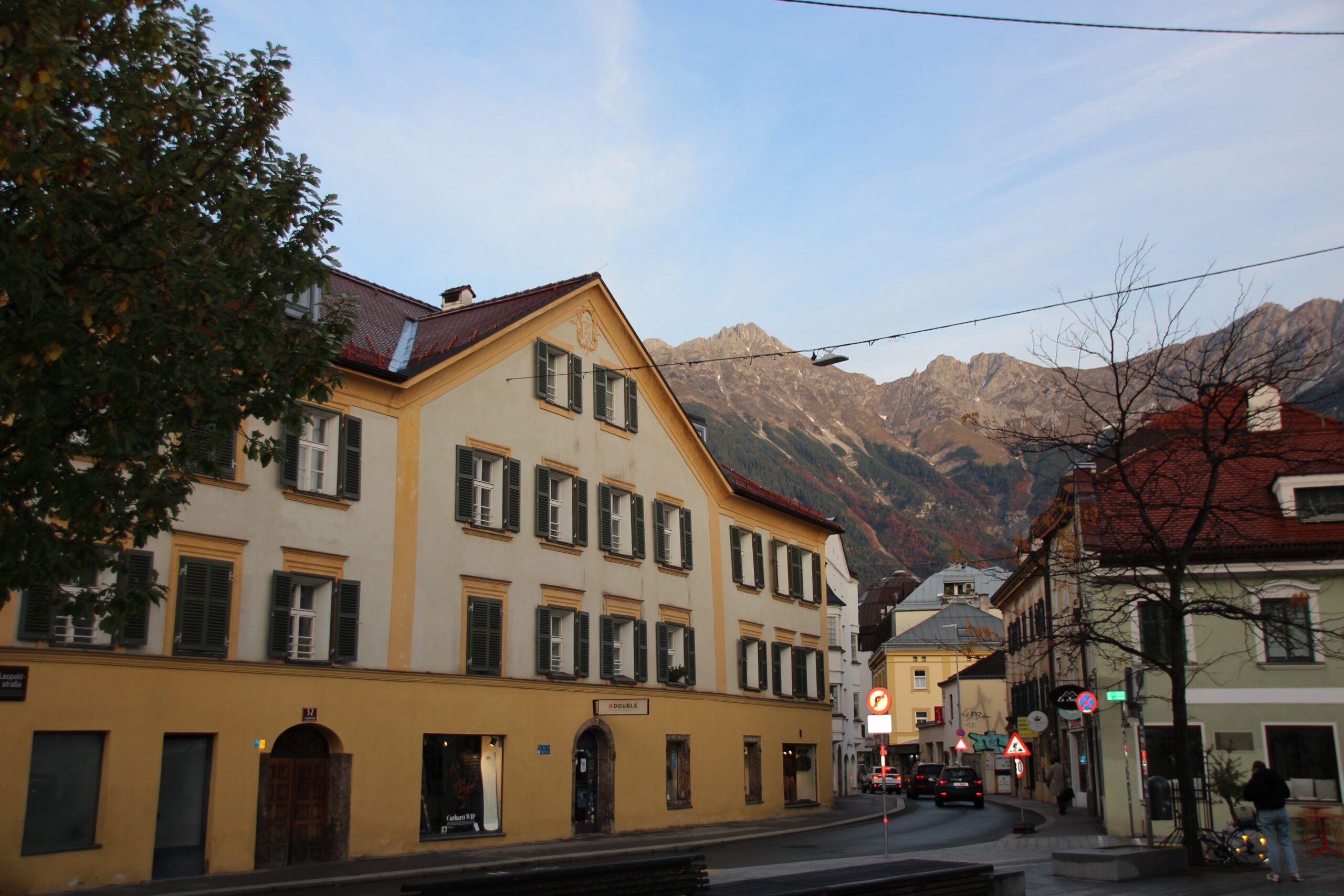
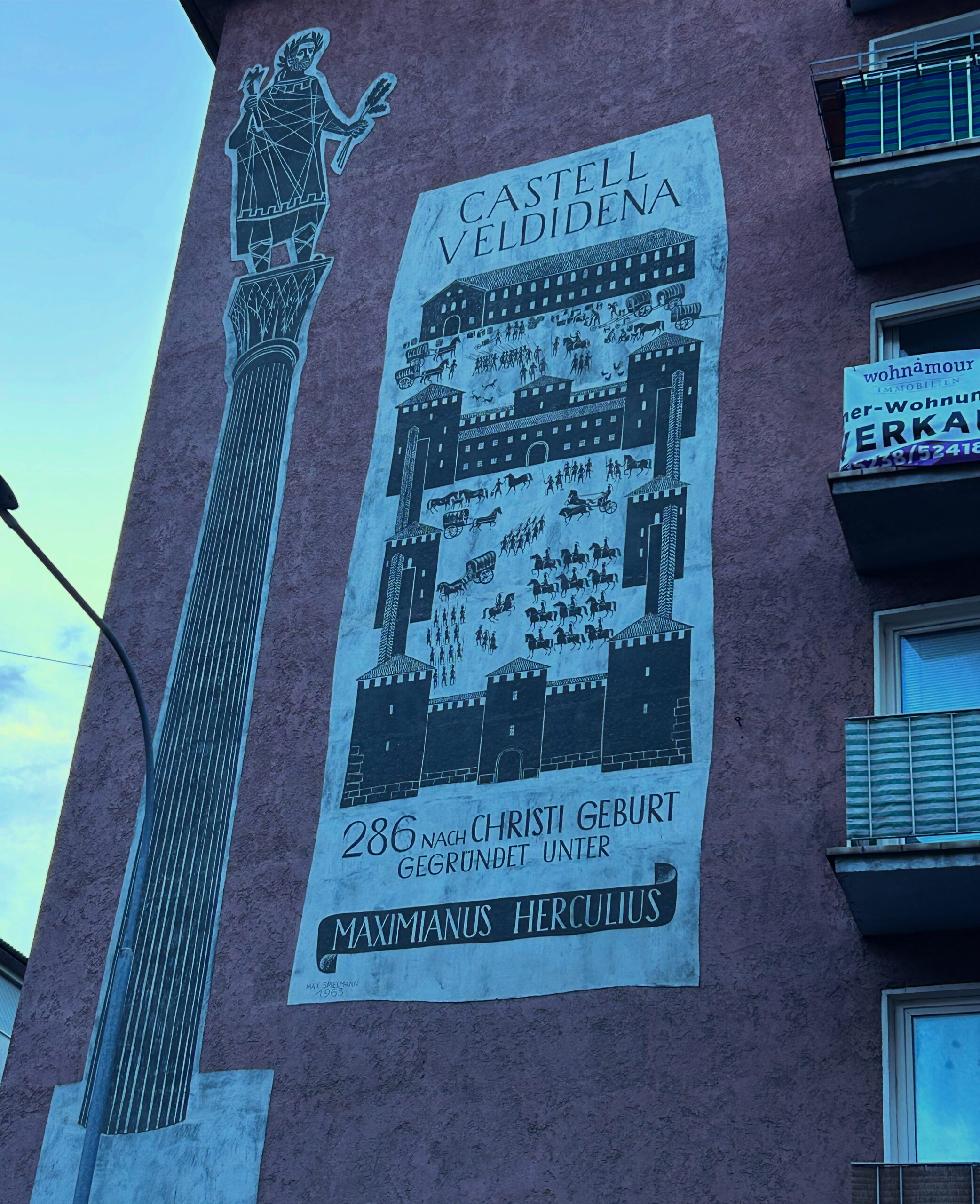
Wiltener Platzl, today a popular meeting place for Innsbruck’s youth and student population, has its roots—so to speak—in Roman antiquity. At the corner of Leopoldstraße and Dr.-Karl-von-Grabmayr-Straße, a mural dating from the 1950s commemorates the Roman military camp Veldidena, which was located directly at the access point to the Via Raetia leading toward the Brenner Pass. Four massive watchtowers and a wall more than two meters thick enclosed the fortress, in which over 500 soldiers were stationed. Along this traffic route, a new lifestyle made its way into the Inn Valley. Around the military camp, a trading outpost emerged: a village with an inn, weapon forges, brickworks, and various crafts. The land surrounding Veldidena had to be cleared for livestock. Equipment and clothing needed to be produced and repaired, and the soldiers had to be fed and entertained. Nor did the Bavarian settlement halt the growth of the village around Wilten Abbey, whose center lay near today’s Gasthof Haymon. According to the abbey’s land register, Wilten consisted of a large manor farm, two mills, twelve farmsteads, five feudal holdings, thirty small houses, and a brewhouse where beer was produced for the monastery’s cheerful daily life. Long before Innsbruck’s main traffic artery, the Südring, ruthlessly cut through the city from the 1960s onward, a kind of medieval “belt” developed along Leopoldstraße between the Graßmayr Bell Foundry and the Triumphal Arch. As early as the Middle Ages, a second local center emerged at the Lower Village Square. At the beginning of the 17th century, the village already counted 80 houses and a respectable population of 600. By 1775, Wilten had grown as far as today’s Leopoldstraße 22. Fifty-six townhouses and eighty agricultural holdings, along with five inns and seven noble residences, were home to around 1,000 people. While the abbey and the Leuthaus housed the administration of the village, parishes, and the monastery’s estates, economic and civic life unfolded here—where Wiltener Platzl and Kaiserschützenplatz are located today. Merchants and travelers came from the Brenner road to Innsbruck to pay their toll at the customs station near the Triumphal Arch. The farmhouses clustered around the village well gradually developed along this main thoroughfare into bourgeois residences, noble estates, workshops, and shops. The diversity of architectural styles still bears witness to the lively activity of past centuries. House Leopoldstraße 27 was home to a farrier by at least 1428. Together with number 25, it forms a fine example of residential buildings from the first half of the 19th century and of Biedermeier architecture. Not only did the economically difficult period following the Napoleonic Wars cause a slump in construction, but many of the rather unremarkable buildings from this era were later swept away by the fervor of Historicism after 1880. The core of the building opposite, at Leopoldstraße 30 and 32, can be traced back as far as the 12th century. Where a fashion boutique and apartments are located today, merchants once unloaded their goods at the Materialisten Ladele outside Innsbruck’s city limits in order to reduce the expected burden at the customs station. The square building at today’s Liebeneggstraße 2, decorated with Baroque murals, developed together with the Welsberg Schlössl at Leopoldstraße 35 in the 15th century from a farmstead into the Liebenegg estate. In 1601, both buildings were confirmed as a Freisitz, which also included a farmhouse with meadowland. In 1824, the Imperial-Royal gubernatorial registrar had the Liebenegg estate raised to four stories and converted into a rental building. The stately mansion at Leopoldstraße 22 is known as the Steidlevilla. Its core dates back to the 17th century, but in the 19th century it was transformed from a noble residence into a neoclassical villa, entirely in keeping with the bourgeois building boom of the time. It was named after Richard Steidle, co-founder of the League of Tyrolean Antisemites and leader of the Tyrolean Home Guard. During the political turmoil of the interwar period, a true crime story unfolded here in the form of a political assassination attempt: in 1933, Steidle was shot and seriously wounded in front of his villa by the German National Socialist Werner von Alversleben. A little further toward the city center stands one of Innsbruck’s most traditional inns. In 1901, the Trentino natives Heinrich and Maria Steneck opened the wine restaurant Steneck. The establishment was particularly popular among Innsbruck’s Italian-speaking population. Although the Innsbruck locals long regarded the Walschen with skepticism, the exceptionally good cuisine was nonetheless gladly accepted. Both the later Italian Prime Minister Alcide De Gasperi, as a young student at the University of Innsbruck, and Benito Mussolini are said to have enjoyed specialties and wine from their homeland here during their time in Innsbruck—before they went on to shape the fate of Europe. Generations of Innsbruck residents have enjoyed schnitzel, sausages, and fries at affordable prices at the Stenni, as the now timeworn establishment is affectionately known. When Heinrich Steneck passed away on December 22, 1953, the Innsbrucker Nachrichten took a touching farewell, on behalf of the entire city, from the founder of this Innsbruck institution.
Der steigende Verkehr seit den 1980ern nahm dem ehemaligen Dorfzentrum seinen Charme. Erst mit der jüngsten Neugestaltung des Wiltener Platzls has succeeded in making this historic square more attractive again. The modern village square with its fountain and seating area is a popular meeting place for residents and walkers alike. Between the two buildings of Ansitz Liebenegg is the modern building in which the Wilten neighbourhood meeting place, a service provided by the Innsbruck Social Services is housed here. The Leopoldstrasse and the Leopoldstraße continue their tradition as a commercial centre outside the city centre. Wiltener Platzl continues to this day. Unlike other main streets in the peripheral neighbourhoods, shops of all kinds flourish here. Boutiques, studios and other small shops manage to establish themselves in the latest hip neighbourhood. Grätzel ebenso wie alteingesessene und neue Lokale am Wiltener Platzl zu behaupten.
Innsbruck as part of the Imperium Romanum
In the year 15 before the Common Era, the field commanders Tiberius and Drusus, both stepsons of Emperor Augustus, reached the northern Alpine region with their armies. While the modern Italian today comes to Tyrol for Christmas markets in winter and more tolerable temperatures in summer, at that time it was the power ambitions of the rising superpower that made the legionaries lace up their sandals. Drusus marched from Verona to Trient, then followed the Adige River over the Brenner Pass into the area of present-day Innsbruck. From the Roman strategic perspective, the conquest was long overdue. Roman troops stationed in Gaul in the west and Illyricum on the Adriatic in the east were to be connected, raids by barbarian peoples into northern Italian settlements prevented, and routes for trade, travelers, and the military expanded and secured. Contrary to how it is often portrayed, the mountainous land was not terra incognita for the Romans. The Inn Valley had not become a permanently inhabited zone only with the climatic warming known as the Roman Climate Optimum. Trade and cultural exchange extending as far as central Italy can be demonstrated through archaeological finds. Partly multi-storey houses with stone foundations, clustered in nucleated villages, similar linguistic idioms, burnt-offering sites such as the Goldbühel in Igls, and ceramic finds point to a shared cultural background with the Etruscans. Finds indicate economic exchange between ethnic groups and communities stretching from Vorarlberg through the Lake Garda region to Istria, even though the Romans liked to depict the militarily inferior Alpine inhabitants as wild barbarians. The conquered peoples north of the main Alpine ridge were referred to by Greek and Roman authors using the rather vague collective term “Raeti.” Today, research understands the Raeti to have been the inhabitants of Tyrol, the Lower Engadine, and Trentino—the area of the Fritzens–Sanzeno culture, named after its major archaeological sites. The tribe living in the area of present-day Innsbruck was given the name Breones by the new rulers. The settlements of the Breonic population were located in mid-mountain elevations and on higher alluvial fans such as Amras and Wilten, slightly above the Inn Valley, which at the time was a floodplain and marshland. Whether the Romans destroyed settlements and cult sites between Zirl and Wattens during their campaign of conquest is unclear. What is certain is that the burnt-offering site on the Goldbühel in Igls was no longer used after the year 15. There are also no precise sources regarding how the conquerors treated the subdued population.
Roman military power was followed by Roman administration and the legal system. Already under Augustus’ successor Tiberius, an administrative structure was rolled out and the new territory integrated into the state system. What is now Tyrol was divided along the Ziller River. The area east of the Ziller became part of the province of Noricum, while Innsbruck became part of the province Raetia et Vindelicia. This province extended from present-day central Switzerland with the Gotthard massif in the west to the Alpine foreland north of Lake Constance, from the Brenner Pass in the south to the Ziller River in the east. Remarkably, the Ziller as a boundary still persists today in ecclesiastical terms: the area east of the Ziller belongs to the Diocese of Salzburg, while Tyrol west of the Ziller is part of the Diocese of Innsbruck. It likely did not take long for the former barbarians to assimilate into Roman culture. While the Romans did not bring chewing gum, vinyl records, or silk stockings for their new subjects—as would be the case nearly 2,000 years later—the Roman lifestyle certainly introduced new possibilities. The route between what is now the Seefeld Saddle and the Brenner Pass had existed for centuries but was unsuitable for trade or troop movements. In the 3rd century CE, the Brenner route was expanded into a via publica. Slightly over five meters wide, it ran from the Brenner Pass to the Ferrariwiese above Wilten, over Mount Isel, to what is today the Gasthaus Haymon, where the Roman military camp Veldidena was located. As the Via Raetia, this road competed with the Via Claudia Augusta, which connected Italy and Bavaria via the Reschen and Fern passes. For poorly equipped merchant caravans, the Brenner route was in parts too steep to become the main route, but through the road network Veldidena was now integrated into an economic and intellectual space stretching from Britain through the Baltic region to North Africa. At intervals of 20 to 40 kilometers, way stations (mansiones) with accommodation, food, and stables were established. In Sterzing, at the Brenner, in Matrei, and in Innsbruck, villages developed around these Roman mansiones, where Roman culture gradually took hold. The local population began to exploit their role as a transit and supply region. Along the trade routes, smithies emerged as an early form of metalworking industry, as well as taverns and inns. With an imperial edict in 212 CE, the Breonic population became full Roman citizens, with all associated rights and obligations. Military service in the Roman army offered opportunities for social advancement. After Christianity became the state religion in the 4th century, the Tyrolean region was also Christianized, starting from the Diocese of Brixen. By that time, cultural achievements such as the imperial coinage system, glass and brick production, the Latin language, bathhouses, thermal baths, schools, and wine had long since become standard. There was probably no Breonic People’s Front, but the famous quote from Life of Brian could just as well have been uttered in pre-Christian Innsbruck:
"Apart from medicine, sanitation, education, wine, public order, irrigation, roads, water treatment and public health insurance, what, I ask you, have the Romans ever done for us?"
Very little of Roman Innsbruck remains visible in the modern cityscape. Exhibits can be seen at the Tyrolean State Museum Ferdinandeum. Various excavation projects around the present-day Wilten Abbey uncovered graves and remains such as walls, coins, bricks, and everyday objects from the Roman period in Innsbruck. The core of the Leuthaus next to the abbey dates back to Roman times. One of the Roman milestones from the former main route over the Brenner can be seen in Wiesengasse near the Tivoli Stadium. Even less has survived of the Breones themselves. Near Lake Lans, visitors can explore remains of Raetian houses, and just below Mount Isel, the former cult site Goldbühel welcomes interested visitors.
Innsbruck's industrial revolutions
Innsbruck has always seen itself primarily as a city of trade, tourism, and academia. In reality, however, manufacturing and productive industries have played a significant role in its history. As early as the fifteenth century, a proto‑industrial form of production began to emerge from traditional crafts. Metalworking flourished in the booming residential city, driven by the construction boom and the demand for weapons and armour. A combination of factors made this possible: the city’s favourable transport connections, the availability of water power, Innsbruck’s political rise, the craftsmanship of its artisans, and access to capital under Maximilian all contributed to the development of necessary infrastructure. Bell founders and armaments manufacturers such as the Löffler family established workshops in Hötting, Mühlau, and Dreiheiligen that ranked among the leading enterprises of their time in Europe. Along the Sill Canal, mills and workshops harnessed water power as an energy source. Powder mills and silver smelting works were located in Silbergasse, today’s Universitätsstraße. In what is now Adamgasse, close to the city, a munitions factory once stood, which exploded in 1636.
The wealth generated by metalworking stimulated other sectors of the economy. By the early seventeenth century, around 270 businesses were operating in Innsbruck, providing employment for masters, journeymen, and apprentices. Although most of the population was still engaged in administration, trade and craft industries—and the money they generated—began to attract a new social stratum. This led to a redistribution within the city. Citizens and businesses gradually displaced officials and members of the aristocracy from the Neustadt. Many of the Baroque palazzi that now line Maria‑Theresien‑Straße were built during this period, while districts such as Dreiheiligen and St. Nikolaus developed into industrial and working‑class quarters. In addition to metalworking in the Silbergasse area, tanners, carpenters, wagon makers, builders, stonemasons, and other crafts associated with early industrialisation settled here.
Industrial development reshaped not only the social structure through the influx of new workers and their families, but also the physical appearance of Innsbruck. Workers, unlike peasants, were not subjects bound to a feudal lord, even if they remained subordinate to the strict authority of their employers. Entrepreneurs were not of noble birth, yet often possessed greater financial resources than the aristocracy. Traditional hierarchies still existed but began to show signs of strain. The new bourgeoisie introduced new fashions and dressed differently. Capital from outside flowed into the city. Housing and churches were built for the incoming population. The working‑class districts outside the city walls were viewed with suspicion by long‑time residents, not least because overcrowded conditions were believed to foster outbreaks of plague. Large workshops altered both the smell and soundscape of the city. Industrial sites were noisy, and smoke from furnaces polluted the air. Innsbruck had evolved from a small settlement at the Inn Bridge into a proto‑industrial town.
Growth was interrupted for several decades at the end of the eighteenth century by the Napoleonic Wars. Compared to other parts of Europe, the second wave of industrialisation arrived relatively late in Innsbruck. One reason was the delayed development of a functioning banking system. For devout Catholics, bankers were still regarded as “usurers and moneylenders,” and financial dealings were considered morally questionable. Without access to credit, however, large enterprises could not be established. Although the Tyrolean provincial government had founded the Banko as early as 1715 and a private bank operated in Herzog‑Friedrich‑Straße, it was only with the establishment of a branch of the savings bank that people no longer had to keep their money hidden at home. From around 1850 onwards, credit became available, enabling the creation of larger local enterprises. Traditional crafts—both urban guild-based workshops and seasonal rural production—came under pressure from modern industrial manufacturing. Modern factories emerged in St. Nikolaus, Wilten, Mühlau, and Pradl along the Mühlbach and Sill Canal. Many innovative entrepreneurs came from outside Innsbruck. In what is now Innstraße 23, Peter Walde, who had moved from Lusatia to Innsbruck, founded a business in 1777 producing goods derived from fats, such as tallow candles and soap. Eight generations later, Walde remains one of Austria’s oldest family businesses, and its historic headquarters—with its Gothic vaulted ceilings—still sells soaps and candles today. Franz Josef Adam, originally from the Vinschgau, established what became the city’s largest brewery in a former aristocratic residence. In 1838, the spinning machine arrived in Pradl via the Dornbirn firm Herrburger & Rhomberg, bringing textile production into the region. The company had acquired land along the Sill floodplain, where water power provided ideal conditions for operating heavy machinery. Alongside wool, cotton was now also processed.
As 400 years earlier, the Second Industrial Revolution fundamentally transformed both the city and the daily lives of its inhabitants. Districts such as Mühlau, Pradl, and Wilten expanded rapidly. Factories were often located directly within residential areas. Around 1900, more than twenty enterprises were still using the Sill Canal. The Haidmühle in Salurnerstraße operated from 1315 to 1907. A textile factory in Dreiheiligenstraße was also powered by the canal. Noise and emissions from machinery placed heavy burdens on residents, as described in a newspaper article from 1912:
“The installation of an explosion engine in the Hibler fig‑coffee factory near the main railway station has caused outrage among the residents of the surrounding district. The noise produced by this machine throughout most of the day is extremely disturbing and diminishes the value of nearby dwellings. The once highly sought-after garden rooms in hotels on Bahnhofplatz are now scarcely rentable. Even worse than the noise, however, is the smoke and stench produced by the new machine…”
Aristocrats who had relied too long on inherited wealth were increasingly forced to sell their estates to the rising bourgeoisie. For example, Palais Sarnthein—originally built in 1689—was later used by a weapons manufacturer and merchant, Johann Peterlongo. Some members of the aristocracy adapted successfully, investing their resources in industrial ventures. The growing demand for labour was met by former farmhands and landless peasants. While wealthy entrepreneurs built villas in Wilten, Pradl, and Saggen, and middle-class employees occupied urban housing, workers were often accommodated in dormitories or mass housing. Twelve-hour shifts in cramped, noisy, and polluted conditions placed heavy demands on labourers. Child labour was not restricted until the 1840s, and women earned only a fraction of men’s wages. Workers were often dependent on company-owned housing and lacked legal protections. Social security systems did not yet exist; those unable to work depended on charitable support from their home communities. It should be noted that these harsh conditions were not entirely new but evolved from rural life, where inequality, child labour, and precarious work had been common.
However, industrialisation did not only affect everyday material life. Innsbruck experienced the kind of gentrification that can be observed today in trendy urban neighbourhoods such as Prenzlauer Berg in Berlin. The change from the rural life of the village to the city involved more than just a change of location. In one of his texts, the Innsbruck writer Josef Leitgeb tells us how people experienced the urbanisation of what was once a rural area:
“…a great many strangers, poorly dressed, crowded into growing housing blocks, filling the streets morning, noon, and evening as they went to and from work… faces pale and prematurely aged, lacking individuality in posture, speech, and clothing—no longer individuals, but a uniform, endlessly repeatable urban working class… The railway station and the gasworks seemed to be the core of this new and profoundly alien landscape.”
After 1848, many Innsbruck residents experienced a process of “bourgeoisification.” Stories of upward mobility through diligence, talent, and opportunity became more common. Notable examples still in existence include the Tyrolean glass painting workshop, the Hörtnagl food business, and the Walde soap factory. Successful entrepreneurs came to occupy roles once held by the landed nobility, forming вместе with academics a new influential social class. Even workers experienced a degree of bourgeois emancipation. Unlike peasants bound to feudal lords, they now received wages instead of subsistence and gained some autonomy over their private lives. Together with the many academics, they formed a new social class that increasingly gained political influence. As early as 1851, Beda Weber remarked approvingly: “Their social circles are unforced; one already senses something distinctly metropolitan, something not easily found elsewhere in Tyrol.”
The workers also became bourgeois. While the landlord in the countryside was still master of the private lives of his farmhands and maidservants and was able to determine their lifestyle up to and including sexuality via the release for marriage, the labourers were now at least somewhat freer individually. They were poorly paid, but at least they now received their own wages instead of board and lodging and were able to organise their private affairs for themselves without the landlord's guardianship.
However, the downside of this newly gained autonomy became particularly apparent in the early decades of industrialisation. There was little state infrastructure for healthcare or family support. Health insurance, pensions, retirement homes, and childcare facilities did not yet exist; previously, these functions had largely been fulfilled within extended rural families. In working-class districts, unsupervised children were a common sight during the day—especially the youngest, who were not yet subject to compulsory schooling. In response, a women’s association was founded in 1834 following an appeal by the Tyrolean provincial governor. It established childcare institutions in working-class districts such as St. Nikolaus, Dreiheiligen, and Angerzell (today’s Museumstraße). Their aim was not only to keep children off the streets and provide them with food and clothing, but also to instill manners, modest behaviour, and moral discipline. Under strict supervision, caretakers ensured “cleanliness, order, and obedience,” thereby providing at least a basic level of care. The former childcare institution in Paul‑Hofhaimer‑Gasse behind the Ferdinandeum still exists today. The neoclassical building now houses a Caritas integration kindergarten and a daycare center for employees of the State of Tyrol.
Innsbruck never became a traditional industrial working‑class city. Even so, a significant labour movement—such as that found in Vienna—never truly developed in Tyrol. While there were Social Democrats and a small number of Communists, the working class remained too small to exert substantial political influence. May Day marches, for example, are attended by many primarily for inexpensive food and free beer rather than political engagement. More broadly, there are few memorial sites dedicated to industrialisation and the achievements of the working class. Only in places such as St.-Nikolaus-Gasse or in some tenement buildings in Wilten and Pradl have structures survived that offer a glimpse into the everyday life of Innsbruck’s workers.
The Wallschen and the Fatti di Innsbruck
Prejudice and racism toward immigrants were and remain common practice in Innsbruck, as in all societies. Whether Syrian refugees since 2015 or Turkish guest workers in the 1970s and 80s, 'the foreign' usually generates little goodwill in the average Tyrolean. Today, Italy may be the favorite travel destination of Innsbruckers and pizzerias a part of everyday dining, but for a long time, our southern neighbors were the most suspiciously eyed population group. What Jews and Bohemian brickmakers ('Ziegelböhmen') were to the Viennese around 1900, the 'Wallsche' (Italians) were to the Tyrolean. The aversion to Italians in Innsbruck can look back on a long tradition. Although Italy did not exist as an independent state—instead, many small counties, city-states, and principalities between Lake Garda and Sicily shaped the political landscape, with individual regions also differing linguistically and culturally—people gradually began to see themselves as Italians over time and were perceived as such abroad. Most of those with whom Innsbruckers interacted belonged to the upper class, which automatically generated a certain resentment. During the Middle Ages and the Early Modern period, they resided in Innsbruck as members of the civil service, the court staff, bankers, wholesalers, or wives of various local rulers. The mutual dislike between 'Italians' and 'Germans' went both ways: one side viewed the other as dishonorable, unreliable, arrogant, vain, morally corrupt, and lazy; the other side viewed them as uncivilized, barbaric, uneducated, and 'pigs.' With the wars between 1848 and 1866, hatred of all things Italian reached a new peak in the 'Holy Land of Tyrol,' even though many 'Wallsche' served in the Imperial-Royal (k.u.k.) Army and the rural Italian-speaking Tyrolean population largely remained loyal to the monarchy. Italians—especially Garibaldi's troops—were considered godless insurgents and republicans, and were lambasted from church pulpits between Kufstein and Riva del Garda in both Italian and German. The Tyrolean press landscape played a major role in the conflict. The Innsbrucker Nachrichten, with a circulation of around 15,000 copies, was Tyrol's widest-reaching media outlet at the turn of the century; while it had no explicit political orientation, it was considered Pan-German liberal-leaning. On the Italian side, Cesare Battisti (1875–1916) stood out—he was later executed by hanging for high treason by the Austrian military during the war. The publicist and politician from Trento had begun studying at the German-language university in Vienna before transferring to the University of Florence. With a sharp pen in the two Italian newspapers Il Popolo and L’Avvenire, he repeatedly fueled the nationalities conflict within the country's borders. Thanks to his blend of socialist ideology and Italian patriotism, he was considered public enemy and traitor number one by many Tyroleans. Clubs and associations also played a supporting role in the hardening of positions. In 1867, not only were the press laws liberalized, but so was the right of association, triggering a genuine boom in new foundations. Sports clubs, gymnastics societies, theater groups, marksmen companies (Schützen), or the Innsbrucker Liedertafel often served not just for recreation, but as political front organizations. Student fraternities were particularly extreme. Facing them were the Italian-speaking students, who were inferior both in terms of numbers and organization. Due to the loss of Padua, Italian-descended Tyroleans no longer had the opportunity to complete university studies in their native language within the empire, leading many to orient themselves toward Innsbruck—where they met with little affection. One of the main political bones of contention between Italian- and German-speaking students was the opening of an Italian faculty or university. The discussion over whether to target a university in Trieste (the preferred location for Italian-speaking representatives), Innsbruck, Trento, or Rovereto played out over years. Although attending university was actually a matter for a small elite, irredentist, anti-Austrian-minded Tyrolean deputies from the Trentino were able to repeatedly inject emotional charge into the issue as a symbol for sought-after autonomy—given that by law, all language groups within the monarchy were to be treated equally after 1867. Pan-German nationalist politicians, such as Innsbruck Mayor Wilhelm Greil (who was repeatedly admonished by Tyrol's Imperial-Royal Governor for his improper conduct toward the Italian population), used the emotions surrounding the issue to whip up sentiment about impending 'foreign infiltration' (Überfremdung). Added to the ethnic and racial resentment toward their southern neighbors—especially among conservatives—was the fear of figures like Cesare Battisti, who as a socialist embodied living evil anyway.
Demographic data shows how inflated the fear of Innsbruck being "Italianized" by Trentino students actually was. As is so often the case, facts back then were replaced by gut feeling and racially motivated populism. After the incorporation of Pradl and Wilten in 1904, Innsbruck had just over 50,000 inhabitants. With slightly over 1,000 students, the student population accounted for less than 2%. Of the roughly 3,000 people of Italian descent—most of them Welschtiroler from the Trentino—only just over 100 were enrolled at the university. The vast majority of the Wallsche consisted of workers, innkeepers, merchants, and soldiers. Many had been living in and around Innsbruck for a long time. In the somewhat cheaper district of Wilten, a sort of Little Italy had emerged. Anton Gutmann sold Italian wines at his winery cooperative Riva at Leopoldstraße 30, while across the street one could eat well and affordably at Gasthaus Steneck. As subjects of the monarchy, most immigrants spoke excellent German; only a small fraction came from Dalmatia or Trieste and was genuinely foreign-speaking. The differences were socio-cultural. There were separate associations such as the Club Ciclistico and the Unione Ginnastica, socialist-oriented workers' and consumer organizations, music societies, and student fraternities. Although students made up only a small fraction among the Italian population, disproportionate attention was focused on them and their demand for an institute with Italian as the language of examination and instruction. After much back-and-forth, it was decided in September 1904 to establish a provisional faculty of law in Innsbruck. This was intended to separate the students without alienating either group. From the outset, however, the project was ill-fated. No one was willing to rent the necessary premises to the university. Finally, the enterprising builder Anton Fritz made an apartment available in one of his tenement buildings at Liebeneggstraße 8. At the inaugural lecture and the festive evening event at Gasthaus zum Weißen Kreuz on November 3, prominent figures such as Battisti and the future Italian Prime Minister Alcide De Gasperi were present. As the night wore on, the mood grew increasingly boisterous. When taunts such as "Porchi tedeschi" and "Abbasso Austria" ("German pigs" and "Down with Austria") were shouted, the situation escalated. A mob of German-speaking students armed with sticks, knives, and revolvers besieged the Weißen Kreuz, where the Italians—likewise largely armed—had barricaded themselves. A squad of Kaiserjäger successfully dispersed the initial turmoil, and several Italians were detained. In the process, the painter August Pezzey (1875–1904) was mistakenly fatally wounded by a bayonet thrust from an overly nervous soldier. Following the night's events, the Innsbrucker Nachrichten appeared on November 4 under the headline: "German Blood Has Flowed!". The reporter on site claimed that 100 to 200 revolver shots were fired by the Italians at the "host of German students," reporting Pezzey's death. News of what transpired sparked a wave of revenge acts and violence. Joining those who were politically motivated—as in any riot—were onlookers and rioters who simply enjoyed causing havoc under the cover of the crowd, without holding any genuine political convictions. While the detained Italians sang the martial song Inno di Garibaldi in the city's hopelessly overcrowded prison, severe riots broke out across the city against Italian establishments and businesses. The premises of Gasthaus zum Weißen Kreuz were completely devastated in monarchist fashion, leaving nothing intact except a portrait of Emperor Franz Joseph. Rioters threw stones at the residence of the already unpopular Governor at Palais Trapp because his wife had Italian roots. The building on Liebeneggstraße provided to the university by Anton Fritz was destroyed, as was his private home. Once the initial turmoil had settled, myth-making around the event began rapidly. August Pezzey, who hailed from a Ladin family and died in the chaos, was proclaimed a "German Hero" in a nationalistic frenzy by politicians and the press. He was given an honorary grave at Innsbruck's Westfriedhof cemetery. At his funeral, attended by thousands of mourners, Mayor Greil delivered a melodramatic speech:
"...A gloriously beautiful death was granted to you on the field of honour for the German people... In the fight against impudent acts of violence you breathed your last as a martyr for the German cause..."
Reports of the Fatti di Innsbruck reached the international press and contributed significantly to the resignation of the Austrian Minister-President Ernest von Koerber. Depending on the medium, Italians were portrayed either as dishonorable bandits or as courageous national heroes, while Austrians were depicted as pangermanist barbarians or as a bulwark against the “Welsch.” On 17 November, just two weeks after its ceremonial opening, the Italian faculty in Innsbruck was dissolved again. A university of their own remained denied to this linguistic group within Austria-Hungary until the end of the monarchy in 1918. The long tradition of viewing Italians as dishonorable and lazy was further intensified by Italy’s entry into the war in 1915 on the side of France and England. To this day, many Tyroleans continue to maintain negative prejudices toward their southern neighbors with great persistence.
Art in architecture: the post-war period in Innsbruck
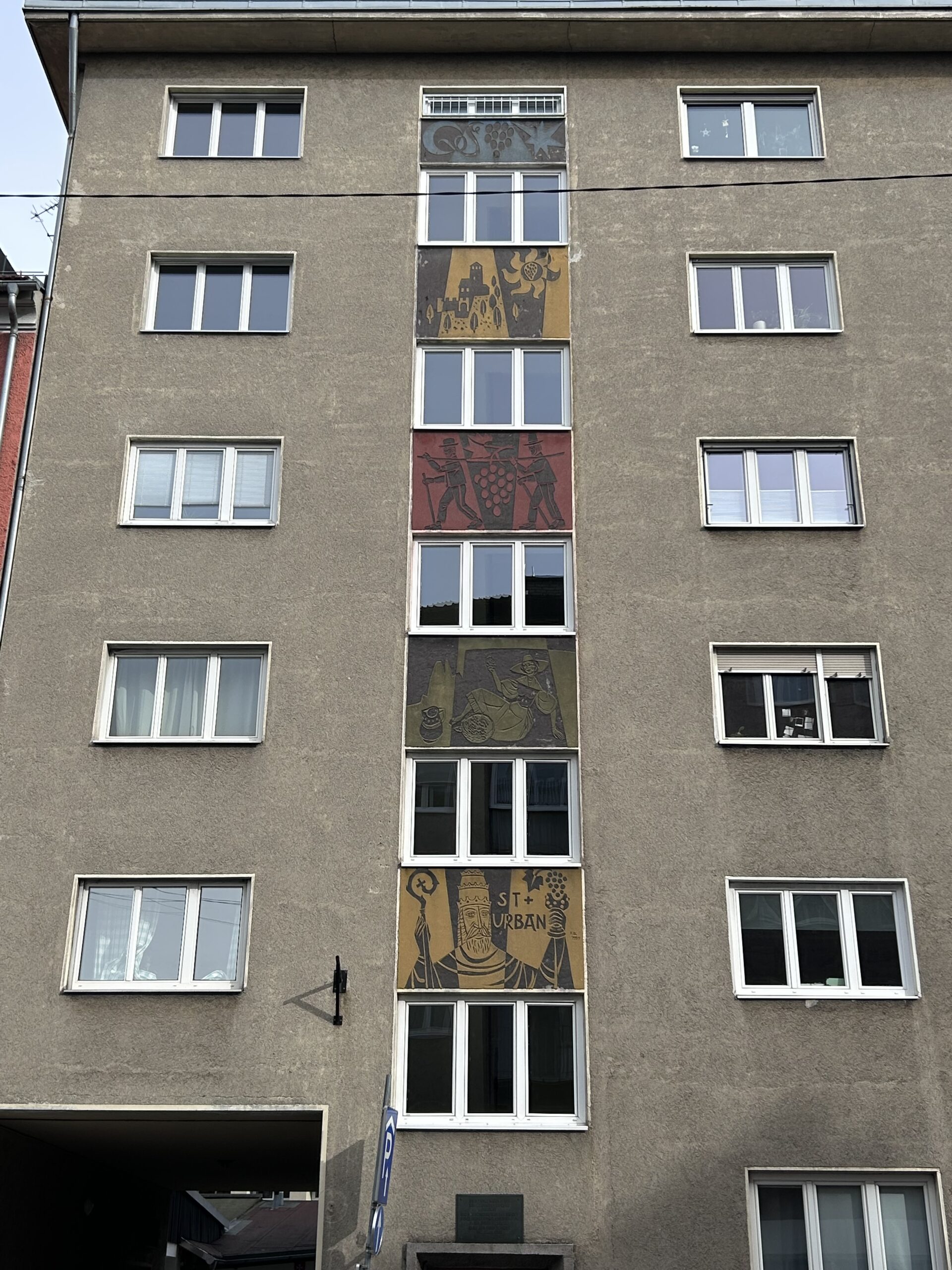
Just as after the First World War, the housing shortage was one of the most pressing issues after 1945. Innsbruck had been severely affected by air raids, and funds for new construction were scarce. When the first residential complexes were built in the 1950s, frugality was the order of the day. While many of the buildings erected from the 1950s onward are architecturally unremarkable, they house quite interesting works of art. Starting in 1949, Austria introduced the "Kunst am Bau" (Percent for Art) initiative. For state-funded construction projects, 2% of the total expenditure was to be allocated to artistic design. Implementing building legislation—and thus managing these budgets—was the responsibility of the federal states, then as now. In the frugal postwar years, even successful and practical artists like Oswald Haller (1908–1981), who made his living from commercial art and tourism posters, had fallen on hard times. Public procurement was meant to offer them financial support. This concept had first emerged in the Weimar Republic in 1919 and was continued by the National Socialists from 1934 onward. Austria readopted Kunst am Bau after the war to shape public spaces as part of the reconstruction effort. The public sector, replacing the aristocracy and the bourgeoisie as the property developers of past centuries, was under intense financial pressure. Nevertheless, residential projects—though primarily focused on functionality—were not meant to look entirely plain. The Tyrolean artists entrusted with creating these artworks were chosen through open competitions. The most renowned among them was Max Weiler, perhaps the most prominent artist in postwar Tyrol, who was responsible for the frescoes in the Theresienkirche on the Hungerburg in Innsbruck, among other works. Other prominent names include Helmut Rehm (1911–1991), Walter Honeder (1906–2006), Fritz Berger (1916–2002), and Emmerich Kerle (1916–2010). Many of these artists were shaped not only by the Bundesgewerbeschule Innsbruck (today's HTL) and the Academy of Fine Arts Vienna, but also by their collective experience during National Socialism and the war. Fritz Berger had lost his right arm and an eye, forcing him to learn to work with his left hand. Emmerich Kerle served as a war painter in Finland. In Vienna, he was taught by Josef Müllner, an artist who made his mark on art history with busts of Adolf Hitler, Siegfried from the Nibelungen saga, and the still-controversial Karl Lueger Monument in Vienna. Like a large portion of the Tyrolean population, these artists—along with politicians and civil servants—longed for peace and quiet after the harsh and painful war years, wanting to let bygones be bygones regarding the events of recent decades. The works created under Kunst am Bau reflect this attitude toward a new self-image and moral code. It was the first time that abstract, non-representational art entered Innsbruck's public space, albeit only within an uncritical framework. Fairytales, legends, and religious symbols were popular motifs immortalized in sgraffito, mosaics, murals, and statues. One could speak of a sort of second wave of Biedermeier art, symbolizing the petty-bourgeois lifestyle of the postwar population. The art was also intended to create a new awareness and image of what was considered "typically Austrian." As late as 1955, every second Austrian still considered themselves German. The diverse motifs depict leisure activities, clothing styles, and the concepts of social order and norms of the postwar era. Women were frequently portrayed in traditional costume (Tracht and Dirndl), men in Lederhosen. Conservative ideals of gender roles were processed through this art: hardworking fathers, dutiful wives tending to home and hearth, and children eagerly studying in school remained the ideal well into the 1970s. Anyone walking attentively through the city will find many of these artworks still visible on buildings in Pradl and Wilten today. The contrast between plain architecture and contemporary art from a postwar era—often suppressed, yet long romanticized and glorified in films and stories—is well worth seeing. Particularly fine examples can be found on the facades along Pacherstraße, Hunoldstraße, Ing.-Thommenstraße, Innrain, the Landesberufsschule Mandelsbergerstraße, or in the courtyard between Landhausplatz and Maria-Theresien-Straße.
The Bocksiedlung and Austrofascism
Political violence, alongside hunger and a severe housing shortage, shaped Austria throughout the 1920s and 1930s. The two major mass parties of the young republic, the Social Democrats and the Christian Socials, regarded each other with hostility. Both parties established paramilitary organizations to enforce their political agendas on the streets if necessary. The Republikanischer Schutzbund on the Social Democratic side and various Christian Social or even monarchist-oriented Heimwehr groups, which for simplicity may be grouped under this collective term, watched one another like opposing sides in a civil war. Many politicians and functionaries on both sides had fought on the front during the war and had become deeply militarized as a result. The Tyrolean Heimwehr enjoyed superior infrastructure and political connections due to the support of the Catholic Church. On November 12, 1928, the tenth anniversary of the founding of the Republic, 18,000 Heimwehr members marched through the city in the first nationwide Heimwehr rally, demonstrating their strength on what was the most important holiday for Austrian Social Democrats. From 1930 onward, the Nazi Party (NSDAP) also became increasingly visible in public life. It found supporters particularly among students and disillusioned young workers. By 1932, the party already had 2,500 members in Innsbruck. Violent clashes between the hostile political factions occurred repeatedly. The most notorious of these became known as the Hötting Hall Battle (Höttinger Saalschlacht) of May 27, 1932. At that time, Hötting was still independent and not yet part of Innsbruck. The community was inhabited mainly by workers. In this “red” stronghold of Tyrol, National Socialists planned a rally at the Goldener Bär Inn, a traditional meeting place of Social Democrats. This provocation escalated into a fight that left more than thirty people injured and one National Socialist dead. The violence spread across the entire city; even in the hospital, the injured continued fighting each other. Only the intervention of the gendarmerie and the army succeeded in separating the opposing sides.
After these years that resembled a civil war, the Christian Social Party prevailed in 1933 under Chancellor Engelbert Dollfuß (1892–1934). His goal was the establishment of the so-called Austrian Corporate State (Österreichischer Ständestaat), today better known under the term Austrofascism. The entire state apparatus was to be unified under the Fatherland Front (Vaterländische Front), modeled on Mussolini’s fascism in Italy: anti-socialist, authoritarian, socially conservative, anti-democratic, antisemitic, and militarized. Quite a few people welcomed the replacement of parliament and the multi-party system by a strong leader who promised peace and order. In Innsbruck, unlike in many Austrian cities where this political upheaval was at times accompanied by bloodshed, no significant fighting occurred. On 15 March, the headquarters of the Tyrolean Social Democratic Workers' Party (Sozialdemokratische Arbeiterpartei Tirol) in the Hotel Sonne was cleared out. The leader of the Republican Protection League (Republikanischer Schutzbund), Gustav Kuprian, was arrested on charges of high treason, and the individual units of the Schutzbund were disarmed. The Tiroler Wochenzeitung was established as the party newspaper. Innsbruck’s municipal council was reduced from forty to twenty-eight members. Instead of being elected through free elections, council members were appointed by the provincial governor. The Social Democrats, who had previously held strong representation, were removed from the city government. Dollfuß was extraordinarily popular in Tyrol, as photographs of the crowded square in front of the Hofburg during one of his speeches in 1933 demonstrate. His policies came closer than any other contemporary system to the traditions of the Habsburg Monarchy. As early as 1931, several Tyrolean mayors had joined forces in an effort to lift the ban on the Habsburg family entering Austria. This policy was supported by the Catholic Church and was even incorporated into the Constitution of 1934: “In the name of God, the Almighty, from whom all law proceeds, the Austrian people receive this Constitution for their Christian, German federal state founded on a corporative basis.” The close relationship with the Church provided the government with access to infrastructure, media organizations, and affiliated institutions. The Fatherland Front, together with its paramilitary units, took harsh action against the despised Socialists. It did not hesitate to employ repression and violence against both individuals and institutions associated with the political opposition. Suspected and actual Socialists, Social Democrats, trade unionists, and Communists were repeatedly arrested. The press was politically controlled and censored, while newspaper articles glorified the idyllic nature of rural life. Large families received financial support. Schools were segregated by gender, and the curricula differed accordingly: domestic work for girls and pre-military training for boys. Cultural policy deliberately distinguished itself from that of the National Socialist and anti-clerical neighbor to the north. Theatre and music were intended to present Austria as the “better and more civilized” German state.
tion Austrofascism, however, brought peace and order only briefly, if at all. On 25 July 1934, a coup attempt by the banned National Socialists took place in Vienna, during which Chancellor Engelbert Dollfuß was killed. Hitler, who had not ordered the attacks, initially distanced himself publicly from the events, helping to suppress the planned overthrow before it could gain momentum. An attempted coup also occurred in Innsbruck. During an effort by a group of National Socialists to seize control of the city, a police officer was shot and killed in Herrengasse. In memory of the murdered Federal Chancellor, who was subsequently elevated to the status of a martyr, the square in front of the theatre, where he had met with Richard Steidl only two weeks earlier, was renamed Dollfuß Square (Dollfußplatz) by “order of the Government Commissioner of the Provincial Capital of Tyrol.” Dollfuß’s successor as head of state was Kurt Schuschnigg (1897–1977), a native Tyrolean. The war veteran, who came from the lower nobility of the former Austro-Hungarian Empire, was a member of the Innsbruck student fraternity Austria. In 1930, Schuschnigg, then a lawyer and member of parliament, founded the Ostmärkische Sturmschar, a Catholic and antisemitic paramilitary organization intended to serve as a counterweight to the more radical Heimwehr groups. As Minister of Education and Minister of Justice, Schuschnigg played a key role in the rightward shift of society under the Corporate State. Among other measures, he reintroduced the death penalty. For the people of Innsbruck, however, little changed under the new Chancellor in terms of everyday hardship. Economically, the Corporate State was unable to reverse the situation during the 1930s. Government investment in major infrastructure projects came to a halt following the economic crisis of 1931. By 1933, the unemployment rate had reached 25 percent. The reduction of social welfare measures that had been introduced at the beginning of the First Republic had dramatic consequences. Long-term unemployed individuals were excluded from receiving social benefits as so-called “Ausgesteuerte” (persons whose entitlement to benefits had expired). Poverty led to rising crime rates, and assaults, robberies, and thefts became commonplace. As in previous decades, housing remained a particularly serious problem. Despite the city's efforts to provide modern housing, many Innsbruck residents still lived in dilapidated dwellings. Private bathrooms or even a separate bedroom for each person were rare exceptions. Since Innsbruck’s rapid growth beginning in the 1880s, housing conditions had remained precarious for a large part of the population. The railway, industrialization, refugees from the German-speaking regions of Italy, and the economic crisis had pushed the city to the limits of its capacity. After Vienna, Innsbruck had the second-highest number of residents per house in Austria. Housing rents were so high that workers often slept in shifts in order to share the costs. Although new apartment blocks and homeless shelters had been built, especially in Pradl, including the Workers’ Residence (Wohnheim für Arbeiter) on Amthorstraße in 1907 and the Hostel (Herberge) on Hunoldstraße, these measures were insufficient to bring the situation under control.
In this climate of social dictatorship and economic hardship, several shantytowns and barrack settlements emerged on the outskirts of the city. They were founded by the excluded, the desperate, and those left behind who could find no place within the system. The former prisoner-of-war camp in Höttinger Au, west of the city, served as emergency accommodation for homeless people. The most famous and notorious inner-city enclave, remembered to this day, was the Bocksiedlung ("Bock Settlement") in the area of present-day Reichenau. Beginning around 1930, several families settled there between the airport then located on the site and the concentration camp that would later be built in Reichenau. According to local legend, Otto and Josefa Rauth were the founders of the settlement after their caravan became stranded there. In the Innsbruck of the Corporate State, having the wrong party affiliation was enough to make affordable housing unattainable. As an openly declared Communist, Rauth possessed what was arguably the most disadvantageous party membership of all. His raft, the Ark Noah (Arche Noah), with which he planned to travel via the Inn and Danube rivers to the Soviet Union, remained moored on the riverbank in front of the Sandwirt Inn (Gasthof Sandwirt) and never actually set sail. Gradually, a settlement developed that existed both physically on the edge of the city and socially on the margins of society. It was run like an independent commune by its unofficial mayor, Johann Bock (1900–1975). He managed everyday life within his sphere of influence in a rough but warm-hearted manner. The air raids of the Second World War further worsened Innsbruck's housing situation and caused the Bocksiedlung to grow. At its peak, it is said to have contained around fifty dwellings. Even the barracks of the Reichenau concentration camp were used as sleeping quarters after the last National Socialists held there had been transferred or released. The Bockala, as the inhabitants were known, had a terrible reputation among the respectable citizens of the rest of the city, and despite later attempts to romanticize or soften its history, that reputation was probably not entirely undeserved. Many, though not all, residents were unemployed or involved in criminal activities. Often, however, they were simply people who had fallen through the cracks of society and found refuge in the Bocksiedlung. As helpful and supportive as the often eccentric residents could be toward one another, physical violence and petty crime were part of everyday life. Excessive alcohol consumption was commonplace. There were no paved roads, no sewage system, no sanitary facilities, and no regular electricity supply. Even access to drinking water remained precarious for a long time, creating a constant risk of disease outbreaks. The dwellings themselves were as diverse as their inhabitants. They included caravans, circus wagons, wooden barracks, corrugated metal huts, brick houses, and concrete buildings. Within the Bocksiedlung, houses and wagons were rented out and sold. With the tacit tolerance of the City of Innsbruck, property rights acquired through long-term occupation even emerged under Johann Bock's leadership. The residents cultivated self-sufficiency gardens and kept livestock. In difficult times, even dogs and cats occasionally appeared on the menu. There were no fixed boundaries to the settlement; in Innsbruck, being a Bockala was as much a social status as it was a place of residence.
The beginning of the end for the Bocksiedlung (“Bock Settlement”) came with the 1964 Olympic Games and a fire that had occurred in the settlement the year before. An urban legend claims that the fire was deliberately set by the municipal authorities in order to accelerate the clearance of the neighborhood and make way for the construction of the Olympic Village (Olympisches Dorf). In 1967, Mayor Alois Lugger and Johann Bock negotiated the future of the settlement and compensation payments from the municipality for its evacuation. According to local accounts, these discussions took place in a rather alcohol-laden atmosphere. Nevertheless, it would take several more years before the settlement effectively came to an end. It was not until 1976 that the last remaining dwellings were forcibly vacated due to unsanitary conditions. Many of the Bockala were relocated to municipal apartments in Pradl, Reichenau, and the newly constructed Olympic Village (O-Dorf). The customs and lifestyle associated with the Bocksiedlung continued there under a new address for several years, contributing in large part to the negative reputation that these neighborhoods still carry today. Less firmly embedded in the collective memory of many Innsbruck residents than the legends of the Bocksiedlung is the interwar period. Yet this era often remains a much greater part of everyday culture than we realize. In churches such as St. Jakob in Defereggen in East Tyrol or the parish church of Fritzens, images depicting Dollfuß as the protector of the Catholic Church can still be seen, more or less without comment. Even today, there are “red” and “black” motorists’ clubs, sports associations, rescue organizations, and Alpine clubs whose roots can be traced back to this period. The history of the Bocksiedlung has been painstakingly reconstructed by the Innsbruck City Archive through numerous interviews and extensive archival research, and was published in a highly readable form in the book: Bocksiedlung. Ein Stück Innsbruck (Bocksiedlung: A Piece of Innsbruck) published by the Innsbruck City Archive. The book provides a valuable account of both the settlement itself and the social realities of Innsbruck in the twentieth century.