Pfarre Mariahilf
Dr.-Sigismund-Epp-Weg
Die Pfarre Mariahilf ist Namensgeberin des Innsbrucker Stadtteils westlich der Innbrücke, der bis 1837 als Obere Anbruggen bekannt war. Neben der Mariahilfkirche gehören auch der Friedhof, der Kindergarten, die Kunstkammer und das Widum zu einem Ensemble an Gebäuden, das ein eindrucksvolles Beispiel für den Einfluss der Kirche auf Infrastruktur, Gesellschaft und Gemeinwesen darstellt. Die Anfänge der Pfarre Mariahilf liegen im 17. Jahrhundert. Nachdem schwedische, französische und hessische Truppen während den letzten Jahren des Dreißigjährigen Krieges (1618 – 1648) große Teile des benachbarten Bayern und die Stadt Bregenz verwüstet hatten, gelobten die Tiroler Landstände am 1. Februar 1647 feierlich, Cranachs Bild der Mother of mercy, das heute im Dom St. Jakob hängt, eine Kapelle zu stiften, wenn Tirol von den Kriegsgräueln verschont bliebe.
Als Baumeister für das Vorhaben konnte Christoph Gumpp gewonnen werden. Bereits 1648 wurde auf einem provisorischen Altar die erste Messe gefeiert, ein Jahr später war der Rohbau fertig. Im Laufe der nächsten Jahrhunderte gestalteten mehrere Generationen Tiroler Künstler die Mariahilfkirche bis zu ihrem heutigen Aussehen. Gumpp ließ sich wohl auf seinen Italienreisen von den Kuppelbauten wie dem römischen Pantheon inspirieren. Das Innere ist nicht wie es typisch für den Barock ist ein großes Ganzes, sondern eine Aneinanderreihung einzelner Elemente, wie es in der Renaissance üblich war. Fünf Altarkapellen geben dem runden Bau die äußere Form. Die Kuppel wird innen von sechs ovalen Deckenfresken geschmückt, die das Leben Marias darstellen. Sechs runde Fresken zeigen Szenen aus dem Alten Testament. Cranachs Mother of mercy, der man die Kirche eigentlich weihen wollte, blieb in der Pfarrkirche St. Jakob, weshalb Michael Waldmann 1654 eine Kopie des Bildes Cranachs anfertigte. Die vier Stände Klerus, Adel, Bauern und Bürger knieen am Hochaltar vor einer Darstellung der Kirche und weisen diese Maria zu. Über dem Chorbogen kann man die Wappen Tirols, der Casa Austria und der toskanischen Familie Medici sehen, aus der die kurz vor Beendigung des Rohbaus verstorbene Tiroler Landesfürstin stammte.
Neben der Kirche befindet sich das Epp´sche Benefiziatenhaus, das von Johann Martin Gumpp als Wohnhaus des Kaplans geplant wurde und heute als Kunstkammer mit vielen Ausstellungsstücken und Archiv rund um Mariahilf dient. Auf der anderen Seite wird die Kirche vom Messnerhaus und dem 1952 wieder eröffneten Kindergarten flankiert. Nördlich der Kirche steht das im 19. Jahrhundert neu gebaute Widum mit dem großen Pfarrgarten. Volksschule und Friedhof sind nur wenige Gehminuten entfernt.
Trotz dem Segen und Schutz Marias kam mehrere Unglücke über die Pfarre. Das Erdbeben vom 22. Dezember 1689 verschonte Mariahilf nicht und nahm auch die neu gebaute Kirche erheblich mit. Menschlicher Natur waren die späteren Schäden. Die 1837 von der Glockengießerei Graßmayr gegossenen Glocken wurden wie auch die Orgelpfeifen während des Ersten Weltkrieges eingeschmolzen, um aus dem Metall Waffen herzustellen. Während der Luftangriffe des Zweiten Weltkriegs wurden der Kindergarten und das Pfarrheim zerstört, auch die Kirche erlitt kleinere Schrammen.
Der vielleicht wichtigste Mann der Geschichte Mariahilfs aber war kein Künstler oder Baumeister, sondern Dr. Sigismund Epp (1647 – 1720), Professor für Theologie, Prokanzler und Rektor an der Universität Innsbruck. Er stiftete zwei Benefizien, die es den Tiroler Landständen ermöglichten, die Kirche Mariahilf zu betreiben, in Folge zu erweitern und dadurch ihren Einfluss in der Stadt zu vergrößern. Der Gelehrte Epp hatte an seine Großzügigkeit mehrere Verfügungen geknüpft, darunter die Art und Weise wie der Benefiziat beschaffen sein soll:
“To enjoy this benefice, a pious and respectable secular priest, a native Tyrolean and capable of speaking the German language, shall be appointed… The benefice holder shall include the founders in his prayers and good works.”
Über die Kaplanei Mariahilf, seit 1853 Pfarre mit Seelsorge, konnten die Tiroler Landstände innerhalb der Kirche in vielen wichtigen, weltliche Belange betreffenden Angelegenheiten, einen Gegenpol zu den mächtigen Jesuiten, dem Tiroler Landesfürsten und später der Regierung in Wien bilden. Vor allem beim Thema Bildung und Universität kam es immer wieder zu Machtkämpfen zwischen diesen Institutionen. Nach dem Tod Epps wanderte das Privileg, Universitätskirche zu sein, zwar von Mariahilf in die Dreifaltigkeitskirche der Soldaten Christi, in den frühen 1850er Jahren gründete der Mariahilfer Pfarrer Caspar Weyrer aber eine eigene Schule. Einige Jahrzehnte zuvor war der Versuch in Mariahilf abseits der Trivialschule St. Nikolaus ein eigenes Institut zu gründen noch abgelehnt worden. Seit Maria Theresia und Josef II. war es dem zunehmend zentralisierten Staat ein besonderes Anliegen gewesen, Bildungsangelegenheiten weg von der Kirche unter die Fittiche des Staates zu bringen. Weyrer kam über einen weiteren Benefiziaten, Elisabeth von Mayrhofer zu Koburg & Anger, aber an Kapital und Immobilien, um unabhängig von staatlicher Seite die Schule Mariahilf zu gründen. Die Vereinbarung lautete:
„Die beiden Häuser, der Garten, der Hof, kurz den ganzen Einfang vermache ich zu einem Schulhaus oder zu einer Kinderwarth-Anstalt… die Kinder (sind) verbunden, alle Wochen einmal in der Versammlung laut einen Vaterunser und ein Avemaria zu beten.“
Für das eigene Seelenheil beten zu lassen, war in Innsbruck auch im 19. Jahrhundert noch in Mode. Mit dem Erlass eines neuen Schulgesetzes 1872, musste die Schule ihre Pforten schließen. Caspar Weyrer gründete noch im selben Jahr eine Privatschule, um dieses Gesetz zu umgehen. Weder die liberal-großdeutsche Stadtregierung noch das Ministerium in Wien wollten aber die kirchlich gelenkte Schule in Innsbrucks Bildungslandschaft haben, weshalb der k.k. Bezirksschulrat kurzerhand die beiden Stiftungshäuser als nicht tauglich für Schulzwecke erklärte. Damit sollte das letzte Wort aber noch nicht gesprochen sein.
Einige Jahre früher war der Mariahilfer Friedhof, der seit 1786 neben der Kirche bestand, wegen ungünstiger Bodenbeschaffenheit ins Visier der Behörden geraten. 1876, vier Jahre nach der faktischen Schließung der Mariahilfer Schule durch die Obrigkeit, wälzte die Pfarre Mariahilf Pläne zur Verlegung des Gottesackers. Der Tiroler Landtagsausschuss, der noch immer die Geschicke Mariahilfs leitete, erwarb das Grundstück, auf dem sich der Friedhof Mariahilf bis heute befindet. In malerischer Hügellage gilt der Tiroler Landesfriedhof mit den Arkaden und der Friedhofskapell im Stil der Neorenaissance als schönster Friedhof der Stadt.
Die Verlegung des Friedhofs an den neuen Ort ermöglichte schlussendlich doch noch den Schulbau. Auf dem ehemaligen Friedhofsgelände öffnete 1902 die heutige Volksschule Mariahilf. Auf der Hinterseite der Volksschule ist noch ein kleiner Teil Friedhofskapelle und Mauer sichtbar. Im ehemaligen Schulhaus wurde ein Kindergarten eröffnet. Mit der Machtübernahme der Nationalsozialisten 1938 wurde die Stiftung Mayrhofers, wie so viele kirchliche Einrichtungen, aufgelöst und das Vermögen der Nationalsozialistischen Volkswohlfahrt einverleibt. Knapp vor Kriegsende landete eine 1000 kg schwere Bombe zwischen Kindergarten und Pfarrheim, explodierte allerdings nicht. Ob dafür die Gnadenmutter verantwortlich war, konnte nicht letztgültig geklärt werden. Heute verwalten die Pfarre Mariahilf und Vinzenzkonferenz das Vereinsheim und den Kindergarten.
Leopold V & Claudia de Medici: Glamour and splendour in Innsbruck
While the Thirty Years’ War was ravaging half of Europe, a charismatic princely couple set out to reshape the face of Innsbruck forever in the Baroque manner. The Habsburg who entered the history of the land as Leopold V (1586–1632) assumed sovereign governmental responsibilities in the Upper Austrian regency of Tyrol and the Further Austrian territories after turbulent early years. Unlike many firstborn members of his rank, his career had long appeared uncertain. In his youth he received the classical humanist education customary for young aristocrats, under the guidance of the Jesuits. In Graz and Judenburg he studied philosophy and theology in preparation for a career within the ecclesiastical sphere of power—an established path for younger sons with little prospect of secular thrones. Leopold’s early career within the power structures of the Church epitomised precisely those features of Catholicism rejected by Protestants and Church reformers. At the age of twelve he was elected Bishop of Passau; at thirteen he was appointed coadjutor of the Bishopric of Strasbourg in Lorraine. He never, however, received holy orders; the spiritual duties were carried out by a prince‑bishop appointed for that purpose. A passionate politician, Leopold travelled extensively between his dioceses and supported the imperial side during the conflict between Rudolf II and Matthias—later immortalised by Franz Grillparzer in Bruderzwist im Hause Habsburg. These activities, scarcely befitting a churchman, nonetheless preserved Leopold’s chances of attaining a secular princely title.
That opportunity arose in 1618, when the unmarried Maximilian III died childless. At the behest of his brother, Leopold assumed the role of Habsburg governor and ruler of the Upper and Further Austrian lands and their incorporated peoples and territories. In the early years of his regency he continued to shuttle between his bishoprics in southern and western Germany, threatened by the upheavals of the Thirty Years’ War. Although the ambitious power politician found satisfaction in the excitement of high politics, the status of governor did not suffice. He sought recognition as territorial prince, complete with homage and dynastic inheritance. What he lacked were a suitable bride, time, and money. Costly conflicts had depleted his coffers.
Money arrived with the bride—and with her, time. Claudia de’ Medici (1604–1648), from the wealthy Tuscan merchant‑princely dynasty, was selected to bestow dynastic fortune upon the aspiring territorial prince, now approaching forty. As a child, Claudia had already been promised to the Duke of Urbino, whom she married at seventeen, despite a proposal from Emperor Ferdinand II. Her husband died after only two years of marriage. The ties between the Medici and the Habsburgs remained intact. Since the marriage of Francesco de’ Medici to Johanna of Habsburg, a daughter of Ferdinand I, the two dynasties had been closely interwoven. Leopold and Claudia likewise proved a perfect match of title, power, Baroque piety, and wealth. Leopold’s sister Maria Magdalena, who as a Medici bride had become Grand Duchess of Tuscany, resided in Florence and sent her brother a painted portrait of the young widow, remarking that she was “beautiful in face, body, and virtue.” After a delicate dance of mutual conditions—the bride’s family seeking assurance of the groom’s title, while the Emperor required proof of a suitable marriage before granting the ducal dignity—the moment finally arrived. In 1625 Leopold, now raised to duke and well nourished and mature in years, relinquished his ecclesiastical possessions and titles in order to marry and, together with his nearly twenty‑years‑younger bride, found a new Tyrolean line of the House of Habsburg.
The relationship between the prince and the Italian woman was to characterise Innsbruck. The Medici had made a fortune from the cotton and textile trade, but above all from financial transactions, and had risen to political power. Under the Medici, Florence had become the cultural and financial centre of Europe, comparable to the New York of the 20th century or the Arab Emirates of the 21st century. The Florentine cathedral, which was commissioned by the powerful wool merchants' guild, was the most spectacular building in the world in terms of its design and size. Galileo Galilei was the first mathematician of Duke Cosimo II. In 1570, Cosimo de Medici was appointed the first Grand Duke of Tuscany by the Pope. Thanks to generous loans and donations, the Tuscan moneyed aristocracy became European aristocracy. In the 17th century, the city on the Arno had lost some of its political clout, but in cultural terms Florence was still the benchmark. Leopold did everything in his power to catapult his royal seat into this league.
In February 1622 the wedding celebrations of Emperor Ferdinand II and Eleonore of Mantua had taken place in Innsbruck; for the northern Italian bridal entourage Innsbruck was easier to reach than Vienna. Tyrol was religiously unified and had been spared the initial devastations of the Thirty Years’ War. Whereas the imperial wedding concluded within five days, Leopold and Claudia celebrated for two full weeks. Their official marriage ceremony had taken place in Florence Cathedral without the groom present. The subsequent festivities celebrating the Habsburg–Medici union became one of the most magnificent events in Innsbruck’s history, holding the city in thrall for a fortnight. After a wintry procession descending from the snow‑covered Brenner Pass, Innsbruck welcomed its new princess and her family. Prior to her arrival, the groom and his subjects had prayed for inner purification to seek divine blessing. Like the Emperor before them, the bridal couple entered the city in a grand procession through two specially erected gates. Fifteen hundred marksmen fired volleys from all their weapons. Drummers, pipers, and the bells of the Hofkirche accompanied the procession of 750 participants passing the astonished populace. A broad programme of entertainment—hunts, theatre, dances, music, and exotic spectacles including “bears, Turks, and Moors”—filled guests and townspeople alike with amazement and delight. From a modern perspective, one particularly inglorious attraction was the cat race, in which riders attempted to sever the head of a cat suspended by its legs as they galloped past.
Leopold’s early years of rule were far less glorious for his subjects. His policies were marked by frequent conflicts with the estates of the realm. A hardliner of the Counter‑Reformation, he supported imperial troops. The Lower Engadine, over which Leopold exercised jurisdiction, was a persistent source of unrest. Under the pretext of protecting Catholic subjects from Protestant attacks, Leopold occupied the region. Although he repeatedly suppressed uprisings successfully, the resources required drove both population and estates to the brink of despair. The northern border with Bavaria was likewise unstable and demanded Leopold’s attention as military commander. Duke Bernhard of Saxe‑Weimar had taken Füssen and was positioned at the Ehrenberg Pass on the Tyrolean frontier. Innsbruck was spared direct combat, but its proximity to the fronts nevertheless made it part of the Thirty Years’ War. Financially, Leopold funded these efforts through comprehensive tax reforms to the disadvantage of the middle classes. Wartime inflation, caused by disruptions in trade critical to Innsbruck, worsened living conditions. In 1622 a weather‑related crop failure further aggravated the situation, already strained by debt from earlier obligations. His insistence on enforcing modern Roman law across the territory, at the expense of traditional customary law, also earned him little affection among his subjects.
None of this prevented Leopold and Claudia from maintaining a splendid court in absolutist fashion. Under Leopold’s rule Innsbruck underwent extensive Baroque transformation. Court festivals attracted the European high nobility. Spectacles such as lion fights, featuring exotic animals from the ducal menagerie established by Ferdinand II in the Hofgarten, as well as theatre and concerts, served to entertain court society. The morals and manners of the rugged Alpine population were to be refined. It was a delicate balance between lavish court festivities and prohibitions on carnival celebrations for ordinary citizens. Divine wrath—manifest in plague and war—was to be averted through virtuous conduct. Swearing, shouting, and the carrying of firearms in public streets were prohibited. Pimps, prostitution, adultery, and moral decay were prosecuted rigorously at the pious court. Jews likewise faced harsh conditions under Leopold and Claudia. Long‑standing hostility towards the Hebrew population gave rise to one of the most disturbing traditions of Tyrolean piety. In 1642 Hippolyt Guarinoni, an Italian‑born physician at the Abbey of Hall and founder of the Karlskirche in Volders, composed the legend of the child martyr Anderle of Rinn. Inspired by the alleged ritual murder of Simon of Trent in 1475, Guarinoni wrote the Anderl‑Lied in verse. In Rinn near Innsbruck an antisemitic cult emerged around the remains of Andreas Oxner—supposedly murdered by Jews in 1462, a date revealed to Guarinoni in a dream. This cult was only banned in 1989 by the Bishop of Innsbruck. Innsbruck was not only morally but also physically “cleansed.” Waste, particularly problematic during dry periods when no water flowed through the canals, was regularly removed by princely decree. Livestock were forbidden to roam within the city walls. Memories of the recent plague epidemic remained vivid; foul smells and miasmas were to be eliminated at all cost.
Around the midpoint of the Thirty Years’ War, one of the most powerful women in Tyrolean history came to prominence. After Leopold’s early death, Claudia ruled the country on behalf of her minor son, together with her chancellor Wilhelm Biener (1590–1651), employing a modern, confessionally driven, early absolutist policy and a firm hand. She relied on an efficient administrative apparatus. The young widow surrounded herself with Italians and Italian‑speaking Tyroleans who introduced new ideas while displaying uncompromising severity in the fight against Lutheranism. To prevent fires—after the Lion House and Ferdinand II’s estate Ruhelust had burned down directly in front of the Hofburg in 1636—stables and other wooden buildings within the city walls were demolished. Silkworm breeding in Trentino and early considerations regarding a Tyrolean university flourished under Claudia’s regency. Chancellor Biener centralised parts of the administration, above all aiming to replace the fragmented legal systems of the Tyrolean territories with a uniform code. This required further curtailing the power of the often arbitrary local nobility in favour of the territorial prince. The system was intended to finance not only the expensive court but also territorial defence. It was not only Protestant troops from southern Germany that threatened the Habsburg lands. France—nominally a Catholic power—sought compensation at the expense of the Casa de Austria in Spain, Italy, and the Further Austrian territories, today’s Benelux countries. Innsbruck became one of the centres of the Habsburg war council. Situated at the fringes of the German battlefields and midway between Vienna and Tuscany, the city was an ideal meeting place for Austrians, Spaniards, and Italians alike. The notoriously brutal Swedish forces threatened Tyrol directly but were kept at bay. Fortifications protecting Tyrol were constructed through forced labour by unwanted inhabitants of the land—beggars, Roma, and deserters. Defensive works near Scharnitz on today’s German border were named Porta Claudia after the ruler. When Claudia de’ Medici died in 1648, around the conclusion of the Thirty Years’ War, events unfolded much as they did in England at almost the same time under Cromwell: the estates rose against the central authority. Claudia, who never learned the German vernacular and even after more than twenty years remained unfamiliar with local customs, had never been particularly popular. Nonetheless, her removal was unthinkable. The role of scapegoat passed to her chancellor. Wilhelm Biener, now persona non grata, was imprisoned by her successor Archduke Ferdinand Karl and the estates, and in 1651—like Charles I two years after a show trial—was beheaded.
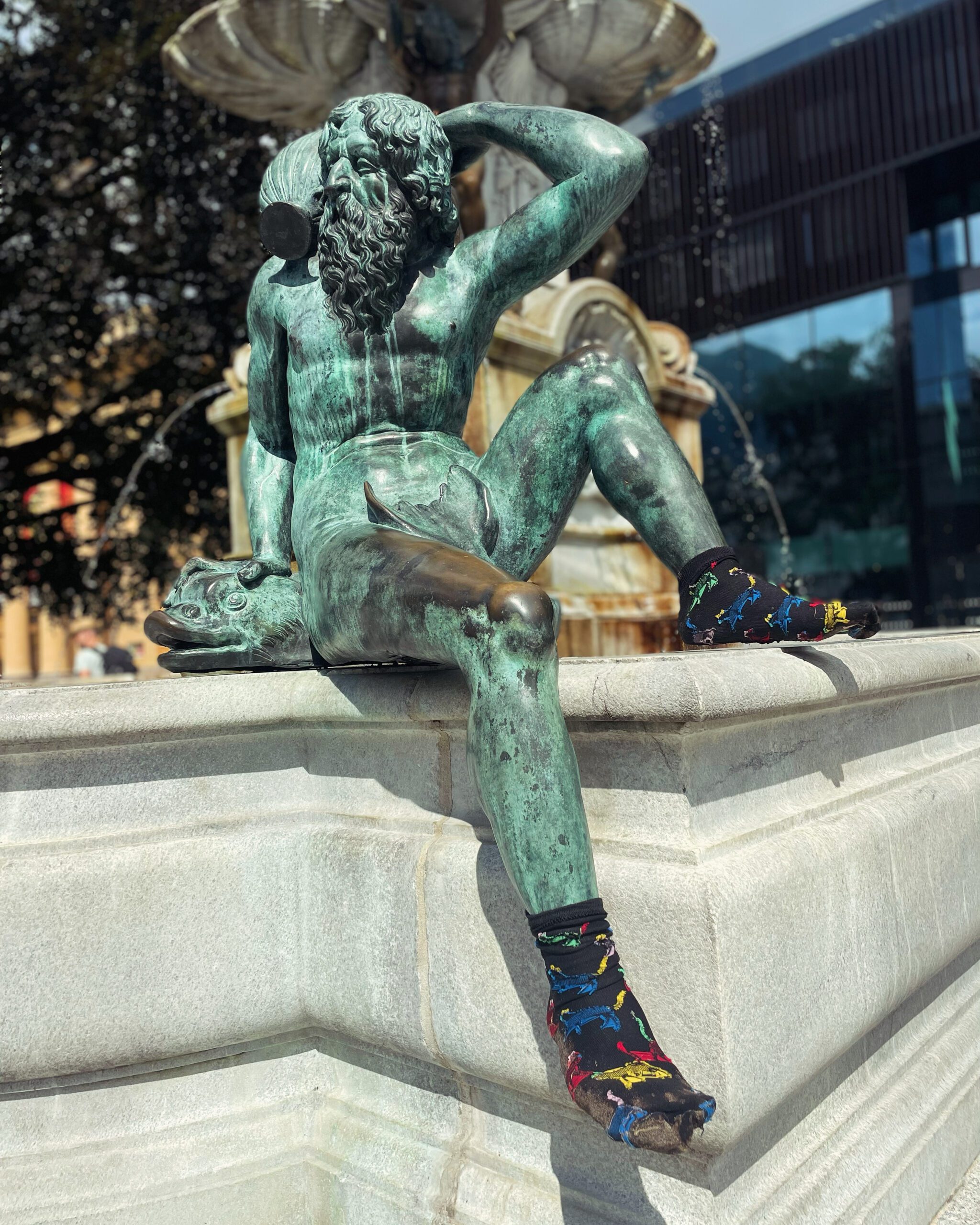
A trace of Florence and the Medici still shapes Innsbruck today. The family coat of arms, with its red balls and lilies, can still be seen both in the Jesuit Church, where Claudia and Leopold were laid to rest, and in the parish church of Mariahilf. The Old Town Hall is also known as the Claudiana. Remains of the Porta Claudia near Scharnitz likewise survive. Leopold’s name is particularly associated with theatre in Innsbruck. The Leopold Fountain in front of the House of Music commemorates him. Anyone undertaking the ascent of the striking Serles mountain begins the hike at the monastery of Maria Waldrast, which Leopold devotedly founded in 1621—to the wondrous image of Our Beloved Lady at Waldrast—for the Servite Order, and which Claudia subsequently expanded. Chancellor Wilhelm Biener is commemorated by a street name in the Saggen district.