Mentlberg Castle & Pilgrimage Church
Mentlberg 23
Worth knowing
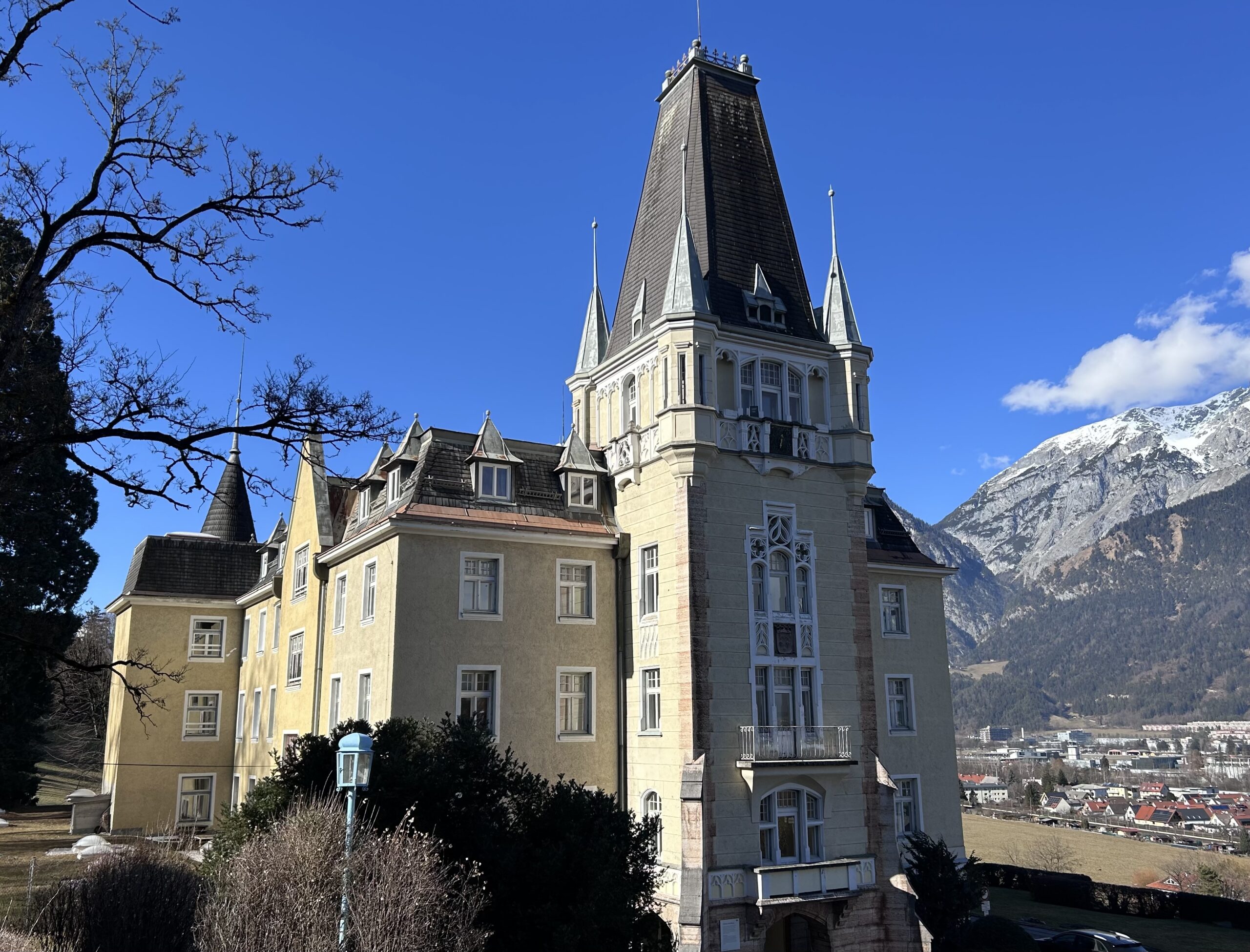
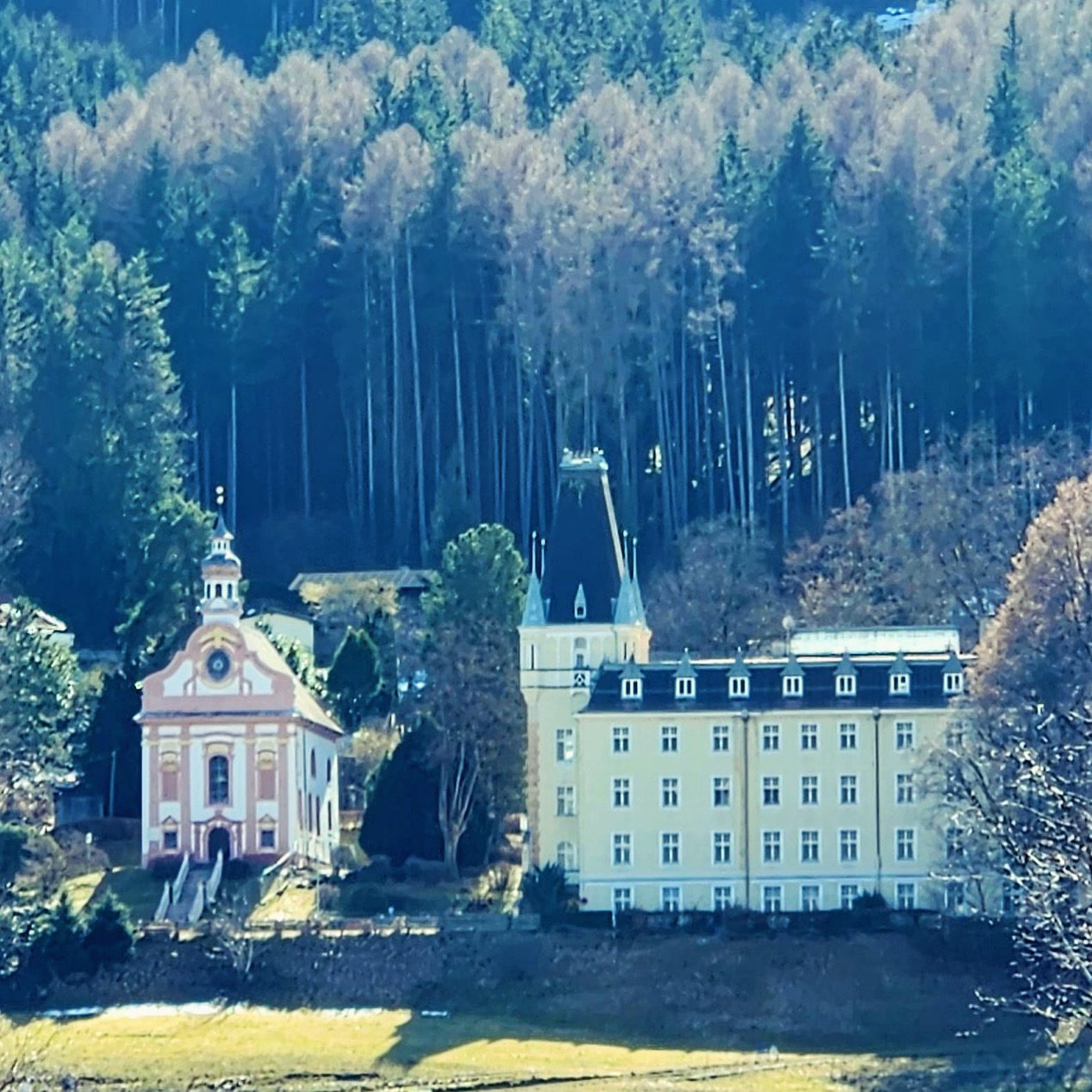
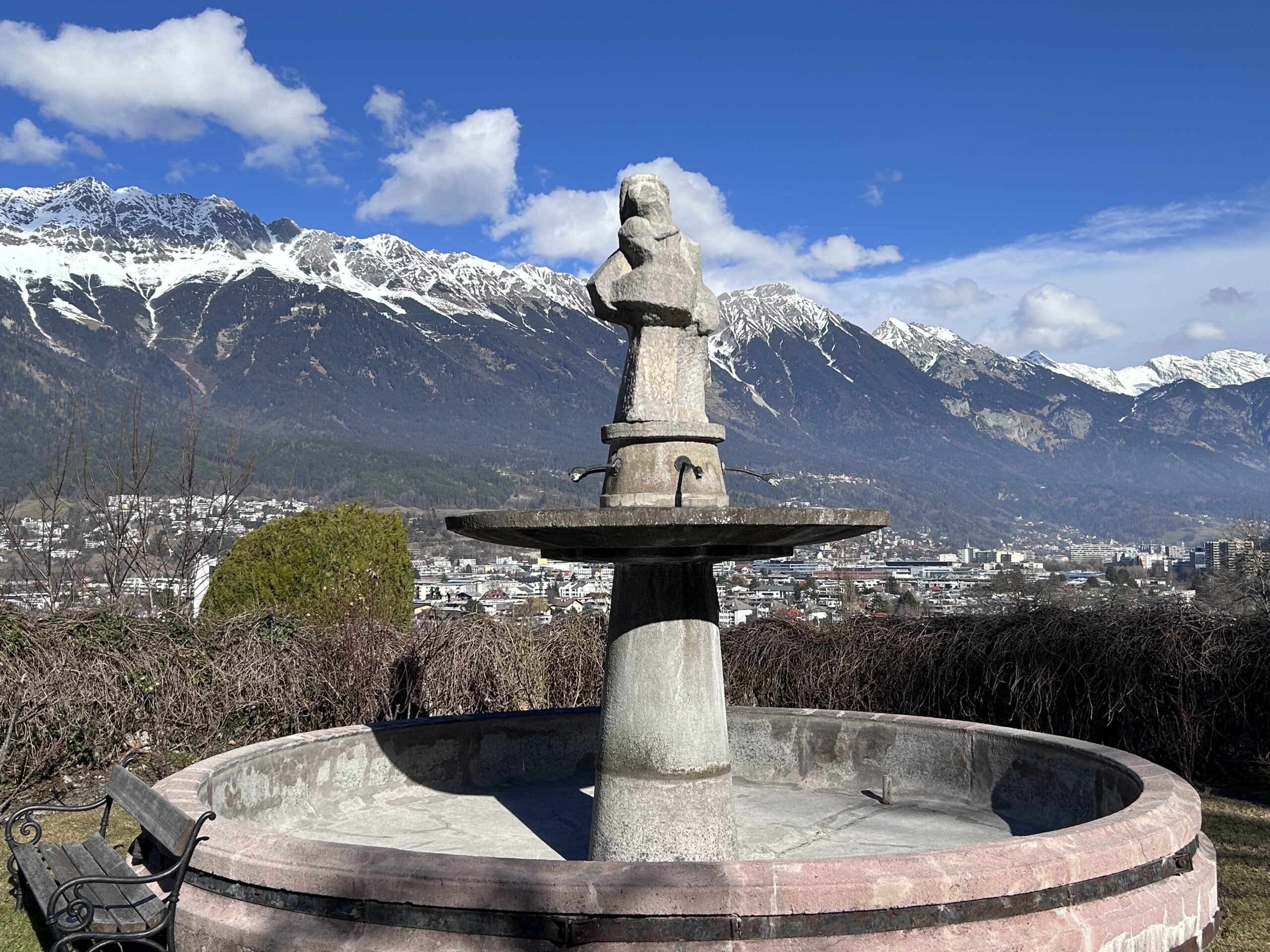
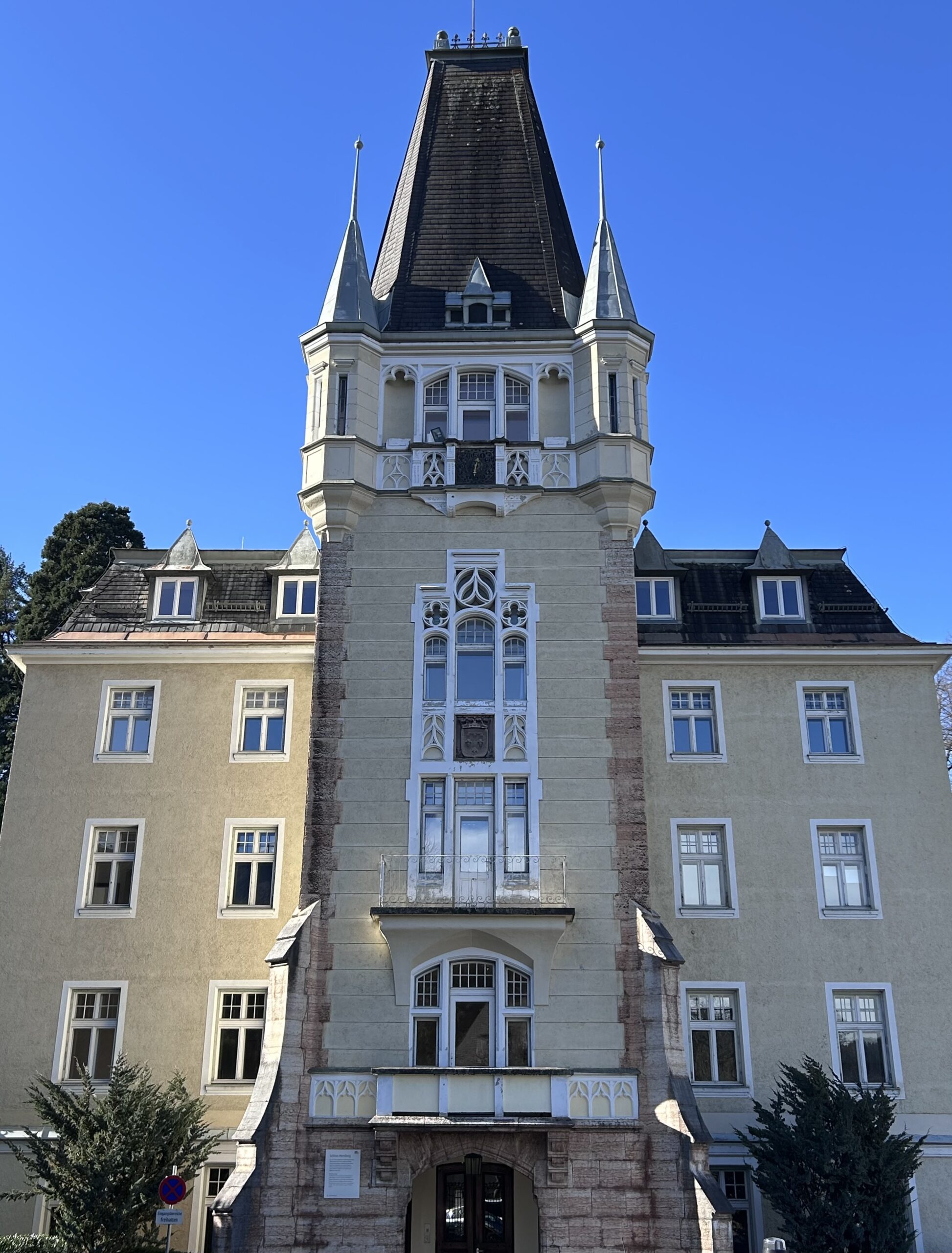
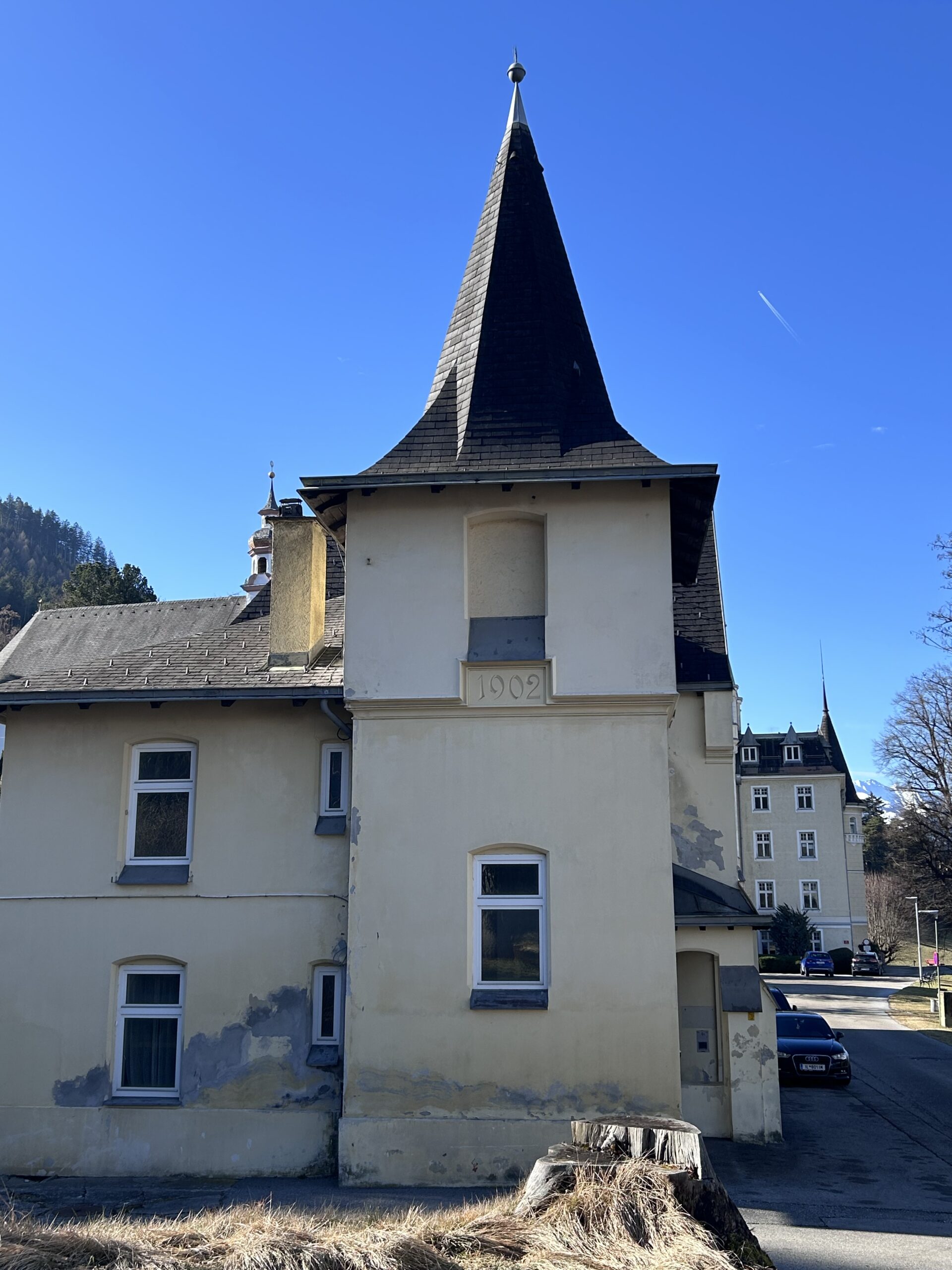
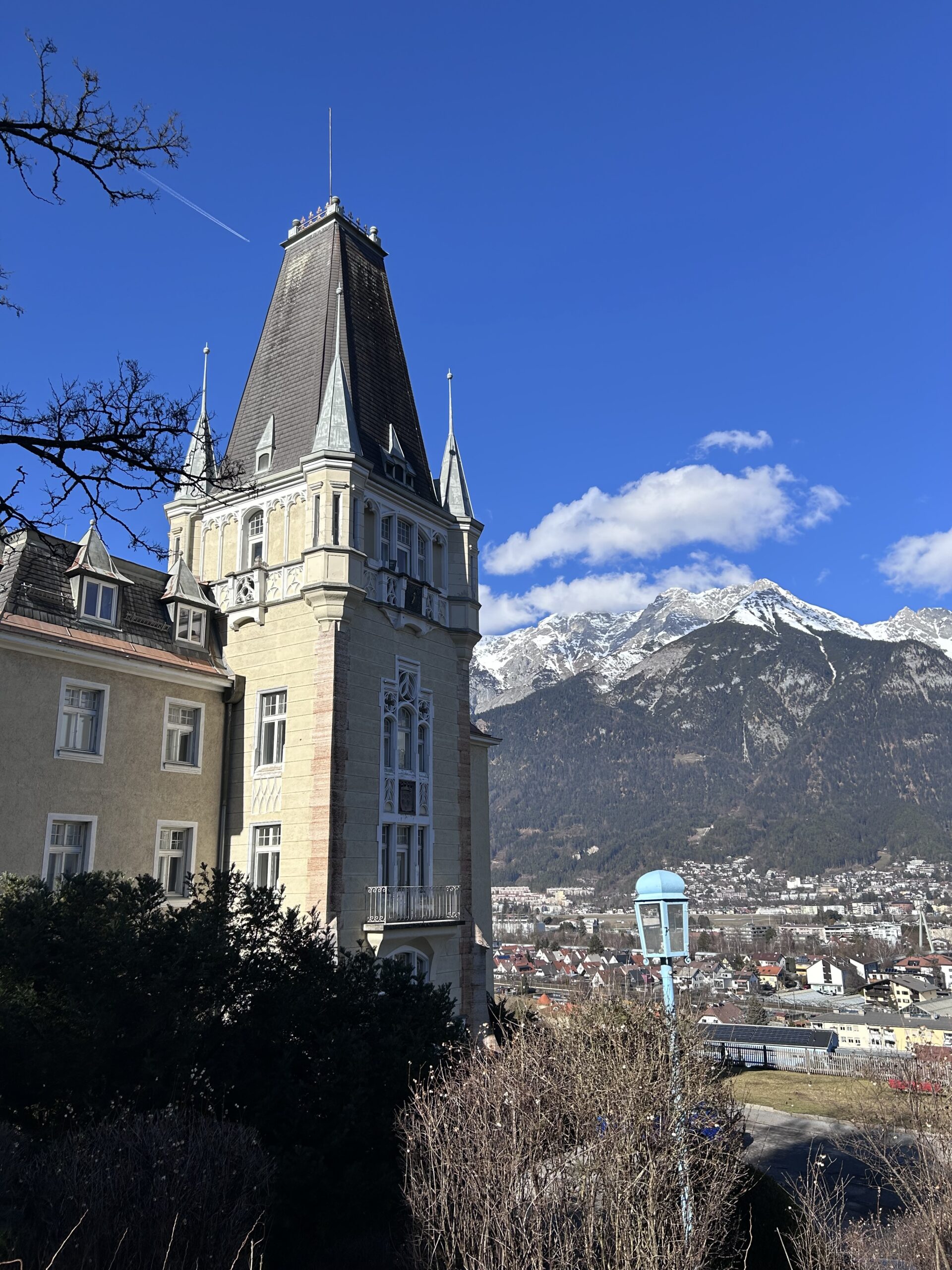
At the southwestern edge of the city, Mentlberg Castle and the Pilgrimage Church of Mentlberg form two little-noticed gems. Few places in Innsbruck have seen as many changes of use and ownership as this duo: noble residence, pilgrimage site, hotel, boarding school, barracks, sports venue—nowhere is Innsbruck as adaptable as at the foot of the Wiltenberg. The castle acquired its present appearance between 1902 and 1905. The French prince Ferdinand of Bourbon-Orléans, Duke of Vendôme, had purchased the property fifteen years earlier as a hunting lodge, farm, and holiday residence for himself and his wife Sophie, a sister of the Austrian Empress Elisabeth. It was likely the location at the forest’s edge, close to the city yet in the heart of the Alps, that particularly appealed to the couple. Elisabeth—known as Sisi—who was more inclined toward rural life than the strict court etiquette of Vienna, visited several times. Faithful to French high aristocratic ideals and the architectural spirit of the fin de siècle, the prince had his estate remodeled in the style of Historicism by the construction firm Josef Retter into a Loire-style château, in order to retain at least a small piece of home in the province of Germany, the hereditary enemy. The neo-Gothic tower at the eastern end, with its striking pyramidal roof, displays the coat of arms of the French noble house. The stately driveway and boundary wall toward the forest likewise leave no doubt about the owners’ aristocratic origins. In contrast, the lower part of the estate, with its farmstead, meadows, and fields, presents a very different picture. Here the aristocrats expressed their affection for what they considered authentic Tyrolean rural life. To fully indulge the rural inclinations of himself and his Bavarian wife, the duke also acquired the so-called Untere Figge, today’s Sieglanger on the banks of the Inn, where he had stables, garages, a park with greenhouse, and a staff residence built.
The First World War brought the estate a new purpose. Like Ambras Castle, Mentlberg was converted into a military hospital. Soldiers were treated here in a sanatorium for lung diseases. Despite the postwar renovation of the castle at public expense, Duke Ferdinand of Bourbon-Orléans wished to dispose of his Austrian property. In 1926, interest in Mentlberg Castle and its associated lands was shown by the Province of Tyrol, a consortium of Innsbruck innkeepers led by the Hotel Grauer Bär, and the Alpine Timber Industry Ltd. from Ljubljana. Although Ljubljana had only recently ceased to be part of the Austrian monarchy and had become part of the Kingdom of Yugoslavia, economic ties remained intact. For 400,000 schillings, the Yugoslav company acquired the estate. However, plans to once again convert the castle into a hotel failed after initial enthusiasm and substantial investment. Just two years later, the entire 70-hectare property was sold to the Province of Tyrol for 600,000 schillings. The Gallwiesen Farm at Mentlberg was intended to become a model agricultural estate for training purposes, with the castle serving as accommodation for students and apprentices. A bold plan to create a bathing beach on the Untere Figge along the Inn was never realized. Instead, the land was used in the 1930s for the construction of the Dollfuß and Fischer settlements. In 1932, the castle itself was proposed as a maternity and infant home, but the provincial parliament rejected the idea due to the overly lavish setting. In the financially strained period following the economic crisis, the provincial government decided to lease Mentlberg as a hotel for 6,000 schillings in order to ease the regional budget. Plans to host the slalom of the 1933 Alpine World Ski Championships at Mentlberg also failed—not for financial reasons, but due to lack of snow, at least that year. The following year, however, “the forty best-placed downhill racers of the Pfriemesköpfl–Mutters race competed on the slope beside the castle for the honorary prize of Federal Chancellor Dr. Dollfuß.”
In the late 1930s and the postwar period, Mentlberg Castle was used for military and administrative purposes. After serving as barracks for the Austrian army, it became a site of the Reich Labour Service during the National Socialist era. Young men and women were legally obliged to perform community service as “soldiers of labor.” In addition to its educational and disciplinary role within Nazi propaganda, this system also enabled the regime to drastically reduce unemployment figures in the newly annexed territories at a single stroke. After the war, French occupying forces briefly took up quarters in the castle before it once again became a home for students and apprentices. After 2015, the building was used as a refugee shelter. Currently, the Province of Tyrol is converting Mentlberg—under strict heritage protection regulations—into a disaster management center.
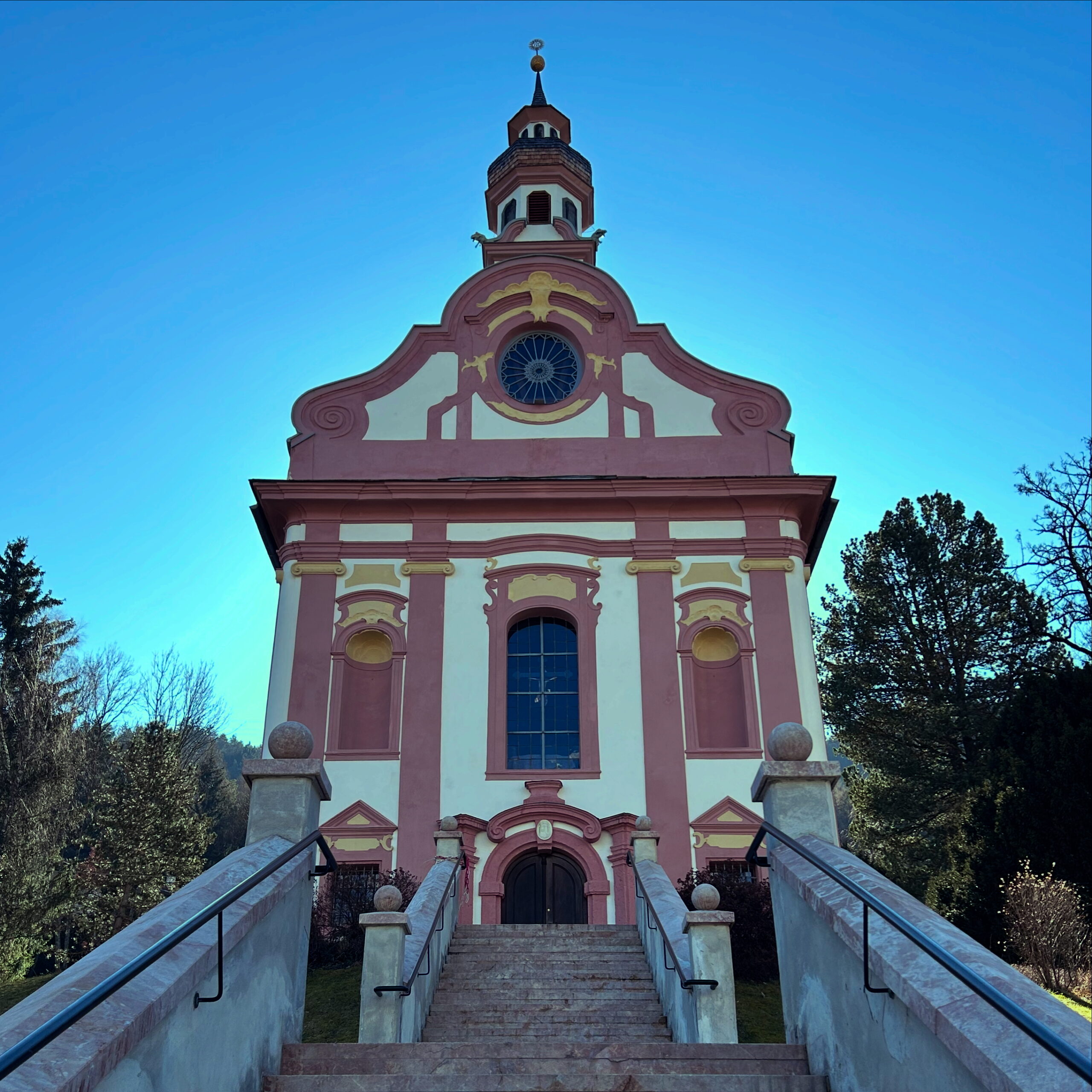
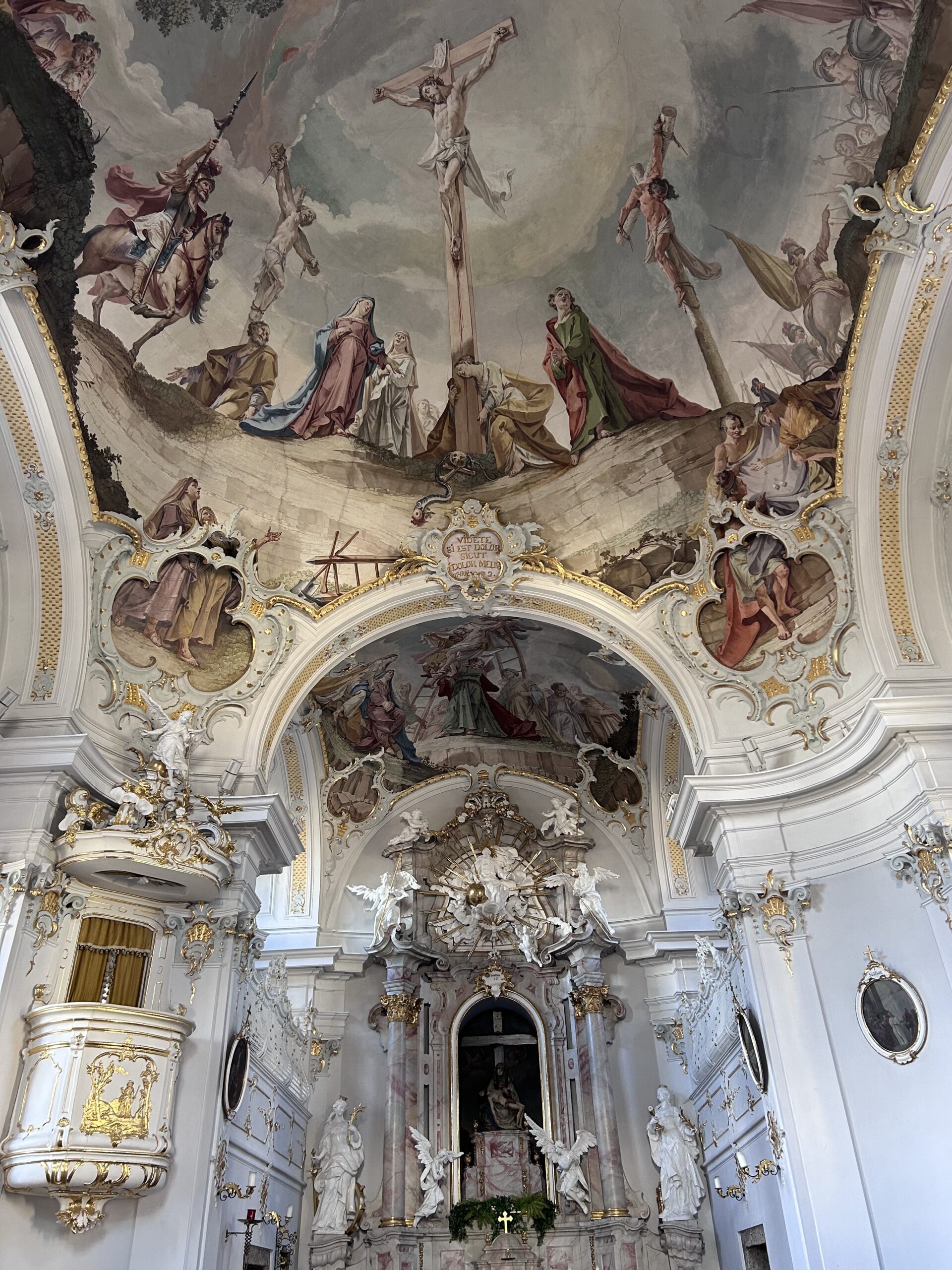
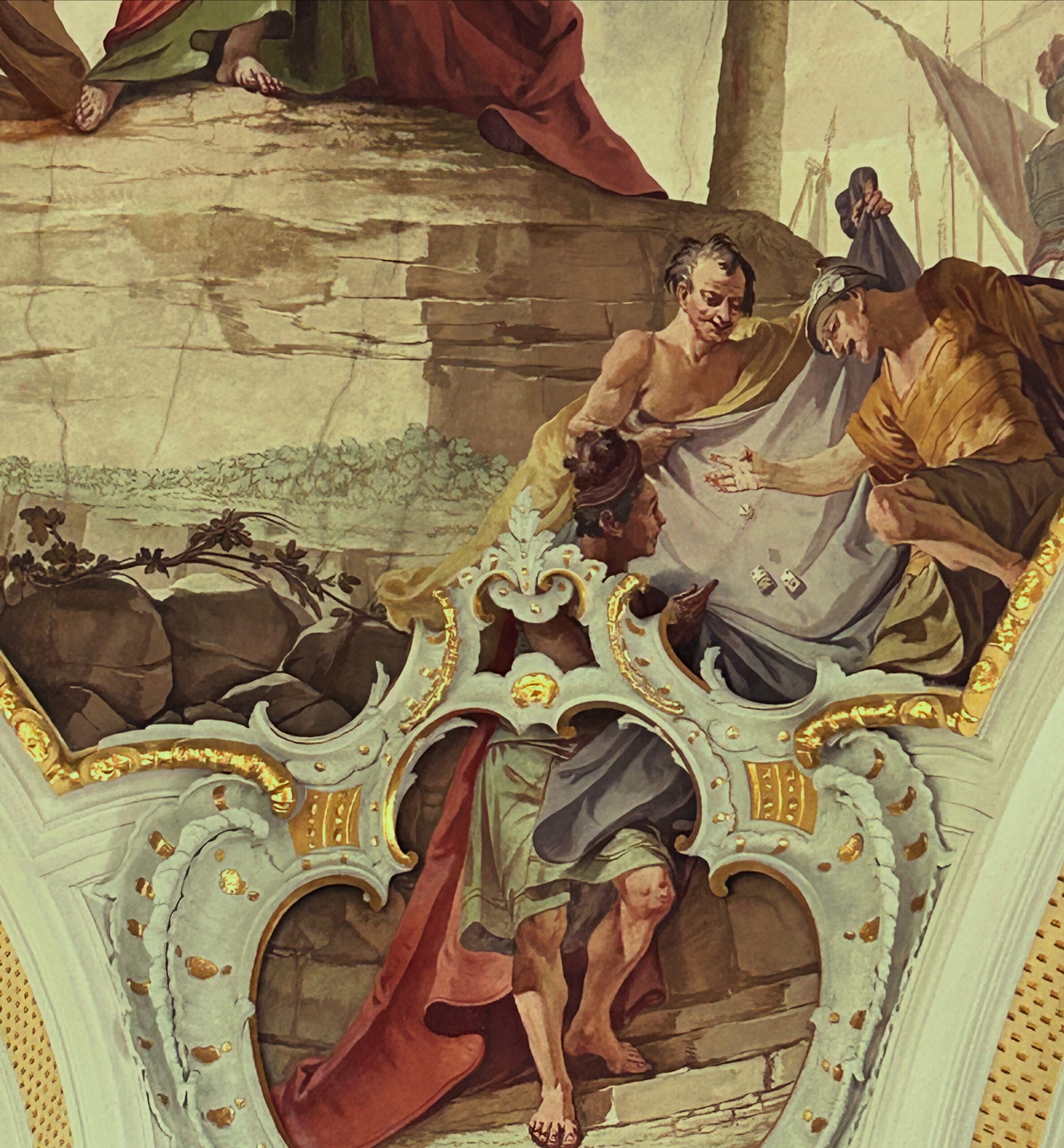
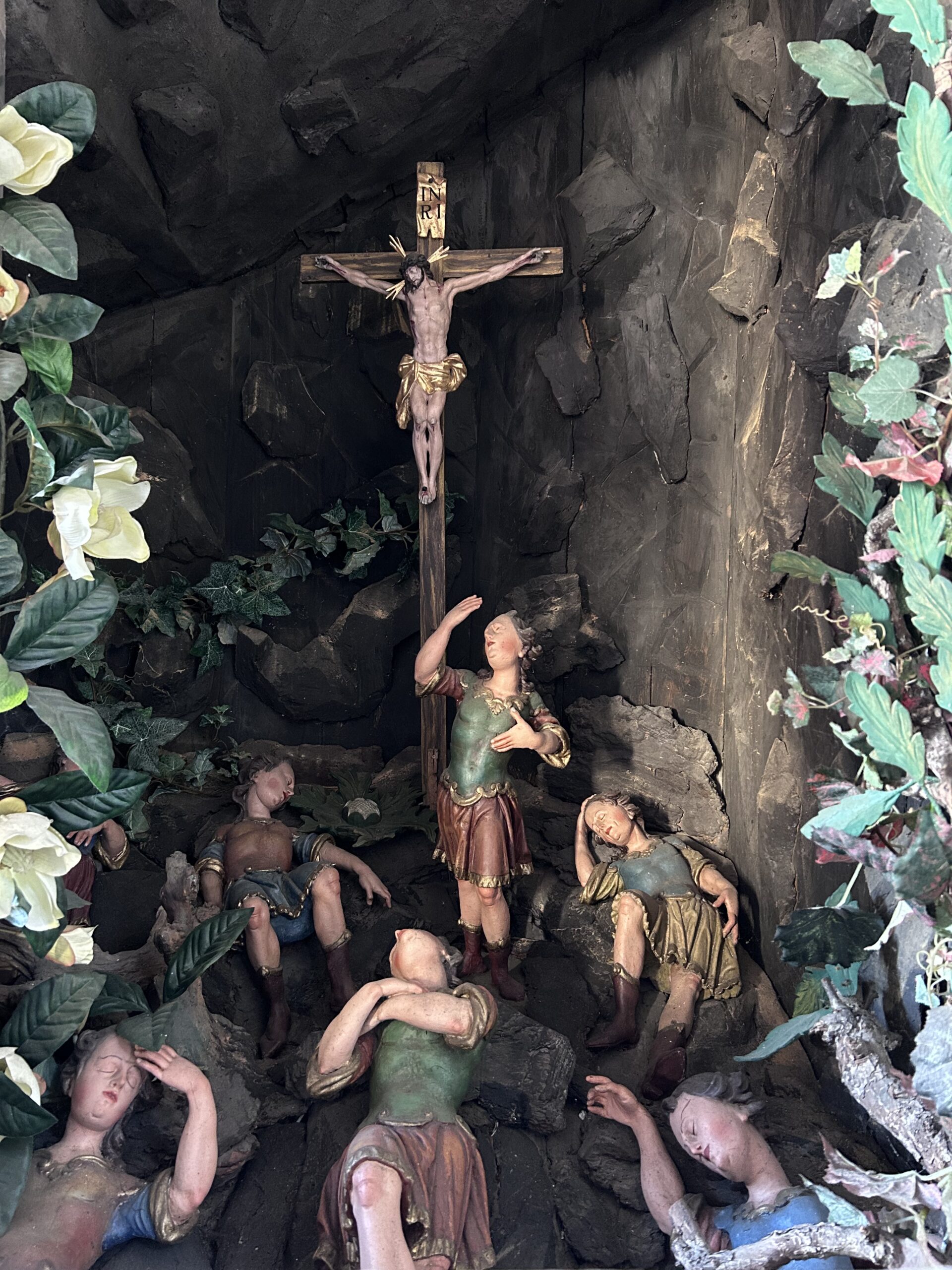
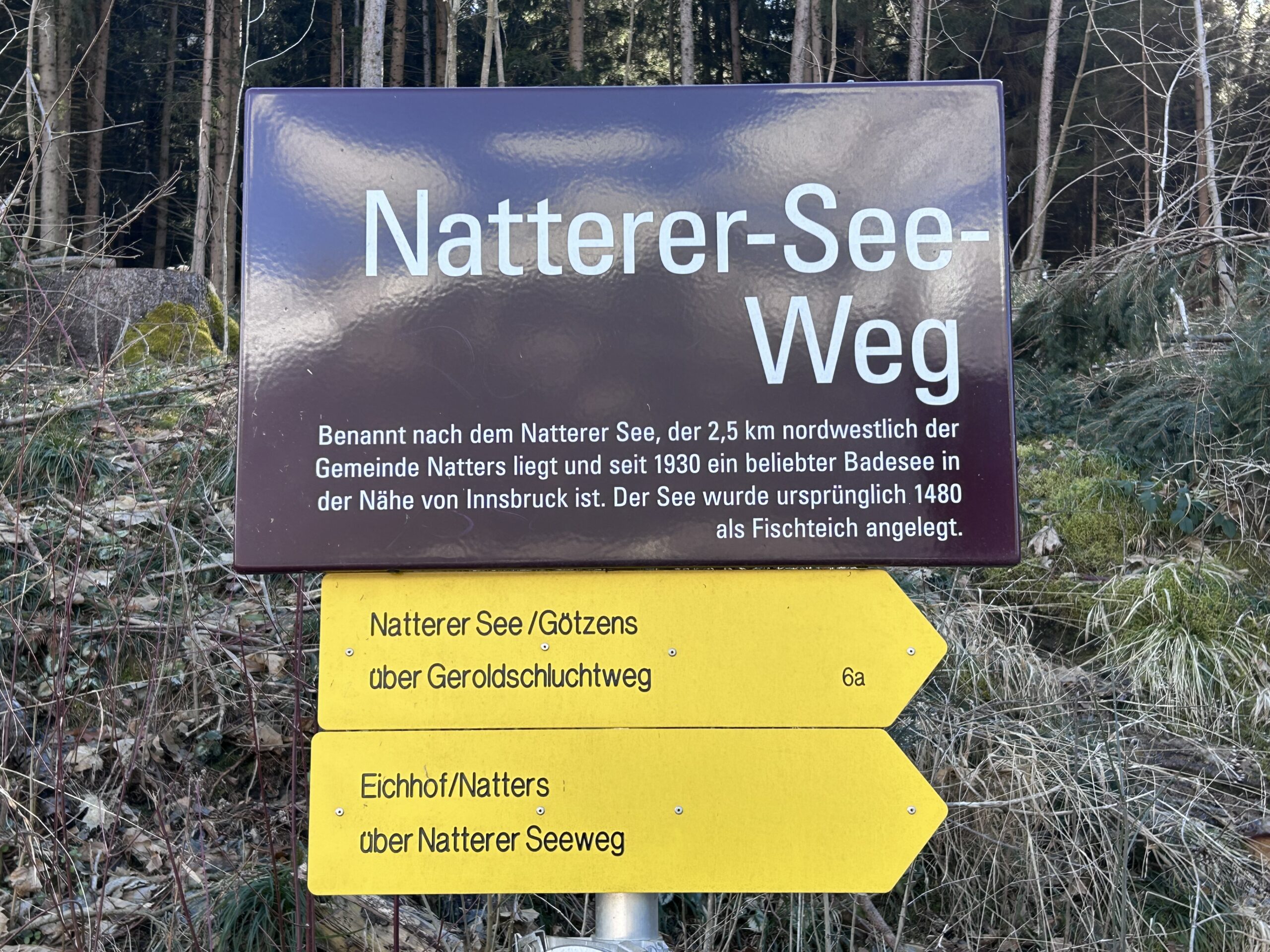
To the east of the castle stands the Pilgrimage Church of Mentlberg, a classic product of the Baroque era. Not only its appearance but also its history reflects the intensely pronounced—and to us today somewhat peculiar—piety that shaped early modern thinking. An officer of the imperial army brought back from his service in the Thirty Years’ War a statue of the Virgin Mary holding the body of Christ. Due to economic hardship and war, the 17th century was a heyday of Christian superstition, during which people attributed their personal fate to the intervention of saints. The soldier’s father, Ferdinand von Khuepach zu Ried, owner of Mentlberg Castle, decided to place the wooden sculpture in the small chapel on his estate. As at the Tummelplatz, miraculous healings were also reported at the “Sorrowful Mother on the Gallwiese.” Wilten Abbey reacted swiftly to promote the pilgrimage. The abbot had seven wayside shrines erected along the path from Wilten to Mentlberg and renovated the aging chapel. The Seven Sleepers, an ancient Christian legend about seven young martyrs from Ephesus, were especially venerated as intercessors against high fever and insomnia. Accordingly, the abbot of Wilten Abbey had a depiction of the grotto in which the seven youths had been sealed built into the chapel. In the 18th century, Mentlberg developed into a veritable pilgrimage destination. Whether it was the beauty of the site with its splendid view over the Inn Valley or the church’s official and attractively resonant name—“Sorrowful Mother of God”—that drew people can no longer be determined. In any case, the business of faith and superstition reached proportions that justified the construction of a larger church. In 1770, based on plans by Konstantin Johann Walter, among other things architect of the Triumphal Arch and the remodeling of the Hofburg, the Rococo-style church that still stands today was built. The ceiling fresco depicts a crucifixion scene typical of the period, intended to portray the suffering of the Savior as vividly and memorably as possible. The grotto of the Seven Sleepers was integrated into the new church, as were the altarpiece of the miraculous Madonna and the wooden sculpture. To this day, votive paintings testify to the miracle-believing devotion of the faithful, who offered these gifts in hopes of healing and blessing or to give thanks for a miraculous turn in their lives. Today, the Mentlberg church—owing to its pleasant size, beautiful Baroque interior, and view over the city of Innsbruck—is extremely popular with wedding couples. From the castle, delightful walks lead to Lake Natterer See, the Eichhof, and further into the Innsbruck Mittelgebirge.
Tourism: From Alpine summer retreat to Piefke Saga
In the 1990s, an Austrian television series caused a scandal. Die Piefke Saga, written by the Tyrolean author Felix Mitterer, portrayed in four darkly humorous and revealing episodes the relationship between the German tourist family Sattmann and their hosts in a fictional Tyrolean holiday resort. Despite all justified criticism of modern tourism and its sometimes extreme excesses, one should not forget that tourism in the nineteenth century was an important driving force for the development of Innsbruck and its surroundings—not only economically. The first travellers to visit Innsbruck were pilgrims and “business people” of the early modern period. Merchants, journeymen on their travels, officials, soldiers, entourages of visiting nobility, skilled labourers, miners, clergy, pilgrims, and scholars were the earliest “tourists” attracted to the city between Italy and the German lands. Travel was expensive, dangerous, and arduous. Moreover, many subjects were not permitted to leave their place of origin without the consent of their feudal lord or abbot. Those who travelled usually did so on foot. Although Innsbruck’s inns and taverns profited from travellers as early as the Middle Ages and the early modern period, tourism in the modern sense did not yet exist. This began only when a few eccentrics were first drawn to mountain peaks. For this to happen, not only was a growing middle class required, but also a new perception of the Alps. For a long time, mountains had been regarded purely as a threat. It was primarily the British who, having explored the world’s oceans, now sought to conquer its mountain ranges as well. From the late eighteenth century onward, during the Romantic period, travel accounts began to spread the idea of the natural beauty of the Alps. The first foreign-language travel guide to Tyrol, Travels through the Rhaetian Alps by Jean François Beaumont, appeared in 1796. In addition to the alpine scenery, it was also the “wild and exotic natives” of Tyrol that fascinated international audiences. The bearded rebel Andreas Hofer, who had managed to challenge Napoleon’s army with a peasant force, attracted as much attention in Britain—the traditional enemy of France—as among German nationalists north of the Alps, who saw in him a kind of proto-German figure. Tyroleans were perceived as a stubborn, archetypal, and untamed people, comparable to the Germanic tribes under Arminius who had once resisted the Roman Empire. Descriptions of Innsbruck by authors such as Beda Weber (1798–1858), along with other travel accounts in the rapidly expanding press landscape, helped shape an attractive image of the city.
The next step was to make the wild Alpine environment accessible to a growing number of tourists who wished to emulate early adventurers, even if their willingness to take risks and their physical fitness fell short. In 1869, the German Alpine Club established a section in Innsbruck, following the relatively unsuccessful founding of the Austrian Alpine Club in 1862. Driven by the Greater German idea shared by many members, the two associations merged in 1873. To this day, the Alpine Club retains a largely bourgeois character, while its social-democratic counterpart is the organisation Naturfreunde. The network of hiking trails expanded, as did the number of mountain huts capable of hosting guests. As a transit region, Tyrol already possessed numerous mule tracks and footpaths that had existed for centuries and now formed the basis for alpine tourism. Small inns, farms, and stations along postal routes served as accommodation. Key figures such as the Tyrolean theologian Franz Senn (1831–1884) and Adolf Pichler (1819–1900) were instrumental in surveying Tyrol and creating maps. Contrary to popular belief, the Tyroleans were not born mountaineers but had to learn how to master the alpine environment; previously, mountains had been viewed mainly as dangerous obstacles in agricultural life. The Alpine clubs also trained mountain guides. Around the turn of the century, skiing began to gain popularity alongside hiking and mountaineering. Ski lifts did not yet exist; to climb mountains, skins were attached to skis—a practice still used in ski touring today. Only from the 1920s onward, with the construction of cable cars to the Nordkette and Patscherkofel, did a wealthier clientele begin to enjoy the modern luxury of mechanised mountain access.
This development required new hotels, cafés, inns, shops, and modes of transport to meet the needs of visitors. Guests accustomed to running water and telephones in cities like London or Paris were not willing to accept basic conditions such as outdoor toilets. Inns of the first and second class were suitable for transit travellers but not equipped for more discerning tourists. Until the nineteenth century, innkeepers in Innsbruck and the surrounding villages belonged to the upper middle class in terms of income, but their profession was not considered particularly prestigious. Many were farmers who supplemented their income by serving food and drink. As local meeting points and hubs in postal and goods networks, inns were centres of information, yet innkeeping did not carry the status of a guild profession or bourgeois occupation. This changed with the professionalisation of tourism. Entrepreneurs such as Robert Nißl, who acquired Büchsenhausen Castle in 1865 and transformed it into a brewery, or Johann Gruber of the inn Zum Riesen Haymon, invested in tourism infrastructure. Former aristocratic estates such as Weiherburg were converted into inns and hotels. In Innsbruck, the true transformation did not occur on the barricades of 1848 but later, within the tourism sector, as ambitious citizens replaced aristocrats as owners of estates.
The Österreichischer Hof, opened in 1849, dominated early modern hospitality but was not yet a true grand hotel. That distinction only came with the opening of the Grand Hotel Europa in 1869. In 1892, the Habsburger Hof followed, offering modern comforts such as electric lighting—a sensation at the time. Hotels like the Kaiserhof and Arlberger Hof were located near the railway station, which at the time represented the centre of modern urban life rather than the congested traffic hubs of today.
Visitor numbers grew steadily. Shortly before the First World War, Innsbruck recorded around 200,000 guests annually. A report from June 1896 noted:
“Tourism in Innsbruck in the month of May amounted to 5,647 persons, including 2,763 from Austria-Hungary, 1,974 from the German Empire, 282 English, 65 Italians, 68 French, 53 Americans, 51 Russians, and 388 from various other countries.”
In addition to the sheer number of travellers influencing life in the small town of Innsbruck, it was also the international character of its visitors that gradually gave the city a new face. Beyond purely tourist infrastructure, general modern developments were also accelerated. Wealthy guests could hardly be expected to frequent inns with cesspits behind the building. While a sewage system would inevitably have been built sooner or later, the economic importance of tourism enabled and accelerated the allocation of funds for the major infrastructure projects of the turn of the century. This transformation affected not only the city’s appearance but also the everyday lives and working conditions of its inhabitants. Enterprising individuals such as Heinrich Menardi succeeded in expanding the value chain by offering paid leisure activities in addition to accommodation and food. In 1880, he founded the carriage hire and later automobile rental service Heinrich Menardi for excursions into the Alpine surroundings. Initially using horse-drawn carriages, and after the First World War buses and cars, affluent tourists were transported as far as Venice. The company still exists today and is now headquartered in the Menardi building at Wilhelm‑Greil‑Straße 17, opposite Landhausplatz, although it has since shifted from transport and trade to the more lucrative real estate sector. Local retail also benefited from the affluent international clientele. By 1909, there were already three dedicated tourist equipment shops in the city, alongside the fashionable department stores that had opened just a few years earlier.
Innsbruck and its surrounding areas also became known for spa tourism—the precursor of today’s wellness industry—where wealthy guests recovered from a wide range of ailments in an alpine environment. Spa facilities existed in Egerdach near Amras, in Mentlberg, and in Mühlau. Establishments such as the Igler Hof (then the Grand Hotel Igler Hof) and the Sporthotel Igls still retain some of the charm of that era. Michael Obexer, founder of the spa resort in Igls and owner of the grand hotel, was a pioneer of tourism. Although these facilities never achieved the international fame of major spa destinations such as Bad Ischl, Marienbad, or Baden near Vienna—as evidenced by historical photographs and postcards—the treatments offered, including brine baths, steam therapies, gymnastics, and even “magnetism,” corresponded to what was considered state of the art at the time and still partially resonates in today’s wellness practices. Perhaps the most spectacular tourism project Innsbruck ever experienced was “Hoch‑Innsbruck,” today known as the Hungerburg. Not only the funicular railway and hotels were built there; even an artificial lake was created after the turn of the century to attract visitors.
One of the former landowners in the Hungerburg area and a pioneer of Innsbruck tourism, Richard von Attlmayr, played a key role in the predecessor organisation of today’s tourism association. Since 1881, the Innsbruck Beautification Association had been concerned with meeting the growing needs of visitors. The association developed walking and hiking paths, installed benches, and opened up hard-to-access areas such as the Mühlauer Gorge and the Sill Gorge. The distinctive green benches along many paths still serve as a reminder of this organisation, which continues to exist today. Seven years later, in 1888, those benefiting from tourism in Innsbruck founded the Commission for the Promotion of Tourism, the predecessor of today’s tourism board. Through joint efforts in marketing and quality assurance among accommodation providers, businesses hoped to further stimulate tourism.
“Each year the number of overseas pilgrims visiting our country and its glacier-crowned mountains increases, much to the annoyance of our friendly Swiss neighbours, and many a fine dollar is left behind. The English are beginning to find Tyrol just as interesting as Switzerland, and the number of French and Dutch visitors spending the summer here grows year by year.”
Postcards became the first mass-market “influencers” in the history of tourism. Many businesses produced their own postcards, and publishers created countless images of the city’s most popular sights. It is striking what was considered worth seeing at the time. Unlike today, it was primarily the modern achievements of the city that were depicted: the Leopold Fountain, the city café near the theatre, the chain bridge, the cog railway to the Hungerburg, or the Stefansbrücke (opened in 1845), a stone arch bridge crossing the Sill. Andreas Hofer also served as an effective testimonial on postcards: the Schupfen inn, where he had established his headquarters, and the Bergisel with the large Andreas Hofer monument were popular motifs.
In 1914, Innsbruck had 17 hotels attracting visitors, supplemented by summer and winter holidaymakers in Igls and the Stubai Valley. The First World War abruptly brought this first wave of tourism to an end. Just as tourism began to recover in the late 1920s, the global economic crisis and Hitler’s 1,000-mark travel restriction in 1933—introduced to pressure the Austrian government into lifting the ban on the Nazi Party—dealt further blows.
It took the economic boom of the 1950s and 1960s to revive tourism in Innsbruck after the destruction. Between 1955 and 1972, overnight stays in Tyrol increased fivefold. Following the hardships of the war years and the reconstruction of Europe’s economy, tourism became a stable source of income for Tyrol and Innsbruck, extending even beyond official hotels and guesthouses. Many Innsbruck families crowded more tightly into their already small apartments in order to rent out beds to foreign guests and supplement their income. Tourism not only brought foreign currency but also enabled locals to develop a new sense of identity, both internally and externally. At the same time, increasing prosperity allowed more Innsbruck residents to travel abroad themselves. The beaches of Italy became particularly popular destinations. Former wartime enemies thus became guests and hosts to one another.
The Bocksiedlung and Austrofascism
Political violence, alongside hunger and a severe housing shortage, shaped Austria throughout the 1920s and 1930s. The two major mass parties of the young republic, the Social Democrats and the Christian Socials, regarded each other with hostility. Both parties established paramilitary organizations to enforce their political agendas on the streets if necessary. The Republikanischer Schutzbund on the Social Democratic side and various Christian Social or even monarchist-oriented Heimwehr groups, which for simplicity may be grouped under this collective term, watched one another like opposing sides in a civil war. Many politicians and functionaries on both sides had fought on the front during the war and had become deeply militarized as a result. The Tyrolean Heimwehr enjoyed superior infrastructure and political connections due to the support of the Catholic Church. On November 12, 1928, the tenth anniversary of the founding of the Republic, 18,000 Heimwehr members marched through the city in the first nationwide Heimwehr rally, demonstrating their strength on what was the most important holiday for Austrian Social Democrats. From 1930 onward, the Nazi Party (NSDAP) also became increasingly visible in public life. It found supporters particularly among students and disillusioned young workers. By 1932, the party already had 2,500 members in Innsbruck. Violent clashes between the hostile political factions occurred repeatedly. The most notorious of these became known as the Hötting Hall Battle (Höttinger Saalschlacht) of May 27, 1932. At that time, Hötting was still independent and not yet part of Innsbruck. The community was inhabited mainly by workers. In this “red” stronghold of Tyrol, National Socialists planned a rally at the Goldener Bär Inn, a traditional meeting place of Social Democrats. This provocation escalated into a fight that left more than thirty people injured and one National Socialist dead. The violence spread across the entire city; even in the hospital, the injured continued fighting each other. Only the intervention of the gendarmerie and the army succeeded in separating the opposing sides.
After these years that resembled a civil war, the Christian Social Party prevailed in 1933 under Chancellor Engelbert Dollfuß (1892–1934). His goal was the establishment of the so-called Austrian Corporate State (Österreichischer Ständestaat), today better known under the term Austrofascism. The entire state apparatus was to be unified under the Fatherland Front (Vaterländische Front), modeled on Mussolini’s fascism in Italy: anti-socialist, authoritarian, socially conservative, anti-democratic, antisemitic, and militarized. Quite a few people welcomed the replacement of parliament and the multi-party system by a strong leader who promised peace and order. In Innsbruck, unlike in many Austrian cities where this political upheaval was at times accompanied by bloodshed, no significant fighting occurred. On 15 March, the headquarters of the Tyrolean Social Democratic Workers' Party (Sozialdemokratische Arbeiterpartei Tirol) in the Hotel Sonne was cleared out. The leader of the Republican Protection League (Republikanischer Schutzbund), Gustav Kuprian, was arrested on charges of high treason, and the individual units of the Schutzbund were disarmed. The Tiroler Wochenzeitung was established as the party newspaper. Innsbruck’s municipal council was reduced from forty to twenty-eight members. Instead of being elected through free elections, council members were appointed by the provincial governor. The Social Democrats, who had previously held strong representation, were removed from the city government. Dollfuß was extraordinarily popular in Tyrol, as photographs of the crowded square in front of the Hofburg during one of his speeches in 1933 demonstrate. His policies came closer than any other contemporary system to the traditions of the Habsburg Monarchy. As early as 1931, several Tyrolean mayors had joined forces in an effort to lift the ban on the Habsburg family entering Austria. This policy was supported by the Catholic Church and was even incorporated into the Constitution of 1934: “In the name of God, the Almighty, from whom all law proceeds, the Austrian people receive this Constitution for their Christian, German federal state founded on a corporative basis.” The close relationship with the Church provided the government with access to infrastructure, media organizations, and affiliated institutions. The Fatherland Front, together with its paramilitary units, took harsh action against the despised Socialists. It did not hesitate to employ repression and violence against both individuals and institutions associated with the political opposition. Suspected and actual Socialists, Social Democrats, trade unionists, and Communists were repeatedly arrested. The press was politically controlled and censored, while newspaper articles glorified the idyllic nature of rural life. Large families received financial support. Schools were segregated by gender, and the curricula differed accordingly: domestic work for girls and pre-military training for boys. Cultural policy deliberately distinguished itself from that of the National Socialist and anti-clerical neighbor to the north. Theatre and music were intended to present Austria as the “better and more civilized” German state.
tion Austrofascism, however, brought peace and order only briefly, if at all. On 25 July 1934, a coup attempt by the banned National Socialists took place in Vienna, during which Chancellor Engelbert Dollfuß was killed. Hitler, who had not ordered the attacks, initially distanced himself publicly from the events, helping to suppress the planned overthrow before it could gain momentum. An attempted coup also occurred in Innsbruck. During an effort by a group of National Socialists to seize control of the city, a police officer was shot and killed in Herrengasse. In memory of the murdered Federal Chancellor, who was subsequently elevated to the status of a martyr, the square in front of the theatre, where he had met with Richard Steidl only two weeks earlier, was renamed Dollfuß Square (Dollfußplatz) by “order of the Government Commissioner of the Provincial Capital of Tyrol.” Dollfuß’s successor as head of state was Kurt Schuschnigg (1897–1977), a native Tyrolean. The war veteran, who came from the lower nobility of the former Austro-Hungarian Empire, was a member of the Innsbruck student fraternity Austria. In 1930, Schuschnigg, then a lawyer and member of parliament, founded the Ostmärkische Sturmschar, a Catholic and antisemitic paramilitary organization intended to serve as a counterweight to the more radical Heimwehr groups. As Minister of Education and Minister of Justice, Schuschnigg played a key role in the rightward shift of society under the Corporate State. Among other measures, he reintroduced the death penalty. For the people of Innsbruck, however, little changed under the new Chancellor in terms of everyday hardship. Economically, the Corporate State was unable to reverse the situation during the 1930s. Government investment in major infrastructure projects came to a halt following the economic crisis of 1931. By 1933, the unemployment rate had reached 25 percent. The reduction of social welfare measures that had been introduced at the beginning of the First Republic had dramatic consequences. Long-term unemployed individuals were excluded from receiving social benefits as so-called “Ausgesteuerte” (persons whose entitlement to benefits had expired). Poverty led to rising crime rates, and assaults, robberies, and thefts became commonplace. As in previous decades, housing remained a particularly serious problem. Despite the city's efforts to provide modern housing, many Innsbruck residents still lived in dilapidated dwellings. Private bathrooms or even a separate bedroom for each person were rare exceptions. Since Innsbruck’s rapid growth beginning in the 1880s, housing conditions had remained precarious for a large part of the population. The railway, industrialization, refugees from the German-speaking regions of Italy, and the economic crisis had pushed the city to the limits of its capacity. After Vienna, Innsbruck had the second-highest number of residents per house in Austria. Housing rents were so high that workers often slept in shifts in order to share the costs. Although new apartment blocks and homeless shelters had been built, especially in Pradl, including the Workers’ Residence (Wohnheim für Arbeiter) on Amthorstraße in 1907 and the Hostel (Herberge) on Hunoldstraße, these measures were insufficient to bring the situation under control.
In this climate of social dictatorship and economic hardship, several shantytowns and barrack settlements emerged on the outskirts of the city. They were founded by the excluded, the desperate, and those left behind who could find no place within the system. The former prisoner-of-war camp in Höttinger Au, west of the city, served as emergency accommodation for homeless people. The most famous and notorious inner-city enclave, remembered to this day, was the Bocksiedlung ("Bock Settlement") in the area of present-day Reichenau. Beginning around 1930, several families settled there between the airport then located on the site and the concentration camp that would later be built in Reichenau. According to local legend, Otto and Josefa Rauth were the founders of the settlement after their caravan became stranded there. In the Innsbruck of the Corporate State, having the wrong party affiliation was enough to make affordable housing unattainable. As an openly declared Communist, Rauth possessed what was arguably the most disadvantageous party membership of all. His raft, the Ark Noah (Arche Noah), with which he planned to travel via the Inn and Danube rivers to the Soviet Union, remained moored on the riverbank in front of the Sandwirt Inn (Gasthof Sandwirt) and never actually set sail. Gradually, a settlement developed that existed both physically on the edge of the city and socially on the margins of society. It was run like an independent commune by its unofficial mayor, Johann Bock (1900–1975). He managed everyday life within his sphere of influence in a rough but warm-hearted manner. The air raids of the Second World War further worsened Innsbruck's housing situation and caused the Bocksiedlung to grow. At its peak, it is said to have contained around fifty dwellings. Even the barracks of the Reichenau concentration camp were used as sleeping quarters after the last National Socialists held there had been transferred or released. The Bockala, as the inhabitants were known, had a terrible reputation among the respectable citizens of the rest of the city, and despite later attempts to romanticize or soften its history, that reputation was probably not entirely undeserved. Many, though not all, residents were unemployed or involved in criminal activities. Often, however, they were simply people who had fallen through the cracks of society and found refuge in the Bocksiedlung. As helpful and supportive as the often eccentric residents could be toward one another, physical violence and petty crime were part of everyday life. Excessive alcohol consumption was commonplace. There were no paved roads, no sewage system, no sanitary facilities, and no regular electricity supply. Even access to drinking water remained precarious for a long time, creating a constant risk of disease outbreaks. The dwellings themselves were as diverse as their inhabitants. They included caravans, circus wagons, wooden barracks, corrugated metal huts, brick houses, and concrete buildings. Within the Bocksiedlung, houses and wagons were rented out and sold. With the tacit tolerance of the City of Innsbruck, property rights acquired through long-term occupation even emerged under Johann Bock's leadership. The residents cultivated self-sufficiency gardens and kept livestock. In difficult times, even dogs and cats occasionally appeared on the menu. There were no fixed boundaries to the settlement; in Innsbruck, being a Bockala was as much a social status as it was a place of residence.
The beginning of the end for the Bocksiedlung (“Bock Settlement”) came with the 1964 Olympic Games and a fire that had occurred in the settlement the year before. An urban legend claims that the fire was deliberately set by the municipal authorities in order to accelerate the clearance of the neighborhood and make way for the construction of the Olympic Village (Olympisches Dorf). In 1967, Mayor Alois Lugger and Johann Bock negotiated the future of the settlement and compensation payments from the municipality for its evacuation. According to local accounts, these discussions took place in a rather alcohol-laden atmosphere. Nevertheless, it would take several more years before the settlement effectively came to an end. It was not until 1976 that the last remaining dwellings were forcibly vacated due to unsanitary conditions. Many of the Bockala were relocated to municipal apartments in Pradl, Reichenau, and the newly constructed Olympic Village (O-Dorf). The customs and lifestyle associated with the Bocksiedlung continued there under a new address for several years, contributing in large part to the negative reputation that these neighborhoods still carry today. Less firmly embedded in the collective memory of many Innsbruck residents than the legends of the Bocksiedlung is the interwar period. Yet this era often remains a much greater part of everyday culture than we realize. In churches such as St. Jakob in Defereggen in East Tyrol or the parish church of Fritzens, images depicting Dollfuß as the protector of the Catholic Church can still be seen, more or less without comment. Even today, there are “red” and “black” motorists’ clubs, sports associations, rescue organizations, and Alpine clubs whose roots can be traced back to this period. The history of the Bocksiedlung has been painstakingly reconstructed by the Innsbruck City Archive through numerous interviews and extensive archival research, and was published in a highly readable form in the book: Bocksiedlung. Ein Stück Innsbruck (Bocksiedlung: A Piece of Innsbruck) published by the Innsbruck City Archive. The book provides a valuable account of both the settlement itself and the social realities of Innsbruck in the twentieth century.
Baroque: art movement and art of living
Anyone traveling through Austria is familiar with the domes and onion-shaped towers of churches in towns and villages. They are the characteristic hallmark of the Baroque architectural style, which reached its peak during the Counter-Reformation and continues to shape the cityscape of Innsbruck to this day. The most prominent churches—such as the Cathedral, St. John’s Church, or the Jesuit Church—are built in the Baroque style. Places of worship were meant to be splendid and magnificent, symbols of the triumph of the true faith. The exuberant, all-encompassing piety of elites and subjects alike was reflected in art and culture: great drama, pathos, suffering, splendor, and glory combined to form the Baroque—a style that left a lasting imprint on the entire Catholic sphere of influence of the Habsburgs and their allies between Spain and Hungary. From the seventeenth century onward, the Gumpp family of master builders and Johann Georg Fischer fundamentally transformed Innsbruck’s cityscape. The Old Provincial Government Building in the Old Town, the New Provincial Government Building on Maria-Theresien-Strasse, countless palazzi, paintings, and sculptures—the Baroque was the defining stylistic force of the House of Habsburg in the seventeenth and eighteenth centuries and became embedded in everyday life. The bourgeoisie did not wish to lag behind the nobility and princes and therefore had their private residences built in the Baroque style as well. Farmhouses were adorned with images of saints, depictions of the Virgin Mary, and representations of the Sacred Heart of Jesus.
Yet the Baroque was more than an architectural style; it was a way of life that emerged in the aftermath of the Thirty Years’ War. The Ottoman threat from the east, culminating in the two sieges of Vienna, dominated the empire’s foreign policy, while the Reformation shaped domestic affairs. Baroque culture became a central element of Catholicism and its political self-representation in public space—a countermodel to the austere and rigorous way of life advocated by Calvin and Luther. Christian holidays were introduced to brighten everyday life. Architecture, music, and painting were rich, full, and exuberant. In theatres such as the Comedihaus in Innsbruck, dramas with religious themes were performed. Ways of the Cross with chapels and representations of the crucified Christ crisscrossed the landscape. Popular piety, expressed through pilgrimages and the veneration of Mary and the saints, became firmly embedded in everyday church life. Multiple crises shaped daily existence. In addition to war and famine, plague epidemics occurred particularly frequently in the seventeenth century. Baroque piety was used as a means of educating subjects, teaching them to interpret these calamities as expressions of God’s dissatisfaction—misfortunes that could be remedied through a devout and virtuous way of life. Although the sale of indulgences was no longer common practice in the Catholic Church after the sixteenth century, vivid notions of heaven and hell persisted. Through a virtuous life—that is, living in accordance with Catholic values and displaying proper conduct as a subject within the divine order—one could come significantly closer to paradise. So-called Christian devotional literature became the most popular reading material following the educational reforms of the eighteenth century and the rising literacy of the population. The suffering of the Crucified for humanity was regarded as a symbol of the hardship endured by subjects on earth within the feudal system. Through votive paintings, people sought assistance in times of hardship or expressed gratitude—most often to the Virgin Mary—for surviving dangers and illnesses. Particularly impressive votive paintings can be admired in the Wilten Basilica. The historian Ernst Hanisch described the Baroque and its influence on the Austrian way of life as follows:
“Austria emerged in its modern form as a crusading imperialism—externally against the Turks and internally against the Reformers. This brought bureaucracy and the military, and externally a multiethnic society. State and Church attempted to control the intimate sphere of citizens’ lives. Everyone had to reform themselves through the confessional; sexuality was restricted, norm-compliant sexuality enforced. People were systematically trained to dissemble.”
Rituals and submissive behavior toward authority left deep traces in everyday culture, distinguishing Catholic countries such as Austria and Italy to this day from Protestant-influenced regions such as Germany, England, or Scandinavia. Austrians’ passion for academic titles has its roots in Baroque hierarchies. The term Baroque prince refers to a particularly patriarchal and patronizing politician who knows how to captivate an audience with grand gestures. While political sobriety is valued in Germany, the style of Austrian politicians remains theatrical—entirely in keeping with the Austrian adage “Schaumamal” (“let’s see”).
Wilten Abbey as a Structuring Authority
“Austria is a democratic republic. Its law emanates from the people,” as stated today in Article 1 of the Austrian Federal Constitutional Law. Ministries and their local representatives, the magistrates, are representatives of a secular republic. Unlike in many other regions, church and state are separated in Austria. This was not always the case. For centuries, it was the clergy who exercised jurisdiction and administration. Ecclesiastical institutions such as monasteries, thanks to their educated and literate brethren, were the most important administrative units in Late Antiquity, orchestrating structures of power, governance, law, property ownership, infrastructure, and public order. In Wilten, a small community of pastors managed the affairs of the region between the Nordkette mountain range and the Brenner Pass. As early as the sixth century, a church can be documented in what is now Wilten. The Bavarian dukes, who counted the Inn Valley among their dominions in the early Middle Ages, were more than willing to make use of these educated churchmen to keep the administration of the territory on an orderly footing. In 1128, Bishop Reginbert of Brixen transferred the monastery to the then newly founded Premonstratensian Order. The charter confirming the transfer to the Premonstratensians in 1138 has been preserved in the archive of Wilten Abbey to this day. Considering that the mother monastery in Prémontré in France was founded only in 1120 by the order’s founder, Norbert of Xanten, the spread of the order to Tyrol occurred remarkably quickly. Originating in France, the order managed to establish itself throughout Europe within just a few decades. The ideal of poverty was less pronounced among the Premonstratensians than among the contemporaneously emerging Franciscans or Dominicans. Norbert, venerated as a saint from 1582 onward, was indeed a church reformer; yet, despite all his spirituality, he could not deny his noble lineage or his political role as Archbishop of Magdeburg and advisor to the king. With the assumption of ecclesiastical rights and duties came lordship over extensive lands at the abbey’s disposal. In 1140, the Prince-Bishopric of Brixen transferred all its landholdings between Bergisel, the Sill River, and the Inn River to Wilten Abbey. The powerful Bavarian Duke Henry the Lion donated a hereditary farm from his own possessions to the abbey. In addition, Mentlberg and lands in the Sellrain Valley were added. One of Tyrol’s most beautiful valley termini, Lüsens, remains in ecclesiastical ownership to this day, as does the Heiligwasser inn in Igls.
Thanks to its extensive landholdings, the abbey also became a political actor. On these lands, the abbey held lower jurisdiction, encompassing all matters not subject to blood justice. In 1180, it was Wilten Abbey that transferred the lands south of the Inn to the Counts of Andechs—lands on which Innsbruck was founded. Not only in 1180, but also in 1339 and 1453, the expansion of Innsbruck was possible only after the acquisition of land from Wilten. In matters of pastoral care and liturgical service, the city was dependent on the abbot. Thus, for a long time, the right to conduct burials was a privilege of Wilten Abbey. Only in the late Middle Ages did Innsbruck acquire this privilege itself. The parish church of St James was merely a filial church. With considerable foresight, Wilten Abbey secured not only ecclesiastical but also secular special rights contractually in return for the sale of land. The Kleine Sill, a canal constructed in the High Middle Ages, supplied the city with water indispensable to its craft workshops. As the canal ran through abbey lands, the abbot retained authority over its use rights—along with many other matters—until the sixteenth century. The abbey also possessed the important milling rights. During the Middle Ages, farmers from Amras, Pradl, and Innsbruck were required to bring their grain to the Wilten mills along the Sill to have it ground. When medieval cities ran out of bread, unrest and uprisings threatened, as grain formed the staple of the daily diet. The well-being of Innsbruck’s city council depended on Wilten; in many respects, the city relied on the abbot’s goodwill. The relationship between ecclesiastical authority in Wilten, embodied by the abbot, and secular power in Innsbruck, embodied by the territorial prince, resembled the enduring struggle between pope and emperor in the Middle Ages.
In addition to economic matters, Innsbruck also remained dependent on Wilten Abbey in educational affairs for a long time. A monastic school is mentioned as early as 1313. Ruedger the schoolmaster appears in Wilten’s chronicles even ten years earlier, noted as village schoolmaster. Alongside lively panel painting, the pupils likely also copied books. The city school at the Church of St James, a filial church of Wilten Abbey, likewise stood indirectly under the abbot’s authority. Until 1561, the abbots successfully prevented the settlement of further religious orders in Innsbruck in order to maintain the abbey’s sphere of influence within the city. Only during the Counter-Reformation did the territorial prince—originating from Spain, disregarding many local customs, and later Emperor Ferdinand I—succeed, together with the Jesuits, in establishing a religious order in the city itself, thereby making the residential city more independent. Nevertheless, masses on major feast days such as Christmas and Easter, as well as baptisms, continued to be celebrated in Wilten. From the sixteenth century onward, the influence of the church gradually began to wane, even though it persisted in one form or another for centuries. Well into the twentieth century, disputes between church and state over supremacy in various aspects of subjects’ and citizens’ lives shaped power structures and social policy. During the interwar period, the Catholic faith was still raison d’état of the corporative state under Federal Chancellors Dollfuss and Schuschnigg, and even today, in many fundamental questions of education policy, the church remains unavoidable. Today, the abbots of Wilten no longer wield political power; however, the landownership and the wealth reflected in the abbey’s buildings have by no means been lost.
Sporty Innsbruck
Anyone seeking proof that the people of Innsbruck have always been an active bunch might turn to the painting Winter Landscape by the Dutch artist Pieter Bruegel (c. 1525–1569) from the sixteenth century. On his return journey north from Italy, the master likely stopped in Innsbruck and observed the local population ice skating on the frozen Lake Ambras. In his Handbook for Travellers in Tyrol (1851), Beda Weber described the leisure habits of Innsbruck’s inhabitants, including ice skating at Lake Ambras: “The lake nearby (note: Amras), a pool in the marshy area, is used by skaters in winter.” To this day, wearing sports clothing in almost any situation is perfectly normal for Innsbruck residents. While in other cities functional clothing or hiking and sports shoes might draw raised eyebrows in restaurants or offices, at the foot of the Nordkette such attire hardly stands out. This was not always the case, however. The path from the ice-skating peasant to the active citizen was a long one. In the Middle Ages and early modern period, leisure and free time for activities such as hunting or riding were largely privileges of the aristocracy. Only with the changing living conditions of the nineteenth century did a significant portion of the population—especially in urban areas—experience something resembling leisure for the first time. Increasingly, people no longer worked in agriculture but as workers and employees in offices, workshops, and factories according to regulated schedules. Industrialised England played a pioneering role, where workers and employees gradually began freeing themselves from the excessive demands of early industrial capitalism. Sixteen‑hour workdays were not only detrimental to workers’ health; employers also realised that overwork reduced productivity. Since the 1860s, efforts had been made to introduce an eight-hour working day. In 1873, Austrian printers established a ten-hour working day, and in 1918 Austria adopted a 48-hour workweek. By 1930, a 40-hour week had become standard in industrial enterprises. People from all social classes—not just the aristocracy—now had the time and energy for hobbies, club life, and sport. English tourists, in particular, introduced new sports, disciplines, and equipment. The cost of equipment largely determined whether a sport remained reserved for the bourgeoisie or was accessible to workers. Sledding, for example, became widespread around the turn of the century, while bobsleigh and skeleton remained elite sports. Sport was not only a leisure activity but also a marker of social distinction: the working class, bourgeoisie, and aristocracy all shaped their identities through the sports they practised. Nobles maintained traditions such as riding and hunting; the bourgeoisie displayed individuality and wealth through expensive equipment like bicycles; and the working class played football or engaged in wrestling and physical contests.
By the mid-nineteenth century, athletes, like singers, museum and theatre enthusiasts, scientists, and lovers of literature, began to come together in associations. Gymnasts were the pioneers of organized club sport in Innsbruck. Gymnastics was considered the quintessential form of sport in the German-speaking world. Competition was not the primary focus; rather, members were expected to train their bodies in order to serve the national body effectively in times of war. As sedentary professions—especially academic ones—became more common, gymnastics was seen as a form of balance. Looking at historical images of gymnasts practicing and performing their exercises, one cannot fail to notice the distinctly military character of these events. Friedrich Ludwig Jahn (1778–1852), commonly known as “Turnvater Jahn,” was not only a leading advocate of physical exercise but also the intellectual founder of the Lützow Free Corps, which fought against Napoleon as a kind of all-German volunteer army. One of the best-known mottos attributed to him is: “Hatred of all foreign things is the German’s duty.” In Saggen, Jahnstraße and a small park with a monument still commemorate Friedrich Ludwig Jahn. The German gymnastics clubs, much like student fraternities, played a significant role in the emergence of the national movement. It therefore took some time before the first official gymnastics club could be established. Gymnasts, who were regarded as particularly liberal and aligned with the Greater German idea, were viewed with suspicion by the Habsburg authorities under Metternich. The founding of gymnastics clubs was banned throughout the German-speaking world. Only one year after the social upheavals of 1848 was the Innsbruck Gymnastics Club (ITV) officially founded. After a conservative backlash in 1850, during which gymnastics clubs were once again banned, the development of the Austrian Imperial Council in the 1860s spurred the formation of political parties. Sports clubs benefited from this as their precursor organisations. In 1863, the ITV was founded for the second time and continues to exist to this day. Soon, Christian, socialist, and Greater German associations emerged, with people gathering in different clubs depending on their ideological and social affiliations.
Among the earliest sports facilities were swimming baths. The first bathing establishment welcomed swimmers from 1833 onward in Hötting, at the open-air pool by the Gießen stream. Additional facilities soon followed near Büchsenhausen Castle, as well as a complex next to what is now the Sillpark site, which was divided into separate areas for women and men. Particularly beautifully situated was the Schönruh outdoor pool above Ambras Castle, which opened in 1929 shortly after the indoor swimming pool in Pradl had been built. The population had grown significantly, and so too had people’s enthusiasm for swimming as a leisure activity. In 1961, the range of sports facilities at Tivoli was expanded with the addition of the Tivoli outdoor pool. In 1883, cyclists founded the Bicycle Club. The first cycling races had been held in France and Great Britain from 1869 onward. The English city of Coventry was also a pioneer in the production of the elegant “steel steeds,” which were extremely expensive. In the same year, the Innsbruck press reported on these modern means of individual transport, when “several gentlemen ventured onto the streets with multiple velocipedes ordered from the firm Peterlongo.” In 1876, cycling was temporarily banned in Innsbruck due to repeated accidents. Cycling was also quickly recognised by the authorities as a form of physical training that could be used for military purposes. A decree from the Imperial Ministry of War was reported in the press:
“It is intended, as in previous years, to also employ cyclists in this year’s exercises involving combined arms… The commands of the infantry and Tyrolean rifle regiments, as well as the field rifle battalions, are to call upon those individuals who are registered as cyclists and are obliged to participate in military exercises this year to report for duty with their bicycles.”
Unter der Regie des Münchners Anton Schlumpeter entwickelte sich die Szene vor der Jahrhundertwende weiter. Schlumpeter deckte mit einer Fahrschule, einem Geschäft für Fahrräder samt Werkstatt und schließlich mit den in seiner Wiltener Fabrik produzierten Fahrradmarke Veldidena die Wertschöpfungskette komplett ab. Die Velocipedisten siedelten sich 1896 im Rahmen der „Internationalen Ausstellung für körperliche Erziehung, Gesundheitspflege und Sport“ im Saggen nahe der Viaduktbögen mit einer Radrennbahn samt Tribüne an. Die Innsbrucker Nachrichten berichteten begeistert von dieser Neuerung, war doch der Radsport bis zu den ersten Autorennen europaweit die beliebteste Sportdisziplin:
“The Innsbruck cycling track, which is to be opened in the coming weeks in connection with the international exhibition, will have a length of 400 metres and a width of 6 metres… The velocipede racing track, the construction of which is chiefly due to the efforts of the President of the Tyrolean Cyclists’ Association, State Railway Chief Engineer R. von Weinong, will be one of the most outstanding and best-equipped cycling tracks on the continent. On the 29th of this month (June 1896), a major international cycling competition will be held on the Innsbruck track for the first time, and in the future, regular annual velocipede prize races are to follow, which will undoubtedly be of considerable benefit to both the promotion of cycling as a sport and tourism in Innsbruck.”
The cement railway was used for daily training in the warm season. The smoke-filled air as the locomotives passed by was probably not good for the lungs. After initial enthusiasm, Schlumpeter had to step in to save the railway. The enterprising entrepreneur realised that the cyclists were not providing enough activity and, on his own initiative, began to build a kind of predecessor to today's Olympiaworld at the Tivoli with several facilities for sport. In addition to cycling races, boxers could compete in the ring. He also had tennis courts built in Saggen. Despite all his efforts, the facility was demolished again in 1901.
Football proved more sustainable than cycling in establishing itself in Innsbruck. For a long time, it was regarded as an English sport and therefore as “un-German.” Unlike gymnastics, it was considered too focused on commerce and professionalisation, and it was seen as offering too little military, educational, or societal value. It was only with the International Exhibition of 1896 in Saggen that football began to gain a certain level of acceptance. There were already interregional matches, for example a 1–1 draw between the team of the Innsbruck Gymnastics Club and Bayern Munich. In order to compete against other teams, the footballers were required to leave their parent organisation, the ITV. The “Aryan clause” embedded there not only prohibited the admission of Jewish players, but also banned matches against teams that included Jewish players. In 1903, the club Fußball Innsbruck was founded, which would later develop into SVI. Matches were played on a football field in front of the Sieberer orphanage. In Wilten, by then part of Innsbruck, SK Wilten was established in 1910. The football ground Besele, which still exists today next to the West Cemetery, was equipped with grandstands to accommodate growing numbers of spectators. In 1913, Wacker Innsbruck was officially founded, the club that remains the most successful football team in Tyrol to this day. For a long time, successful football remained largely confined to Vienna. While the Austrian “Wunderteam” gained international recognition in the 1930s and even won the precursor to today’s European Championship, football in Tyrol was played at a more modest level. It was only after the Second World War that national and international successes began to emerge. Ten Austrian championship titles and reaching the semi-finals of the European Cup testify to the deep-rooted enthusiasm for football among the people of Innsbruck.
In addition to the various summer sports, winter sports also became increasingly popular. Sledding had already become a popular leisure activity by the mid-nineteenth century on the hills surrounding Innsbruck. The first ice rink opened in 1870 as a winter alternative to swimming, on the grounds of the outdoor pool in Höttinger Au. Unlike water sports, ice skating was an activity that could be enjoyed jointly by men and women. Instead of meeting during Sunday strolls, young couples could arrange to meet at the ice rink without parental supervision. In 1884, the Ice Skating Club was founded and used the exhibition grounds as its rink. With facilities such as the ice rink in front of the Imperial and Royal shooting range in Mariahilf, Lake Lans, Lake Ambras, the swimming complex in Höttinger Au, and the Sill Canal in Kohlstatt, Innsbruck offered numerous opportunities for ice skating. As early as 1908, the first ice hockey club was established with the IEV. Skiing, initially a Nordic-style pastime practiced in the valleys, soon spread as a downhill discipline as well. The Academic Alpine Club Innsbruck was founded in 1893 and organised the first ski race on Tyrolean soil two years later, running from Sistrans to Ambras Castle. The sports shop Witting, established in 1867 on Maria-Theresien-Straße, demonstrated strong business acumen by selling ski equipment to a well-to-do clientele even before 1900. Following St. Anton and Kitzbühel, the first Innsbruck ski club was founded in 1906. Equipment remained simple for a long time, allowing skiing primarily on relatively gentle slopes, combining alpine and Nordic techniques similar to cross-country skiing. Nevertheless, skiers ventured to descend slopes in places such as Mutters or the Ferrari meadow. From 1928 onward, two cable cars led up to both the Nordkette and the Patscherkofel, making skiing significantly more attractive. Skiing achieved its breakthrough as a national sport with the World Ski Championships held in Innsbruck in February 1933. On an unmarked course, participants had to cover 10 kilometres and 1,500 metres of elevation between the Glungezer and Tulfes. The two local athletes Gustav Lantschner and Inge Wersin‑Lantschner won multiple medals in these competitions, further fuelling the growing enthusiasm for alpine winter sports in Innsbruck.
Competitions in various sports—above all cycling, boxing, athletics, and football—had become mass phenomena by the interwar period at the latest. In 1924, Joseph Roth (1894–1939) wrote his praise poem dedicated to sport:
The zeitgeist stretches the biceps and fulfils,
with knockout and belly kick the century,
if there is someone who wonders about it,
never read the newspaper Sport im Bild.
After the Second World War, sport finally became a mass phenomenon. While footballers were no longer able to build on the successes of the pre-war period, it was above all skiers who contributed to the slowly emerging sense of national identity among Austrians. Innsbruck remains strongly identified with sport to this day. With events such as the UEFA European Championship in 2008, the UCI Road World Championships in 2018, and the Climbing World Championships in 2018, the city has been able to reconnect—also at the elite level—with the “golden years” of the 1930s, which saw two World Ski Championships, as well as with the Olympic Games of 1964 and 1976. However, it is less elite sport than grassroots participation that contributes to Innsbruck’s reputation as the self-proclaimed “sports capital of Austria.” There are hardly any residents who do not at least strap on alpine skis from time to time. Mountain biking on the numerous alpine pastures around Innsbruck, ski touring, sport climbing, and hiking are exceptionally popular among the local population and are deeply embedded in everyday life.
Innsbruck and National Socialism
In den 1920er und 30er wuchs und gedieh die NSDAP auch in Tirol. Die erste Ortsgruppe Innsbrucks wurde bereits 1923 gegründet. Mit „Der Nationalsozialist - Combat Gazette for Tyrol and Vorarlberg“ erschien ein eigenes Wochenblatt. 1933 erlebte die NSDAP mit dem Rückenwind aus Deutschland auch in Innsbruck einen kometenhaften Aufstieg. Die Modernität der und die Aufstiegsmöglichkeiten, die sie bot, sprach junge, ambitionierte Menschen an. Das Neue, das Aufräumen mit alten Hierarchien und Strukturen wie der katholischen Kirche und der allgemeine Um- und Aufbruch in eine neue Zeit waren mächtige Anziehungsfaktoren. Arbeiter, Angestellte und Unternehmer gleichermaßen sehnten sich nach dem Wirtschaftsaufschwung auch für das schwächelnde Österreich, der in Deutschland die Arbeitslosenzahlen massiv reduziert hatte. Akademiker hingegen sahen sich in der großdeutschen Zukunft dem politischen Ziel ihrer Träume entgegengehen. Die demokratische Republik war konservativen Eliten ein Gräuel. Wer bereits oben war, sehnte sich nach den Zeiten vor dem allgemeinen Wahlrecht zurück, als Sozialdemokraten noch nichts zu melden hatten. Dazu versprach der neue „deutsche Volkskörper“ den vielen auf der Strecke gebliebenen Menschen eine glanzvolle Zukunft in einer egalitären Gemeinschaft ähnlich den Sozialdemokraten. Das Versprechen, die deutschsprachigen Südtiroler Home to the realm zu holen und damit das Unrecht der Brennergrenze auszumerzen wurde von allen gerne gehört. Konnten die Nationalsozialisten bei ihrem ersten Antreten bei der Innsbrucker Gemeinderatswahl 1921 nur 2,8% der Stimmen erringen, waren es bei den Wahlen 1933 bereits 41%. Nicht nur die Wahl Hitlers zum Reichskanzler in Deutschland, auch Kampagnen, Fackelzüge, Spendenaktionen und Events aller Art verhalfen der ab 1934 in Österreich verbotenen Partei zu diesem Ergebnis. Neun Mandatare, darunter der spätere Innsbrucker Bürgermeister Egon Denz und Gauleiter Franz Hofer, zogen in den Gemeinderat ein.
Als der Anschluss Österreichs an Deutschland im März 1938 erfolgte, kam es in Innsbruck zu bürgerkriegsähnlichen Szenen. Über 1800 Innsbrucker waren Mitglied der SA, die ihr Quartier in der Bürgerstraße 10 hatte. Bereits im Vorfeld des Einmarsches war es immer wieder zu Aufmärschen und Kundgebungen der Nationalsozialisten gekommen, nachdem das Verbot der Partei aufgehoben worden war. Noch bevor Bundeskanzler Schuschnigg seine letzte Rede an das Volk vor der Machtübergabe an die Nationalsozialisten mit den Worten „God bless Austria“ am 11. März 1938 geschlossen hatte, rotteten sich bereits die Nationalsozialisten in der Innenstadt zusammen um den Einmarsch der deutschen Truppen vorzufeiern. Die Polizei war dem Aufruhr der organisierten Manifestationen teils gewogen, teils stand sie dem Treiben machtlos gegenüber. Landhaus und Maria-Theresien-Straße wurden zwar abgeriegelt und mit Maschinengewehrständen gesichert, an ein Durchgreifen seitens der Exekutive war aber nicht zu denken. „One people - one empire - one leader“ und das Horst-Wessel-Lied hallten durch die Stadt. Die Bedrohung des deutschen Militärs und der Aufmarsch von SA-Truppen beseitigten die letzten Zweifel. Mehr und mehr schloss sich die begeisterte Bevölkerung an. Am Tiroler Landhaus, damals noch in der Maria-Theresienstraße, sowie im provisorischen Hauptquartier der Nationalsozialisten im Gasthaus Old Innsprugg, wurde die Hakenkreuzfahne gehisst. Der Putsch, samt Festnahme amtsbekannter Unruhestifter und offiziellem Wechsel politischer Amtsträger geschah über Nacht. Am 12. März empfingen Tausende Innsbrucker das deutsche Militär frenetisch. Um die demonstrative Gastfreundschaft gegenüber den Nationalsozialisten sicherzustellen, ließ der neue Bürgermeister Egon Denz jedem Arbeiter einen Wochenlohn auszahlen. Am 5. April besuchte Adolf Hitler persönlich Innsbruck, um sich von einer euphorischen Menschenmenge als heilsversprechender Führer feiern zu lassen. Auf der Nordkette wurden Bergfeuer in Hakenkreuzform entzündet. Die Volksbefragung am 10. April ergab eine Zustimmung von über 99% zum Anschluss Österreichs an Deutschland. Die Menschen waren nach der wirtschaftlichen Not der Zwischenkriegszeit, der Wirtschaftskrise und den Regierungen unter Dollfuß und Schuschnigg müde und wollten Veränderung. Welche Art von Veränderung, war im ersten Moment weniger wichtig als die Veränderung an und für sich. Wehrmacht und Industrie boten jungen Menschen eine Perspektive, auch denen, die mit der Ideologie des Nationalsozialismus an und für sich wenig anfangen konnten. Die Arbeitslosenquote sank nach dem Anschluss tatsächlich rapide von knapp 25 auf unter drei Prozent. Dass es immer wieder zu Gewaltausbrüchen kam, war für die Zwischenkriegszeit in Österreich ohnehin nicht unüblich. Anders als heute war Demokratie nichts, woran sich jemand in der kurzen, von politischen Extremen geprägten Zeit zwischen der Monarchie 1918 bis zur Ausschaltung des Parlaments unter Dollfuß 1933 hätte gewöhnen können. Was faktisch nicht in den Köpfen der Bevölkerung existiert, muss man nicht abschaffen.
Tirol und Vorarlberg wurden in einem Reichsgau zusammengefasst mit Innsbruck als Hauptstadt. Auch wenn der Nationalsozialismus von einem guten Teil der Bevölkerung mit der Zeit immer skeptischer gesehen wurde, gab es kaum organisierten oder gar bewaffneten Widerstand, dazu waren der katholische Widerstand OE5 und die Linke in Tirol nicht stark genug. Unorganisiertes subversives Verhalten der Bevölkerung, vor allem in den Landgemeinden rund um Innsbruck gab es vereinzelt. Zu allumfassend dominierte der Machtapparat den Alltag der Menschen. Viele Arbeitsstellen und sonstige Annehmlichkeiten des Lebens waren an eine zumindest äußerlich parteitreue Gesinnung gebunden. Eine Inhaftierung blieb dem größten Teil der Bevölkerung zwar erspart, die Angst davor war aber allgegenwärtig. Das Regime unter Hofer und Gestapochef Werner Hilliges leistete ganze Arbeit bei der Unterdrückung. Regimegegner Nummer eins war der Klerus, die katholische Kirche wurde deshalb auf allen Ebenen bekämpft. Katholische Schulen wurden umfunktioniert, Jugendorganisationen und Vereine verboten, Klöster geschlossen, der Religionsunterricht abgeschafft und eine Kirchensteuer eingeführt. Besonders hartnäckige Pfarrer wie Otto Neururer wurden in Konzentrationslager gebracht. Auch Lokalpolitiker wie die späteren Innsbrucker Bürgermeister Franz Greiter und Anton Melzer, der im Ersten Weltkrieg für Gott, Kaiser und Vaterland einen Arm verloren hatte, mussten flüchten oder wurden verhaftet. Gewalt und die Verbrechen an der jüdischen Bevölkerung, dem Klerus, politisch Verdächtigen, Zivilpersonen und Kriegsgefangenen auch nur überblicksmäßig zusammenzufassen würde den Rahmen sprengen. In der Klinik Innsbruck wurden Behinderte und vom System als nicht genehm empfundene Menschen wie Homosexuelle zwangssterilisiert. 1941 wurde in der Rossau in der Nähe des Bauhofs Innsbruck das Arbeitslager Reichenau errichtet. Etwa 120 Personen fanden in diesem Barackenlager den Tod durch Krankheit, die schlechten Bedingungen, Arbeitsunfälle oder Hinrichtungen. Die meist jüdischen, russischen oder italienischen Zwangsarbeiter wurden in den Messerschmitt Werken in Kematen und auf den vielen Baustellen wie der Errichtung der South Tyrolean settlements oder der Stollen zum Schutz vor den Luftangriffen im Süden Innsbrucks eingesetzt. Die Erinnerungsorte an die Zeit des Nationalsozialismus sind rar gesät. Das auffälligste Denkmal ist wohl das Tiroler Landhaus mit dem Befreiungsdenkmal. An der Alten Universität in der Herrengasse prangt eine Bronzetafel, die daran erinnert, dass die Gestapo hier einst ihr Hauptquartier hatte, wo Verdächtige unter Folter verhört, schwer misshandelt und teils mit Fäusten zu Tode geprügelt wurden. Der Vorplatz der Universität und eine kleine Säule am südlichen Eingang der Klinik wurden ebenfalls im Gedenken an das wohl dunkelste Kapitel Österreichs Geschichte gestaltet. In der Rossau wurde ein Gedenkort an das Arbeitslager Reichenau errichtet.
Glaube, Kirche und Obrigkeit
The abundance of churches, chapels, crucifixes, statues, and paintings in public spaces strikes many visitors to Innsbruck from other countries as unusual. Not only places of worship, but also many private houses are decorated with depictions of Jesus, Mary, saints, and biblical scenes. For centuries, the Christian faith and its institutions shaped everyday life throughout Europe, and Innsbruck—as a residence city of the strictly Catholic Habsburgs and the capital of the self-proclaimed Holy Land of Tyrol—was particularly richly endowed with ecclesiastical buildings. In terms of number and scale relative to the conditions of earlier times, churches appear as gigantic features in the cityscape. In the 16th century, Innsbruck, with its approximately 5,000 inhabitants, possessed several churches whose splendor and size surpassed every other building, including the palaces of the aristocracy. Wilten Abbey was a vast complex in the midst of a small farming village that had developed around it.
The spatial dimensions of these places of worship reflect their importance within the political and social structure. For many inhabitants of Innsbruck, the Church was not only a moral authority but also a secular landowner. The Bishop of Brixen was formally equal in rank to the territorial prince. Peasants worked on the bishop’s estates just as they did on those of a secular ruler. The clergy exercised both taxation and judicial authority over their subjects, and ecclesiastical landowners were often regarded as particularly demanding. At the same time, it was also the clergy in Innsbruck who were largely responsible for social welfare, healthcare, care for the poor and orphans, food distribution, and education. The Church’s influence extended into the material world in a way comparable to how the modern state operates today through tax offices, police, schools, and employment services. What democracy, parliament, and the market economy represent for us today, bishops, the Bible, Christian devotional literature, and parish priests represented for people of earlier centuries: a reality that maintained order.
It would be incorrect to believe that all clergymen were cynical power-hungry figures who exploited their uneducated subjects. The majority of both clergy and nobility were devout and God-fearing, albeit in a manner that is difficult to comprehend from today’s perspective. It was not the case that every superstition was blindly accepted or that people were arbitrarily executed based on anonymous accusations. In the early modern period, violations of religion and morals were tried before secular courts and punished severely. Charges were brought under the term heresy, which encompassed a wide range of offenses. Sodomy—meaning any sexual act not serving reproduction—sorcery, witchcraft, and blasphemy, in short any deviation from the correct faith, could be punished by burning. The act of burning was intended both to purify the condemned and to destroy them and their sinful behavior completely, thereby removing evil from the community. For a long time, the Church regulated everyday social life down to the smallest details. Church bells structured people’s daily schedules. Their sound called people to work or worship, or informed the community of a death through tolling. People were able to distinguish individual bell signals and their meanings. Sundays and holidays structured time. Fasting days regulated diet. Family life, sexuality, and individual behavior were expected to conform to Church-prescribed morality. For many people, salvation in the afterlife was more important than happiness on earth, which was seen as predetermined by the course of time and divine will. Purgatory, the Last Judgment, and the torments of hell were real and served to frighten and discipline even adults.
While parts of Innsbruck’s bourgeoisie were at least gently awakened by the ideas of the Enlightenment after the Napoleonic Wars, the majority of the population remained deeply attached to a blend of conservative Catholicism and superstitious folk piety. Religiosity was not necessarily a question of background and social status, as the social, media, and political debates along the fault line between liberals and conservatives repeatedly demonstrated. Although the freedom of religious practice had been legally enshrined since the December Constitution (Dezemberverfassung) of 1867, state and religion remained closely intertwined. Thanks to the 1855 concordat between the Pope and the Emperor, marriage law and the school system were under the control of the Catholic Church. It was only under pressure from liberals in parliament that these bastions of everyday social life began to crumble, yet particularly in Tyrol, the pastor's word remained sacrosanct. In the First Republic, a conservative backlash occurred. Ignaz Seipel, a Christian Social politician who went down in history as the Iron Prelate (Eiserner Prälat), rose to the highest office of the state in the 1920s. Federal Chancellor Engelbert Dollfuß saw his Corporate State (Ständestaat)—a construct built on a Catholic foundation—as a bulwark against socialism. In 1933, the concordat with the Vatican was renewed. Even after World War II, church and politics in Tyrol formed a powerful double act in the persons of Bishop Rusch and Governor Wallnöfer. In 1957, the government of the Second Republic reconfirmed the agreement, which formally remains valid to this day. A genuine separation of church and state did not begin until the 1970s. Although people leaving the church in recent decades have dented official membership figures and recreational events draw larger crowds than Sunday masses, faith and the church still hold a fixed place in the daily lives of Innsbruck’s residents, even if often unnoticed. The Roman Catholic Church still owns a vast amount of land in and around Innsbruck, even beyond the walls of its monasteries and educational institutions. A number of schools in and around Innsbruck also remain under the influence of conservative forces and the church. And whoever enjoys a public holiday, cracks Easter eggs against one another, or lights a candle on a Christmas tree does not have to be a Christian to act in the name of Jesus—disguised as tradition.