Guardian Angel Church
Gumppstrasse 67
Worth knowing
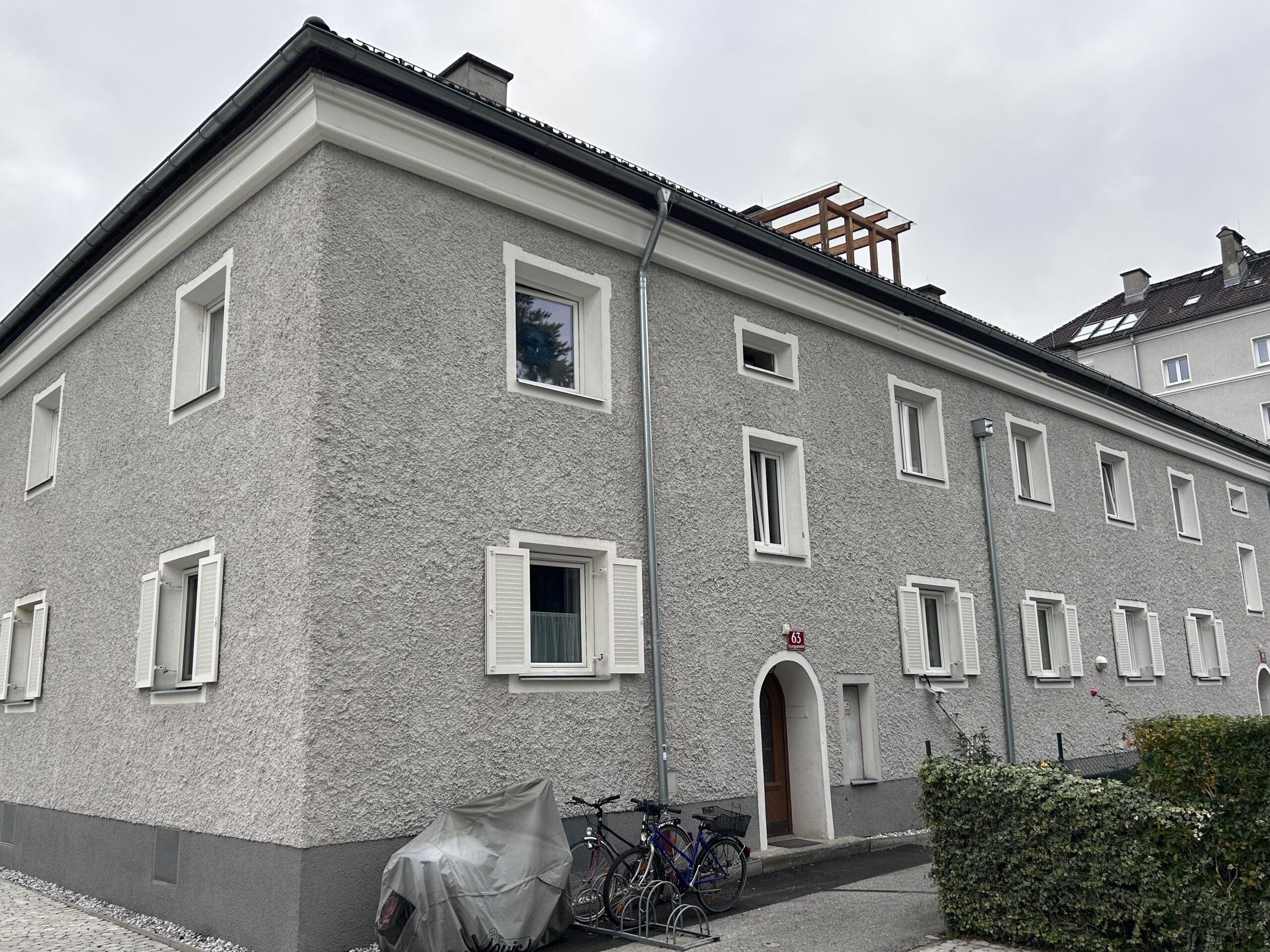
Between 1939 and 1942, the South Tyrolean Settlement of Pradl was built in the eastern part of Innsbruck, between Langstraße, Roßsprung, and Kranewitterstraße. At lightning speed—just as in Wilten, Saggen, and Reichenau—distinctive residential blocks clustered around generously designed courtyards were erected to warmly welcome German-speaking resettlers from South Tyrol to the capital of the Reichsgau Tyrol and Vorarlberg. Despite the National Socialists’ fondness for meticulous detail in planning the huge housing complex, no consideration was given to Christian pastoral care. When the Catholic Church experienced its revival after 1945 and Sunday Mass began to reclaim its place in everyday social life, the existing parish church of Pradl proved far too small for the newly created district and its inhabitants. In 1950, Apostolic Administrator and later Bishop Paulus Rusch therefore divided the oversized parish, with Neu-Pradl initially receiving only a vicariate rather than its own parish. In the same year, construction began on the first newly erected church of the post-war period.
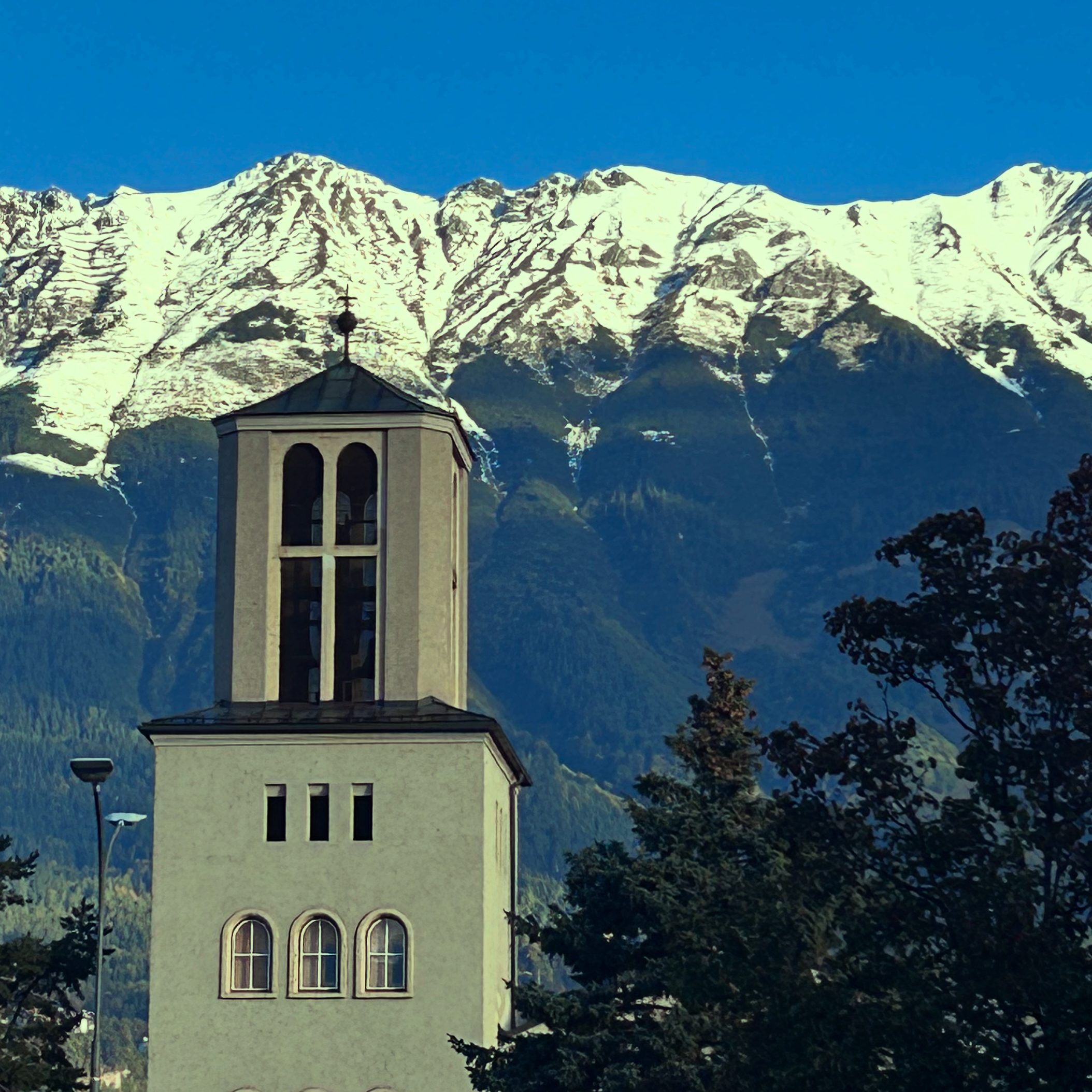
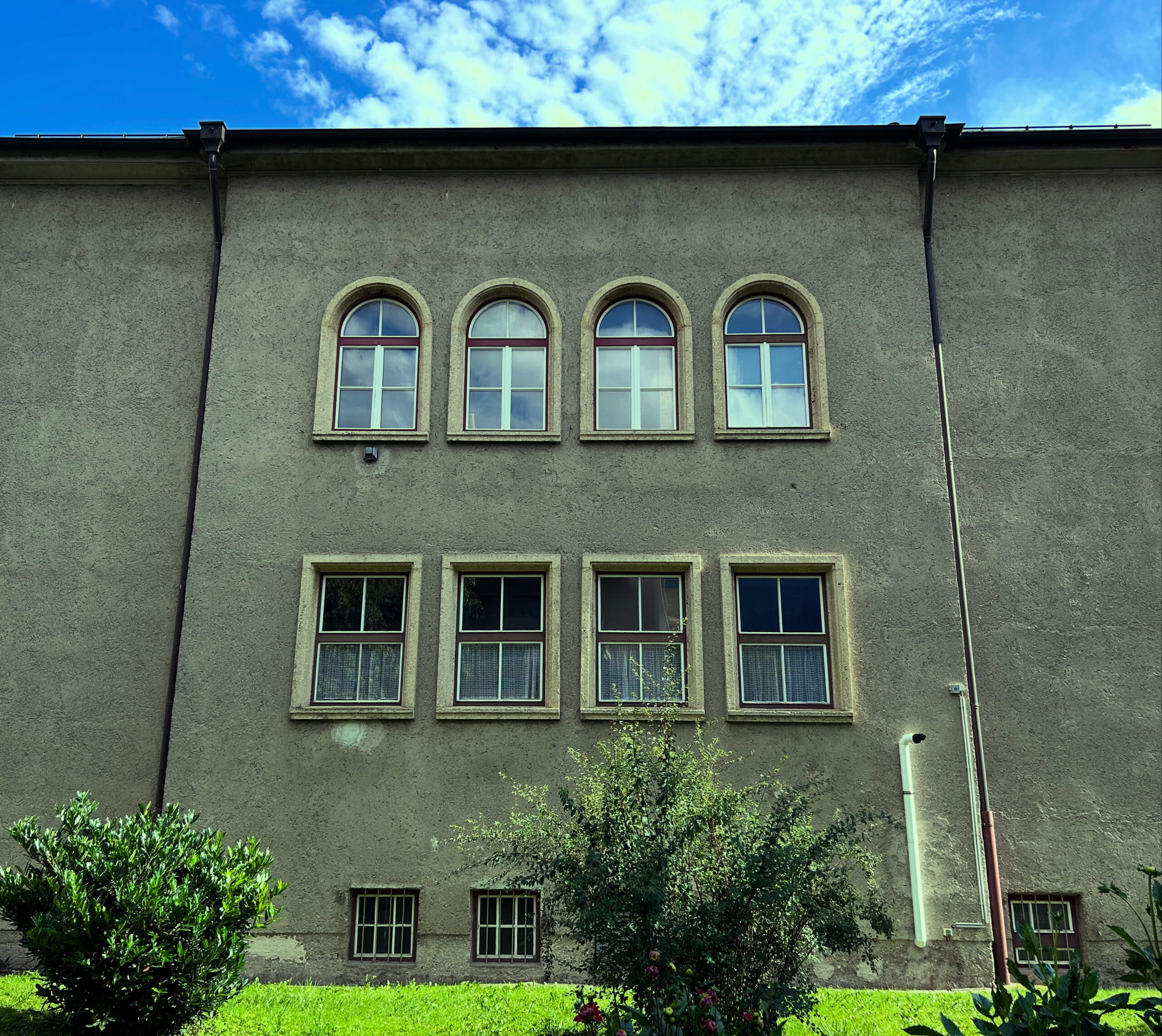
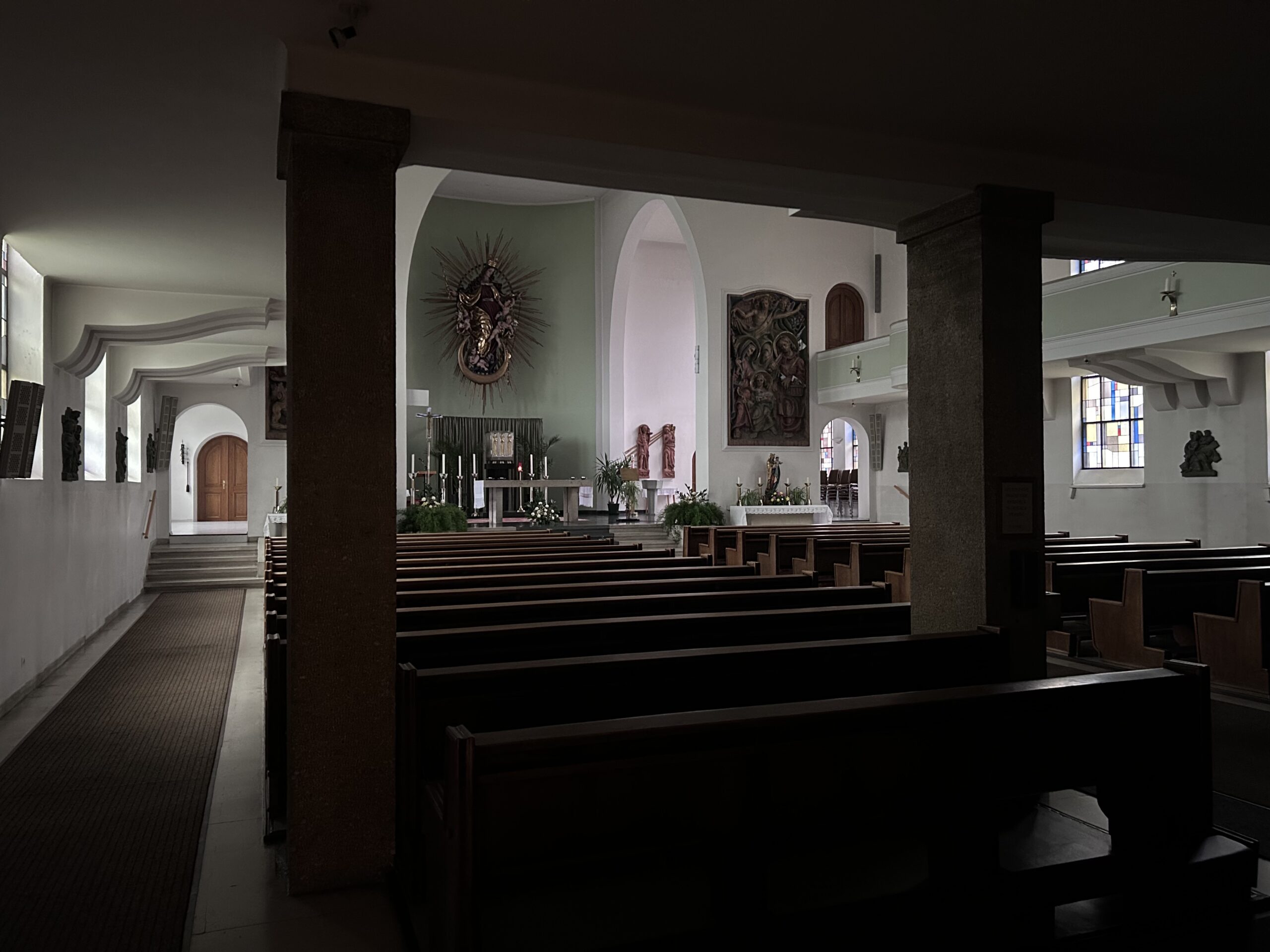
Architect Karl Friedrich Albert designed the Parish Church of the Holy Guardian Angels in a kind of modern neo-Romanesque style. The entrance area consists of three arches topped by a circular window. Rounded forms also characterize the sturdy church tower. In its basic form, the building thus follows a traditional, deliberately unobtrusive approach rather than signaling a bold new beginning. After the horrors of the war, harmony was the order of the day. The austere exterior also reflects the economically difficult situation of the early post-war years. This distinguishes the Guardian Angels Church from later, far more modern and daring designs such as St. Norbert in Pradl South, the Parish Church of the Holy Family at the Wilten West cemetery, or even Horst Parson’s Petrus Canisius Church in Höttinger Au.
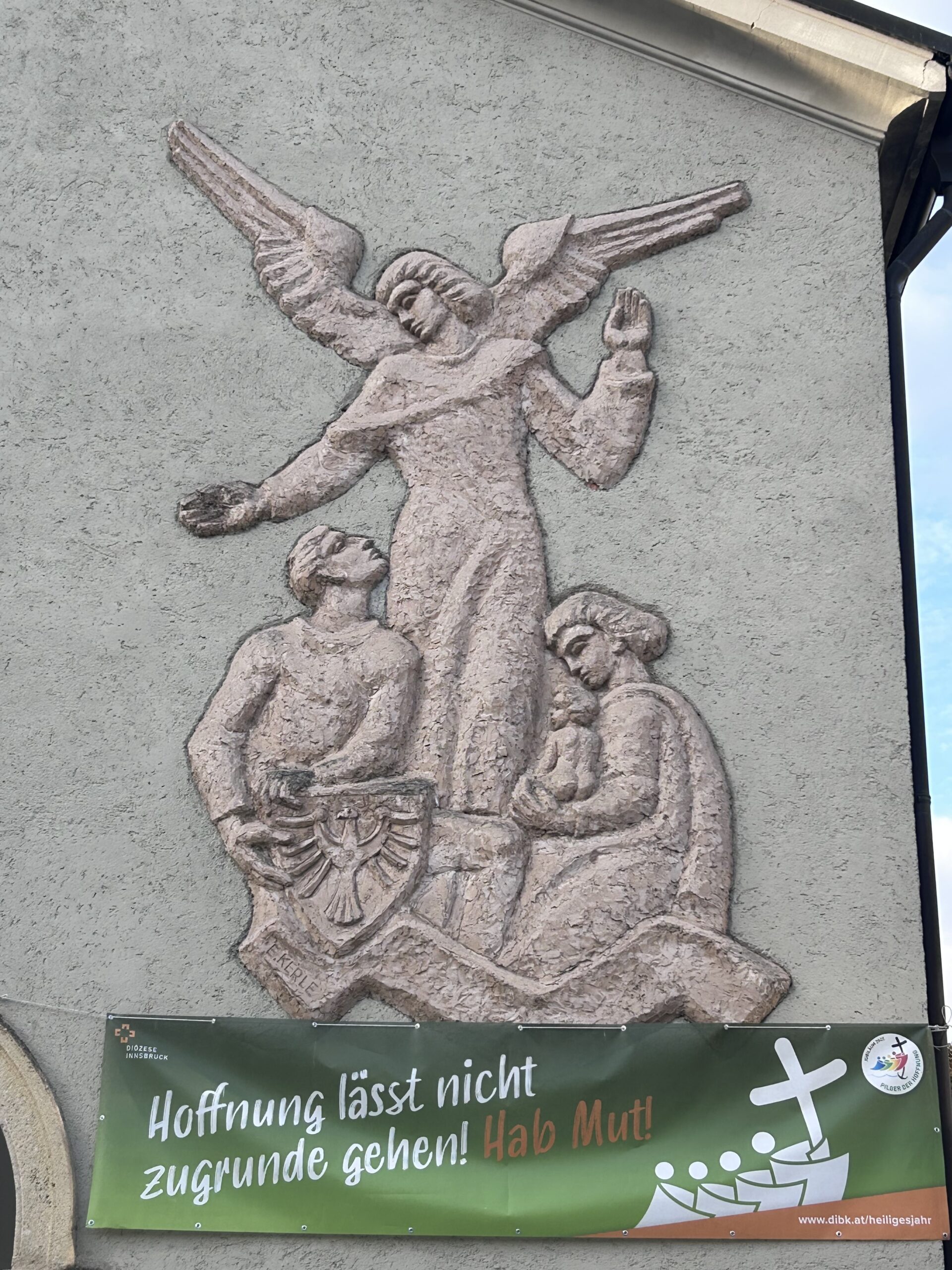
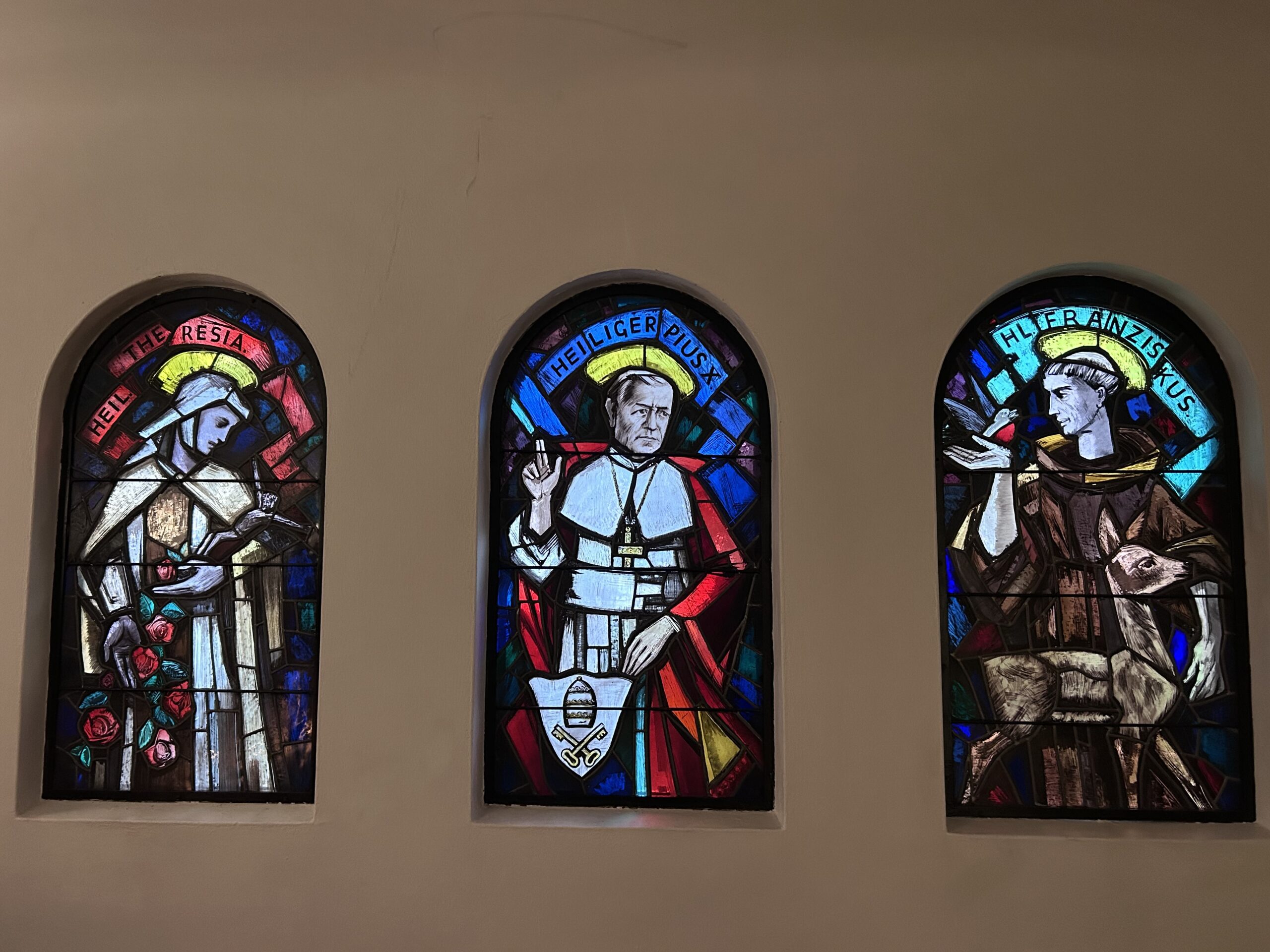
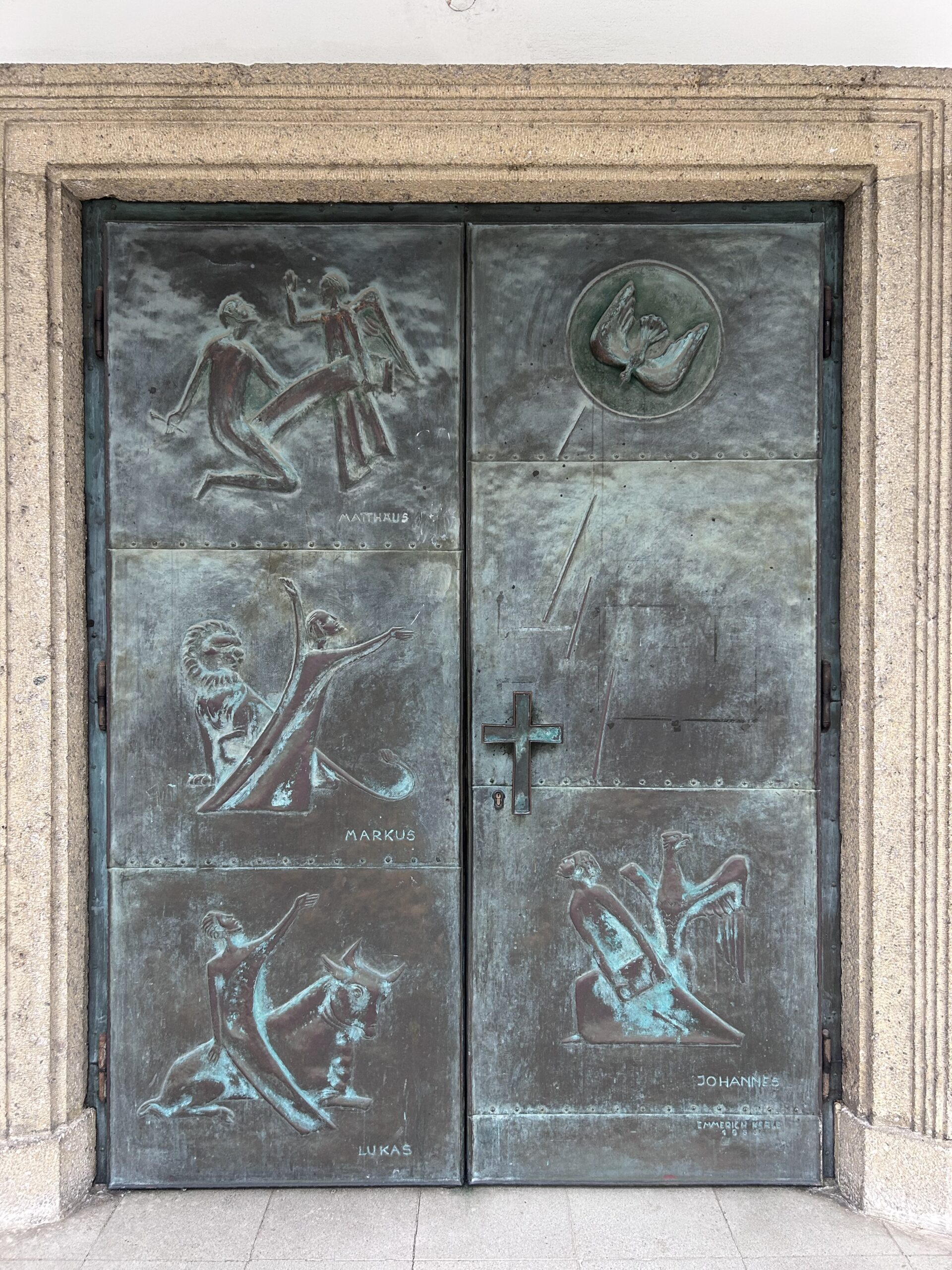
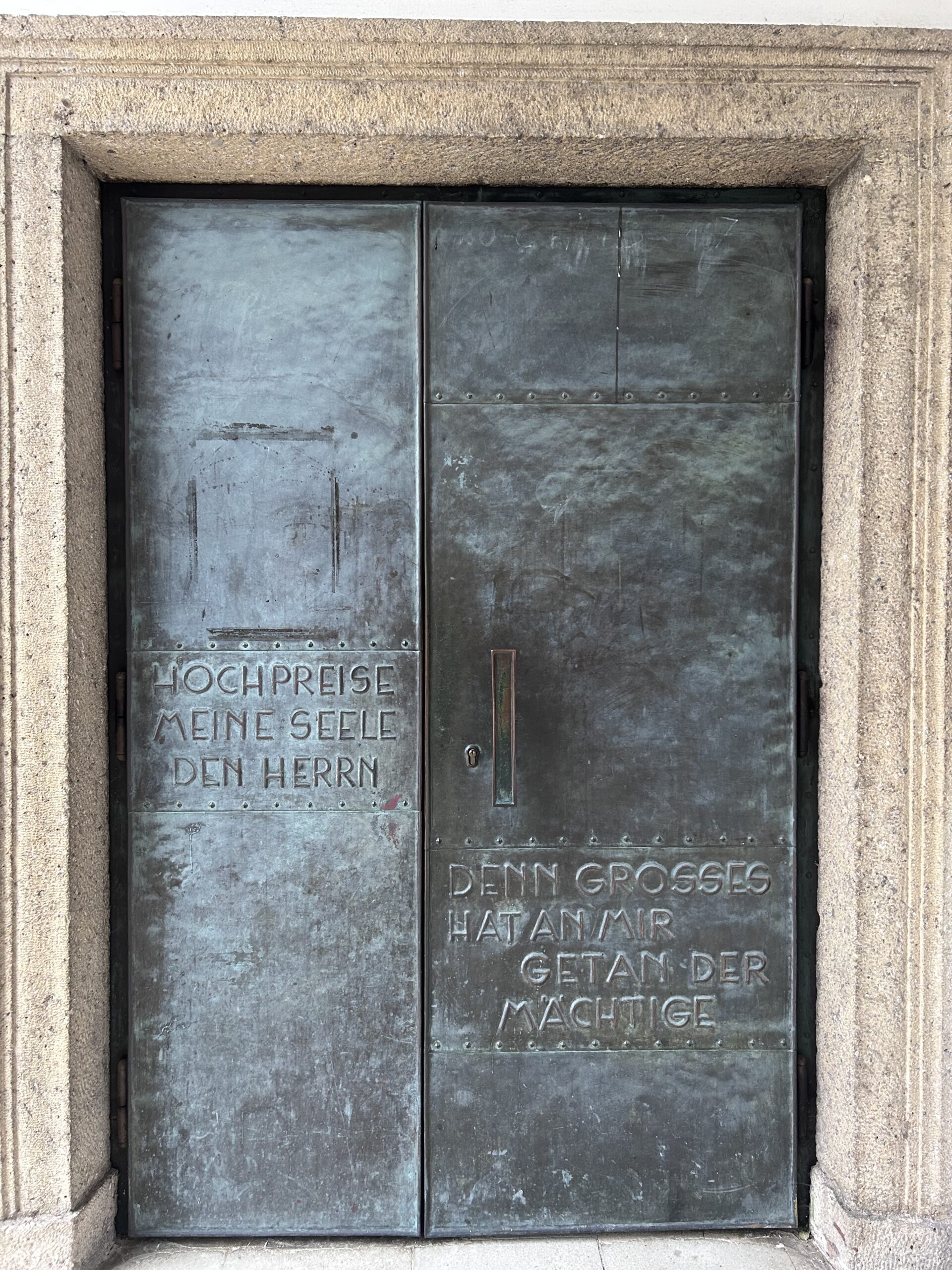
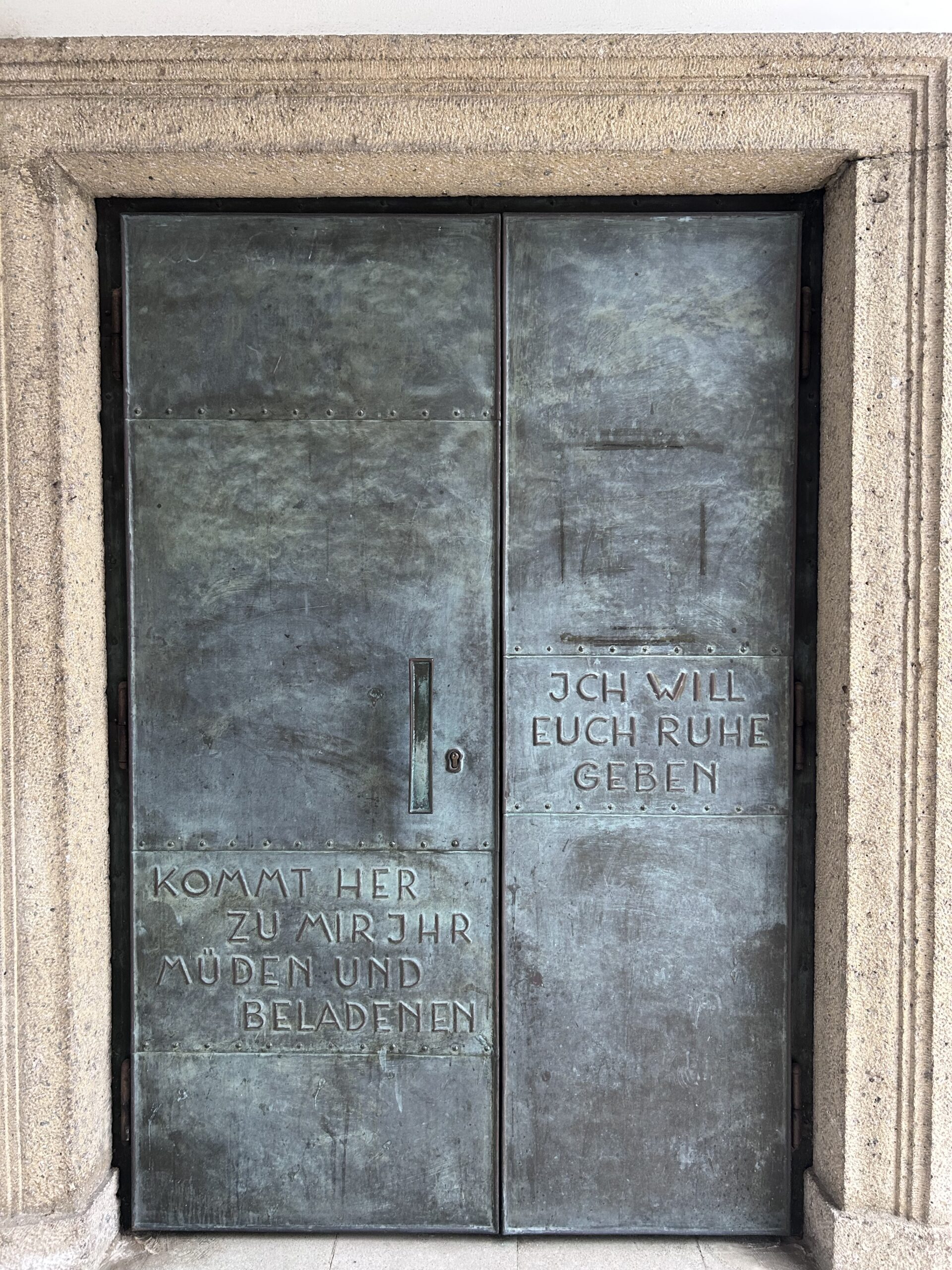
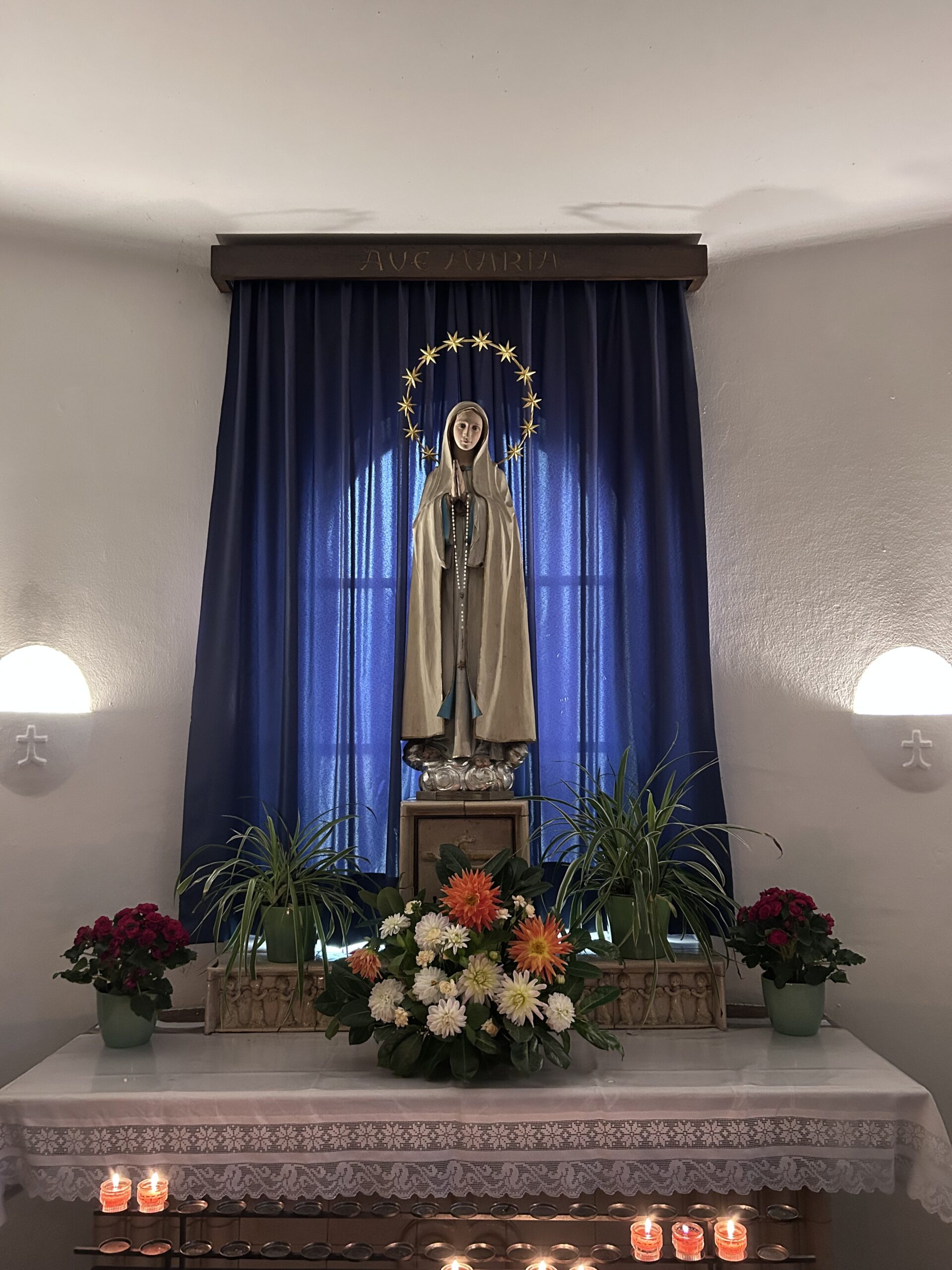
The church was consecrated in 1952, even before its final completion. The distinctive relief on the façade was added only in 1956. Here too, the decision fell on a traditional and rather plain design. The scandal surrounding Max Weiler’s images for the interior of the Theresienkirche on the Hungerburg a few years earlier was still fresh in the minds of those responsible, so they opted for a proven, conservative artist. Emmerich Kerle—who, besides many sacred works, also designed the façade of the Landesberufsschule on Mandelsbergerstraße and the eagle on the Liberation Monument at Landhausplatz—had his workshop in the basement of the Guardian Angels Church. The motif he created for the church reflects the spirit of the 1950s, which can be found in many works of the “Kunst am Bau” (Percent for Art) initiative. The guardian angel holds his protective hand over a well-behaved family and the coat of arms of Tyrol. On the left side of the interior, near the entrance, there is a classic altar dedicated to the veneration of Mary. The ornate stained-glass windows depict Pope Pius X (1835–1914), flanked by Saint Thérèse and Saint Francis. Pius was regarded as a defender of the Church against modernity. At his election, Emperor Franz Joseph I had issued a veto against his opponent, thus enabling the election of Pius. His church policy aligned with the thinking of Tyrol’s leading cleric, Paulus Rusch, who would later dedicate a church in Reichenau to him. The rest of the interior space and the gallery have an almost Protestant character. The massive entrance portals were also crafted by Kerle. The central one shows the four evangelists. The Bible verse on the side door also seems fitting for the spirit of the post-war era: “Come to me, all you who are weary and burdened, and I will give you rest.”
Risen from the ruins
Following the end of the war, US troops controlled Tyrol for two months starting in May 1945, before administration of the occupied territory was handed over to France. While the end of the war meant the air raids were over and the danger of a destructive final battle in the streets of Innsbruck was averted, hardship and anxiety persisted. During the first three postwar years, hunger was the greatest enemy. Fiorello La Guardia, head of UNRRA (*United Nations Relief and Rehabilitation Administration*)—which supplied war-devastated areas with basic necessities—counted Austria "...among those nations of the world closest to starvation." May 1945 was less a "month of bliss" and more freezing cold, with snow reaching all the way into the valleys. The winter of 1946/47 went down in Tyrolean climate history as particularly cold and long, followed by a summer that was exceptionally hot and dry. Crop failures reached up to 50%. The supply situation was catastrophic, especially in the city. Obtaining daily food became a life-threatening, everyday worry for the people of Innsbruck. In addition to its own citizens, thousands of Displaced Persons, liberated forced laborers, and occupation soldiers had to be fed. Milk, bread, eggs, sugar, flour, fat—there was a shortage of everything. The Tyrolean state government and the French occupation forces could not cover the required per capita kilocalorie intake. To improve the logistics for incoming supplies, the French laid the foundation for the new airport on the *Ulfiswiese* in Höttinger Au as early as 1946, which replaced the airbase in Reichenau (opened 20 years earlier) after two years of construction. Contemporary witnesses remember with horror the flown-in food cans and their far-from-tasty contents, such as whale meat, that were allocated to them. Food supply was managed through ration cards. Adults had to present confirmation from the employment office to receive these cards. Rations varied depending on the worker category: heavy laborers, pregnant women, and nursing mothers received food worth 2,700 calories. Craftsmen with light jobs, civil servants, and freelancers received 1,850 kilocalories, while office workers received 1,450 calories. Housewives and other "ordinary consumers" (*Normalverbraucher*) received 1,200 calories. Foreign relief organizations ran charitable initiatives such as soup kitchens and school feeding programs. The American welfare organization CARE (*Cooperative for American Remittances to Europe*) sent CARE packages. Many children were sent to foster households in Switzerland during the summer to regain their strength and put a few extra pounds on their bones. However, these measures were not enough for everyone. Housewives and other "ordinary consumers" in particular suffered under the low allocations. Despite the risk of being arrested, many Innsbruck residents set out for the surrounding villages to forage for food (*hamstern*). Those with money paid astronomical prices to the farmers; those without had to beg for food. In extreme cases, women whose husbands had fallen in battle, were prisoners of war, or were missing saw no other way out than prostitution. Women who became pregnant as a result faced severe verbal abuse targeted at both themselves and their offspring. Decriminalized abortion in Austria was still 30 years away. For the most part, politicians were powerless in the face of this. Satisfying all interests was impossible even in normal times. Many decisions made between the parliament in Vienna, the Tyrolean state parliament (*Landtag*), and Innsbruck City Hall were incomprehensible to the public. Office buildings and commercial enterprises were given free rein by the Innsbruck municipal electric company, while private households faced repeated restrictions on power access starting in October 1945. This disadvantage of households compared to the economy also applied to the coal supply. While children suffered from malnutrition, some enterprising farmers legally distilled profitable schnapps from fruit. The old divides between city and countryside grew larger and more bitter. Innsbruck residents accused the surrounding rural population of deliberately withholding food for the black market. Raids, thefts, and illegal logging occurred. Transports at the train station were guarded by armed units. Appropriating food from a warehouse was both illegal and an everyday reality. Hungry children and teenagers roamed the city, seizing any opportunity to get food or fuel. The first Governor of Tyrol, Karl Gruber—who had himself been part of the illegal resistance during the war—understood the situation of people rebelling against the system, but could do nothing to change it. Innsbruck Mayor Anton Melzer's hands were tied as well. It was not only difficult to reconcile the needs of all interest groups; time and again, cases of corruption and favors for relatives and acquaintances surfaced among the civil service. Gruber's successor in the governor's chair, Alfons Weißgatterer, had to weather several minor uprisings when public anger boiled over and stones were thrown at the *Landhaus* (state parliament building). The state government's response came via the *Tiroler Tageszeitung*.
„Are the broken windows that clattered from the country house into the street yesterday suitable arguments to prove our will to rebuild? Shouldn't we remember that economic difficulties have never been resolved by demonstrations and rallies in any country?“
The newspaper had been founded in 1945 under the administration of the US armed forces to promote democratization and denazification. Its first editor-in-chief, Anton Klotz (1889–1961), had worked for the conservative *Allgemeiner Tiroler Anzeiger* before being sent to the Buchenwald concentration camp by the National Socialists. After just one year, the daily newspaper was transferred to *Schlüssel GmbH* under the leadership of ÖVP politician Joseph Moser. In the first few months after the war, a paper shortage made it the only available newspaper in the region. The second paper, the *Tiroler Nachrichten*, which began publication in late 1945, was under the direct administration of the ÖVP. Thanks to high circulation and almost direct control over the content, the Tyrolean state government was able to shape public sentiment. However, this dominance over public opinion did nothing to change reality, such as the precarious housing situation. An estimated 30,000 Innsbruck residents were homeless, living in cramped conditions with relatives, or residing in temporary barracks settlements. These included the former labor camp in Reichenau, the settlement colloquially known as the "*Ausländerlager*" (foreigners' camp) for displaced persons from formerly German areas of Europe, and the *Bocksiedlung*. Maria-Theresien-Straße, Museumstraße, the railway station district, Wilten, and Pradlerstraße would likely be much more visually appealing today had officials not been forced to quickly plug the gaps in the cityscape to create housing as fast as possible for the many homeless residents and returning soldiers. Aesthetics, however, was a luxury that no one could afford in this situation. Tens of thousands of citizens pitched in to clear the rubble and debris left behind on the streets by air raids. The exhausted population urgently needed new living space to escape the unhealthy living conditions, in which large extended families were sometimes squeezed into single-room apartments.
"The emergency situation jeopardises the comfort of the home. It eats away at the roots of joie de vivre. No one suffers more than the woman whose happiness is to see a contented, cosy family circle around her. What a strain on mental strength is required by the daily gruelling struggle for a little shopping, the hardship of queuing, the disappointment of rejections and refusals and the look of discouragement on the faces of loved ones tormented by deprivation."
What could be read in the *Tiroler Tageszeitung* was only part of the harsh everyday reality. Just as after the First World War, when the Spanish Flu claimed many victims, 1945 also saw a surge in dangerous infections. Vaccines against tuberculosis could not be delivered during the first winter, and hospital beds were in short supply.
Even though the situation eased after 1947, living conditions in Tyrol remained precarious. It took years before noticeable improvements occurred. Food rationing was finally discontinued on July 1, 1953. In the same year, Mayor Greiter was able to announce that all buildings destroyed during the air raids had been fully restored. This was also thanks to the occupying forces. The French troops under Émile Béthouart behaved very leniently and cooperatively toward their former enemy, treating the Tyrolean culture and population with friendliness and an open mind. Although people were initially hostile toward the occupying power—yet another war had been lost—the skepticism of Innsbruck's residents faded over time. Thanks to the soldiers of the *4th Moroccan Mountain Division*, many Tyroleans saw Black people for the very first time. The soldiers were especially popular among children because of the chocolates and sweets they handed out. Many locals also found employment within the French administration. The French Monument on Landhausplatz commemorates the era of the French occupation. On the *Émile-Béthouart-Steg*—the footbridge connecting St. Nikolaus and the inner city across the Inn River—a commemorative plaque encapsulates the relationship between the occupying forces and the local population:
"Came as a victor
Remained as a protector.
Returned home as a friend."
In addition to material hardship, a collective war trauma shaped society. The adults of the 1950s were products of interwar upbringing and National Socialism. Men who had fought at the front could only speak of their horrifying experiences as losers of the war within certain circles, while women usually had no platform at all to process their fears and anxieties. Domestic violence and alcoholism were widespread. Teachers, police officers, politicians, and civil servants had frequently been part of the National Socialist follower base—a demographic that did not simply vanish with the end of the war, but was merely met with a wall of silence in public life. Although a large number of proceedings against National Socialists took place at the Innsbruck People's Court under the direction of the Allied powers, the number of convictions failed to reflect the true extent of what had occurred. The vast majority of the accused went free. Particularly implicated representatives of the system were imprisoned for a time or lost their public service positions, but after serving their sentences, they were able to return to their old lives relatively unmolested—at least professionally. People not only wanted to draw a line under the past decades; the perpetrators of yesterday were needed to keep the society of today running. At the latest with the growing tensions between the superpowers and the USSR, former Nazis were viewed as the lesser evil compared to socialists and communists. The problem with this strategy of suppression was that no one took responsibility for what had happened, even though enthusiasm and support for National Socialism had been widespread, especially at the beginning. There was hardly a family without at least one member who had an inglorious history between 1933 and 1945. Shame over what had transpired since 1938 and during those years in Austrian politics blended with the fear of being treated as war culprits by the occupying powers—the USA, Great Britain, France, and the USSR—much like in 1918. An atmosphere emerged in which no one—neither the generation that took part nor the one that followed—spoke about what had taken place. This attitude long prevented any critical examination of the events since 1933. The myth of Austria as the "first victim" of National Socialism—which only slowly began to crumble with the Waldheim affair in the 1980s—was born. Police officers, teachers, judges—they were all left in their positions despite their political stance. Society needed them to keep functioning. A prime example of this generously spread blanket of forgetting, with strong ties to Innsbruck, is the biography of the physician Burghard Breitner (1884–1956). Breitner grew up in a wealthy upper-middle-class household. The Villa Breitner at Mattsee housed a museum dedicated to the German nationalist poet Josef Viktor Scheffel, who was revered by Breitner's father. After passing his school-leaving exams (Matura), Breitner decided against a career in literature in favor of studying medicine. He subsequently completed his military service and launched his medical career. In 1912/13, he served as a military doctor in the Balkan War. In 1914, he was deployed to the Eastern Front, where he was taken prisoner by Russian forces. As a physician, he selflessly cared for his comrades in the prisoner-of-war camp. It was not until 1920 that he returned to Austria from the POW camp, celebrated as a hero and the "Angel of Siberia." In 1932, his career at the University of Innsbruck began. By 1938, Breitner faced the problem that he could not provide the "Greater Aryan Certificate" (Großer Ariernachweis) due to the Jewish background of his paternal grandmother. However, thanks to his good relationship with the rector of the University of Innsbruck and key National Socialists, he was ultimately able to continue working at the university clinic. During the Nazi regime, Breitner—as head of the Innsbruck Clinic—was responsible for forced sterilizations and "voluntary castrations," even if he likely did not perform any of the surgeries personally. After the war, the "Angel of Siberia" managed, with some effort, to maneuver his way through the denazification process. In 1951, he was nominated as a candidate for the federal presidential election by the VdU (Federation of Independents), a political collecting basin for staunch National Socialists. In 1952, Breitner became Rector of the University of Innsbruck. Following his death, the City of Innsbruck dedicated an honorary grave to him at the Westfriedhof (Western Cemetery). In the Reichenau district, a street is dedicated to him in the immediate vicinity of the site of the former concentration camp.
Art in architecture: the post-war period in Innsbruck
Just as after the First World War, the housing shortage was one of the most pressing issues after 1945. Innsbruck had been severely affected by air raids, and funds for new construction were scarce. When the first residential complexes were built in the 1950s, frugality was the order of the day. While many of the buildings erected from the 1950s onward are architecturally unremarkable, they house quite interesting works of art. Starting in 1949, Austria introduced the "Kunst am Bau" (Percent for Art) initiative. For state-funded construction projects, 2% of the total expenditure was to be allocated to artistic design. Implementing building legislation—and thus managing these budgets—was the responsibility of the federal states, then as now. In the frugal postwar years, even successful and practical artists like Oswald Haller (1908–1981), who made his living from commercial art and tourism posters, had fallen on hard times. Public procurement was meant to offer them financial support. This concept had first emerged in the Weimar Republic in 1919 and was continued by the National Socialists from 1934 onward. Austria readopted Kunst am Bau after the war to shape public spaces as part of the reconstruction effort. The public sector, replacing the aristocracy and the bourgeoisie as the property developers of past centuries, was under intense financial pressure. Nevertheless, residential projects—though primarily focused on functionality—were not meant to look entirely plain. The Tyrolean artists entrusted with creating these artworks were chosen through open competitions. The most renowned among them was Max Weiler, perhaps the most prominent artist in postwar Tyrol, who was responsible for the frescoes in the Theresienkirche on the Hungerburg in Innsbruck, among other works. Other prominent names include Helmut Rehm (1911–1991), Walter Honeder (1906–2006), Fritz Berger (1916–2002), and Emmerich Kerle (1916–2010). Many of these artists were shaped not only by the Bundesgewerbeschule Innsbruck (today's HTL) and the Academy of Fine Arts Vienna, but also by their collective experience during National Socialism and the war. Fritz Berger had lost his right arm and an eye, forcing him to learn to work with his left hand. Emmerich Kerle served as a war painter in Finland. In Vienna, he was taught by Josef Müllner, an artist who made his mark on art history with busts of Adolf Hitler, Siegfried from the Nibelungen saga, and the still-controversial Karl Lueger Monument in Vienna. Like a large portion of the Tyrolean population, these artists—along with politicians and civil servants—longed for peace and quiet after the harsh and painful war years, wanting to let bygones be bygones regarding the events of recent decades. The works created under Kunst am Bau reflect this attitude toward a new self-image and moral code. It was the first time that abstract, non-representational art entered Innsbruck's public space, albeit only within an uncritical framework. Fairytales, legends, and religious symbols were popular motifs immortalized in sgraffito, mosaics, murals, and statues. One could speak of a sort of second wave of Biedermeier art, symbolizing the petty-bourgeois lifestyle of the postwar population. The art was also intended to create a new awareness and image of what was considered "typically Austrian." As late as 1955, every second Austrian still considered themselves German. The diverse motifs depict leisure activities, clothing styles, and the concepts of social order and norms of the postwar era. Women were frequently portrayed in traditional costume (Tracht and Dirndl), men in Lederhosen. Conservative ideals of gender roles were processed through this art: hardworking fathers, dutiful wives tending to home and hearth, and children eagerly studying in school remained the ideal well into the 1970s. Anyone walking attentively through the city will find many of these artworks still visible on buildings in Pradl and Wilten today. The contrast between plain architecture and contemporary art from a postwar era—often suppressed, yet long romanticized and glorified in films and stories—is well worth seeing. Particularly fine examples can be found on the facades along Pacherstraße, Hunoldstraße, Ing.-Thommenstraße, Innrain, the Landesberufsschule Mandelsbergerstraße, or in the courtyard between Landhausplatz and Maria-Theresien-Straße.
The Red Bishop and Innsbruck's moral decay
In the 1950s, Innsbruck began to recover from the crisis and war years of the first half of the 20th century. On May 15, 1955, Chancellor Leopold Figl officially declared a political turning point with his famous words, "*Austria is free*," and the signing of the Austrian State Treaty. During the years that went down in history as the *Wirtschaftswunder* (economic miracle), moderate prosperity established itself in many households. Between 1953 and 1962, an annual economic growth rate of over 6% allowed an increasing portion of the population to dream of exotic luxuries like refrigerators, a private bathroom, or even a vacation in the South. This era brought not only material but also social change. People's desires became more elaborate with rising prosperity and the lifestyle promoted in advertising and media. The phenomenon of a new youth culture began to take root amidst the somber postwar society of small-town Austria. Previously unknown terms like *teenager* and *latchkey kid* (*Schlüsselkind*) entered everyday vocabulary in the 1950s. In 1956, the magazine *BRAVO* launched. For the first time, a media outlet catered directly to the interests of young people. Marilyn Monroe was featured on the first cover, under the headline: "*Did Marilyn's curves get married too?*" The biggest stars of those early years were James Dean and Peter Kraus, before the Beatles took over in the 1960s. After the *Summer of Love*, the advice column "Dr. Sommer" began educating youth on love and sex. The church's all-powerful authority over the moral conduct of adolescents began to crumble, albeit slowly—the first photo love story featuring nudity did not follow until 1982. Up until the 1970s, opportunities for young people in Innsbruck were largely limited to traditional inns (*Wirtshausstuben*), the marksmanship club (*Schützenverein*), and brass bands (*Blasmusik*). Only gradually did bars, discos, nightclubs, pubs, and event venues begin to open. Events like the *5 Uhr Tanztee* (5 o'clock tea dance) at the Sporthotel Igls attracted young singles looking to socialize. *Café Central* became the "second home of long-haired youths," as the *Tiroler Tageszeitung* horrifiedly observed in 1972. Establishments such as the *Falknerkeller* on Gilmstraße, the *Uptown Jazzsalon* in Hötting, the Jazzclub in Hofgasse, the *Clima Club* in Saggen, the *Scotch Club* on Angerzellgasse, and the *Tangente* on Bruneckerstraße had nothing in common with the traditional tavern. The performances by The Rolling Stones and Deep Purple at the Olympiahalle in 1973 marked the temporary peak of Innsbruck's cultural awakening. While this did not turn Innsbruck into London or San Francisco, locals had at least caught a breath of rock 'n' roll. By contrast, what remains anchored in cultural memory as the 1968 revolution barely took place in the "*Heiliges Land*" (Holy Land of Tyrol). Neither workers nor students took to the barricades in large numbers. Though a few radical student groups eventually emerged to protest social injustice, the Vietnam War, and traditional gender roles, there was no comparison to the unrest seen in Prague, Paris, or the distant USA. The historian Fritz Keller famously described Austria's '68 movement as a mere "*Mailüfterl*" (gentle May breeze). Nevertheless, society was undergoing a quiet transformation. A look at the annual music charts offers a clue: While the top 10 in 1964 was still dominated by *Kaplan Alfred Flury* and *Freddy* with "Lass die kleinen Dinge" and "Gib mir dein Wort," alongside the Beatles with their German version of "Komm, gib mir deine Hand," musical tastes were shifting. Although Peter Alexander and Mireille Mathieu could still be found on the charts, from 1967 onward, international acts with foreign-language tracks—such as *The Rolling Stones, Tom Jones, The Monkees, Scott McKenzie, Adriano Celentano*, and *Simon & Garfunkel*—dominated the top spots with increasingly socially critical lyrics.
This change sparked a backlash. The spearhead of the conservative counter-revolution was the Bishop of Innsbruck, Paulus Rusch. Cigarettes, alcohol, overly revealing fashion, trips abroad, working women, nightclubs, premarital sex, the 40-hour workweek, Sunday sports events, dance nights, mixed-gender education and leisure—all of this was deeply abhorrent to the strict clergyman and devoted follower of the Sacred Heart of Jesus cult. Peter Paul Rusch was born in Munich in 1903 and grew up in Vorarlberg as the youngest of three children in an upper-middle-class household. Both of his parents and his older sister died of tuberculosis before he reached adulthood. Forced to fend for himself at the young age of 17 during the lean post-war years, inflation wiped out his father's inheritance—which was meant to finance his university studies—in no time. Rusch worked for six years at the Bank für Tirol und Vorarlberg to fund his theology degree. In 1927, he entered the Collegium Canisianum, and six years later, he was ordained as a priest of the Jesuit order. His meteoric career led the intelligent young man to serve as a chaplain in Lech am Arlberg and Hohenems. He then returned to Innsbruck as head of the partial seminary. In 1938, he became Titular Bishop of Lycopolis and Apostolic Administrator for Tyrol and Vorarlberg—two imaginative titles intended to replace the authority of the bishop in North Tyrol. As the youngest de facto bishop in Europe, he had to endure the harrassment of the National Socialist rulers against the Church. Although his critical stance on National Socialism was well known, Rusch himself was never imprisoned; the authorities feared turning the popular young bishop into a martyr. After the war, the socially and politically active bishop was at the forefront of the reconstruction effort. With hands-on dedication, he sought to strengthen the influence of the Church. His father had worked his way up from carpenter to architect, passing down a passion for construction. Added to this was Rusch's own experience in banking: thanks to his background in the private sector, he recognized the opportunities for the Church to step in and distinguish itself as a helper in times of need. Under Rusch's leadership, the Katholische Jugend (Catholic Youth) volunteered without pay to construct the Heiligjahrsiedlung (Holy Year Settlement) in Höttinger Au. The diocese purchased the plot of land from the Ursuline Order, and interest-free loans were advanced to the settlers by the Church. His pragmatic, hands-on approach to the housing shortage earned him the nickname the "Red Bishop." In these modest houses with self-sufficiency gardens—built according to the vision of the dogmatic and frugal "worker's bishop"—41 families, with preference given to those with many children, found a new home. Alleviating the housing shortage was meant to keep the greatest threats of the Cold War away from his congregation. Both the state-mandated atheism of communism and the consumer-driven capitalism spilling over from the US into Western Europe were anathema to him. In 1953, Rusch published his book "Junger Arbeiter, wohin?" ("Young Worker, Whither Bound?"). What sounded like revolutionary, left-wing literature was actually an exposition of Christian Social Teaching, which condemned both capitalism and socialism. Families were expected to live modestly, managing in Christian harmony on the moderate income of a single breadwinning father. Employers, employees, and laborers were to form a peaceful unit—cooperation instead of class struggle, laying the groundwork for today's social partnership. Everyone had their place in a Christian sense: a sort of modern feudal system, which had already been envisioned for implementation under Dollfuss's Austrofascist Corporate State (Ständestaat). He shared his political views with State Governor Eduard Wallnöfer and Mayor Alois Lugger, who together with the bishop formed the "Holy Trinity" of conservative Tyrol during the economic miracle era. To this, Rusch added a latent Catholic antisemitism that remained widespread in Tyrol even after 1945, enduring as a supposed tradition through aberrations like the veneration of Anderle von Rinn.
Besondere Anliegen waren dem streitbaren Jesuiten Erziehung und Bildung. Die gesellschaftliche Formung quer durch alle Klassen durch die Soldaten Christi konnte in Innsbruck auf eine lange Tradition zurückblicken. Der Jesuitenpater und vormalige Gefängnisseelsorger Alois Mathiowitz (1853 – 1922) gründete 1909 in Pradl den Peter-Mayr-Bund. His approach was to put young people on the right path through leisure activities and sport and adults from working-class backgrounds through lectures and popular education. The workers' youth centre in Reichenauerstraße, which was built under his aegis, still serves as a youth centre and kindergarten today. Rusch also had experience with young people. In 1936, he was elected regional field master of the scouts in Vorarlberg. Despite a speech impediment, he was a charismatic guy and extremely popular with his young colleagues and teenagers. In his opinion, only a sound education under the wing of the church according to the Christian model could save the salvation of young people. In order to give young people a perspective and steer them in an orderly direction with a home and family, the Youth building society savings strengthened. In the parishes, kindergartens, youth centres and educational institutions such as the House of encounter am Rennweg errichtet, um von Anfang an die Erziehung in kirchlicher Hand zu haben. Der allergrößte Teil des sozialen Lebens der Stadtjugend spielte sich nicht in verruchten Spelunken ab. Den meisten Jugendlichen fehlte schlicht und ergreifend das Geld, um regelmäßig in Lokalen zu verkehren. Viele fanden ihren Platz in den halbwegs geordneten Bahnen der katholischen Jugendorganisationen.
Hier ist die Übersetzung des letzten Teils: Rusch failed to foresee that the clergy itself was changing with the times. Alongside the conservative bishop, a generation of liberal clerics was emerging and immersing themselves in youth work. In the 1960s and 70s, two church youth movements wielded immense influence in Innsbruck. Responsible for this were Sigmund Kripp and Meinrad Schumacher, who won over teenagers and young adults through new pedagogical approaches and a more open handling of sensitive topics like sexuality and substances. In Innsbruck, the Marianische Kongregation (Marian Congregation)—known to this day as the MK—had been shaping the minds of the elite according to the principles of the Jesuit Order since 1578. This youth organization catered to high school students (Gymnasiasten). The MK was strictly hierarchical, designed to teach young "Soldiers of Christ" obedience from the outset. In 1959, Father Sigmund Kripp took over the leadership of the organization. Under his direction—and supported by financial contributions from the Church, the state, parents, and substantial volunteer labor—the youth built projects such as the Mittergrathütte along with its own material ropeway in Kühtai, as well as the legendary youth center Kennedyhaus on Sillgasse. Federal Chancellor Klaus and members of the US Embassy attended the cornerstone laying of this youth center—which would become the largest of its kind in Europe with nearly 1,500 members—as the building was dedicated to the first Catholic, recently assassinated President of the United States. Innsbruck's second church youth organization was Z6. City youth chaplain Father Meinrad Schumacher took care of all those young people who had no place in the MK or the Katholische Hochschülerschaft (Catholic Students' Association) through the Aktion 4-5-6. Working-class children and apprentices met in various youth centers in Pradl or Reichenau until a new center opened in 1971 at its namesake Zollerstraße 6, also built by the members themselves. Josef Windischer took over as director. Z6 had much more in common with what Denis Hopper and Peter Fonda displayed on movie screens riding their motorcycles in Easy Rider. Things were rougher here than in the MK. Rocker gangs, petty criminals, and drug addicts also spent their free time at Z6. While Schumacher ran his program with the "well-behaved" youth upstairs, Windischer populated the basement with the "outsiders" to support these lost sheep as best as possible. By the late 1960s, both the MK and Z6 decided to open their doors to non-members. Girls' and boys' groups were partially merged, and non-members were admitted. Although the two youth centers targeted different demographics, their overall concept was identical: theological knowledge and Christian morality were imparted in a playful, age-appropriate environment. Sections dedicated to chess, soccer, hockey, basketball, music, movies, and a party cellar addressed young people's desires for play, sports, and destigmatizing their first sexual experiences. The youth centers offered a space where adolescents of both genders could mingle. However, the MK in particular remained an institution that had little to do with the wild lifestyle of the 1968 movement as commonly portrayed in films. For instance, dance classes were not held during Advent, Carnival, or on Saturdays, and they remained forbidden fruit for anyone under 17. Nonetheless, the youth centers went too far for Bishop Rusch. The critical articles in the MK magazine Wir diskutieren ("We Discuss")—which reached a circulation of over 2,000 copies—increasingly met with his displeasure. Solidarity with Vietnam was one thing, but criticism of the Schützen (traditional Tyrolean marksmanship guilds) and the Austrian Armed Forces (Bundesheer) could not be tolerated. After years of disputes between the bishop and the youth center, the showdown arrived in 1973. When Father Kripp published his book Abschied von morgen ("Farewell to Tomorrow"), detailing his pedagogical concept and work in the MK, closed-door proceedings were launched against the head of the youth center within the diocese and the Jesuit Order. Despite massive protests from parents and members, Kripp was removed from his post. Neither inner-church intervention by the prominent theologian Karl Rahner, nor a petition initiated by artist Paul Flora, nor regional and national outrage in the press could save the overly liberal priest from the wrath of Rusch—who even secured the papal blessing from Rome for Kripp's dismissal. In July 1974, Z6 also came to a temporary end. Articles about the birth control pill and the Z6 newspaper's criticism of the Catholic Church were too much for the strict bishop. Rusch simply had the locks to the youth center changed—a method he had previously used against the Katholische Hochschülerschaft when it drifted too close to a left-wing activist group. On August 1, 1974, the Tiroler Tageszeitung noted in an article on the matter:
"In recent weeks, there had been profound disputes between the educators and the bishop over fundamental issues. According to the bishop, the views expressed in "Z 6" were "no longer in line with church teaching". For example, the leadership of the centre granted young people absolute freedom of conscience without simultaneously recognising objective norms and also permitted sexual relations before marriage."
It was his adherence to conservative values and his stubbornness that damaged Rusch's reputation during the last 20 years of his life. When he was consecrated as the first bishop of the newly founded Diocese of Innsbruck in 1964, times were changing. The progressive clergyman with practical life experience of the past was overtaken by the modern lifestyle of a new generation and the demands of an establishing consumer society. The bishop's constant criticism of his flock's lifestyle and his stubborn refusal to abandon his overly conservative values—paired with occasionally bizarre statements—transformed the young, hands-on bishop of the reconstruction era into a reason for many Tyroleans to leave the Catholic Church. His concept of repentance and penance produced surreal results. For instance, while he demanded admissions of guilt and atonement for transgressions during the Nazi era, he simultaneously criticized the denazification laws as too far-reaching and severe. Responding to changing sexual norms and the abortion law reforms under Chancellor Kreisky, he claimed that girls and young women who engaged in premature sexual relations were up to twelve times more likely to suffer from cancers of the reproductive organs. Rusch referred to Hamburg as a "den of sin" (Sündenbabel) and suggested that the simple minds of the Tyrolean population were ill-equipped to handle phenomena like tourism and nightlife, which lured them into immoral behavior. He feared that technology and progress would make people far too independent of God. He was adamantly opposed to the new trend of dual-income households: individuals were expected to be content with a modest "spiritual single-family home" complete with a vegetable garden rather than striving for more, while women were expected to dedicate themselves strictly to their traditional role as housewives and mothers.
In 1973, after 35 years at the head of the church community of Tyrol and Innsbruck, Bishop Rusch was named an honorary citizen of the City of Innsbruck. He resigned from his office in 1981. In 1986, Innsbruck's first bishop was laid to rest in St. James' Cathedral (Dom St. Jakob). The Bischof-Paulus-Studentenheim (Bishop Paulus Student Residence), located near the Petrus Canisius Church built under his leadership in Höttinger Au, serves as a reminder of his legacy. Following its closure in 1974, the Z6 youth center relocated to Andreas-Hofer-Straße 11 before finding its current home on Dreiheiligenstraße, right in the heart of the early modern working-class district opposite the Plague Church (Pestkirche). After his involvement in social projects in Brazil, Jussuf Windischer remained in Innsbruck. The father of four continued to work with marginalized social groups, served as a lecturer at the Social Academy, worked as a prison chaplain, and headed the Caritas Integration House in Innsbruck. The MK also continues to exist today, even though the Kennedyhaus—which was renamed Sigmund-Kripp-Haus by its members immediately following Kripp's departure—no longer exists. In 2005, Kripp was named an honorary citizen of the City of Innsbruck by his former sodalis and later vice mayor—just like Bishop Rusch before him.
Innsbruck and National Socialism
In den 1920er und 30er wuchs und gedieh die NSDAP auch in Tirol. Die erste Ortsgruppe Innsbrucks wurde bereits 1923 gegründet. Mit „Der Nationalsozialist - Combat Gazette for Tyrol and Vorarlberg“ erschien ein eigenes Wochenblatt. 1933 erlebte die NSDAP mit dem Rückenwind aus Deutschland auch in Innsbruck einen kometenhaften Aufstieg. Die Modernität der und die Aufstiegsmöglichkeiten, die sie bot, sprach junge, ambitionierte Menschen an. Das Neue, das Aufräumen mit alten Hierarchien und Strukturen wie der katholischen Kirche und der allgemeine Um- und Aufbruch in eine neue Zeit waren mächtige Anziehungsfaktoren. Arbeiter, Angestellte und Unternehmer gleichermaßen sehnten sich nach dem Wirtschaftsaufschwung auch für das schwächelnde Österreich, der in Deutschland die Arbeitslosenzahlen massiv reduziert hatte. Akademiker hingegen sahen sich in der großdeutschen Zukunft dem politischen Ziel ihrer Träume entgegengehen. Die demokratische Republik war konservativen Eliten ein Gräuel. Wer bereits oben war, sehnte sich nach den Zeiten vor dem allgemeinen Wahlrecht zurück, als Sozialdemokraten noch nichts zu melden hatten. Dazu versprach der neue „deutsche Volkskörper“ den vielen auf der Strecke gebliebenen Menschen eine glanzvolle Zukunft in einer egalitären Gemeinschaft ähnlich den Sozialdemokraten. Das Versprechen, die deutschsprachigen Südtiroler Home to the realm zu holen und damit das Unrecht der Brennergrenze auszumerzen wurde von allen gerne gehört. Konnten die Nationalsozialisten bei ihrem ersten Antreten bei der Innsbrucker Gemeinderatswahl 1921 nur 2,8% der Stimmen erringen, waren es bei den Wahlen 1933 bereits 41%. Nicht nur die Wahl Hitlers zum Reichskanzler in Deutschland, auch Kampagnen, Fackelzüge, Spendenaktionen und Events aller Art verhalfen der ab 1934 in Österreich verbotenen Partei zu diesem Ergebnis. Neun Mandatare, darunter der spätere Innsbrucker Bürgermeister Egon Denz und Gauleiter Franz Hofer, zogen in den Gemeinderat ein.
Als der Anschluss Österreichs an Deutschland im März 1938 erfolgte, kam es in Innsbruck zu bürgerkriegsähnlichen Szenen. Über 1800 Innsbrucker waren Mitglied der SA, die ihr Quartier in der Bürgerstraße 10 hatte. Bereits im Vorfeld des Einmarsches war es immer wieder zu Aufmärschen und Kundgebungen der Nationalsozialisten gekommen, nachdem das Verbot der Partei aufgehoben worden war. Noch bevor Bundeskanzler Schuschnigg seine letzte Rede an das Volk vor der Machtübergabe an die Nationalsozialisten mit den Worten „God bless Austria“ am 11. März 1938 geschlossen hatte, rotteten sich bereits die Nationalsozialisten in der Innenstadt zusammen um den Einmarsch der deutschen Truppen vorzufeiern. Die Polizei war dem Aufruhr der organisierten Manifestationen teils gewogen, teils stand sie dem Treiben machtlos gegenüber. Landhaus und Maria-Theresien-Straße wurden zwar abgeriegelt und mit Maschinengewehrständen gesichert, an ein Durchgreifen seitens der Exekutive war aber nicht zu denken. „One people - one empire - one leader“ und das Horst-Wessel-Lied hallten durch die Stadt. Die Bedrohung des deutschen Militärs und der Aufmarsch von SA-Truppen beseitigten die letzten Zweifel. Mehr und mehr schloss sich die begeisterte Bevölkerung an. Am Tiroler Landhaus, damals noch in der Maria-Theresienstraße, sowie im provisorischen Hauptquartier der Nationalsozialisten im Gasthaus Old Innsprugg, wurde die Hakenkreuzfahne gehisst. Der Putsch, samt Festnahme amtsbekannter Unruhestifter und offiziellem Wechsel politischer Amtsträger geschah über Nacht. Am 12. März empfingen Tausende Innsbrucker das deutsche Militär frenetisch. Um die demonstrative Gastfreundschaft gegenüber den Nationalsozialisten sicherzustellen, ließ der neue Bürgermeister Egon Denz jedem Arbeiter einen Wochenlohn auszahlen. Am 5. April besuchte Adolf Hitler persönlich Innsbruck, um sich von einer euphorischen Menschenmenge als heilsversprechender Führer feiern zu lassen. Auf der Nordkette wurden Bergfeuer in Hakenkreuzform entzündet. Die Volksbefragung am 10. April ergab eine Zustimmung von über 99% zum Anschluss Österreichs an Deutschland. Die Menschen waren nach der wirtschaftlichen Not der Zwischenkriegszeit, der Wirtschaftskrise und den Regierungen unter Dollfuß und Schuschnigg müde und wollten Veränderung. Welche Art von Veränderung, war im ersten Moment weniger wichtig als die Veränderung an und für sich. Wehrmacht und Industrie boten jungen Menschen eine Perspektive, auch denen, die mit der Ideologie des Nationalsozialismus an und für sich wenig anfangen konnten. Die Arbeitslosenquote sank nach dem Anschluss tatsächlich rapide von knapp 25 auf unter drei Prozent. Dass es immer wieder zu Gewaltausbrüchen kam, war für die Zwischenkriegszeit in Österreich ohnehin nicht unüblich. Anders als heute war Demokratie nichts, woran sich jemand in der kurzen, von politischen Extremen geprägten Zeit zwischen der Monarchie 1918 bis zur Ausschaltung des Parlaments unter Dollfuß 1933 hätte gewöhnen können. Was faktisch nicht in den Köpfen der Bevölkerung existiert, muss man nicht abschaffen.
Tirol und Vorarlberg wurden in einem Reichsgau zusammengefasst mit Innsbruck als Hauptstadt. Auch wenn der Nationalsozialismus von einem guten Teil der Bevölkerung mit der Zeit immer skeptischer gesehen wurde, gab es kaum organisierten oder gar bewaffneten Widerstand, dazu waren der katholische Widerstand OE5 und die Linke in Tirol nicht stark genug. Unorganisiertes subversives Verhalten der Bevölkerung, vor allem in den Landgemeinden rund um Innsbruck gab es vereinzelt. Zu allumfassend dominierte der Machtapparat den Alltag der Menschen. Viele Arbeitsstellen und sonstige Annehmlichkeiten des Lebens waren an eine zumindest äußerlich parteitreue Gesinnung gebunden. Eine Inhaftierung blieb dem größten Teil der Bevölkerung zwar erspart, die Angst davor war aber allgegenwärtig. Das Regime unter Hofer und Gestapochef Werner Hilliges leistete ganze Arbeit bei der Unterdrückung. Regimegegner Nummer eins war der Klerus, die katholische Kirche wurde deshalb auf allen Ebenen bekämpft. Katholische Schulen wurden umfunktioniert, Jugendorganisationen und Vereine verboten, Klöster geschlossen, der Religionsunterricht abgeschafft und eine Kirchensteuer eingeführt. Besonders hartnäckige Pfarrer wie Otto Neururer wurden in Konzentrationslager gebracht. Auch Lokalpolitiker wie die späteren Innsbrucker Bürgermeister Franz Greiter und Anton Melzer, der im Ersten Weltkrieg für Gott, Kaiser und Vaterland einen Arm verloren hatte, mussten flüchten oder wurden verhaftet. Gewalt und die Verbrechen an der jüdischen Bevölkerung, dem Klerus, politisch Verdächtigen, Zivilpersonen und Kriegsgefangenen auch nur überblicksmäßig zusammenzufassen würde den Rahmen sprengen. In der Klinik Innsbruck wurden Behinderte und vom System als nicht genehm empfundene Menschen wie Homosexuelle zwangssterilisiert. 1941 wurde in der Rossau in der Nähe des Bauhofs Innsbruck das Arbeitslager Reichenau errichtet. Etwa 120 Personen fanden in diesem Barackenlager den Tod durch Krankheit, die schlechten Bedingungen, Arbeitsunfälle oder Hinrichtungen. Die meist jüdischen, russischen oder italienischen Zwangsarbeiter wurden in den Messerschmitt Werken in Kematen und auf den vielen Baustellen wie der Errichtung der South Tyrolean settlements oder der Stollen zum Schutz vor den Luftangriffen im Süden Innsbrucks eingesetzt. Die Erinnerungsorte an die Zeit des Nationalsozialismus sind rar gesät. Das auffälligste Denkmal ist wohl das Tiroler Landhaus mit dem Befreiungsdenkmal. An der Alten Universität in der Herrengasse prangt eine Bronzetafel, die daran erinnert, dass die Gestapo hier einst ihr Hauptquartier hatte, wo Verdächtige unter Folter verhört, schwer misshandelt und teils mit Fäusten zu Tode geprügelt wurden. Der Vorplatz der Universität und eine kleine Säule am südlichen Eingang der Klinik wurden ebenfalls im Gedenken an das wohl dunkelste Kapitel Österreichs Geschichte gestaltet. In der Rossau wurde ein Gedenkort an das Arbeitslager Reichenau errichtet.