Cafe Katzung / Trautsonhaus / Weinhaus Happ
Herzog-Friedrich-Straße 14 / 16 / 22
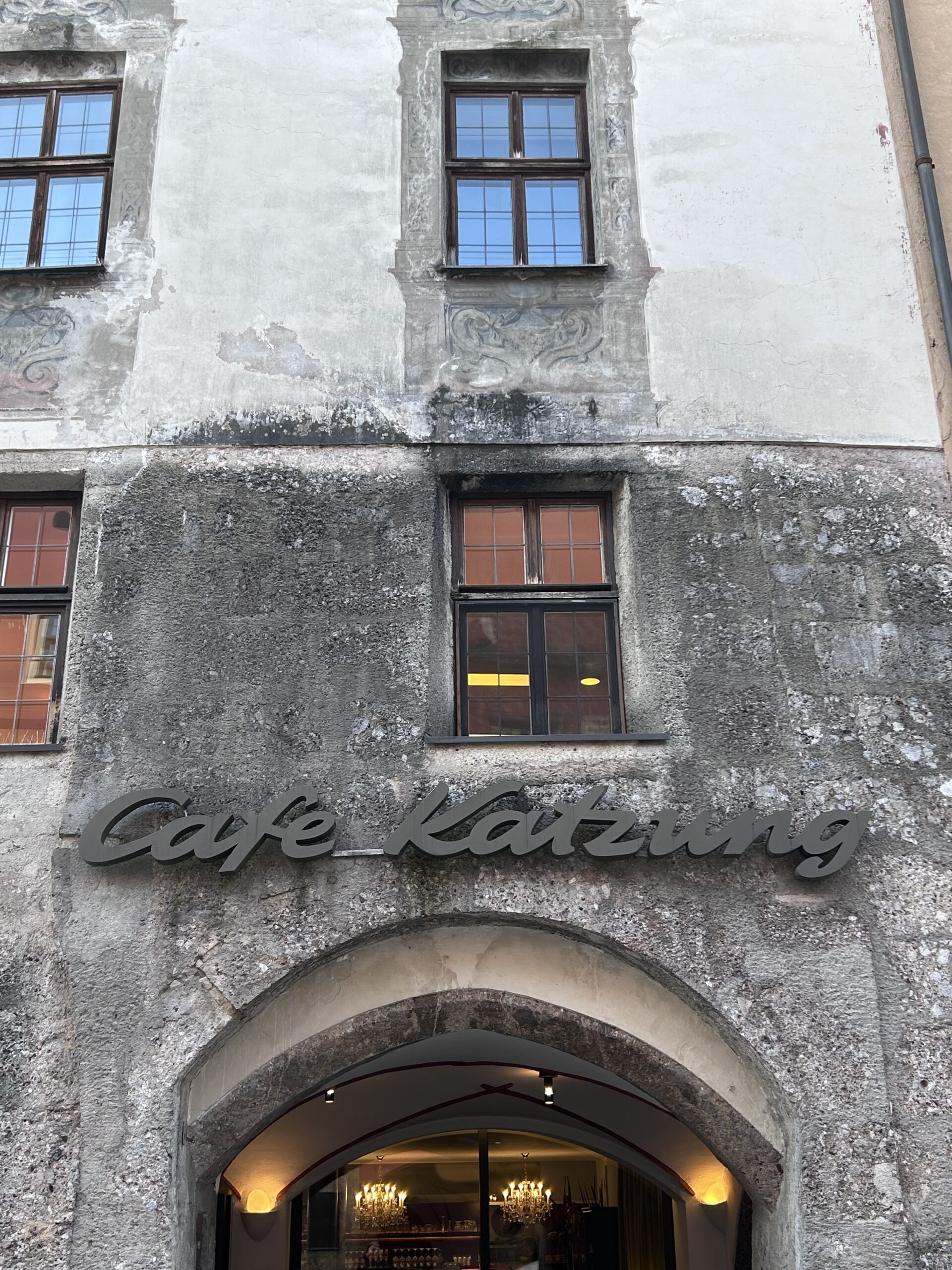
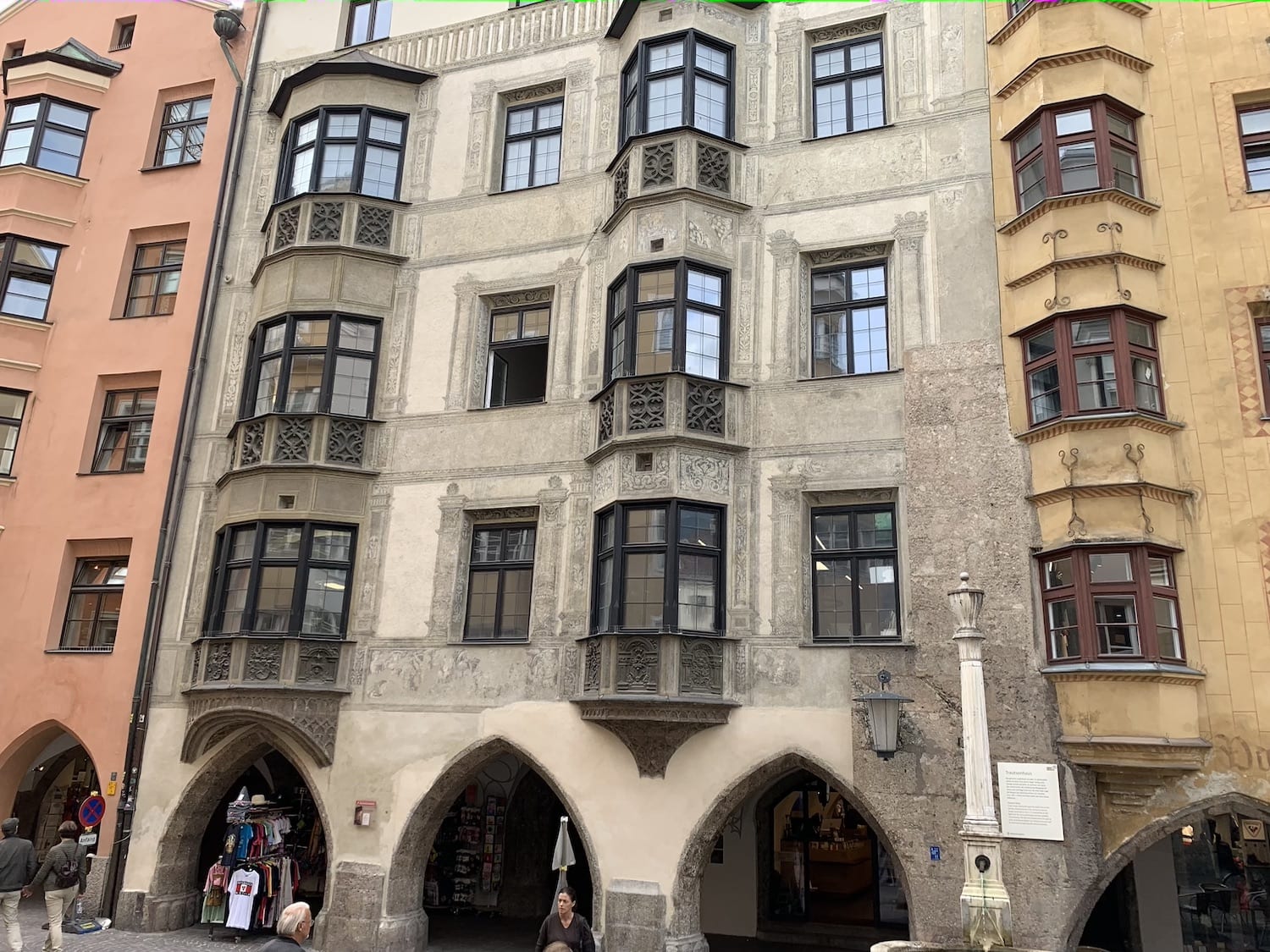
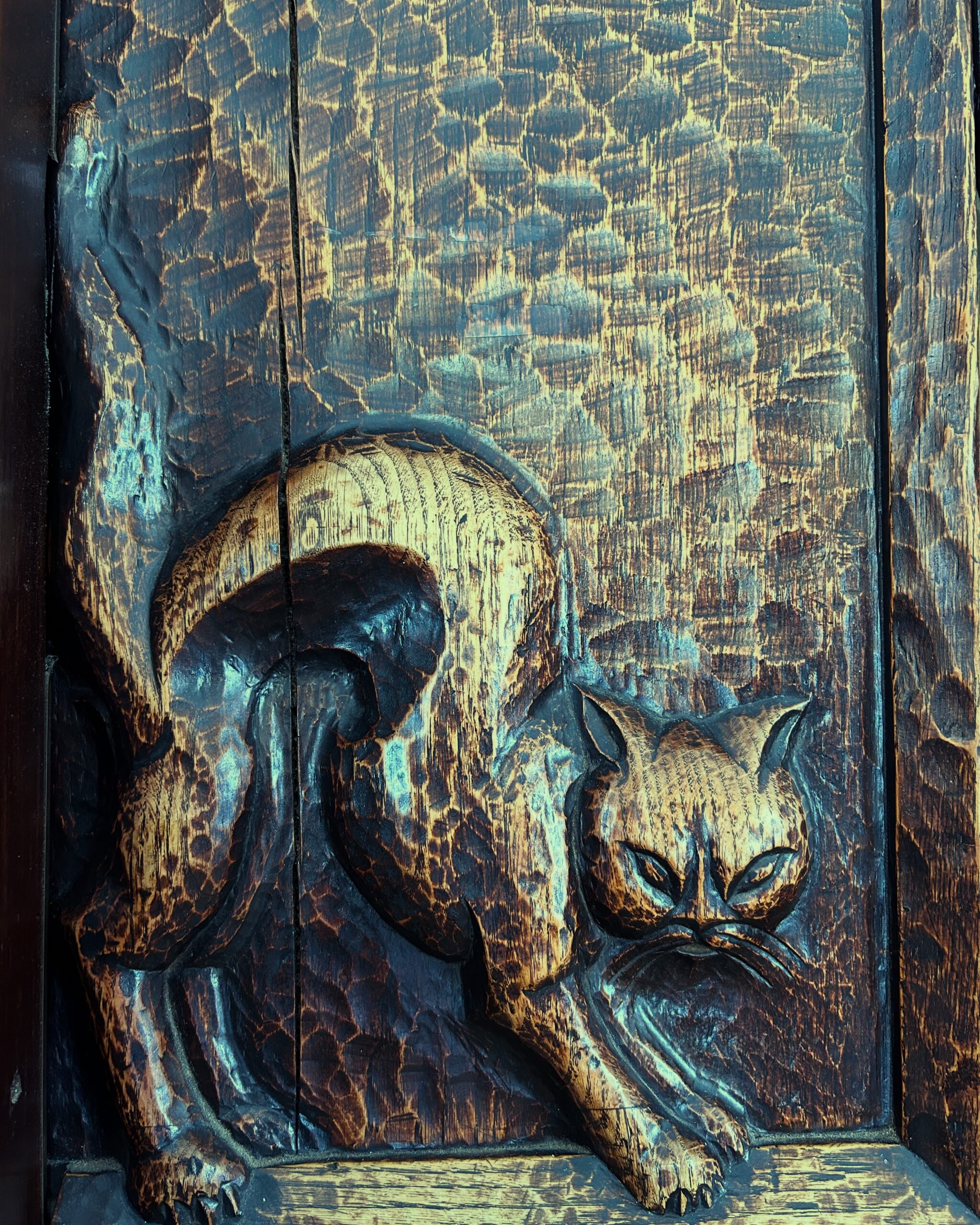
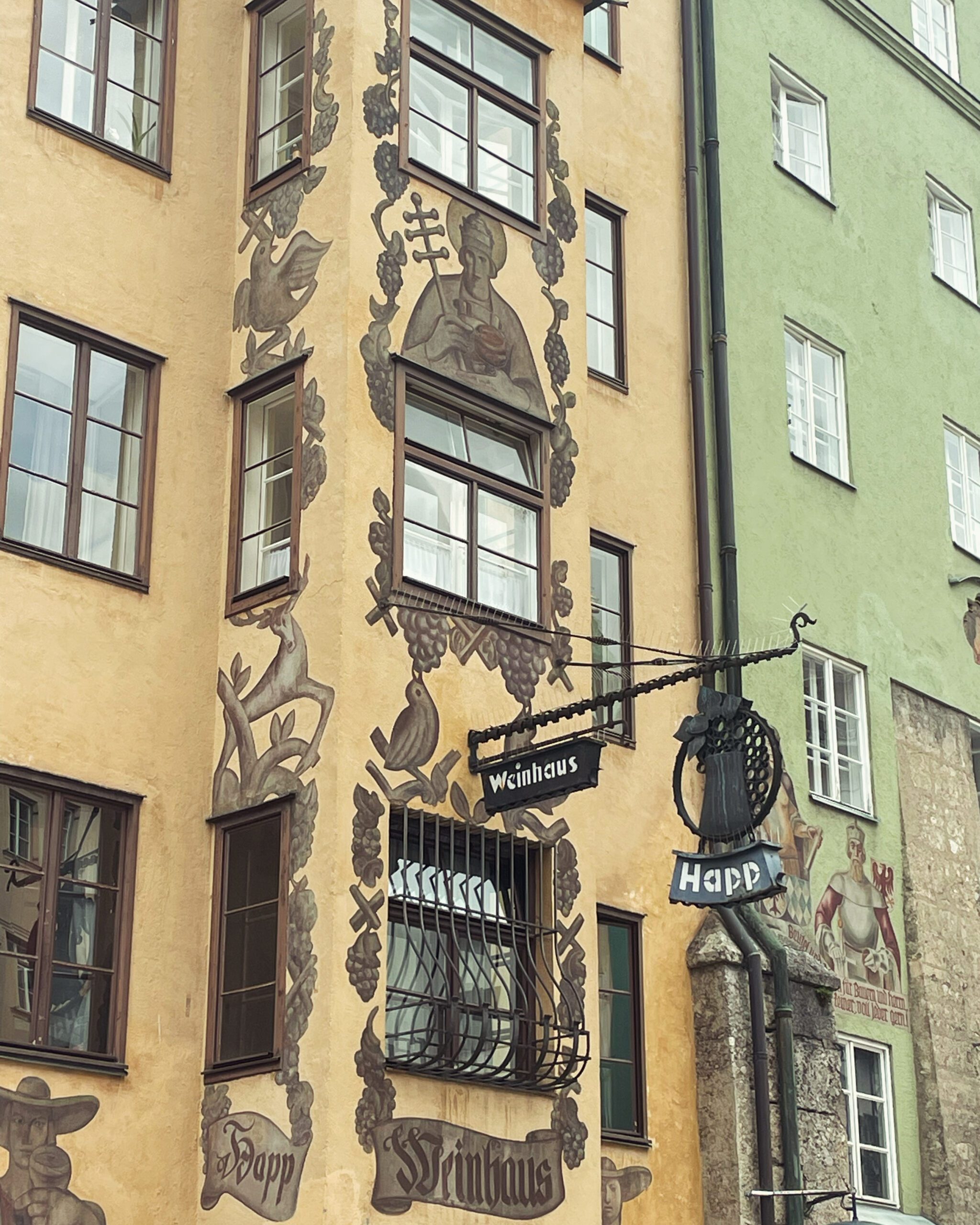
Trautsonhaus & Cafe Katzung
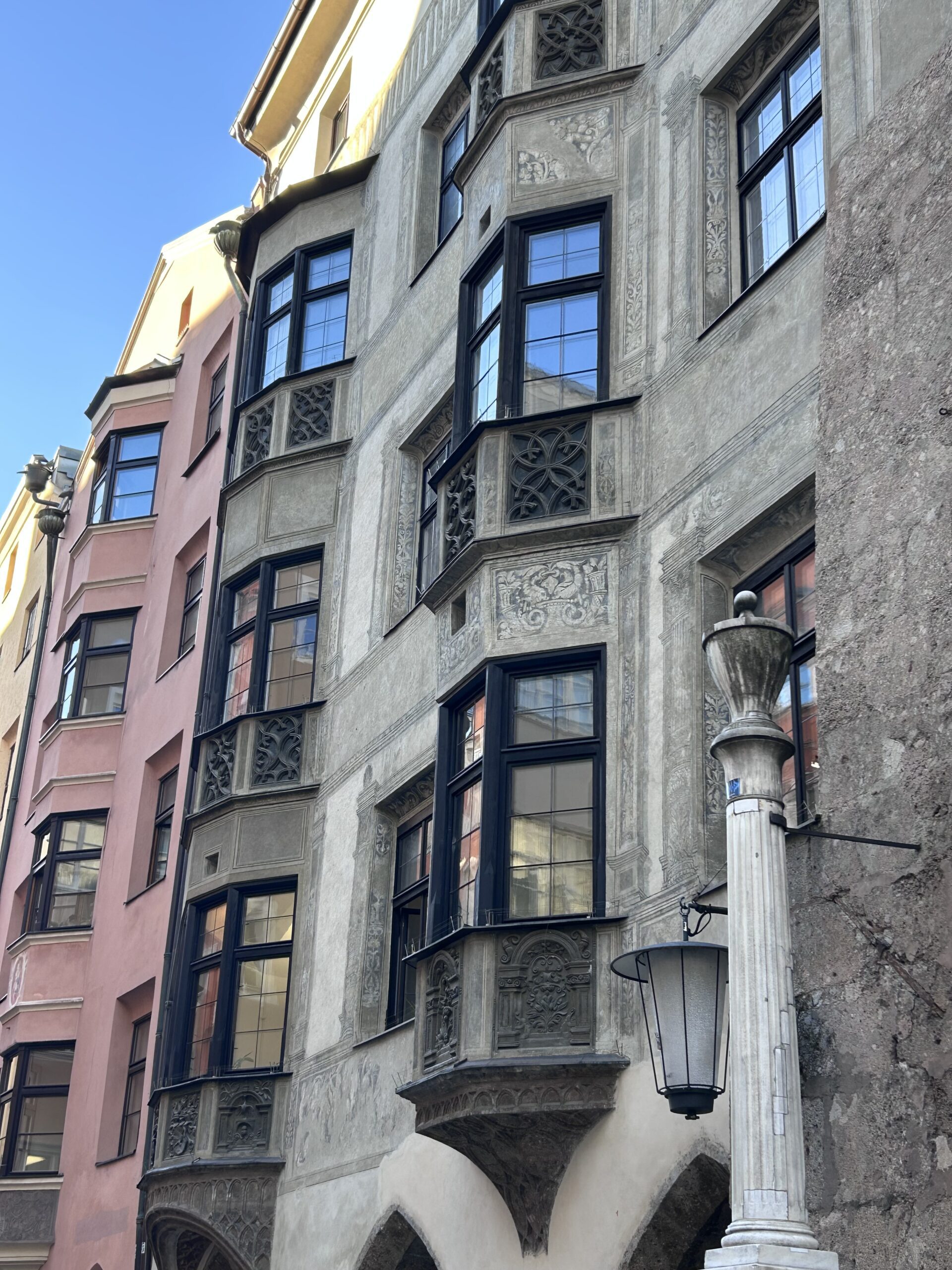
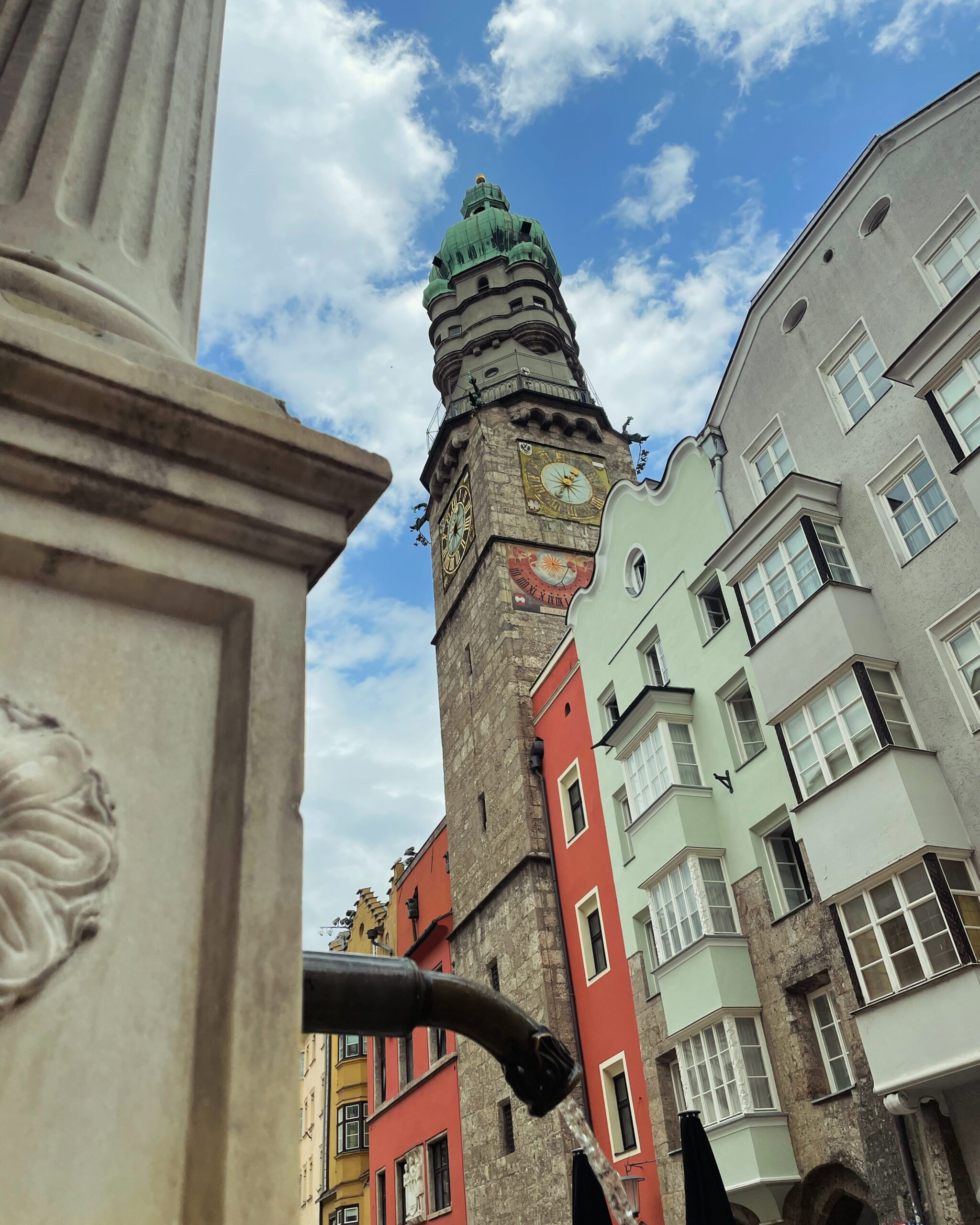
Herzog-Friedrich-Straße is home to some of Innsbruck’s most beautiful Gothic buildings. In the 15th century, stone houses gradually replaced the old wooden structures. When Innsbruck was elevated to the status of a princely residence city, the clientele changed and prosperity increased. Real estate was meant to reflect this new status. It’s worth taking a closer look at the façades, bay windows, reliefs, and frescoes. Three particularly fine examples can be found in the early modern row of houses opposite the city tower.
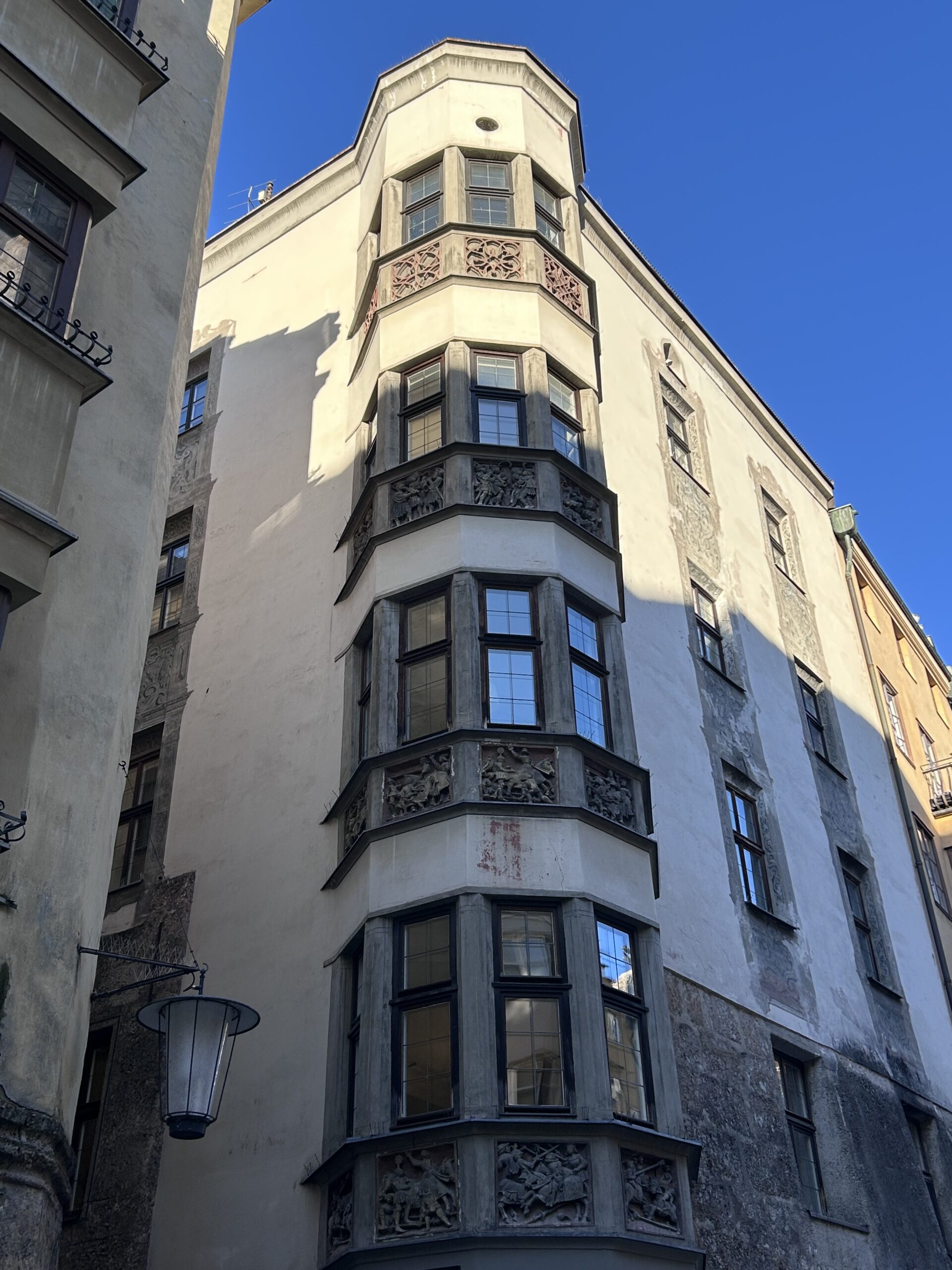
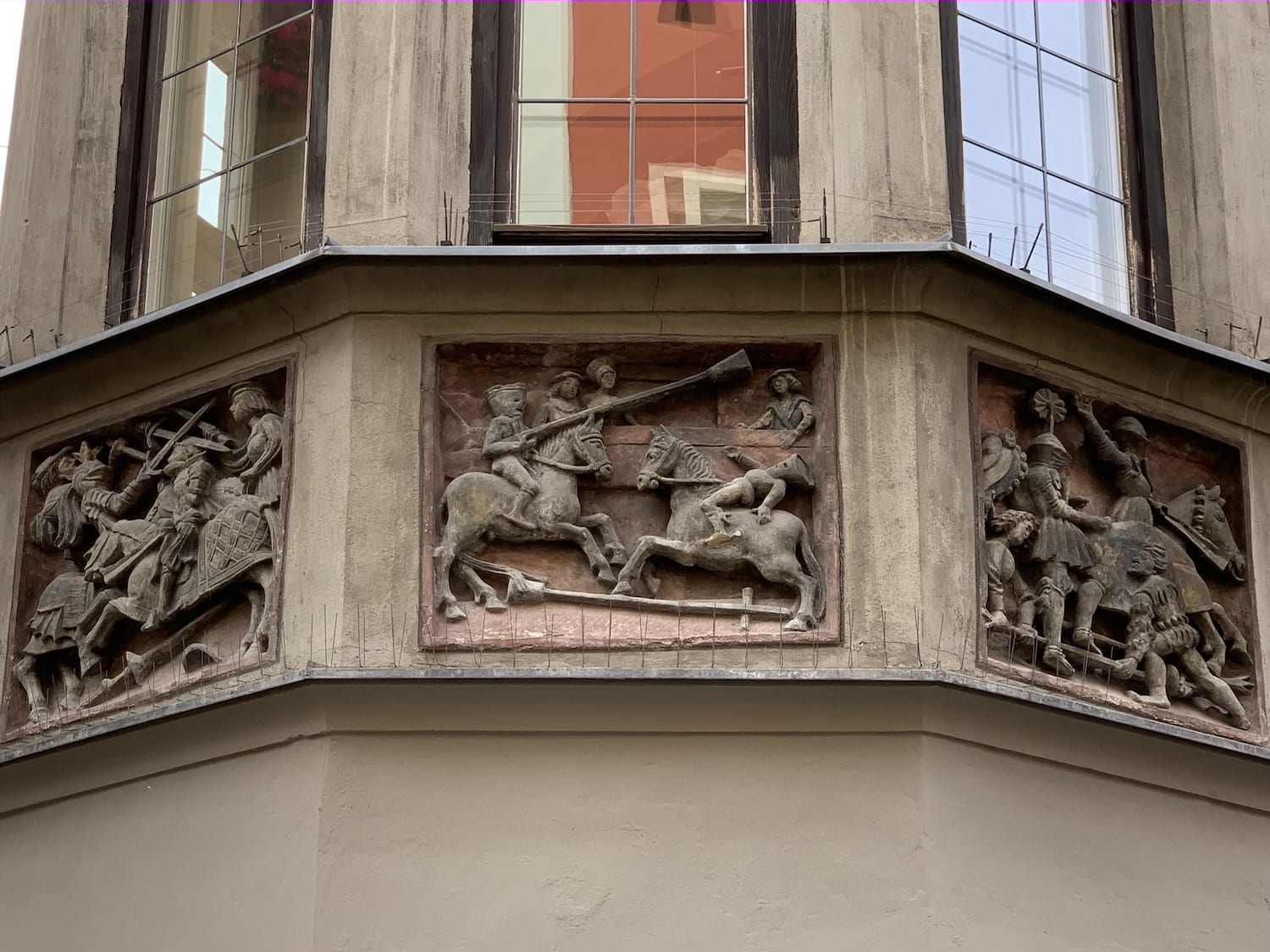
The Katzunghaus was first mentioned in records in 1455. Notable are the reliefs on the bay window created by the Türing family in 1530, depicting a late medieval tournament. Today, it houses the city’s oldest continuously operating coffeehouse. Court confectioner Anton Georg Katzung opened this Innsbruck institution in 1793. Interestingly, unlike earlier inns that bore animal names such as Eagle, Bear, or Stag, Katzung confidently chose his own name for the establishment. Later owners of Innsbruck cafés and patisseries, such as Munding and Café Grabhofer, followed his example. What was new about cafés was that they were public places aimed primarily at the local urban bourgeoisie. Unlike inns, which mainly accommodated travelers, cafés allowed the bourgeoisie and minor nobility to meet without seeming disreputable. Going out and being seen in a public establishment became respectable. Katzung was the first to offer a billiard table to the general public—a pastime previously reserved for aristocrats in their salons and upper-class university students. More recent is the iconic 1950s-style lettering on the façade.
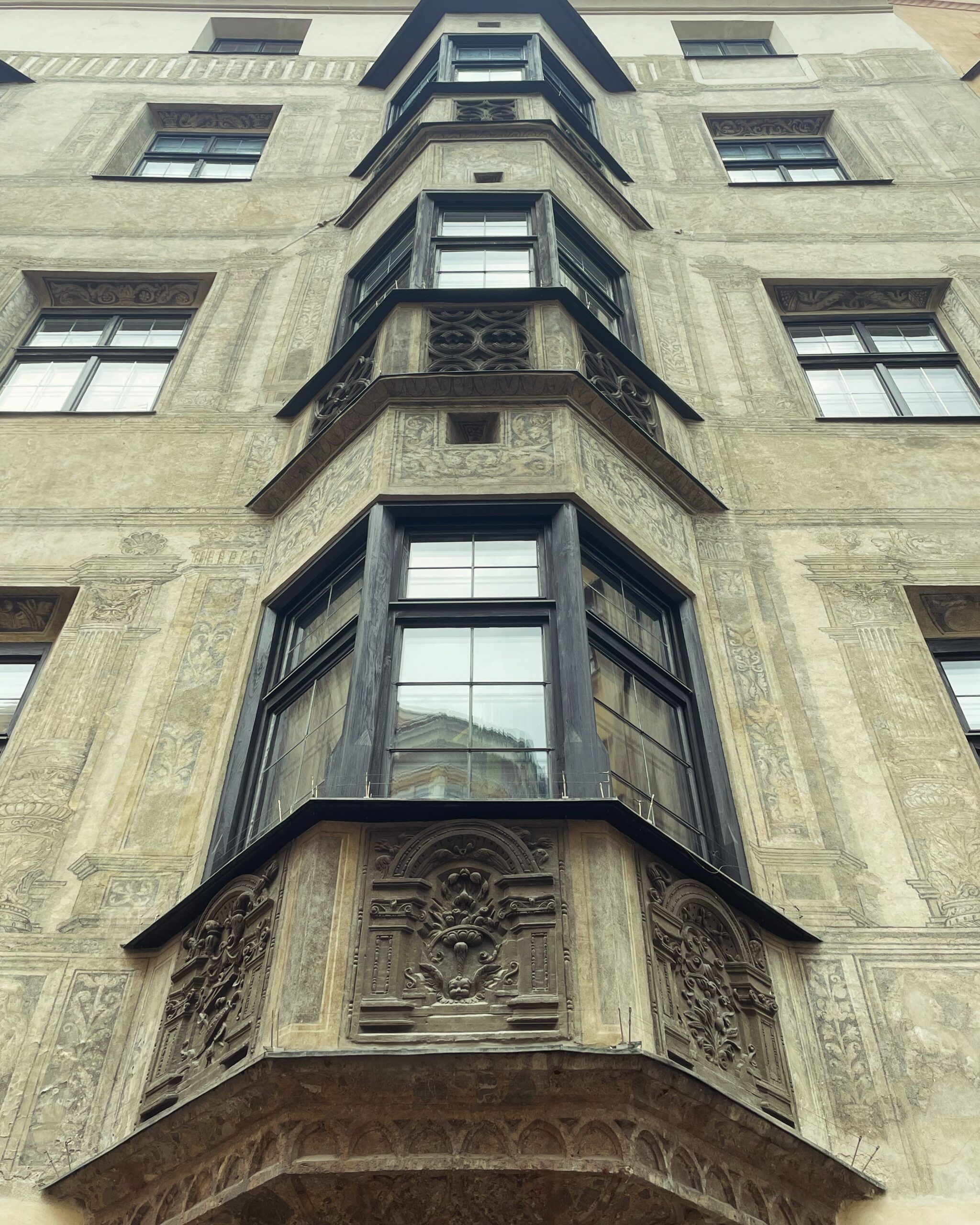
Also worth seeing is the Trautsonhaus. The building was named after hereditary marshal Hans Freiherr von Trautson, who acquired it in 1541. This building, too, is a masterpiece by Gregor Türing. The Gothic sandstone bay windows are richly decorated with strictly symmetrical, intricate ornaments, giving a good impression of the typical architecture of the time. The vaulted arcades beneath the arcades date from the transitional period between Renaissance and Gothic. The baroque fountain on a small platform was installed in 1806 under Bavarian administration and is the last fountain in the old town to survive in its original form. Where tourists now refresh themselves and Christmas market visitors clean their hands of pastry grease or mulled wine, fruit, vegetables, and laundry were once washed. The building underwent major renovations in 1889 and again after World War II air raids. During these works, the ornate paintings that still adorn the façade were uncovered. A brief visit to the Gothic courtyard is worthwhile. It shows the classic structure of Innsbruck’s stone residential houses of the time, with shaft and staircase.
Weinhaus Happ
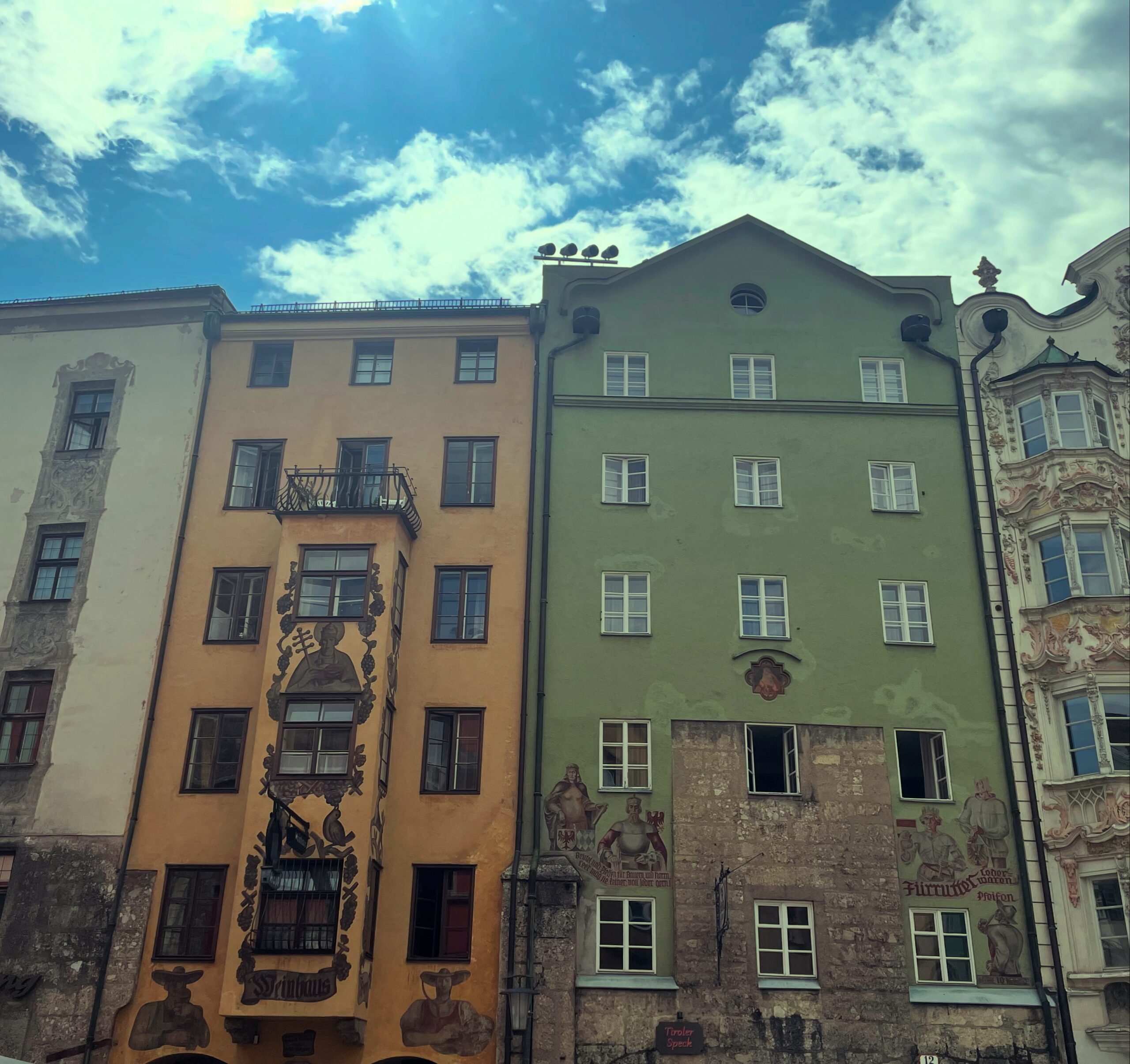
The wine house Happ is particularly Gothic in appearance, although it does not originally date from the 16th century. From the 15th century onwards, the trade in the grape juice that gave it its name flourished here. The differing climatic conditions north and south of the main Alpine ridge resulted in different forms of agricultural management. While wine in the south was primarily an export commodity, North Tyrol had to import both wine and wheat. The interests of farmers in the different regions were therefore entirely divergent, particularly with regard to customs duties on goods. The sovereign thus had to continually fine-tune the taxation system in order to satisfy, as far as possible, all the interests and necessities of his subjects. From its earliest days, Innsbruck was an important hub for the wine trade heading north. The city lies on the imaginary boundary between beer- and wine-drinking regions. In the cooler regions of northern Europe, people primarily drank beer, whereas in Mediterranean countries they consumed the wine that thrived there. Innsbruck—and the drinking habits of its inhabitants—have been and continue to be influenced by both sides along this beer–wine divide. In 1427, Frederick IV granted the innkeepers of Innsbruck permission to serve wine. In 1783, the Weinhaus Happ was first officially recorded as a tavern under the beer landlord Martin Juffing. After numerous changes of ownership, the building’s namesake, Franz Happ, took over the establishment in 1874. Like many other buildings in the old town, the Weinhaus Happ was in a miserable state by the end of the 19th century due to prolonged neglect of its old structure. After the façade completely collapsed, it had to be renovated for the first time. Following the difficult war years, Maria Schwarz took over the Happ in 1921. Over time, it developed into a well-established Innsbruck institution. As in many inns, theatrical performances were also staged in the establishment located right next to the Golden Roof. Six years later, the Weinhaus Happ acquired its present striking appearance. The then little-known Franz Baumann (1892–1974) completely redesigned the building inside and out. The challenge lay in renovating and modernising the structure without disrupting the cityscape. At that time, the Tyrolean Heritage Protection Association, together with the district authority, had the final say in construction projects at sensitive locations. Urban planning was not to be carried out on the drawing board alone but had to take historic town centres into account. Baumann designed the façade in the cubic style of the New Objectivity. He conceived the finely carved, noteworthy entrance door, the projecting house sign, the staircase, the dining rooms, and the furnishings as a unified whole. Instead of a fully wood-panelled parlour, Baumann used wood more sparingly as a material. By incorporating new materials, he succeeded in bringing Tyrolean style and the cosiness of the traditional inn into the modern age. The centrally positioned oriel window was a popular stylistic element of the time, also used by his brother-in-law Theodor Prachensky, for example in the design of the building above the passageway to the savings bank on Maria-Theresien-Strasse. The parlour located there was later affectionately renamed the “Baumannstube” after Baumann rose to become one of the leading architects of his era. The façade paintings of the Weinhaus Happ also date from the interwar period. In 1937, South Tyrolean rural motifs—including an image of Saint Urban, the patron saint of winemakers—were created by Erich Torggler (1899–1938). Torggler was a member of the Tyrolean artists’ group Wagner, which had been founded in 1925 by Wilhelm Nicolaus Prachensky (1898–1956), the younger brother of Theodor Prachensky, together with Ernst Nepo. His painting style perfectly matched Baumann’s vision of the New Objectivity. The figures depicted captured the spirit of the time, which—almost twenty years after the division of Tyrol—was still shaped by the border at the nearby Brenner Pass. The Weinhaus Happ can be seen as a symbol of the agricultural differences between Tyrol north of the Brenner and Tyrol south of it, while at the same time reflecting the enduring sense of unity that many people still feel for the region to this day.
Colonial goods, coffee and enlightenment
Legend has it that when the Turks laid siege to Vienna in 1683, they brought two things to Austria that have left a lasting mark on breakfast culture to this day: the crescent-shaped Kipferl and coffee. How the exotic beverage actually made its way from distant growing regions into the German-speaking world can no longer be conclusively reconstructed; it was almost certainly not through sacks of coffee beans allegedly abandoned on the battlefield outside Vienna. This urban legend can more plausibly be traced back to the late seventeenth century, when the coffee bean began to establish itself in Europe as a luxury commodity consumed by political and economic elites. This was the era of the great trading companies, the first stock exchanges, and the philosophers, legal scholars, and economists of the early Enlightenment—a period in which lucrative overseas trade brought coffee and the economic sectors that developed around it into Europe’s cities. As part of the Habsburg Empire and an important trading town, Innsbruck was involved in this imperial business from an early date. Long-distance trade was an integral part of the local economy. Thanks to the Inn Bridge and its favourable geographic position, the city had been integrated into European trade networks since the twelfth century. A substantial portion of Innsbruck’s wealthy elite—who also exercised political influence through the city council—emerged from the mercantile class.
At the beginning of the eighteenth century, coffee appeared for the first time in Innsbruck’s municipal legislation, a strong indication that it had crossed the threshold into public significance within urban life. In 1713, the city council decreed that coffee might be purchased exclusively in pharmacies. Much like Red Bull in the 1990s, the exotic drink was initially viewed with suspicion. As demand grew in the Enlightenment climate of Emperor Joseph II’s reign and coffee gradually gained wider social acceptance, these restrictions were relaxed. Coffee nevertheless remained an exclusive and expensive indulgence of eccentric elites rather than an everyday beverage. Spice merchants—shops specialising in spices and foodstuffs—began to sell coffee. The Innsbruck coffee brand Nosko, which still exists today, claims to be the city’s oldest roastery, tracing its origins to the spice shop founded in 1751 by Josef Ulrich Müller at Seilergasse 18. Unterberger & Comp. Kolonialwaren, the second coffee roastery still operating in Innsbruck today, likewise began as a spice merchant’s business. Jakob Fischnaller took over a shop in the Old Town that had existed since 1660 and began selling coffee there in 1768. Restaurateurs followed this slowly emerging trend. With the arrival of the first licensed coffee servers at the end of the 1750s, the triumphal advance of the coffee bean began. These early establishments bore little resemblance to the Viennese coffeehouse culture known worldwide today. In 1793, Café Katzung opened its doors to the affluent bourgeoisie, who began to appropriate public space with billiard tables and newspaper stands. Fifty years later, there were already eight coffeehouses in the small city of Innsbruck. Unlike traditional inns, coffeehouses symbolised a new, urban, and enlightened lifestyle and marked a clear distinction between city and countryside. For a long time, wine and beer had been the everyday drinks of the masses. In the Middle Ages, water from wells—especially in larger cities—was often considered unsafe, while light wine and nourishing, calorie-rich beer were more reliable alternatives. Alcohol, however, dulled the senses. Under Maria Theresa, peasants were granted local distilling rights. The strong, often cheaply produced spirits distilled from fallen fruit were popular among the rural population and among workers and employees in cities alike—and problematic at the same time. Anyone concerned with social standing avoided them. Coffee, by contrast, promoted alertness and productivity and supported the new virtues of diligence and industriousness. In cities such as Innsbruck, the compliant subject was gradually replaced by the critical, newspaper‑reading citizen. Consuming the expensive colonial commodity allowed one to present oneself as a connoisseur, capable of distinguishing genuine bean coffee from the cheap brews adulterated with various fillers—and able to afford it—thereby setting oneself apart from the lower classes. When Napoleon banned the import of coffee in the territories under his control in 1810 in an attempt to weaken the British economy, which depended heavily on overseas trade, this sparked fierce protests throughout Europe. Fig and chicory coffee, used as substitutes—as would later again be the case during the World Wars—met with little enthusiasm among the bourgeois population.
The colonial goods trade, which linked the exploitative business models of African coffee plantations, American tobacco plantations and South American fruit plantations with the Alps, reached a high point in Innsbruck, as in the entire German-speaking region, from the end of the 19th century, when the European powers' race for Africa entered the home straight. In 1900, there were around 40 colonial goods traders in Innsbruck. These were mostly speciality shops and general merchants who sold various, usually expensive goods from all over the world. Above all, luxury goods such as rum, tobacco, cocoa, tea and coffee or exotic fruits such as bananas were sold as colonial goods to the wealthy Innsbruck bourgeoisie. From this time onwards, the Viennese coffee house culture with all its peculiarities finally became the standard for the bourgeois culture of the Austro-Hungarian Empire. Monarchy. No matter where you were between Innsbruck in the west and Czernowitz in the east of the vast empire, you could be sure of finding a railway station, an appropriate hotel and a coffee house with German-speaking staff and a similar menu and furnishings. Coffee houses, unlike traditional inns, were places where not only the aristocracy and new elites, but also men and women, albeit often in separate areas as in the Cafe Munding, could spend time.
Neither coffeehouse culture nor colonial goods shops disappeared from everyday life with the rupture of the First World War and the end of the monarchy. In the 1930s, around sixty such businesses were still operating in Innsbruck. Supermarkets with extensive assortments as we know them today did not yet exist; shopping was still done at market stalls or in small shops. Only after the Second World War did the term Kolonialwaren disappear from the city’s trade registers, replaced by the designations coffee roastery and fruit importer. What remains, however, is not only Viennese coffeehouse culture. Innsbruck is still home to several of the oldest cafés of their kind, including Katzung, Munding, and Central. Since 1884, the firm Ischia has distributed exotic fruits in the city and remains a prominent feature of the urban landscape to this day with its distinctive logo on the company building next to the new city library. A brass plaque at Herzog‑Friedrich‑Strasse 26 and a large version of the logo depicting a trading ship on the main thoroughfare Egger‑Lienz‑Strasse near the Westbahnhof attest to the presence of the Unterberger brand. More contentious is the logo of Praxmarer Kaffee, which shows a kneeling “Moor” offering a cup on a façade in Amraserstrasse. While the traditional coffee company no longer exists, the firm Praxmarer Obst—trading in exotic fruits—continues to operate under the same name.
Franz Baumann and Tyrolean modernism
The First World War not only brought states and ruling dynasties to an end; it also marked a turning point for art, music, literature, and architecture. In Innsbruck, a handful of planners transformed the cityscape during the two decades of the First Republic. Inspired by new design movements such as the Bauhaus style from Germany, skyscrapers from the United States, Italian Futurism, and Soviet Modernism from the revolutionary USSR, remarkable architectural projects emerged in Innsbruck. The best-known representatives of the avant-garde who introduced this new approach to shaping public space in Tyrol were Lois Welzenbacher, Siegfried Mazagg, Theodor Prachensky, and Clemens Holzmeister. Each of these architects had distinct characteristics, making the Tyrolean Modern Movement (Tiroler Moderne) difficult to define precisely. Their common feature was a departure from the classical architecture of the pre-war era while retaining typical Alpine materials and architectural elements, following the principle of “Form Follows Function.” In a 1920 article for the magazine Tiroler Hochland, Lois Welzenbacher wrote about the architecture of his time:
"As far as we can judge today, it is clear that the 19th century lacked the strength to create its own distinct style. It is the age of stillness... Thus details were reproduced with historical accuracy, mostly without any particular meaning or purpose, and without a harmonious overall picture that would have arisen from factual or artistic necessity."
The most prominent and visually influential representative of the so-called Tyrolean Modern Movement in Innsbruck was Franz Baumann (1892–1974). Unlike Holzmeister or Welzenbacher, he never received an academic education. Baumann was born in Innsbruck in 1892, the son of a postal official. His religious education teacher, the now controversial theologian and writer Anton Müller, known by the pseudonym Brother Willram, recognized the young Franz Baumann’s talent for drawing and enabled him to attend the Imperial-Royal State Trade School (k.k. Staatsgewerbeschule) at the age of fourteen. There he met his future brother-in-law Theodor Prachensky, who would also play a significant role in his professional life. During his school years, Baumann gained practical experience as a bricklayer with the construction company Huter & Söhne and began producing landscape drawings around Innsbruck together with his sister Maria and Prachensky. In 1910, Baumann followed his friend to Merano to take up employment with the renowned construction firm Musch & Lun. The former Tyrolean capital was then the most important tourist destination in Tyrol, attracting an international clientele of spa visitors. Under Adalbert Erlebach, who would later play a key role in the development of Hungerburg, Baumann gained his first experience in planning large-scale projects such as hotels and cable cars. Important for his later career was not only his technical education but also his first encounters with the Tyrolean Heritage Protection Association (Tiroler Heimatschutzverband). Kunibert Zimmeter had founded this organization together with Gotthard Graf Trapp. Since building regulations were a provincial matter, the Tyrolean Heritage Protection Association, together with the district authorities, acted as the final authority responsible for evaluating and approving construction projects. In many Tyrolean villages, hotels had replaced churches as the largest buildings in the local skyline. The aim was to prevent tourism and industrial developments from overwhelming traditional village character. In Our Tyrol: A Homeland Protection Book, Zimmeter wrote:
"Let us look at the flattening of our private lives, our amusements, at the centre of which, significantly, is the cinema, at the literary ephemera of our newspaper reading, at the hopeless and costly excesses of fashion in the field of women's clothing, let us take a look at our homes with the miserable factory furniture and all the dreadful products of our so-called gallantry goods industry, Things that thousands of people work to produce, creating worthless bric-a-brac in the process, or let us look at our apartment blocks and villas with their cement façades simulating palaces, countless superfluous towers and gables, our hotels with their pompous façades, what a waste of the people's wealth, what an abundance of tastelessness we must find there."
After four years, Baumann’s career was abruptly interrupted. Like most of his generation, the First World War tore him away from both work and everyday life. While serving on the Italian Front, he suffered a gunshot wound to the abdomen and recovered in a military hospital in Prague. During this otherwise inactive period, he painted cityscapes depicting buildings in and around Prague. These urban views, which later helped him visualize architectural designs, were exhibited at his only exhibition in 1919. His breakthrough in construction came the following year. Baumann unexpectedly won the competitions for the renovation of the Weinhaus Happ in Innsbruck’s Old Town and for the Nordkette Cable Railway. Besides his creativity, his success stemmed from the alignment between his architectural philosophy and the requirements of both the Tyrolean Heritage Protection Association and the public tenders issued by the young First Republic. In the economic upswing of the late 1920s, a new class of customers and visitors emerged in tourism. The aristocratic distance toward the mountains had given way to a middle-class enthusiasm for sports. No longer were grand hotels built at elevations of 1,500 meters for health resorts; instead, functional infrastructure for skiers in high alpine terrain, such as on the Nordkette, was constructed. Buildings were expected to blend harmoniously into their surroundings while remaining attractive and practical. Despite the social and artistic innovations of the era, architects still had to take regional character into account. This was precisely where Baumann’s approach to holistic building in a Tyrolean context excelled. From exterior lighting to furniture, Baumann designed even the smallest details and integrated them into his overall concept of the Tyrolean Modern Movement. Every technical function and detail, as well as environmental conditions, topography, and sunlight, played a role for him. Although he was officially not permitted to use the professional title of architect, he followed the principles outlined by architect Adolf Loos (1870–1933) in his essay Rules for the Person Building in the Mountains:
Don't build picturesquely. Leave such effects to the walls, the mountains and the sun. The man who dresses picturesquely is not picturesque, but a buffoon. The farmer does not dress picturesquely. But he is...
Pay attention to the forms in which the farmer builds. For they are ancestral wisdom, congealed substance. But seek out the reason for the mould. If advances in technology have made it possible to improve the mould, then this improvement should always be used. The flail will be replaced by the threshing machine."
Beginning in 1927, Baumann operated his own studio on Schöpfstraße in the Wilten district. At the height of its success, his office employed fourteen staff members. Time and again, his professional path crossed with that of his friend and brother-in-law Theodor Prachensky. Together, beginning in 1929, they planned the new secondary school in Hötting on Fürstenweg. Although separate wings for boys and girls still had to be included according to contemporary conventions, the building otherwise fully embodied the style of New Objectivity (Neue Sachlichkeit) and the principle of “Light, Air, and Sun.” Thanks to his modern approach, which combined functionality, aesthetics, tradition, and economical construction, Baumann weathered the economic crisis that began in the late 1920s relatively well. It was only the 1,000-Mark Blockade, imposed by Hitler on Austria in 1933 in an attempt to place financial pressure on the Republic, that caused serious problems for his architectural practice. Not only did unemployment in the tourism sector triple within a short period of time, but the construction industry also entered a severe downturn. In 1935, Baumann became head of the Central Association of Architects, after receiving a special exemption allowing him to use the professional title of architect despite lacking a formal academic qualification. With Austria’s annexation by Germany in 1938, he quickly joined the National Socialist German Workers’ Party (NSDAP). On the one hand, like his colleague Lois Welzenbacher, he may have been sympathetic to certain ideas of National Socialism. On the other hand, membership enabled him to advance his career as chairman of the Reich Chamber of Fine Arts in Tyrol. In this position, however, he repeatedly opposed the radical alterations to Innsbruck’s cityscape that the Nazi authorities wished to implement. Innsbruck’s mayor, Egon Denz, wanted the Triumphal Arch and St. Anne’s Column removed in order to create more space for traffic in Maria-Theresien-Straße. At that time, the city center still served as the principal traffic route connecting the Brenner Pass in the south with the federal highway leading east and west along what is now the Innrain. A statue of Adolf Hitler was intended to replace St. Anne’s Column. Gauleiter Franz Hofer also planned to have the towers of the Court Church blown up. In his official capacity, Baumann assessed both projects negatively. When the matter eventually reached the desk of Albert Speer, Speer agreed with Baumann’s assessment. From that point onward, Gauleiter Hofer no longer awarded Baumann any public projects. However, this courageous stance probably spared him more serious consequences after the war. After being questioned during the denazification process following the war, Baumann began working in the municipal building department, likely also on the recommendation of his brother-in-law Theodor Prachensky. Although Baumann was fully exonerated, partly due to testimony from the abbot of Wilten, whose church towers he had helped save, his reputation as an architect could no longer be fully restored. Another setback was the destruction of his studio on Schöpfstraße, which was hit by a bomb in 1944. In his postwar career, Baumann became responsible for the restoration of buildings damaged during the war. Under his supervision, the Boznerplatz and its Rudolf Fountain were rebuilt, while the Burggraben area and the New City Halls (Neue Stadtsäle) behind the Tyrolean State Theatre were redesigned. Franz Baumann died in 1974. Today, his paintings, sketches, and drawings are highly sought after and command substantial prices on the art market. Anyone who carefully examines more recent large-scale projects in Innsbruck, such as the City Library, the PEMA Towers, and many of the city’s residential developments, can still recognize elements of the Tyrolean Modern Movement today.
The year 1848 and its consequences
The year 1848 occupies a mythical place in European history. Innsbruck was not one of the hotspots like Paris, Vienna, Budapest, Milan or Berlin, but even in the “Holy Land” of Tyrol the revolutionary year left its mark. In contrast to the rural surroundings, an enlightened educated bourgeoisie had developed in Innsbruck. Enlightened people no longer wanted to be subjects of a monarch or territorial prince, but citizens with rights and duties in relation to a modern state. Students and members of the liberal professions demanded political participation, freedom of the press and civil rights. Workers demanded better wages and working conditions. Particularly radical liberals and nationalists even questioned the absolute authority of the Church. In March 1848 this socially and politically highly explosive mixture erupted in uprisings and street fighting in many cities. In Innsbruck, some students and professors celebrated the newly granted freedom of the press with a torchlight procession. On the whole, however, the revolution proceeded quietly in the rather leisurely Tyrol. To speak of a spontaneous outburst of emotion or even a revolution would already be an exaggeration: the date of the procession was postponed from 20 to 21 March because of bad weather. There were hardly any anti-Habsburg riots or violent incidents; a stray stone thrown into a Jesuit window was one of the highlights of the Alpine version of the Revolution of 1848. The students even supported the city magistrate in maintaining public order, thereby demonstrating their gratitude to the monarch for the newly granted freedoms and their loyalty.
The initial enthusiasm for change among the bourgeois elites was soon replaced in Innsbruck by a surge of German-national patriotism. On April 6, 1848, the governor of Tyrol led a ceremonial procession in which the German flag was displayed. A German tricolour was also hoisted on the city tower. While students, workers, liberal-national citizens, republicans, supporters of a constitutional monarchy, and Catholic conservatives could not agree on social issues such as press freedom, they shared a common hostility toward the Italian independence movement, which had spread across northern Italy from Piedmont and Milan. Innsbruck students and riflemen, with the support of the imperial army leadership, marched into the Trentino to suppress unrest and uprisings at an early stage. Notable members of this corps included the already elderly Father Haspinger, who had fought alongside Andreas Hofer in 1809, and Adolf Pichler. Johann Nepomuk Mahl-Schedl, a wealthy owner of Büchsenhausen Castle, even equipped his own company and marched over the Brenner Pass to secure the border. However, the war did not remain confined to the southern borders. Innsbruck itself, as the political and economic center of the multinational crown land of Tyrol and home to many Italian speakers, became an arena of the conflict between nationalities. Combined with ample alcohol consumption, anti-Italian sentiment posed a greater threat to public order than the demand for civil liberties. A dispute between a German-speaking craftsman and an Italian-speaking Ladin escalated to such an extent that it nearly triggered a pogrom against the numerous businesses and inns of Italian-speaking Tyroleans.
The relative calm of Innsbruck suited the imperial court in Vienna, which was under pressure. As unrest in the capital continued after March, Emperor Ferdinand fled to Tyrol in May. According to contemporary press reports, he was enthusiastically welcomed by the population.
"“What is the name of the land to which such an honour falls, what is the people that enjoys such trust in these fateful times? Does the peace and security here rest solely on legend from ancient times, or is there also in the present a foundation on which one can build, which the wind cannot blow away and the storm cannot shake? This Alpine land is called Tyrol, do you like it? Yes, the Tyrolean people alone prove, in the midst of a shaken Europe, reverence and loyalty, courage and strength for their hereditary ruling house, while all around rebellion, contradiction, defiance and demands, often even revolt and upheaval rage; Tyrol alone stands firmly without wavering in custom and obedience, in religion, truth and law, while elsewhere insolence and falsehood, madness and passions prevail …”"
In June, a young Franz Joseph—still not yet emperor—also stopped at the Hofburg on his return from the battlefields of northern Italy instead of traveling directly to Vienna. Innsbruck once again became a royal residence, albeit only for one summer. While blood was shed in Vienna, Milan, and Budapest, the imperial family enjoyed rural Tyrolean life. Ferdinand, Franz Karl, his wife Sophie, and Franz Joseph received guests from foreign courts and were driven by carriage to excursion destinations such as Weiherburg, Stefansbrücke, Kranebitten, and even up to Heiligwasser, and went on hikes. This calm did not last long. Ferdinand, considered no longer fit to rule, handed over power under gentle pressure to Franz Joseph I. In July 1848, the first parliamentary session was held in Vienna, and a constitution came into force. However, the monarchy’s willingness to reform soon waned. The new parliament—the Reichsrat—could not pass binding laws, the emperor never attended it, and he did not understand why a monarchy ordained by God needed such a council.
The subtly initiated liberalization nevertheless ran its course in the cities. Innsbruck was granted the status of a city with its own independent charter (Statutarstadt). In 1850, the "Provisorische Gemeindegesetz für die Landeshauptstadt Innsbruck" ("Provisional Municipal Code for the State Capital of Innsbruck") came into force:
"The municipality is to provide for the sanitation police; it takes care of the paving and maintenance of streets, alleys, and paths, with the exception of those whose maintenance is the responsibility of the Imperial Treasury, as well as for street lighting, the maintenance and cleaning of the main drainage canals, and the maintenance of municipal bridges, fountains, aqueducts, and other facilities, as well as public bathing establishments. It administers the health, fire, market, building, and traffic police, oversees land boundaries, measures, and weights; it is charged with the provision of food supplies, and takes police precautions to avert threats to personal safety and property posed by flooding or other natural disasters."
Innsbruck's municipal law provided for citizenship rights that, while tied to property ownership or tax payments, legally guaranteed certain rights to members of the community. Right of domicile (Heimatrecht) could be acquired through birth, marriage, or extraordinary conferral, granting voting rights at the municipal level to at least adult males. If one fell into financial hardship, one was entitled to basic welfare provided by the city. Within the city government, the Greater German-liberal faction prevailed thanks to the census-based majority voting system, with merchants, tradesmen, industrialists, and innkeepers setting the tone. On June 2, 1848, the first edition of the liberal and Greater German-leaning Innsbrucker Zeitung was published—from which the above article on the emperor's arrival in Innsbruck is taken. Conservatives, on the other hand, read the Volksblatt für Tirol und Vorarlberg. Moderate readers who favored a constitutional monarchy preferred to consume the Bothe für Tirol und Vorarlberg. However, freedom of the press was short-lived. The previously abolished censorship was partially reinstated. Newspaper publishers were subjected to various forms of harassment by the authorities, and newspapers were strictly forbidden from printing content critical of the state government, the monarchy, or the Church.
"Anyone who, by means of printed matter, incites, instigates or attempts to incite others to take action which would bring about the violent separation of a part from the unified state... of the Austrian Empire... or the general Austrian Imperial Diet or the provincial assemblies of the individual crown lands.... Imperial Diet or the Diet of the individual Crown Lands... violently disrupts... shall be punished with severe imprisonment of two to ten years."
After Innsbruck had officially replaced Meran as the provincial capital in 1849 and had thus finally become the political centre of Tyrol, parties began to form. With the establishment of the Catholic-conservative faction and the liberals, a pair of opposing ideas emerged that would shape politics not only until the First World War. Associations of all kinds as political organisations in advance of parties, and newspapers, formed the lines along which society split in all questions of life from the cradle to the grave. From 1868 onwards, the liberal, greater German-oriented party provided the mayor of the city of Innsbruck. The influence of the Church declined in Innsbruck in contrast to the surrounding municipalities. Individualism, capitalism, nationalism and consumption stepped into the breach. New worlds of work, department stores, theatres, cafés and dance halls did not displace religion entirely even in the city, but the weighting shifted as a result of the civil freedoms won in 1848.
The probably most important legal change of 1848 was the land relief patent. In Innsbruck the clergy, especially Wilten Abbey, owned a large part of the agricultural land. The Church and the nobility were exempt from taxes. In 1848/49 feudal lordship and the relationship of subjection were abolished in Austria. Ground rents, tithes and compulsory labour were thus removed. The landowners received one third of the value of their land from the state within the framework of the reform, one third was regarded as tax relief, and one third of the compensation had to be borne by the peasants themselves. They could pay this amount in instalments over twenty years. The after-effects can still be felt today. The descendants of the peasants who were successful at the time enjoy, through inherited land ownership resulting from the 1848 reforms, the fruits of prosperity and also political influence through land sales for housing, leases and compensation payments by public authorities for infrastructure projects. The landowning nobility of the past had to come to terms with the humiliation of taking up bourgeois occupations. The transition from privilege by birth to privileged status within society through financial means, networks and education often succeeded. Many Innsbruck dynasties of academics have their origins in the decades after 1848.
Life also changed for the broader population. The previously unknown phenomenon of leisure time emerged and, together with disposable income available to a greater number of people, fostered hobbies. Civil organisations and associations—from reading circles to choral societies, fire brigades and sports clubs—were founded. The revolutionary year also manifested itself in the cityscape. Parks such as the English Garden at Ambras Castle or the Hofgarten were no longer reserved exclusively for the aristocracy but served citizens as local recreational areas. In St. Nikolaus the Waltherpark was created as a small oasis of calm. One floor above, the first swimming and bathing facility in Tyrol opened at Büchsenhausen Castle; soon afterwards another bath followed in Dreiheiligen. Excursion inns around Innsbruck flourished. Alongside high-end restaurants and hotels, a scene of taverns emerged in which workers and employees could also afford pleasant evenings with theatre, music and dancing.
Türing dynasty of master builders: Innsbruck becomes a cosmopolitan city
With Innsbruck’s rise to the status of a residence city, a true building boom began. Anyone who wished to wield influence needed to have a residence in the city, in order to be as close as possible to the centre of power. In the period before newspapers, a regular postal system, fax, and email, politics was conducted primarily through direct personal contact. One family was particularly closely associated with this development and played a decisive role in transforming the settlement at the Inn Bridge into a stone-built city in a contemporary Gothic style. In the fifteenth century, Sigismund the Rich in Coin brought Niklas Türing (1427–1496) to Innsbruck. Türing first appears in the historical record in 1488. The Türings were a family of stonemasons and master builders from Memmingen in what is now Swabia, a region that at the time belonged as part of Further Austria to the Habsburg Monarchy. Innsbruck had already been the seat of the provincial government for several decades, but architectural grandeur north of the Alps had yet to take hold. The city consisted largely of wooden houses and was scarcely representative. Over the course of the late Middle Ages, Gothic and, somewhat later, Renaissance art had enveloped Europe in a new architectural idiom, founded on a new understanding of architecture and aesthetics. Buildings such as Notre Dame or York Minster set a trend that would shape much of Europe until the onset of the Baroque. Pointed towers, ribbed vaults, bay windows, and playful carvings depicting scenes of courtly life are among the typical features that give this heterogeneous style its distinctive character. For craftsmen and builders, golden times dawned—times that would gather even greater momentum under Maximilian.
During this transitional period between the Middle Ages and the Early Modern era, the Türings left a lasting mark on Gothic Innsbruck. Their work can be traced particularly well in the Old Town. Many of the town houses, such as the Trautson House, still preserve Gothic ground plans, inner courtyards, and carved elements today. Thanks to their training, the Türings combined an eye for the overall structure with attention to detail in their building projects. They were renowned for their exceptionally fine stonework, which made it possible to create elaborate portals, arcades, staircases, and vaults. They produced ornamental reliefs with patterns typical of Renaissance art; grotesques, vases, and animal motifs were characteristic forms of embellishment for bay windows and plain walls. The symmetrical arrangement of individual elements is another hallmark of the period. A substantial part of the Golden Roof (Goldenes Dachl) is attributable to Niklas Türing. He also created the statue of the castle giant Haidl, an exceptionally tall member of Sigismund’s bodyguard, which can still be seen today in the City Tower. Emperor Maximilian held him in such high esteem that he permitted him to immortalise both the Türing family coat of arms and that of his wife—a fountain and a fish—in the vaulting of the Golden Roof. His son Gregor likewise left his mark, among other works, with the Trautson House in Herzog-Friedrich-Strasse and the House of the Castle Giant in Domgasse. Thanks to careers that advanced in step with the city’s development, the Türings gained not only fame and honour but also considerable wealth. A record from 1497 reports that Niklas Türing served the provincial ruler as a “salaried court mason.” When he died—either in 1517 or 1518, the precise year is unknown—his gravestone titled him “Chief Master Builder to His Roman Imperial Majesty.” Together with his son Gregor, he was listed as a master stonemason. The building boom also enabled the Türings to acquire citizenship in Innsbruck. By 1506 at the latest, they owned a house in the workers’ and artisans’ quarter of Anbruggen. In 1509 they were able to purchase the building that today houses the Gasthof zum Lamm in Mariahilfstrasse, and they later acquired additional property at what is now Schlossergasse 21.
The last member of the Türing family to exert a formative influence on Innsbruck’s building scene was Niklas Türing the Younger, who, together with Andrea Crivelli, began the planning work on the Hofkirche. During the sixteenth and seventeenth centuries, the influence of Gothic architecture—particularly in what is now Austria—began to wane. In the course of the Counter-Reformation, churches in particular were increasingly rebuilt or newly constructed in the Baroque style. Today, Türingstrasse in eastern Innsbruck commemorates this early modern dynasty of master builders.
The Tyrolean nation, "democracy" and the heart of Jesus
Many Tyroleans still like to see themselves as a nation of their own. With “Tirol isch lei oans,” “Zu Mantua in Banden,” and “Dem Land Tirol die Treue,” the federal state has no fewer than three more or less official anthems. This pronounced local patriotism, as in other Austrian provinces, has historical roots. Tyrolean freedom and independence are frequently invoked almost as local sacred relics to substantiate this self-image. People also like to speak of the first democracy on mainland Europe—an assertion that is clearly an exaggeration when one considers the feudal, hierarchy-driven history of the region well into the twentieth century. Nevertheless, a certain distinctiveness in Tyrol’s historical development cannot be denied, even if this involved less the participation of broad sections of the population than the curtailment of the sovereign’s power by local elites. Tyrolean princes were already minting coins bearing their likenesses at an early stage, yet their relationship with the clergy, the estates, and the population was subject to constant fluctuation. The first act of what might be called proto-democratic Tyrolean historiography was what the Innsbruck historian Otto Stolz (1881–1957) enthusiastically celebrated in the 1950s—drawing on English history—as a Magna Charta Libertatum. Following the marriage of the Bavarian Ludwig of Wittelsbach to the Tyrolean sovereign Margaret of Tyrol-Gorizia, the Bavarian Wittelsbach dynasty briefly ruled Tyrol. In order to win over the Tyrolean population, Ludwig decided in the fourteenth century to offer the estates a concession. In the Great Charter of Freedom of 1342, he promised the Tyroleans that no laws would be enacted and no taxes raised without prior consultation with the estates. However, this was by no means a democratic constitution in the modern, twenty-first-century sense, as the estates consisted primarily of the landed nobility, who naturally represented their own interests. Although one version of the document mentioned the inclusion of peasants as an estate in the regional assembly, this version was never officially implemented.
The second act followed with Habsburg involvement. As cities and the bourgeoisie gained greater political weight in the fifteenth century due to their economic importance, a counterbalance to the nobility emerged within the estates. At the Landtag of 1423 under Frederick IV, eighteen members of the nobility met for the first time with eighteen representatives of towns and the peasantry. Over time, a fixed composition developed in the regional assemblies of the fifteenth and sixteenth centuries. Represented were the bishops of Brixen and Trient, the abbots of Tyrolean monasteries, the nobility, delegates from the towns, and representatives of the peasantry. The Landeshauptmann presided over the assembly. Naturally, the resolutions and wishes of the Landtag were not binding on the prince; nevertheless, it was surely reassuring for a ruler to know that representatives of the population stood behind him or supported difficult decisions.
Another important document for the region was the Tyrolean Landlibell. In 1511, Maximilian stipulated, among other things, that Tyrolean soldiers were to be deployed only for the defense of their own land. The reason for Maximilian’s apparent generosity lay less in affection for the Tyroleans than in the necessity of keeping the Tyrolean mines operational instead of sacrificing valuable workers and the peasantry that supported them on Europe’s battlefields. What is often overlooked is that the Landlibell also imposed significant restrictions on the population and increased financial burdens. In addition to regulating troop contingents, it defined special taxes. The nobility and clergy were required to use the income from their estates as the tax base, which often amounted to a rough estimate. Towns, by contrast, were taxed according to the number of hearths in their houses—a figure that could be recorded quite accurately. The highly sought-after mining workers were exempt from these taxes and were only conscripted for military service in cases of extreme emergency. This special regulation of territorial defense laid down in the Landlibell was one of the causes of the uprising of 1809, when young Tyroleans were conscripted during mobilization under universal military service. To this day, the Napoleonic Wars—during which the Catholic crown land was threatened by the “godless French” and the revolutionary social order—continue to shape Tyrolean self-perception. During this defensive struggle, a bond formed between Catholicism and Tyrol. Before a decisive battle against Napoleon’s armies in June 1796, the Tyrolean riflemen entrusted their fate to the Sacred Heart of Jesus and entered into a personal covenant with God to protect the Holy Land of Tyrol. Another identity-forming legend from 1796 centers on a young woman from the village of Spinges. Katharina Lanz, who entered regional history as the “Virgin of Spinges,” is said to have motivated the nearly defeated Tyrolean troops through her commanding presence in battle, ultimately enabling them to overcome the French superiority. Depending on the account, she is said to have wielded a pitchfork, a flail, or a scythe—much like the French maiden Joan of Arc—striking fear into Napoleon’s troops. Legends and traditions surrounding the riflemen and the notion of being an independent, God-chosen nation accidentally attached to the Republic of Austria stem from these narratives. The government in Vienna under Maria Theresa viewed this identity with skepticism. Distinct identities of individual crown lands did not align with enlightened concepts of a modern state. In the nineteenth century, too, efforts were made to strengthen identification with the monarchy and foster a new national consciousness. Subjects were meant to feel allegiance not to Tyrol, but to the House of Habsburg. The press, visits by the ruling family, monuments such as the Rudolf Fountain, and the opening of Bergisel with Hofer portrayed as a loyal Tyrolean were intended to help transform the population into faithful imperial subjects. Over the centuries, Innsbruck’s inhabitants saw themselves as Tyroleans, Germans, Catholics, and subjects of the emperor—but hardly anyone identified as Austrian before 1945. Only after the Second World War did a sense of belonging to Austria slowly begin to develop in Tyrol as well.
The end of the monarchy further strengthened Tyrolean national sentiment. When the Habsburg Empire collapsed after the First World War, the crown land of Tyrol also fell apart. What had been known as South Tyrol until 1918—the Italian-speaking region between Riva on Lake Garda and Salurn in the Adige Valley—became Trentino with its capital in Trento. Liberals and conservatives, otherwise divided on almost every issue, were united in their hostility toward the unwanted division of the province and the founding of the Republic of German-Austria. Even today, many Tyroleans take particular pride in their local identity and readily distinguish themselves from residents of other federal states. For many Tyroleans, the Brenner Pass still represents an unjust border more than a century later, even though political cross-border cooperation takes place at the EU level within the framework of a “Europe of the Regions.” The legend of the Holy Land, the independent Tyrolean nation, and the first mainland democracy persists to this day. The saying “bisch a Tiroler bisch a Mensch, bisch koana, bisch a Oasch” (“If you’re a Tyrolean, you’re a human being; if you’re not, you’re an arse”) succinctly captures Tyrolean nationalism. The fact that the historical crown land of Tyrol was a multiethnic construct—including Italians, Ladins, Cimbrians, and Rhaeto-Romans—is often deliberately ignored in right-wing circles. Laws from the federal capital Vienna or even from Brussels are viewed with unreflective skepticism. Nationalists on both sides of the Brenner still draw on figures such as the Virgin of Spinges, the Sacred Heart of Jesus, and Andreas Hofer to present their causes in a way that resonates with the public.