Goldenes Dachl
Herzog-Friedrich-Straße
Worth knowing
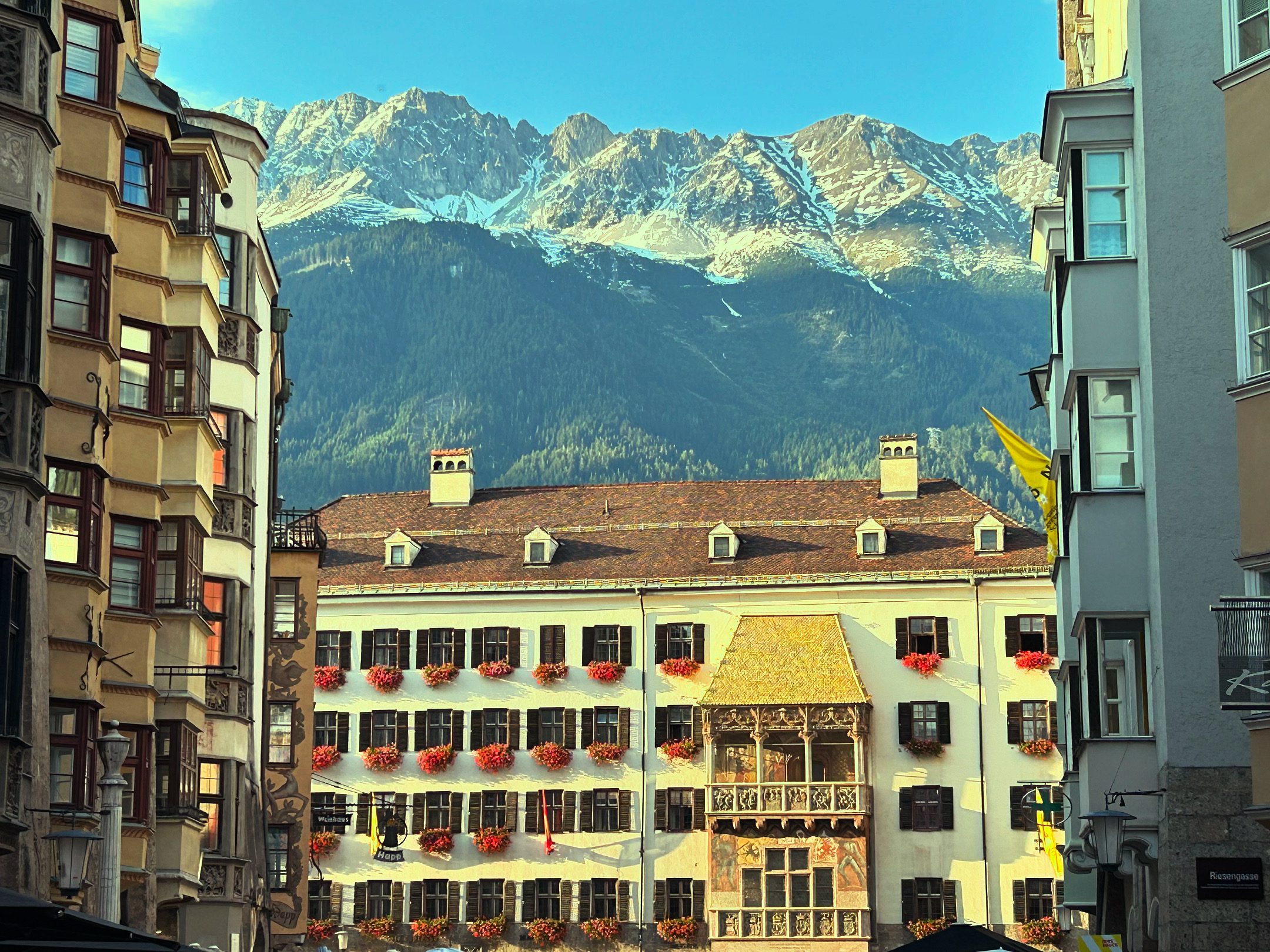
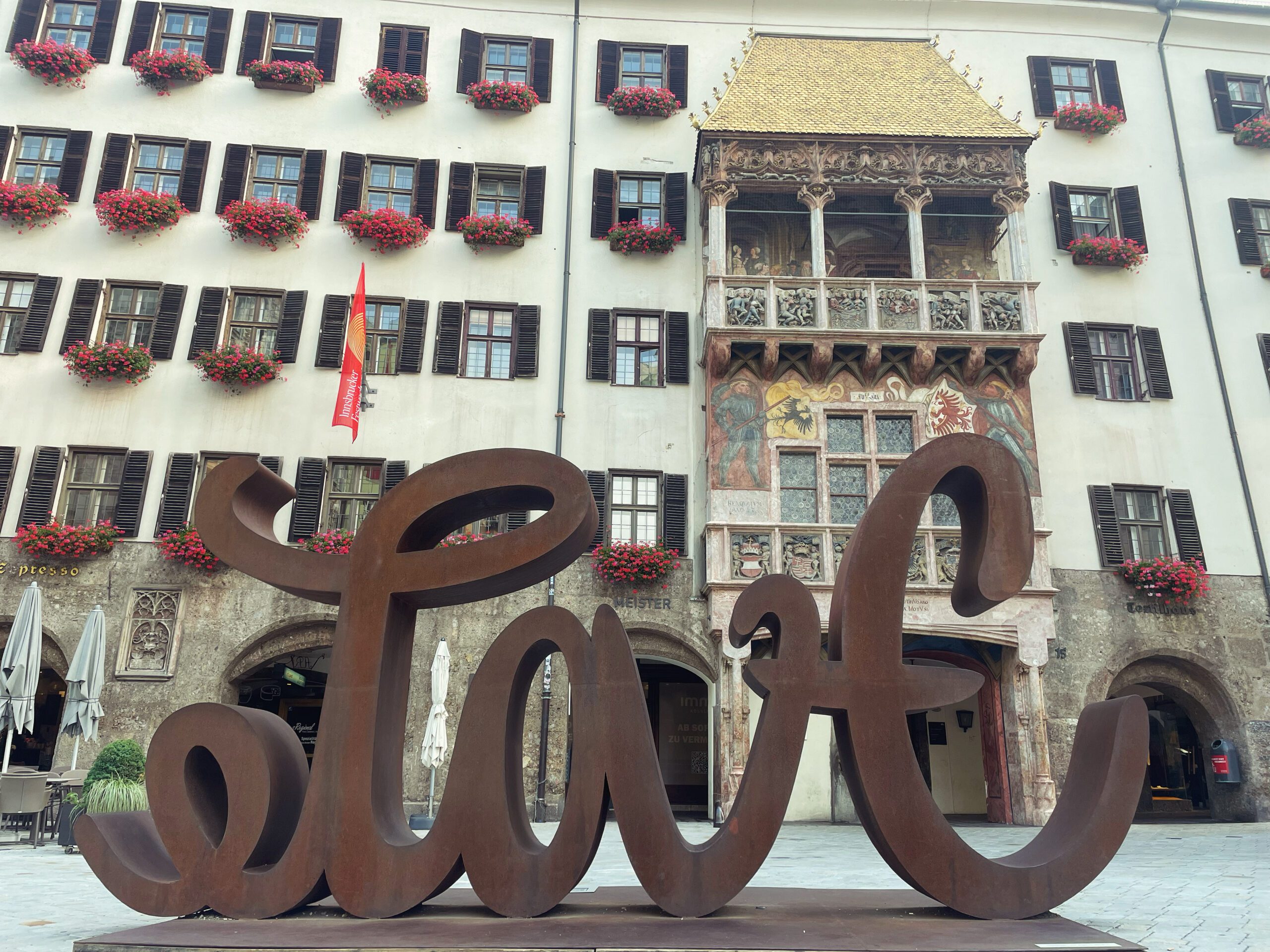
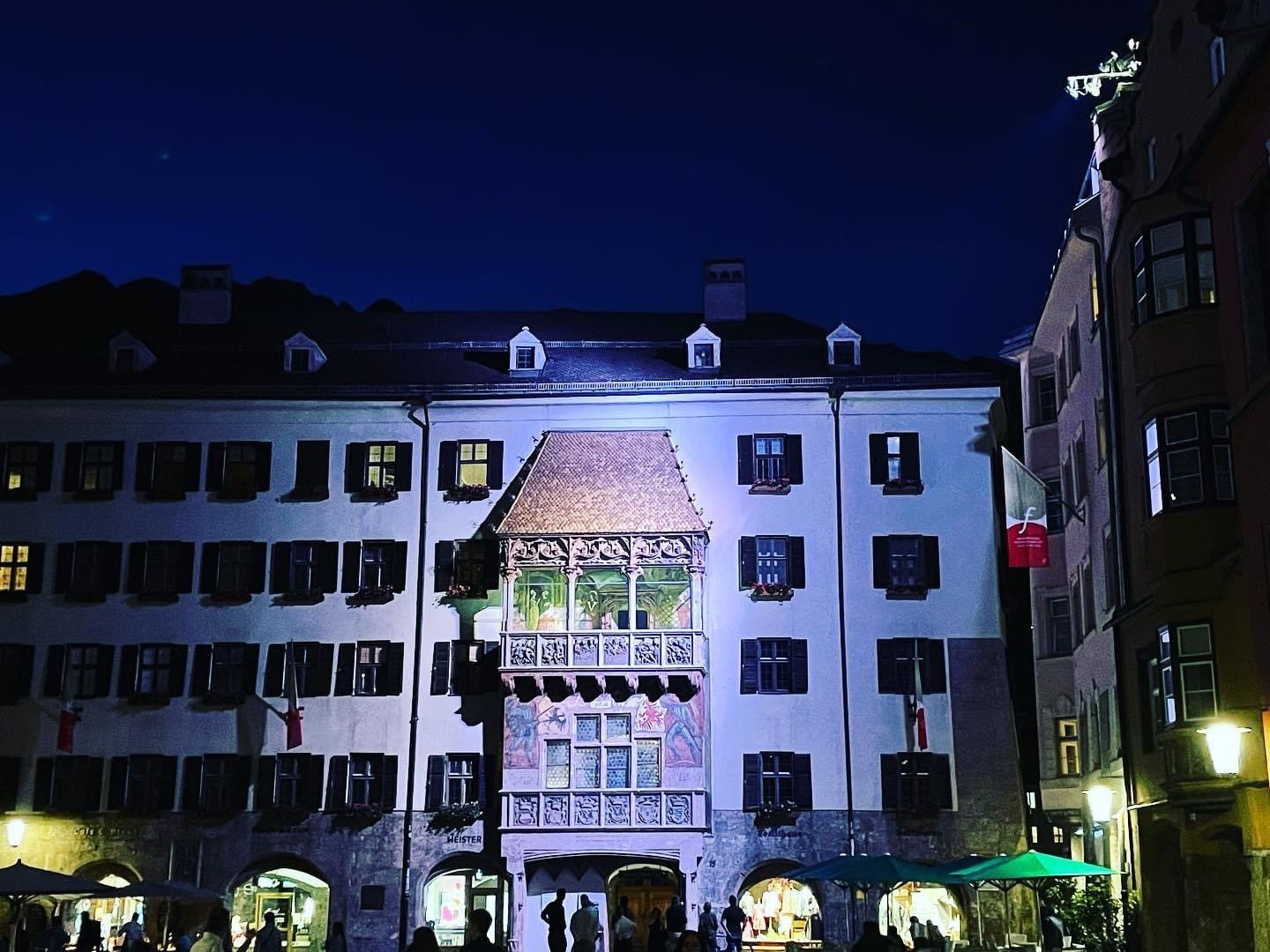
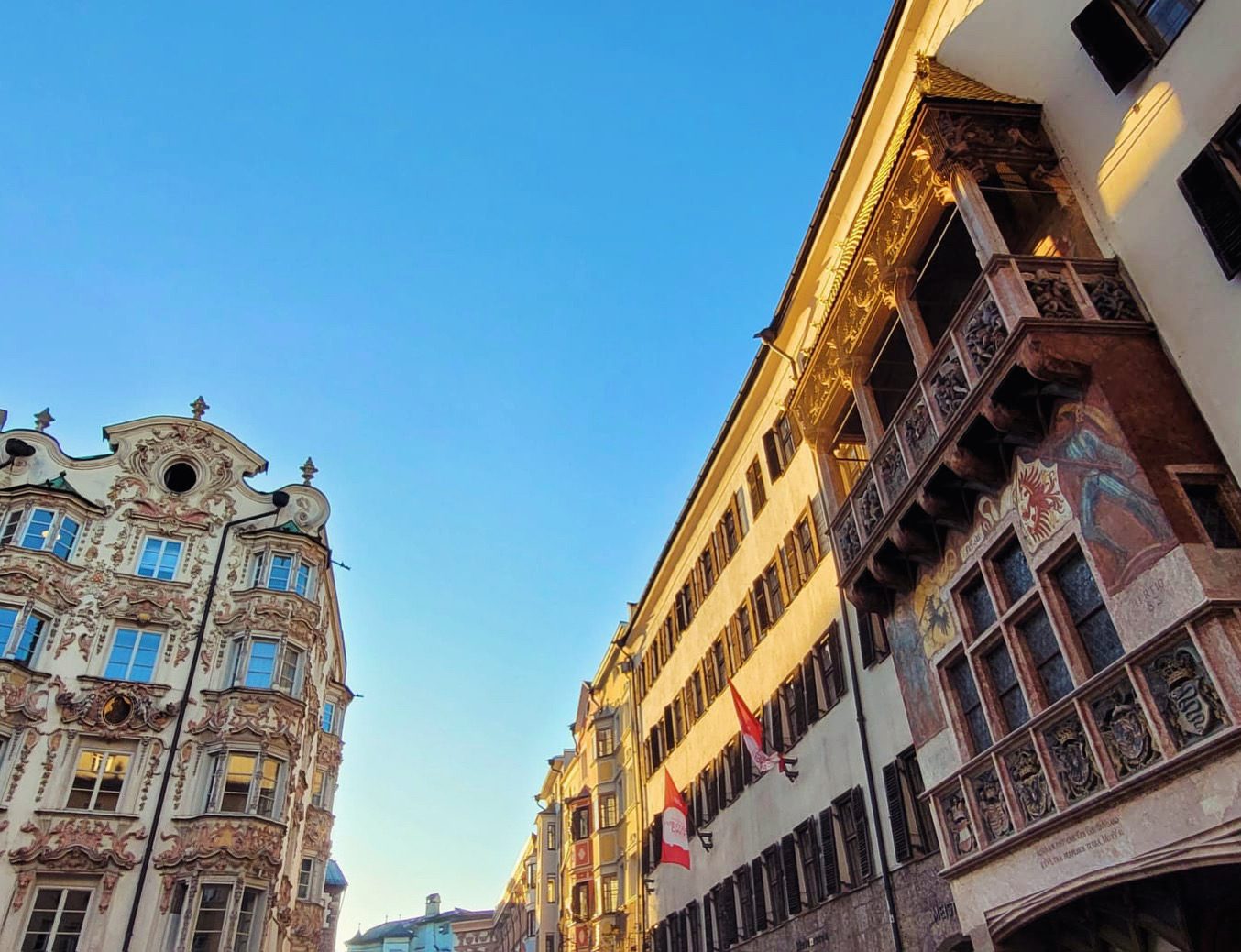
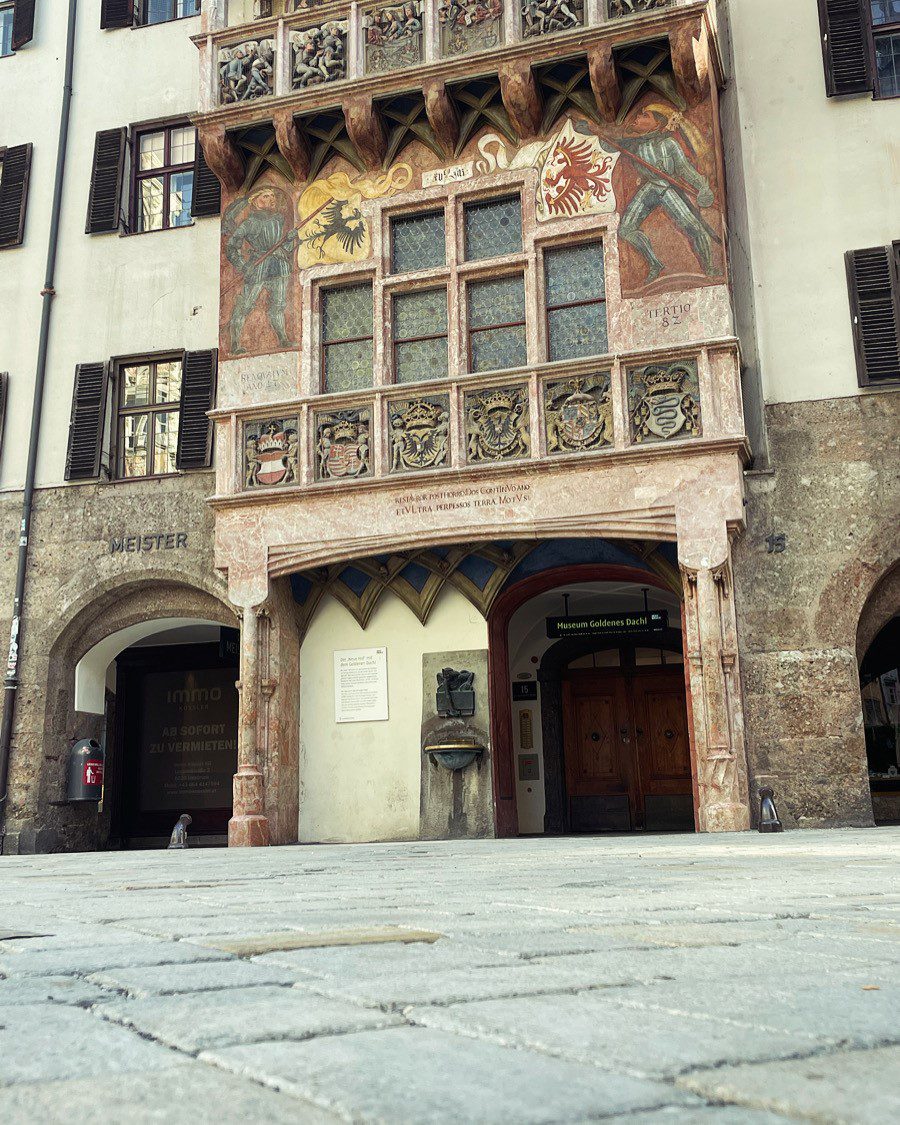
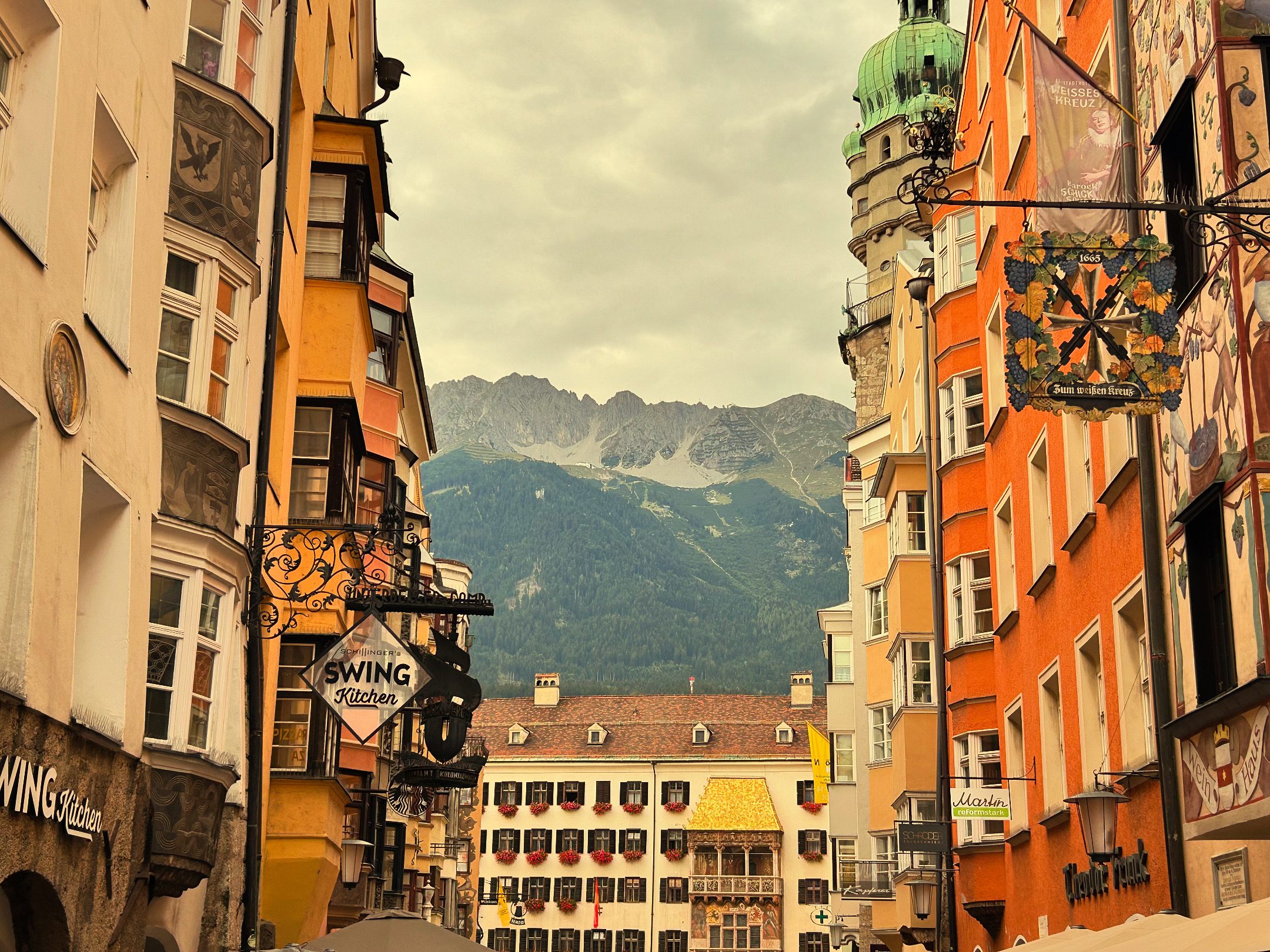
Before the Golden Roof began its long and arduous journey to becoming the city’s landmark, it had to fulfill many different roles and functions. As Innsbruck grew in importance for the region of Tyrol, Frederick IV had the “Neuhof” built around 1420. The Andechs Castle no longer matched Frederick’s expectations of a proper residence. Eighty years later, even the Neuhof was no longer representative enough to meet the standards of the new ruler. Emperor Maximilian’s court was significantly larger than that of the previous princes. He moved into the more spacious Hofburg, where the magnificent armoury tower—part of the defensive structure—became the second prestige project of his era to shape the cityscape. From then on, the centrally located Neuhof was intended to serve merely as an imperial ornament and to mark the beginning of a Golden Age at the turn of the century. In 1500, Maximilian commissioned the court architect Türing to build the ornate bay window we know today, decorated with 2,657 gilded shingles. It provided a place from which he could observe the events on the square below while presenting himself to the public. Where tourists from around the world now take photos, Maximilian once watched re-enacted medieval knightly tournaments, court hearings, and executions. These competitions, styled after the Middle Ages, were meant to entertain the court and its visitors. Maximilian’s second wife, Bianca Maria Sforza—who spent many years at court in Innsbruck—actively promoted these spectacles to combat the boredom of the small town. The elaborate oriel in the city center also served as a symbol of power. Ordinary people were never meant to forget who ruled them. The rules of the game back then were not so different from today: during the economic boom after World War I, the financial elite built a skyline in New York to display their power; a hundred years later, Dubai erected the Burj Khalifa as a symbol of its oil wealth. The Emperor of the Holy Roman Empire, meanwhile, gilded the roof of his viewing balcony and adorned it with the insignia of his rule. The reliefs beneath the oriel depict the territories ruled by Maximilian. From left to right, they show the coats of arms of Austria, Hungary, the Holy Roman Empire, Germany, Burgundy, Milan, Styria, and Tyrol. Knights and animal figures guard the Habsburg possessions. It is quite possible that the frieze, originally finished in 1500, was replaced a few years later after Maximilian was crowned emperor in 1508. Paintings on the front show the emperor with his two wives, Mary of Burgundy and Bianca Maria Sforza, depicted as minstrels. Their appearance is telling: Maximilian always portrayed his marriage to Mary of Burgundy as a love match, while he supposedly married Bianca Maria Sforza for political reasons. Accordingly, Mary of Burgundy is shown modestly with her hair covered, while the curls of Bianca Maria Sforza flow freely down her back. Mary of Burgundy died young and beautiful in a riding accident. Through her, the Habsburgs gained two future emperors, Charles and Ferdinand. The idealized representation of both wives symbolizes their significance for Maximilian. Scenes from medieval courtly life—very much in line with Maximilian’s tastes—decorate the façade. One figure depicts Emperor Frederick III, Maximilian’s stern-looking father, mockingly shown wearing a cap with donkey ears. The three-dimensional Morisco dancers, carved from sandstone, twist their limbs over monkeys, goats, and dogs. Some symbols, such as the two lions seemingly fighting over a scepter, continue to puzzle researchers today. The secret script inscribed on the band behind the dancers and figures on the upper relief panels was deciphered only in 2020. The encoded Latin phrase likely reads:
“Ego sum lux mundi qui sequitur me non ambulabit in tenebris sed habebit lucem vitae dicit dominus” Translated: *“…I am the light of the world. Whoever follows me will not walk in darkness but will have the light of life, says the Lord.”
“ Für einen großen Teil der Malereien war Hofmaler Jörg Kölderer verantwortlich, der viele Gebäude und Räume, die rund um 1500 entstanden, mit seiner Kunst schmückte. Auch das Jagdbuch, das Fischereibuch und das Zeugbuch, die das Treiben rund um die Waffenproduktion im Zeughaus zeigt, stammen aus seiner Feder. An der Decke unter dem Erker befinden sich putzige Figuren, einige davon in für das 16. Jahrhundert wohl anzüglicher Pose. Unter dem Erker auch eine Gedenktafel für den verurteilten und hingerichteten Jakob Hutter zu sehen.
After Innsbruck’s time as a Habsburg residence came to an end, the Golden Roof entered a period of decline. The rational spirit of Emperor Joseph II’s era had little mercy for the former imperial showroom of vanity. The building first became the seat of the financial administration and, from 1780 onward, served as a barracks—thus transforming the symbol of power back into a utilitarian space. The hardships that followed the Napoleonic Wars did not spare the Old Town or its historical buildings. Appreciation for Gothic houses—now protected monuments—was not yet widespread in the 19th century. That more was not lost is thanks largely to the lack of financial means at the time. In 1822, the façade received its current appearance during its conversion into a private rental property. In 1853, in the first year after its founding, the students of the new Federal Secondary School were taught in the Golden Roof. The National Socialists later used the landmark to lend civilian marriages greater prestige over traditional Catholic weddings. To this day, the Innsbruck registry office is located inside, where couples exchange their vows. Since 1996, a small museum dedicated to Innsbruck’s city history and Emperor Maximilian has been open inside the Golden Roof.
The Innsbruck witch trial of 1485
The Middle Ages are often portrayed in books and films as a dark age in which tyrannical aristocrats and bloodthirsty robber knights oppressed drab, mouse‑grey‑clad peasants, and women were burned at the stake as witches without trial. This depiction bears no resemblance to historical reality. The Middle Ages were neither a colourless era nor one characterised by lawlessness and arbitrariness. Nor were they the great age of large‑scale witch burnings. This dark episode would not begin until the sixteenth century. This grim chapter of history had its beginnings in 1485, at the threshold of the Early Modern period, partly in Innsbruck. The economic and social conditions in cities such as pre‑modern Innsbruck provided fertile ground for witch trials. Cities were growing at an above‑average rate. Officials, court servants, entertainers, soldiers, traders, and other “foreign folk” stirred insecurity and mistrust. Mortality among children under the age of ten was close to 50 per cent. There were no weather forecasts by which farmers could have planned their work. Food supplies were permanently scarce, leading to an increased incidence of disease and deformities of all kinds. Medicine and science were not yet advanced enough to explain these phenomena. As a result, much was attributed to supernatural forces. Saints were invoked for assistance. Processions and prayers were intended to help people escape the devil and damnation in the afterlife. Harmful objects such as bone fragments from unbaptised deceased children or pieces of wood from a gallows were believed to bring misfortune, while relics were highly prized artefacts thought to offer protection. Even the smallest particles of a saint’s body were believed to possess powers capable of performing miracles. On the opposing side were love and illness spells, curses, and the worship of the devil.
The central figure of the Innsbruck witch trial was Heinrich Kramer, the author of the influential work Malleus Maleficarum (The Hammer of Witches). Kramer was a misogynistic, superstitious religious zealot, driven by belief in the devil and the apocalypse and, unfortunately, equipped by the Pope with extraordinary authority to pursue witches. He exploited this situation to his own advantage. Like a showman, he travelled through the land as an inquisitor and arrived in Innsbruck in 1485. His arguments and sermons on magic and witchcraft fell on fertile ground there. Kramer encouraged his audience to report individuals suspected of witchcraft, an invitation that was readily taken up. Envy and resentment were part of everyday life within the urban community, and some citizens willingly used denunciation as a means of resolving disputes. Fifty people—most of them women—came under suspicion of witchcraft following denunciations by fellow citizens on charges of heresy. After arrests and interrogations, seven individuals were formally charged. The reasons for the accusations were manifold. One woman, Helene Scheuberin, for example, was accused of having magically poisoned the knight Jörg Spiess.
It was the Bishop of Brixen, Golser, who doubted Kramer’s account and intervened. His representative identified serious procedural flaws. A lawyer was appointed to represent all seven accused women in court. Ultimately, all suspects were released. The bishop ordered Kramer to leave Tyrol. “In practice, his foolishness became apparent, for he assumed much that had not been proven,” Golser wrote in a letter. For Kramer, this disappointing trial marked the starting point of a dubious career, as he felt his honour had been affronted. Following this episode, he composed The Hammer of Witches. He even introduced it with explicit reference to Innsbruck: “But what if I were to report all the cases found in that one city alone? One would have to write a book.” Kramer’s work became the standard manual for inquisitors across Europe. Almost simultaneously, around 1500, the printing press experienced its major breakthrough, greatly facilitating the dissemination of this guide to witch‑hunting and witch trials. It should be noted that most witch trials were not conducted before ecclesiastical courts. Heresy was a secular crime, for which—at least on paper—guidelines existed. Torture was regulated, which did not make it any less terrifying, but did somewhat limit arbitrariness. It is estimated that between 100,000 and 150,000 people in Europe died as heretics, witches, and sorcerers. The victims included members of the elite who aroused envy, as well as Protestants, marginalised groups, and the socially disadvantaged, who served as scapegoats for storms, disease, and other misfortunes. The ratio of women to men was approximately 3:1. After 1485, Innsbruck was spared further waves of witch persecution. The intervention of Golser and the actions of parts of the Innsbruck population played a decisive role in this outcome.
Reform and rebellion: Jakob Hutter and Michael Gaismair
The first years of rule of the later Emperor Ferdinand I (1503–1564) as sovereign of Tyrol were marked by unrest. The costly courtly lifestyle of Sigismund and Maximilian’s wars, combined with the pledging of a large part of the country’s assets to foreign entrepreneurs and financiers, had thrown Tyrol’s finances dangerously out of balance. Under Ferdinand, who was of Spanish descent and spent little time at the court in Innsbruck, the city lost much of its importance. Many imperial officials left the city again, taking with them the capital they had brought as well-paid servants of the state and members of the aristocracy. What they left behind, at least in the subjective and individual perception of many citizens, were disadvantages. The increased prices of everyday necessities did not fall again, even though incomes declined. The new legal system introduced through the administrative reforms of Maximilian conflicted with traditional customary law. Hunting in the forests and collecting firewood thus became illegal for large parts of the population. The loss of these common rights and the ever-increasing burden of taxes had severe consequences for small farmers, day laborers, servants, and other members of the lower classes. At this time, two men appeared in Tyrol—Jakob Hutter (1500–1536) and Michael Gaismair (1490–1532)—who called for greater social justice, threatened the existing order, and paid for it with their lives.
Jakob Hutter was the figurehead of the Anabaptists, who were particularly active in Tyrol in the Lower Inn Valley and the Puster Valley. The time in which he grew up seemed tailor-made for an apocalyptic preacher of change. The first signs of the Little Ice Age caused more frequent crop failures. Some people interpreted this as God’s punishment for the sinful lives of humankind. Sects such as the Anabaptists preached the pure doctrine of religion in order to free themselves from this guilt and thus restore order. People, they argued, should join Christianity as free and responsible adults rather than being baptized immediately after birth. Their attitude toward secular property, infant baptism, and their openly displayed aversion to both secular and ecclesiastical authorities aroused particular displeasure among the Roman Church and Ferdinand I. For the deeply pious and pope-loyal territorial ruler, the Anabaptists represented a threat to public order. For a considerable part of the population, these eccentrics were welcome scapegoats. What anarchists and communists were to the nineteenth century, groups such as the Hutterites represented in the age of confessional conflict. The fact that debt and financial hardship were not the result of the godless lives of the Anabaptists, but rather of the expensive regency and policies of the Habsburgs, was of little interest to anyone. The witch craze passed Innsbruck by, but as early as 1524 three Anabaptists were burned at the stake for heresy in front of the Golden Roof. Five years later, thousands of them were expelled from the country and emigrated to Moravia—today’s Czech Republic—where they were tolerated. One of those exiled was Jakob Hutter. Raised in South Tyrol, his years of apprenticeship and travel as a hatmaker took him to Prague and Carinthia, where he probably first came into contact with the Anabaptists and their teachings. When this religious community was also expelled from Moravia in 1535, Hutter returned to Tyrol. The Peasants’ Wars, which lay only ten years in the past, still weighed heavily on the authorities. Agitators were met with uncompromising severity. Hutter was arrested and brought to Innsbruck. In the Kräuterturm, a prison integrated into the city walls, he was interrogated according to the customs of the time—under torture. As the leader of the heretics, he was burned at the stake in 1536 in front of the Golden Roof for his activities. After their final expulsion from the German lands and long years of wandering and flight across Europe, the community named after him, the Hutterian Brethren, arrived in North America in the nineteenth century. Even today, there are several hundred Hutterite colonies in Canada and the United States that continue to live according to the precept of the Jerusalem community of goods, in a form of communal early Christianity. Like the Mennonites and the Amish, the Hutterites mostly live isolated from the outside world and have preserved their own form of a language derived from German. In Innsbruck, a small plaque at the Golden Roof and a street in the western part of the city commemorate Jakob Hutter. In 2008, the bishops of Brixen and Innsbruck, together with the governors of North and South Tyrol, acknowledged the injustice committed nearly 500 years earlier against the Anabaptist community in a letter to the Council of Elders of the Hutterian Brethren. In 2015, the Hutterer Park was opened in the Saggen district, a few steps southwest of the Panorama Building, where the memorial Übrige Brocken (“Remaining Fragments”) commemorates the fate and suffering of the persecuted.
The greatest upheaval during the Reformation in Tyrol was the Peasants’ Revolt of 1525, which is closely associated with the name Michael Gaismair. Unlike Hutter, who primarily called for spiritual renewal, Gaismair also sought to bring about social change. The Tyrolean uprising was part of what became known as the German Peasants’ War, which shook large parts of the Holy Roman Empire. It was driven in part by reformist theological fervor, and in part by dissatisfaction with social conditions and the distribution of property. Gaismair was not a theologian. As the son of a mining entrepreneur, he came from a household that would today be described as the bourgeois upper class. He probably studied law at an Italian university before becoming a mining clerk at the Schwaz mines. In 1518 he entered the service of the Tyrolean governor Leonhard von Völs, where he gained military and administrative experience. In 1524, presumably following a kind of corruption scandal, he transferred to the service of the Bishop of Brixen. The bishop was both the ecclesiastical and secular ruler of his diocese. He was highly unpopular among his subjects, as he was regarded as a harsh lord who demanded more compulsory labor and corvée than the Tyrolean territorial prince. Here Gaismair witnessed firsthand how the clerical administration oppressed its subjects through strict jurisdiction.
In May 1525, after long simmering, popular anger boiled over. News of peasant uprisings from southern Germany had also incited the Tyrolean subjects. Many of them had served as mercenaries in Maximilian’s Italian wars and possessed military experience. Discontented townspeople, craftsmen, and other members of the lower classes joined them. One of these bands of peasants stormed the Neustift Monastery. Not only episcopal property and wine supplies were plundered, but also the registers recording jurisdiction, ownership, debts, and the peasants’ obligations to their lords were destroyed. Michael Gaismair, who should actually have stood on the bishop’s side, was also involved. The day after the monastery was taken, the insurgents elected Gaismair as their captain. It was likely his military experience, education, and knowledge of the strengths and weaknesses of both the Tyrolean governor and the bishops of Brixen and Trent that earned him their trust. In the following days, the uprising gained uncoordinated momentum and spread across large parts of Tyrol. Attacks occurred against church institutions and the detested foreign trading houses such as the Fugger family. While some divisions and groups put forward serious demands and posed a genuine threat to the authorities, others were motivated more by the thrill of rebellion and plundering. In Innsbruck, the Wilten Abbey, as a seat of manorial authority, was besieged, but the peasants soon abandoned their plans after receiving wine and meat from the abbot’s storehouses.
In order to gain time and regroup, the government under Ferdinand convened a provincial assembly in Innsbruck. The subjects’ grievances were collected in a catalogue of complaints, the 62 Merano Articles, later expanded into the 96 Innsbruck Articles. During the negotiations between the territorial prince, the nobility, the clergy, townspeople, and peasants, Gaismair remained in Brixen and attempted to establish his rule in the Eisack Valley region. Only in the course of the summer did he travel to Innsbruck for negotiations with Ferdinand. Although he was promised safe conduct, he was arrested as the ringleader. It seems unlikely that he was actually imprisoned in the Kräuterturm, given his rather unspectacular escape in October 1525. Via Sterzing, he fled to Switzerland. In Zurich he encountered Huldrych Zwingli, who likely inspired him to write a draft constitution for Tyrol. The clergy were to concern themselves with the salvation of souls rather than with politics. Land and property, including mining revenues, were to be distributed socially, and interest was to be abolished. The restrictions on hunting and fishing imposed on Tyroleans by Ferdinand’s predecessor Maximilian I were to be lifted. One article stated:
“As for the tithe, each shall give it according to God’s command, and it shall be used as follows: each parish shall have a priest according to the teaching of the Apostle Paul, who proclaims the word of God to the people… what remains is to be given to the poor.”
Meanwhile, the rebellions in the County of Tyrol and the prince-bishoprics of Brixen and Trent collapsed. The leaders of the uprisings either fled or were executed cruelly and demonstratively. Some points from the catalogues of grievances were incorporated by the prince into the provincial code in order to pacify the population. For Gaismair, however, there was no turning back. The radicalized former official moved with some of his men from Graubünden into southern Salzburg and participated in the Salzburg Peasants’ Revolt of 1526. Reports of his military successes reached the Republic of Venice, which had been in constant conflict with the Habsburgs since the war of 1477 with Sigismund the Rich in Coin. Gaismair was hired as a condottiere—a military commander—probably also because the Venetians wished to make use of the knowledge of the former official of the bishop of Brixen and the Tyrolean governor regarding conditions in their enemy’s lands. Soon, however, he also fell out of favor there. Not only did the Doge of Venice make peace with the Habsburgs, but Gaismair’s anti-Catholic stance and unconventional lifestyle also provoked envy and resentment. In 1532 he was murdered with more than forty stab wounds on his country estate near Venice. Which of the many powers he had antagonized was responsible remains unclear; however, it is likely that the hired killers were commissioned by the territorial court in Innsbruck.
No less interesting than his life is his posthumous reputation. Gaismair never achieved the widespread fame of Andreas Hofer in Tyrol. Unlike Hofer, who rose up as a devout Catholic against a foreign power, Gaismair was a rebel against his own rulers—an inconvenient thinker and nonconformist. In 1899, a play about the peasant leader by Franz Kranewitter was published. In the twentieth century, Gaismair was interpreted according to contemporary needs: as a fighter against monarchy and clergy, by the National Socialists as a German hero and liberator of the peasants, or by the political left as an early communist. The generation of 1968 celebrated the fundamentally devout and God-fearing revolutionary for his ideas on the communal ownership of property. The Tyrolean journalist and historian Claus Gatterer wrote about the constant reinterpretation of Gaismair’s figure:
“How much truth may a people learn about its past, about the growth and development of its present? … In accordance with the prevailing ideology, long-established heroes and saints are toppled from their pedestals and replaced by others previously disregarded; or an established saint is simply assigned a new biography that, particularly in its motivations, fits current needs.”
There are hardly any memorials or monuments to Michael Gaismair and the peasant uprising of 1525 in Innsbruck. In Wilten, a street and a secondary school named after him commemorate him.
Siegmund der Münzreiche
Auf den Landesfürsten Friedl mit der leeren Tasche folgte sein Sohn Siegmund der Münzreiche (1427 – 1496). Der Start des jungen Mannes an der Spitze des Landes war holprig. Als sein Vater starb, war Siegmund erst 12 Jahre alt. Deshalb nahm ihn sein Onkel Friedrich III., der Kaiser of the Holy Roman Empire und Vater Maximilians I., in unfreiwillige Obhut und Vormundschaft. Man könnte sagen, Siegmund startete seine Karriere als Geisel des Kaisers, seines eigenen Vetters. Tirol war mittlerweile eine reiche Grafschaft, die direkte Kontrolle darüber wollte der Kaiser nur ungern aufgeben. Der Tiroler Landtag hatte zwischenzeitlich die Regierungsgeschäfte in Ermangelung eines Landesfürsten übernommen und damit politisches Gewicht bewiesen. Erst als die Landstände gegen diese Bevormundung protestierten, konnte Siegmund sein Amt antreten. Mit 18 Jahren zog er in Innsbruck ein, um seine Karriere als CEO Tirols zu starten. Unter seiner Ägide kam es zu vielen Innovationen auf der einen Seite, zu einem aufgeblähten und teuren Hofstaat auf der anderen. In Innsbruck und Umgebung zog das städtische Leben neues Handwerk an. 1453 eröffnete in der heutigen Universitätsstraße die Landesfürstliche Silberschmelze. 1484 ließ Siegmund die Münzprägeanstalt von Meran in Südtirol nach Hall verlegen, was ihm den Beinamen Siegmund der Münzreiche brought in. Two years later, a princely mill was built on the Sill Canal, which was to form the basis for the early industrialisation that developed in the following years. He issued the Schwaz mountain regulations, die zum Vorbild für alle Bergwerke der Habsburger werden sollte. Den Bergbeamten wurden, ähnlich den Universitäten, mehr Rechte innerhalb ihres Wirkungsbereiches gegeben. Für die Bergarbeiter gab es Sonderregelungen innerhalb der Gesellschaft, waren sie doch heiß begehrte Arbeitskräfte. Man kann von einer frühen sozial- und arbeitsrechtlichen Vereinbarung sprechen. Die Bergleute arbeiteten hart, verdienten aber verhältnismäßig gut. Dasselbe galt für die Prägeanstalt und die Haller Salinen. Eine frühe Form bürgerlicher Mittelschicht begann sich durch diese Möglichkeiten am Arbeitsmarkt herauszubilden.
During his opulent reign, Innsbruck had become a centre of attraction for craftsmen, goldsmiths and artists. The immigrants often came from the aristocracy and did not want to give up their lifestyle in Innsbruck. A special form of metal industry established itself in Mühlau. Plattner schufen Rüstungen und Harnische für Adelige, die sich sowohl auf Kriegszügen wie auch auf Turnieren standesgemäß präsentieren wollten. Siegmund war ihr bester Kunde. Er kaufte etliche Turnierharnische für sich selbst und als anerkennende Geschenke für Aristokraten ausländischer Höfe und Ehrengäste. Die Werkstätten am Mühlaubach wurden zu den führenden Betrieben ihrer Art weltweit. Erst im 17. Jahrhundert kamen die reich verzierten Rüstungen aus der Mode. Der Stadtturm beim Alten Rathaus als Ausdruck des städtischen Wohlstands und erste Teile der Hofburg wurden unter Siegmund erbaut. Ein Glasmaler siedete sich in Innsbruck an. Dieses Mäzenatentum war wohl auch ein wenig Kompensation für Siegmunds Eheleben. Er hatte in seinen ersten Jahren als Landesfürst Eleonore von Schottland (1433 – 1480), die optisch wenig attraktive 16 Jahre alte Tochter Königs Jakob aus dem Hause Stewart, geheiratet. Die Ehe sollte ohne Kinder bleiben, dafür aber kulturell umso fruchtbarer sein. Die Hofbibliothek wuchs im Gleichschritt mit Siegmunds und Eleonores humanistisch gelehrten Gästen. Beide galten als kunstsinnig und literarisch interessiert. Bücher waren in der Zeit vor der Erfindung des Buchdrucks ein teures Hobby. Auch fahrendes Volk und Schausteller waren am Hof gerne gesehen, um die einheimischen und internationalen Gäste zu unterhalten.
During his opulent reign, Innsbruck became a magnet for craftsmen, goldsmiths, and artists. Many of the immigrants came from aristocratic backgrounds and did not wish to abandon their lifestyle upon settling in Innsbruck. In Mühlau, a special form of metalworking industry took hold. Armorers produced suits of armor for nobles who wanted to present themselves appropriately on military campaigns as well as at tournaments. Sigismund was their best customer. He purchased numerous tournament armors for himself and as tokens of appreciation for aristocrats from foreign courts and distinguished guests. The workshops along the Mühlau stream became the leading enterprises of their kind worldwide. Only in the seventeenth century did the richly decorated armors fall out of fashion. The city tower next to the Old Town Hall, as an expression of urban prosperity, and the first parts of the Hofburg were built under Sigismund’s rule. A glass painter settled in Innsbruck. This patronage was perhaps also a form of compensation for Sigismund’s married life. In his early years as territorial prince, he married Eleanor of Scotland (1433–1480), the sixteen-year-old, physically rather unattractive daughter of King James of the House of Stewart. The marriage would remain childless, but culturally it proved all the more fruitful. The court library grew in step with the humanistically educated guests welcomed by Sigismund and Eleanor. Both were considered artistically inclined and interested in literature. Books were an expensive hobby in the era before the invention of printing. Traveling performers and entertainers were also welcome at court, helping to amuse domestic and international guests. Sigismund’s opulent lifestyle cost him not only a great deal of money but also political reputation—and ultimately, probably, his princely throne. In his second marriage, he wed Catherine of Saxony (1468–1524), a lady from a high-ranking princely electoral house. It was likely due to the influence and courtly expenditures of Sigismund and his two wives that the Coin-Rich’s expenses eventually exceeded income from taxes, salt works, and mines. At the princely wedding in 1484, the bride’s procession alone consisted of fifty-four wagons. Guests had to be housed and fed in Innsbruck. Even with a wife forty years his junior, the now senile Sigismund was not granted a male heir—an especially bitter fact considering the thirty illegitimate children attributed to him. At the same time, conditions grew harsher for those unable to keep pace with the city’s new rhythm of life. At that time, Innsbruck had approximately 2,000 citizens. Sigismund’s court comprised 500 people, not including his wife’s household. These “outsiders” attracted considerable attention in Innsbruck. The gap between social classes widened, and the estates grew concerned about the strained state finances. By the end of his reign, Sigismund’s court had become excessively bloated and costly. A lost war against the Swiss Confederates obligated him to make payments, and a conflict with Venice also ended unfavorably. Sigismund was forced to mortgage Habsburg possessions in Alsace and the present-day Breisgau to Charles the Bold of Burgundy, the future father-in-law of Maximilian I. He sold the Austrian Forelands to the Duchy of Bavaria at a bargain price and pledged the Tyrolean silver mines to Jakob Fugger. The Bavarian Wittelsbachs sought to regain control of Tyrol through an inheritance treaty with the age-related mentally diminished Sigismund. Only imperial pressure and the swift intervention of the Tyrolean Estates and Maximilian made it possible for the country to remain in the hands of the House of Habsburg. In 1490, Maximilian assumed the office of territorial prince, even though Sigismund was still alive. This reunited all Habsburg hereditary lands under one ruler. Sigismund was not the most successful ruler Tyrol ever had, but thanks to his clearly visible contributions to Innsbruck’s cultural rise, he continues to enjoy a measure of respect in popular memory.
Maximilian I. and his times
Maximilian ranks among the most significant figures not only in the history of Innsbruck, but in European history as a whole. Of this mountainous land he is said to have remarked: “Tyrol is a coarse peasant’s coat, but one that keeps you warm.” There were many reasons for this special affection. His father, Frederick III, had been born in Innsbruck in 1415, before the city became a princely residence. Like many of his peers in the high aristocracy, Maximilian was an enthusiastic hunter, and the city’s location amid floodplains, forests, and mountains is said to have exerted on him a particular appeal—much as it still does today on German students. Despite these convincing “soft facts,” it was probably more tangible reasons that led him to conduct a considerable part of his governmental business from Innsbruck. In 1490, at the request of the Estates of the Land, he assumed the government of Tyrol from his predecessor Sigismund. The powerful Habsburg was unwilling to relinquish the important assets the region had to offer from the Habsburg portfolio. Maximilian transformed the former trading settlement on the Inn into one of the most important centers of the Holy Roman Empire, thereby permanently shaping its destiny. Innsbruck’s strategically advantageous location close to the Italian theaters of war also made the city highly attractive to the Emperor. Many Tyroleans were compelled to enforce the imperial will on the battlefield instead of tending their own fields. This changed only toward the end of his reign. In 1511, Maximilian granted the Tyroleans the Tyrolean Landlibell, a kind of constitution, which stipulated that they could only be called upon for military service in defense of their own land. What admirers of Maximilian—who like to regard the document as a charter of liberty—often overlook are the associated obligations, such as the levying of special taxes in the event of war. For Innsbruck the arrangement paid off in any case—if not financially, then at least culturally. “Whoever does not create a memory for himself in life will have no memory after death, and such a person will be forgotten with the peal of the bell.” Maximilian countered this fear quite successfully and deliberately through the erection of highly visible symbols of imperial power, such as the Golden Roof. Propaganda, imagery, and media played an increasingly important role, not least due to the emergence of printing. Maximilian made deliberate use of art and culture to maintain his presence. He kept a Reich Chapel Choir, a musical ensemble that performed primarily at public appearances and receptions of international envoys. A veritable cult of personality was staged around him through coins, books, printed works, and paintings.
For all the romance cultivated by this lover of courtly traditions and classical chivalry, Maximilian was a cool-headed power politician. His cultural policy and propaganda may have drawn on medieval models, but in realpolitik terms he was forward-looking. During his reign, political institutions such as the Imperial Diet (Reichstag), the Imperial Aulic Council (Reichshofrat), and the Imperial Chamber Court (Reichskammergericht) emerged, strictly regulating the relationship between subjects, territorial lords, and monarchy. Around 1500, Tyrol had approximately 300,000 inhabitants. More than 80 percent worked in agriculture and lived largely from the yields of their farms. In a veritable frenzy of new legislation, Maximilian curtailed peasant rights to the commons. Timber harvesting, hunting, and fishing were subordinated to the territorial lord and were no longer communal rights. This had negative effects on peasant self-sufficiency. Thanks to the new laws, hunters became poachers. Meat and fish, long staples of the medieval diet, became luxuries that could often only be obtained illegally. As a result, Maximilian was unpopular among large segments of the population during his lifetime.
Restrictions on self-sufficiency were joined by new taxes. It had always been customary for sovereigns to impose additional taxes on the population in the event of war. Maximilian's warfare differed from medieval conflicts. The auxiliary troops and their noble, chivalrous landlords were supplemented or completely replaced by mercenaries who knew how to use modern firearms.
This new way of waging war consumed enormous sums. When revenues from princely rights—such as minting, market, mining, and customs monopolies—were no longer sufficient, various population groups were taxed according to their estate and wealth. The system, however, was still far removed from today’s differentiated taxation models and consequently produced injustice and resentment. One example was Maximilian’s Gemeiner Pfennig. This wealth tax ranged from 0.1 to 0.5 percent of assets but was capped at one gulden. Jews, irrespective of their wealth, were required to pay a poll tax of one gulden. For the first time, princes were also obliged to contribute, but due to the cap they paid no more than a middle-class Jew. The proclamation and execution of the tax fell to prelates, parish priests, and secular lords. Priests were required to announce the tax from the pulpit on three successive Sundays, collect contributions together with court representatives, and enter them into the imperial tax register. It soon became clear that this method of taxation was unworkable. A modern system and tax model were required. A collegial chamber, the Regiment, centrally supervised Tyrol and Further Austria following the modern model of Burgundian financial administration that Maximilian had encountered during his time in the Netherlands. Innsbruck became the financial and accounting center of the Austrian lands. The Audit Chamber (Raitkammer) and the Privy Treasury (Hauskammer) were located in the Neuhof, where today the Golden Roof looks down over the old town. In 1496, the financial resources of the Austrian hereditary lands were consolidated in the treasury in Innsbruck. The head of the Court Chamber was the Bishop of Brixen, Melchior von Meckau, who increasingly involved the Fugger family as creditors. Officials such as Jakob Villinger (1480–1529) handled financial transactions with banking houses across Europe using the Italian-influenced method of double-entry bookkeeping and attempted to keep imperial finances under control. Talented minor nobles and citizens, trained jurists, and professional administrators replaced the high nobility in leading roles. Financial experts from Burgundy held the commercial leadership of the Regiment. The boundaries between finance and other fields such as war planning and domestic policy became fluid, granting this new administrative class considerable power. Where once equilibrium between territorial lord, church, landlord, and subject had rested on a balance of contributions and military protection, this system was now enforced through coercion from above. Maximilian argued that it was the duty of every Christian, regardless of estate, to defend the Holy Roman Empire against external enemies. The records surrounding disputes between king, nobility, clergy, peasants, and towns over tax obligations strongly resemble modern political debates on power and wealth distribution. The crucial difference from earlier centuries lay in the fact that the modern administrative apparatus now made it possible to enforce and collect these taxes. Comparisons to mandatory cash registers, the taxation of tips in the hospitality industry, or debates over abolishing cash transactions suggest themselves. Capital followed political significance to Innsbruck as well. During his reign, Maximilian employed 350 councillors. Nearly a quarter of these well-paid officials came from Tyrol. Envoys and politicians from across Europe, extending as far as the Ottoman Empire, as well as nobles, built residences in Innsbruck or stayed in its inns. Much like today’s oil wealth draws specialists of all kinds to Dubai, Schwaz silver and the financial economy it generated once attracted experts of all kinds to Innsbruck—a small city amid the inhospitable Alps.
Under Maximilian’s rule, Innsbruck underwent architectural and infrastructural transformation on an unprecedented scale. In addition to constructing the prestigious Golden Roof, he remodeled the Imperial Palace, began construction of the Court Church, and created the Innsbruck Arsenal, Europe’s leading weapons manufactory. Streets through the old town were reinforced and paved for the refined members of the court. As a pious Christian in the chivalric tradition, the Emperor also aided the poorest members of society. In 1499 he renovated and expanded the Salvator Chapel, a hospital for destitute Innsbruck residents who had no claim to a place in the municipal hospital. In 1509, the inner-city cemetery was relocated from today’s Cathedral Square to behind the municipal hospital, at what is now Adolf-Pichler-Platz. Maximilian rerouted the trade road through present-day Mariahilf and improved the city’s water supply. A fire ordinance for Innsbruck followed in 1510. He also began to curtail the privileges of Wilten Abbey, the largest landowner in what is today the city area. Infrastructure owned by the monastery—such as mills, sawmills, and the Sill Canal—was to come under stronger princely control.
The imperial court and the affluent administrative class resident in Innsbruck transformed the city’s appearance and demeanor. Maximilian had introduced the refined courtly culture of Burgundy to Central Europe through his first wife. Culturally, however, it was above all his second wife, Bianca Maria Sforza, who promoted Innsbruck. Not only was their royal wedding celebrated there, she also resided in the city for long periods, as it lay closer to her native Milan than Maximilian’s other residences. She brought her entire court from the Renaissance metropolis into the German lands north of the Alps. Art and entertainment in all forms flourished.
Under Maximilian, Innsbruck not only became a cultural centre of the empire, the city also boomed economically. Among other things, Innsbruck was the centre of the postal service in the empire. Maximilian was able to build on the expertise of the gunsmiths who had already established themselves in the foundries in Hötting under his predecessor Siegmund. Platers, foundry operators, powder stampers and cutlers settled in Neustadt, St. Nikolaus, Mühlau, Hötting and along the Sill Canal. The Fugger merchant dynasty maintained an office in Innsbruck. In addition to his favoured love of Tyrolean nature, the treasures such as salt from Hall and silver from Schwaz were at least as dear and useful to him. Maximilian financed his lavish court, his election as king by the electors and the eight-year war against the Republic of Venice by mortgaging the country's mineral resources, among other things.
Assessing Maximilian’s impact on Innsbruck is challenging. Expressions of affection by an emperor naturally flatter the popular imagination to this day. His material legacy, with its many monumental buildings, reinforces this positive image. He made Innsbruck an imperial residence and advanced infrastructural modernization. Thanks to the arsenal, the city became a center of the arms industry, the treasury of the Empire, and expanded both economically and spatially. Yet the debts he incurred and the regional assets he pledged to the Fugger family shaped Tyrol after his death just as profoundly as the strict laws he imposed on the common population. He is said to have left debts amounting to five million gulden—an amount his Austrian territories could have earned over twenty years. Outstanding payments ruined many businesses and service providers after his death, leaving them stranded on imperial promises. Early modern rulers were not bound by their predecessors’ liabilities; only agreements with the Fugger family constituted an exception, as these involved collateral rights. In the legends surrounding the Emperor, these harsh realities are far less present than the Golden Roof and the soft facts learned in school. In 2019, celebrations marking the 500th anniversary of the death of what was arguably the most important Habsburg for Innsbruck were held under the slogan “Tyrolean at heart, European in spirit.” The Viennese-born ruler was benevolently naturalized. Salzburg has Mozart; Innsbruck has Maximilian—a Emperor whom Tyroleans have adapted to fit the desired identity of Innsbruck as a rugged character happiest in the mountains. His distinctive face today adorns all manner of consumer goods, from cheese to ski lifts; the Emperor serves as patron for all kinds of the profane. Only for political agendas is he less easily harnessed than Andreas Hofer. For the average citizen, it is probably easier to identify with a revolutionary innkeeper than with an emperor.
Friedl with the empty pocket
The Tyrolean sovereign Frederick IV (1382–1439) lived in a turbulent period of Habsburg and Innsbruck history. The key events of his life would provide suitable material for an adventurous medieval film, as would his physical appearance as it has been handed down to us. A long, bushy beard framed Frederick’s face. In many chronicles and accounts he was described as arbitrary, power-hungry, devious, and cunning. Contemporaries regarded him as a sex addict who, if necessary, did not shy away from violence to impose his will. This, however, was not unusual when one considers the biographies of other princes of the late Middle Ages, as a glance at his ancestry reveals. On his mother’s side, he descended from the Milanese Visconti family, who had ruthlessly fought their way up to ducal rank. At the age of twenty-four, Frederick assumed not only the regency of Further Austria but also the County of Tyrol. Further Austria—does that mean Vorarlberg? Not quite. Further Austria referred to Habsburg possessions that included parts of Switzerland, Vorarlberg, Alsace, and Baden-Württemberg. From Frederick’s time onward, Tyrol and Further Austria were jointly administered as Upper Austria. This made him one of the most powerful princes of the Holy Roman Empire. From the very beginning of his reign, he was involved in costly wars both along his borders and within the empire. In the west, the Appenzell region rose up against the Habsburg ruler; in the south, an uprising broke out in Trento; and north of the River Inn, Heinrich of Rottenburg instigated a feud. These were among the last conflicts still fought in the manner of purely knightly armies. Like his predecessor on the Tyrolean throne, Margaret, and like his grandfather Bernabò Visconti, Frederick also came into conflict with the pope. At the time, there was not only a pope in Rome but also one in Avignon. This papal question was to be resolved at the Council of Constance, perhaps the most important political event of the late European Middle Ages. Frederick sided with Pope John XXIII. King Sigismund of Luxembourg, King of the Holy Roman Empire, who supported the rival pope in Avignon, retaliated by placing Frederick under the imperial ban and having him imprisoned. This entailed not only loss of freedom and excommunication, but also the forfeiture of his territories and possessions. His enemies mockingly bestowed upon him the nickname “Frederick of the Empty Pockets.” After an adventurous escape from captivity and his return to Innsbruck, Frederick was forced to grant reforms to the population—above all to the landowning lesser nobility and the towns—as recognition for their support in his hour of greatest need. In addition to the clergy, nobility, and towns, the courts responsible for administering rural communities were now also permitted to send representatives to the regional assembly (Landtag). His nickname remained in popular usage, even though by the end of his reign he was one of the wealthiest princes of his time, thanks to the rich silver deposits in Schwaz and Gossensass as well as tolls and customs duties on trade between Venice and Augsburg. The Schwaz silver mine was the largest in Europe at the time. The mining economy also permanently altered Innsbruck’s social structure. The power of the guilds increased. When Frederick died, Tyrol—owing to the silver discoveries in Schwaz—had risen to become an important territory within the Habsburg lands. This development also transformed Innsbruck. Frederick decided to make the city on the River Inn his residence. In 1420, he purchased two burghers’ houses within the city walls. Merano had been the ancestral seat of the Counts of Tyrol and officially remained the provincial capital until 1849; in practice, however, Innsbruck had clearly taken the lead ever since Frederick’s relocation. During his reign, the arcades along Herzog-Friedrich-Strasse were constructed, and the City Tower was erected. Across Europe, the fifteenth century was an economically difficult period due to a generally colder climate than in previous eras and frequent crop failures. Through trade and the stimulus generated by the relocation of the court, Innsbruck prospered in contrast to this broader European trend. Although the city depended on its surrounding countryside for food supplies, its growing prosperity made it easier to navigate this period of crisis than was the case in purely rural regions. The princely court, comprising around 400 people, brought officials, servants, merchants, financiers, and soldiers into the city—along with money and a new lifestyle. As in many German-speaking European cities, urbanization spilled over from the Italian regions, leading to greater occupational specialization and an increasingly pronounced division of labor. The craft guilds became the economic engine and the foundation for later proto-industrial production. Inns and taverns opened, offering diversion from everyday life. Traveling theaters and performers came to the city. Immigration and rapid social change also generated tensions. The xenophobia of a superstitious, often illiterate and poorly educated population did not diminish at the same pace as social conditions evolved. Conflicts between long-established residents and newcomers, artisans, merchants, peasants, and members of the court were part of daily life in Frederick’s Innsbruck.
Because of his many conflicts with other princes and the pope, his wealth from tolls and the Schwaz mines, and his likely eccentric character, Frederick IV was regarded by his contemporaries as a kind of robber baron. Only later did he receive a more favorable reputation through the many legends that grew up around his person. According to one such story, he is said to have wandered through the land disguised as a beggar in order to learn what the people truly thought of him. From the reports commissioned by the Habsburgs from the sixteenth century onward, his image becomes considerably more positive. His affectionate nickname, “Frederick of the Empty Pockets,” still carries this image of the good-natured, somewhat clumsy Tyrolean ruler. Whether he was a miserly eccentric or a shrewd politician and a friend of the common people remains a matter of debate to this day.
Türing dynasty of master builders: Innsbruck becomes a cosmopolitan city
With Innsbruck’s rise to the status of a residence city, a true building boom began. Anyone who wished to wield influence needed to have a residence in the city, in order to be as close as possible to the centre of power. In the period before newspapers, a regular postal system, fax, and email, politics was conducted primarily through direct personal contact. One family was particularly closely associated with this development and played a decisive role in transforming the settlement at the Inn Bridge into a stone-built city in a contemporary Gothic style. In the fifteenth century, Sigismund the Rich in Coin brought Niklas Türing (1427–1496) to Innsbruck. Türing first appears in the historical record in 1488. The Türings were a family of stonemasons and master builders from Memmingen in what is now Swabia, a region that at the time belonged as part of Further Austria to the Habsburg Monarchy. Innsbruck had already been the seat of the provincial government for several decades, but architectural grandeur north of the Alps had yet to take hold. The city consisted largely of wooden houses and was scarcely representative. Over the course of the late Middle Ages, Gothic and, somewhat later, Renaissance art had enveloped Europe in a new architectural idiom, founded on a new understanding of architecture and aesthetics. Buildings such as Notre Dame or York Minster set a trend that would shape much of Europe until the onset of the Baroque. Pointed towers, ribbed vaults, bay windows, and playful carvings depicting scenes of courtly life are among the typical features that give this heterogeneous style its distinctive character. For craftsmen and builders, golden times dawned—times that would gather even greater momentum under Maximilian.
During this transitional period between the Middle Ages and the Early Modern era, the Türings left a lasting mark on Gothic Innsbruck. Their work can be traced particularly well in the Old Town. Many of the town houses, such as the Trautson House, still preserve Gothic ground plans, inner courtyards, and carved elements today. Thanks to their training, the Türings combined an eye for the overall structure with attention to detail in their building projects. They were renowned for their exceptionally fine stonework, which made it possible to create elaborate portals, arcades, staircases, and vaults. They produced ornamental reliefs with patterns typical of Renaissance art; grotesques, vases, and animal motifs were characteristic forms of embellishment for bay windows and plain walls. The symmetrical arrangement of individual elements is another hallmark of the period. A substantial part of the Golden Roof (Goldenes Dachl) is attributable to Niklas Türing. He also created the statue of the castle giant Haidl, an exceptionally tall member of Sigismund’s bodyguard, which can still be seen today in the City Tower. Emperor Maximilian held him in such high esteem that he permitted him to immortalise both the Türing family coat of arms and that of his wife—a fountain and a fish—in the vaulting of the Golden Roof. His son Gregor likewise left his mark, among other works, with the Trautson House in Herzog-Friedrich-Strasse and the House of the Castle Giant in Domgasse. Thanks to careers that advanced in step with the city’s development, the Türings gained not only fame and honour but also considerable wealth. A record from 1497 reports that Niklas Türing served the provincial ruler as a “salaried court mason.” When he died—either in 1517 or 1518, the precise year is unknown—his gravestone titled him “Chief Master Builder to His Roman Imperial Majesty.” Together with his son Gregor, he was listed as a master stonemason. The building boom also enabled the Türings to acquire citizenship in Innsbruck. By 1506 at the latest, they owned a house in the workers’ and artisans’ quarter of Anbruggen. In 1509 they were able to purchase the building that today houses the Gasthof zum Lamm in Mariahilfstrasse, and they later acquired additional property at what is now Schlossergasse 21.
The last member of the Türing family to exert a formative influence on Innsbruck’s building scene was Niklas Türing the Younger, who, together with Andrea Crivelli, began the planning work on the Hofkirche. During the sixteenth and seventeenth centuries, the influence of Gothic architecture—particularly in what is now Austria—began to wane. In the course of the Counter-Reformation, churches in particular were increasingly rebuilt or newly constructed in the Baroque style. Today, Türingstrasse in eastern Innsbruck commemorates this early modern dynasty of master builders.
Innsbruck and the House of Habsburg
Innsbrucks Innenstadt wird bis heute von Gebäuden und Denkmälern geprägt, die an die Familie Habsburg erinnern. Unzählige Touristen bewundern die stummen Hinterlassenschaften der Dynastie, die als mindestens ebenso ur-österreichisch gilt wie Schnitzel, Mozartkugeln und Mehlspeisen. Diese Darstellung ist allerdings nicht korrekt, auch wenn die Habsburger die Landesgeschichte über Jahrhunderte mitprägten. Sie waren ein europäisches Herrscherhaus, zu dessen Einflussbereich verschiedenste Territorien gehörten. Am Zenit ihrer Macht waren ihre Mitglieder die Herrscher über ein „Reich, in dem die Sonne nie untergeht“. Durch Kriege und geschickte Heirats- und Machtpolitik saßen sie in verschiedenen Epochen an den Schalthebeln der Macht zwischen Südamerika und der Ukraine. Ob der internationalen Ausrichtung des Hauses Habsburg verwundert es nicht, dass so mancher CEO der Grafschaft Tirol aus dieser Dynastie zumindest am Anfang etwas fremdelte mit der alpinen Provinz und ihren Einwohnern. Einige der Tiroler Landesfürsten hatten weder eine besondere Beziehung zu Tirol noch brachten sie diesem deutschen Land besondere Zuneigung entgegen. Ferdinand I. (1503 – 1564) wurde am spanischen Hof erzogen. Maximilians Enkel Karl V. war in Burgund aufgewachsen. Als er mit 17 Jahren zum ersten Mal spanischen Boden betrat, um das Erbe seiner Mutter Johanna über die Reiche Kastilien und Aragorn anzutreten, sprach er kein Wort spanisch. Als er 1519 zum Deutschen Kaiser gewählt wurde, sprach er kein Wort Deutsch. Es waren auch nicht alle Habsburger glücklich in Innsbruck sein zu „dürfen“. Angeheiratete Prinzen und Prinzessinnen wie Maximilians zweite Frau Bianca Maria Sforza oder Ferdinand II. zweite Frau Anna Caterina Gonzaga strandeten ungefragt nach der Hochzeit in der rauen, deutschsprachigen Bergwelt. Stellt man sich zudem vor, was ein Umzug samt Heirat von Italien nach Tirol zu einem fremden Mann für einen Teenager bedeutet, kann man erahnen, wie schwer das Leben der Prinzessinnen war. Kinder der Aristokratie wurden bis ins 20. Jahrhundert vor allem dazu erzogen, politisch verheiratet zu werden. Widerspruch dagegen gab es keinen. Man mag sich das höfische Leben als prunkvoll vorstellen, Privatsphäre war in all dem Luxus nicht vorgesehen.
Innsbruck repeatedly became a place of destiny for this ruling dynasty. Thanks to its strategically favorable location between Italian cities and German centers such as Augsburg and Regensburg, Innsbruck gained a special status within the empire at the latest after being elevated to a residence city under Emperor Maximilian. Innsbruck experienced its Habsburg heyday when it served as the main residence of the Tyrolean sovereigns. Ferdinand II, Maximilian III, and Leopold V, together with their wives, shaped the city during their reigns. When Sigismund Franz of Habsburg (1630–1665) died childless as the last provincial ruler, Innsbruck also lost its status as a residence city, and Tyrol was governed by a governor. Tyrolean mining had lost much of its importance and no longer required special attention. Shortly thereafter, the Habsburgs lost their possessions in Western Europe, including Spain and Burgundy, which pushed Innsbruck from the center to the periphery of the empire.
Despite this decline in favor and the increasing centralization of government affairs, Tyrol, as a conservative region, generally remained loyal to the dynasty. Even after the period as a residence city, the births of new members of the ruling family were dutifully celebrated with parades and processions; deaths were mourned with memorial masses; and archdukes, kings, and emperors were immortalized in public spaces with statues and paintings. In the nineteenth century, the Jesuit Hartmann Grisar wrote the following about the celebrations marking the birth of Archduke Leopold in 1716:
„But what an imposing sight it was when, as night fell, the Abbot of Wilten held the final religious function in front of St Anne's Column, which had been consecrated by the blood of the country, surrounded by rows of students and the packed crowd; when, by the light of thousands of burning lights and torches, the whole town, together with the studying youth, the hope of the country, implored heaven for a blessing for the Emperor's newborn first son.“
The Habsburgs valued the Nibelung-like loyalty of their alpine subjects. The region’s difficult accessibility made it a perfect refuge in turbulent and crisis-ridden times. Charles V (1500–1558) fled to Innsbruck for a time during a conflict with the Protestant Schmalkaldic League. Ferdinand I (1793–1875) had his family stay in Innsbruck to keep them far from the Ottoman threat in eastern Austria. Shortly before his coronation, Franz Joseph I enjoyed the seclusion of Innsbruck during the turbulent summer of the 1848 revolution together with his brother Maximilian, who was later executed by nationalist insurgents as Emperor of Mexico. A plaque at the Alpine inn Heiligwasser above Igls commemorates the fact that the monarch spent the night there during his ascent of the Patscherkofel. In the Austro-Hungarian Monarchy of the nineteenth century, Innsbruck was the western outpost of a vast empire that extended as far as present-day Ukraine. Franz Joseph I (1830–1916) ruled a multiethnic empire between 1848 and 1916. His neo-absolutist understanding of rule, however, was outdated. Although Austria had had a parliament and a constitution since 1867, the emperor regarded this government as “his.” Ministers were accountable to the emperor, who stood above the government.
In the second half of the nineteenth century, the ailing empire began to crumble increasingly. On October 28, 1918, the Republic of Czechoslovakia was proclaimed; on October 29, Croats, Slovenes, and Serbs withdrew from the monarchy. The last emperor, Charles, abdicated on November 11. On November 12, “German-Austria declared itself a democratic republic in which all power emanates from the people.” The Habsburg chapter had come to an end. Even though only very few Austrians today can imagine a monarchy as a form of government, the view of the ruling family remains ambivalent. Despite all the national, economic, and democratic problems that existed in the multiethnic states that— in various forms and configurations—were subject to the Habsburgs, the successor nation-states in some cases proved far less successful at reconciling minority interests and cultural differences within their territories. Since the EU’s eastward enlargement, the Habsburg Monarchy has not infrequently been portrayed by well-meaning historians as a precursor to the European Union. The list of Habsburg legacies in Innsbruck is long. Together with the Catholic Church, the Habsburgs shaped public space through architecture, art, and culture. The Golden Roof, the Imperial Palace, the Triumphal Arch, Ambras Castle, the Leopold Fountain, and many other structures still bear witness today to the presence of what was arguably the most significant ruling dynasty in European history in Innsbruck.