Hofkirche, Silberne Kapelle & Volkskunstmuseum
Universitätsstraße 2
Worth knowing
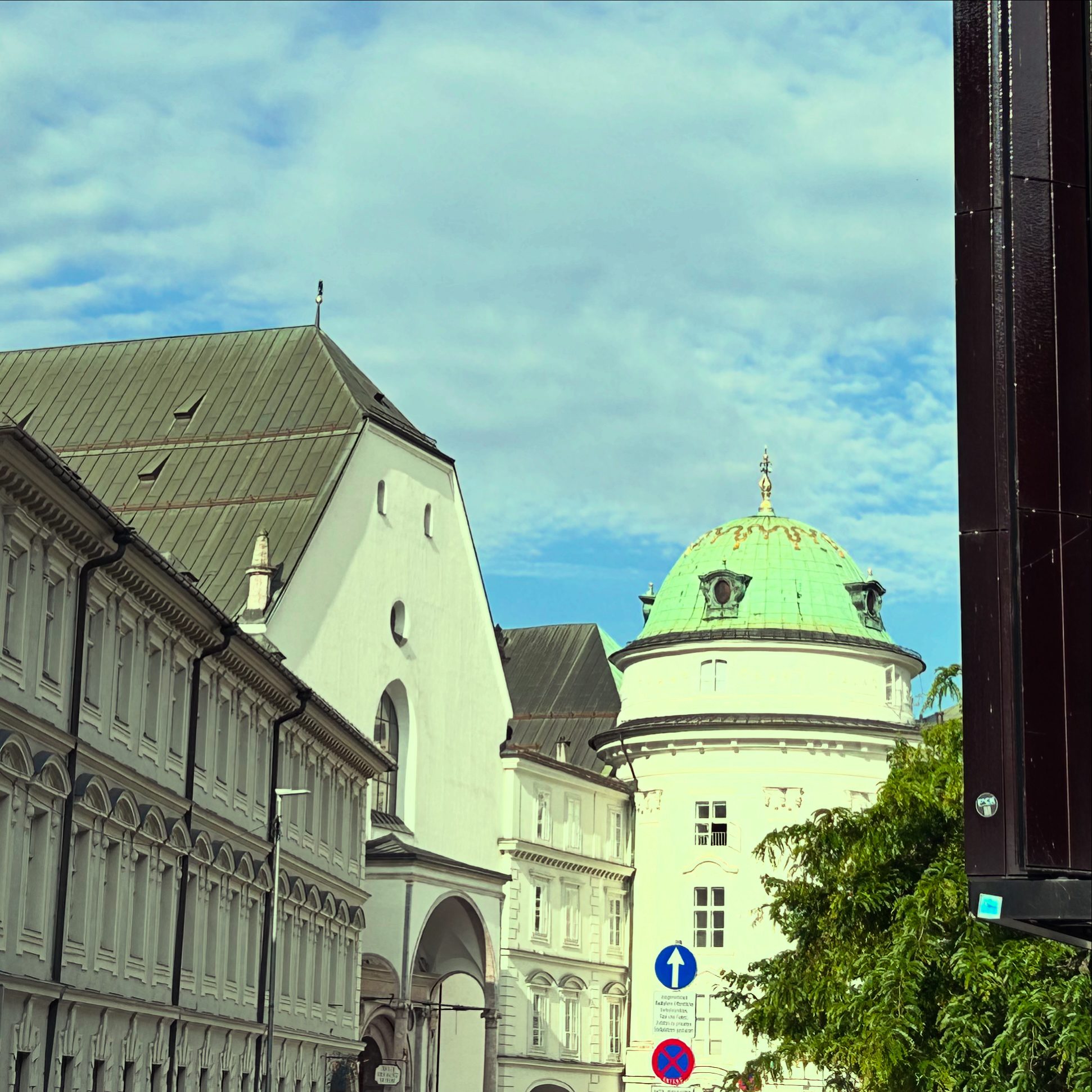
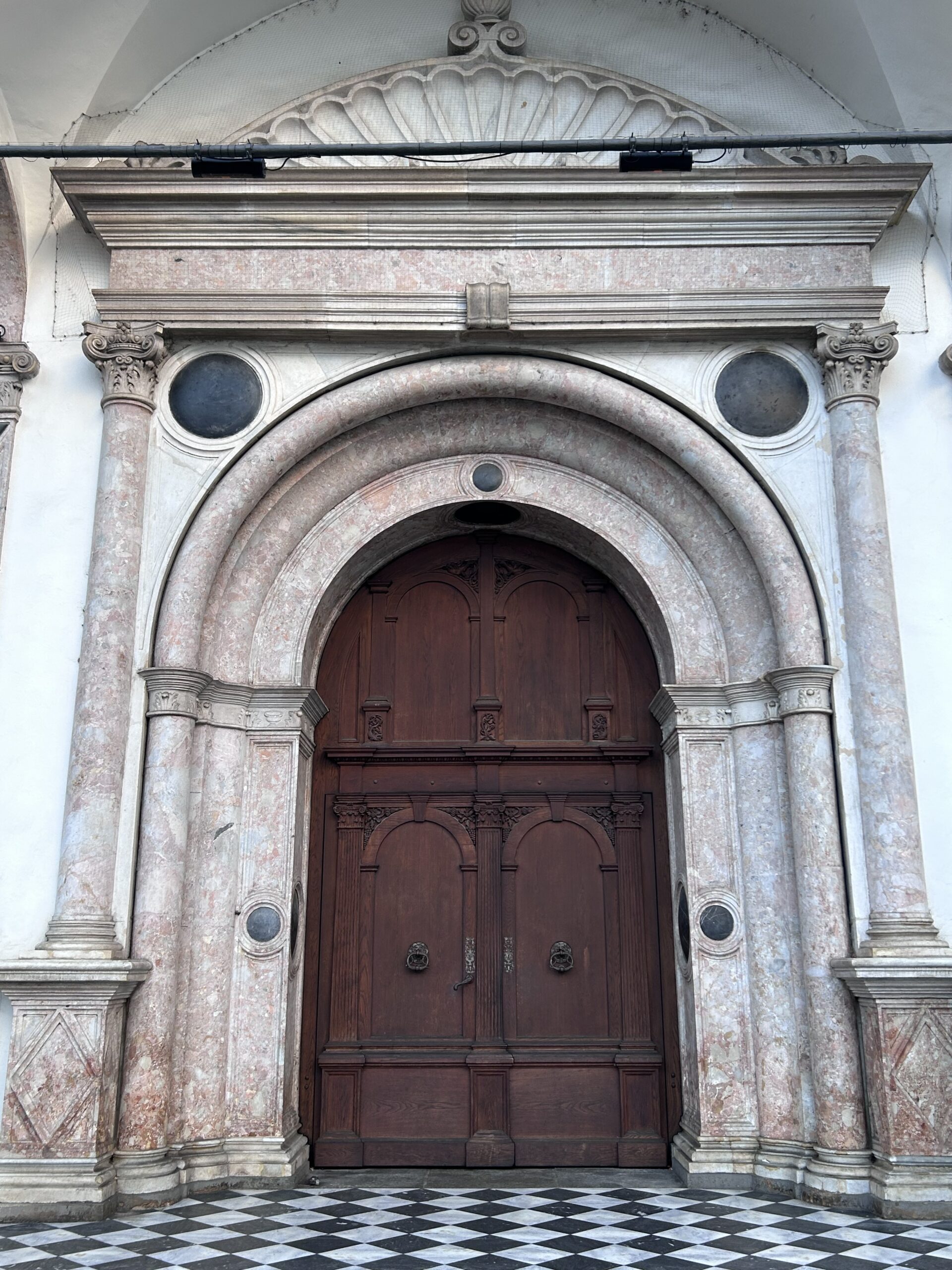
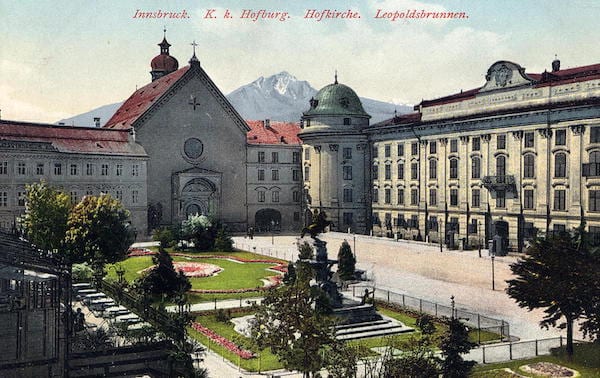
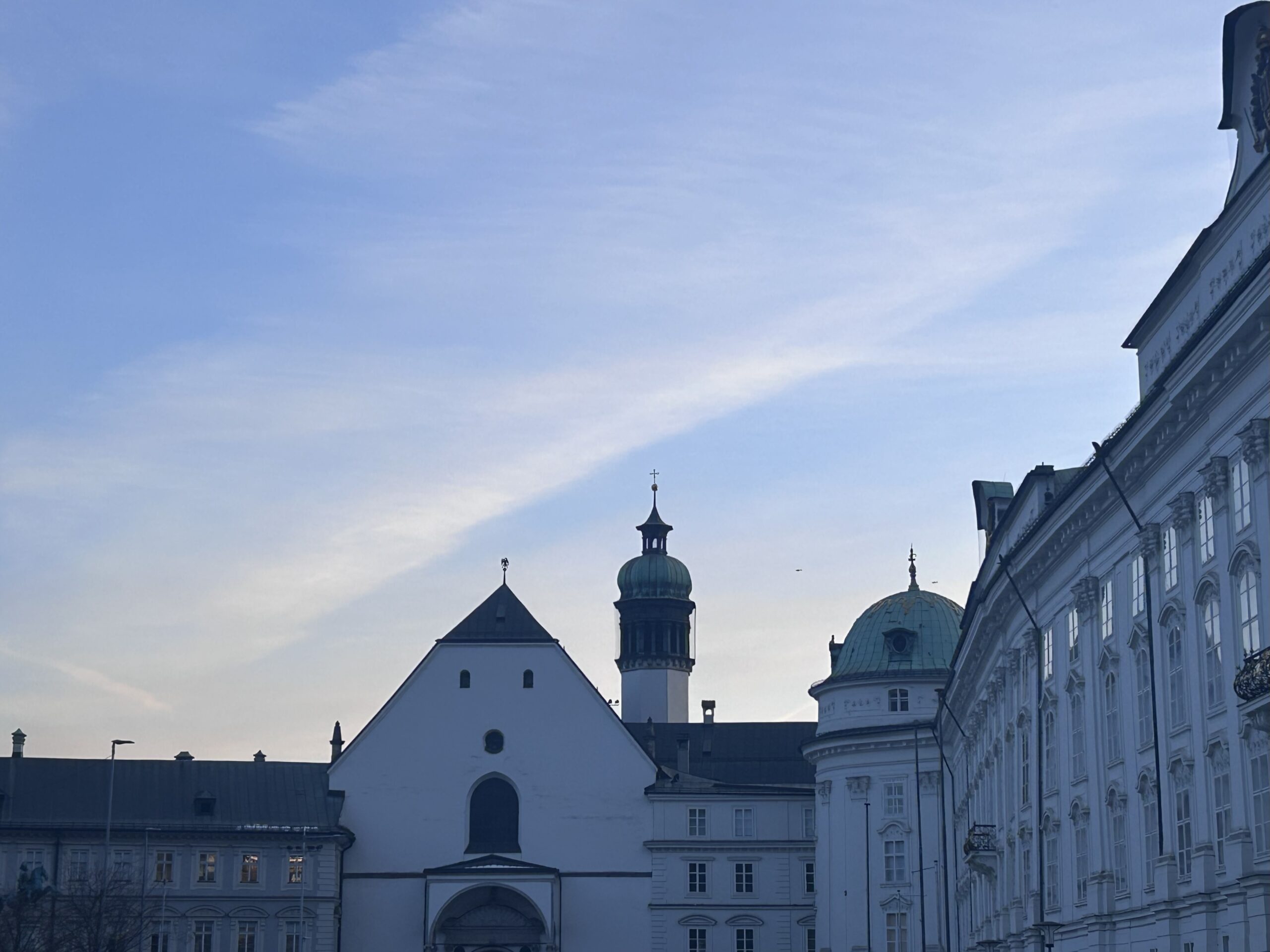
The Hofkirche in Innsbruck is one of the few churches that survived the fury of the Baroque urban renewal of the 17th and 18th centuries. The Gothic building displays the form and characteristics of the late Innsbruck Renaissance. The entrance area is modest; columns and discreet ornaments adorn the portal beneath the vaulting. The unadorned façade is almost overshadowed by the splendor of the neighboring Hofburg. Despite its seemingly modest exterior, the church is among the city’s best-known landmarks. Planned as Maximilian’s final resting place, it is the largest imperial tomb in Western Europe. In the 19th century it was regarded as the most important—by some malicious travelers even the only—sight in Innsbruck, as recorded in a travel account from 1846:
„Das meiste Kunstinteresse erregt die Hof- oder Franziskaner-, eigentlich heil. Kreuzkirche, die mehr Museum der Erzbildnerei als Kirche ist. Im Mittelschiff ist das Grabmal Kaiser Marimilian's I. angebracht, von einem unförmlichen Eisengitter umschlossen. Auf der Decke des Sargs ist der Kaiser lebensgroß, knieend, die Hände zum Gebet gefaltet, zu schauen. Diesen Erzguß verfertigte der Sicilianer Ludwig del Duca, und die an den vier Ecken der Decke angebrachten Statuetten, die Tugenden der Gerechtigkeit, Klugheit, Stärke und Mäßigkeit vorstellend… Die Seitenflächen des Sarges, in 24 Felder getheilt, enthalten auf eben so vielen Marmortafeln die merkwürdigsten Kriegs- und Friedensthaten dieses Herrschers in erhabener Arbeit.“
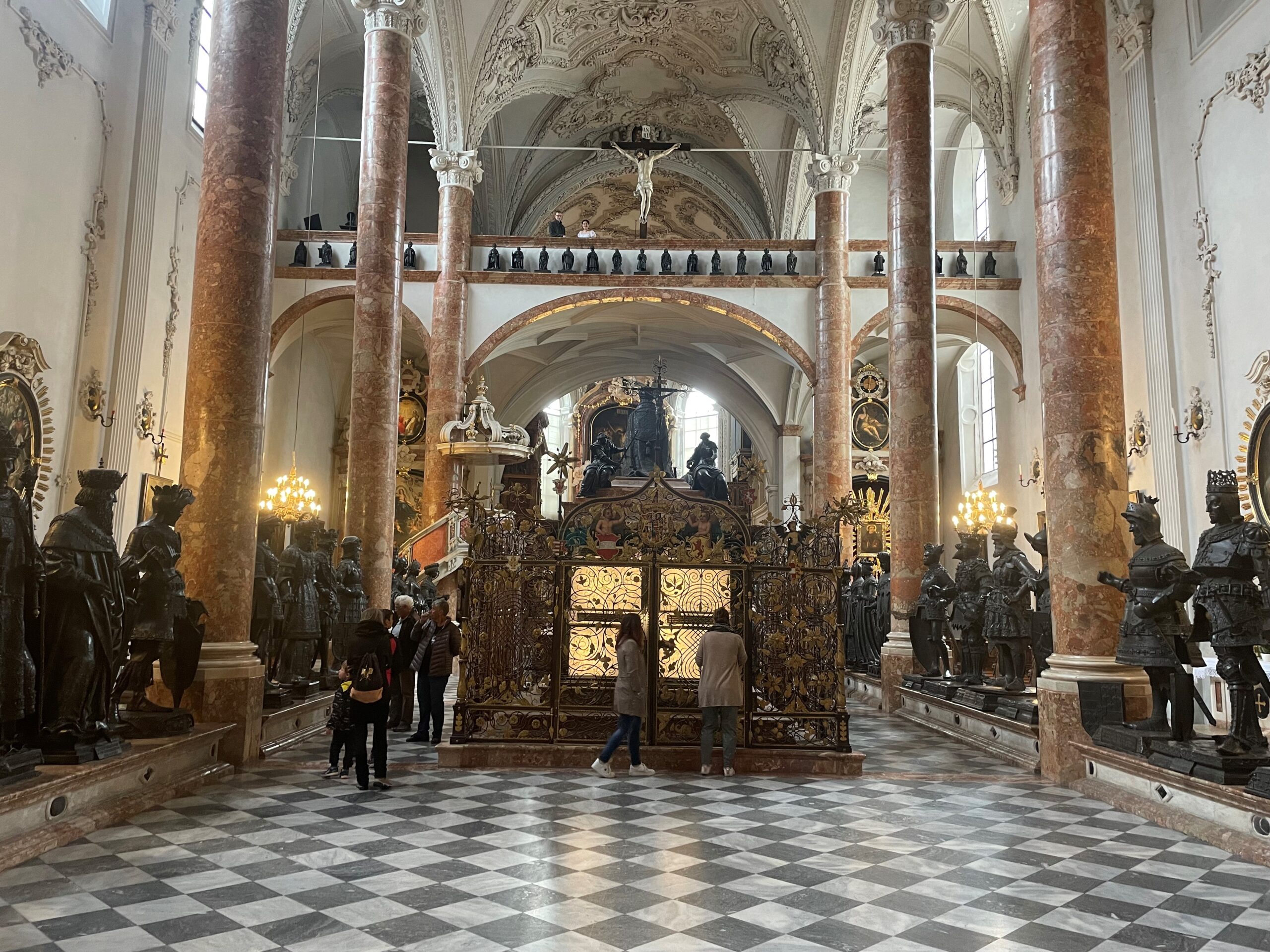
It is indeed true that no building reflects Maximilian I’s view of himself and his world as clearly as the Hofkirche in Innsbruck. The “last knight and first gunner” placed his public persona at the center of a long line of ancestors reaching back to the legendary British King Arthur. One could have gone even further back, as Maximilian’s court genealogist had identified the biblical patriarch Noah and the ancient Trojan hero Hector as progenitors of the Habsburgs. Larger-than-life bronze figures of these predecessors were meant to guard the Emperor’s eternal rest. Of the planned forty “Black Men” (Schwarze Mander)—not all of whom are male—only twenty-eight were ultimately realized to form a fitting honor guard. At the center of the ensemble kneels Maximilian himself. Albrecht Dürer (1471–1528) was involved in the design of the cenotaph enthroned at the center of the church. With his work, Dürer represented early modern capitalism in the art world. His copper engravings were already mass-produced and widely distributed in the German lands during his lifetime, making him a sought-after celebrity. Maximilian was an eager patron of the business-minded Nuremberg artist, who—like the Emperor—wanted to be visible to as broad an audience as possible through popular depictions and works. The tomb portrays the Emperor in death as he wished to be perceived in life: a symbol of a virtuous and devout existence. The oratory at the sarcophagus by Hans Waldner is an example of the highly developed woodworking craftsmanship of the Renaissance in the German-speaking world. The reliefs on the sides mark important stages in Maximilian’s life; each is a small work of art in its own right. Beginning with his marriage to Mary of Burgundy and continuing through various military episodes, the 24 panels depict the glorious deeds of the vain Habsburg. The Emperor did not live to see the completion of his tomb. In 1519, when he felt the end of his days approaching, legend has it that the Innsbruck innkeepers presented him with the debts his court had accumulated with them over the years. Enraged by this presumption, Maximilian turned his back on “his” Innsbruck and set out for his ancestral castle in Wiener Neustadt, his alternative final resting place. He died halfway there, in Linz. As egocentric as Maximilian was in life and in his self-representation, he wished to undertake his final journey in humility. He is said to have decreed that after the last rites he should no longer be addressed by his titles, that his teeth be removed, his skull shaved, and his body sewn into a shroud, so that he might appear before the Lord in heaven as a poor penitent. Faith was for him an instrument to legitimize his power, yet he was no cynic; like most of his peers on Europe’s royal thrones, he was genuinely devout. Faith as a system of order only works if one truly believes—and buildings such as the Hofkirche still demonstrate this impressively today. Because the figures intended for his substitute tomb at the fortress in Wiener Neustadt were too heavy, Maximilian’s grandson, Emperor Ferdinand I, decided decades later to have the tomb built in Innsbruck even without the mortal remains. The bronze figures had already been cast at the foundry in Mühlau. Construction on the church was completed in 1563 after ten years. Maximilian’s body was never transferred; his remains lie buried in Wiener Neustadt. His heart, as was customary for monarchs, was buried separately and rests with his first wife, Mary of Burgundy, in Bruges. Even without the body in the magnificent sarcophagus, the Schwarzmanderkirche is an impressive PR coup by the PR professional Maximilian.
What the Emperor did not achieve was accomplished by the Tyrolean resistance fighter Andreas Hofer. His mortal remains lie in an honorary grave in the Hofkirche. The path there was long, however. Hofer was executed and buried in Mantua in 1810. Thirteen years later, an unofficial delegation of Tyrolean riflemen set out to exhume his body and transfer it to Innsbruck. After initial resistance from the official state under Metternich, he was finally buried in the Hofkirche. The marble monument depicts Hofer in traditional Tyrolean dress with a flag, taking the oath of loyalty “For God, Emperor, and Fatherland,” in accordance with the ideas of the Habsburg authorities.
In addition to the bronze figures and tombs, the Schwarzmanderkirche houses a still-playable Renaissance organ. Church instruments are still used for concerts today and may seem unremarkable in the 21st century. Until the 20th century, however, attending Mass was for many people the only opportunity to experience music at all and a weekly highlight. Even today, one can experience the room-filling sound at a concert.
A noteworthy organ can also be seen in the Silver Chapel adjoining the Hofkirche. In this devotional space, Archduke Ferdinand II sought peace and seclusion—perhaps to seek absolution in dialogue with the Almighty for his wild excesses during the legendary festivities at Ambras Castle. The chapel takes its name from the lavishly decorated reliefs adorning the altar of ivory, ebony, and silver. Court architect Giovanni Lucchese and the Dutch court sculptor Alexander Colin, who had also worked on the Black Men one floor below, designed this Gothic jewel in the spirit of the Renaissance man Ferdinand, who—like Maximilian—had himself portrayed on his tomb as a worldly powerful yet devout and humble ruler. Beside him, beneath the Gothic vault, rest his first wife Philippine Welser and their children.
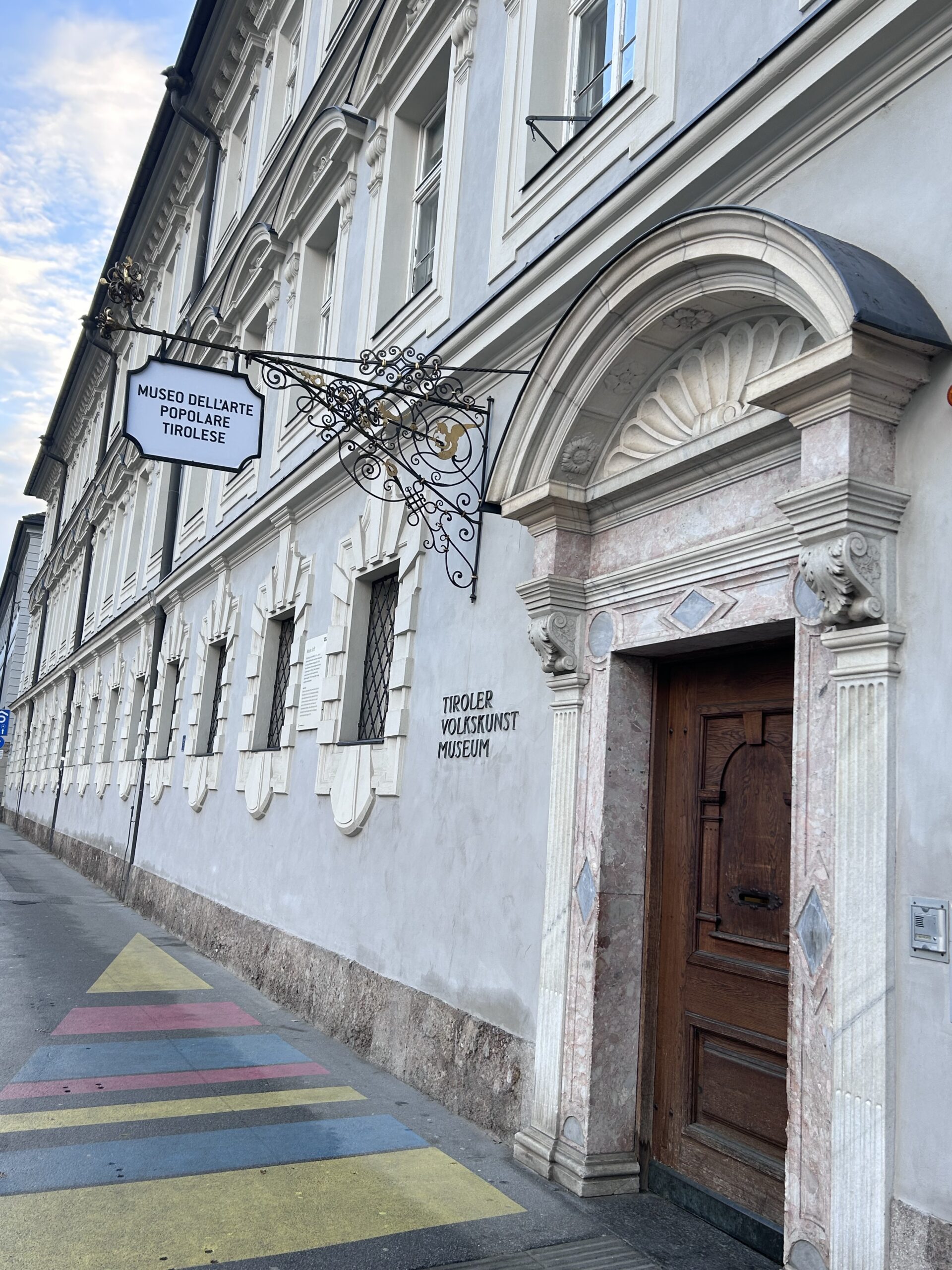
Those wishing to learn more about the culture and everyday life of past eras in Tyrol and the history of the Hofkirche are well served at the Folk Art Museum (Volkskunstmuseum) directly next to the church. Unlike the Ferdinandeum, this museum does not focus on high culture but on the everyday life of the broader population and folk traditions. As early as the 19th century, bourgeois-intellectual circles developed a keen interest in the distinctive character of the Tyrolean folk spirit and regional history. Legends, fairy tales, songs, customs, clothing, crafts—everything that made up the folk soul became of interest. The rise of tourism meant that everyday objects, “antiquities,” and artworks understood as patriotic cultural assets were taken home by well-to-do travelers as souvenirs and curiosities from the exotic mountain land. At the same time, industrial goods increasingly replaced products of rural craftsmanship, which for a long time had provided a source of income in agriculture, especially during winter. In 1889, the Tyrolean Trade Association, founded just under ten years earlier, decided to establish a museum dedicated to collecting arts and crafts from Tyrol in the broadest sense. With the collapse of the monarchy, this endeavor gained new significance. The founding of the Republic of German-Austria was a bumpy affair. Austria as a state had no long tradition, whereas the crown land of Tyrol could look back on a lengthy past. From the perspective of its Greater German–liberal founding fathers from the Chamber of Commerce, Tyrolean identity was to be made visible to a new public through the Folk Art Museum. Everyday Tyrolean life of past centuries became a master narrative that made the sense of belonging between the two parts of the region—separated at the Brenner Pass since 1920—tangible. In 1926, the state of Tyrol took over the extensive collection; three years later, the former Franciscan monastery was ceremoniously inaugurated as the Tyrolean Folk Art Museum by Federal President Miklas. The building, designed in the 16th century by Andrea Crivelli and Niclas Türing as a monastery and later remodeled, became, in a sense, the home of the Tyrolean folk spirit. How important interpretive authority over regional identity was for politics at the time is shown by the fact that the museum’s director, Josef Ringler, was removed from his post and replaced by a loyalist just days after Austria’s annexation to the German Reich in 1938. Today, the Folk Art Museum displays farmhouse parlors, furniture, clothing, nativity scenes, masks, and other objects representing Tyrolean traditions since the Middle Ages. The focus is not only on the culture of North Tyrol but, in the spirit of the Euroregion, also includes South Tyrol and Trentino. Particularly popular is the annual Christmas nativity exhibition, which relocates the birth of the Savior to the Holy Land of Tyrol. Debates surrounding traditional costumes, dirndls, riflemen, and customs to this day demonstrate how important national identity still is.
Maximilian I. and his times
Maximilian ranks among the most significant figures not only in the history of Innsbruck, but in European history as a whole. Of this mountainous land he is said to have remarked: “Tyrol is a coarse peasant’s coat, but one that keeps you warm.” There were many reasons for this special affection. His father, Frederick III, had been born in Innsbruck in 1415, before the city became a princely residence. Like many of his peers in the high aristocracy, Maximilian was an enthusiastic hunter, and the city’s location amid floodplains, forests, and mountains is said to have exerted on him a particular appeal—much as it still does today on German students. Despite these convincing “soft facts,” it was probably more tangible reasons that led him to conduct a considerable part of his governmental business from Innsbruck. In 1490, at the request of the Estates of the Land, he assumed the government of Tyrol from his predecessor Sigismund. The powerful Habsburg was unwilling to relinquish the important assets the region had to offer from the Habsburg portfolio. Maximilian transformed the former trading settlement on the Inn into one of the most important centers of the Holy Roman Empire, thereby permanently shaping its destiny. Innsbruck’s strategically advantageous location close to the Italian theaters of war also made the city highly attractive to the Emperor. Many Tyroleans were compelled to enforce the imperial will on the battlefield instead of tending their own fields. This changed only toward the end of his reign. In 1511, Maximilian granted the Tyroleans the Tyrolean Landlibell, a kind of constitution, which stipulated that they could only be called upon for military service in defense of their own land. What admirers of Maximilian—who like to regard the document as a charter of liberty—often overlook are the associated obligations, such as the levying of special taxes in the event of war. For Innsbruck the arrangement paid off in any case—if not financially, then at least culturally. “Whoever does not create a memory for himself in life will have no memory after death, and such a person will be forgotten with the peal of the bell.” Maximilian countered this fear quite successfully and deliberately through the erection of highly visible symbols of imperial power, such as the Golden Roof. Propaganda, imagery, and media played an increasingly important role, not least due to the emergence of printing. Maximilian made deliberate use of art and culture to maintain his presence. He kept a Reich Chapel Choir, a musical ensemble that performed primarily at public appearances and receptions of international envoys. A veritable cult of personality was staged around him through coins, books, printed works, and paintings.
For all the romance cultivated by this lover of courtly traditions and classical chivalry, Maximilian was a cool-headed power politician. His cultural policy and propaganda may have drawn on medieval models, but in realpolitik terms he was forward-looking. During his reign, political institutions such as the Imperial Diet (Reichstag), the Imperial Aulic Council (Reichshofrat), and the Imperial Chamber Court (Reichskammergericht) emerged, strictly regulating the relationship between subjects, territorial lords, and monarchy. Around 1500, Tyrol had approximately 300,000 inhabitants. More than 80 percent worked in agriculture and lived largely from the yields of their farms. In a veritable frenzy of new legislation, Maximilian curtailed peasant rights to the commons. Timber harvesting, hunting, and fishing were subordinated to the territorial lord and were no longer communal rights. This had negative effects on peasant self-sufficiency. Thanks to the new laws, hunters became poachers. Meat and fish, long staples of the medieval diet, became luxuries that could often only be obtained illegally. As a result, Maximilian was unpopular among large segments of the population during his lifetime.
Restrictions on self-sufficiency were joined by new taxes. It had always been customary for sovereigns to impose additional taxes on the population in the event of war. Maximilian's warfare differed from medieval conflicts. The auxiliary troops and their noble, chivalrous landlords were supplemented or completely replaced by mercenaries who knew how to use modern firearms.
This new way of waging war consumed enormous sums. When revenues from princely rights—such as minting, market, mining, and customs monopolies—were no longer sufficient, various population groups were taxed according to their estate and wealth. The system, however, was still far removed from today’s differentiated taxation models and consequently produced injustice and resentment. One example was Maximilian’s Gemeiner Pfennig. This wealth tax ranged from 0.1 to 0.5 percent of assets but was capped at one gulden. Jews, irrespective of their wealth, were required to pay a poll tax of one gulden. For the first time, princes were also obliged to contribute, but due to the cap they paid no more than a middle-class Jew. The proclamation and execution of the tax fell to prelates, parish priests, and secular lords. Priests were required to announce the tax from the pulpit on three successive Sundays, collect contributions together with court representatives, and enter them into the imperial tax register. It soon became clear that this method of taxation was unworkable. A modern system and tax model were required. A collegial chamber, the Regiment, centrally supervised Tyrol and Further Austria following the modern model of Burgundian financial administration that Maximilian had encountered during his time in the Netherlands. Innsbruck became the financial and accounting center of the Austrian lands. The Audit Chamber (Raitkammer) and the Privy Treasury (Hauskammer) were located in the Neuhof, where today the Golden Roof looks down over the old town. In 1496, the financial resources of the Austrian hereditary lands were consolidated in the treasury in Innsbruck. The head of the Court Chamber was the Bishop of Brixen, Melchior von Meckau, who increasingly involved the Fugger family as creditors. Officials such as Jakob Villinger (1480–1529) handled financial transactions with banking houses across Europe using the Italian-influenced method of double-entry bookkeeping and attempted to keep imperial finances under control. Talented minor nobles and citizens, trained jurists, and professional administrators replaced the high nobility in leading roles. Financial experts from Burgundy held the commercial leadership of the Regiment. The boundaries between finance and other fields such as war planning and domestic policy became fluid, granting this new administrative class considerable power. Where once equilibrium between territorial lord, church, landlord, and subject had rested on a balance of contributions and military protection, this system was now enforced through coercion from above. Maximilian argued that it was the duty of every Christian, regardless of estate, to defend the Holy Roman Empire against external enemies. The records surrounding disputes between king, nobility, clergy, peasants, and towns over tax obligations strongly resemble modern political debates on power and wealth distribution. The crucial difference from earlier centuries lay in the fact that the modern administrative apparatus now made it possible to enforce and collect these taxes. Comparisons to mandatory cash registers, the taxation of tips in the hospitality industry, or debates over abolishing cash transactions suggest themselves. Capital followed political significance to Innsbruck as well. During his reign, Maximilian employed 350 councillors. Nearly a quarter of these well-paid officials came from Tyrol. Envoys and politicians from across Europe, extending as far as the Ottoman Empire, as well as nobles, built residences in Innsbruck or stayed in its inns. Much like today’s oil wealth draws specialists of all kinds to Dubai, Schwaz silver and the financial economy it generated once attracted experts of all kinds to Innsbruck—a small city amid the inhospitable Alps.
Under Maximilian’s rule, Innsbruck underwent architectural and infrastructural transformation on an unprecedented scale. In addition to constructing the prestigious Golden Roof, he remodeled the Imperial Palace, began construction of the Court Church, and created the Innsbruck Arsenal, Europe’s leading weapons manufactory. Streets through the old town were reinforced and paved for the refined members of the court. As a pious Christian in the chivalric tradition, the Emperor also aided the poorest members of society. In 1499 he renovated and expanded the Salvator Chapel, a hospital for destitute Innsbruck residents who had no claim to a place in the municipal hospital. In 1509, the inner-city cemetery was relocated from today’s Cathedral Square to behind the municipal hospital, at what is now Adolf-Pichler-Platz. Maximilian rerouted the trade road through present-day Mariahilf and improved the city’s water supply. A fire ordinance for Innsbruck followed in 1510. He also began to curtail the privileges of Wilten Abbey, the largest landowner in what is today the city area. Infrastructure owned by the monastery—such as mills, sawmills, and the Sill Canal—was to come under stronger princely control.
The imperial court and the affluent administrative class resident in Innsbruck transformed the city’s appearance and demeanor. Maximilian had introduced the refined courtly culture of Burgundy to Central Europe through his first wife. Culturally, however, it was above all his second wife, Bianca Maria Sforza, who promoted Innsbruck. Not only was their royal wedding celebrated there, she also resided in the city for long periods, as it lay closer to her native Milan than Maximilian’s other residences. She brought her entire court from the Renaissance metropolis into the German lands north of the Alps. Art and entertainment in all forms flourished.
Under Maximilian, Innsbruck not only became a cultural centre of the empire, the city also boomed economically. Among other things, Innsbruck was the centre of the postal service in the empire. Maximilian was able to build on the expertise of the gunsmiths who had already established themselves in the foundries in Hötting under his predecessor Siegmund. Platers, foundry operators, powder stampers and cutlers settled in Neustadt, St. Nikolaus, Mühlau, Hötting and along the Sill Canal. The Fugger merchant dynasty maintained an office in Innsbruck. In addition to his favoured love of Tyrolean nature, the treasures such as salt from Hall and silver from Schwaz were at least as dear and useful to him. Maximilian financed his lavish court, his election as king by the electors and the eight-year war against the Republic of Venice by mortgaging the country's mineral resources, among other things.
Assessing Maximilian’s impact on Innsbruck is challenging. Expressions of affection by an emperor naturally flatter the popular imagination to this day. His material legacy, with its many monumental buildings, reinforces this positive image. He made Innsbruck an imperial residence and advanced infrastructural modernization. Thanks to the arsenal, the city became a center of the arms industry, the treasury of the Empire, and expanded both economically and spatially. Yet the debts he incurred and the regional assets he pledged to the Fugger family shaped Tyrol after his death just as profoundly as the strict laws he imposed on the common population. He is said to have left debts amounting to five million gulden—an amount his Austrian territories could have earned over twenty years. Outstanding payments ruined many businesses and service providers after his death, leaving them stranded on imperial promises. Early modern rulers were not bound by their predecessors’ liabilities; only agreements with the Fugger family constituted an exception, as these involved collateral rights. In the legends surrounding the Emperor, these harsh realities are far less present than the Golden Roof and the soft facts learned in school. In 2019, celebrations marking the 500th anniversary of the death of what was arguably the most important Habsburg for Innsbruck were held under the slogan “Tyrolean at heart, European in spirit.” The Viennese-born ruler was benevolently naturalized. Salzburg has Mozart; Innsbruck has Maximilian—a Emperor whom Tyroleans have adapted to fit the desired identity of Innsbruck as a rugged character happiest in the mountains. His distinctive face today adorns all manner of consumer goods, from cheese to ski lifts; the Emperor serves as patron for all kinds of the profane. Only for political agendas is he less easily harnessed than Andreas Hofer. For the average citizen, it is probably easier to identify with a revolutionary innkeeper than with an emperor.
Philippine Welser: Little Venice, cookery & herbalism
Philippine Welser (1527–1580) was the wife of Archduke Ferdinand II and ranks among the most popular historical figures associated with Innsbruck. To this day, she is often portrayed as a woman of humble origins who rose to the highest social circles through the power of love. This portrayal, however, is not entirely accurate. The Welser family was among the wealthiest families of their time. Her uncle Bartholomäus Welser was comparable in financial stature to Jakob Fugger and likewise belonged to the class of merchants and financiers who amassed immense wealth around 1500. The pillars of his prosperity—comparable to that of today’s tech billionaires—were the spice trade with India, mining, and the metals trade with the American colonies. Welser had also extended loans to the Habsburgs, which he was to recover in a momentous way. Instead of repaying the debts, Emperor Charles V pledged part of the territories newly annexed from the Spanish crown in America to the Welser family. In return, they were permitted to secure and develop the land as the colony of Klein‑Venedig (Little Venice), present‑day Venezuela, by establishing fortresses and settlements. They equipped expeditions in search of the legendary land of gold, El Dorado. In order to maximize profits from their fief, they set up trading posts and participated in the lucrative transatlantic slave trade between Europe, West Africa, and the Americas. The first generation of conquistadors, acting in the service of early capitalism in South and Central America, proceeded with such brutality that the distant Spanish authorities were forced to intervene. After 1530, Charles V prohibited the trade in Indigenous people from South America; however, the use of enslaved Africans on plantations and in mines was not affected by this regulation. This continued inhumane conduct on the part of the Welser representatives led to complaints at the imperial court in 1546. As a result, their fief over Klein‑Venedig was revoked, although their trading networks remained intact.
The young Philippine benefited from her family’s well‑established connections to the aristocracy. What followed was one of the most sensational celebrity marriages of the early modern period. Ferdinand and Philippine met at a Carnival ball in Pilsen. The Habsburg fell head over heels in love with the wealthy woman from Augsburg and married her. The secret marriage met with little enthusiasm within the House of Habsburg, even though business relations between the old nobility and the nouveau‑riche Augsburg merchant families had existed for decades and the Welser fortune was very welcome. Despite their wealth, marriages between commoners and nobles were considered scandalous and socially inappropriate. Ferdinand is said to have been utterly infatuated with his beautiful wife throughout his life and therefore to have disregarded all social conventions of the time. According to contemporary witnesses, her skin was so delicate that “one could see a sip of red wine flowing through her throat.” It comes as no surprise that the Tyrolean ruler had Ambras Castle lavishly remodelled for her. His brother Maximilian even remarked that Ferdinand was “enchanted” by the beautiful Philippine Welser, when Ferdinand withdrew his troops during the Turkish war to return home to his wife—though he added less charitably: “…I wish the wench were put into a sack and that no one knew where she was. God forgive me.” The Emperor only recognised the marriage after the couple had asked for forgiveness and pledged lifelong secrecy. The children of this morganatic marriage were therefore excluded from the line of succession.
Philippine Welser’s great passion was cooking. A collection of her recipes is still preserved today in the Austrian National Library. In the Middle Ages and the early modern period, the culinary arts were cultivated exclusively by the wealthy and the nobility, while the vast majority of subjects ate whatever was available. For centuries—indeed until the 1950s—people lived under conditions of chronic calorie deficiency. While today excessive consumption leads to illness, our ancestors suffered from diseases caused by malnutrition. Fruit was rarely part of the diet, as was meat. Food was monotonous and barely seasoned; spices such as exotic pepper were luxury goods beyond the reach of ordinary people. Whereas the daily fare of the common population was focused almost entirely on the most efficient intake of calories needed for physical labour, attitudes towards food and drink began to change in Innsbruck under Ferdinand II and Philippine Welser. Since the reign of Frederick IV, the court had already contributed to a gradual refinement of manners and customs in Innsbruck. Philippine Welser and Ferdinand elevated this development to new heights at Ambras Castle and the Weiherburg. The banquets they hosted were legendary and not infrequently degenerated into excesses. Her second great interest was herbal medicine. Philippine documented how plants and herbs could be used to alleviate physical ailments of all kinds. One of her recommendations read: “To make the teeth white and fresh and to kill the worms therein: take rosemary wood and burn it to charcoal, grind it into powder, bind it in a small silk cloth and rub the teeth with it.” For her studies and interests, she had a herb garden laid out at Ambras Castle in Innsbruck.
According to contemporary accounts, she was very popular among the Tyrolean population, as she showed great care for the poor and needy. Such charitable welfare, organised by the city council and sponsored by wealthy citizens and nobles, was not exceptional at the time but common practice. Nowhere, it was believed, could one come closer to salvation in the afterlife than through Christian charity (caritas). Philippine Welser found her final resting place after her death in 1580 in the Silver Chapel of the Court Church in Innsbruck, where she was buried together with her children who had died in infancy and with Ferdinand. Below Ambras Castle, the Philippine‑Welser‑Straße still commemorates her today.
Ferdinand II: Principe and Renaissance prince
Archduke Ferdinand II of Austria (1529–1595) ranks among the most colourful figures in Tyrolean regional history. His father, Emperor Ferdinand I, ensured that he received an excellent education. Ferdinand grew up at the Spanish court of his uncle, Emperor Charles V. The years of his formal education coincided with the early phase of Jesuit influence at the Habsburg courts. The young statesman was educated by these devout scholars entirely in the spirit of Christian humanism, complemented by instruction in the customs and etiquette of the High Renaissance aristocracy. In his youth, Ferdinand travelled extensively through Italy and Burgundy, where he became acquainted with a refined and luxurious courtly lifestyle that had not yet been established among the German aristocracy. He also spent several formative years in Innsbruck. Ferdinand was what one might today describe as a globetrotter, a member of the educational elite, or a cosmopolitan. He was regarded as intelligent, charming, and artistically inclined. Among contemporaries less enamoured of his eccentricity, however, he was reputed to be immoral and hedonistic. Even during his lifetime, rumours circulated that he hosted extravagant and indecent orgies. This reputation was likely connected to his private life. In a first, “semi‑morganatic” marriage, Ferdinand was wed to the commoner Philippine Welser. After the death of his first wife, Ferdinand married at the age of fifty‑three the deeply religious Anna Caterina Gonzaga, a sixteen‑year‑old princess of Mantua. Mutual affection between the two appears to have been limited, not least because Anna Caterina was Ferdinand’s niece. The Habsburgs were far less squeamish about marriages within the family than about unions between nobles and commoners. From this marriage, too, Ferdinand “only” fathered three daughters.
After the rarely Ferdinand I, Innsbruck once again gained a resident ruler. Ferdinand’s father divided his realm among his sons. Maximilian II, suspected by his parents of heresy and sympathy with Protestant doctrines, inherited Upper and Lower Austria as well as Bohemia and Hungary. Ferdinand’s younger brother Charles ruled Inner Austria—Carinthia, Styria, and Carniola. The middle son received Tyrol, which at the time extended as far as the Engadin, along with the fragmented Habsburg possessions west of the central European core lands. The golden age of silver mining in Tyrol was already fading. The mines of Schwaz were becoming unprofitable due to cheap silver imports from the Americas. The influx of precious metals from the Habsburg territories in New Spain led to inflation. These financial challenges did not deter Ferdinand from commissioning extensive public and private infrastructure projects. Innsbruck benefited enormously—economically and culturally—from once again becoming the seat of an active ruler after years of neglect following Maximilian’s death. Ferdinand’s archducal presence attracted aristocrats and officials back to the city. By the late 1560s, the administrative apparatus had grown once again to around one thousand people, whose spending stimulated local commerce. Bakers, butchers, and inns flourished after leaner years. By the end of the sixteenth century, Innsbruck had an above‑average number of taverns compared to other cities, profiting handsomely from merchants, travellers, and guests. Wine taverns also functioned as storage and trading centres.
The Italian cities of Florence, Venice and Milan were trendsetters in terms of culture, art and architecture. Ferdinand's Tyrolean court was to be in no way inferior to them. Gone were the days when Germans were considered uncivilised in the more beautiful cities south of the Alps, barbaric or even as Pigs were labelled. To this end, he had Innsbruck remodelled in the spirit of the Renaissance. In keeping with the trend of the time, he imitated the Italian aristocratic courts. Court architect Giovanni Lucchese assisted him in this endeavour. Ferdinand spent a considerable part of his life at Ambras Castle near Innsbruck, where he amassed one of the most valuable collections of works of art and armour in the world. Ferdinand transformed the castle above the village of Amras into a modern court. His parties, masked balls and parades were legendary. During the wedding of a nephew, he had 1800 calves and 130 oxen roasted. Wine is said to have flowed from the wells instead of water for 10 days.
The transformation of Innsbruck did not end with Ambras Castle. West of the city, an archway still commemorates Ferdinand’s game reserve, complete with a pleasure pavilion (Lusthaus), also designed by Lucchese. To allow the sovereign access to his weekend residence, a road was laid through the marshy Höttinger floodplains, forming the basis of today’s Kranebitter Allee. The Lusthaus was replaced in 1786 by the structure now known as the Powder Tower (Pulverturm), which today houses parts of the University of Innsbruck’s Faculty of Sport Science. In the city centre, Ferdinand commissioned the princely Comedihaus on today’s Rennweg. To improve Innsbruck’s water supply, the Mühlau Bridge was constructed, allowing water from the Mühlau stream to be channelled into the city. The Jesuits, who had arrived in Innsbruck shortly before Ferdinand’s accession to counter reformers and critics of the Church and to reorganise education, were granted a new church in Silbergasse. Numerous new buildings—including the monasteries of the Jesuits, Franciscans, Capuchins, and Servite nuns—stimulated crafts and construction. These new orders supported Ferdinand’s emphasis on the confessional conformity of his subjects. In the Tyrolean Provincial Ordinance of 1573, Ferdinand not only sought to curb fornication, profanity, and prostitution, but also obliged his subjects to live a God‑fearing—i.e. Catholic—life. The “Prohibition of Sorcery and Superstitious Divination” outlawed any deviation from the true faith under threat of imprisonment, corporal punishment, and confiscation of property. Jews were required to wear a clearly visible yellow ring on the left side of their clothing. At the same time, Ferdinand brought a Jewish financier to Innsbruck to manage the court’s complex finances. Samuel May and his family lived in the city as protected court Jews; Daniel Levi entertained the archduke with dance and harp music, while Elieser Lazarus served as his personal physician.
To live lavishly, tax the population heavily, tolerate Protestant advisers at court while suppressing Protestantism among the populace posed no contradiction for a Renaissance prince. Ferdinand saw himself as Advocatus Ecclesiae, the secular representative of the Church, responsible in an absolutist confessional sense for the salvation of his subjects’ souls. At the age of fifteen, he had already marched into battle with his uncle Charles V during the Schmalkaldic War against the enemies of the Roman Church. Coercive measures, the founding of churches and monasteries—such as those of the Franciscans and Capuchins in Innsbruck—improved pastoral care, and Jesuit theatrical productions like The Beheading of John were among the preferred weapons against Protestantism. Ferdinand’s piety was sincere, yet like most of his contemporaries he was adept at adapting to circumstances. His policies reflected the influence of contemporary Italian avant‑garde thought. Machiavelli’s Il Principe argued that rulers were permitted whatever was necessary for success—and could be deposed if they failed. Ferdinand II sought to embody this early absolutist style of leadership and, with his Provincial Ordinance, introduced a comparatively modern legal framework. For his subjects, however, this meant higher taxes, as well as significant restrictions on common land usage, fishing, and hunting rights. Miners, mining entrepreneurs, and foreign trading companies with their counting houses in Innsbruck further drove up food prices. In summary, while Ferdinand enjoyed exclusive hunting privileges on his estates, his subjects endured hardship caused by rising burdens, inflation, and game damage exacerbated by hunting bans. Owing largely to his architectural legacy, Ferdinand continues to enjoy a favourable reputation today. The eccentric archduke found his final resting place—fittingly according to his own tastes—in the Silver Chapel, beside his first wife, Philippine Welser.
Andreas Hofer and the Tyrolean uprising of 1809
The period of the Napoleonic Wars provided Tyrol with a national epic and, in Andreas Hofer, a hero whose legacy continues to resonate to this day. Anyone searching for a Tyrolean national founding narrative—voilà! However, if one sets aside the carefully constructed legend of the Tyrolean uprising against foreign rule, the years before and after 1809 emerge as a darker chapter in Innsbruck’s urban history, marked by economic hardship, wartime devastation, and widespread looting. During the Napoleonic Wars, the Kingdom of Bavaria was allied with France and, through several conflicts between 1796 and 1805, succeeded in taking Tyrol from the Habsburgs. Innsbruck was no longer the capital of a crown land, but merely one of many district capitals within the administrative unit of the Innkreis. Revenues from tolls and customs duties, as well as income from Hall salt production, were redirected northwards. The British continental blockade against Napoleon caused the collapse of long‑established and prosperity‑generating sectors of the Innsbruck economy, particularly long‑distance trade and transport. Innsbruck’s citizens were required to quarter Bavarian soldiers in their homes. The abolition of the Tyrolean provincial government, the gubernium, and the Tyrolean parliament meant not only a loss of status, but also a loss of jobs and financial resources. While the city suffered financially under war and the new regime, the upheaval also opened up new socio‑political opportunities. War, as the saying goes, is the father of all things, and many citizens did not entirely oppose the fresh winds of change. Inspired by the spirit of the Enlightenment, reason, and the French Revolution, the new rulers set about dismantling traditional structures. Measures such as street‑cleaning regulations and compulsory smallpox vaccination aimed to improve hygiene and public health. At the beginning of the nineteenth century, a considerable number of people still died from diseases caused by poor sanitation and contaminated drinking water. A modern tax system was introduced, and the powers of the nobility were further curtailed in line with the emerging administrative state. The Bavarian authorities reinstated the right to form associations, which had been banned in 1797. The reduction of the Church’s influence over education was also welcomed by the liberal-minded population of Innsbruck. A telling example of these reforms was the appointment of the Benedictine monk Martin Goller—later co‑founder of the Innsbruck Music Society—to promote musical and cultural education in the city. However, Catholic processions and religious festivals fell victim to the Enlightenment-inspired agenda of the new rulers. In 1808, the Bavarian king introduced the Municipal Edict across his territories, obliging subjects to maintain public buildings, fountains, roads, bridges, and other infrastructure.
These reforms were unpopular with large segments of the Tyrolean population. For Tyrolean farmers, who had long been largely exempt from compulsory labour, the new obligations represented an additional burden and an affront to their sense of status. The immediate trigger for the uprising was the conscription of young men into the Bavarian-Napoleonic army, despite the fact that Tyroleans, according to the Landlibell issued by Emperor Maximilian, were only obliged to defend their own borders. On 10 April 1809, a disturbance during a conscription in Axams near Innsbruck escalated into a full uprising. Under the banner of “God, Emperor, and Fatherland,” Tyrolean militia units assembled to drive the Bavarian troops and administrators out of Innsbruck. The riflemen were led by Andreas Hofer (1767–1810), an innkeeper as well as a wine and horse trader from the Passeier Valley near Merano. He was supported not only by fellow Tyroleans such as Father Haspinger, Peter Mayr, and Josef Speckbacher, but also—behind the scenes—by Archduke Johann of Habsburg. Upon entering Innsbruck, the insurgents did not limit themselves to official targets. As in the Peasants’ War of 1525, their zeal was driven not only by adrenaline but also by alcohol. The unruly mob proved more damaging to the city than Bavarian rule had been since 1805. Particularly severe riots were directed against bourgeois women and the small Jewish population—carried out by the very “liberators.”
n July 1809, following the Peace of Znaim concluded with the Habsburgs—still regarded by many Tyroleans today as Vienna’s betrayal of Tyrol—Bavarian and French forces regained control of Innsbruck. What followed entered the history books as the Tyrolean Uprising under Andreas Hofer, who had by then assumed supreme command of the Tyrolean militia. In total, the insurgents achieved victory three times on the battlefield, most famously in the Third Battle of Bergisel in August 1809. “Innsbruck sees and hears what it has never seen or heard before: a battle involving 40,000 combatants…” For a brief period, Andreas Hofer effectively ruled Tyrol in the absence of regular administrative structures, even in civilian matters. The city’s dire financial situation, however, did not improve. Instead of Bavarian and French soldiers, Innsbruck citizens now had to house and feed their own compatriots from the peasant regiments and pay levies to the new provincial government. The liberal and affluent urban elites were particularly unhappy with the new rulers. The decrees issued by Hofer in his role as provincial commander resembled a theocratic order more than nineteenth‑century legislation. Women were required to appear in public only modestly veiled, dances were banned, and “immodest” monuments—such as the nymphs at the Leopold Fountain—were removed from public space. Educational responsibilities were to be returned to the clergy. Liberals and intellectuals were arrested, while the recitation of the rosary became compulsory. In the autumn of 1809, the fourth and final Battle of Bergisel ended in a decisive defeat at the hands of overwhelming French forces. The government in Vienna had used the Tyrolean insurgents primarily as a tactical buffer in the war against Napoleon. Even earlier, the emperor had already been forced to cede Tyrol again in the Treaty of Schönbrunn. Between 1810 and 1814, Innsbruck once more came under Bavarian administration. The population, too, was only moderately motivated to continue fighting. Wilten suffered severe damage from the fighting, shrinking from over 1,000 inhabitants to fewer than 700. By this time, Hofer himself was a man broken by exhaustion and alcohol. He was captured and executed in Mantua on 20 January 1810. To make matters worse, Tyrol was divided. The Adige Valley and Trentino became part of the Kingdom of Italy established by Napoleon, while the Puster Valley was annexed to the French‑controlled Illyrian Provinces.
The “fight for freedom” continues to symbolise the Tyrolean self‑image to this day. For a long time, Andreas Hofer was regarded as an undisputed hero and the prototype of the resilient, patriotic, and steadfast Tyrolean—the underdog who resisted foreign domination and unholy customs. In reality, Hofer was likely a charismatic leader, but politically inept, conservative‑clerical, and simple‑minded. His tactical principle at the Third Battle of Mount Isel—“Grad nit aufferlassen tiat sie” (“You just must not let them come up”)—captures his character quite well. In conservative Tyrolean circles such as the marksmen (Schützen), Hofer continues to be venerated in an uncritical and quasi‑cultic manner. The Tyrolean marksmen tradition is a living form of heritage that has modernised in some respects, yet in many darker corners remains reactionary in orientation. To this day, marksmen from Wilten, Amras, Pradl, and Hötting march in harmony alongside clergy, traditional costume associations, and brass bands in church processions, firing rifles into the air to drive all evil away from Tyrol and the Catholic Church. Throughout the city, numerous monuments commemorate the year 1809. During the second half of the nineteenth century, the fighters were increasingly heroised as a German bulwark against foreign peoples. Mount Isel was made available to the city for the veneration of the freedom fighters by Wilten Abbey, the Catholic authority in Innsbruck. Streets in the Wilten district—incorporated into Innsbruck in 1904 during a period dominated by a Greater German liberal city council and long administered by the Abbey—were named after Andreas Hofer and his comrades Josef Speckbacher, Peter Mayr, Father Haspinger, and Kajetan Sweth. The short Rote Gassl (Red Alley) in the historic centre of Wilten commemorates the Tyrolean marksmen who—supposedly clad in red uniforms, probably erroneously attributed to them—are said to have paid mass homage at this spot to the victorious commander Hofer after the second Battle of Mount Isel. To this day, Andreas Hofer is frequently invoked in Tyrol in support of a wide range of initiatives and agendas. Especially during the nationalism of the nineteenth century, repeated reference was made to the idealised hero Andreas Hofer. Through paintings, pamphlets, and theatrical performances he was elevated to iconic status. Even today, one can still see the likeness of the senior marksman when Tyroleans protest against unpopular measures of the federal government, EU transit regulations, or—somewhat incongruously—when FC Wacker Innsbruck faces away teams. The slogan in such cases is: “Men, it’s time!” The legend of the battle‑hardened Tyrolean farmer—working the fields by day and training in the evening at the shooting range as a sharpshooter and defender of the homeland—is repeatedly revived to reinforce an image of “authentic” Tyrolean identity. The commemorations marking the anniversary of Andreas Hofer’s death on 20 February continue to draw large crowds from all parts of Tyrol to Innsbruck. Only in recent decades has a more critical reassessment emerged of this staunchly conservative marksman captain, likely overwhelmed by his role as Tyrol’s provincial commander, who—encouraged by elements of the Habsburg dynasty and the Catholic Church—sought not only to repel French and Bavarian forces but also to keep the liberal ideas of the Enlightenment firmly out of Tyrol.
Glaube, Kirche und Obrigkeit
The abundance of churches, chapels, crucifixes, statues, and paintings in public spaces strikes many visitors to Innsbruck from other countries as unusual. Not only places of worship, but also many private houses are decorated with depictions of Jesus, Mary, saints, and biblical scenes. For centuries, the Christian faith and its institutions shaped everyday life throughout Europe, and Innsbruck—as a residence city of the strictly Catholic Habsburgs and the capital of the self-proclaimed Holy Land of Tyrol—was particularly richly endowed with ecclesiastical buildings. In terms of number and scale relative to the conditions of earlier times, churches appear as gigantic features in the cityscape. In the 16th century, Innsbruck, with its approximately 5,000 inhabitants, possessed several churches whose splendor and size surpassed every other building, including the palaces of the aristocracy. Wilten Abbey was a vast complex in the midst of a small farming village that had developed around it.
The spatial dimensions of these places of worship reflect their importance within the political and social structure. For many inhabitants of Innsbruck, the Church was not only a moral authority but also a secular landowner. The Bishop of Brixen was formally equal in rank to the territorial prince. Peasants worked on the bishop’s estates just as they did on those of a secular ruler. The clergy exercised both taxation and judicial authority over their subjects, and ecclesiastical landowners were often regarded as particularly demanding. At the same time, it was also the clergy in Innsbruck who were largely responsible for social welfare, healthcare, care for the poor and orphans, food distribution, and education. The Church’s influence extended into the material world in a way comparable to how the modern state operates today through tax offices, police, schools, and employment services. What democracy, parliament, and the market economy represent for us today, bishops, the Bible, Christian devotional literature, and parish priests represented for people of earlier centuries: a reality that maintained order.
It would be incorrect to believe that all clergymen were cynical power-hungry figures who exploited their uneducated subjects. The majority of both clergy and nobility were devout and God-fearing, albeit in a manner that is difficult to comprehend from today’s perspective. It was not the case that every superstition was blindly accepted or that people were arbitrarily executed based on anonymous accusations. In the early modern period, violations of religion and morals were tried before secular courts and punished severely. Charges were brought under the term heresy, which encompassed a wide range of offenses. Sodomy—meaning any sexual act not serving reproduction—sorcery, witchcraft, and blasphemy, in short any deviation from the correct faith, could be punished by burning. The act of burning was intended both to purify the condemned and to destroy them and their sinful behavior completely, thereby removing evil from the community. For a long time, the Church regulated everyday social life down to the smallest details. Church bells structured people’s daily schedules. Their sound called people to work or worship, or informed the community of a death through tolling. People were able to distinguish individual bell signals and their meanings. Sundays and holidays structured time. Fasting days regulated diet. Family life, sexuality, and individual behavior were expected to conform to Church-prescribed morality. For many people, salvation in the afterlife was more important than happiness on earth, which was seen as predetermined by the course of time and divine will. Purgatory, the Last Judgment, and the torments of hell were real and served to frighten and discipline even adults.
While parts of Innsbruck’s bourgeoisie were at least gently awakened by the ideas of the Enlightenment after the Napoleonic Wars, the majority of the population remained deeply attached to a blend of conservative Catholicism and superstitious folk piety. Religiosity was not necessarily a question of background and social status, as the social, media, and political debates along the fault line between liberals and conservatives repeatedly demonstrated. Although the freedom of religious practice had been legally enshrined since the December Constitution (Dezemberverfassung) of 1867, state and religion remained closely intertwined. Thanks to the 1855 concordat between the Pope and the Emperor, marriage law and the school system were under the control of the Catholic Church. It was only under pressure from liberals in parliament that these bastions of everyday social life began to crumble, yet particularly in Tyrol, the pastor's word remained sacrosanct. In the First Republic, a conservative backlash occurred. Ignaz Seipel, a Christian Social politician who went down in history as the Iron Prelate (Eiserner Prälat), rose to the highest office of the state in the 1920s. Federal Chancellor Engelbert Dollfuß saw his Corporate State (Ständestaat)—a construct built on a Catholic foundation—as a bulwark against socialism. In 1933, the concordat with the Vatican was renewed. Even after World War II, church and politics in Tyrol formed a powerful double act in the persons of Bishop Rusch and Governor Wallnöfer. In 1957, the government of the Second Republic reconfirmed the agreement, which formally remains valid to this day. A genuine separation of church and state did not begin until the 1970s. Although people leaving the church in recent decades have dented official membership figures and recreational events draw larger crowds than Sunday masses, faith and the church still hold a fixed place in the daily lives of Innsbruck’s residents, even if often unnoticed. The Roman Catholic Church still owns a vast amount of land in and around Innsbruck, even beyond the walls of its monasteries and educational institutions. A number of schools in and around Innsbruck also remain under the influence of conservative forces and the church. And whoever enjoys a public holiday, cracks Easter eggs against one another, or lights a candle on a Christmas tree does not have to be a Christian to act in the name of Jesus—disguised as tradition.
Maria Theresia, Mother of the Nation and Reformer
Maria Theresa ranks among the most important figures in Austrian history. Particularly significant were her domestic reforms, many of which had a tangible impact on the everyday lives of Innsbruck’s inhabitants and are still visible today in the city’s built environment. Together with her most influential advisers—Friedrich Wilhelm von Haugwitz, Joseph von Sonnenfels, and Wenzel Anton Kaunitz—she succeeded in transforming the so‑called Austrian hereditary lands into a modern state. Instead of governing her territories through the local nobility, she relied on a centralized, professional administration. In keeping with Enlightenment thought, her advisers recognized that the welfare of the state depended on the health and level of education of its individual subjects. An early healthcare reform of 1742 obliged the professors of medicine at the University of Innsbruck not only to teach but also to ensure the operation of the municipal hospital in the Neustadt district. A school reform likewise reshaped the educational landscape within the city walls, both spatially and conceptually. Due to a lack of space, the school was relocated from Domplatz to Kiebachgasse, and its educational mission was redefined. Subjects were expected to remain Catholic, but their loyalty was to be directed toward the state. Education was placed under centralized state control in order to develop talents in a targeted manner. The aim was not to raise critical, humanistic intellectuals, but rather to train personnel for the state administrative apparatus. This reform laid the foundation for later social mobility. Through military service and civil administration, non‑nobles were now able to pursue careers and climb the social ladder. Any improvement of the individual was regarded as a gain for the whole. Further measures followed that affected not only the national economy but also the daily lives of most people. The standardization of weights and measures made the tax system more precise and less susceptible to abuse. For farmers, the harmonization of laws meant that their livelihoods were less dependent on local landlords and their arbitrary decisions. The Robot—the unpaid compulsory labor owed by peasants to their landlords—was also abolished under Maria Theresa. A shift in thinking likewise took place in criminal prosecution and the judicial system. In 1747, a small police force was established in Innsbruck to oversee market regulation, trade and guild regulations, control of foreigners, and public morals. Above all, this served to regulate the provision of goods in favor of consumers. Not only poor quality but also price gouging was punished. The strictness of early food inspections is illustrated by a police record from 1748, in which a butcher from Pradl was fined for exceeding the legally fixed meat prices. This denser network of regulations and improved law enforcement went hand in hand with a more humane system of punishment. Although the criminal code Constitutio Criminalis Theresiana did not abolish torture, it did strictly regulate its use. Yet despite Maria Theresa’s self‑presentation as a pious mother of the land and her reputation today as an Enlightenment ruler, the devoutly Catholic sovereign was uncompromising when it came to power and religion. In keeping with Enlightenment thought, she ordered critical investigations into superstitions such as vampirism, which was widespread in the eastern parts of her realm, and initiated the final end of the witch trials. At the same time, however, Protestants were ruthlessly expelled from the country. Many Tyroleans were forced to leave their homeland and resettle in more remote regions of the Habsburg monarchy.
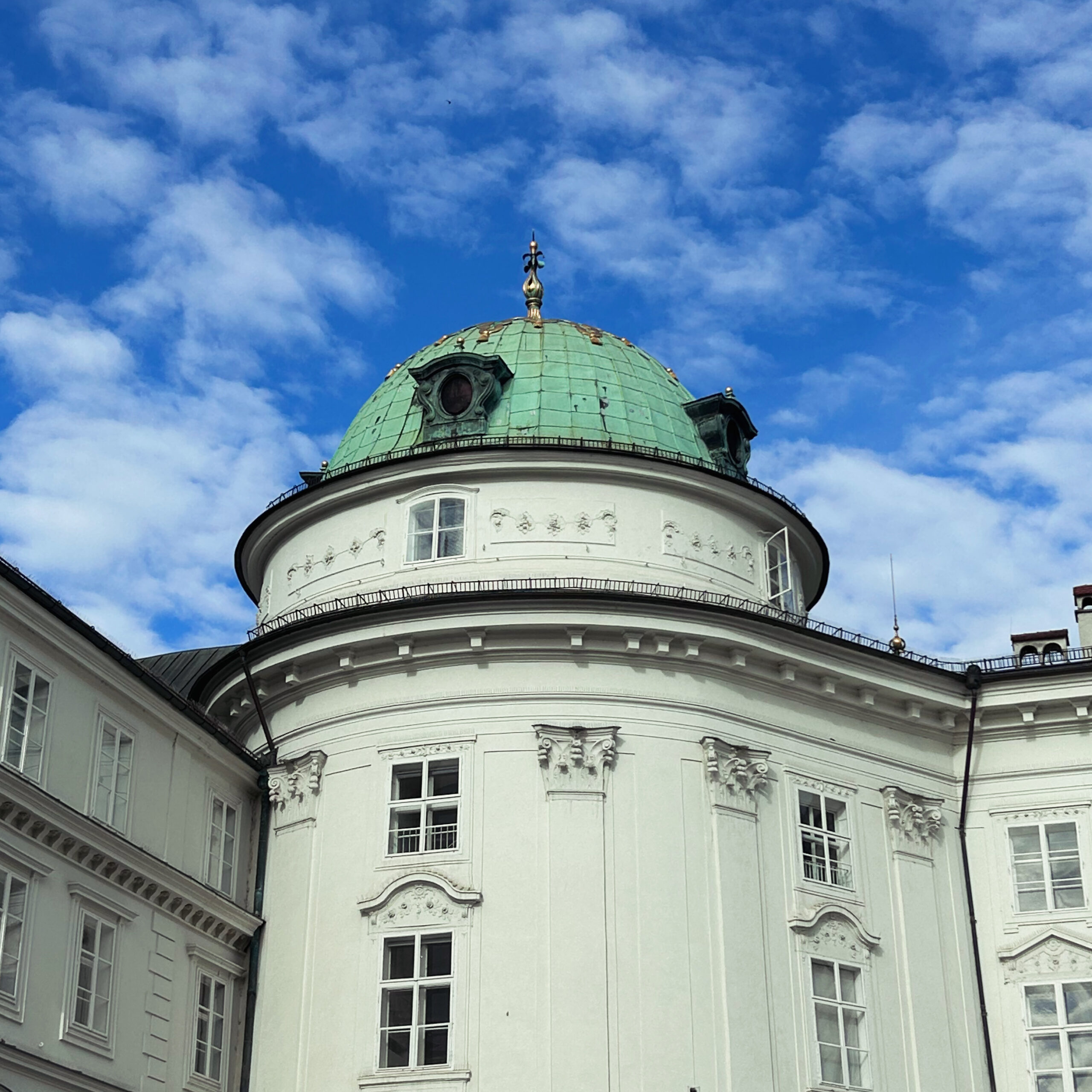
In crown lands such as Tyrol, which had previously enjoyed a high degree of autonomy, Maria Theresa’s reforms were met with little approval. Centralization remains a sensitive issue in Austrian politics to this day. With the exception of a few liberals, people saw themselves more as an independent, autonomous land and less as part of a modern territorial state. The clergy also resented their new subordinate role, which was further intensified under Joseph II. For the local nobility, the reforms meant not only a loss of status and autonomy but also higher taxes and levies. Taxes, duties, and customs revenues that had long provided Innsbruck with reliable income were now collected centrally and only partially returned through fiscal redistribution. To mitigate the social decline of sons from impoverished noble families and prepare them for state service, Maria Theresa founded the Theresianum, which also had a branch in Innsbruck from 1775 onward. As so often, time smoothed over former conflicts, and today Innsbruck’s inhabitants take pride in having hosted one of the most significant rulers in Austrian history. Not only the Triumphal Arch and the Imperial Palace (Hofburg), but also the Turnvereinshaus and the New City School recall the Theresian era, a period in which the state began to intervene ever more deeply in the lives of its citizens from the moment they entered school.
Innsbruck and the House of Habsburg
Innsbrucks Innenstadt wird bis heute von Gebäuden und Denkmälern geprägt, die an die Familie Habsburg erinnern. Unzählige Touristen bewundern die stummen Hinterlassenschaften der Dynastie, die als mindestens ebenso ur-österreichisch gilt wie Schnitzel, Mozartkugeln und Mehlspeisen. Diese Darstellung ist allerdings nicht korrekt, auch wenn die Habsburger die Landesgeschichte über Jahrhunderte mitprägten. Sie waren ein europäisches Herrscherhaus, zu dessen Einflussbereich verschiedenste Territorien gehörten. Am Zenit ihrer Macht waren ihre Mitglieder die Herrscher über ein „Reich, in dem die Sonne nie untergeht“. Durch Kriege und geschickte Heirats- und Machtpolitik saßen sie in verschiedenen Epochen an den Schalthebeln der Macht zwischen Südamerika und der Ukraine. Ob der internationalen Ausrichtung des Hauses Habsburg verwundert es nicht, dass so mancher CEO der Grafschaft Tirol aus dieser Dynastie zumindest am Anfang etwas fremdelte mit der alpinen Provinz und ihren Einwohnern. Einige der Tiroler Landesfürsten hatten weder eine besondere Beziehung zu Tirol noch brachten sie diesem deutschen Land besondere Zuneigung entgegen. Ferdinand I. (1503 – 1564) wurde am spanischen Hof erzogen. Maximilians Enkel Karl V. war in Burgund aufgewachsen. Als er mit 17 Jahren zum ersten Mal spanischen Boden betrat, um das Erbe seiner Mutter Johanna über die Reiche Kastilien und Aragorn anzutreten, sprach er kein Wort spanisch. Als er 1519 zum Deutschen Kaiser gewählt wurde, sprach er kein Wort Deutsch. Es waren auch nicht alle Habsburger glücklich in Innsbruck sein zu „dürfen“. Angeheiratete Prinzen und Prinzessinnen wie Maximilians zweite Frau Bianca Maria Sforza oder Ferdinand II. zweite Frau Anna Caterina Gonzaga strandeten ungefragt nach der Hochzeit in der rauen, deutschsprachigen Bergwelt. Stellt man sich zudem vor, was ein Umzug samt Heirat von Italien nach Tirol zu einem fremden Mann für einen Teenager bedeutet, kann man erahnen, wie schwer das Leben der Prinzessinnen war. Kinder der Aristokratie wurden bis ins 20. Jahrhundert vor allem dazu erzogen, politisch verheiratet zu werden. Widerspruch dagegen gab es keinen. Man mag sich das höfische Leben als prunkvoll vorstellen, Privatsphäre war in all dem Luxus nicht vorgesehen.
Innsbruck repeatedly became a place of destiny for this ruling dynasty. Thanks to its strategically favorable location between Italian cities and German centers such as Augsburg and Regensburg, Innsbruck gained a special status within the empire at the latest after being elevated to a residence city under Emperor Maximilian. Innsbruck experienced its Habsburg heyday when it served as the main residence of the Tyrolean sovereigns. Ferdinand II, Maximilian III, and Leopold V, together with their wives, shaped the city during their reigns. When Sigismund Franz of Habsburg (1630–1665) died childless as the last provincial ruler, Innsbruck also lost its status as a residence city, and Tyrol was governed by a governor. Tyrolean mining had lost much of its importance and no longer required special attention. Shortly thereafter, the Habsburgs lost their possessions in Western Europe, including Spain and Burgundy, which pushed Innsbruck from the center to the periphery of the empire.
Despite this decline in favor and the increasing centralization of government affairs, Tyrol, as a conservative region, generally remained loyal to the dynasty. Even after the period as a residence city, the births of new members of the ruling family were dutifully celebrated with parades and processions; deaths were mourned with memorial masses; and archdukes, kings, and emperors were immortalized in public spaces with statues and paintings. In the nineteenth century, the Jesuit Hartmann Grisar wrote the following about the celebrations marking the birth of Archduke Leopold in 1716:
„But what an imposing sight it was when, as night fell, the Abbot of Wilten held the final religious function in front of St Anne's Column, which had been consecrated by the blood of the country, surrounded by rows of students and the packed crowd; when, by the light of thousands of burning lights and torches, the whole town, together with the studying youth, the hope of the country, implored heaven for a blessing for the Emperor's newborn first son.“
The Habsburgs valued the Nibelung-like loyalty of their alpine subjects. The region’s difficult accessibility made it a perfect refuge in turbulent and crisis-ridden times. Charles V (1500–1558) fled to Innsbruck for a time during a conflict with the Protestant Schmalkaldic League. Ferdinand I (1793–1875) had his family stay in Innsbruck to keep them far from the Ottoman threat in eastern Austria. Shortly before his coronation, Franz Joseph I enjoyed the seclusion of Innsbruck during the turbulent summer of the 1848 revolution together with his brother Maximilian, who was later executed by nationalist insurgents as Emperor of Mexico. A plaque at the Alpine inn Heiligwasser above Igls commemorates the fact that the monarch spent the night there during his ascent of the Patscherkofel. In the Austro-Hungarian Monarchy of the nineteenth century, Innsbruck was the western outpost of a vast empire that extended as far as present-day Ukraine. Franz Joseph I (1830–1916) ruled a multiethnic empire between 1848 and 1916. His neo-absolutist understanding of rule, however, was outdated. Although Austria had had a parliament and a constitution since 1867, the emperor regarded this government as “his.” Ministers were accountable to the emperor, who stood above the government.
In the second half of the nineteenth century, the ailing empire began to crumble increasingly. On October 28, 1918, the Republic of Czechoslovakia was proclaimed; on October 29, Croats, Slovenes, and Serbs withdrew from the monarchy. The last emperor, Charles, abdicated on November 11. On November 12, “German-Austria declared itself a democratic republic in which all power emanates from the people.” The Habsburg chapter had come to an end. Even though only very few Austrians today can imagine a monarchy as a form of government, the view of the ruling family remains ambivalent. Despite all the national, economic, and democratic problems that existed in the multiethnic states that— in various forms and configurations—were subject to the Habsburgs, the successor nation-states in some cases proved far less successful at reconciling minority interests and cultural differences within their territories. Since the EU’s eastward enlargement, the Habsburg Monarchy has not infrequently been portrayed by well-meaning historians as a precursor to the European Union. The list of Habsburg legacies in Innsbruck is long. Together with the Catholic Church, the Habsburgs shaped public space through architecture, art, and culture. The Golden Roof, the Imperial Palace, the Triumphal Arch, Ambras Castle, the Leopold Fountain, and many other structures still bear witness today to the presence of what was arguably the most significant ruling dynasty in European history in Innsbruck.