Tummelplatz
Above Ambras Castle / Tummelplatz stop
Worth knowing
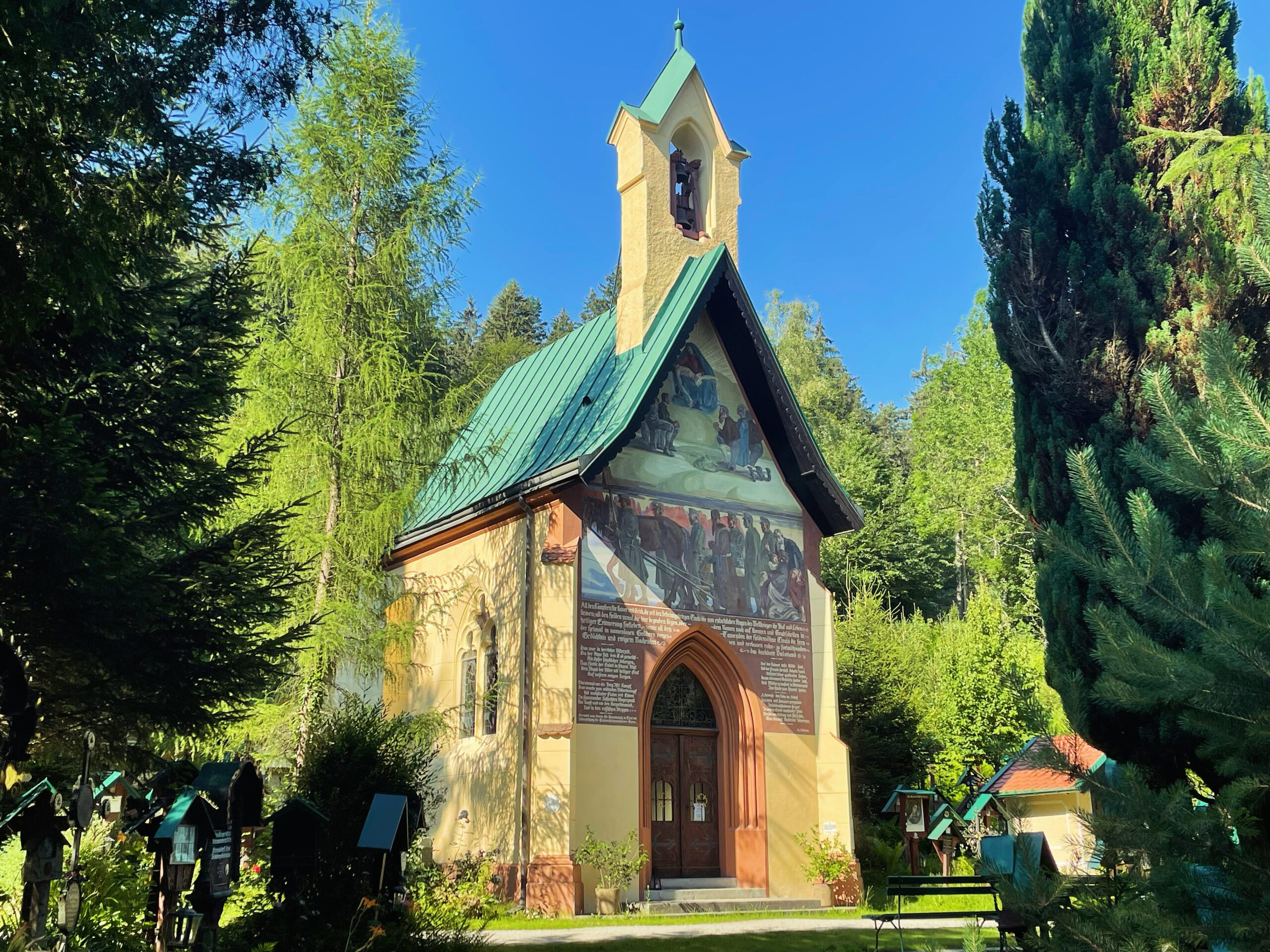
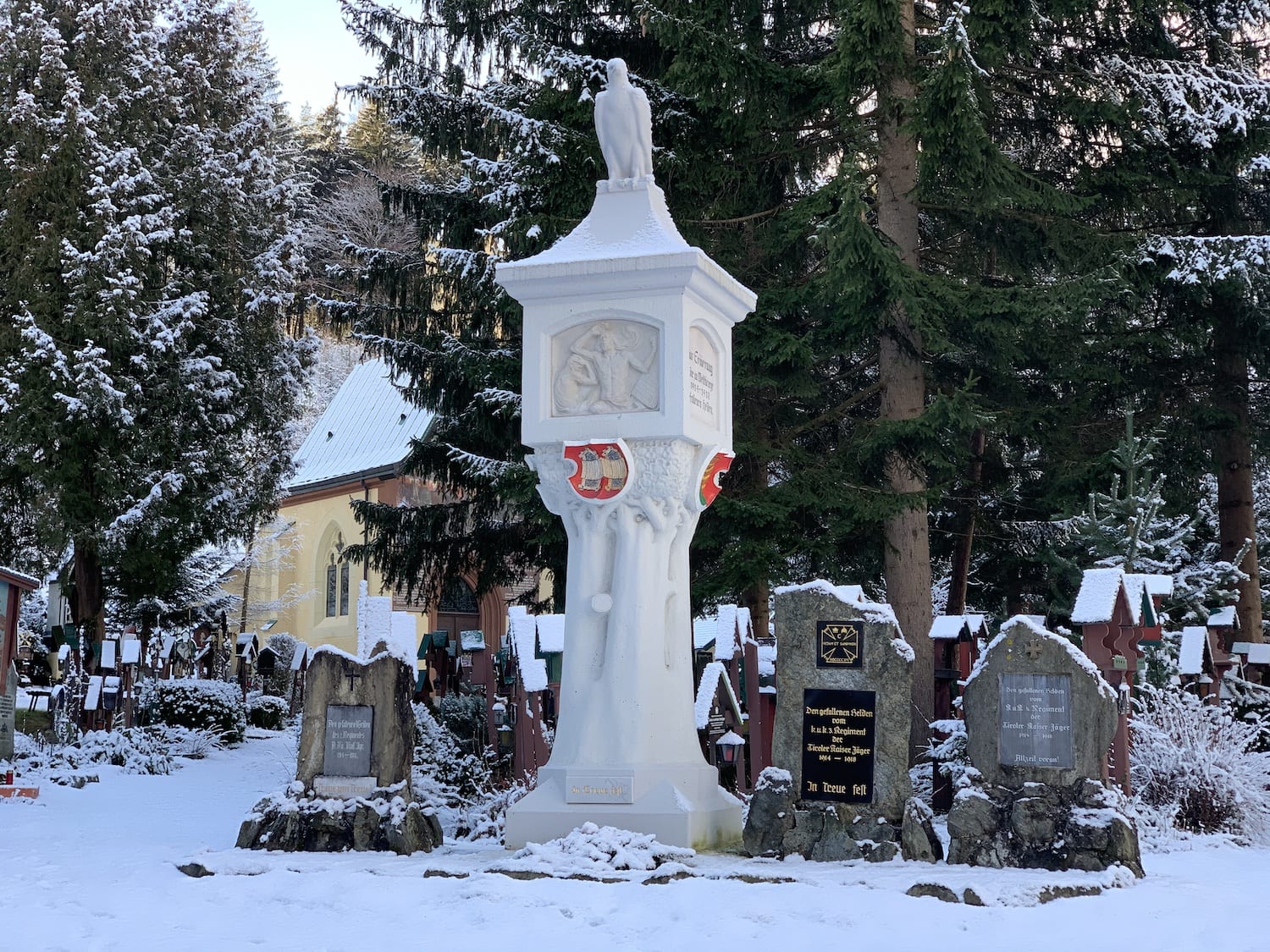
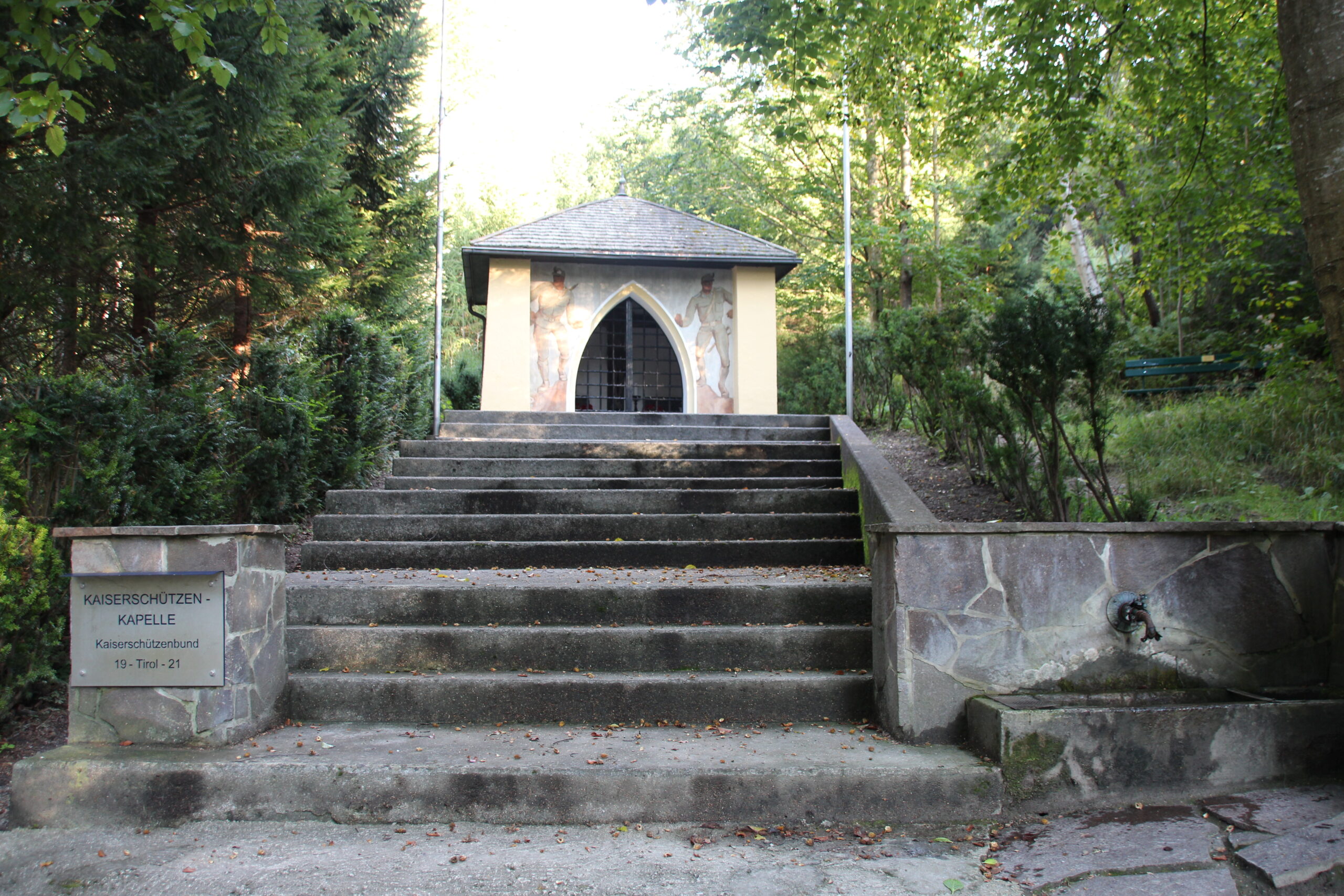
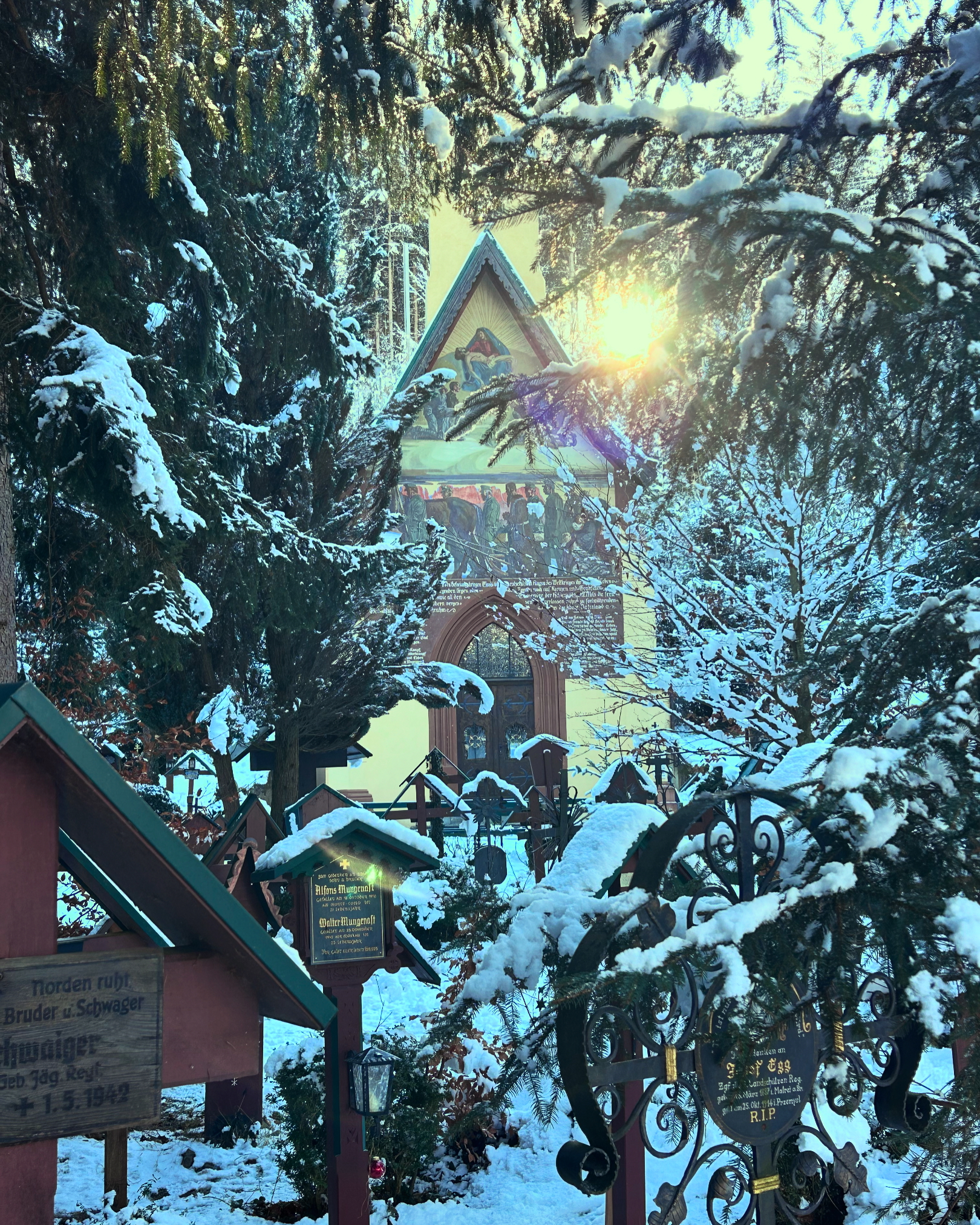
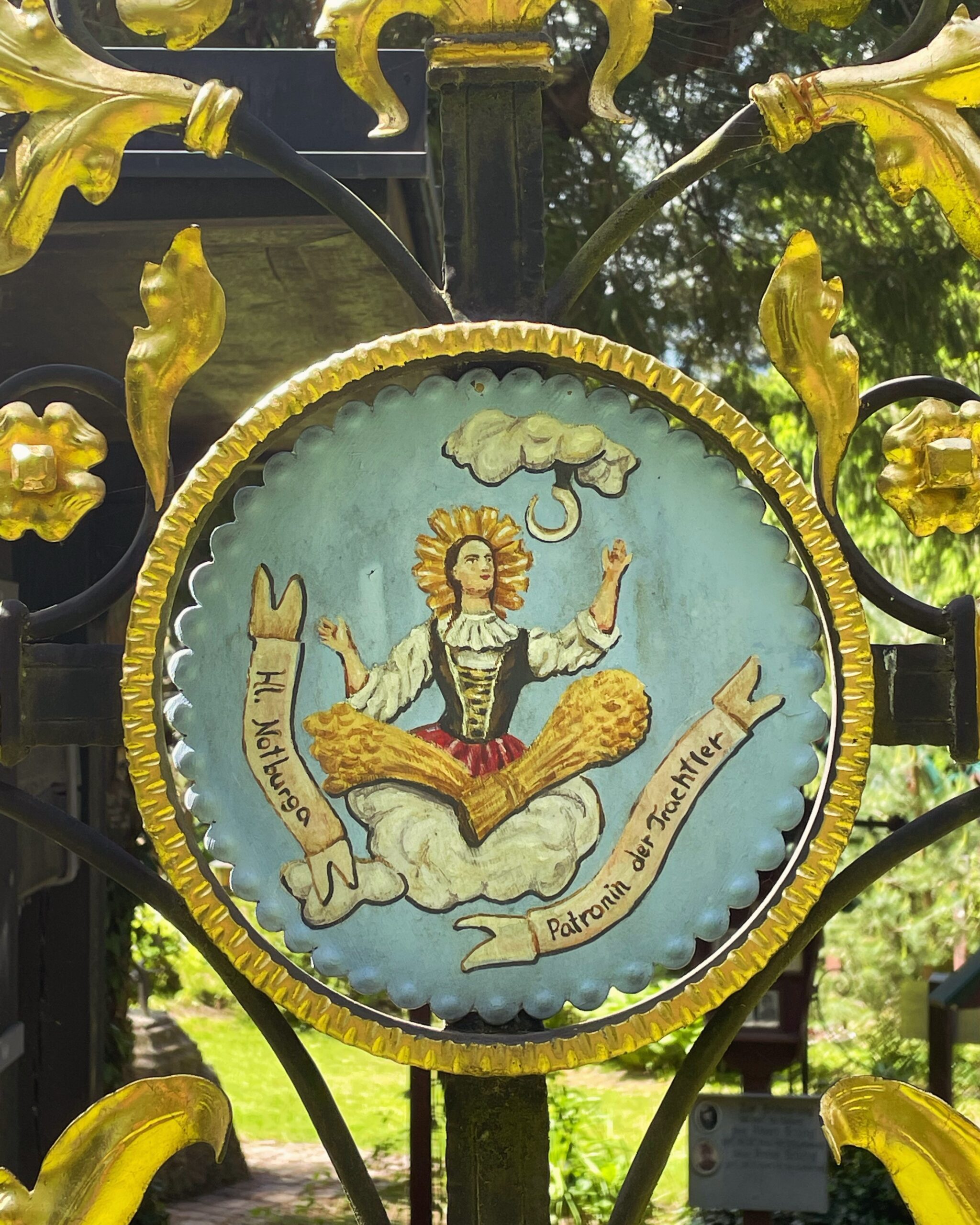
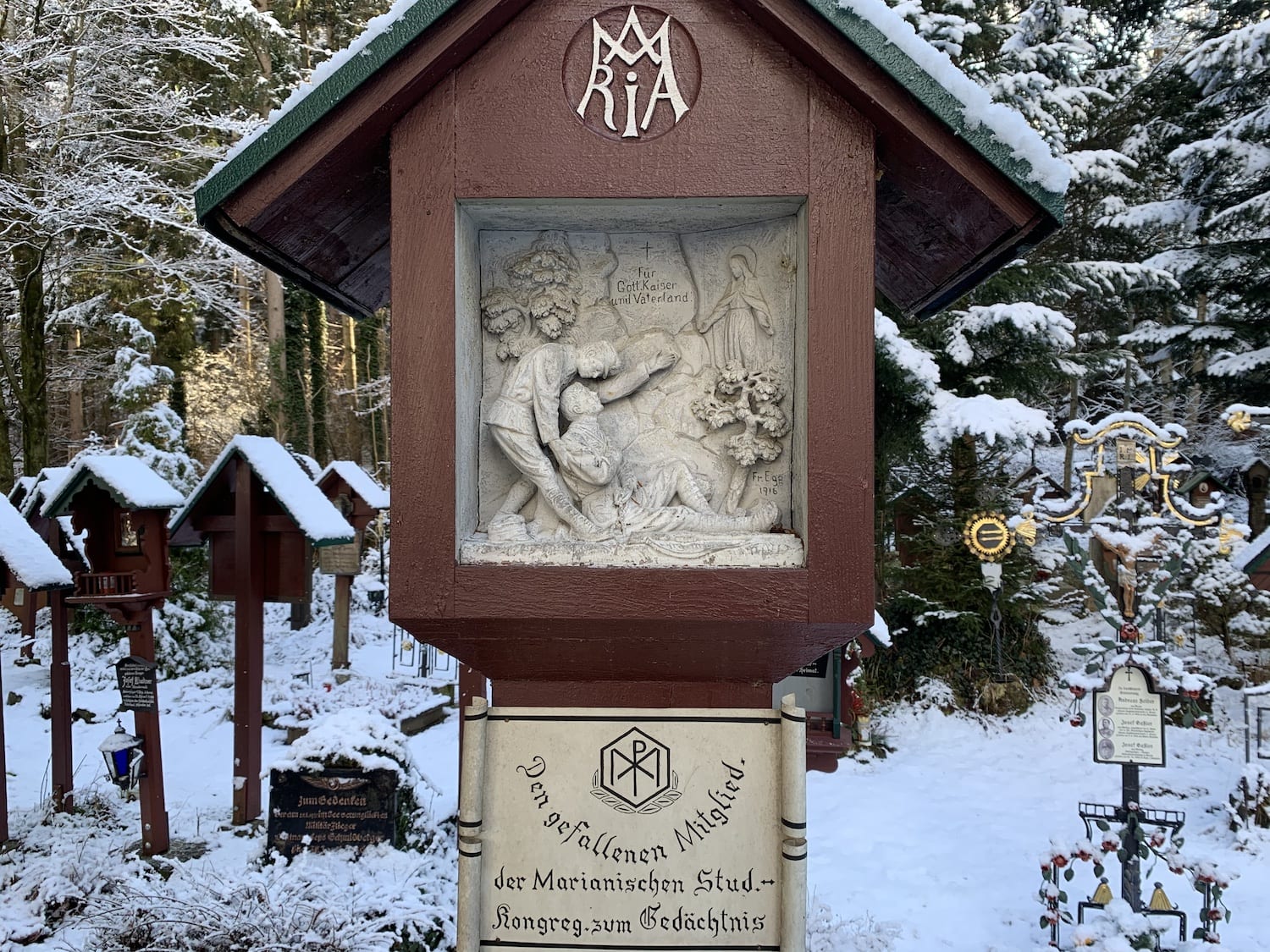
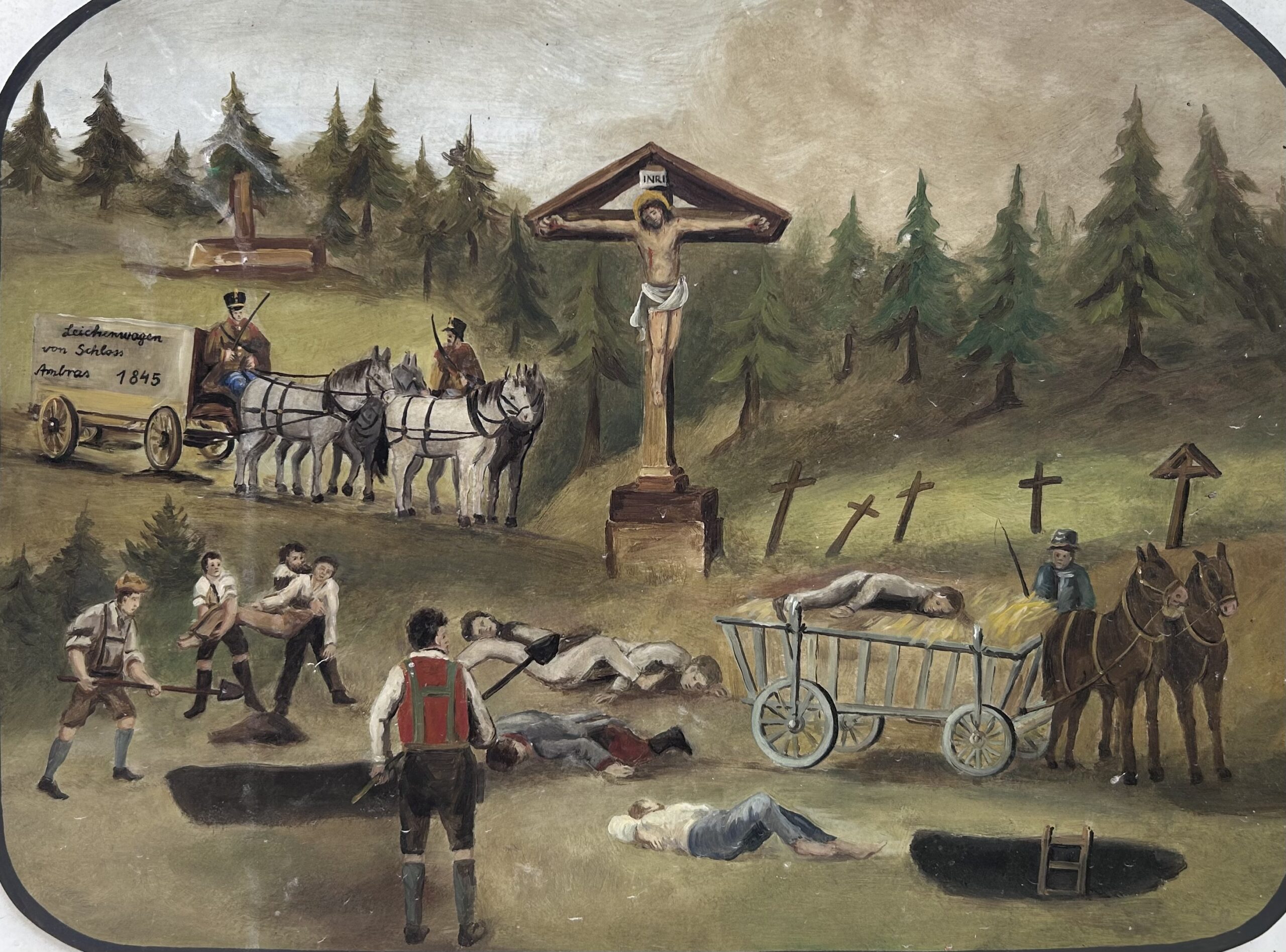
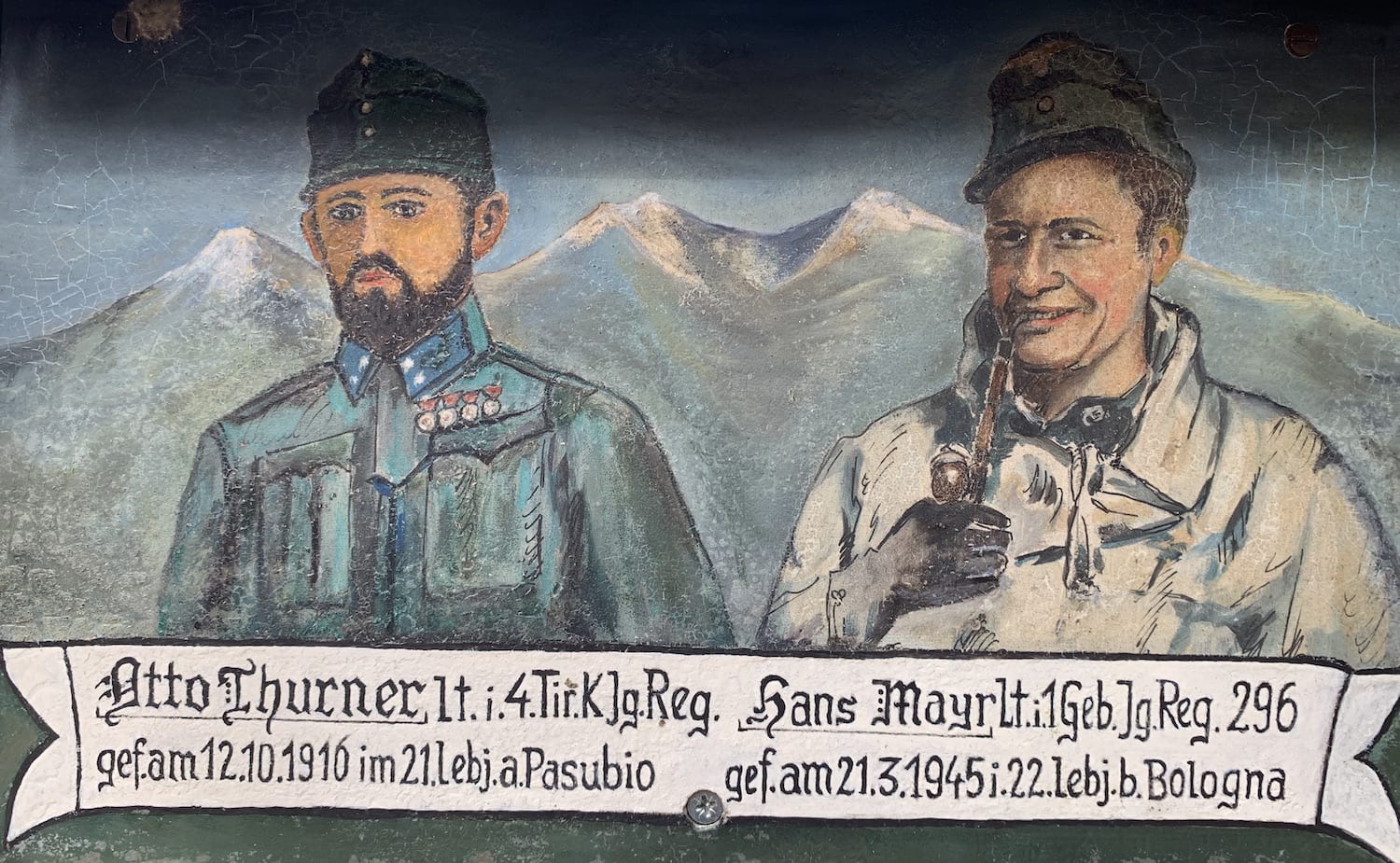
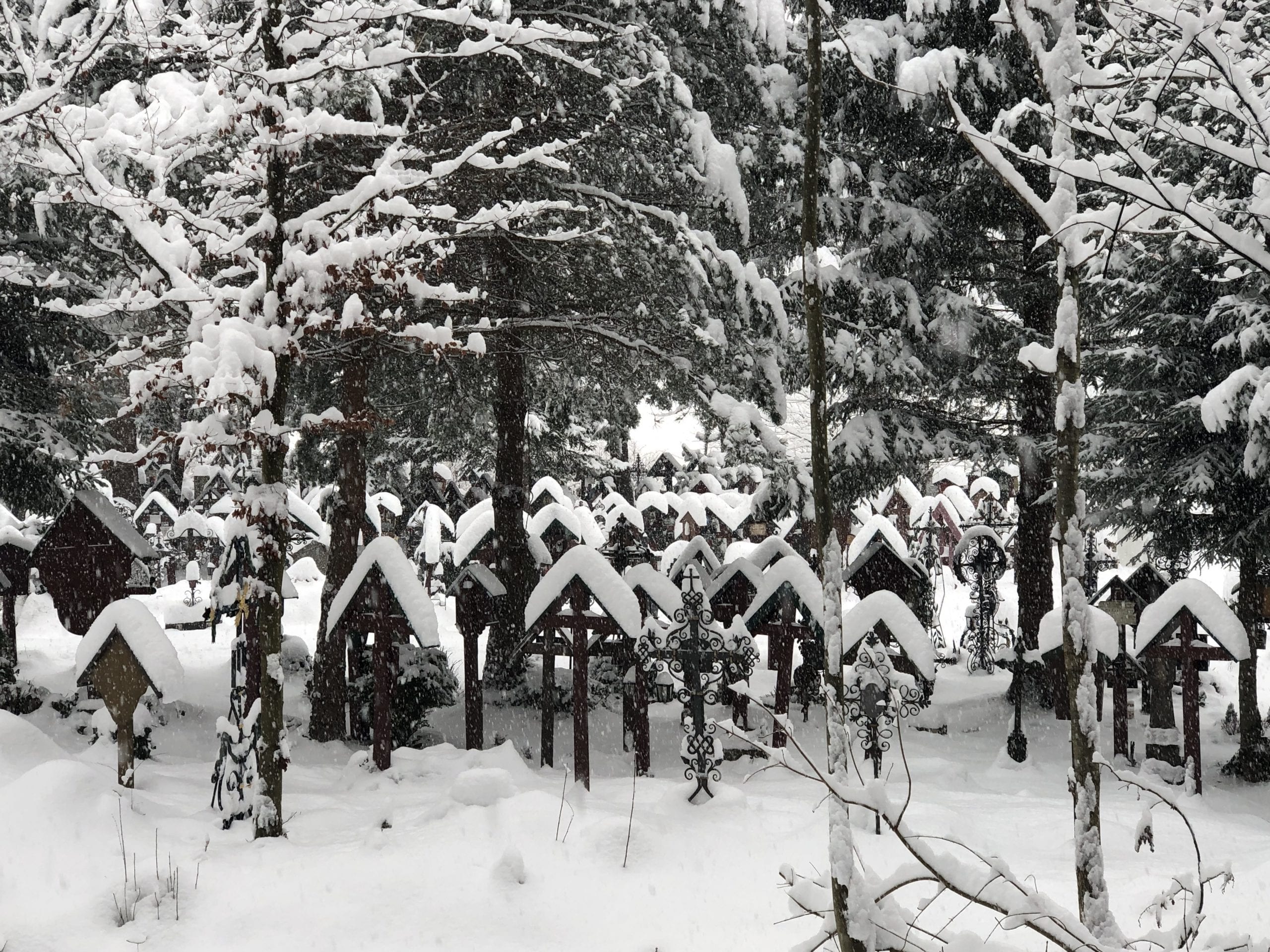
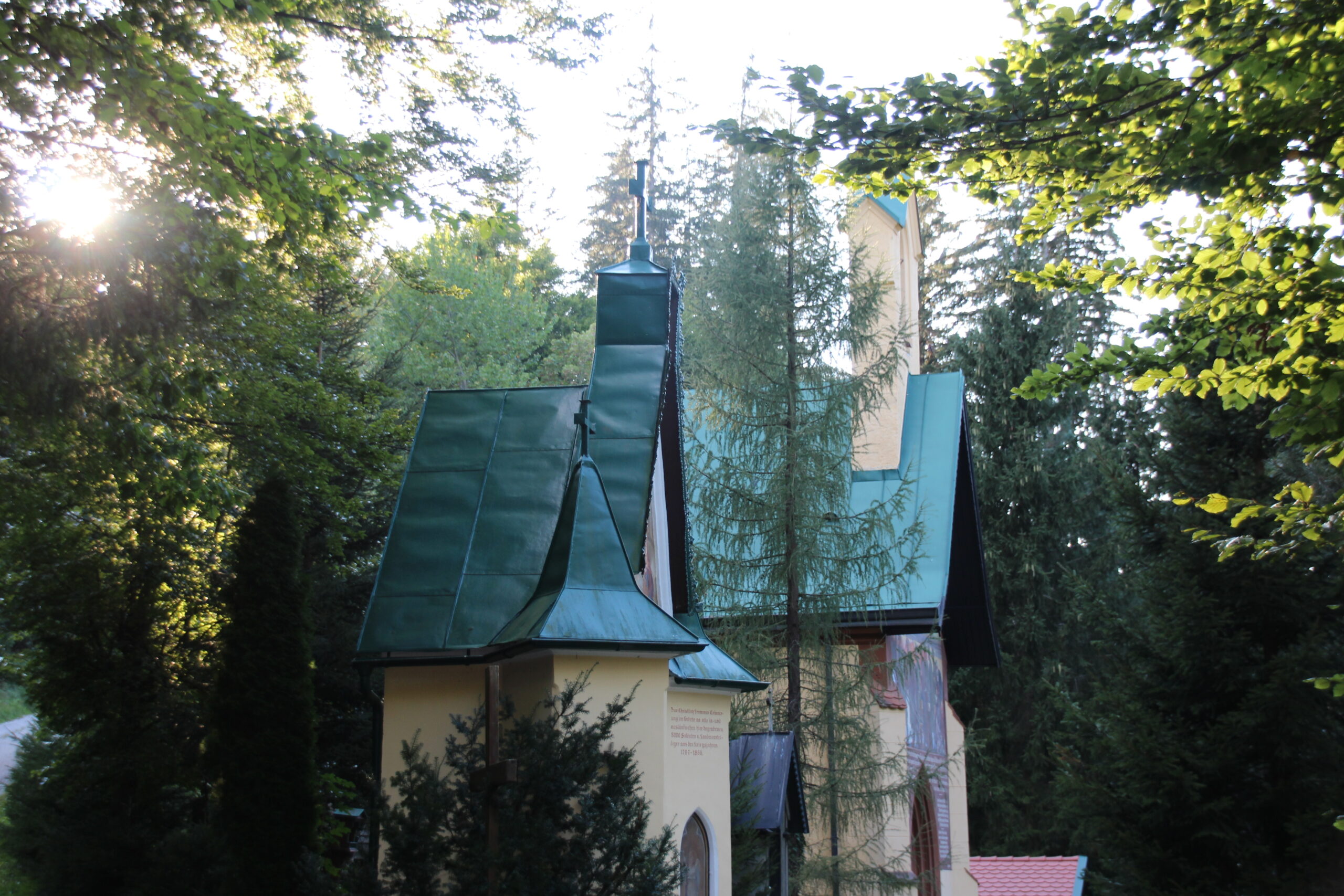
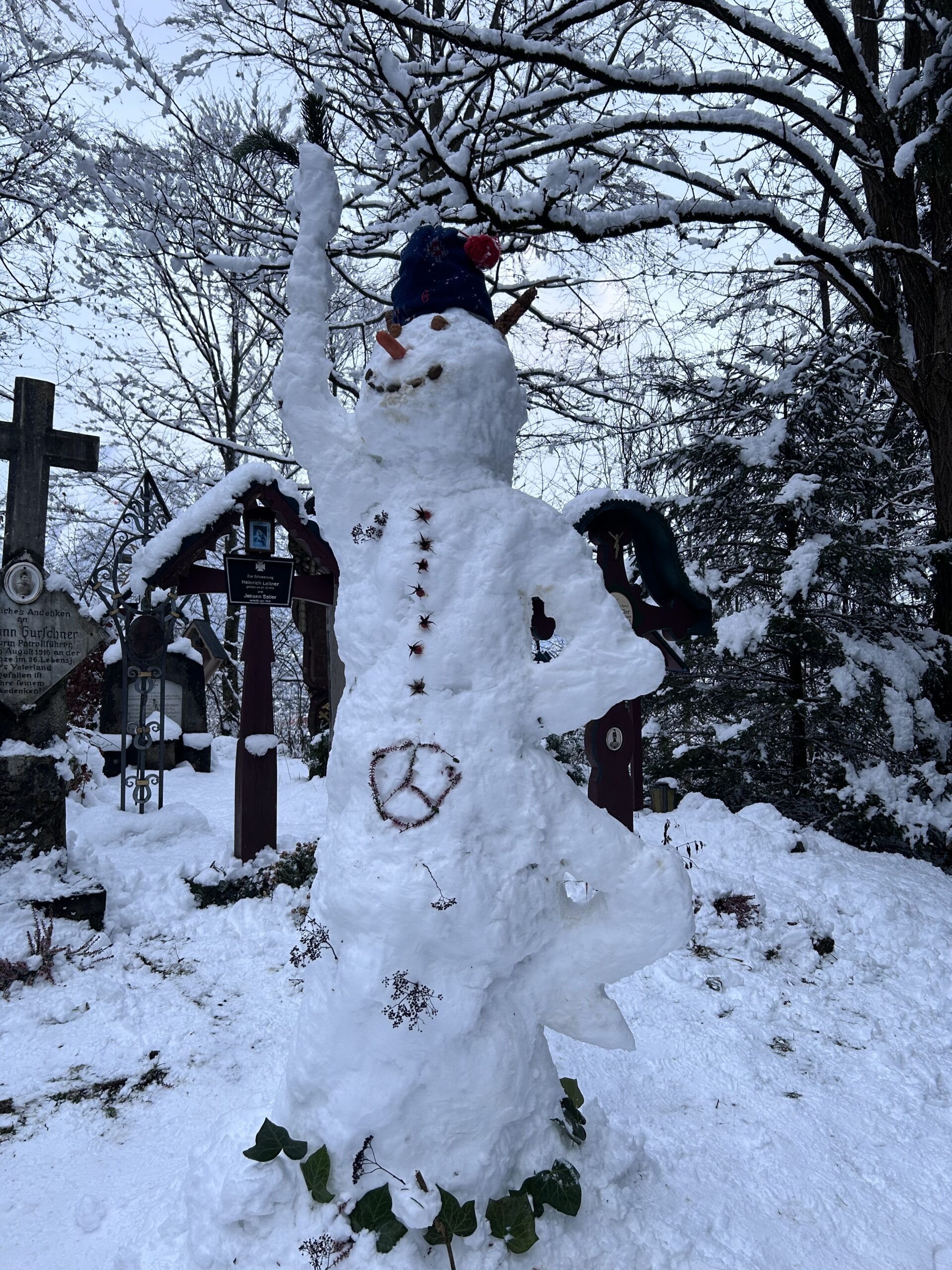
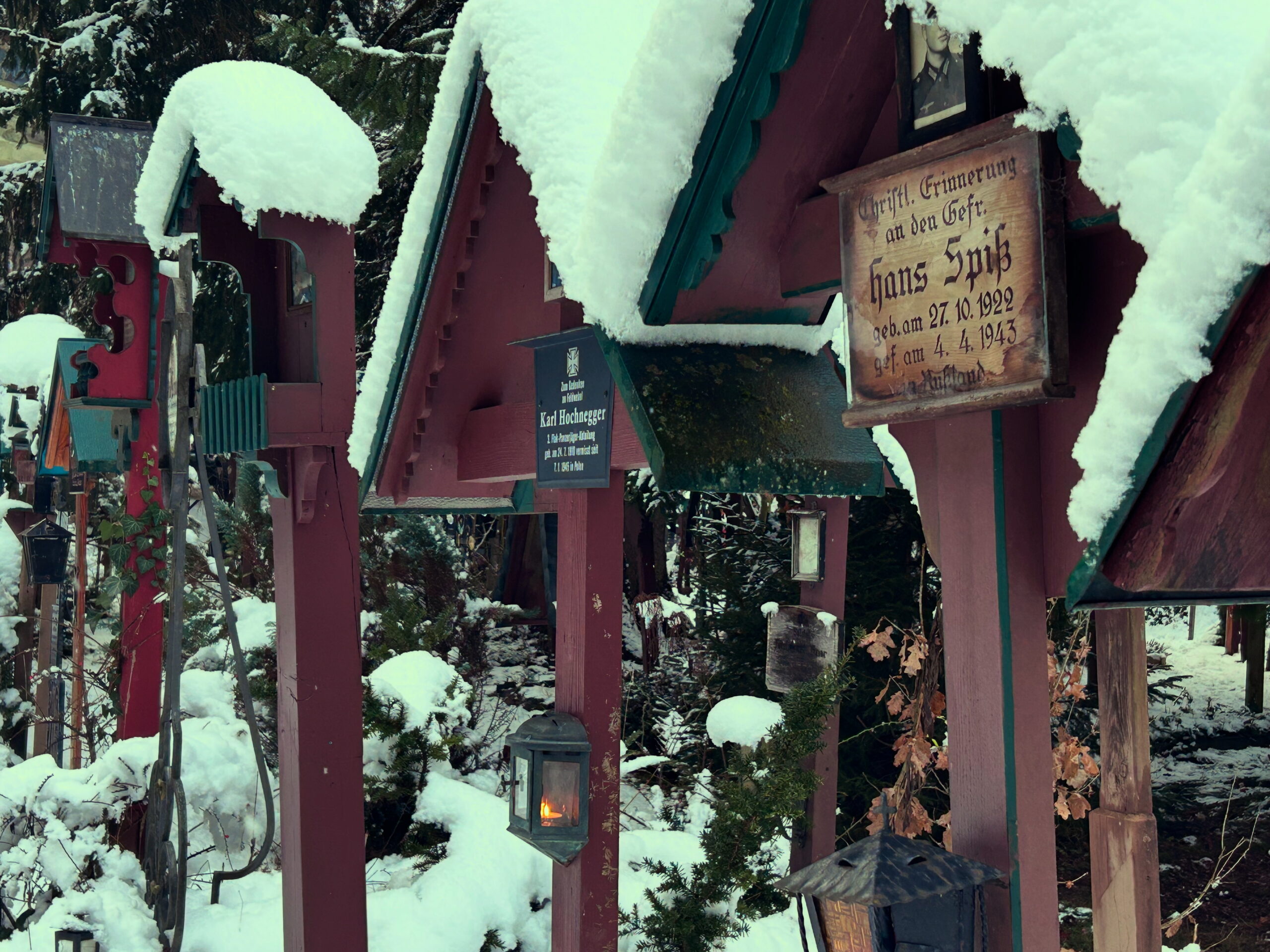
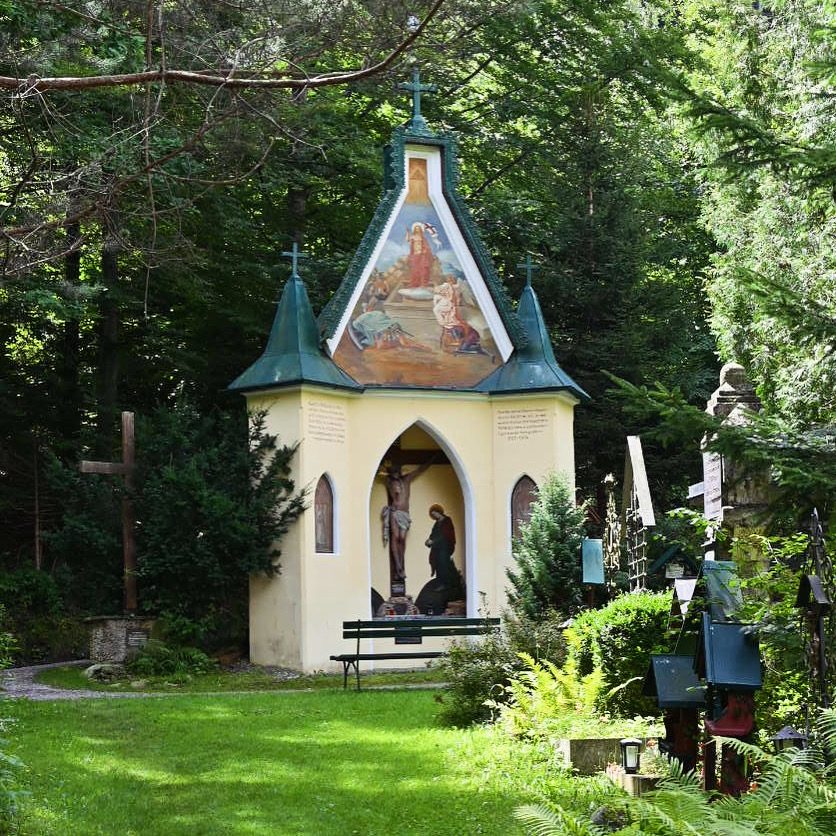
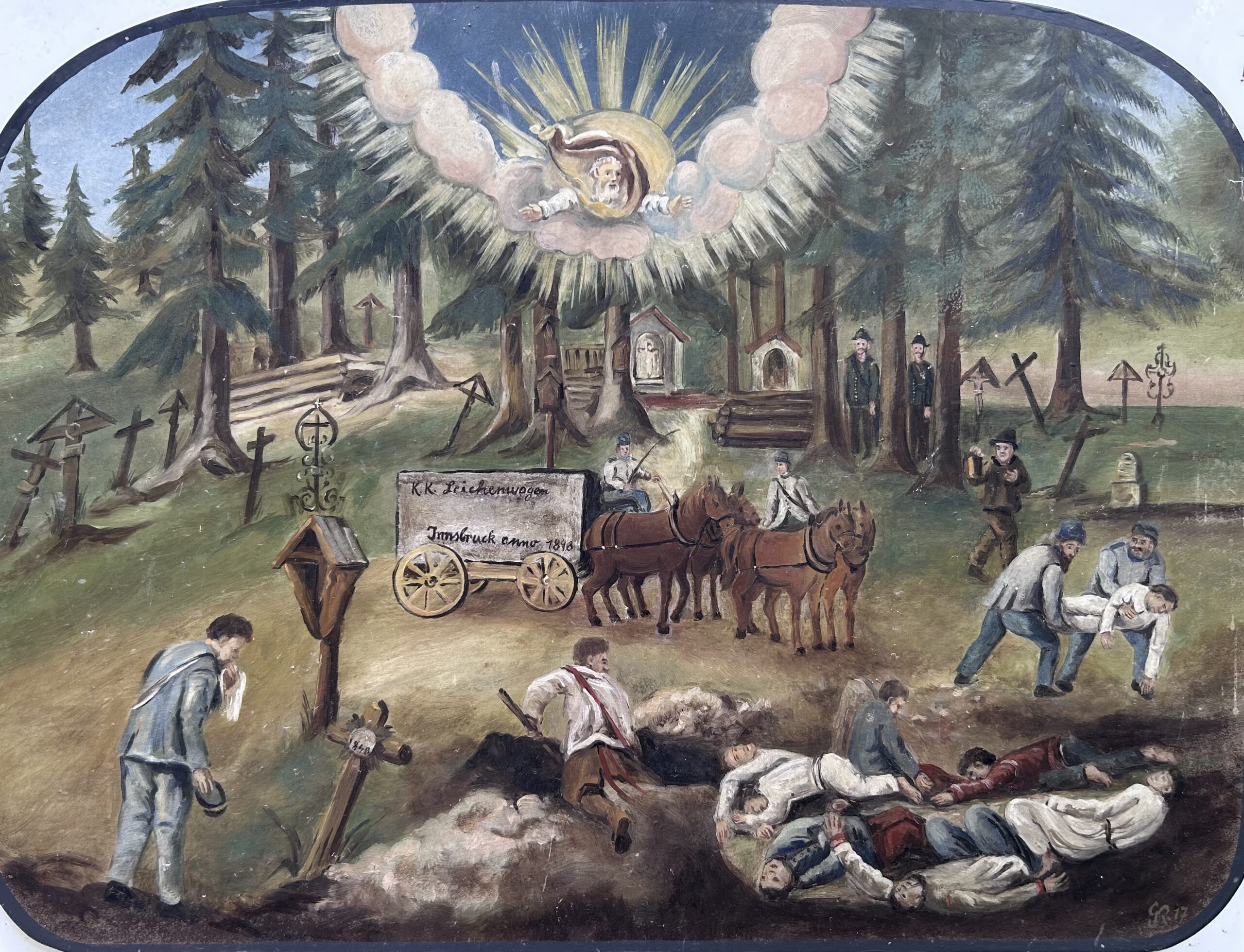
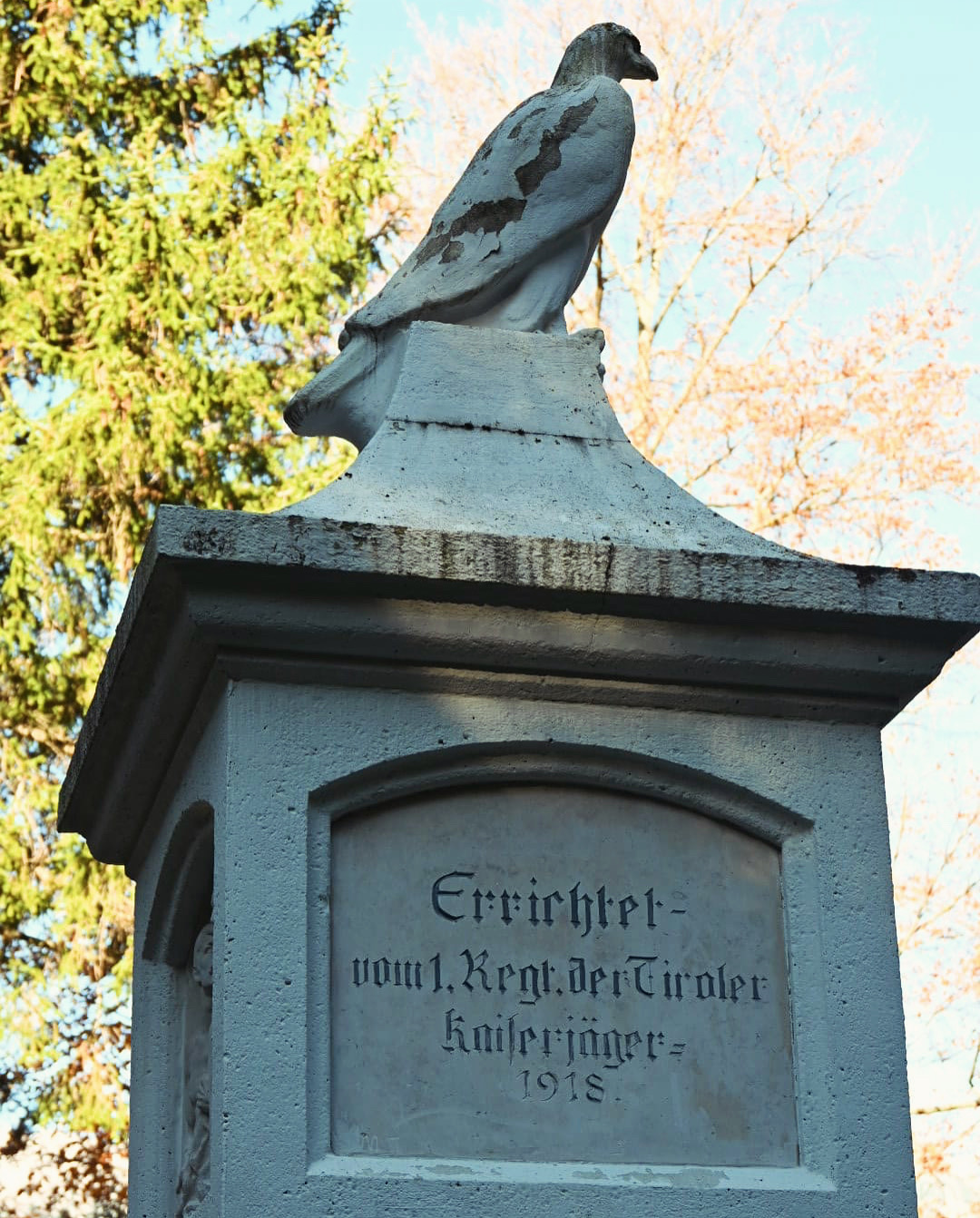
Nestled in the forest slightly above Ambras Castle lies the remarkable burial and memorial site known as the Tummelplatz. The name derives from the horses of Ambras Castle, which were trained here outside the gates of the princely residence and thus “tummelten” (frolicked). The crosses and gravestones—of varying ages and in some cases elaborately crafted—tell the stories and fates of soldiers from different eras. The clearing began its function as a cemetery during the Napoleonic Wars. When the fighting reached Tyrol between 1796 and 1815, the then‑vacant Ambras Castle was converted into a military hospital. Many of those who died there were buried at the nearby Tummelplatz. In 1799, Amras’s local leader Johann Georg Sokopf placed a sign at the entrance to the burial site in the forest, officially marking it as such. During the wars of 1848, 1859, and 1866, Ambras Castle again served as a hospital. Soldiers from all crown lands of the vast Habsburg Empire—and five nurses who died at the castle—were buried at the Tummelplatz until 1856. Before long, eerie legends about the soldiers’ cemetery circulated among the people of Innsbruck. After an apparition of the Virgin Mary and a reported miraculous healing, the Tummelplatz became a pilgrimage site. Small chapels soon appeared. Today, six chapels of different styles and periods sit among the graves. At the eastern entrance, visitors are welcomed by the Kaiserschützen Chapel, designed by Clemens Holzmeister and built in 1922 under the supervision of Theodor Prachensky. The Tyrolean artist Alfons Walde created the mural depicting two Kaiserschützen in large format. The chapel houses a relic of the last Habsburg emperor, Karl I. In 2004, more than 80 years after his death on Madeira, he was beatified at the initiative of the Kaiser Karl Prayer League, founded in 1895 and chaired by the Archbishop of Vienna. The relic—a splinter of one of the emperor’s finger bones—was transferred to its final resting place in 2017 in the presence of the emperor’s last grandson, as well as representatives of the Kaiserschützen Association, the Wilten brass band, the Tyrolean riflemen, and numerous high‑ranking Tyrolean and Innsbruck politicians.
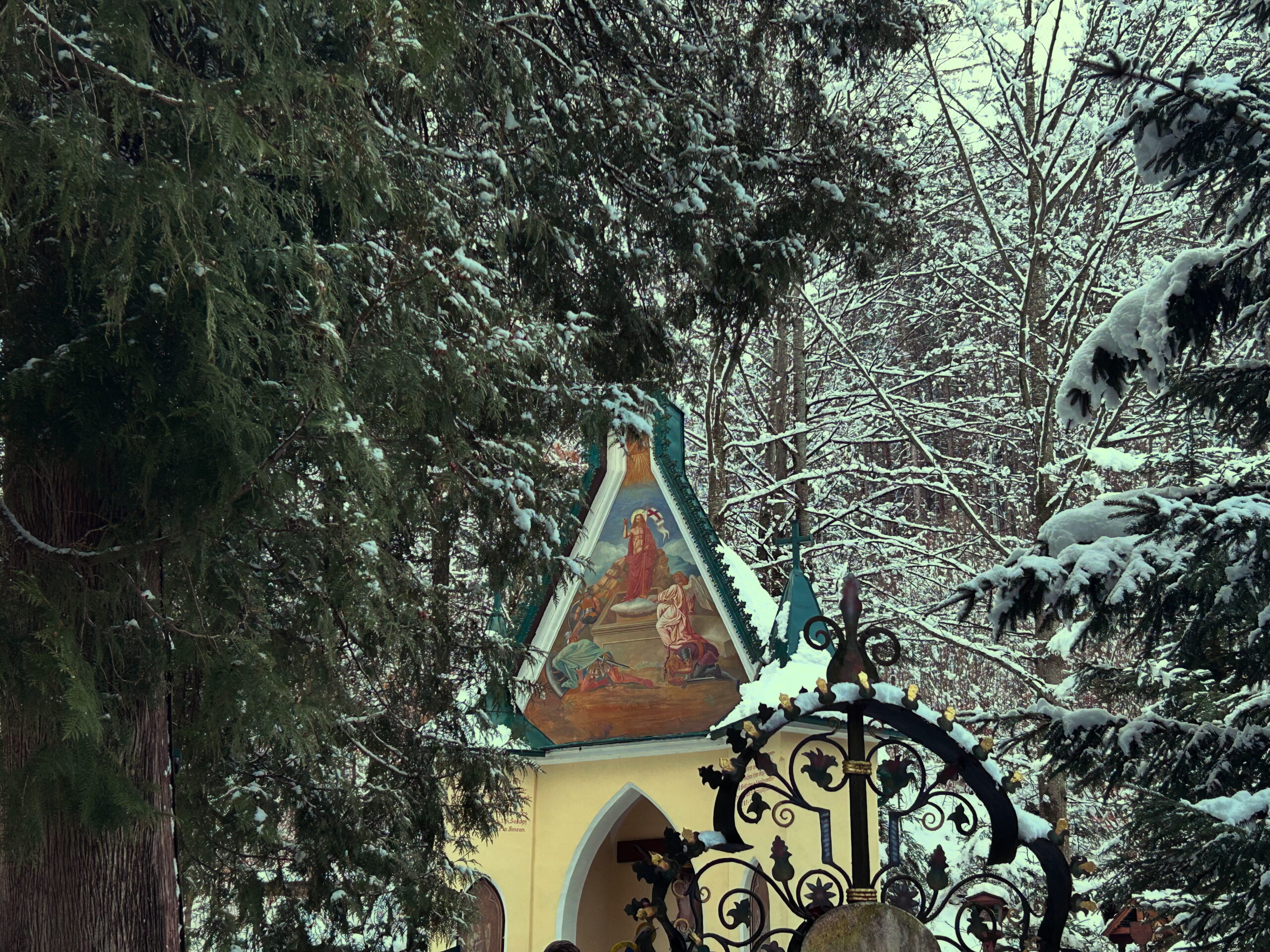
The most striking structure is the Cross Chapel (Kreuzkapelle), funded through donations in 1897. On 11 October of that year, the Innsbrucker Nachrichten reported:
„Auf der dem Tummelplatz zugekehrten Stirnseite ist der Eingang der Kapelle in gothischem Spitzbogen. Eine über dem Portale angebrachten Marmortafel verkündet die Widmung der Kapelle zur frommen Erinnerung an die in den Freiheitskämpfen von 1797 und 1809 gefallenen und hier begrabenen Krieger. Den oberen Teil des Giebels schmückt ein Rundfenster in Form eines Dreipasses. Überkrönt ist die ganze Stirnseite von einem als Thürmchen für 2 hellklingende Glöcklein verwendeten Dachreiter, der einen stilgerechten Abschluss bildet. … Im Schiffe der Kapelle ist an der Wand der Westseite neben dem Fenster eine Votivtafel aus Marmor in die Mauer eingelassen, deren Inschrift an das furchtbare Schicksal erinnert, welches beim Brande eines Wohltätigkeitsbazarss in Paris am 4. Mai 1897 die Herzogin Charlotte Augusta von Alencon ereilte.“
Die Fassade wurde während des Ersten Weltkriegs 1917 von Anton Kirchner gestaltet und zeigt Soldaten der Italienfront, die einen Holzsarg ziehen. Die Mater Dolorosa mit dem Leichnam Christi im Arm, bekniet von Schützen und Soldaten wacht über der gespenstischen Szene. Darunter findet sich ein martialisches Gedicht Anton Müllers (1870 – 1939), besser bekannt als Bruder Willram, der während des Ersten Weltkriegs mit seinen Schriften und Predigten zu Antisemitismus, Kriegshetze und Propaganda beitrug. Er verband die Erhebung von 1809, Tiroler Heldenmut, Kaisertreue und Katholizismus zu einem Bild, dem die Schlachten des industrialisierten Kriegs zwischen 1914 und 1918 wohl nicht entsprachen. Die erste Strophe lautet:
“It was in our glorious fathers’ time,
when ancestors pledged their lives sublime
as sacrifice to hostile might.
Now dyed the grandson with his blood
the dust of fathers with holy flood
upon our everlasting heights.”
During the renovation of the chapel in 1969, Anton Plattner’s painting ‘The Risen Savior Overcomes Death’ was added to the interior. In addition to these two main chapels, the Tummelplatz also features the Sokopf Chapel—named after the Amras municipal leader who officially marked the site—the Lourdes Chapel, the Antonius Chapel, and the Joseph Chapel. Student fraternities, professional guilds, and associations commemorate their fallen members with monuments at the Tummelplatz.
Today, the Tummelplatz serves both as a memorial site for relatives of war victims buried far away on the battlefields of the world wars and as a reminder of the importance of peace. The various monuments and grave inscriptions demonstrate how dramatically perspectives on war and peace have shifted since World War I, when a population shaped by propaganda was willing to sacrifice its life “on the field of honor” for God, Emperor, and Fatherland. One gravestone, bearing an image of the Virgin Mary (Gnadenmutter Mariahilf) by Lucas Cranach, features a poem that reads:
I wore it with honour,
the Kaiserjäger dress of honour,
and was in his younger days,
also willing to die.
To die for the fatherland,
is the soldier's fortune, he will inherit heaven,
and does not want to go back.
So do not weep for your loved ones,
it's well done to me,
and you remained the consolation,
that we will meet again.
It is to be hoped that misguided patriotism expressed on inscriptions such as ‘We are ready to give property and life for the Fatherland’ will forever remain a thing of the past. At Christmas and other holidays, especially on the first Sunday after All Saints’ Day, events are held to commemorate the fallen. Kaiserjäger, Kaiserschützen, politicians, and clergy gather to solemnly call for peace—sometimes under traditions that appear rather bizarre, dressed in historical costumes.
1796 - 1866: Vom Herzen Jesu bis Königgrätz
The period between the French Revolution and the Battle of Königgrätz in 1866 was a highly warlike era. Many of the later political attitudes, animosities toward other groups, and the European nationalism of the nineteenth and twentieth centuries—which would also shape the history of Innsbruck—had their roots in the conflicts of this time. The monarchies of Europe, led by the Catholic Habsburgs, declared war on the French Republic. Although revolutionary Paris was far away and no comprehensive press system existed for the dissemination of news, the alleged godlessness of the murderers of Marie Antoinette was effectively spread through pamphlets and sermons from church pulpits. Fear arose that the revolutionary slogan “Liberté, Égalité, Fraternité,” along with its principles, might spread throughout Europe. During the Coalition Wars, a young general named Napoleon Bonaparte advanced across the Alps in 1796 with his Italian army and encountered Austrian troops. This was not merely a war over territory and power—it was a clash of systems. The Grande Armée of revolutionary France confronted the forces of the conservative and Catholic Habsburgs. Tyrolean riflemen (Schützen) actively participated in the fighting, defending the province’s borders against the advancing French. The men were accustomed to handling weapons and were considered skilled marksmen. The historian Ludwig Denk described this in a publication from 1860:
"...The Tyrolean's main passion is shooting. Early on, the father takes his son hunting. It is not uncommon to see boys running around with loaded rifles, climbing high mountains and shooting birds or squirrels..."
The strength of units such as the Hötting Rifle Company, established in 1796, lay not in open field battles but in guerrilla warfare. Moreover, they believed they had a secret weapon against the most advanced army of the time: the Sacred Heart of Jesus. Since 1719, Jesuit missionaries had spread devotion to the Sacred Heart even in the most remote valleys, successfully establishing it as a unifying force in the struggle against pagan customs and Protestantism. Faced with the godless revolutionary French, it seemed only natural that the Sacred Heart would once again—after 1703—watch protectively over the Tyrolean warriors of God. In desperate circumstances, the Tyrolean troops renewed their covenant. Against all odds, the riflemen succeeded in their defensive efforts. The abbot of Stams Abbey petitioned the provincial estates that, henceforth, “the Feast of the Divine Heart of Jesus should be celebrated annually with a solemn church service, if Tyrol were freed from the threat of enemy danger.”
Victory in this battle did not change the outcome of the war against Napoleon’s overwhelming forces, nor did it alter the territorial expansion of Tyrol—while Innsbruck’s population declined. During the turmoil of war, the Habsburg territory had expanded without notable military success—and likely without the help of the Sacred Heart. The archiepiscopal territory of Trentino became part of the crown lands through a territorial settlement known as the Reichsdeputationshauptschluss in the final phase of the Holy Roman Empire before its dissolution in 1803. Innsbruck, however, shrank. Fallen soldiers and war-related economic hardship led to a decline in the population from over 9,500 around 1750 to approximately 8,800 in the early decades of the nineteenth century. While this may seem modest in absolute numbers, the consequences were severe: stagnation in urban life. Young men were missing—as labourers, husbands, and fathers. This wartime recession remains largely underrepresented in the city’s historiography. Perhaps the near absence of Biedermeier architecture in Innsbruck can be seen as a subtle reminder of these difficult years.
After the Napoleonic Wars and the reorganisation of Europe at the Congress of Vienna, Tyrol’s borders remained largely peaceful for around thirty years. This changed with the Italian Risorgimento, the national movement led by Sardinia‑Piedmont and France. In 1848, 1859, and 1866, the so‑called Italian Wars of Unification took place. Over the course of the nineteenth century—at the latest since 1848—a fervent nationalist enthusiasm spread among young men of the upper classes across Europe. Volunteer armies sprang up everywhere. Students and academics formed associations; gymnasts and riflemen alike sought to prove their newfound national identity on the battlefield, supporting official armies against their respective enemies. During this time, Innsbruck served as an important logistical hub as a garrison town. Following the Congress of Vienna, the Tyrolean Jäger Corps became the Imperial and Royal Tyrolean Kaiserjäger Regiment, an elite unit deployed in these conflicts. Volunteer formations such as the Innsbruck Academics and the Stubai Riflemen also fought in Italy. Thousands fell in battle against a coalition consisting of the traditional enemy France, the particularly “godless” Redshirts under Giuseppe Garibaldi, and the emerging Kingdom of Italy, formed at Austria’s expense under the leadership of the Francophile House of Savoy from Piedmont. The media further inflamed sentiment behind the front lines. The Innsbrucker Zeitung preached loyalty to the emperor and a Greater German‑Tyrolean nationalism, railed against Italians and the French, and celebrated the bravery of Tyrolean soldiers. One report stated:
“The strong occupation of the heights at the exit of the Valsugana near Primolano and Le Tezze has often given the Innsbruck Academics I and the Stubai riflemen cause to undertake voluntary excursions against Le Tezze, Fonzago, and Fastro, as well as to the right bank of the Brenta and the heights opposite the small camps of the Sette Comuni… On the 19th, the Stubai riflemen had already struck down several enemies when they ventured down for the first time, creeping up on them…”
Probably the most famous battle of the Wars of unification fand in Solferino 1859 in der Nähe des Gardasees statt. Entsetzt vom blutigen Geschehen entschloss sich Henry Durant das Rote Kreuz zu gründen. Der Schriftsteller Joseph Roth beschrieb das Geschehen auf den ersten Seiten seines Romans Radetzkymarsch.
"In the battle of Solferino, he (note: Lieutenant Trotta) commanded a platoon as an infantry lieutenant. The battle had been going on for half an hour. Three paces in front of him he saw the white backs of his soldiers. The first row of his platoon was kneeling, the second was standing. Everyone was cheerful and certain of victory. They had eaten copiously and drunk brandy at the expense and in honour of the emperor, who had been in the field since yesterday. Here and there one fell out of line."
The year 1866 proved particularly catastrophic for the Austrian Empire. In Italy, Venetia and Lombardy were lost. In the north, the Habsburg army suffered a devastating defeat at the Battle of Königgrätz. After this short “brother’s war,” Prussia took over leadership of the German Confederation from the Habsburgs. Austria’s reorientation toward the east meant that Innsbruck definitively became a city on the western periphery of the empire. This shift was accompanied by a resurgence of nationalist ideas, particularly among Innsbruck’s liberal upper bourgeoisie. Support for the “Greater German solution”—a united state with the German Empire rather than the Austro‑Hungarian Monarchy—was especially strong. The extent to which this German Question divided the city became apparent more than thirty years later, when the Innsbruck city council proposed naming a street after Otto von Bismarck. While conservative loyalists reacted with outrage, the liberal Greater German faction around Mayor Wilhelm Greil welcomed the idea. After the Second World War, the defeat at Königgrätz supported Austria’s narrative of being the first victim of National Socialism, as it had already been excluded from a unified German state in 1866.
To this day, the conflicts at Tyrol’s southern borders continue to shape tradition and the cityscape. The Sacred Heart celebrations were long marked by great pomp and, especially in the nineteenth and early twentieth centuries, developed into a volatile mixture of superstition, Catholicism, and ethnic nationalism directed against French and Italian influences. Countless soldiers continued to entrust their fate to the Sacred Heart even amidst the shellfire of the First World War. Alongside Cranach’s Madonna of Mercy, the flaming Sacred Heart remains one of the most popular Christian motifs in Tyrol and adorns the façades of countless buildings. With sites such as the Tummelplatz, the Pradl Military Cemetery, and the Kaiserjäger Museum on Bergisel, Innsbruck preserves several places of remembrance for these bloody conflicts, in which many of its residents marched off to war and never returned.
The First World War
An Innsbruck student nearly changed the course of world history instead of Gavrilo Princip. In 1913, the young man boasted to a waitress about his plans to shoot the heir to the throne, but he was arrested before he could carry them out. Only when the world-changing shots were actually fired in Sarajevo a year later did an article appear in the Innsbrucker Nachrichten on June 30 about the events. The consequences that the First World War, which subsequently broke out, would have for the world and for people's everyday lives could not yet be foreseen after the assassination of Franz Ferdinand on June 28. Two days after the murder of the Habsburg heir in Sarajevo, readers in Innsbruck were already reading prophetic words in their newspaper: “We have arrived at a turning point – perhaps the turning point – in the destiny of this empire.” In Innsbruck, too, enthusiasm for war was widespread in 1914. Driven by the slogan of the time, “God, Emperor, and Fatherland,” the vast majority of people unanimously welcomed the attack on Serbia. Politicians, the clergy, and the press fuelled the general jubilation. Particularly “deserving” in promoting the war were the two theologians Joseph Seeber (1856–1919) and Anton Müllner, known as Brother Willram (1870–1919), who, through their sermons and writings such as The Bloody Year, elevated the war into a crusade against France and Italy. In addition to the imperial proclamation To My Peoples, which appeared throughout the media of the Empire, the Innsbrucker Nachrichten published an article on July 29, the day after Austria-Hungary declared war on Serbia, about Prince Eugene's capture of Belgrade in 1717. The tone in the media was celebratory, although not entirely without dark forebodings of what was to come.
"The Emperor's appeal to his people will be deeply felt. The internal strife has been silenced and the speculations of our enemies about unrest and similar things have been miserably put to shame. Above all, the Germans stand by the Emperor and the Empire in their old and well-tried loyalty: this time, too, they are ready to stand up for dynasty and fatherland with their blood. We are facing difficult days; no one can even guess what fate will bring us, what it will bring to Europe, what it will bring to the world. We can only trust with our old Emperor in our strength and in God and cherish the confidence that, if we find unity and stick together, we must be granted victory, for we did not want war and our cause is that of justice!"
Many Innsbruck residents volunteered for the campaign against Serbia, which was believed to be a matter of only a few weeks or months. So many volunteers poured into Innsbruck from outside the city to report to the recruitment commissions that the city was almost bursting at the seams. No one could imagine how differently things would turn out. After the first battles in distant Galicia, it became clear that this would not be over within a few months. The Imperial Riflemen (Kaiserjäger) and other Tyrolean troops were effectively sacrificed. Poor equipment, inadequate supplies, and the catastrophic leadership of the High Command under Conrad von Hötzendorf led thousands either to their deaths or into captivity, where hunger, abuse, and forced labour awaited them. In 1915, Italy entered the war on the side of France and Britain. Under the infamous secret Treaty of London, the young kingdom had been promised generous territorial gains in return for supporting the Entente against Germany and Austria. On May 23, the former ally declared war on the Habsburg Empire. Until regular troops could be transferred from the Eastern Front, regional defence depended on the Standschützen, a force consisting of men under 21, over 42, or those deemed unfit for regular military service. Correspondingly, casualties were high. Fighting in the mountain war stretched from the Ortler in the west across the northern shore of Lake Garda to the Sexten Dolomites. Innsbruck itself was not directly affected by military operations. At the very least, however, the sounds of war could be heard in the provincial capital, as reported in the newspaper of July 7, 1915:
“Soon after the Italians commenced hostilities, cannon fire could clearly be heard in the region of the Serles peak, coming from one of the battlefields in southern Tyrol, probably the Vielgereut plateau. In recent days, the sound of artillery fire has also undoubtedly been detected in Innsbruck itself and in the northeastern parts of the city — individual powerful blasts, dull rather than rolling and resonant, echoing across the Brenner Pass. There can be no mistake. In Innsbruck itself, the thunder of the guns is more difficult to detect because of the noise of the city, but on one occasion, around 9 p.m., when there was some degree of quiet, this unmistakable thunder, originating from our mortars, was clearly heard.”
Although the front was far away, the war increasingly penetrated civilian life. This total involvement of society in warfare was a new phenomenon. The mass mobilization of a large proportion of the working male population brought many businesses to a complete standstill. Shop shelves remained empty, public transport services ceased, and craftsmen and labourers were called up for military service. Companies still able to operate were subordinated to the wartime economy. By the “Hunger Winter” of 1917, Innsbruck’s economy had almost completely collapsed. Food, coal, and firewood were in short supply, and hunger and cold became bitter enemies of women, children, the wounded, and those unfit for military service. During the final years of the war, provisions were distributed through ration cards. The basic weekly allowance per person amounted to 500 grams of meat, 60 grams of butter, and 2 kilograms of potatoes. Archive photographs show long queues of desperate and hungry people outside food shops. Protests and strikes repeatedly broke out. Politicians, trade unionists, workers, and returning soldiers saw an opportunity for change. Under the slogan “Peace, Bread, and Suffrage,” parties of many different political backgrounds united in opposition to the war. The cityscape also changed. Barracks were erected in Höttinger Au to house prisoners of war. Wounded soldiers arrived in such large numbers that civilian buildings, including the university library then under construction and Ambras Castle, were converted into military hospitals. A predecessor of today’s Tram Line 3 was established to transport the wounded from the railway station to the new garrison hospital, today’s Conrad Barracks in Pradl. To cope with the large number of fallen soldiers, the Pradl Military Cemetery was created.
As the war neared its end, the front also drew closer. In February 1918, the Italian air force succeeded in dropping three bombs on Innsbruck. The Neue Freie Presse reported for the first time on the secret Treaty of London, heightening Tyrolean anxiety over the threatened loss of territory south of the Brenner Pass. By then, most people already knew the war was lost and sensed the fate that awaited Tyrol, as this article of October 6, 1918, demonstrates:
“External and internal enemies are gambling today with the land of Andreas Hofer. The latest throw of the dice is even more cruel; never before has a free land been bartered away so disgracefully. The blood of our fathers, sons, and brothers has been shed in vain if this shameful plan becomes reality. The final throw has not yet been made. Therefore, Tyroleans, attend the Tyrolean People’s Assembly in Brixen on October 13, 1918 (next Sunday). German soil must remain German; Tyrolean soil must remain Tyrolean. Tyroleans, decide your own future!”
On November 4, Austria-Hungary and the Kingdom of Italy finally agreed to an armistice. Part of the agreement granted Italy the right to occupy territory of the monarchy. Alarm bells immediately rang among Austria-Hungary’s allies in the German Empire. On the very next day, Bavarian troops entered Innsbruck. Germany was still at war with Italy and feared that the front might shift into North Tyrol, bringing it closer to German territory. Fortunately for Innsbruck and the surrounding region, Germany also capitulated one week later on November 11. As a result, major military engagements between regular armies were avoided.
Nevertheless, Innsbruck remained in danger. Massive convoys of military vehicles, trains packed with soldiers, and thousands of exhausted troops making their way home on foot passed through the city. Anyone who could jumped onto overcrowded trains or military vehicles to leave the front behind and return home. In November 1918 alone, more than 270 soldiers lost their lives during these reckless attempts or had to be admitted to one of the city’s hospitals. The city not only had to maintain order among its own citizens and ensure food supplies but also protect itself against looting. To preserve public order, the Tyrolean National Council established a citizens’ militia on November 5 composed of pupils, students, workers, and ordinary citizens. On November 23, 1918, Italian troops occupied the city and its surroundings. More than 80,000 Italian soldiers were stationed in Tyrol, around 5,000 of whom required accommodation in the starving and destitute city. Schools were turned into barracks. Mayor Greil’s conciliatory appeal to surrender the city peacefully succeeded. There were isolated disturbances, food riots, and incidents of looting, but there were no armed clashes with the occupation troops and no Bolshevik revolution such as the one that occurred in Munich.
The consequences of the First World War for Innsbruck’s population were devastating. More than 1,200 people lost their lives on battlefields or in military hospitals, while approximately 600 were wounded. Memorials to the First World War and its victims can be found throughout Innsbruck, particularly at churches and cemeteries. The Kaiserjäger Museum on Bergisel displays uniforms, weapons, and photographs from the war. The theologians Anton Müllner and Josef Seeber have streets named after them in Innsbruck. A street was also named after Archduke Eugene, commander-in-chief of the Austro-Hungarian Army on the Southern Front. A monument to the unsuccessful military leader stands in front of the Hofgarten. The eastern section of the Amras Military Cemetery commemorates the Italian occupation.
Andreas Hofer and the Tyrolean uprising of 1809
The period of the Napoleonic Wars provided Tyrol with a national epic and, in Andreas Hofer, a hero whose legacy continues to resonate to this day. Anyone searching for a Tyrolean national founding narrative—voilà! However, if one sets aside the carefully constructed legend of the Tyrolean uprising against foreign rule, the years before and after 1809 emerge as a darker chapter in Innsbruck’s urban history, marked by economic hardship, wartime devastation, and widespread looting. During the Napoleonic Wars, the Kingdom of Bavaria was allied with France and, through several conflicts between 1796 and 1805, succeeded in taking Tyrol from the Habsburgs. Innsbruck was no longer the capital of a crown land, but merely one of many district capitals within the administrative unit of the Innkreis. Revenues from tolls and customs duties, as well as income from Hall salt production, were redirected northwards. The British continental blockade against Napoleon caused the collapse of long‑established and prosperity‑generating sectors of the Innsbruck economy, particularly long‑distance trade and transport. Innsbruck’s citizens were required to quarter Bavarian soldiers in their homes. The abolition of the Tyrolean provincial government, the gubernium, and the Tyrolean parliament meant not only a loss of status, but also a loss of jobs and financial resources. While the city suffered financially under war and the new regime, the upheaval also opened up new socio‑political opportunities. War, as the saying goes, is the father of all things, and many citizens did not entirely oppose the fresh winds of change. Inspired by the spirit of the Enlightenment, reason, and the French Revolution, the new rulers set about dismantling traditional structures. Measures such as street‑cleaning regulations and compulsory smallpox vaccination aimed to improve hygiene and public health. At the beginning of the nineteenth century, a considerable number of people still died from diseases caused by poor sanitation and contaminated drinking water. A modern tax system was introduced, and the powers of the nobility were further curtailed in line with the emerging administrative state. The Bavarian authorities reinstated the right to form associations, which had been banned in 1797. The reduction of the Church’s influence over education was also welcomed by the liberal-minded population of Innsbruck. A telling example of these reforms was the appointment of the Benedictine monk Martin Goller—later co‑founder of the Innsbruck Music Society—to promote musical and cultural education in the city. However, Catholic processions and religious festivals fell victim to the Enlightenment-inspired agenda of the new rulers. In 1808, the Bavarian king introduced the Municipal Edict across his territories, obliging subjects to maintain public buildings, fountains, roads, bridges, and other infrastructure.
These reforms were unpopular with large segments of the Tyrolean population. For Tyrolean farmers, who had long been largely exempt from compulsory labour, the new obligations represented an additional burden and an affront to their sense of status. The immediate trigger for the uprising was the conscription of young men into the Bavarian-Napoleonic army, despite the fact that Tyroleans, according to the Landlibell issued by Emperor Maximilian, were only obliged to defend their own borders. On 10 April 1809, a disturbance during a conscription in Axams near Innsbruck escalated into a full uprising. Under the banner of “God, Emperor, and Fatherland,” Tyrolean militia units assembled to drive the Bavarian troops and administrators out of Innsbruck. The riflemen were led by Andreas Hofer (1767–1810), an innkeeper as well as a wine and horse trader from the Passeier Valley near Merano. He was supported not only by fellow Tyroleans such as Father Haspinger, Peter Mayr, and Josef Speckbacher, but also—behind the scenes—by Archduke Johann of Habsburg. Upon entering Innsbruck, the insurgents did not limit themselves to official targets. As in the Peasants’ War of 1525, their zeal was driven not only by adrenaline but also by alcohol. The unruly mob proved more damaging to the city than Bavarian rule had been since 1805. Particularly severe riots were directed against bourgeois women and the small Jewish population—carried out by the very “liberators.”
n July 1809, following the Peace of Znaim concluded with the Habsburgs—still regarded by many Tyroleans today as Vienna’s betrayal of Tyrol—Bavarian and French forces regained control of Innsbruck. What followed entered the history books as the Tyrolean Uprising under Andreas Hofer, who had by then assumed supreme command of the Tyrolean militia. In total, the insurgents achieved victory three times on the battlefield, most famously in the Third Battle of Bergisel in August 1809. “Innsbruck sees and hears what it has never seen or heard before: a battle involving 40,000 combatants…” For a brief period, Andreas Hofer effectively ruled Tyrol in the absence of regular administrative structures, even in civilian matters. The city’s dire financial situation, however, did not improve. Instead of Bavarian and French soldiers, Innsbruck citizens now had to house and feed their own compatriots from the peasant regiments and pay levies to the new provincial government. The liberal and affluent urban elites were particularly unhappy with the new rulers. The decrees issued by Hofer in his role as provincial commander resembled a theocratic order more than nineteenth‑century legislation. Women were required to appear in public only modestly veiled, dances were banned, and “immodest” monuments—such as the nymphs at the Leopold Fountain—were removed from public space. Educational responsibilities were to be returned to the clergy. Liberals and intellectuals were arrested, while the recitation of the rosary became compulsory. In the autumn of 1809, the fourth and final Battle of Bergisel ended in a decisive defeat at the hands of overwhelming French forces. The government in Vienna had used the Tyrolean insurgents primarily as a tactical buffer in the war against Napoleon. Even earlier, the emperor had already been forced to cede Tyrol again in the Treaty of Schönbrunn. Between 1810 and 1814, Innsbruck once more came under Bavarian administration. The population, too, was only moderately motivated to continue fighting. Wilten suffered severe damage from the fighting, shrinking from over 1,000 inhabitants to fewer than 700. By this time, Hofer himself was a man broken by exhaustion and alcohol. He was captured and executed in Mantua on 20 January 1810. To make matters worse, Tyrol was divided. The Adige Valley and Trentino became part of the Kingdom of Italy established by Napoleon, while the Puster Valley was annexed to the French‑controlled Illyrian Provinces.
The “fight for freedom” continues to symbolise the Tyrolean self‑image to this day. For a long time, Andreas Hofer was regarded as an undisputed hero and the prototype of the resilient, patriotic, and steadfast Tyrolean—the underdog who resisted foreign domination and unholy customs. In reality, Hofer was likely a charismatic leader, but politically inept, conservative‑clerical, and simple‑minded. His tactical principle at the Third Battle of Mount Isel—“Grad nit aufferlassen tiat sie” (“You just must not let them come up”)—captures his character quite well. In conservative Tyrolean circles such as the marksmen (Schützen), Hofer continues to be venerated in an uncritical and quasi‑cultic manner. The Tyrolean marksmen tradition is a living form of heritage that has modernised in some respects, yet in many darker corners remains reactionary in orientation. To this day, marksmen from Wilten, Amras, Pradl, and Hötting march in harmony alongside clergy, traditional costume associations, and brass bands in church processions, firing rifles into the air to drive all evil away from Tyrol and the Catholic Church. Throughout the city, numerous monuments commemorate the year 1809. During the second half of the nineteenth century, the fighters were increasingly heroised as a German bulwark against foreign peoples. Mount Isel was made available to the city for the veneration of the freedom fighters by Wilten Abbey, the Catholic authority in Innsbruck. Streets in the Wilten district—incorporated into Innsbruck in 1904 during a period dominated by a Greater German liberal city council and long administered by the Abbey—were named after Andreas Hofer and his comrades Josef Speckbacher, Peter Mayr, Father Haspinger, and Kajetan Sweth. The short Rote Gassl (Red Alley) in the historic centre of Wilten commemorates the Tyrolean marksmen who—supposedly clad in red uniforms, probably erroneously attributed to them—are said to have paid mass homage at this spot to the victorious commander Hofer after the second Battle of Mount Isel. To this day, Andreas Hofer is frequently invoked in Tyrol in support of a wide range of initiatives and agendas. Especially during the nationalism of the nineteenth century, repeated reference was made to the idealised hero Andreas Hofer. Through paintings, pamphlets, and theatrical performances he was elevated to iconic status. Even today, one can still see the likeness of the senior marksman when Tyroleans protest against unpopular measures of the federal government, EU transit regulations, or—somewhat incongruously—when FC Wacker Innsbruck faces away teams. The slogan in such cases is: “Men, it’s time!” The legend of the battle‑hardened Tyrolean farmer—working the fields by day and training in the evening at the shooting range as a sharpshooter and defender of the homeland—is repeatedly revived to reinforce an image of “authentic” Tyrolean identity. The commemorations marking the anniversary of Andreas Hofer’s death on 20 February continue to draw large crowds from all parts of Tyrol to Innsbruck. Only in recent decades has a more critical reassessment emerged of this staunchly conservative marksman captain, likely overwhelmed by his role as Tyrol’s provincial commander, who—encouraged by elements of the Habsburg dynasty and the Catholic Church—sought not only to repel French and Bavarian forces but also to keep the liberal ideas of the Enlightenment firmly out of Tyrol.
Glaube, Kirche und Obrigkeit
The abundance of churches, chapels, crucifixes, statues, and paintings in public spaces strikes many visitors to Innsbruck from other countries as unusual. Not only places of worship, but also many private houses are decorated with depictions of Jesus, Mary, saints, and biblical scenes. For centuries, the Christian faith and its institutions shaped everyday life throughout Europe, and Innsbruck—as a residence city of the strictly Catholic Habsburgs and the capital of the self-proclaimed Holy Land of Tyrol—was particularly richly endowed with ecclesiastical buildings. In terms of number and scale relative to the conditions of earlier times, churches appear as gigantic features in the cityscape. In the 16th century, Innsbruck, with its approximately 5,000 inhabitants, possessed several churches whose splendor and size surpassed every other building, including the palaces of the aristocracy. Wilten Abbey was a vast complex in the midst of a small farming village that had developed around it.
The spatial dimensions of these places of worship reflect their importance within the political and social structure. For many inhabitants of Innsbruck, the Church was not only a moral authority but also a secular landowner. The Bishop of Brixen was formally equal in rank to the territorial prince. Peasants worked on the bishop’s estates just as they did on those of a secular ruler. The clergy exercised both taxation and judicial authority over their subjects, and ecclesiastical landowners were often regarded as particularly demanding. At the same time, it was also the clergy in Innsbruck who were largely responsible for social welfare, healthcare, care for the poor and orphans, food distribution, and education. The Church’s influence extended into the material world in a way comparable to how the modern state operates today through tax offices, police, schools, and employment services. What democracy, parliament, and the market economy represent for us today, bishops, the Bible, Christian devotional literature, and parish priests represented for people of earlier centuries: a reality that maintained order.
It would be incorrect to believe that all clergymen were cynical power-hungry figures who exploited their uneducated subjects. The majority of both clergy and nobility were devout and God-fearing, albeit in a manner that is difficult to comprehend from today’s perspective. It was not the case that every superstition was blindly accepted or that people were arbitrarily executed based on anonymous accusations. In the early modern period, violations of religion and morals were tried before secular courts and punished severely. Charges were brought under the term heresy, which encompassed a wide range of offenses. Sodomy—meaning any sexual act not serving reproduction—sorcery, witchcraft, and blasphemy, in short any deviation from the correct faith, could be punished by burning. The act of burning was intended both to purify the condemned and to destroy them and their sinful behavior completely, thereby removing evil from the community. For a long time, the Church regulated everyday social life down to the smallest details. Church bells structured people’s daily schedules. Their sound called people to work or worship, or informed the community of a death through tolling. People were able to distinguish individual bell signals and their meanings. Sundays and holidays structured time. Fasting days regulated diet. Family life, sexuality, and individual behavior were expected to conform to Church-prescribed morality. For many people, salvation in the afterlife was more important than happiness on earth, which was seen as predetermined by the course of time and divine will. Purgatory, the Last Judgment, and the torments of hell were real and served to frighten and discipline even adults.
While parts of Innsbruck’s bourgeoisie were at least gently awakened by the ideas of the Enlightenment after the Napoleonic Wars, the majority of the population remained deeply attached to a blend of conservative Catholicism and superstitious folk piety. Religiosity was not necessarily a question of background and social status, as the social, media, and political debates along the fault line between liberals and conservatives repeatedly demonstrated. Although the freedom of religious practice had been legally enshrined since the December Constitution (Dezemberverfassung) of 1867, state and religion remained closely intertwined. Thanks to the 1855 concordat between the Pope and the Emperor, marriage law and the school system were under the control of the Catholic Church. It was only under pressure from liberals in parliament that these bastions of everyday social life began to crumble, yet particularly in Tyrol, the pastor's word remained sacrosanct. In the First Republic, a conservative backlash occurred. Ignaz Seipel, a Christian Social politician who went down in history as the Iron Prelate (Eiserner Prälat), rose to the highest office of the state in the 1920s. Federal Chancellor Engelbert Dollfuß saw his Corporate State (Ständestaat)—a construct built on a Catholic foundation—as a bulwark against socialism. In 1933, the concordat with the Vatican was renewed. Even after World War II, church and politics in Tyrol formed a powerful double act in the persons of Bishop Rusch and Governor Wallnöfer. In 1957, the government of the Second Republic reconfirmed the agreement, which formally remains valid to this day. A genuine separation of church and state did not begin until the 1970s. Although people leaving the church in recent decades have dented official membership figures and recreational events draw larger crowds than Sunday masses, faith and the church still hold a fixed place in the daily lives of Innsbruck’s residents, even if often unnoticed. The Roman Catholic Church still owns a vast amount of land in and around Innsbruck, even beyond the walls of its monasteries and educational institutions. A number of schools in and around Innsbruck also remain under the influence of conservative forces and the church. And whoever enjoys a public holiday, cracks Easter eggs against one another, or lights a candle on a Christmas tree does not have to be a Christian to act in the name of Jesus—disguised as tradition.
Theodor Prachensky: Beamter zwischen Kaiser und Republik
Copilot said: Innsbruck is home to many famous sights, monuments, and spectacular buildings. The Golden Roof and the Bergisel Ski Jump attract tens of thousands of visitors every year. Less imposing, but arguably more important for the city's development during the turbulent first half of the 20th century, were other buildings. From the second half of the 1920s onward, major projects were implemented to alleviate the greatest hardship faced by many Innsbruck residents, who were living in barracks or crowded together with relatives in extremely confined conditions. Entire new districts were created, complete with kindergartens, schools, parks, and recreational facilities. One of the master builders who left a lasting mark on Innsbruck during this period was Theodor Prachensky (1888–1970). The story of his forty-year career in the service of the City of Innsbruck reads like a summary of Austrian history in the early twentieth century. Prachensky worked as both an architect and a civil servant under five different political systems. The Austro-Hungarian Empire was followed by the First Republic, which in turn gave way to the authoritarian Corporate State. In 1938 came the annexation by Nazi Germany, and in 1945, with the end of the war, the Second Republic was proclaimed. Like many artists, architects, and builders of his generation, Prachensky laid the foundations for his career at what is today the Higher Technical College (HTL). In 1908, he graduated from the construction engineering department of the Imperial-Royal State Trade School (k.k. Staatsgewerbeschule) in Innsbruck. Just one year later, he moved to Merano to gain his first experience with large-scale building projects at the renowned architectural firm Musch & Lun. In 1913, he returned to Innsbruck. In the same year, he married Maria, the sister of his friend Franz Baumann, moved into the Prachensky House, which he had designed himself at Bergiselweg 20, and began his employment with the Innsbruck City Administration under Senior Building Councillor Jakob Albert. This decision to enter public service would prove fortunate during the economically difficult years after the war, even though it required him to curb some of his creative ambitions. First, however, he was called to the front. Although Prachensky opposed the war, he volunteered for military service in 1915 as a one-year volunteer with the Tyrolean Imperial Rifles (Tiroler Kaiserjäger). Whether he was motivated by expectations associated with his position as a civil servant or by the widespread patriotic enthusiasm of the time can no longer be determined.
Nach dem Krieg kehrte er ins wirtschaftlich schwer angeschlagene Innsbruck zurück. Seine wegweisenden, wohl auch vom sozialdemokratischen Gedankengut seines Vaters Josef beeinflussten Projekte konnten erst nach den ersten und schwierigsten Nachkriegsjahren begonnen werden. Den Anfang machte der Schlachthausblock im Saggen zwischen 1922 und 1925. Es folgten der Mandelsbergerblock, der Pembaurblock sowie Kindergarten und Hauptschule in der Pembaurstraße, die ebenfalls für die wachsende Arbeiterschaft gedacht waren. Auch das 1931 entworfene Arbeitsamt war eine wichtige Neuerung im Sozialwesen. Seit der Republikgründung 1918 half das Arbeitsamt bei der Vermittlung von Arbeitssuchenden und Arbeitgebern und der Eindämmung der Arbeitslosigkeit.
The next major turning point after the First World War and the economic crisis was the succession of changes in Austria’s political system. Despite Dollfuss’s seizure of power and the banning of the Social Democratic Party in 1933, followed by Austria’s annexation to the German Reich in 1938, Prachensky was able to remain a senior civil servant and continued to influence the appearance of Innsbruck. Together with Jakob Albert, he implemented the residential developments that became known as the South Tyrolean Settlements (Südtiroler Siedlungen) under the National Socialist regime from 1939 onward. Unlike several members of his family, he himself never became a member of the Nazi Party. The Social Democratic influence of his father remained too strong, and this influence is reflected in his architecture. After the Second World War, he remained in office as Senior Building Councillor of the City of Innsbruck for another eight years. In addition to his work as an urban planner and architect, Prachensky was a passionate painter. He died in Innsbruck at the age of eighty-two.
The projects realized by Prachensky are not as spectacular as the mountain stations designed by his brother-in-law Franz Baumann or Lois Welzenbacher’s high-rise building. His surviving structures often appear sober and purely functional, yet reveal their fascination upon closer inspection. Particularly remarkable is the symbolism that Prachensky repeatedly incorporated into his work. Looking at his drawings in the Archive of Architecture at the University of Innsbruck, one quickly recognizes that he was as much an artist as a technician. Many of his designs, such as the Social Democratic People’s House (Sozialdemokratisches Volkshaus) on Salurnerstraße, his Kaiserschützen Memorial, and the Peace and Heroes Church (Friedens- und Heldenkirche), were never built. Innsbruck nevertheless contains many of Prachensky’s buildings that document the history of the interwar period and the changing political and governmental influences under which he himself lived. These include the large residential complexes of the 1920s and 1930s, the War Memorial Chapel (Krieger-Gedächtniskapelle) at Pradl Cemetery, and the old employment office (note: today an annex of the University of Innsbruck, located behind the current AMS employment service building in Wilten). The War Memorial Chapel at Pradl Cemetery, the Kaiserschützen Chapel at Tummelplatz, designed together with Clemens Holzmeister, as well as his unrealized proposals for a Kaiserjäger memorial and the Peace and Heroes Church of Innsbruck, reflect both his own experiences of war and the longing for peace shared by many of his contemporaries. His sons, grandsons, and great-grandchildren carried forward his creative legacy as architects, designers, photographers, and painters in a variety of disciplines. In 2017, parts of the multi-generational body of work created by the Prachensky family of artists were honored in an exhibition at the former Adambräu Brewery.