Adolf-Pichler-Platz
Adolf-Pichler-Platz
Worth knowing
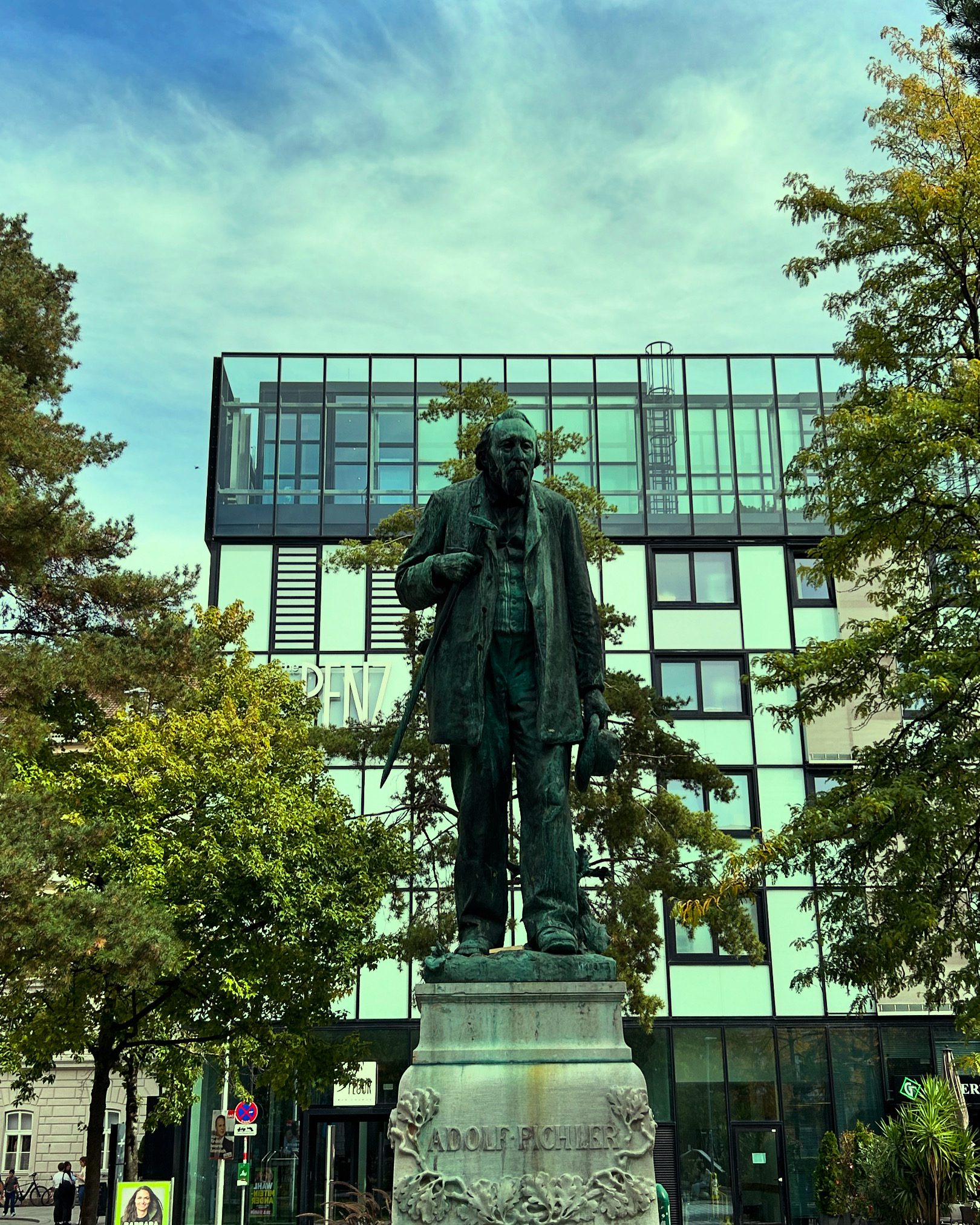
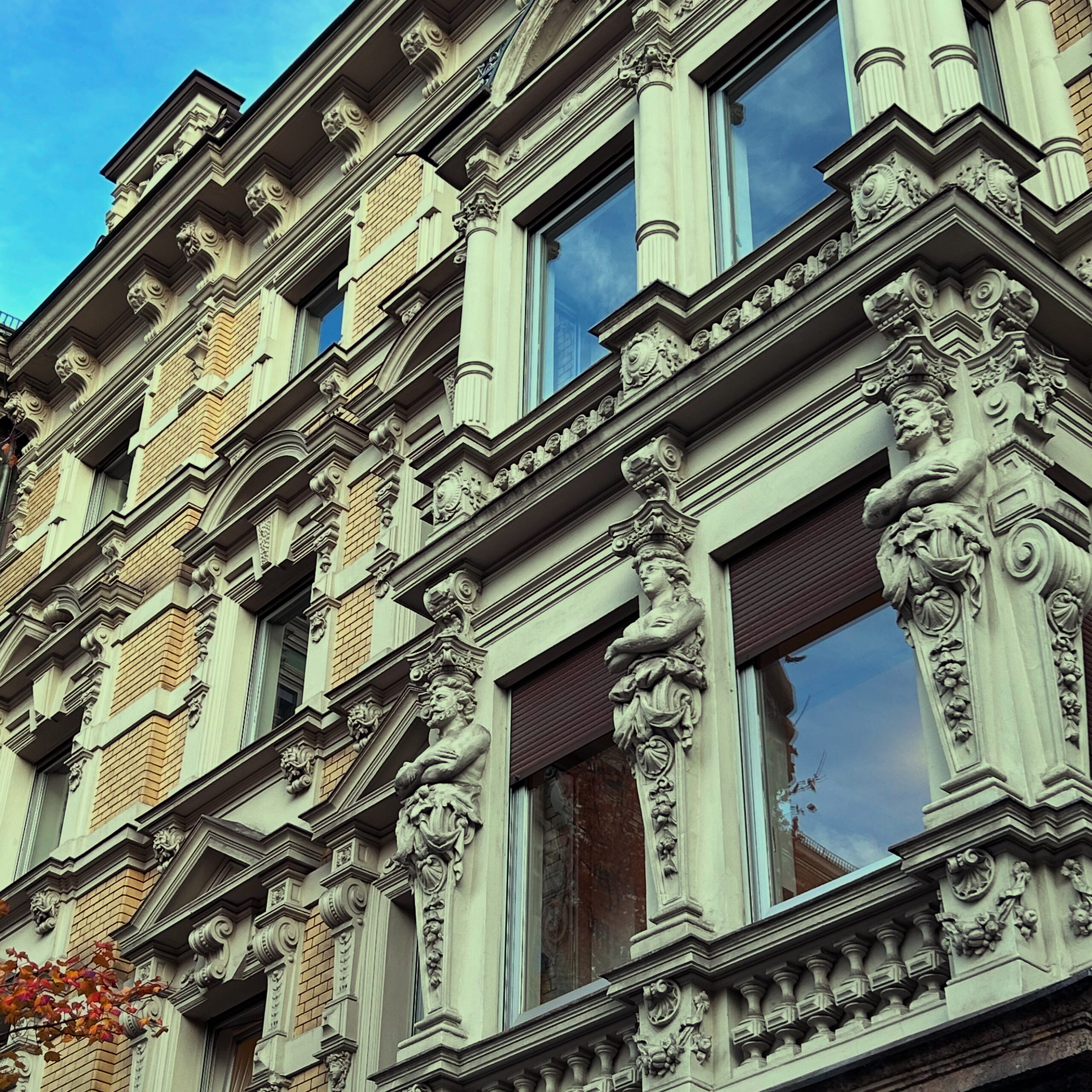
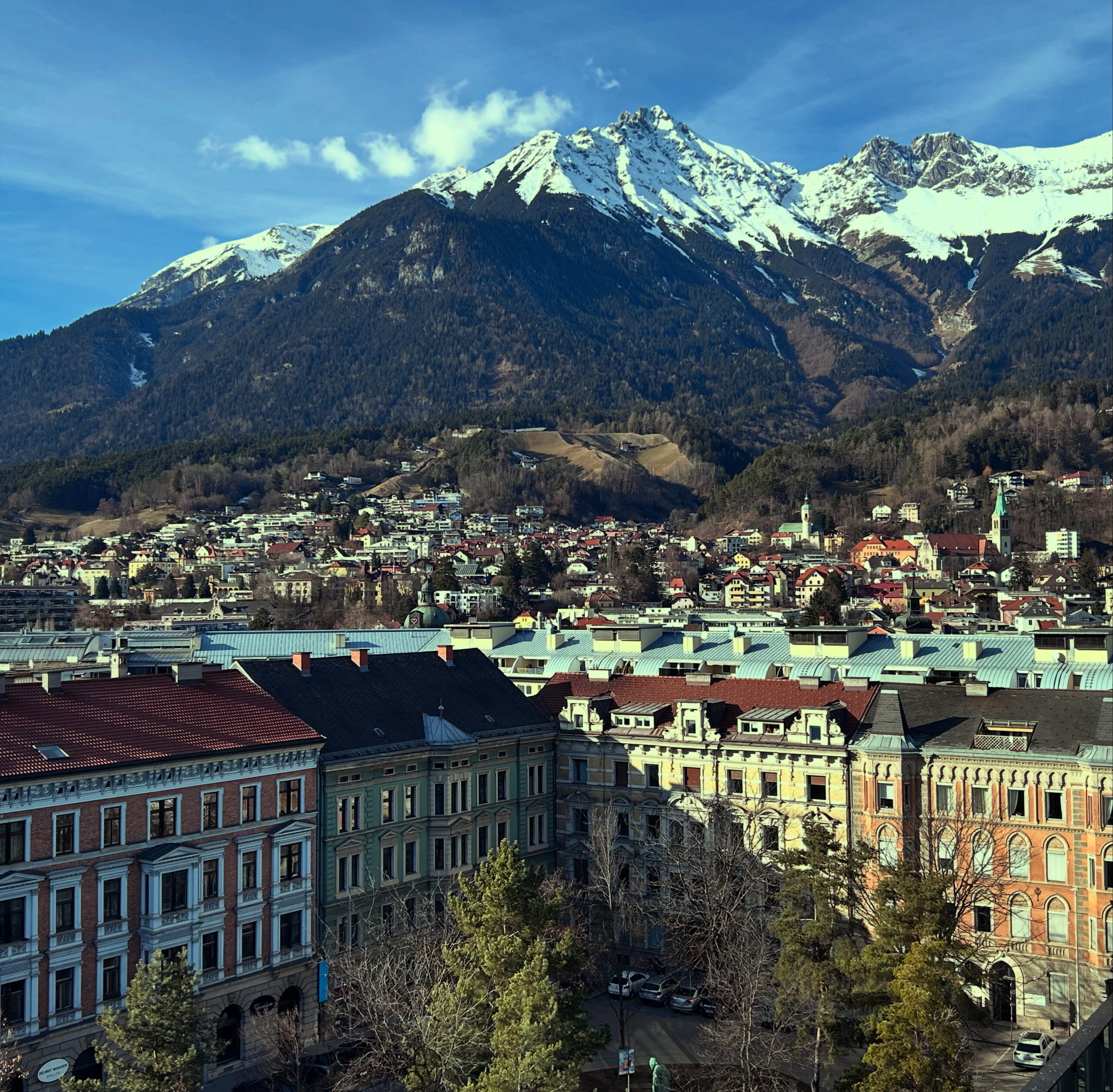
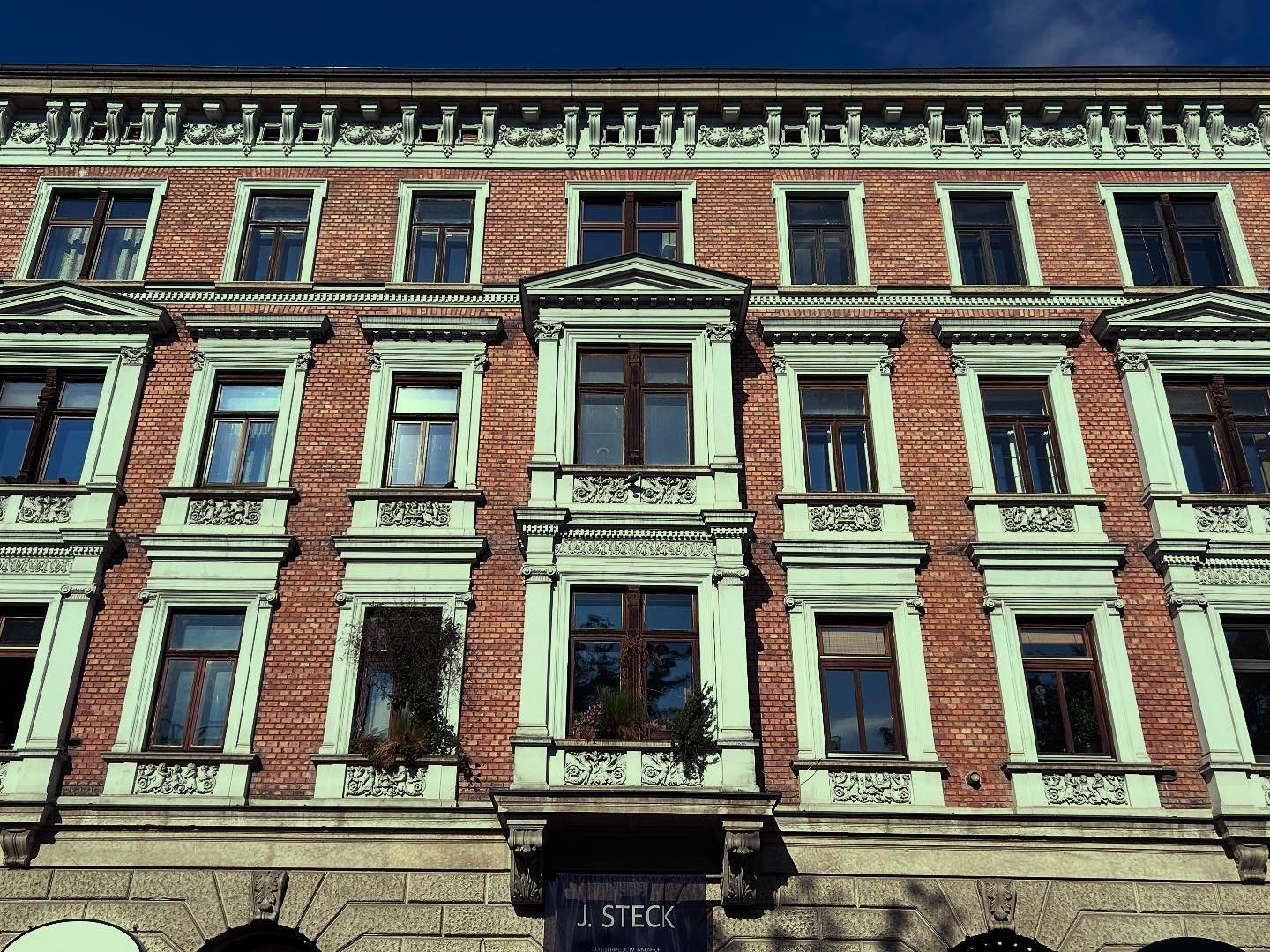
Adolf-Pichler-Platz today is a vibrant mix of buildings from different eras and styles. To the north and west, late 19th-century townhouses frame the small park with its trees, playground equipment, and the Adolf Pichler monument. On the east side, the modern Rathausgalerien with their glass façades adjoin the Federal Secondary School. A narrow cycle lane runs alongside the hopelessly congested street and the perpetually full parking spaces. It is hard to imagine that until the 1860s, a cemetery stood here in the heart of the city. Since the 14th century, the open space outside the city walls, behind the former city hospital and its chapel, had been used as a burial ground complete with arcades and cloisters. Only with the opening of the West Cemetery were the often lavish honorary graves gradually relocated, along with their monuments and memorials, from the Neustadt to the Wiltener fields. When the city hospital moved westward to the outskirts 20 years later, the Innsbruck market expanded onto the vacant land, giving the square the name Neuer Markt (“New Market”). In 1878, the market stalls had to make way for the construction of the elegant row of houses at the northern end of the square. Spurred by economic growth, some of the city’s finest historicist buildings arose here during one of the earliest waves of urban expansion. At the corner of Stainerstraße stands a beautiful residential and commercial building in delicate pink. The adjoining building boasts a neo-Romanesque façade, above whose entrance portal sits the lion typical of this architectural style. Particularly noteworthy is the house built in the rare brick style for Innsbruck. Its bay window is adorned with classical statues, columns, and exuberant ornamentation, while capitals crown the windows. In 1890, the Federal Secondary School moved from today’s Boznerplatz into the vacated premises of the former hospital. Founded nearly 40 years earlier, it represented a science- and mathematics-oriented counterpart to the Jesuit Academic Gymnasium, which focused on the humanities. Instead of classical languages, practical subjects geared toward the modern professional world now took centre stage.
The Adolf Pichler monument in the centre of the square was created under Mayor Wilhelm Greil. The square had long borne the name Karl-Ludwig-Platz, after the Habsburg Archduke and governor in Innsbruck from 1855 to 1861. Just a year after Adolf Pichler’s death (1819–1900), a committee was formed in the typical late-monarchic fashion to commemorate this esteemed “German” citizen in public space. By then, the town hall had moved from the Old Town to Maria-Theresien-Straße. For the municipal council, Adolf Pichler offered the perfect canvas to project the spirit of the age onto the square behind the new town hall. The Innsbruck intellectual embodied the idealised 19th century for the councillors: a self-made man from the bourgeois middle class with liberal and German-national convictions, standing in contrast to the Habsburg Karl Ludwig. The design of the monument was entrusted to Edmund Klotz, a Tyrolean sculptor living in Vienna, who had already created the Greil family tomb at the West Cemetery 20 years earlier. He depicted Pichler in the then-typical hiker and mountaineer outfit, complete with hat, walking stick, and geologist’s hammer as crown and insignia. The monument was inaugurated with pomp and music in 1909. The renaming to Adolf-Pichler-Platz was only decided by the municipal council in 1930.
The upheavals of the decades following the monument’s unveiling did not spare the square. During World War I, the Federal Secondary School premises, like many schools and public institutions, were converted into a military hospital. A bombing raid in December 1944 damaged several buildings. The square, like Tivoli and Rapoldipark, was used by residents as a vegetable garden for self-sufficiency. After the 1960s, traffic conquered the link between the Old Town, Innrain, and Anichstraße. Only with the redesign and new playground in 1994 did Adolf-Pichler-Platz regain its appeal. A few years later came the most comprehensive renovation. The drab façade of the town hall on the west side and its courtyard, used as a car park and rebuilt in the late 1940s after wartime destruction, were extended with a modern section. French architect Dominique Perrault won a competition with his idea of blending municipal offices with shops and restaurants to create a public space. The glass roof of the Rathauspassage is by Daniel Buren, while the tower’s glass façade was designed by Peter Kogler. Construction between 2000 and 2002 progressed slowly, as remnants of the site’s past as a cemetery repeatedly came to light. The new town hall, complete with shopping centre and adjoining hotel, transformed the square entirely. Around the turn of the millennium, the Rathausgalerien—alongside the new Bergisel ski jump and the planned Nordkettenbahn—became another milestone on Innsbruck’s path to its self-proclaimed status as a “world city” through modern architecture. Since the 2000s, glass façades face the Gründerzeit houses. Today, visitors can relax in the park on the former cemetery under Adolf Pichler’s stern gaze or spend the evening in one of the bars. Wilhelm Greil, patron of the monument committee and himself a merchant and moderniser, would likely have approved of this development.
Adolf Pichler: vom Vormärz zum Mainstream
The 19th century transformed Innsbruck in many ways. Politics, administration, society, as well as distributions of power and wealth, underwent profound changes between the first half—still heavily marked by the war years up to 1815—and the second half, which entered European history as the bourgeois era. New professional and social spheres emerged. Through diligence, skill, intellect, and good fortune, the state school and education system allowed individuals to rise further than ever before. Liberal thinkers, who had been suspected of radicalism under Metternich's system and whose writings were frequently censored, were gradually able to express themselves somewhat more freely after 1848. The 1860s brought formal parliamentarism, new municipal statutes, the Compromise with Hungary within the new Austro-Hungarian (k.u.k.) Monarchy, and Austria's exit from the German Confederation. Nationalism, once considered the domain of an avant-garde of a few liberals and "radicals" in the German states, became mainstream politics. The life of Adolf Pichler can be read as representative of these developments. At the age of 12, the son of a customs official moved from Erl near Kufstein to Innsbruck to launch his academic career at the gymnasium. Under the wing of the Jesuits—whom he would later view with little enthusiasm—he began his academic path in the spirit of classical humanism. During this time, Pichler primarily immersed himself in ancient writers and their philosophies. Still a teenager, he founded the association *"Eiche und Buche"* (*Oak and Beech*) with youthful zeal and published a weekly literary journal. During his studies of philosophy, law, and medicine in Innsbruck and Vienna, he read the works of contemporary thinkers—some of whom were subject to censorship—such as Feuerbach, Hegel, and Fichte. He drew from the secret library, affectionately dubbed the *"Giftbude"* (*poison booth*), of Johann Schuler, the editor of the *Tiroler Bote*. He came to know the liberal German champions Anastasius Grün and Heinrich Heine. They advocated for a united German nation in place of the fragmented small states of the German Confederation. Combined with the influence of the eccentric English literary figure Lord Byron and the medieval minnesinger Walther von der Vogelweide, Pichler developed a worldview that would ultimately prevail among Innsbruck's liberal class toward the end of the 19th century: Tyrol was to be part of the German cultural nation. His literary circle, *Die Nibelungen*, founded in 1841, served not only for exchanging books, but also as a precursor to student fraternities, which were banned in Metternich's police state. Four years later, Pichler came firmly into the crosshairs of the secret state police. Together with other "radicals"—most notably Hermann von Gilm—he published the poetry collection *Frühlingslieder aus Tirol* (*Spring Songs from Tyrol*), which fell victim to censorship. Through this collection of harmlessly sentimental poems (from a modern perspective), Pichler had become a sort of intellectual father figure and founder of the *Jungtiroler* (*Young Tyroleans*), without making a remarkably substantial content contribution himself. The young man not only became part of the subversive, Pan-German liberal Tyrolean literary scene, but also corresponded with foreign authors and intellectuals through letters and newspaper articles. His circle of colleagues and friends ranged from Tyroleans Adolf Flir, Johann Senn, and Beda Weber to Grillparzer, Stifter, and Alexander von Humboldt.
In 1848, shortly after completing his medical studies in Vienna, Pichler took part in the fighting along Tyrol’s borders during the Italian wars of independence. He raised his own unit, the Academic Legion. Although students and professors fought alongside Habsburg troops in the defense of the borders, the authorities regarded Pichler’s activities with suspicion. His association with subversive circles and his politically engaged articles, poems, and plays hindered his academic career in the monarchy after the upheavals of 1848. Rejected by the university, he accepted a position teaching at a Gymnasium in Innsbruck, while continuing his work as a literary historian. Pichler devoted himself to documenting the history of Tyrolean literature and encouraged his students to collect plays and traditions from their respective home regions. In the spirit of 1848, he became an eager archivist of Tyrolean traditions, attempting to weave the past and inherited customs into a cohesive, nationally oriented—and distinctly Germanic—narrative. His own literary works, often imbued with national pathos, achieved only limited success. Apart from Rodrigo, a historical drama staged at the Innsbruck City Theatre, his plays failed to reach a wider audience. Set during the fall of the Visigothic kingdom in eighth-century Spain, the play serves as an allegory for Austria’s political situation after its withdrawal from the German Confederation. Rodrigo disappears from history following defeat in a decisive battle at the Guadalete River—a clear parallel to Königgrätz.
Wohl ein wenig desillusioniert nach der in Tirol wenig revolutionären Märzrevolution und dem Ausscheiden Österreichs aus dem deutschen Bund 1866, wandte sich der vom offen Aufsässigen zum stillen Widerspenstigen mutierten Intellektuellen der Geologie zu. Auf langen Wanderungen durch die Alpen sammelte er Erkenntnisse über die geliebte Heimat und konnte so zumindest ein wenig in die Fußstapfen Alexanders von Humboldt treten. 1867 wurde er zum Universitätsprofessor für Geologie in Innsbruck berufen und konnte so seine akademische Karriere im Alter von knapp 50 Jahren doch noch krönen, ohne selbst je ein naturwissenschaftliches Studium absolviert zu haben. Den Posten als Rektor lehnte der unangepasste Pichler ab, zu hoch wäre wohl der Preis dafür gewesen. Liest man heute die Artikel und Gedichte Pichlers, fühlt man sich in Ausdruck und Thematik rund um Deutschtum, Wahrheit, Kampfeslust und Heldenverehrung stark an die Diktion der völkischen Presse der frühen Nationalsozialisten erinnert. Als Intellektueller, Kritiker und Kommentator des Zeitgeschehens beeinflusste Pichler den Zeitgeist der Innsbrucker Politik merklich. Viel ist in seinen Schriften die Rede von deutschen Helden, Walhalla, Wotan, Aufopferung und Erlösung. Bis an sein Lebensende verfasste er Gedichte, Theaterstücke und schmalzige Hymnen wie seinen späten Dietrich von Bern aus dem Jahr 1898.
Do you know Dietrich of Bern, Once held in chains? In anger he breathes fire— until iron melts like wax. Follow the example of your hero— never endure a foreign yoke— never accept as master the slave who once crawled before you.
His primary outlet was the sharply satirical and anti-clerical journal Der Scherer, published between 1899 and 1906. Its logo depicted a smiling elderly Tyrolean presenting a dead mole—symbolizing the clergy, often portrayed as a pest—to the viewer. Pichler also contributed to major newspapers and journals such as Die Presse, Wiener Zeitung, Augsburger Allgemeine, Gartenlaube, Odin, and Germania, consistently writing against both clerical authority and political power. While resolutely nationalist, he rejected the popular forms of antisemitism common at the time, as well as imperialism in all its forms—British, French, or German. He advocated the principle that all peoples and nations should govern themselves, and that culture and tradition deserved respect.
By the time the once “radical” public intellectual died in 1900, he had become a respected figure. His views had remained largely unchanged, but they had moved from the margins into the mainstream and were no longer censored—indeed, they were particularly valued in Innsbruck’s municipal politics under Mayor Wilhelm Greil. Liberal newspapers published effusive tributes. Karl Habermann, editor of Der Scherer, burned a pastoral letter by the Prince-Bishop of Brixen during a torchlight procession in Pichler’s honour—an act that led to legal proceedings. A special issue of Der Scherer, filled with poems and tributes by fellow writers and admirers, included a final farewell written by Pichler himself, in which he compared his pen to the sword of King Arthur. An obituary honoured the “old man” with the words:
“Tyrol, once a black clerical land, has through Pichler become a new centre of intellectual uprising, from which thousands of compatriots across all German regions draw the torch to ignite the sacred flame in their own homes.”
Other publications such as Odin—a militant organ of the pan-German movement—and the Ostdeutsche Rundschau also celebrated the Tyrolean hero. Writers like Franz Kranewitter (1860–1938), Rudolf Greinz (1866–1942), Heinrich von Schullern (1865–1955), and Arthur von Wallpach (1866–1946) carried forward Pichler’s intellectual legacy as part of the Jung-Tirol movement—first in Der Scherer and later in Der Föhn. They were united by shared experiences: Austria’s withdrawal from the German Confederation, the declining power of the Habsburg monarchy, and the loss of southern Tyrolean territories. Their blend of liberalism—partly anti-clerical, partly infused with martial imagery—combined with a strong emphasis on homeland and Tyrolean identity, remained popular both after the First World War and during the National Socialist period. Works such as Kranewitter’s Andreas Hofer and Wallpach’s poetry collections with titles like Tyrolean Blood or We Break Through Death! allowed various political movements to appropriate their messages. Just one year after Pichler’s death, a committee was formed to erect a monument in his honour, chaired by Mayor Greil. Since 1930, Adolf-Pichler-Platz—where his bronze statue stands—has borne his name. Streets in Amras and Pradl commemorate his successors Greinz, Schullern, Kranewitter, and Renk. A memorial plaque adorns Pichler’s former residence in Müllerstraße, decorated with a Tyrolean eagle, laurel wreath, and oak leaves, bearing the inscription: “To the German poet Adolf Pichler – from the Land of Tyrol.”
Innsbrucker Kulturkampf
Media and politicians never tire of pointing out the societal division and polarization that characterize the 21st century. Usually, the culprit is delivered right along with the diagnosis: social media. Yet a look back at the late 19th century demonstrates just how long division and polarization accompanied society well before the invention of Facebook, Twitter, and the like. Simplified, the parliament of the late Austro-Hungarian Monarchy was shaped by Christian Socials, Social Democrats, and liberal-nationalist parties representing the individual ethnic groups of the multi-ethnic empire. The Social Democrats, Christian Socials, and Pan-German Nationalists were the predecessors of today's parliamentary parties SPÖ, ÖVP, and FPÖ. In the Tyrolean Landtag (regional parliament), Social Democrats played no role; the Catholic-conservative party had lost some of its influence, but formed a coalition block with the reform-Catholic Christian Socials in Tyrol. The Innsbruck city council, on the other hand, was dominated by Pan-German liberals thanks to the wealth-based census suffrage. The rivalry between Liberals, Conservatives, and the Social Democrats—who were disadvantaged by electoral law—created a highly explosive atmosphere in Innsbruck. As in other cities of the Habsburg Monarchy and the German Empire, this *Kulturkampf* (cultural struggle) rarely remained limited to verbal skirmishes. Politicians, intellectuals, and journalists fought especially bitterly over dominance at the universities, as these were the institutions training the elites of tomorrow. Yet the conflict did not stop at the higher education institutions. Following the press reforms of 1867, newspapers reached unprecedented levels of circulation. Conservatives, Catholics, Pan-German Nationalists, Liberals, and Social Democrats each had their own partisan papers. Readers of these publications lived in their own echo chambers. The polemical articles reached an audience willing to emphasize their opinions with physical force. Although dueling was officially prohibited by law, it was tolerated until well into the 20th century as a means of satisfaction in accordance with military and aristocratic notions of honor, serving as a common practice. Fencing student fraternities (*Burschenschaften*) adopted dueling and continue this tradition as an honorable duel, the *Mensur*, to this day. In other respects as well, fraternities had their origins in the military. The first corps emerged at German universities as seedbeds of nationalist thought following the Napoleonic Wars. While conservative subjects organized themselves into paramilitary units within the marksmen companies (*Schützen*), these student fraternities enjoyed immense popularity among academics. Like other associations, they increasingly took clear political stances. In doing so, two distinct poles emerged: Catholic, conservative, loyal to the Emperor; and liberal, Pan-German, nationalist. What appears contradictory today—liberal and nationalist—was a standard political pair of ideas in the 19th century. *Pan-Germanism* was not the peculiar political ideology of a far-right minority. Anyone who wished to be seen as modern did not view themselves as a subject of the traditional multi-ethnic state of the Habsburg Monarchy, but instead aspired toward the All-German *Nation*: a militarily and economically strong, not necessarily democratic, and ethnically uniform state that united all German-speaking lands after the Prussian model. In Innsbruck, students joined together in 1859 to form a corps in order to perform border service during the Second Italian War of Independence. The Corps *Rhaetia*, *Chinisia*, and *Athesia* were the first fraternities at the university to appear in public. Shortly thereafter, Catholic students gathered under the academic fraternity *Austria*, which exists to this day. Around the turn of the century, one-third of the students at the University of Innsbruck belonged to a fraternity, a corps, or a *Burschenschaft*. Unlike today, it was not unusual for them to appear in public in full regalia (*Wichs*) wearing their colors—uniforms complete with sabers, berets, and sashes. They were also frequently armed with walking sticks, brass knuckles, and revolvers. Half of the fraternities held a Pan-German nationalist orientation and bore telling names such as *Suevia* or *Germania*. They derived their ideology from the *Los-von-Rom* ("Away from Rome") movement led by the German radical Georg Ritter von Schönerer (1842–1921), who personally attended events in Innsbruck on several occasions. At the secular faculties, the majority of professors held Pan-German nationalist views. Relative to the city's total population—which in 1910 remained 96% Catholic—they constituted a numerical minority, but owing to their social influence, a highly powerful one. In the 1880s, later than at other Austrian universities, racial antisemitism spread in Innsbruck amid this climate, even though there were hardly any Jewish students or professors at the Leopold-Franzens-University. As radical opposition to the monarchy and clergy mounted at the university, the situation escalated irreversibly from the 1890s onward. Provocations and disagreements among professors made headlines and reached parliament, while conflicts between Catholic and Pan-German nationalist students frequently ended in outright brawls.
The *Wahrmund Affair*, which radiated outward from the University of Innsbruck across the entire Austro-Hungarian Monarchy in the early 20th century, was just one of many examples of this intense polarization. Ludwig Wahrmund (1860–1932) was a professor of canon law at the Faculty of Law at the University of Innsbruck. Originally chosen by the Governor of Tyrol to strengthen Catholicism at the University of Innsbruck—which was deemed too liberal—Wahrmund turned out to be a proponent of an enlightened theology. In contrast to conservative representatives in the clergy and politics, he was a reform Catholic who viewed the Pope solely as a spiritual leader rather than a worldly authority. In Wahrmund's view, students ought to narrow and reconcile the gaps between the Church and the modern world rather than cement them. Until 1906, Wahrmund was part of the *Leo-Gesellschaft*, which aimed to promote science and scholarship on a Catholic basis. In a transformation from a moderate Saul to a liberal Saul, he became chairman of the Innsbruck local chapter of the *Freie Schule* association, which advocated for the complete secularization of the entire educational system. From a reform Catholic, he evolved into a champion of the total separation of church and state. Amplified by the media, his lectures repeatedly drew the attention of the authorities. Conservative politicians and press outlets raged against his questioning of the indissolubility of marriage, while liberals and his supporters among professors and students applauded him. Pan-German nationalist academics received backing from Mayor Greil and the likewise anti-clerical Social Democrats, whereas the Tyrolean regional government stepped into the breach on the conservative side. The *Wahrmund Affair* reached the Imperial Council (*Reichsrat*) as a core debate of the *Kulturkampf*. For the Christian Socials, it was a *"struggle of freethinking Jewry against Christianity,"* in which *"Zionists, German cultural fighters, Czech and Ruthenian radicals"* presented themselves in an *"international coalition"* as a *"freethinking ring of Jewish radicalism and radical Slavdom."* Wahrmund, on the other hand, referred to Catholic students in the generally heated atmosphere as *"traitors and parasites."* When Wahrmund published one of his speeches in 1908 in which he questioned Christian morality and the Catholic veneration of saints, he was charged with blasphemy. Following further—and at times violent—rallies on both the conservative and anti-clerical sides, along with student riots and strikes, university operations briefly had to be suspended entirely. Wahrmund was initially placed on leave and later transferred to the German University in Prague.
In February 1910, civil-war-like scenes unfolded in Innsbruck, entering the city's history as the *Breinößlschlacht* (Battle of the Breinößl). The Catholic fraternities *Tirolia*, *Raeto Bavaria*, and *Leopoldina* had their headquarters in the *Gasthof Breinößl* on Maria-Theresien-Straße. Members of the rival Corps *Gothia* attacked several *Tirolia* students inside the inn. The innkeeper Franz Hofer—father of the future Gauleiter and himself likely holding Pan-German nationalist views—called the police to have the Catholic students thrown out of his establishment. The following day, fresh provocations erupted among the fraternities, culminating in a mass brawl involving over 100 combatants. Students fought each other and summoned police officers in a street battle that left several people injured and the interior of *Gasthof Breinößl* devastated. The next day, the wave of violence reached its end following a brawl involving 250 people, which resulted in the destruction of *Café Central* and the neighboring *Akademikerhaus* belonging to the Catholic fraternity. The tragic climax of the *Innsbruck Kulturkampf* turned fatal two years later. On the night of November 4, students from the *Raeto Bavaria* and *Austria* fraternities were walking home from a dance when they were attacked by Pan-German nationalist fraternity members. During the ensuing brawl in front of *Gasthof Breinößl* on Maria-Theresien-Straße, medical student Max Ghezze (1889–1912) suffered a blow to the back of his head. Police officers brought the unconscious student to a drunk tank, where he was found hours later by his fellow classmates. Ghezze died shortly thereafter at the Innsbruck hospital, due in part to his mistreatment by the police. The members of *Gothia* suspected of the crime were released for lack of evidence. Protests sent from Cortina to the governor's office criticized the city administration and the police, even demanding universal empire-wide suffrage at the municipal level. Such a reform likely would have brought an end to the exclusive rule of the *Deutsche Volkspartei* and Wilhelm Greil's corresponding influence over executive power on the city council.
The First World War brought a brief pause in the struggle for ideological supremacy at the university. The politics of the 1920s and 30s—characterized by civil-war-like tensions between Christian Socials, Social Democrats, and Pan-German Nationalists, which culminated first in the Catholic Corporate State (*Ständestaat*) and subsequently in the annexation (*Anschluss*) to National Socialist Germany—had their roots in the *Kulturkampf*. The fraternity students of the past had since become professors, lawyers, historians, teachers, and doctors. To their youthful political extremism, they had added the experiences of a world war, inflation, and multiple economic and political crises. What remained was authoritarian subservience to authority, a readiness for violence, and antisemitism, which were passed down to the next generation of young men.
Klingler, Huter, Retter & Co: master builders of expansion
The final decades of the 19th century became known in Austrian history as the Gründerzeit (Founders’ Era). After the economic crisis of 1873, the financial situation recovered and an unprecedented construction boom began. Innsbruck also established a modern banking system. Financial institutions such as the Savings Bank founded in 1821 and the Creditanstalt, whose building erected in 1910 still towers over Maria-Theresien-Straße like a small palace, made it possible to obtain loans, without which entrepreneurship and commerce as we know them today would not have been possible. In some cases, these financial institutions even acted as developers themselves. Between 1880 and 1900, Innsbruck’s population grew from 20,000 to 26,000 inhabitants, while Wilten, incorporated into the city in 1904, even tripled its population from 4,000 to 12,000. The number of buildings increased from 600 to more than 900. Most of them, unlike previous buildings, were multi-story apartment houses. Infrastructure was also modernized. Gas, running water, and electricity became part of everyday life for an increasing number of people. These buildings represented the new society. Entrepreneurs, professionals, employees, and workers had different needs than the legally dependent subjects of previous centuries. The urban lifestyle demanded apartments with several rooms and open spaces for recreation after working hours. Apartment buildings made a modern lifestyle possible even for people who did not own property. Unlike the rural regions of Tyrol, where farming families lived together with servants in farmhouses as part of an extended kinship community, life in the city was already quite close to our present-day understanding of family life. Although the upper middle class had not yet surpassed the nobility, it had reduced the gap considerably and, through its new position on the municipal council, was able not only to commission private building projects but also to decide on public construction projects. The old city hospital in the center of town was replaced by a modern hospital in the west; Sieberer’s orphanage and retirement home were established in Saggen, and a new urban center emerged around the railway station.
The forty years preceding the First World War were a gold rush era for the construction industry. The architecture of the buildings reflected the worldview of their owners. Master builders often assumed several roles and frequently replaced architects altogether. Most clients had very clear ideas about what they wanted. They were not seeking breathtaking new creations but rather copies of or adaptations based on existing buildings. In keeping with the spirit of the age, Innsbruck’s master builders designed structures according to the wishes of their financially powerful clients in the styles of Historicism, Classicism, and the Tyrolean Heimatstil. The style chosen for a home was often not merely an aesthetic decision but also an ideological statement by the owner. Liberals generally preferred Classicism, while conservatives were drawn to the Tyrolean Heimatstil. Whereas the Heimatstil presented itself in a Neo-Baroque form with abundant paintings, clear forms, statues, and columns were characteristic elements of Classical-inspired architecture. In what was sometimes a rather wild mixture of styles, people realized their ideas of classical Greece and ancient Rome. Not only railway stations and public buildings but also large apartment buildings, entire streets, churches, and even cemeteries were built along former country roads in this design. Academics—and those wishing to appear as such—demonstrated their fascination with antiquity through neoclassical façades. Catholic traditionalists commissioned murals depicting saints and scenes from Tyrolean history on their Heimatstil houses. While Neoclassicism predominates in Saggen and Wilten, the district of Pradl is largely characterized by conservative Heimatstil architecture. For a long time, many architectural experts looked down upon the tastes of social climbers and the newly rich. Heinrich Hammer wrote in his standard work Art History of the City of Innsbruck:
"Of course, this first rapid expansion of the city took place in an era that was unfruitful in terms of architectural art, in which architecture, instead of developing an independent, contemporary style, repeated the architectural styles of the past one after the other."
The era of grand villas, which imitated the aristocratic residences of former times with a bourgeois touch, came to an end after several exuberant decades simply because space became scarce. Further development of the city with detached houses was no longer possible. Even today, the area around Falkstraße, Gänsbachstraße, and Bienerstraße is known as Villensaggen, while the areas further east are referred to as Blocksaggen. Wilten and Pradl, however, never experienced this kind of development. Nevertheless, in their gold-rush enthusiasm, developers sealed ever more land with construction. In 1907, Albert Gruber delivered a warning speech about this growth, cautioning against unchecked urban expansion and land speculation.
"It is the most difficult and responsible task facing our city fathers. Up until the 1980s (note: 1880), let's say in view of our circumstances, a certain slow pace was maintained in urban expansion. Since the last 10 years, however, it can be said that cityscapes have been expanding at a tremendous pace. Old houses are being torn down and new ones erected in their place. Of course, if this demolition and construction is carried out haphazardly, without any thought, only for the benefit of the individual, then disasters, so-called architectural crimes, usually occur. In order to prevent such haphazard building, which does not benefit the general public, every city must ensure that individuals cannot do as they please: the city must set a limit to unrestricted speculation in the area of urban expansion. This includes above all land speculation."
A handful of master builders, together with the Innsbruck Building Authority, guided this development. If Wilhelm Greil can be called the mayor of Innsbruck’s expansion, then the Vienna-born Eduard Klingler (1861–1916) certainly deserves the title of its architect. As a public official and master builder, Klingler left a profound mark on Innsbruck’s cityscape. He began working for the Province of Tyrol in 1883. In 1889 he joined the municipal building authority, which he headed from 1902 onward. Among the projects attributed to Klingler as head of the building authority are the Commercial Academy, the Leitgeb School, Pradl Cemetery, the Dermatological Clinic within the hospital complex, the Municipal Kindergarten on Michael-Gaismair-Straße, the Train Barracks (today a residential building), the Market Hall, and the Tyrolean State Conservatory. One particularly noteworthy Heimatstil building designed by him is the Ulrich House on Bergisel, which today serves as the headquarters of the Old Kaiserjäger Club.
The most important construction company in Innsbruck was Johann Huter & Sons. Johann Huter took over his father’s brickworks. In 1856 he acquired the company’s first property, the Huter Grounds, on Innrain. Three years later the first business headquarters was established on Meranerstraße. The company’s official founding came in 1860 when it was registered together with his sons Josef and Peter. Like many of its competitors, Huter & Sons saw itself as a full-service provider. The company included its own brickworks, cement factory, carpentry shop, metal workshop, design office, and construction firm. By the outbreak of the First World War, it employed more than 700 people. In 1906/07, the Huter family built their residential and business headquarters at Kaiser-Josef-Straße 15 in the typical style of the late pre-war years. This stately house combines the Tyrolean Heimatstil, surrounded by gardens and nature, with Neo-Gothic and Neo-Romanesque elements. Well-known buildings erected by Huter & Sons in Innsbruck include the Monastery of Perpetual Adoration, St. Nicholas Parish Church, the first building of the new hospital complex, and several buildings on Claudiaplatz.
The second major player was Josef Retter (1872–1954). Born in Lower Austria with Tyrolean roots, he completed an apprenticeship as a mason before attending the Imperial-Royal State Trade School in Vienna and the master craftsman school of its construction department. After gaining professional experience throughout the Habsburg Monarchy—in Vienna, Croatia, and Bolzano—he was able, thanks to his wife’s dowry, to establish his own construction company in Innsbruck at the age of 29. Like Huter’s company, his enterprise also included a sawmill, a sand and gravel works, and a stonemasonry workshop. In 1904 he built his residential and office building. The dark Neo-Gothic Retter House at Schöpfstraße 23a, with its distinctive bay window supported by columns and a turret, is decorated with a remarkable mosaic representing an allegory of architecture. The relief on the gable depicts the union of art and craftsmanship, symbolizing Retter’s career path. Retter’s buildings particularly shaped Wilten and Saggen. Through projects such as the new Academic Gymnasium, the castle-like Commercial Academy building, the Protestant Christ Church in Saggen, the Zelger House on Anichstraße, Sonnenburg in Wilten, and the Neo-Gothic Mentlberg Castle in Sieglanger, he created many of the most important buildings of this era in Innsbruck.
Late in life but with a similarly practice-orientated background that was typical of 19th century master builders, Anton Fritz started his construction company in 1888. He grew up remotely in Graun in the Vinschgau Valley. After working as a foreman, plasterer and bricklayer, he decided to attend the trade school in Innsbruck at the age of 36. Talent and luck brought him his breakthrough as a planner with the country-style villa at Karmelitergasse 12. In its heyday, his construction company employed 150 people. In 1912, shortly before the outbreak of the First World War and the resulting slump in the construction industry, he handed over his company to his son Adalbert. Anton Fritz's legacy includes his own home at Müllerstraße 4, the Mader house in Glasmalereistraße and houses on Claudiaplatz and Sonnenburgplatz.
With Carl Kohnle, Carl Albert, Karl Lubomirski, and Simon Tommasi, Innsbruck possessed several other master builders who left their mark on the cityscape through typical buildings of the late 19th century. Together, they shaped Innsbruck’s new streets in the prevailing architectural spirit of the final thirty years of the Habsburg Monarchy. Residential houses, railway stations, government buildings, and churches throughout the vast empire stretching from Ukraine to Tyrol looked remarkably similar. New movements such as Art Nouveau gained acceptance only slowly. In Innsbruck, it was the Munich architect Josef Bachmann who introduced a new accent to bourgeois design with the redesign of the façade of the Winkler House. With the outbreak of the First World War, construction activity largely ceased. After the war, the era of neoclassical Historicism and the Heimatstil was definitively over. Times had become harsher, and the requirements for housing had changed. In the period of severe housing shortages in the young Republic of German-Austria, affordable housing and modern sanitary facilities became more important than representative façades and grand rooms. The increasingly professional education of master builders and architects at the Imperial-Royal State Trade School also contributed to a new understanding of construction, replacing the often self-taught veterans of the gold-rush era of Classicism. A stroll through Saggen and parts of Wilten and Pradl still transports visitors back to the Gründerzeit. Claudiaplatz and Sonnenburgplatz are among the most impressive examples. The construction company Huter & Sons still exists today. The company is now located in Sieglanger on Josef-Franz-Huter-Straße, named after its founder. Although the residential building on Kaiser-Josef-Straße no longer bears the company’s name, it remains, in all its opulence, a remarkable relic of the period that permanently transformed Innsbruck’s appearance. In addition to his residence on Schöpfstraße, the district of Wilten contains a second building associated with the Retter family. Opposite the university on Innrain stands Villa Retter. Josef Retter’s eldest daughter, Maria Josefa, who herself had been educated according to the principles of the reform educator Maria Montessori, opened Innsbruck’s first Haus des Kindes (“House of the Child”) in 1932. Above the entrance, a portrait depicts the benefactor Josef Retter. The south façade is adorned with a mosaic in the characteristic style of the 1930s, referring to the building’s original purpose. A smiling blond girl embraces her mother, who is holding a book, and her father, who carries a hammer. The family crypt at Westfriedhof Cemetery is another notable legacy of the Retter family.
Wilhelm Greil: DER Bürgermeister Innsbrucks
One of the most important figures in Innsbruck's municipal history was Wilhelm Greil (1850–1928). The entrepreneur held the office of mayor from 1896 to 1923, having previously helped shape the city's fortunes as vice mayor. His tenure was not only long, but also took place during a particularly dynamic era. The four decades between the economic crisis of 1873 and the First World War were marked by unprecedented growth and rapid modernization. It was a time of incorporating entire city districts, technical innovations, and new media. Private investments in infrastructure such as railways, energy, and electricity were encouraged by the state and given tax incentives in order to lead the provinces and cities of the struggling Danube Monarchy into modernity. The city's economy was booming. Businesses emerged in the new districts of Pradl and Wilten, attracting a labor force. Tourism also brought fresh capital into the city. Innsbruck's city council was dominated by the liberal and Pan-German nationalist 'Deutsche Volkspartei' (German People's Party), to which Greil also belonged. It was only with the incorporation of Wilten and Pradl in 1904 that the conservatives were able to gain ground, though they could not fully catch up. Social Democracy played almost no role until 1918. Due to an electoral system based on voting rights categorized by wealth classes, only about 10% of Innsbruck's population could step up to the ballot box. Women were fundamentally excluded. Furthermore, relative voting rights applied within the three electoral colleges, which effectively meant: winner takes it all. Appropriately enough, Mayor Greil lived much like a Renaissance prince. He hailed from the upper-class haute bourgeoisie. His father was able to afford establishing the family's home base in the Palais Lodron on Maria-Theresien-Straße. Thanks to this electoral statute, Mayor Greil could rely on 100% support in the city council well into the era of the First Republic, which naturally simplified decision-making and governance considerably. For all the efficiency that Innsbruck's mayors displayed on a superficial level, one should not forget that this was only possible because, as part of an elite composed of entrepreneurs, merchants, and professionals, they ruled through a form of elected dictatorship—without any significant opposition or consideration for other population groups such as workers, artisans, and employees. The Imperial Municipal Act of 1862 granted cities like Innsbruck, and thus its mayors, far-reaching powers. It is hardly surprising that the chain of office presented to Greil on his 60th birthday by his colleagues on the city council bore an astonishing resemblance to the collar orders of the old nobility. However, Greil was also a skillful politician who adeptly navigated the established power structures and media landscape of his time. Article 17 of the Austrian Basic Law of 1867, known as the December Constitution, secured freedom of expression in the press without prior censorship for the first time—excluding, of course, punishable content such as blasphemy or insulting the authorities. Consequently, a variety of newspapers established themselves, such as the conservative Neue Tiroler Stimme, the social democratic Volkszeitung, or the liberal Innsbrucker Nachrichten, shaping a worldview according to their publishers' preferences. Thanks to the reach of the Innsbrucker Nachrichten, Wilhelm Greil was able to effectively project his view of local politics. Despite his at times fierce speeches—modeled on the platform of Georg Ritter von Schönerer (1842–1921), the founding figure of the Pan-German nationalists—he managed to reach arrangements with conservative forces in the region, even if things frequently clashed in the media and elsewhere. Taxes, social policy, education, housing, and the design of public spaces were debated with passion and zeal, often enough with violence as the ultimate argument.
Unter Greils Ägide und dem allgemeinen wirtschaftlichen Aufschwung erweiterte sich Innsbruck im Eiltempo. Der Gemeinderat kaufte ganz im Stil eines Kaufmanns vorausschauend Grund an, um der Stadt Neuerungen zu ermöglichen. Der Politiker Greil konnte sich bei den großen Bauprojekten der Zeit auf die Beamten und Stadtplaner Eduard Klingler, Jakob Albert und Theodor Prachensky stützen. Infrastrukturprojekte wie das neue Rathaus in der Maria-Theresienstraße 1897, die Eröffnung der Mittelgebirgsbahn, die Hungerburgbahn und die Karwendelbahn wurden während seiner Regierungszeit umgesetzt. Weitere gut sichtbare Meilensteine waren die Erneuerung des Marktplatzes und der Bau der Markthalle. Neben den prestigeträchtigen Großprojekten revolutionierte vor allem Unsichtbares in den letzten Jahrzehnten des 19. Jahrhunderts das Leben vieler Innsbrucker. Bereits Greils Vorgänger Bürgermeister Heinrich Falk (1840 – 1917) hatte erheblich zur Modernisierung der Stadt und zur Besiedelung des Saggen beigetragen. Seit 1859 war die Beleuchtung der Stadt mit Gasrohrleitungen stetig vorangeschritten. Mit dem Wachstum der Stadt und der Modernisierung wurden die Senkgruben, die in Hinterhöfen der Häuser als Abort dienten und nach Entleerung an umliegende Landwirte als Dünger verkauft wurden, zu einer Unzumutbarkeit für immer mehr Menschen. 1880 wurde das Ragging, so der Name im Volksmund für die Entleerung der Aborte, in den Verantwortungsbereich der Stadt übertragen. Zwei pneumatische Maschinen sollten den Vorgang zumindest etwas hygienischer gestalten. Zwischen 1887 und 1891 wurde Innsbruck mit einer modernen Hochdruckwasserleitung ausgestattet, über die auch Wohnungen in höher gelegenen Stockwerken mit frischem Wasser versorgt werden konnten. Wer auf sich hielt und es sich leisten konnte, hatte damit erstmals die Gelegenheit eine Spültoilette im Eigenheim zu installieren. Greil setzte diesen Feldzug der Modernisierung mit einer Vielzahl an Infrastrukturprojekten fort. Die Ansammlung an Menschen auf enger werdendem Raum unter teils prekären Hygieneverhältnissen hatte viele Probleme mit sich. Die Randbezirke der Stadt und die umliegenden Dörfer wurden regelmäßig von Typhus heimgesucht. Nach jahrzehntelangen Diskussionen wurde 1903 mit dem Bau einer modernen Schwemmkanalisation begonnen. Ausgehend von der Innenstadt wurden immer mehr Stadtteile an diesen heute alltäglichen Luxus angeschlossen. 1908 waren nur die Koatlackler Mariahilf und St. Nikolaus nicht an das Kanalsystem angeschlossen. Auch der neue Schlachthof im Saggen erhöhte Hygiene und Sauberkeit in der Stadt. Schlecht kontrollierte Hofschlachtungen gehörten mit wenigen Ausnahmen der Vergangenheit an. Das Vieh kam im Zug am Sillspitz an und wurde in der modernen Anlage fachgerecht geschlachtet. Greil überführte das Gaswerk in Pradl und das Elektrizitätswerk in Mühlau in städtischen Besitz. Die Straßenbeleuchtung wurde im 20. Jahrhundert von den Gaslaternen auf elektrisches Licht umgestellt. 1888 übersiedelte das Krankenhaus von der Maria-Theresienstraße an seinen heutigen Standort. Bürgermeister und Gemeinderat konnten sich bei dieser Innsbrucker Renaissance neben der wachsenden Wirtschaftskraft in der Vorkriegszeit auch auf Mäzen aus dem Bürgertum stützen. Waren technische Neuerungen und Infrastruktur Sache der Liberalen, verblieb die Fürsorge der Ärmsten weiterhin bei klerikal gesinnten Kräften, wenn auch nicht mehr bei der Kirche selbst. Freiherr Johann von Sieberer stiftete das Greisenasyl und das Waisenhaus im Saggen. Leonhard Lang stiftete das Gebäude in der Maria-Theresienstraße, in der sich bis heute das Rathaus befindet gegen das Versprechen der Stadt ein Lehrlingsheim zu bauen.
In contrast to the booming pre-war era, Greil’s leadership after 1914 was marked by crisis management. In his final years in office, he guided Innsbruck through the transition from the Habsburg monarchy to the republic—a time characterized above all by hunger, hardship, scarcity of resources, and insecurity. He was 68 years old when Tyrol was divided at the Brenner Pass after the war. During his political career, Greil had often exploited general hostility toward Italians (“Walsche”) in a similarly populist manner to his Christian Social counterpart in Vienna, Karl Lueger, who used antisemitic rhetoric. At the end of his career, he had to witness the Italian occupation of Innsbruck. With the introduction of the republic, the census-based voting system was abolished, marking the beginning of the end of liberal dominance in the municipal council. In 1919, the Social Democrats won elections in Innsbruck for the first time. Only due to council majorities and a coalition of Greater German-liberal and conservative-clerical politicians did Greil remain mayor. He died in 1928 at the age of 78 as an honorary citizen of the city of Innsbruck. Wilhelm-Greil-Straße had already been named after him during his lifetime.
The First World War
An Innsbruck student nearly changed the course of world history instead of Gavrilo Princip. In 1913, the young man boasted to a waitress about his plans to shoot the heir to the throne, but he was arrested before he could carry them out. Only when the world-changing shots were actually fired in Sarajevo a year later did an article appear in the Innsbrucker Nachrichten on June 30 about the events. The consequences that the First World War, which subsequently broke out, would have for the world and for people's everyday lives could not yet be foreseen after the assassination of Franz Ferdinand on June 28. Two days after the murder of the Habsburg heir in Sarajevo, readers in Innsbruck were already reading prophetic words in their newspaper: “We have arrived at a turning point – perhaps the turning point – in the destiny of this empire.” In Innsbruck, too, enthusiasm for war was widespread in 1914. Driven by the slogan of the time, “God, Emperor, and Fatherland,” the vast majority of people unanimously welcomed the attack on Serbia. Politicians, the clergy, and the press fuelled the general jubilation. Particularly “deserving” in promoting the war were the two theologians Joseph Seeber (1856–1919) and Anton Müllner, known as Brother Willram (1870–1919), who, through their sermons and writings such as The Bloody Year, elevated the war into a crusade against France and Italy. In addition to the imperial proclamation To My Peoples, which appeared throughout the media of the Empire, the Innsbrucker Nachrichten published an article on July 29, the day after Austria-Hungary declared war on Serbia, about Prince Eugene's capture of Belgrade in 1717. The tone in the media was celebratory, although not entirely without dark forebodings of what was to come.
"The Emperor's appeal to his people will be deeply felt. The internal strife has been silenced and the speculations of our enemies about unrest and similar things have been miserably put to shame. Above all, the Germans stand by the Emperor and the Empire in their old and well-tried loyalty: this time, too, they are ready to stand up for dynasty and fatherland with their blood. We are facing difficult days; no one can even guess what fate will bring us, what it will bring to Europe, what it will bring to the world. We can only trust with our old Emperor in our strength and in God and cherish the confidence that, if we find unity and stick together, we must be granted victory, for we did not want war and our cause is that of justice!"
Many Innsbruck residents volunteered for the campaign against Serbia, which was believed to be a matter of only a few weeks or months. So many volunteers poured into Innsbruck from outside the city to report to the recruitment commissions that the city was almost bursting at the seams. No one could imagine how differently things would turn out. After the first battles in distant Galicia, it became clear that this would not be over within a few months. The Imperial Riflemen (Kaiserjäger) and other Tyrolean troops were effectively sacrificed. Poor equipment, inadequate supplies, and the catastrophic leadership of the High Command under Conrad von Hötzendorf led thousands either to their deaths or into captivity, where hunger, abuse, and forced labour awaited them. In 1915, Italy entered the war on the side of France and Britain. Under the infamous secret Treaty of London, the young kingdom had been promised generous territorial gains in return for supporting the Entente against Germany and Austria. On May 23, the former ally declared war on the Habsburg Empire. Until regular troops could be transferred from the Eastern Front, regional defence depended on the Standschützen, a force consisting of men under 21, over 42, or those deemed unfit for regular military service. Correspondingly, casualties were high. Fighting in the mountain war stretched from the Ortler in the west across the northern shore of Lake Garda to the Sexten Dolomites. Innsbruck itself was not directly affected by military operations. At the very least, however, the sounds of war could be heard in the provincial capital, as reported in the newspaper of July 7, 1915:
“Soon after the Italians commenced hostilities, cannon fire could clearly be heard in the region of the Serles peak, coming from one of the battlefields in southern Tyrol, probably the Vielgereut plateau. In recent days, the sound of artillery fire has also undoubtedly been detected in Innsbruck itself and in the northeastern parts of the city — individual powerful blasts, dull rather than rolling and resonant, echoing across the Brenner Pass. There can be no mistake. In Innsbruck itself, the thunder of the guns is more difficult to detect because of the noise of the city, but on one occasion, around 9 p.m., when there was some degree of quiet, this unmistakable thunder, originating from our mortars, was clearly heard.”
Although the front was far away, the war increasingly penetrated civilian life. This total involvement of society in warfare was a new phenomenon. The mass mobilization of a large proportion of the working male population brought many businesses to a complete standstill. Shop shelves remained empty, public transport services ceased, and craftsmen and labourers were called up for military service. Companies still able to operate were subordinated to the wartime economy. By the “Hunger Winter” of 1917, Innsbruck’s economy had almost completely collapsed. Food, coal, and firewood were in short supply, and hunger and cold became bitter enemies of women, children, the wounded, and those unfit for military service. During the final years of the war, provisions were distributed through ration cards. The basic weekly allowance per person amounted to 500 grams of meat, 60 grams of butter, and 2 kilograms of potatoes. Archive photographs show long queues of desperate and hungry people outside food shops. Protests and strikes repeatedly broke out. Politicians, trade unionists, workers, and returning soldiers saw an opportunity for change. Under the slogan “Peace, Bread, and Suffrage,” parties of many different political backgrounds united in opposition to the war. The cityscape also changed. Barracks were erected in Höttinger Au to house prisoners of war. Wounded soldiers arrived in such large numbers that civilian buildings, including the university library then under construction and Ambras Castle, were converted into military hospitals. A predecessor of today’s Tram Line 3 was established to transport the wounded from the railway station to the new garrison hospital, today’s Conrad Barracks in Pradl. To cope with the large number of fallen soldiers, the Pradl Military Cemetery was created.
As the war neared its end, the front also drew closer. In February 1918, the Italian air force succeeded in dropping three bombs on Innsbruck. The Neue Freie Presse reported for the first time on the secret Treaty of London, heightening Tyrolean anxiety over the threatened loss of territory south of the Brenner Pass. By then, most people already knew the war was lost and sensed the fate that awaited Tyrol, as this article of October 6, 1918, demonstrates:
“External and internal enemies are gambling today with the land of Andreas Hofer. The latest throw of the dice is even more cruel; never before has a free land been bartered away so disgracefully. The blood of our fathers, sons, and brothers has been shed in vain if this shameful plan becomes reality. The final throw has not yet been made. Therefore, Tyroleans, attend the Tyrolean People’s Assembly in Brixen on October 13, 1918 (next Sunday). German soil must remain German; Tyrolean soil must remain Tyrolean. Tyroleans, decide your own future!”
On November 4, Austria-Hungary and the Kingdom of Italy finally agreed to an armistice. Part of the agreement granted Italy the right to occupy territory of the monarchy. Alarm bells immediately rang among Austria-Hungary’s allies in the German Empire. On the very next day, Bavarian troops entered Innsbruck. Germany was still at war with Italy and feared that the front might shift into North Tyrol, bringing it closer to German territory. Fortunately for Innsbruck and the surrounding region, Germany also capitulated one week later on November 11. As a result, major military engagements between regular armies were avoided.
Nevertheless, Innsbruck remained in danger. Massive convoys of military vehicles, trains packed with soldiers, and thousands of exhausted troops making their way home on foot passed through the city. Anyone who could jumped onto overcrowded trains or military vehicles to leave the front behind and return home. In November 1918 alone, more than 270 soldiers lost their lives during these reckless attempts or had to be admitted to one of the city’s hospitals. The city not only had to maintain order among its own citizens and ensure food supplies but also protect itself against looting. To preserve public order, the Tyrolean National Council established a citizens’ militia on November 5 composed of pupils, students, workers, and ordinary citizens. On November 23, 1918, Italian troops occupied the city and its surroundings. More than 80,000 Italian soldiers were stationed in Tyrol, around 5,000 of whom required accommodation in the starving and destitute city. Schools were turned into barracks. Mayor Greil’s conciliatory appeal to surrender the city peacefully succeeded. There were isolated disturbances, food riots, and incidents of looting, but there were no armed clashes with the occupation troops and no Bolshevik revolution such as the one that occurred in Munich.
The consequences of the First World War for Innsbruck’s population were devastating. More than 1,200 people lost their lives on battlefields or in military hospitals, while approximately 600 were wounded. Memorials to the First World War and its victims can be found throughout Innsbruck, particularly at churches and cemeteries. The Kaiserjäger Museum on Bergisel displays uniforms, weapons, and photographs from the war. The theologians Anton Müllner and Josef Seeber have streets named after them in Innsbruck. A street was also named after Archduke Eugene, commander-in-chief of the Austro-Hungarian Army on the Southern Front. A monument to the unsuccessful military leader stands in front of the Hofgarten. The eastern section of the Amras Military Cemetery commemorates the Italian occupation.
Risen from the ruins
Following the end of the war, US troops controlled Tyrol for two months starting in May 1945, before administration of the occupied territory was handed over to France. While the end of the war meant the air raids were over and the danger of a destructive final battle in the streets of Innsbruck was averted, hardship and anxiety persisted. During the first three postwar years, hunger was the greatest enemy. Fiorello La Guardia, head of UNRRA (*United Nations Relief and Rehabilitation Administration*)—which supplied war-devastated areas with basic necessities—counted Austria "...among those nations of the world closest to starvation." May 1945 was less a "month of bliss" and more freezing cold, with snow reaching all the way into the valleys. The winter of 1946/47 went down in Tyrolean climate history as particularly cold and long, followed by a summer that was exceptionally hot and dry. Crop failures reached up to 50%. The supply situation was catastrophic, especially in the city. Obtaining daily food became a life-threatening, everyday worry for the people of Innsbruck. In addition to its own citizens, thousands of Displaced Persons, liberated forced laborers, and occupation soldiers had to be fed. Milk, bread, eggs, sugar, flour, fat—there was a shortage of everything. The Tyrolean state government and the French occupation forces could not cover the required per capita kilocalorie intake. To improve the logistics for incoming supplies, the French laid the foundation for the new airport on the *Ulfiswiese* in Höttinger Au as early as 1946, which replaced the airbase in Reichenau (opened 20 years earlier) after two years of construction. Contemporary witnesses remember with horror the flown-in food cans and their far-from-tasty contents, such as whale meat, that were allocated to them. Food supply was managed through ration cards. Adults had to present confirmation from the employment office to receive these cards. Rations varied depending on the worker category: heavy laborers, pregnant women, and nursing mothers received food worth 2,700 calories. Craftsmen with light jobs, civil servants, and freelancers received 1,850 kilocalories, while office workers received 1,450 calories. Housewives and other "ordinary consumers" (*Normalverbraucher*) received 1,200 calories. Foreign relief organizations ran charitable initiatives such as soup kitchens and school feeding programs. The American welfare organization CARE (*Cooperative for American Remittances to Europe*) sent CARE packages. Many children were sent to foster households in Switzerland during the summer to regain their strength and put a few extra pounds on their bones. However, these measures were not enough for everyone. Housewives and other "ordinary consumers" in particular suffered under the low allocations. Despite the risk of being arrested, many Innsbruck residents set out for the surrounding villages to forage for food (*hamstern*). Those with money paid astronomical prices to the farmers; those without had to beg for food. In extreme cases, women whose husbands had fallen in battle, were prisoners of war, or were missing saw no other way out than prostitution. Women who became pregnant as a result faced severe verbal abuse targeted at both themselves and their offspring. Decriminalized abortion in Austria was still 30 years away. For the most part, politicians were powerless in the face of this. Satisfying all interests was impossible even in normal times. Many decisions made between the parliament in Vienna, the Tyrolean state parliament (*Landtag*), and Innsbruck City Hall were incomprehensible to the public. Office buildings and commercial enterprises were given free rein by the Innsbruck municipal electric company, while private households faced repeated restrictions on power access starting in October 1945. This disadvantage of households compared to the economy also applied to the coal supply. While children suffered from malnutrition, some enterprising farmers legally distilled profitable schnapps from fruit. The old divides between city and countryside grew larger and more bitter. Innsbruck residents accused the surrounding rural population of deliberately withholding food for the black market. Raids, thefts, and illegal logging occurred. Transports at the train station were guarded by armed units. Appropriating food from a warehouse was both illegal and an everyday reality. Hungry children and teenagers roamed the city, seizing any opportunity to get food or fuel. The first Governor of Tyrol, Karl Gruber—who had himself been part of the illegal resistance during the war—understood the situation of people rebelling against the system, but could do nothing to change it. Innsbruck Mayor Anton Melzer's hands were tied as well. It was not only difficult to reconcile the needs of all interest groups; time and again, cases of corruption and favors for relatives and acquaintances surfaced among the civil service. Gruber's successor in the governor's chair, Alfons Weißgatterer, had to weather several minor uprisings when public anger boiled over and stones were thrown at the *Landhaus* (state parliament building). The state government's response came via the *Tiroler Tageszeitung*.
„Are the broken windows that clattered from the country house into the street yesterday suitable arguments to prove our will to rebuild? Shouldn't we remember that economic difficulties have never been resolved by demonstrations and rallies in any country?“
The newspaper had been founded in 1945 under the administration of the US armed forces to promote democratization and denazification. Its first editor-in-chief, Anton Klotz (1889–1961), had worked for the conservative *Allgemeiner Tiroler Anzeiger* before being sent to the Buchenwald concentration camp by the National Socialists. After just one year, the daily newspaper was transferred to *Schlüssel GmbH* under the leadership of ÖVP politician Joseph Moser. In the first few months after the war, a paper shortage made it the only available newspaper in the region. The second paper, the *Tiroler Nachrichten*, which began publication in late 1945, was under the direct administration of the ÖVP. Thanks to high circulation and almost direct control over the content, the Tyrolean state government was able to shape public sentiment. However, this dominance over public opinion did nothing to change reality, such as the precarious housing situation. An estimated 30,000 Innsbruck residents were homeless, living in cramped conditions with relatives, or residing in temporary barracks settlements. These included the former labor camp in Reichenau, the settlement colloquially known as the "*Ausländerlager*" (foreigners' camp) for displaced persons from formerly German areas of Europe, and the *Bocksiedlung*. Maria-Theresien-Straße, Museumstraße, the railway station district, Wilten, and Pradlerstraße would likely be much more visually appealing today had officials not been forced to quickly plug the gaps in the cityscape to create housing as fast as possible for the many homeless residents and returning soldiers. Aesthetics, however, was a luxury that no one could afford in this situation. Tens of thousands of citizens pitched in to clear the rubble and debris left behind on the streets by air raids. The exhausted population urgently needed new living space to escape the unhealthy living conditions, in which large extended families were sometimes squeezed into single-room apartments.
"The emergency situation jeopardises the comfort of the home. It eats away at the roots of joie de vivre. No one suffers more than the woman whose happiness is to see a contented, cosy family circle around her. What a strain on mental strength is required by the daily gruelling struggle for a little shopping, the hardship of queuing, the disappointment of rejections and refusals and the look of discouragement on the faces of loved ones tormented by deprivation."
What could be read in the *Tiroler Tageszeitung* was only part of the harsh everyday reality. Just as after the First World War, when the Spanish Flu claimed many victims, 1945 also saw a surge in dangerous infections. Vaccines against tuberculosis could not be delivered during the first winter, and hospital beds were in short supply.
Even though the situation eased after 1947, living conditions in Tyrol remained precarious. It took years before noticeable improvements occurred. Food rationing was finally discontinued on July 1, 1953. In the same year, Mayor Greiter was able to announce that all buildings destroyed during the air raids had been fully restored. This was also thanks to the occupying forces. The French troops under Émile Béthouart behaved very leniently and cooperatively toward their former enemy, treating the Tyrolean culture and population with friendliness and an open mind. Although people were initially hostile toward the occupying power—yet another war had been lost—the skepticism of Innsbruck's residents faded over time. Thanks to the soldiers of the *4th Moroccan Mountain Division*, many Tyroleans saw Black people for the very first time. The soldiers were especially popular among children because of the chocolates and sweets they handed out. Many locals also found employment within the French administration. The French Monument on Landhausplatz commemorates the era of the French occupation. On the *Émile-Béthouart-Steg*—the footbridge connecting St. Nikolaus and the inner city across the Inn River—a commemorative plaque encapsulates the relationship between the occupying forces and the local population:
"Came as a victor
Remained as a protector.
Returned home as a friend."
In addition to material hardship, a collective war trauma shaped society. The adults of the 1950s were products of interwar upbringing and National Socialism. Men who had fought at the front could only speak of their horrifying experiences as losers of the war within certain circles, while women usually had no platform at all to process their fears and anxieties. Domestic violence and alcoholism were widespread. Teachers, police officers, politicians, and civil servants had frequently been part of the National Socialist follower base—a demographic that did not simply vanish with the end of the war, but was merely met with a wall of silence in public life. Although a large number of proceedings against National Socialists took place at the Innsbruck People's Court under the direction of the Allied powers, the number of convictions failed to reflect the true extent of what had occurred. The vast majority of the accused went free. Particularly implicated representatives of the system were imprisoned for a time or lost their public service positions, but after serving their sentences, they were able to return to their old lives relatively unmolested—at least professionally. People not only wanted to draw a line under the past decades; the perpetrators of yesterday were needed to keep the society of today running. At the latest with the growing tensions between the superpowers and the USSR, former Nazis were viewed as the lesser evil compared to socialists and communists. The problem with this strategy of suppression was that no one took responsibility for what had happened, even though enthusiasm and support for National Socialism had been widespread, especially at the beginning. There was hardly a family without at least one member who had an inglorious history between 1933 and 1945. Shame over what had transpired since 1938 and during those years in Austrian politics blended with the fear of being treated as war culprits by the occupying powers—the USA, Great Britain, France, and the USSR—much like in 1918. An atmosphere emerged in which no one—neither the generation that took part nor the one that followed—spoke about what had taken place. This attitude long prevented any critical examination of the events since 1933. The myth of Austria as the "first victim" of National Socialism—which only slowly began to crumble with the Waldheim affair in the 1980s—was born. Police officers, teachers, judges—they were all left in their positions despite their political stance. Society needed them to keep functioning. A prime example of this generously spread blanket of forgetting, with strong ties to Innsbruck, is the biography of the physician Burghard Breitner (1884–1956). Breitner grew up in a wealthy upper-middle-class household. The Villa Breitner at Mattsee housed a museum dedicated to the German nationalist poet Josef Viktor Scheffel, who was revered by Breitner's father. After passing his school-leaving exams (Matura), Breitner decided against a career in literature in favor of studying medicine. He subsequently completed his military service and launched his medical career. In 1912/13, he served as a military doctor in the Balkan War. In 1914, he was deployed to the Eastern Front, where he was taken prisoner by Russian forces. As a physician, he selflessly cared for his comrades in the prisoner-of-war camp. It was not until 1920 that he returned to Austria from the POW camp, celebrated as a hero and the "Angel of Siberia." In 1932, his career at the University of Innsbruck began. By 1938, Breitner faced the problem that he could not provide the "Greater Aryan Certificate" (Großer Ariernachweis) due to the Jewish background of his paternal grandmother. However, thanks to his good relationship with the rector of the University of Innsbruck and key National Socialists, he was ultimately able to continue working at the university clinic. During the Nazi regime, Breitner—as head of the Innsbruck Clinic—was responsible for forced sterilizations and "voluntary castrations," even if he likely did not perform any of the surgeries personally. After the war, the "Angel of Siberia" managed, with some effort, to maneuver his way through the denazification process. In 1951, he was nominated as a candidate for the federal presidential election by the VdU (Federation of Independents), a political collecting basin for staunch National Socialists. In 1952, Breitner became Rector of the University of Innsbruck. Following his death, the City of Innsbruck dedicated an honorary grave to him at the Westfriedhof (Western Cemetery). In the Reichenau district, a street is dedicated to him in the immediate vicinity of the site of the former concentration camp.