Dom Sankt Jakob
Domplatz
Worth knowing
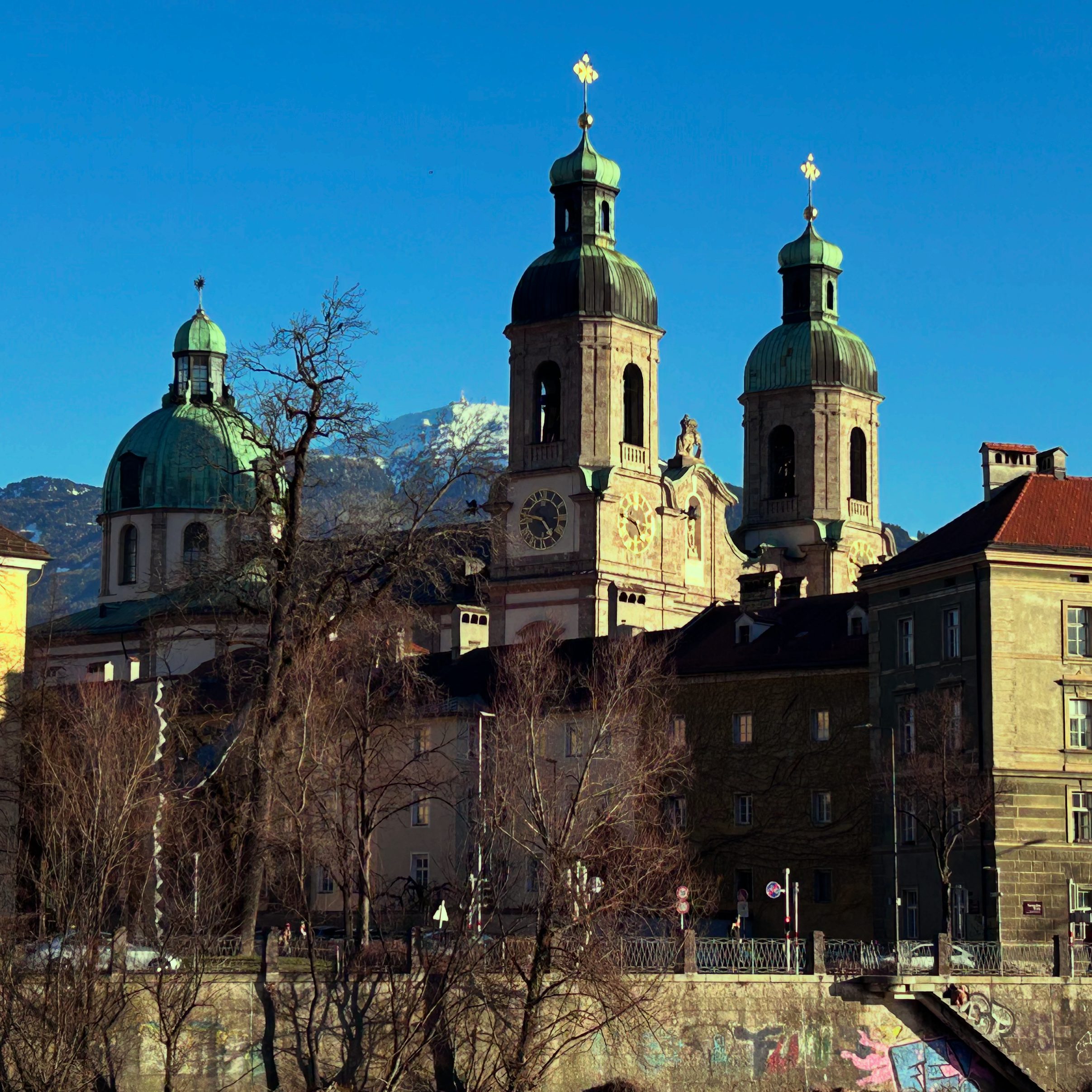
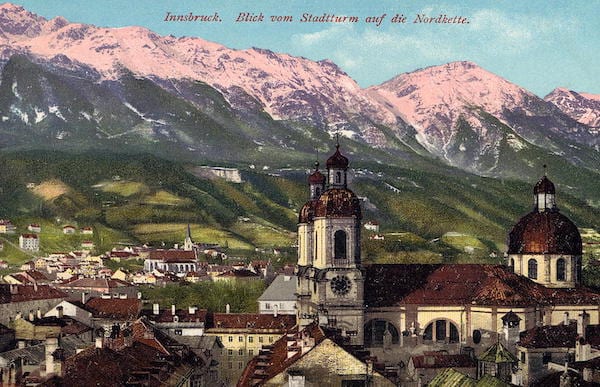
The history of the church from which today’s cathedral in the Old Town emerged is older than that of the city itself. When Count Berchtold V acquired the land south of the Inn from the Wilten Abbey in 1180—land on which Innsbruck would later be built—the exchange contract already mentioned a market church. At that time, Innsbruck was not yet an independent parish but merely a branch of Wilten Abbey. There was no talk of a bishop’s seat then. Nevertheless, the church was the center of the developing town, which at that time had neither the Golden Roof nor the Imperial Palace. A cemetery surrounded the church; the last graves were only removed in 1905 with the construction of the sewer system. It was only with the construction of the city tower, the town hall, the Neuhof, and other buildings on the Upper and Lower Town Squares in the late Middle Ages that things changed. In Albrecht Dürer’s famous watercolor, painted during his journey through Innsbruck in 1495, the parish church of St. James appears merely as one of many towers in the cityscape.
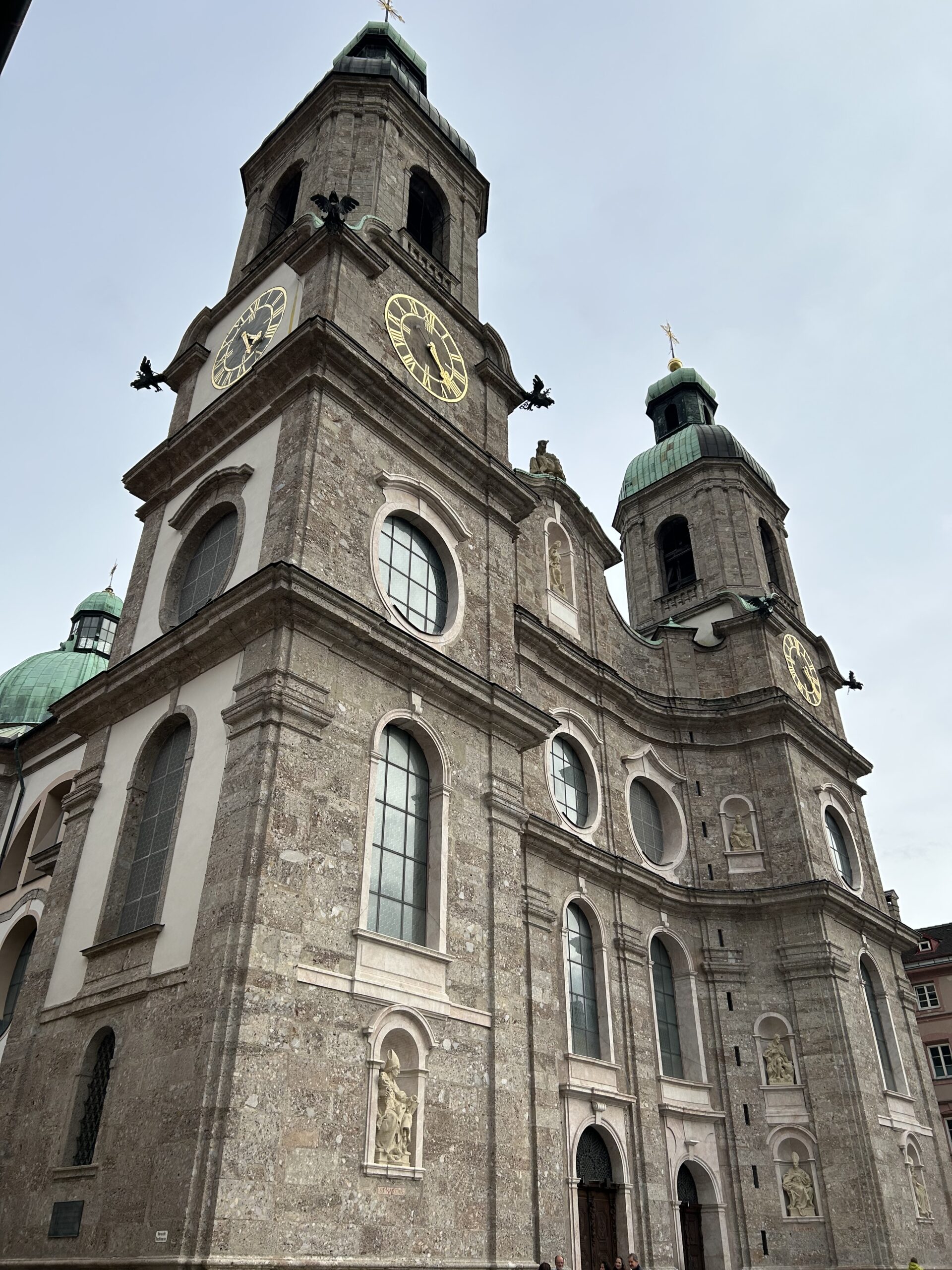
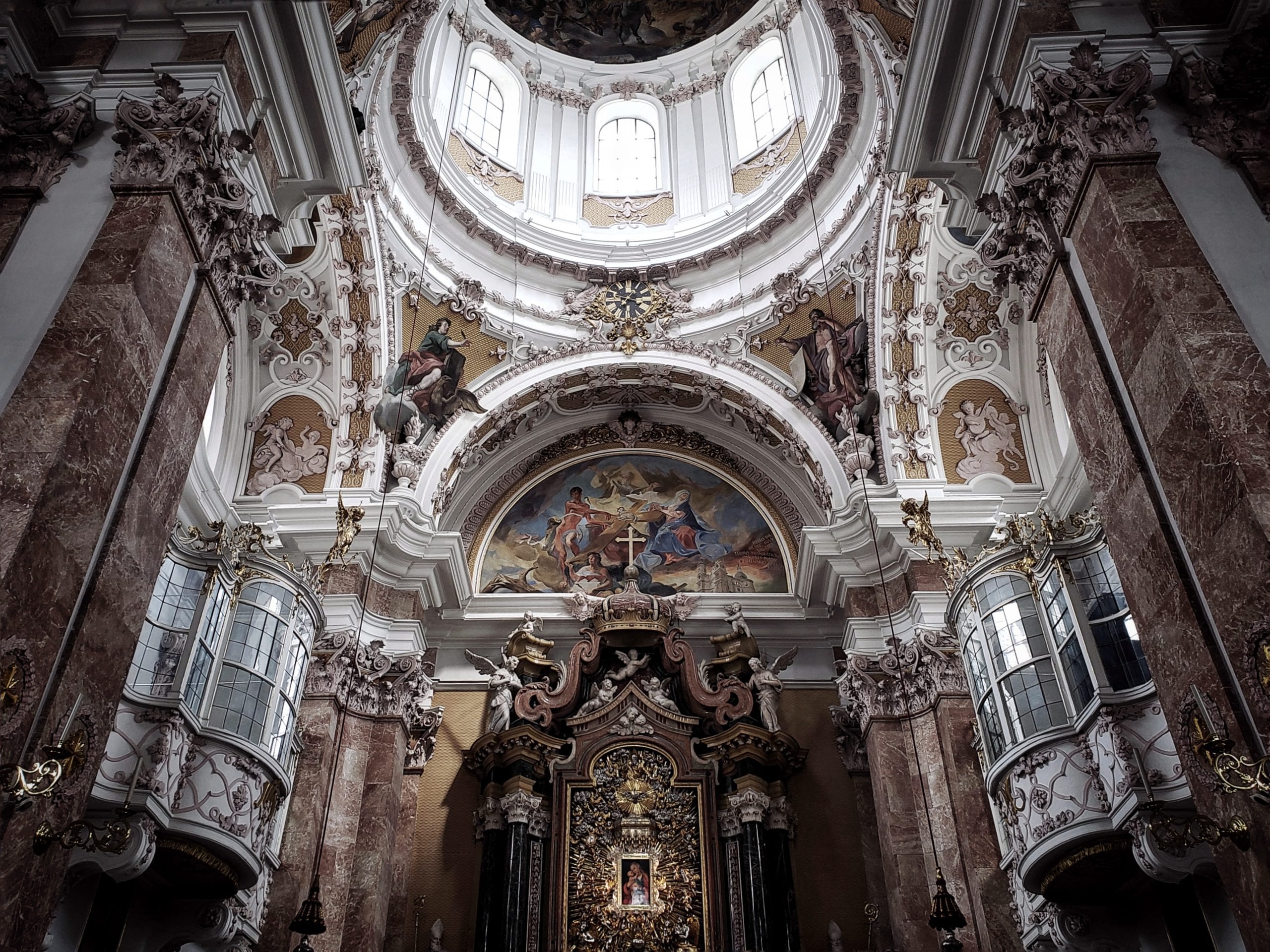
The fate of St. James was far from fortunate. The church burned down several times. The earthquake of 1689, which damaged almost all Innsbruck houses, did not spare the cathedral either. In 1724, after a complete redesign in the contemporary Baroque style, the church was consecrated. It was not fitting for a city like Innsbruck to have a half-finished ruin as its showpiece within the city walls. To finance the construction, a special tax on tobacco was introduced, and additional duties were levied. The former Lion House of Ferdinand II on the Inn, which had burned down in 1636, was rebuilt as a brewery and tavern to bring extra coins into the budget through Innsbruck’s thirst for beer. After the unexpected death of Johann Jakob Herkomer, originally intended as the construction manager, Johann Georg Fischer took over the project. A beautiful legend surrounds the large ceiling fresco by Cosmas Damian Asam (1686–1739). When the painter fell from the scaffolding during work, Saint John is said to have stretched out his hand to save the maestro from certain death. After World War I, the newly drawn border at the Brenner made it difficult to administer North and South Tyrol under one diocese. North Tyrol and Vorarlberg needed their own administration. Finally, in 1964, the former small branch of Wilten Abbey became the Cathedral of Innsbruck.
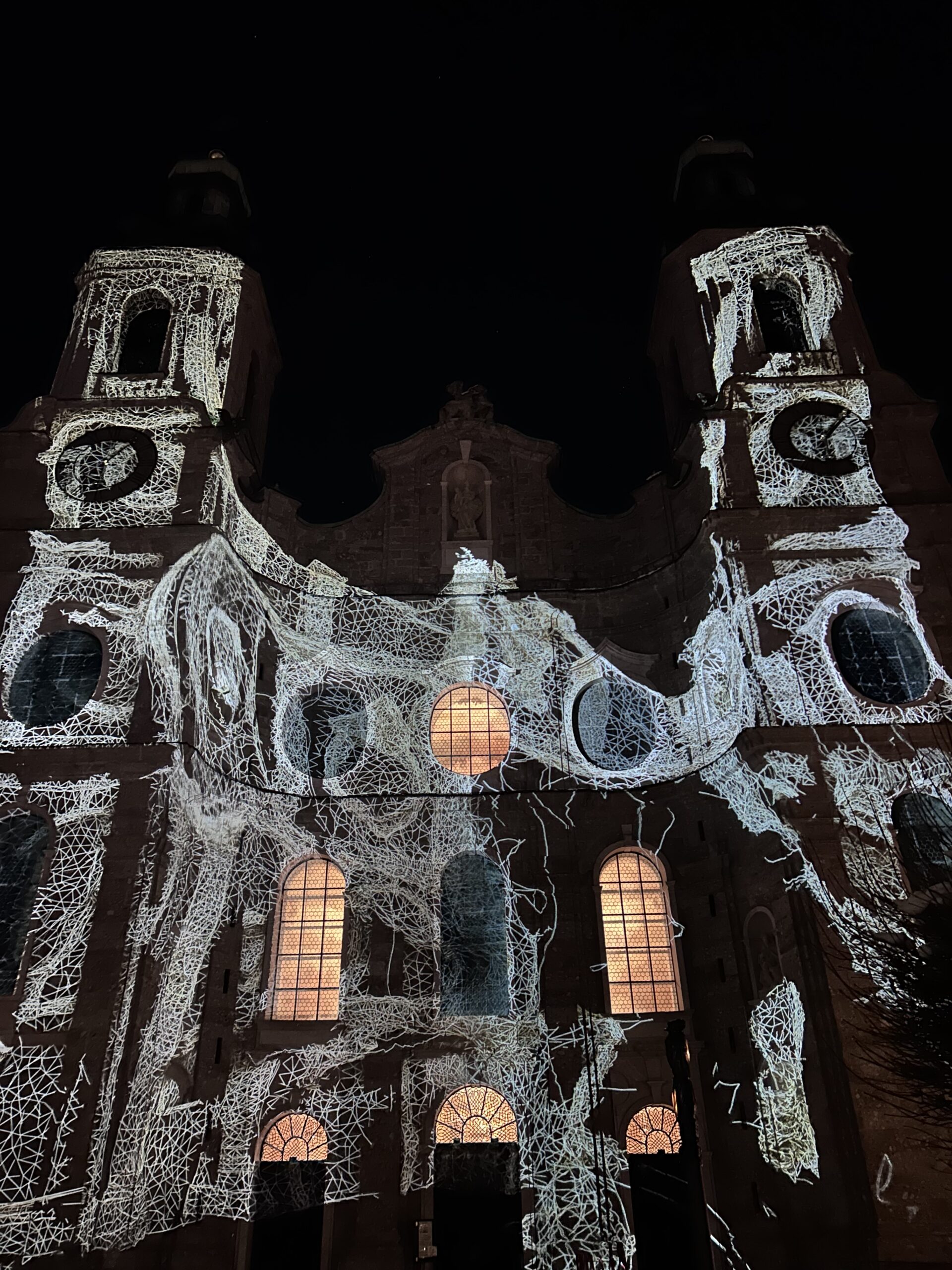
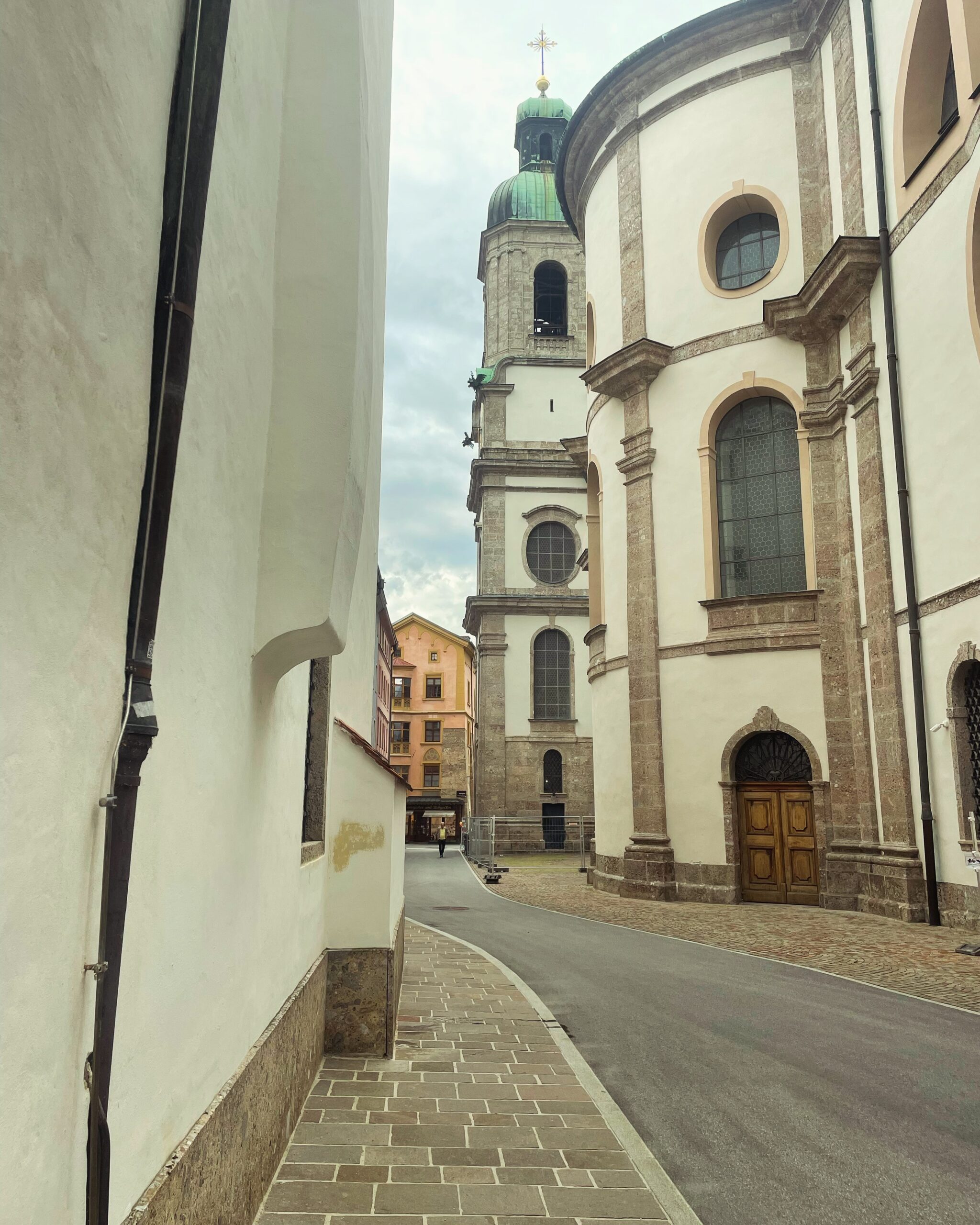
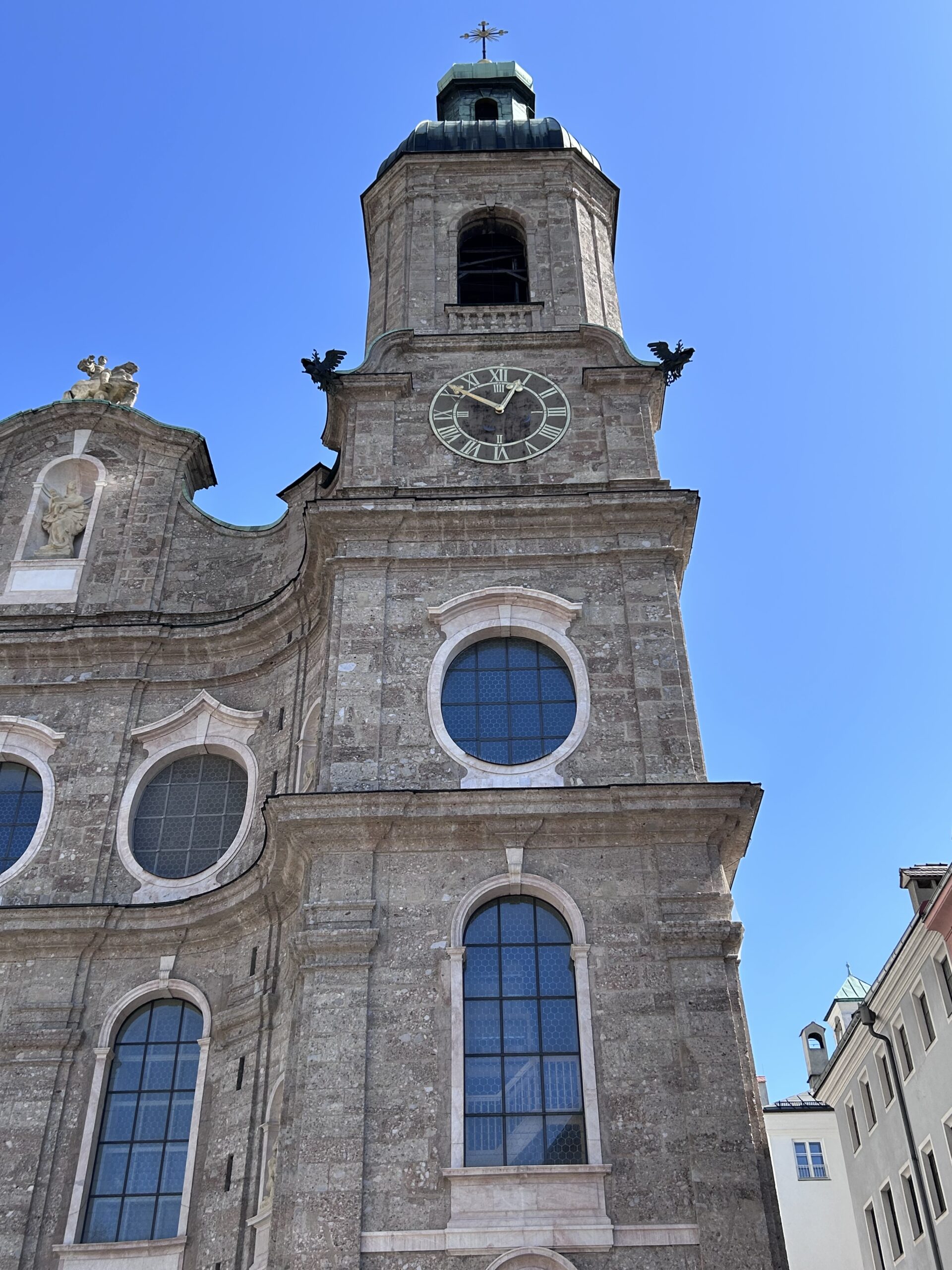
In 1944, like so many other churches, the cathedral was damaged in an air raid. The interior and exterior were quickly renovated in the first post-war years to restore the proper representation of the clerical administrative center of western Austria as soon as possible. The sturdy church towers rise high into the sky, adorned with imposing gargoyles. A rider sits atop the gable above the entrance. The front façade is decorated with statues of various saints, including Saint Notburga, one of Innsbruck’s patron saints, and Saint Romedius, who is said to have ridden from Tyrol to Rome on a bear. Veneration of saints reached its peak in the 17th and 18th centuries. Baroque culture understood the importance of inspiring people for the Roman Church with good stories, the integration of popular legends, and impressive sound. The many bells of St. James remain a spectacle even today. The Marian bell, cast at the traditional Grassmayr foundry in Innsbruck, weighs over seven tons. On special occasions, the cathedral’s bells ring under the expert execution of a dedicated bell ringer. The interior of the cathedral is crowned by a dome above the famous devotional image Mariahilf by Lucas Cranach the Elder (1472–1553). This masterpiece of the Innsbruck Cathedral came as a souvenir under the art-loving provincial prince Leopold V. Since 1650, it has hung on the high altar of the cathedral, with only a brief interruption during wartime. During World War II, the image of the Virgin was taken to the nearby Ötztal to protect it from bombings. Anyone walking attentively through the city will find the Virgin in many house façades or fountains. Even outside Innsbruck, the image is widespread in North and South Tyrol. Alongside the devotional image, a second monument survived the transformation from the old to the new church and was relocated: the tomb of Maximilian III of Austria occupies a significant part of the nave. The kneeling provincial prince of Tyrol is flanked by Saint George, the patron of the Teutonic Order. Archduke Eugen, who served as the supreme military commander of Tyrol in the Austro-Hungarian army during World War I and was also a member of the Teutonic Order, is buried here as well.
Today, the cathedral square is a popular meeting place in the Old Town, just a few steps from the Golden Roof yet slightly away from the tourist crowds. Thanks to several cafés and student apartments in the picturesque houses around the fountain, young people have rediscovered the square in front of the church and brought it back to life.
Baroque: art movement and art of living
Anyone traveling through Austria is familiar with the domes and onion-shaped towers of churches in towns and villages. They are the characteristic hallmark of the Baroque architectural style, which reached its peak during the Counter-Reformation and continues to shape the cityscape of Innsbruck to this day. The most prominent churches—such as the Cathedral, St. John’s Church, or the Jesuit Church—are built in the Baroque style. Places of worship were meant to be splendid and magnificent, symbols of the triumph of the true faith. The exuberant, all-encompassing piety of elites and subjects alike was reflected in art and culture: great drama, pathos, suffering, splendor, and glory combined to form the Baroque—a style that left a lasting imprint on the entire Catholic sphere of influence of the Habsburgs and their allies between Spain and Hungary. From the seventeenth century onward, the Gumpp family of master builders and Johann Georg Fischer fundamentally transformed Innsbruck’s cityscape. The Old Provincial Government Building in the Old Town, the New Provincial Government Building on Maria-Theresien-Strasse, countless palazzi, paintings, and sculptures—the Baroque was the defining stylistic force of the House of Habsburg in the seventeenth and eighteenth centuries and became embedded in everyday life. The bourgeoisie did not wish to lag behind the nobility and princes and therefore had their private residences built in the Baroque style as well. Farmhouses were adorned with images of saints, depictions of the Virgin Mary, and representations of the Sacred Heart of Jesus.
Yet the Baroque was more than an architectural style; it was a way of life that emerged in the aftermath of the Thirty Years’ War. The Ottoman threat from the east, culminating in the two sieges of Vienna, dominated the empire’s foreign policy, while the Reformation shaped domestic affairs. Baroque culture became a central element of Catholicism and its political self-representation in public space—a countermodel to the austere and rigorous way of life advocated by Calvin and Luther. Christian holidays were introduced to brighten everyday life. Architecture, music, and painting were rich, full, and exuberant. In theatres such as the Comedihaus in Innsbruck, dramas with religious themes were performed. Ways of the Cross with chapels and representations of the crucified Christ crisscrossed the landscape. Popular piety, expressed through pilgrimages and the veneration of Mary and the saints, became firmly embedded in everyday church life. Multiple crises shaped daily existence. In addition to war and famine, plague epidemics occurred particularly frequently in the seventeenth century. Baroque piety was used as a means of educating subjects, teaching them to interpret these calamities as expressions of God’s dissatisfaction—misfortunes that could be remedied through a devout and virtuous way of life. Although the sale of indulgences was no longer common practice in the Catholic Church after the sixteenth century, vivid notions of heaven and hell persisted. Through a virtuous life—that is, living in accordance with Catholic values and displaying proper conduct as a subject within the divine order—one could come significantly closer to paradise. So-called Christian devotional literature became the most popular reading material following the educational reforms of the eighteenth century and the rising literacy of the population. The suffering of the Crucified for humanity was regarded as a symbol of the hardship endured by subjects on earth within the feudal system. Through votive paintings, people sought assistance in times of hardship or expressed gratitude—most often to the Virgin Mary—for surviving dangers and illnesses. Particularly impressive votive paintings can be admired in the Wilten Basilica. The historian Ernst Hanisch described the Baroque and its influence on the Austrian way of life as follows:
“Austria emerged in its modern form as a crusading imperialism—externally against the Turks and internally against the Reformers. This brought bureaucracy and the military, and externally a multiethnic society. State and Church attempted to control the intimate sphere of citizens’ lives. Everyone had to reform themselves through the confessional; sexuality was restricted, norm-compliant sexuality enforced. People were systematically trained to dissemble.”
Rituals and submissive behavior toward authority left deep traces in everyday culture, distinguishing Catholic countries such as Austria and Italy to this day from Protestant-influenced regions such as Germany, England, or Scandinavia. Austrians’ passion for academic titles has its roots in Baroque hierarchies. The term Baroque prince refers to a particularly patriarchal and patronizing politician who knows how to captivate an audience with grand gestures. While political sobriety is valued in Germany, the style of Austrian politicians remains theatrical—entirely in keeping with the Austrian adage “Schaumamal” (“let’s see”).
Maria help Innsbruck!
Veneration of saints and popular piety have always walked a narrow line between faith, superstition, and magic. In the Alpine regions, where people were exposed to a largely inexplicable natural environment to a greater extent than in many other areas, these forms of belief developed remarkable and locally distinctive expressions. Saints were invoked for help with a wide range of everyday concerns. Saint Anne was asked to protect the house and hearth, while prayers for a good harvest were addressed to Saint Notburga of Rattenberg, who was particularly popular in Tyrol. As the use of fertilizer and agricultural machinery increased, she later became the patron saint of women wearing traditional costume. Miners entrusted their fate in their dangerous underground work to Saint Barbara and Saint Bernard. The chapel near the manor houses in the Hall Valley (Halltal) close to Innsbruck offers a fascinating insight into a spiritual world that oscillates between the legendary figure of the Bettelwurf spirit and the worship of various local patron saints. The saint who continues to eclipse all others in veneration, however, is Mary. From the blessing of herbs on the Feast of the Assumption to the clockwise-flowing water at the monastery and pilgrimage site of Maria Waldrast at the foot of Mount Serles, and from votive paintings in churches and chapels, she is a constant and beloved presence in popular devotion. Anyone strolling attentively through Innsbruck will repeatedly encounter a particular image on building façades: the Mariahilf devotional image by Lucas Cranach the Elder (c. 1472–1553). Cranach’s Madonna is one of the most popular and frequently copied Marian images in the Alpine region. It represents a reinterpretation of the classical iconography of the Mother of God. Similar to Leonardo da Vinci’s Mona Lisa, which was created around the same time, Mary smiles enigmatically at the viewer. Cranach dispensed with all traditional forms of sacralization such as the crescent moon or halo and portrayed her in contemporary everyday clothing. The reddish-blond hair of both mother and child relocates them from Palestine to Europe. The holy and virginal Mary thus became an ordinary woman with her child, belonging to the upper middle class of the sixteenth century.
The origin, journey, and veneration of the Mariahilf devotional image encapsulate, on a small scale, the history of the Reformation, the Counter-Reformation, and popular piety in the German territories. The odyssey of this modestly sized painting (measuring just 78 × 47 cm) began in what is today Thuringia, at the princely court of the land, one of the cultural centers of Europe at the time. Elector Frederick III of Saxony (1463–1525) was a deeply devout man and possessed one of the most extensive collections of relics of his era. Despite his profound rootedness in popular belief in relics and his strong devotion to Mary, in 1518 he supported Martin Luther not only for religious reasons but also for reasons of power politics. The safe conduct granted by this powerful territorial prince and Luther’s accommodation at Wartburg Castle enabled the reformer to work on the German translation of the Holy Scriptures and on his vision of a new, reformed Church. As was customary at the time, Frederick also maintained an “art director” in his entourage: Lucas Cranach, who had served as court painter in Wittenberg since 1515. Like many artists of his time, Cranach was not only extraordinarily productive but also highly business‑minded. In addition to his artistic work, he ran both a pharmacy and a wine tavern in Wittenberg. Thanks to his wealth and social standing, he served as mayor of the town from 1528 onward. Cranach was renowned for painting quickly and in large quantities. He recognized art as a medium for capturing and disseminating both time and zeitgeist. Much like Albrecht Dürer, he produced widely circulated works of great popular appeal. His portraits of the contemporary elite continue to shape our image of early modern celebrities such as his patron Frederick, Emperor Maximilian I, Martin Luther, and his fellow artist Dürer.
At the latest through his acquaintance with the church critics Philipp Melanchthon and Martin Luther at Wittenberg Castle, Cranach became a follower of the new reformed Christianity, which at that time still lacked an official institutional form. The ambiguities in religious beliefs and practices during the period before the formal split of the Church are reflected in Cranach’s works. Despite Luther’s and Melanchthon’s rejection of the veneration of saints, Marian devotion, and iconographic imagery in churches, Cranach continued to paint according to the tastes of his patrons. Just as fluid as the confessional boundaries of the sixteenth century is the date of origin of the Mariahilf image. Cranach created it sometime between 1510 and 1537, either for the private household altar of Frederick’s sister‑in‑law, Duchess Barbara of Saxony, or for the Church of the Holy Cross in Dresden. Art historians remain divided on the issue to this day. Cranach’s close friendship with Martin Luther suggests that he may have painted the work after his conversion to Lutheranism, and that this secularized depiction of a mother and child reflects a new religious worldview. Nevertheless, it is equally plausible that the pragmatic artist produced the painting earlier, in accordance with the wishes of the patron and the fashion of the time, entirely without ideological intent and before Luther’s arrival in Wittenberg.
After Frederick’s death, Cranach entered the service of his successor, John Frederick I of Saxony. When his patron was taken captive by the Emperor following the Battle of Mühlberg in 1547, Cranach, despite his advanced age, followed him into captivity as far as Augsburg and Innsbruck. After five years in the retinue of this comparatively luxuriously housed hostage, Cranach returned to Wittenberg, where he died at what was, by contemporary standards, a biblical age. The Mariahilf image was probably transferred to the art chamber of the Saxon ruler during the turbulent years of the confessional wars, likely to protect it from destruction during iconoclastic outbreaks. Almost sixty-five years later, the painting, like its creator before it, would make its way to Innsbruck along circuitous paths. When the art‑loving Bishop of Passau from the House of Habsburg visited the Dresden court in 1611, he selected Cranach’s Mariahilf image as a diplomatic gift and brought it to his princely episcopal residence on the Danube. There, the cathedral dean saw the painting and was so taken with it that he commissioned a copy for his household altar. A pilgrimage cult quickly developed around the image. When, seven years later, the Bishop of Passau became Archduke Leopold V of Austria and sovereign of Tyrol, the increasingly popular painting moved with him to the Innsbruck court. His Tuscan wife, Claudia de’ Medici, diligently sustained Marian devotion in the Italian tradition even after his death. Both the Servite church and the Capuchin monastery received altars and images of the Holy Mother of God. Nonetheless, nothing surpassed the popularity of Cranach’s Mariahilf image. During the Thirty Years’ War, the painting was frequently removed from the court chapel and publicly displayed in order to protect the city. At these mass prayers, the desperate population of Innsbruck loudly implored the small image with the cry “Maria, help!”, a formula that had entered popular devotion through the Jesuits. In 1647, at a moment of greatest peril, the Tyrolean Estates vowed to build a church around the image should Mary’s protection spare the land from devastation by Bavarian and Swedish troops. That a reformed depiction of the Virgin Mary, painted by a friend of Martin Luther, was invoked to protect the city from Protestant forces is not without a certain irony.
Although the Church of Mariahilf was indeed built, the original painting was installed in 1650 in the parish church of St. James (St. Jakob) within the secure city walls, while the new church received a copy created by Michael Waldmann. This was not to be the last of its kind. Cranach’s motif and representation of the Mother of God enjoyed extraordinary popularity and can still be found today not only in churches, but also on countless private houses. Through these reproductions, art became a mass phenomenon. The Marian image had migrated from the private possession of a Saxon prince into public space. Centuries before Andy Warhol and Roy Lichtenstein, Cranach and Dürer had become intensely copied artists, and their works became part of everyday life and the visual fabric of the city. While the original Mariahilf image may hang in St. James’s Cathedral, it is the copy—and the parish that grew up around it—that gave an entire district its name.
Glaube, Kirche und Obrigkeit
The abundance of churches, chapels, crucifixes, statues, and paintings in public spaces strikes many visitors to Innsbruck from other countries as unusual. Not only places of worship, but also many private houses are decorated with depictions of Jesus, Mary, saints, and biblical scenes. For centuries, the Christian faith and its institutions shaped everyday life throughout Europe, and Innsbruck—as a residence city of the strictly Catholic Habsburgs and the capital of the self-proclaimed Holy Land of Tyrol—was particularly richly endowed with ecclesiastical buildings. In terms of number and scale relative to the conditions of earlier times, churches appear as gigantic features in the cityscape. In the 16th century, Innsbruck, with its approximately 5,000 inhabitants, possessed several churches whose splendor and size surpassed every other building, including the palaces of the aristocracy. Wilten Abbey was a vast complex in the midst of a small farming village that had developed around it.
The spatial dimensions of these places of worship reflect their importance within the political and social structure. For many inhabitants of Innsbruck, the Church was not only a moral authority but also a secular landowner. The Bishop of Brixen was formally equal in rank to the territorial prince. Peasants worked on the bishop’s estates just as they did on those of a secular ruler. The clergy exercised both taxation and judicial authority over their subjects, and ecclesiastical landowners were often regarded as particularly demanding. At the same time, it was also the clergy in Innsbruck who were largely responsible for social welfare, healthcare, care for the poor and orphans, food distribution, and education. The Church’s influence extended into the material world in a way comparable to how the modern state operates today through tax offices, police, schools, and employment services. What democracy, parliament, and the market economy represent for us today, bishops, the Bible, Christian devotional literature, and parish priests represented for people of earlier centuries: a reality that maintained order.
It would be incorrect to believe that all clergymen were cynical power-hungry figures who exploited their uneducated subjects. The majority of both clergy and nobility were devout and God-fearing, albeit in a manner that is difficult to comprehend from today’s perspective. It was not the case that every superstition was blindly accepted or that people were arbitrarily executed based on anonymous accusations. In the early modern period, violations of religion and morals were tried before secular courts and punished severely. Charges were brought under the term heresy, which encompassed a wide range of offenses. Sodomy—meaning any sexual act not serving reproduction—sorcery, witchcraft, and blasphemy, in short any deviation from the correct faith, could be punished by burning. The act of burning was intended both to purify the condemned and to destroy them and their sinful behavior completely, thereby removing evil from the community. For a long time, the Church regulated everyday social life down to the smallest details. Church bells structured people’s daily schedules. Their sound called people to work or worship, or informed the community of a death through tolling. People were able to distinguish individual bell signals and their meanings. Sundays and holidays structured time. Fasting days regulated diet. Family life, sexuality, and individual behavior were expected to conform to Church-prescribed morality. For many people, salvation in the afterlife was more important than happiness on earth, which was seen as predetermined by the course of time and divine will. Purgatory, the Last Judgment, and the torments of hell were real and served to frighten and discipline even adults.
While parts of Innsbruck’s bourgeoisie were at least gently awakened by the ideas of the Enlightenment after the Napoleonic Wars, the majority of the population remained deeply attached to a blend of conservative Catholicism and superstitious folk piety. Religiosity was not necessarily a question of background and social status, as the social, media, and political debates along the fault line between liberals and conservatives repeatedly demonstrated. Although the freedom of religious practice had been legally enshrined since the December Constitution (Dezemberverfassung) of 1867, state and religion remained closely intertwined. Thanks to the 1855 concordat between the Pope and the Emperor, marriage law and the school system were under the control of the Catholic Church. It was only under pressure from liberals in parliament that these bastions of everyday social life began to crumble, yet particularly in Tyrol, the pastor's word remained sacrosanct. In the First Republic, a conservative backlash occurred. Ignaz Seipel, a Christian Social politician who went down in history as the Iron Prelate (Eiserner Prälat), rose to the highest office of the state in the 1920s. Federal Chancellor Engelbert Dollfuß saw his Corporate State (Ständestaat)—a construct built on a Catholic foundation—as a bulwark against socialism. In 1933, the concordat with the Vatican was renewed. Even after World War II, church and politics in Tyrol formed a powerful double act in the persons of Bishop Rusch and Governor Wallnöfer. In 1957, the government of the Second Republic reconfirmed the agreement, which formally remains valid to this day. A genuine separation of church and state did not begin until the 1970s. Although people leaving the church in recent decades have dented official membership figures and recreational events draw larger crowds than Sunday masses, faith and the church still hold a fixed place in the daily lives of Innsbruck’s residents, even if often unnoticed. The Roman Catholic Church still owns a vast amount of land in and around Innsbruck, even beyond the walls of its monasteries and educational institutions. A number of schools in and around Innsbruck also remain under the influence of conservative forces and the church. And whoever enjoys a public holiday, cracks Easter eggs against one another, or lights a candle on a Christmas tree does not have to be a Christian to act in the name of Jesus—disguised as tradition.
The Teutonic Order & Maximilian III.
Maximilian the German master (1558 - 1618) officially took up his post as Gubernator of Tyrol and Vorderösterreich in 1602. Unlike his predecessors, he was the administrator of the land and not its owner. This was reflected in his demeanour. He was a pious and deeply religious man who had to reconcile Christian charity with the political office of regent in a peculiar way. He regularly withdrew for long periods into the seclusion of his study in the Capuchin monastery, founded in 1594, in order to live there in the most modest and austere conditions. He did not organise any lavish parties. He cut Ferdinand's bloated court almost in half. Under Maximilian, strict customs were introduced in Innsbruck. According to legend, children were forbidden to play in the streets. As a fervent representative of the Counter-Reformation, the enforcement of the Catholic faith was of particular concern to him. Unlike his predecessors, he wanted to achieve this through moral rigour rather than ostentatious building projects. He limited himself to completing churches that had already been started, such as the Servite Church or the Jesuit Church, instead of burdening the Tyrolean treasury with new projects. The Innsbruck district of St Nicholas was given its own parish priest, who watched over the salvation of the less well-off but all the more hard-working subjects. Maximilian did not organise lavish concerts in theatres, but together with the widow of his predecessor, Anna Katharina Gonzaga, promoted church singing. Nativity scenes and Easter graves began to establish themselves as an expression of popular faith. Whether it was his example as a pious sovereign, his moderate and prudent religious policy or counter-reformatory suppression, Protestant ideas died a quiet death in the Holy Land of Tyrol under Maximilian's reign, while they continued to simmer in many German principalities.
However, his piety did not exclude scientific interest and the practical measures derived from it for the good of the city. The 17th century was a time when open-minded aristocrats turned to alchemists to replenish the state coffers and had horoscopes cast by scientists such as Johannes Keppler, while they violently campaigned against the "heresy" of the Protestants. The Jesuit, physicist and astronomer Christoph Scheiner, one of the discoverers of sunspots alongside Galileo Galilei, spent three years at Maximilian's court in Innsbruck and researched the function of the human eye at the Inn. Maximilian had him set up a telescope and carried out astronomical research together with Scheiner. Educational institutions also benefited from him. During his reign, the Jesuits expanded their educational mission to include the study of theology and dialectics, which was the first step towards a university.
However, the beginning of the Enlightenment was not just a matter for the princely study room, but was also reflected in the everyday life of the citizens of Innsbruck. The city's fire-fighting system and the hygiene of the Ritschenwhich served as a sewerage system and water source within the city walls, were improved under Maximilian according to the latest knowledge of the time. The second measure in particular was intended to protect the city from a repeat of the great catastrophe under Maximilian's aegis. During his reign, he had to deal with the outbreak of a plague epidemic. The Dreiheiligenkirche church in Kohlstatt, the working-class neighbourhood of the early modern period near the Zeughaus, was built under his patronage to ensure heavenly patronage as well as protection through better hygiene.
The year of Maximilian's death in 1618 marked the beginning of the Thirty Years' War in Europe. As boring as his pious and peaceful reign without ostentation and drama may seem today, the years of peace were probably a blessing for his contemporaries. The moralising Habsburg took the thankless middle seat between the eccentrics Ferdinand II and Leopold V and could hardly leave his mark on the city's memory. Alongside the Dreiheiligenkirche, his final resting place is his most conspicuous legacy. Maximilian's tomb in Innsbruck Cathedral is one of the most remarkable tombs of the Baroque period.
It also tells the interesting story of the Teutonic Order. Maximilian was not only Gubernator of Tyrol and Vorderösterreich, but also Archduke of Austria, Administrator of Prussia and Grand Master of the Teutonic Order. Another Grand Master of the Teutonic Order from the House of Habsburg with a connection to Innsbruck is also buried next to him. Archduke Eugene was the supreme commander of the Austro-Hungarian army on the Italian front during the First World War. The German Orders vividly illustrates the theological mindset and the connection between pious faith and secular power in the early modern period. In the period up to 1500, devout piety and the fear of God were often combined with the exercise of secular power. The order was founded as an order of knights in Jerusalem around 1120 as part of the Crusades. Church and chivalry united to enable pilgrims to visit the holy cities, especially the Church of the Holy Sepulchre, without danger. After the expulsion from Palestine, the knights of the Teutonic Order became involved on the side of Christian Magyars in Transylvania in what is now Romania against pagan tribes. In the 13th century, the Order under Hermann von Salza was able to gain a lot of land in the Baltic region in the fight against the pagan Prussians and conquer the Teutonic Order state establish. This brotherhood acted as a kind of state that, like religious fundamentalists today, invoked God and wanted to establish his order on earth. It was ideals such as Christian charity and the protection of the poor and helpless that also characterised the Teutonic Order at its core. This made it an ideal fit for the Habsburg dynasty. After the decline of the Order in north-east Europe in the 15th century, the Order retained its possessions and power through skilful liaison with the nobility and the military, particularly in the Habsburg Empire.
The Red Bishop and Innsbruck's moral decay
In the 1950s, Innsbruck began to recover from the crisis and war years of the first half of the 20th century. On May 15, 1955, Chancellor Leopold Figl officially declared a political turning point with his famous words, "*Austria is free*," and the signing of the Austrian State Treaty. During the years that went down in history as the *Wirtschaftswunder* (economic miracle), moderate prosperity established itself in many households. Between 1953 and 1962, an annual economic growth rate of over 6% allowed an increasing portion of the population to dream of exotic luxuries like refrigerators, a private bathroom, or even a vacation in the South. This era brought not only material but also social change. People's desires became more elaborate with rising prosperity and the lifestyle promoted in advertising and media. The phenomenon of a new youth culture began to take root amidst the somber postwar society of small-town Austria. Previously unknown terms like *teenager* and *latchkey kid* (*Schlüsselkind*) entered everyday vocabulary in the 1950s. In 1956, the magazine *BRAVO* launched. For the first time, a media outlet catered directly to the interests of young people. Marilyn Monroe was featured on the first cover, under the headline: "*Did Marilyn's curves get married too?*" The biggest stars of those early years were James Dean and Peter Kraus, before the Beatles took over in the 1960s. After the *Summer of Love*, the advice column "Dr. Sommer" began educating youth on love and sex. The church's all-powerful authority over the moral conduct of adolescents began to crumble, albeit slowly—the first photo love story featuring nudity did not follow until 1982. Up until the 1970s, opportunities for young people in Innsbruck were largely limited to traditional inns (*Wirtshausstuben*), the marksmanship club (*Schützenverein*), and brass bands (*Blasmusik*). Only gradually did bars, discos, nightclubs, pubs, and event venues begin to open. Events like the *5 Uhr Tanztee* (5 o'clock tea dance) at the Sporthotel Igls attracted young singles looking to socialize. *Café Central* became the "second home of long-haired youths," as the *Tiroler Tageszeitung* horrifiedly observed in 1972. Establishments such as the *Falknerkeller* on Gilmstraße, the *Uptown Jazzsalon* in Hötting, the Jazzclub in Hofgasse, the *Clima Club* in Saggen, the *Scotch Club* on Angerzellgasse, and the *Tangente* on Bruneckerstraße had nothing in common with the traditional tavern. The performances by The Rolling Stones and Deep Purple at the Olympiahalle in 1973 marked the temporary peak of Innsbruck's cultural awakening. While this did not turn Innsbruck into London or San Francisco, locals had at least caught a breath of rock 'n' roll. By contrast, what remains anchored in cultural memory as the 1968 revolution barely took place in the "*Heiliges Land*" (Holy Land of Tyrol). Neither workers nor students took to the barricades in large numbers. Though a few radical student groups eventually emerged to protest social injustice, the Vietnam War, and traditional gender roles, there was no comparison to the unrest seen in Prague, Paris, or the distant USA. The historian Fritz Keller famously described Austria's '68 movement as a mere "*Mailüfterl*" (gentle May breeze). Nevertheless, society was undergoing a quiet transformation. A look at the annual music charts offers a clue: While the top 10 in 1964 was still dominated by *Kaplan Alfred Flury* and *Freddy* with "Lass die kleinen Dinge" and "Gib mir dein Wort," alongside the Beatles with their German version of "Komm, gib mir deine Hand," musical tastes were shifting. Although Peter Alexander and Mireille Mathieu could still be found on the charts, from 1967 onward, international acts with foreign-language tracks—such as *The Rolling Stones, Tom Jones, The Monkees, Scott McKenzie, Adriano Celentano*, and *Simon & Garfunkel*—dominated the top spots with increasingly socially critical lyrics.
This change sparked a backlash. The spearhead of the conservative counter-revolution was the Bishop of Innsbruck, Paulus Rusch. Cigarettes, alcohol, overly revealing fashion, trips abroad, working women, nightclubs, premarital sex, the 40-hour workweek, Sunday sports events, dance nights, mixed-gender education and leisure—all of this was deeply abhorrent to the strict clergyman and devoted follower of the Sacred Heart of Jesus cult. Peter Paul Rusch was born in Munich in 1903 and grew up in Vorarlberg as the youngest of three children in an upper-middle-class household. Both of his parents and his older sister died of tuberculosis before he reached adulthood. Forced to fend for himself at the young age of 17 during the lean post-war years, inflation wiped out his father's inheritance—which was meant to finance his university studies—in no time. Rusch worked for six years at the Bank für Tirol und Vorarlberg to fund his theology degree. In 1927, he entered the Collegium Canisianum, and six years later, he was ordained as a priest of the Jesuit order. His meteoric career led the intelligent young man to serve as a chaplain in Lech am Arlberg and Hohenems. He then returned to Innsbruck as head of the partial seminary. In 1938, he became Titular Bishop of Lycopolis and Apostolic Administrator for Tyrol and Vorarlberg—two imaginative titles intended to replace the authority of the bishop in North Tyrol. As the youngest de facto bishop in Europe, he had to endure the harrassment of the National Socialist rulers against the Church. Although his critical stance on National Socialism was well known, Rusch himself was never imprisoned; the authorities feared turning the popular young bishop into a martyr. After the war, the socially and politically active bishop was at the forefront of the reconstruction effort. With hands-on dedication, he sought to strengthen the influence of the Church. His father had worked his way up from carpenter to architect, passing down a passion for construction. Added to this was Rusch's own experience in banking: thanks to his background in the private sector, he recognized the opportunities for the Church to step in and distinguish itself as a helper in times of need. Under Rusch's leadership, the Katholische Jugend (Catholic Youth) volunteered without pay to construct the Heiligjahrsiedlung (Holy Year Settlement) in Höttinger Au. The diocese purchased the plot of land from the Ursuline Order, and interest-free loans were advanced to the settlers by the Church. His pragmatic, hands-on approach to the housing shortage earned him the nickname the "Red Bishop." In these modest houses with self-sufficiency gardens—built according to the vision of the dogmatic and frugal "worker's bishop"—41 families, with preference given to those with many children, found a new home. Alleviating the housing shortage was meant to keep the greatest threats of the Cold War away from his congregation. Both the state-mandated atheism of communism and the consumer-driven capitalism spilling over from the US into Western Europe were anathema to him. In 1953, Rusch published his book "Junger Arbeiter, wohin?" ("Young Worker, Whither Bound?"). What sounded like revolutionary, left-wing literature was actually an exposition of Christian Social Teaching, which condemned both capitalism and socialism. Families were expected to live modestly, managing in Christian harmony on the moderate income of a single breadwinning father. Employers, employees, and laborers were to form a peaceful unit—cooperation instead of class struggle, laying the groundwork for today's social partnership. Everyone had their place in a Christian sense: a sort of modern feudal system, which had already been envisioned for implementation under Dollfuss's Austrofascist Corporate State (Ständestaat). He shared his political views with State Governor Eduard Wallnöfer and Mayor Alois Lugger, who together with the bishop formed the "Holy Trinity" of conservative Tyrol during the economic miracle era. To this, Rusch added a latent Catholic antisemitism that remained widespread in Tyrol even after 1945, enduring as a supposed tradition through aberrations like the veneration of Anderle von Rinn.
Besondere Anliegen waren dem streitbaren Jesuiten Erziehung und Bildung. Die gesellschaftliche Formung quer durch alle Klassen durch die Soldaten Christi konnte in Innsbruck auf eine lange Tradition zurückblicken. Der Jesuitenpater und vormalige Gefängnisseelsorger Alois Mathiowitz (1853 – 1922) gründete 1909 in Pradl den Peter-Mayr-Bund. His approach was to put young people on the right path through leisure activities and sport and adults from working-class backgrounds through lectures and popular education. The workers' youth centre in Reichenauerstraße, which was built under his aegis, still serves as a youth centre and kindergarten today. Rusch also had experience with young people. In 1936, he was elected regional field master of the scouts in Vorarlberg. Despite a speech impediment, he was a charismatic guy and extremely popular with his young colleagues and teenagers. In his opinion, only a sound education under the wing of the church according to the Christian model could save the salvation of young people. In order to give young people a perspective and steer them in an orderly direction with a home and family, the Youth building society savings strengthened. In the parishes, kindergartens, youth centres and educational institutions such as the House of encounter am Rennweg errichtet, um von Anfang an die Erziehung in kirchlicher Hand zu haben. Der allergrößte Teil des sozialen Lebens der Stadtjugend spielte sich nicht in verruchten Spelunken ab. Den meisten Jugendlichen fehlte schlicht und ergreifend das Geld, um regelmäßig in Lokalen zu verkehren. Viele fanden ihren Platz in den halbwegs geordneten Bahnen der katholischen Jugendorganisationen.
Hier ist die Übersetzung des letzten Teils: Rusch failed to foresee that the clergy itself was changing with the times. Alongside the conservative bishop, a generation of liberal clerics was emerging and immersing themselves in youth work. In the 1960s and 70s, two church youth movements wielded immense influence in Innsbruck. Responsible for this were Sigmund Kripp and Meinrad Schumacher, who won over teenagers and young adults through new pedagogical approaches and a more open handling of sensitive topics like sexuality and substances. In Innsbruck, the Marianische Kongregation (Marian Congregation)—known to this day as the MK—had been shaping the minds of the elite according to the principles of the Jesuit Order since 1578. This youth organization catered to high school students (Gymnasiasten). The MK was strictly hierarchical, designed to teach young "Soldiers of Christ" obedience from the outset. In 1959, Father Sigmund Kripp took over the leadership of the organization. Under his direction—and supported by financial contributions from the Church, the state, parents, and substantial volunteer labor—the youth built projects such as the Mittergrathütte along with its own material ropeway in Kühtai, as well as the legendary youth center Kennedyhaus on Sillgasse. Federal Chancellor Klaus and members of the US Embassy attended the cornerstone laying of this youth center—which would become the largest of its kind in Europe with nearly 1,500 members—as the building was dedicated to the first Catholic, recently assassinated President of the United States. Innsbruck's second church youth organization was Z6. City youth chaplain Father Meinrad Schumacher took care of all those young people who had no place in the MK or the Katholische Hochschülerschaft (Catholic Students' Association) through the Aktion 4-5-6. Working-class children and apprentices met in various youth centers in Pradl or Reichenau until a new center opened in 1971 at its namesake Zollerstraße 6, also built by the members themselves. Josef Windischer took over as director. Z6 had much more in common with what Denis Hopper and Peter Fonda displayed on movie screens riding their motorcycles in Easy Rider. Things were rougher here than in the MK. Rocker gangs, petty criminals, and drug addicts also spent their free time at Z6. While Schumacher ran his program with the "well-behaved" youth upstairs, Windischer populated the basement with the "outsiders" to support these lost sheep as best as possible. By the late 1960s, both the MK and Z6 decided to open their doors to non-members. Girls' and boys' groups were partially merged, and non-members were admitted. Although the two youth centers targeted different demographics, their overall concept was identical: theological knowledge and Christian morality were imparted in a playful, age-appropriate environment. Sections dedicated to chess, soccer, hockey, basketball, music, movies, and a party cellar addressed young people's desires for play, sports, and destigmatizing their first sexual experiences. The youth centers offered a space where adolescents of both genders could mingle. However, the MK in particular remained an institution that had little to do with the wild lifestyle of the 1968 movement as commonly portrayed in films. For instance, dance classes were not held during Advent, Carnival, or on Saturdays, and they remained forbidden fruit for anyone under 17. Nonetheless, the youth centers went too far for Bishop Rusch. The critical articles in the MK magazine Wir diskutieren ("We Discuss")—which reached a circulation of over 2,000 copies—increasingly met with his displeasure. Solidarity with Vietnam was one thing, but criticism of the Schützen (traditional Tyrolean marksmanship guilds) and the Austrian Armed Forces (Bundesheer) could not be tolerated. After years of disputes between the bishop and the youth center, the showdown arrived in 1973. When Father Kripp published his book Abschied von morgen ("Farewell to Tomorrow"), detailing his pedagogical concept and work in the MK, closed-door proceedings were launched against the head of the youth center within the diocese and the Jesuit Order. Despite massive protests from parents and members, Kripp was removed from his post. Neither inner-church intervention by the prominent theologian Karl Rahner, nor a petition initiated by artist Paul Flora, nor regional and national outrage in the press could save the overly liberal priest from the wrath of Rusch—who even secured the papal blessing from Rome for Kripp's dismissal. In July 1974, Z6 also came to a temporary end. Articles about the birth control pill and the Z6 newspaper's criticism of the Catholic Church were too much for the strict bishop. Rusch simply had the locks to the youth center changed—a method he had previously used against the Katholische Hochschülerschaft when it drifted too close to a left-wing activist group. On August 1, 1974, the Tiroler Tageszeitung noted in an article on the matter:
"In recent weeks, there had been profound disputes between the educators and the bishop over fundamental issues. According to the bishop, the views expressed in "Z 6" were "no longer in line with church teaching". For example, the leadership of the centre granted young people absolute freedom of conscience without simultaneously recognising objective norms and also permitted sexual relations before marriage."
It was his adherence to conservative values and his stubbornness that damaged Rusch's reputation during the last 20 years of his life. When he was consecrated as the first bishop of the newly founded Diocese of Innsbruck in 1964, times were changing. The progressive clergyman with practical life experience of the past was overtaken by the modern lifestyle of a new generation and the demands of an establishing consumer society. The bishop's constant criticism of his flock's lifestyle and his stubborn refusal to abandon his overly conservative values—paired with occasionally bizarre statements—transformed the young, hands-on bishop of the reconstruction era into a reason for many Tyroleans to leave the Catholic Church. His concept of repentance and penance produced surreal results. For instance, while he demanded admissions of guilt and atonement for transgressions during the Nazi era, he simultaneously criticized the denazification laws as too far-reaching and severe. Responding to changing sexual norms and the abortion law reforms under Chancellor Kreisky, he claimed that girls and young women who engaged in premature sexual relations were up to twelve times more likely to suffer from cancers of the reproductive organs. Rusch referred to Hamburg as a "den of sin" (Sündenbabel) and suggested that the simple minds of the Tyrolean population were ill-equipped to handle phenomena like tourism and nightlife, which lured them into immoral behavior. He feared that technology and progress would make people far too independent of God. He was adamantly opposed to the new trend of dual-income households: individuals were expected to be content with a modest "spiritual single-family home" complete with a vegetable garden rather than striving for more, while women were expected to dedicate themselves strictly to their traditional role as housewives and mothers.
In 1973, after 35 years at the head of the church community of Tyrol and Innsbruck, Bishop Rusch was named an honorary citizen of the City of Innsbruck. He resigned from his office in 1981. In 1986, Innsbruck's first bishop was laid to rest in St. James' Cathedral (Dom St. Jakob). The Bischof-Paulus-Studentenheim (Bishop Paulus Student Residence), located near the Petrus Canisius Church built under his leadership in Höttinger Au, serves as a reminder of his legacy. Following its closure in 1974, the Z6 youth center relocated to Andreas-Hofer-Straße 11 before finding its current home on Dreiheiligenstraße, right in the heart of the early modern working-class district opposite the Plague Church (Pestkirche). After his involvement in social projects in Brazil, Jussuf Windischer remained in Innsbruck. The father of four continued to work with marginalized social groups, served as a lecturer at the Social Academy, worked as a prison chaplain, and headed the Caritas Integration House in Innsbruck. The MK also continues to exist today, even though the Kennedyhaus—which was renamed Sigmund-Kripp-Haus by its members immediately following Kripp's departure—no longer exists. In 2005, Kripp was named an honorary citizen of the City of Innsbruck by his former sodalis and later vice mayor—just like Bishop Rusch before him.
Air raids on Innsbruck
The appearance of a city is subject to constant change. Certain eras left particularly visible changes in Innsbruck's cityscape. The political, economic, and social upheavals from the 15th century onward, as well as in the second half of the 19th century, are also reflected in buildings and monuments. However, the most drastic event with the greatest impact on the cityscape was likely the air raids on the city during World War II, when the "home front" became an actual theater of war. For centuries, its location at the foot of the Brenner Pass had been a blessing for the city; now, it became its undoing. Innsbruck was an important supply station for reinforcements for the Italian front. On the night of December 15–16, 1943, the first Allied air raid struck the ill-prepared city. 269 people fell victim to the bombs, 500 were injured, and more than 1,500 were left homeless. Over 300 buildings, primarily in Wilten and the inner city, were destroyed and damaged. On Monday, December 18, the front page of the Innsbrucker Nachrichten—the predecessor to the Tiroler Tageszeitung—featured all kinds of propagandistic reports about the successful and heroic defensive struggle of the German Wehrmacht on all fronts against the alliance of the "Anglo-Americans" and "the Russian," but made no mention of the bombing raid on Innsbruck.
"Bombing Terror over Innsbruck"
December 16 will remain recorded in the history of Innsbruck as the day on which the air terror of the Anglo-Americans struck the Gau capital with all the severity of this mean and brutal method of warfare, which can no longer be called conduct of war. In several waves, enemy bomber formations approached the city and directed their attacks with numerous high-explosive and incendiary bombs against residential areas. Severe damage to residential buildings, hospitals, and other community facilities was the sad result—exceeding all previous damage—of this criminal assault, which brought severe suffering to numerous families in our city, a heavy burden on their way of life, the bitter fate of the destruction of cherished property, the destruction of hearth and home, and homelessness. Boundless hatred and the burning desire to retaliate against this inhuman atrocity with relentless severity are the sole sentiments moving all minds, alongside dealing with personal and community hardships. We all look upon our soldiers with complete trust and await with confidence the day on which the Führer will give the command to deploy their concentrated power with new weapons against the enemy in the West, who through his terror of murder and arson against the defenseless has once again proven that he differs in no way from the Asiatic beasts in the East—unless it be through greater cowardice. The city's air-raid protection facilities have proven their worth, as has the air-raid discipline of the population. Up to this hour, 26 fallen have been reported, a number that in all likelihood should not increase significantly. Relief measures began immediately and effectively under the leadership of the Party and with the active cooperation of the Wehrmacht.
This imaginatively crafted report barely made it onto page 3. The city's poor preparation for the foreseeable bombardment was likely something they preferred not to display too prominently, given the immense scale of the damage to the city and the tragic personal losses among the population. That the mortal remains of the victims of the December 15, 1943 air raid were laid out in state on what is today's Landhausplatz, directly in front of the newly constructed *Gauhaus*—the symbol of National Socialist power—carries a sad irony of fate. In January 1944, construction began on air-raid shelters and other protective measures. A large portion of the work was carried out by prisoners from the Reichenau concentration camp.
In total, Innsbruck was attacked twenty-two times between 1943 and 1945. In the process, nearly 3,833—almost 50%—of the buildings in the city were damaged, and 504 people died. In the final months of the war, any sense of normalcy had ceased to exist. The population lived in constant fear. Schools were closed as early as the morning hours. A regular daily routine was out of the question. Fortunately, the city was only subject to targeted attacks. German cities like Hamburg or Dresden were completely flattened by Allied firestorms within a matter of hours, leaving tens of thousands dead. Nevertheless, the toll was devastating. Many buildings, such as the Jesuit Church, Wilten Abbey, the Servite Church, and the public indoor pool on Amraserstraße, were hit. The attack on December 16, 1944—one year after the first strike—devastated the Cathedral and the Town Hall. Historical buildings and monuments in Innsbruck received special care and protection. The *Golden Roof* was protected with a specialized structure, as was Maximilian's sarcophagus in the Court Church (*Hofkirche*). The statues of the Court Church, the "*Schwarze Mander*" (Black Men), were relocated to Kundl. The painting of the Virgin of Succor by Lucas Cranach from the Innsbruck Cathedral was transferred to the Ötztal during the war.
Many years after the war, the city was still characterized by the rubble and damage of the air raids; today, very little remains to remind us of these events that were traumatic for so many Innsbruck residents. The air-raid shelter south of Innsbruck along the Brennerstraße and the markings on houses indicating air-raid cellars—with their black squares, white circles, and arrows—can still be seen today. Two of the anti-aircraft gun positions, now merely overgrown masonry ruins, can be visited on the *Lanser Köpfl* above Innsbruck. In Pradl, where along with Wilten most of the buildings were damaged, bronze plaques on the affected houses point to their post-war reconstruction. On the old Innsbruck Town Hall, a wall painting commemorates the direct bomb hit in December 1944.