Innsbrucker Kommunalbetriebe & Casino
Salurnerstrasse 11 - 15
Worth knowing
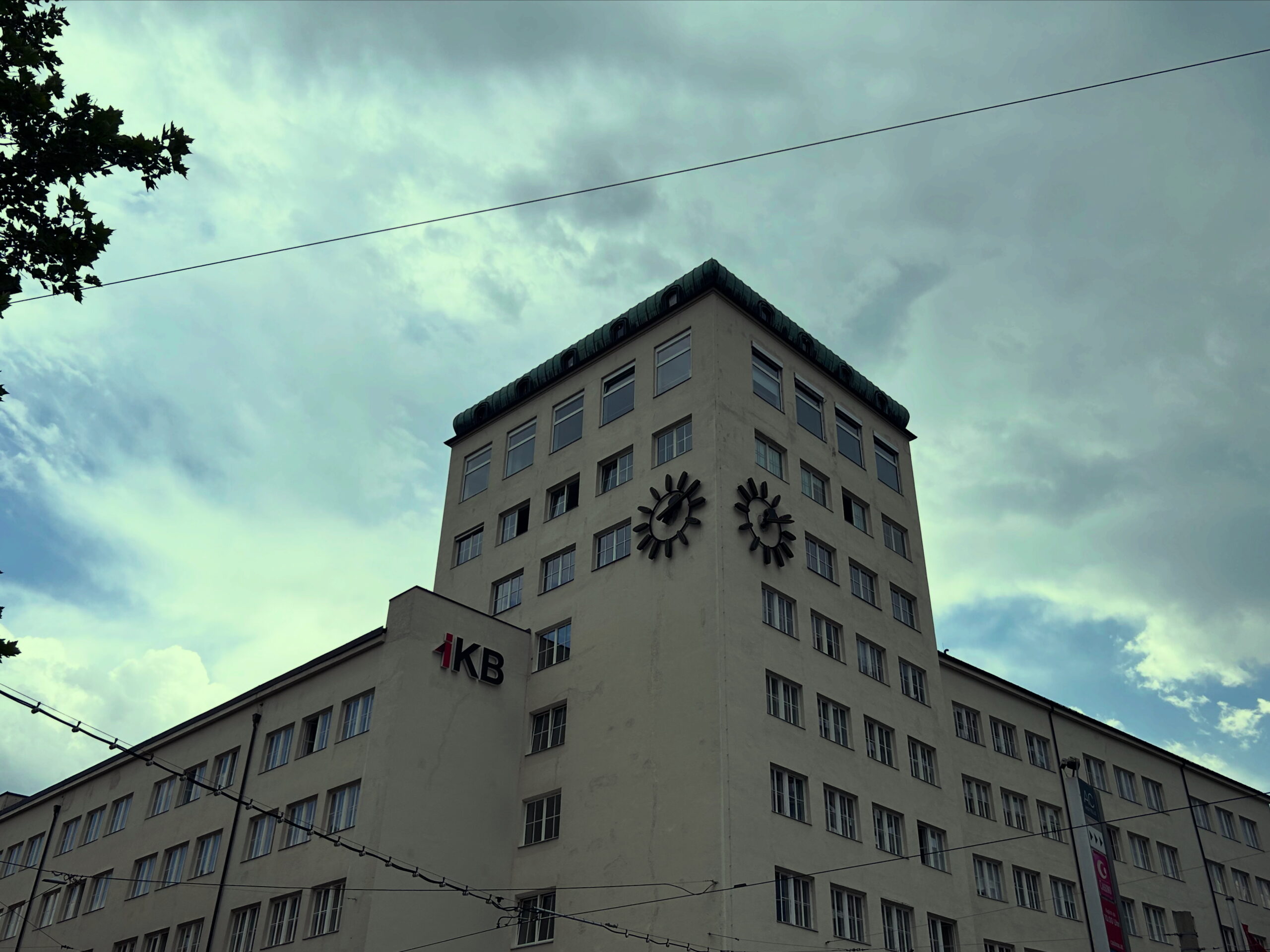
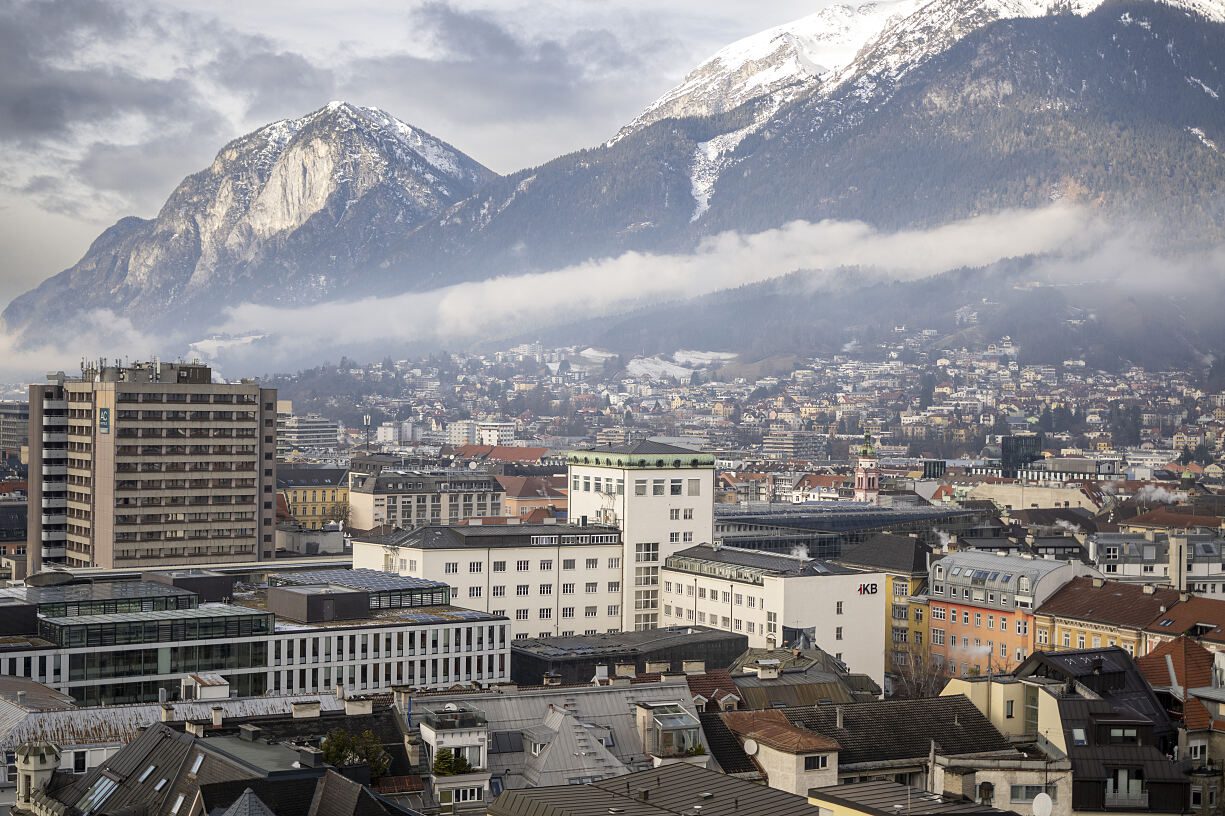
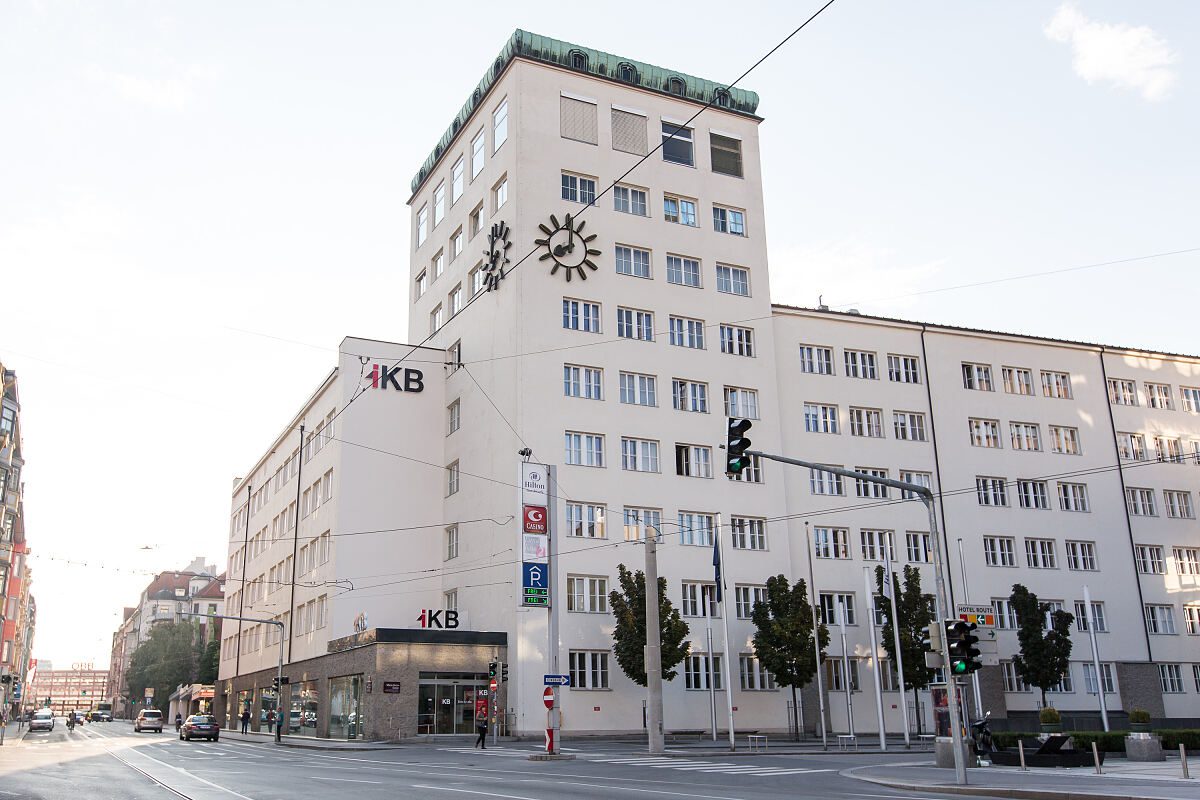
In 1911, after years of negotiations, the city under Mayor Wilhelm Greil purchased the so-called Zelger grounds near the Triumphal Arch from the heirs of Innsbruck entrepreneur Karl Zelger. The Zelger family had amassed a considerable fortune in the fashion and textile business since the early 19th century. Their estate, complete with extensive gardens and parkland, stretched from Landhausplatz to what is now Salurnerstraße. The debate in the media over what should be done with this undeveloped piece of land between the city center and Wilten had already been raging for years. The rapidly growing district around the train station had been crammed with shops, factories, and residential buildings in recent decades. Ideas ranged from a trade museum to a boarding school to a public park for the relaxation of stressed city dwellers. None of these creative development proposals for Bismarckplatz—dedicated to the Iron Chancellor of German unification in 1871—were implemented due to the outbreak of war. In the early 1920s, Clemens Holzmeister presented the first proposal for modernizing Innsbruck on this still-vacant strip of land. His mega-project, which included a hotel, restaurants, offices, and apartments across ten floors, was ahead of its time. Not only were financial resources lacking, but local residents fiercely opposed the planned construction. By 1926, the shortage of funds was temporarily resolved through the currency exchange from crown to schilling and government bonds. The winning design by Lois Welzenbacher, however, did not silence the debates—quite the opposite. Instead of a park, the Innsbruck Electric Works was built on the Zelger grounds. It was not only the building itself but also the way Welzenbacher planned Innsbruck’s first high-rise that stirred controversy. The idea was to juxtapose a “New Town” against the Old Town. The cubic elements in the style of New Objectivity, which had already divided opinion at the municipal swimming pool on Amraserstraße, were seen by many as a disfigurement and by a few as a symbol of the city’s leap into modernity. Professor Josef Manfreda, himself an architect and teacher at the State Trade School, railed against the disregard for Tyrol’s mountain landscape and the violation of the “healthy and simple feelings of the population.” Years later, the building was still a topic of discussion, as shown by Manfreda’s 1930 article The High-Rise on Bismarckplatz:
"the displeasure with the bare wall surfaces that is currently so frequently expressed in the assessment of buildings is a natural, reactionary feeling of our spoilt eye, which sees the streets predominantly overloaded with heavy cornices and window frames."
The plain building with its distinctive clock faces without numbers was not only a visual challenge for many contemporaries. Until then, church towers had dominated the skyline, their clocks regulating daily life. Now a secular utility building towered over the city. Modern architecture attracted the new authorities after 1938. During the Nazi era, the SS occupied the third floor of the office building. While the SA had its headquarters in a Gründerzeit house on Bürgerstraße 10, the Gestapo resided in the Old University on Herrengasse, and the Gauleitung erected the New Landhaus opposite Bismarckplatz in monumental classicism, the SS chose the high-rise as its base—symbolizing a break with the past. Allied air raids caused considerable damage to the building. Renovation began in 1947, which also involved structural changes. The striking asymmetrical corner tower disappeared, and the window fronts were completely redesigned. The onion dome crowning the building like a Baroque church was reinstalled during an additional floor extension. The high-rise remained an attraction. Visitors could enjoy refreshments on a terrace café overlooking the city rooftops. With the pre-Olympic construction boom for the second Winter Games, the square in front of Innsbruck’s first high-rise was redeveloped. Instead of enlivening the open space to highlight the main building of the city’s utilities, the area was densified. In 1970, construction began on a three-story, rather unadorned commercial and office building and a 15-story hotel. The high-rise in the Brutalist concrete style is considered one of the architectural sins of its time, which still negatively affects Innsbruck’s skyline.
In the boundless optimism of the early 1990s, the casino was added to the hotel. For its daring façade of green marble with an overhanging steel-and-glass structure beneath a slanted wing-shaped roof, the building received the Austrian Client Award from the Central Association of Architects in 1993. The fountain in front completes the ensemble on the former Bismarckplatz—an area that, more than a century ago, almost became an inner-city park.
Article 1930: the tower block on bismarckplatz
about 20 years ago, when architect adolf loos came onto the scene with the house on michaelerplatz in vienna, with its completely bare façade wall, in which only the square window holes were cut, a storm of indignation roared through the viennese art and lay world (there was a heated "loos house debate" in the viennese city council). i myself, although i had a prominent leader of modern austrian art as a teacher, could not initially warm to this architectural sobriety - today we say objectivity - either. there was no lack of mockers of this latest architecture, as it was written in a major viennese daily newspaper at the time: the most modern of architects walked through the streets of vienna brooding over art - loos was pictured below, standing in front of a canal grating and staring at it, and found what he had been searching for in vain for so long.
what was then considered an outburst of artlessness and was declared impossible by the public, the authorities and the press, is now taken for granted to an even greater extent by the public in all major cities in germany and france. even in innsbruck, some new buildings and conversions (tower block, farmhouse, etc.) have been built from this new point of view of practicality.) have emerged from this new point of view of objectivity. soon we will also have become friends with the clock, which shows only single strokes instead of numerals, and it will only be a matter of time before - just like the loos' purpose manifestation and the abstraction of the hour digits - only lower case letters will be used in our writing for rational and economic reasons. apart from the fact that such an implementation in german writing is not really new at all, but merely a regeneration, and that lower-case writing exists in many foreign languages without any signs of inadequacy, it would certainly be accepted by the business world without resistance (just think of the simplification of typewriter manipulation and typesetting work, the simplicity of language teaching, etc.).
what seemed outrageous to us art disciples at the time in our generally school-educated obsession with architectural finery due to the sensible but revolutionary idea of loos' house was soon brightened up by inner realisation. when i walked through the streets of innsbruck 10 years ago, coming from vienna, i already had the silent wish to see all the superfluous, meaningless, heavy cornices and stucco decorations with which our newer houses (anichstrasse, bürgerstrasse, etc.) are "stuck on" and "decorated" knocked down - which, by the way, happened after a few years in individual places (post office building, farmhouse, etc.).
the disapproval of bare wall surfaces that is so often expressed in the judgement of buildings at present is a natural, reactionary feeling of our spoilt eye, which sees the streets predominantly overloaded with heavy cornices and window frames. therefore, the strict rejection of the new architecture, unless it shows obvious violations of reason and taste, is also very unfair. one must not forget that the non-expert and the average person, even some artists, are mostly conventionally biased in their judgement and therefore cannot claim to be truly objective.
in order not to be misunderstood, i must expressly state at this point that, when it comes to the external design of residential buildings, i am resolutely opposed to the uniform bleakness of factory construction, which is also largely reflected in the tower block. we have plenty of examples in tyrol's old towns that show how a certain warmth and individuality can be achieved even with the simplest of designs. let us now try to judge the skyscraper from the spirit of our time. in doing so, however, we must free ourselves as far as possible from the ban of certain traditional views in order to exclude those one-sided judgements that no longer have any inner justification today. weren't the painters courbet and delacroix labelled as "not classical", leibl and liebermann as "too naturalistic" due to the public's habitual adherence to traditional aesthetic principles? and what did richard wagner's art have to suffer? of course a real, true critic must above all have a clear eye and a healthy sensibility coupled with reason and know how to defend himself against the artistic distortions and gimmicks of all "progressive" artists who try to pretend their work is visionary.
finally, let us remember that it is not a question of whether a building is good or bad, not of horizontal windows or a flat roof, nor of decorative romanticism or machine fanaticism, but of the honest, truly forward-looking attitude of an architect. welzenbacher is currently building in a modern Nordic style and has achieved the best success with it. his style was well received in germany and he was appointed there. it is therefore not surprising that the tower block, as a proud representative of the metropolitan architecture of the lowlands, does not fit into our mountain world - this is perhaps the greatest weakness of the building.
as i said, the essential thing about this high-rise issue is not so much whether or not the high-rise fits in with tirol, nor even the few fanciful additions, but the act that contributes to the emergence of a new style.
The municipal council and the Zelger heirs
Published: Innsbrucker Nachrichten / 2 April 1909
Immediately before the last meeting, the Zelger heirs sent a printed letter entitled „For clarification“ to all municipal councillors regarding the issue of building on the Zelger grounds and the construction of a public square on the south side of Maximilianstrasse.
Since this letter of clarification contains the reservation that it may be subject to further distribution, the Service and Legal Section has decided to read it out in public for the time being.
(This was followed by the reading of the rather extensive document.)
The Service and Legal Section has also decided to propose to the municipal council that the position of the municipality in this matter be characterised by a public statement, which should read as follows:
„The municipality is well aware that the building line, which provides for an extension of the square on the south side of Maximilianstraße, does not currently have any real existence and cannot have any, because no building has been erected on or in this building line. This building line really only exists on paper, but there it rightfully exists by virtue of the governor's authorisation, and if Zelger's heirs believe that they will soon be able to put an end to this paper existence, they must be aware that they have at their disposal aids that are completely unknown to the city council and its legal advisors.
The municipal council's intention to widen Maximilianstrasse with a bulge in the square does not appear to be a mere concern for urban „finery“, but rather the fulfilment of an urgent need recognised by the entire population, the fulfilment of which is moreover guaranteed by express legal provision. The Innsbruck Building Code (Law of 30 March 1896, § 3, paragraph 2) literally stipulates that when larger plots of land are divided up, care must be taken to ensure that correspondingly large and free spaces are left; and if the municipality complies with this legal provision, it can only be said that the municipality is liable for damages in gross disregard of public law principles.
It seems understandable and natural to the Zelger heirs that the construction of new roads, the construction and equipping of which with supply lines has already cost and will continue to cost the municipality large sums of money, has turned the Zelger plots into building plots with a much higher value. However, the Zelger heirs find it incomprehensible that the municipality, in consideration of the needs of the population and on the basis of explicit legal provisions, did not choose the exact building line that would be the most advantageous for Zelger's private assets when the issue of building development became topical due to the death of Mr Zelger, and they consider this to be an irresponsible encroachment on their private rights.
In response to the concession shown by the Zelger heirs at the opening of Maximilianstrasse and in order to enable them to utilise the building plots immediately, the municipal council voluntarily offered the Zelger heirs the sum of over 80,000 crowns for the square in question and the roads surrounding it, a price that far exceeds what the Zelger heirs would ever be able to obtain under the provisions of the Innsbruck building regulations, unless a decision were to be made that would constitute a manifest error of law. This offer was only able to arouse the amusement of the Zelger heirs and the municipality hereby withdraws it.
It goes without saying that nothing remains but to bring the matter before the competent authorities. However, the Zelger heirs should not expect the municipality to help them in the forthcoming dispute and take into account interests other than those of the municipality.“
The section's motion was adopted.
Franz Baumann and Tyrolean modernism
The First World War not only brought ruling dynasties and empires to an end, the 1920s also saw many changes in art, music, literature and architecture. While jazz, atonal music and expressionism failed to establish themselves in little Innsbruck, a handful of architects changed the cityscape in an astonishing way. Inspired by new forms of design such as the Bauhaus style, skyscrapers from the USA and the Soviet Modernism from the revolutionary USSR, sensational projects emerged in Innsbruck. The best-known representatives of the avant-garde who brought about this new way of designing public space in Tyrol were Lois Welzenbacher, Siegfried Mazagg, Theodor Prachensky and Clemens Holzmeister. Each of these architects had their own idiosyncrasies, making the Tiroler Moderne nur schwer eindeutig zu definieren ist. Allen gemeinsam war die Abwendung von der klassizistischen Architektur der Vorkriegszeit unter gleichzeitiger Beibehaltung typischer alpiner Materialien und Elemente unter dem Motto Form follows function. Lois Welzenbacher schrieb 1920 in einem Artikel der Zeitschrift Tyrolean highlands about the architecture of this period:
"As far as we can judge today, it is clear that the 19th century lacked the strength to create its own distinct style. It is the age of stillness... Thus details were reproduced with historical accuracy, mostly without any particular meaning or purpose, and without a harmonious overall picture that would have arisen from factual or artistic necessity."
The best-known and most impressive representative of the so-called Tiroler Moderne was Franz Baumann (1892 - 1974). Unlike Holzmeister or Welzenbacher, he had no academic training. Baumann was born in Innsbruck in 1892, the son of a postal clerk. The theologian, publicist and war propagandist Anton Müllner, alias Bruder Willram became aware of Franz Baumann's talent as a draughtsman and enabled the young man to attend the Staatsgewerbeschule, today's HTL, at the age of 14. It was here that he met his future brother-in-law Theodor Prachensky. Together with Baumann's sister Maria, the two young men went on excursions in the area around Innsbruck to paint pictures of the mountains and nature. During his school years, he gained his first professional experience as a bricklayer at the construction company Huter & Söhne. In 1910 Baumann followed his friend Prachensky to Merano to work for the company Musch & Lun zu arbeiten. Meran war damals Tirols wichtigster Tourismusort mit internationalen Kurgästen. Unter dem Architekten Adalbert Erlebach machte er erste Erfahrungen bei der Planung von Großprojekten wie Hotels und Seilbahnen. Wie den Großteil seiner Generation riss der Erste Weltkrieg auch Baumann aus Berufsleben und Alltag. An der Italienfront erlitt er im Kampfeinsatz einen Bauchschuss, von dem er sich in einem Lazarett in Prag erholte. In dieser ansonsten tatenlosen Zeit malte er Stadtansichten von Bauwerken in und rund um Prag. Diese Bilder, die ihm später bei der Visualisierung seiner Pläne helfen sollten, wurden in seiner einzigen Ausstellung 1919 präsentiert.
Baumann's breakthrough came in the second half of the 1920s. He was able to win the tenders for the remodelling of the Weinhaus Happ in the old town and the Nordkettenbahn railway. In addition to his creativity and ability to think holistically, he was also able to harmonise his architectural approach with the legal situation and the modern requirements of tendering in the 1920s. Construction was a state matter, the Tyrolean Heritage Protection Association together with the district administration, was the final authority responsible for the assessment and authorisation of construction projects. During his time in Merano, Baumann was already involved with the Homeland Security Association came into contact with it. Kunibert Zimmeter had founded this association together with Gotthard Graf Trapp in the final years of the monarchy. In "Our Tyrol. A heritage book" he wrote:
"Let us look at the flattening of our private lives, our amusements, at the centre of which, significantly, is the cinema, at the literary ephemera of our newspaper reading, at the hopeless and costly excesses of fashion in the field of women's clothing, let us take a look at our homes with the miserable factory furniture and all the dreadful products of our so-called gallantry goods industry, Things that thousands of people work to produce, creating worthless bric-a-brac in the process, or let us look at our apartment blocks and villas with their cement façades simulating palaces, countless superfluous towers and gables, our hotels with their pompous façades, what a waste of the people's wealth, what an abundance of tastelessness we must find there."
The economic boom of the late 1920s saw the emergence of a new clientele and clientele that placed new demands on buildings and therefore on the construction industry. In many Tyrolean villages, hotels had replaced churches as the largest building in the townscape. The aristocratic distance from the mountains had given way to a bourgeois enthusiasm for sport. This called for new solutions at new heights. No more grand hotels were built at 1500 m for spa holidays, but a complete infrastructure for skiers in high alpine terrain such as the Nordkette. The Tyrolean Heritage Protection Association ensured that nature and townscape were protected from overly fashionable trends, excessive tourism and ugly industrial buildings. Building projects had to blend harmoniously, attractively and appropriately into the environment. Despite the social and artistic innovations of the time, architects had to keep the typical regional character in mind. This was precisely the strength of Baumann's approach to holistic building in the Tyrolean sense. All technical functions and details, the embedding of the buildings in the landscape, taking into account the topography and sunlight, played a role for him, who was not officially allowed to use the title of architect. He thus followed the "Rules for those who build in the mountains" by the architect Adolf Loos from 1913:
Don't build picturesquely. Leave such effects to the walls, the mountains and the sun. The man who dresses picturesquely is not picturesque, but a buffoon. The farmer does not dress picturesquely. But he is...
Pay attention to the forms in which the farmer builds. For they are ancestral wisdom, congealed substance. But seek out the reason for the mould. If advances in technology have made it possible to improve the mould, then this improvement should always be used. The flail will be replaced by the threshing machine."
Baumann designed even the smallest details, from the exterior lighting to the furniture, and integrated them into his overall concept of the Tiroler Moderne in.
From 1927, Baumann worked independently in his studio in Schöpfstraße in Wilten. He repeatedly came into contact with his brother-in-law and employee of the building authority, Theodor Prachensky. From 1929, the two of them worked together to design the building for the new Hötting secondary school on Fürstenweg. Although boys and girls still had to be planned separately in the traditional way, the building was otherwise completely in keeping with the style of the Neuen Sachlichkeit and the principle Light, air and sun.
In his heyday, he employed 14 people in his office. Thanks to his modern approach, which combined function, aesthetics and economical construction, he survived the economic crisis well. Only the 1000-mark barrier, die Hitler 1934 über Österreich verhängte, um die Republik finanziell in Bredouille zu bringen, brachte sein Architekturbüro wie die gesamte Wirtschaft in Probleme. Nicht nur die Arbeitslosenquote im Tourismus verdreifachte sich innerhalb kürzester Zeit, auch die Baubranche geriet in Schwierigkeiten. 1935 wurde Baumann zum Leiter der Zentralvereinigung für Architekten, nachdem er mit einer Ausnahmegenehmigung ausgestattet diesen Berufstitel endlich tragen durfte. Im gleichen Jahr plante er die Hörtnaglsiedlung in the west of the city.
After the Anschluss in 1938, he quickly joined the NSDAP. On the one hand, like his colleague Lois Welzenbacher, he was probably not averse to the ideas of National Socialism, but on the other he was able to further his career as chairman of the Reich Chamber of Fine Arts in Tyrol. In this position, he courageously opposed the destructive furore with which those in power wanted to change Innsbruck's cityscape, which did not correspond to his idea of urban planning. The mayor of Innsbruck, Egon Denz, wanted to remove the Triumphal Gate and St Anne's Column in order to make more room for traffic in Maria-Theresienstraße. The city centre was still a transit area from the Brenner Pass in the south to reach the main road to the east and west on today's Innrain. At the request of Gauleiter Franz Hofer, a statue of Adolf Hitler was to be erected in place of St Anne's Column. Hofer also wanted to have the church towers of the collegiate church blown up. Baumann's opinion on these plans was negative. When the matter made it to Albert Speer's desk, he agreed with him. From this point onwards, Baumann was no longer awarded any public projects by Gauleiter Hofer.
After being questioned as part of the denazification process, Baumann began working at the city building authority, probably on the recommendation of his brother-in-law Prachensky. Baumann was fully exonerated, among other things by a statement from the Abbot of Wilten, whose church towers he had saved, but his reputation as an architect could no longer be repaired. Moreover, his studio in Schöpfstraße had been destroyed by a bomb in 1944. In his post-war career, he was responsible for the renovation of buildings damaged by the war. Under his leadership, Boznerplatz with the Rudolfsbrunnen fountain was rebuilt as well as Burggraben and the new Stadtsäle (Note: today House of Music).
Franz Baumann died in 1974 and his paintings, sketches and drawings are highly sought-after and highly traded. Anyone who takes a close look at recent major projects such as the city library, the PEMA towers and many of Innsbruck's housing estates will recognise the approaches of the Tiroler Moderne rediscover even today.
A republic is born
Few eras are more difficult to grasp than the interwar period. The Roaring TwentiesJazz and automobiles come to mind, as do inflation and the economic crisis. In big cities like Berlin, young ladies behaved as Flappers mit Bubikopf, Zigarette und kurzen Röcken zu den neuen Klängen lasziv, Innsbrucks Bevölkerung gehörte als Teil der jungen Republik Österreich zum größten Teil zur Fraktion Armut, Wirtschaftskrise und politischer Polarisierung. Schon die Ausrufung der Republik am Parlament in Wien vor über 100.000 mehr oder minder begeisterten, vor allem aber verunsicherten Menschen verlief mit Tumulten, Schießereien, zwei Toten und 40 Verletzten alles andere als reibungsfrei. Wie es nach dem Ende der Monarchie und dem Wegfall eines großen Teils des Staatsterritoriums weitergehen sollte, wusste niemand. Das neue Österreich erschien zu klein und nicht lebensfähig. Der Beamtenstaat des k.u.k. Reiches setzte sich nahtlos unter neuer Fahne und Namen durch. Die Bundesländer als Nachfolger der alten Kronländer erhielten in der Verfassung im Rahmen des Föderalismus viel Spielraum in Gesetzgebung und Verwaltung. Die Begeisterung für den neuen Staat hielt sich aber in der Bevölkerung in Grenzen. Nicht nur, dass die Versorgungslage nach dem Wegfall des allergrößten Teils des ehemaligen Riesenreiches der Habsburger miserabel war, die Menschen misstrauten dem Grundgedanken der Republik. Die Monarchie war nicht perfekt gewesen, mit dem Gedanken von Demokratie konnten aber nur die allerwenigsten etwas anfangen. Anstatt Untertan des Kaisers war man nun zwar Bürger, allerdings nur Bürger eines Zwergstaates mit überdimensionierter und in den Bundesländern wenig geliebter Hauptstadt anstatt eines großen Reiches. In den ehemaligen Kronländern, die zum großen Teil christlich-sozial regiert wurden, sprach man gerne vom Viennese water headwho was fed by the yields of the industrious rural population.
Other federal states also toyed with the idea of seceding from the Republic after the plan to join Germany, which was supported by all parties, was prohibited by the victorious powers of the First World War. The Tyrolean plans, however, were particularly spectacular. From a neutral Alpine state with other federal states, a free state consisting of Tyrol and Bavaria or from Kufstein to Salurn, an annexation to Switzerland and even a Catholic church state under papal leadership, there were many ideas. The most obvious solution was particularly popular. In Tyrol, feeling German was nothing new. So why not align oneself politically with the big brother in the north? This desire was particularly pronounced among urban elites and students. The annexation to Germany was approved by 98% in a vote in Tyrol, but never materialised.
Instead of becoming part of Germany, they were subject to the unloved Wallschen. Italian troops occupied Innsbruck for almost two years after the end of the war. At the peace negotiations in Paris, the Brenner Pass was declared the new border. The historic Tyrol was divided in two. The military was stationed at the Brenner Pass to secure a border that had never existed before and was perceived as unnatural and unjust. In 1924, the Innsbruck municipal council decided to name squares and streets around the main railway station after South Tyrolean towns. Bozner Platz, Brixnerstrasse and Salurnerstrasse still bear their names today. Many people on both sides of the Brenner felt betrayed. Although the war was far from won, they did not see themselves as losers to Italy. Hatred of Italians reached its peak in the interwar period, even if the occupying troops were emphatically lenient. A passage from the short story collection "The front above the peaks" by the National Socialist author Karl Springenschmid from the 1930s reflects the general mood:
"The young girl says, 'Becoming Italian would be the worst thing.
Old Tappeiner just nods and grumbles: "I know it myself and we all know it: becoming a whale would be the worst thing."
Trouble also loomed in domestic politics. The revolution in Russia and the ensuing civil war with millions of deaths, expropriation and a complete reversal of the system cast its long shadow all the way to Austria. The prospect of Soviet conditions machte den Menschen Angst. Österreich war tief gespalten. Hauptstadt und Bundesländer, Stadt und Land, Bürger, Arbeiter und Bauern – im Vakuum der ersten Nachkriegsjahre wollte jede Gruppe die Zukunft nach ihren Vorstellungen gestalten. Die Kulturkämpfe der späten Monarchie zwischen Konservativen, Liberalen und Sozialisten setzte sich nahtlos fort. Die Kluft bestand nicht nur auf politischer Ebene. Moral, Familie, Freizeitgestaltung, Erziehung, Glaube, Rechtsverständnis – jeder Lebensbereich war betroffen. Wer sollte regieren? Wie sollten Vermögen, Rechte und Pflichten verteilt werden. Ein kommunistischer Umsturz war besonders in Tirol keine reale Gefahr, ließ sich aber medial gut als Bedrohung instrumentalisieren, um die Sozialdemokratie in Verruf zu bringen. 1919 hatte sich in Innsbruck zwar ein Workers', farmers' and soldiers' council nach sowjetischem Vorbild ausgerufen, sein Einfluss blieb aber gering und wurde von keiner Partei unterstützt. Ab 1920 bildeten sich offiziell sogenannten Soldatenräte, die aber christlich-sozial dominiert waren. Das bäuerliche und bürgerliche Lager rechts der Mitte militarisierte sich mit der Tiroler Heimatwehr professioneller und konnte sich über stärkeren Zulauf freuen als linke Gruppen, auch dank kirchlicher Unterstützung. Die Sozialdemokratie wurde von den Kirchkanzeln herab und in konservativen Medien als Jewish Party and homeless traitors to their country. They were all too readily blamed for the lost war and its consequences. The Tiroler Anzeiger summarised the people's fears in a nutshell: "Woe to the Christian people if the Jews=Socialists win the elections!".
With the new municipal council regulations of 1919, which provided for universal suffrage for all adults, the Innsbruck municipal council comprised 40 members. Of the 24,644 citizens called to the ballot box, an incredible 24,060 exercised their right to vote. Three women were already represented in the first municipal council with free elections. While in the rural districts the Tyrolean People's Party as a merger of Farmers' Union, People's Association und Catholic Labour Despite the strong headwinds in Innsbruck, the Social Democrats under the leadership of Martin Rapoldi were always able to win between 30 and 50% of the vote in the first elections in 1919. The fact that the Social Democrats did not succeed in winning the mayor's seat was due to the majorities in the municipal council formed by alliances with other parties. Liberals and Tyrolean People's Party was at least as hostile to social democracy as he was to the federal capital Vienna and the Italian occupiers.
But high politics was only the framework of the actual misery. The as Spanish flu This epidemic, which has gone down in history, also took its toll in Innsbruck in the years following the war. Exact figures were not recorded, but the number of deaths worldwide is estimated at 27 - 50 million. In Innsbruck, at the height of the Spanish flu epidemic, it is estimated that around 100 people fell victim to the disease every day. Many Innsbruck residents had not returned home from the battlefields and were missing as fathers, husbands and labourers. Many of those who had made it back were wounded and scarred by the horrors of war. As late as February 1920, the „Tyrolean Committee of the Siberians" im Gasthof Breinößl "...in favour of the fund for the repatriation of our prisoners of war..." organised a charity evening. Long after the war, the province of Tyrol still needed help from abroad to feed the population. Under the heading "Significant expansion of the American children's aid programme in Tyrol" was published on 9 April 1921 in the Innsbrucker Nachrichten to read: "Taking into account the needs of the province of Tyrol, the American representatives for Austria have most generously increased the daily number of meals to 18,000 portions.“
Then there was unemployment. Civil servants and public sector employees in particular lost their jobs after the League of Nations linked its loan to severe austerity measures. Salaries in the public sector were cut. There were repeated strikes. Tourism as an economic factor was non-existent due to the problems in the neighbouring countries, which were also shaken by the war. The construction industry, which had been booming before the war, collapsed completely. Innsbruck's largest company Huter & Söhne hatte 1913 über 700 Mitarbeiter, am Höhepunkt der Wirtschaftskrise 1933 waren es nur noch 18. Der Mittelstand brach zu einem guten Teil zusammen. Der durchschnittliche Innsbrucker war mittellos und mangelernährt. Oft konnten nicht mehr als 800 Kalorien pro Tag zusammengekratzt werden. Die Kriminalitätsrate war in diesem Klima der Armut höher als je zuvor. Viele Menschen verloren ihre Bleibe. 1922 waren in Innsbruck 3000 Familien auf Wohnungssuche trotz eines städtischen Notwohnungsprogrammes, das bereits mehrere Jahre in Kraft war. In alle verfügbaren Objekte wurden Wohnungen gebaut. Am 11. Februar 1921 fand sich in einer langen Liste in den Innsbrucker Nachrichten on the individual projects that were run, including this item:
„The municipal hospital abandoned the epidemic barracks in Pradl and made them available to the municipality for the construction of emergency flats. The necessary loan of 295 K (note: crowns) was approved for the construction of 7 emergency flats.“
Very little happened in the first few years. Then politics awoke from its lethargy. The crown, a relic from the monarchy, was replaced by the schilling as Austria's official currency on 1 January 1925. The old currency had lost more than 95% of its value against the dollar between 1918 and 1922, or the pre-war exchange rate. Innsbruck, like many other Austrian municipalities, began to print its own money. The amount of money in circulation rose from 12 billion crowns to over 3 trillion crowns between 1920 and 1922. The result was an epochal inflation.
With the currency reorganisation following the League of Nations loan under Chancellor Ignaz Seipel, not only banks and citizens picked themselves up, but public building contracts also increased again. Innsbruck modernised itself. There was what economists call a false boom. This short-lived economic recovery was a Bubble, However, the city of Innsbruck was awarded major projects such as the Tivoli, the municipal indoor swimming pool, the high road to the Hungerburg, the mountain railways to the Isel and the Nordkette, new schools and apartment blocks. The town bought Lake Achensee and, as the main shareholder of TIWAG, built the power station in Jenbach. The first airport was built in Reichenau in 1925, which also involved Innsbruck in air traffic 65 years after the opening of the railway line. In 1930, the university bridge connected the hospital in Wilten and the Höttinger Au. The Pembaur Bridge and the Prince Eugene Bridge were built on the River Sill. The signature of the new, large mass parties in the design of these projects cannot be overlooked.
The first republic was a difficult birth from the remnants of the former monarchy and it was not to last long. Despite the post-war problems, however, a lot of positive things also happened in the First Republic. Subjects became citizens. What began in the time of Maria Theresa was now continued under new auspices. The change from subject to citizen was characterised not only by a new right to vote, but above all by the increased care of the state. State regulations, schools, kindergartens, labour offices, hospitals and municipal housing estates replaced the benevolence of the landlord, sovereigns, wealthy citizens, the monarchy and the church.
To this day, much of the Austrian state and Innsbruck's cityscape and infrastructure are based on what emerged after the collapse of the monarchy. In Innsbruck, there are no conscious memorials to the emergence of the First Republic in Austria. The listed residential complexes such as the Slaughterhouse blockthe Pembaurblock or the Mandelsbergerblock oder die Pembaur School are contemporary witnesses turned to stone. Every year since 1925, World Savings Day has commemorated the introduction of the schilling. Children and adults should be educated to handle money responsibly.
Wilhelm Greil: DER Bürgermeister Innsbrucks
One of the most important figures in the town's history was Wilhelm Greil (1850 - 1923). From 1896 to 1923, the entrepreneur held the office of mayor, having previously helped to shape the city's fortunes as deputy mayor. It was a time of growth, the incorporation of entire neighbourhoods, technical innovations and new media. The four decades between the economic crisis of 1873 and the First World War were characterised by unprecedented economic growth and rapid modernisation. Private investment in infrastructure such as railways, energy and electricity was desired by the state and favoured by tax breaks in order to lead the countries and cities of the ailing Danube monarchy into the modern age. The city's economy boomed. Businesses sprang up in the new districts of Pradl and Wilten, attracting workers. Tourism also brought fresh capital into the city. At the same time, however, the concentration of people in a confined space under sometimes precarious hygiene conditions also brought problems. The outskirts of the city and the neighbouring villages in particular were regularly plagued by typhus.
Innsbruck city politics, in which Greil was active, was characterised by the struggle between liberal and conservative forces. Greil belonged to the "Deutschen Volkspartei", a liberal and national-Great German party. What appears to be a contradiction today, liberal and national, was a politically common and well-functioning pair of ideas in the 19th century. The Pan-Germanism was not a political peculiarity of a radical right-wing minority, but rather a centrist trend, particularly in German-speaking cities in the Reich, which was significant in various forms across almost all parties until after the Second World War. Innsbruckers who were self-respecting did not describe themselves as Austrians, but as Germans. Those who were members of the liberal Innsbrucker Nachrichten of the period around the turn of the century, you will find countless articles in which the common ground between the German Empire and the German-speaking countries was made the topic of the day, while distancing themselves from other ethnic groups within the multinational Habsburg Empire. Greil was a skilful politician who operated within the predetermined power structures of his time. He knew how to skilfully manoeuvre around the traditional powers, the monarchy and the clergy and to come to terms with them.
Taxes, social policy, education, housing and the design of public spaces were discussed with passion and fervour. Due to an electoral system based on voting rights via property classes, only around 10% of the entire population of Innsbruck were able to go to the ballot box. Women were excluded as a matter of principle. Relative suffrage applied within the three electoral bodies, which meant as much as: The winner takes it all. Greil wohne passenderweise ähnlich wie ein Renaissancefürst. Er entstammte der großbürgerlichen Upper Class. Sein Vater konnte es sich leisten, im Palais Lodron in der Maria-Theresienstraße die Homebase der Familie zu gründen. Massenparteien wie die Sozialdemokratie konnten sich bis zur Wahlrechtsreform der Ersten Republik nicht durchsetzen. Konservative hatten es in Innsbruck auf Grund der Bevölkerungszusammensetzung, besonders bis zur Eingemeindung von Wilten und Pradl, ebenfalls schwer. Bürgermeister Greil konnte auf 100% Rückhalt im Gemeinderat bauen, was die Entscheidungsfindung und Lenkung natürlich erheblich vereinfachte. Bei aller Effizienz, die Innsbrucker Bürgermeister bei oberflächlicher Betrachtung an den Tag legten, sollte man nicht vergessen, dass das nur möglich war, weil sie als Teil einer Elite aus Unternehmern, Handelstreibenden und Freiberuflern ohne nennenswerte Opposition und Rücksichtnahme auf andere Bevölkerungsgruppen wie Arbeitern, Handwerkern und Angestellten in einer Art gewählten Diktatur durchregierten. Das Reichsgemeindegesetz von 1862 verlieh Städten wie Innsbruck und damit den Bürgermeistern größere Befugnisse. Es verwundert kaum, dass die Amtskette, die Greil zu seinem 60. Geburtstag von seinen Kollegen im Gemeinderat verliehen bekam, den Ordensketten des alten Adels erstaunlich ähnelte.
Under Greil's aegis and the general economic upturn, fuelled by private investment, Innsbruck expanded at a rapid pace. In true merchant style, the municipal council purchased land with foresight in order to enable the city to innovate. The politician Greil was able to rely on the civil servants and town planners Eduard Klingler, Jakob Albert and Theodor Prachensky for the major building projects of the time. Infrastructure projects such as the new town hall in Maria-Theresienstraße in 1897, the opening of the Mittelgebirgsbahn railway, the Hungerburgbahn and the Karwendelbahn wurden während seiner Regierungszeit umgesetzt. Weitere gut sichtbare Meilensteine waren die Erneuerung des Marktplatzes und der Bau der Markthalle. Neben den prestigeträchtigen Großprojekten entstanden in den letzten Jahrzehnten des 19. Jahrhunderts aber viele unauffällige Revolutionen. Vieles, was in der zweiten Hälfte des 19. Jahrhunderts vorangetrieben wurde, gehört heute zum Alltag. Für die Menschen dieser Zeit waren diese Dinge aber eine echte Sensation und lebensverändernd. Bereits Greils Vorgänger Bürgermeister Heinrich Falk (1840 – 1917) hatte erheblich zur Modernisierung der Stadt und zur Besiedelung des Saggen beigetragen. Seit 1859 war die Beleuchtung der Stadt mit Gasrohrleitungen stetig vorangeschritten. Mit dem Wachstum der Stadt und der Modernisierung wurden die Senkgruben, die in Hinterhöfen der Häuser als Abort dienten und nach Entleerung an umliegende Landwirte als Dünger verkauft wurden, zu einer Unzumutbarkeit für immer mehr Menschen. 1880 wurde das RaggingThe city was responsible for the emptying of the lavatories. Two pneumatic machines were to make the process at least a little more hygienic. Between 1887 and 1891, Innsbruck was equipped with a modern high-pressure water pipeline, which could also be used to supply fresh water to flats on higher floors. For those who could afford it, this was the first opportunity to install a flush toilet in their own home.
Greil continued this campaign of modernisation. After decades of discussions, the construction of a modern alluvial sewerage system began in 1903. Starting in the city centre, more and more districts were connected to this now commonplace luxury. By 1908, only the Koatlackler Mariahilf und St. Nikolaus nicht an das Kanalsystem angeschlossen. Auch der neue Schlachthof im Saggen erhöhte Hygiene und Sauberkeit in der Stadt. Schlecht kontrollierte Hofschlachtungen gehörten mit wenigen Ausnahmen der Vergangenheit an. Das Vieh kam im Zug am Sillspitz an und wurde in der modernen Anlage fachgerecht geschlachtet. Greil überführte auch das Gaswerk in Pradl und das Elektrizitätswerk in Mühlau in städtischen Besitz. Die Straßenbeleuchtung wurde im 20. Jahrhundert von den Gaslaternen auf elektrisches Licht umgestellt. 1888 übersiedelte das Krankenhaus von der Maria-Theresienstraße an seinen heutigen Standort. Bürgermeister und Gemeinderat konnten sich bei dieser Innsbrucker Renaissance neben der wachsenden Wirtschaftskraft in der Vorkriegszeit auch auf Mäzen aus dem Bürgertum stützen. Waren technische Neuerungen und Infrastruktur Sache der Liberalen, verblieb die Fürsorge der Ärmsten weiterhin bei klerikal gesinnten Kräften, wenn auch nicht mehr bei der Kirche selbst. Freiherr Johann von Sieberer stiftete das Greisenasyl und das Waisenhaus im Saggen. Leonhard Lang stiftete das Gebäude in der Maria-Theresienstraße, in der sich bis heute das Rathaus befindet gegen das Versprechen der Stadt ein Lehrlingsheim zu bauen.
Im Gegensatz zur boomenden Vorkriegsära war die Zeit nach 1914 vom Krisenmanagement geprägt. In seinen letzten Amtsjahren begleitete Greil Innsbruck am Übergang von der Habsburgermonarchie zur Republik durch Jahre, die vor allem durch Hunger, Elend, Mittelknappheit und Unsicherheit geprägt waren. Er war 68 Jahre alt, als italienische Truppen nach dem Ersten Weltkrieg die Stadt besetzten und Tirol am Brenner geteilt wurde. Das Ende der Monarchie und des Zensuswahlrechts bedeuteten auch den Niedergang der Liberalen in Innsbruck, auch wenn Greil das in seiner aktiven Karriere nur teilweise miterlebte. 1919 konnten die Sozialdemokraten in Innsbruck zwar zum ersten Mal den Wahlsieg davontragen, dank der Mehrheiten im Gemeinderat blieb Greil aber Bürgermeister. 1928 verstarb er als Ehrenbürger der Stadt Innsbruck im Alter von 78 Jahren. Die Wilhelm-Greil-Straße war noch zu seinen Lebzeiten nach ihm benannt worden.
1796 - 1866: Vom Herzen Jesu bis Königgrätz
The period between the French Revolution and the Battle of Königgrätz in 1866 was a period of war. Many of the basic political attitudes, animosities towards other groups and European nationalism of the 19th and 20th centuries, which were also to influence the history of Innsbruck, had their roots in the conflicts of this period. Revolutionary Paris was a long way away and there were neither e-mails nor a nationwide press system to disseminate news. The godlessness of Marie Antoinette's murderers and the hatred of the Church of the new masters of France were successfully spread via leaflets and church pulpits. The monarchies of Europe, led by the Habsburgs, had declared war on the French Republic. Fears were rife that the slogan of the revolution „Liberté, Égalité, Fraternité" could spread across Europe. A young general named Napoleon Bonaparte was with his italienischen Armee advanced across the Alps as part of the coalition wars and met the Austrian troops there. It was not just a war for territory and power, it was a battle of systems. The Grande Armee of the revolutionary French Republic met the troops of the conservative and Catholic Habsburgs.
Tyrolean marksmen were actively involved in the fighting to defend the country's borders against the invading French. The men were used to handling weapons and were considered skilled marksmen. The historian Ludwig Denk put it this way in an essay in 1860:
"...The Tyrolean's main passion is shooting. Early on, the father takes his son hunting. It is not uncommon to see boys running around with loaded rifles, climbing high mountains and shooting birds or squirrels..."
The strength of units such as the Höttinger Schützen, founded in 1796, lay not in open field battles but in guerrilla warfare. They also had a secret weapon on their side against the most advanced and modern army of the time: the Sacred Heart. Since 1719, Jesuit missionaries had been travelling to the furthest side valleys and had successfully established the cult of the Sacred Heart as a unifying element in the fight against pagan customs and Protestantism. Now that they were facing the godless revolutionary French, who had declared war not only on the monarchy but also on the clergy, it was only logical that the Sacred Heart of Jesus would watch over the Tyrolean holy warriors in a protective capacity. In a hopeless situation, the Tyrolean troops renewed their covenant with the Heart of Jesus to ask for protection. Against all odds, the Tyrolean archers were successful in their defence. It was the abbot of Stams Abbey who petitioned the provincial estates to henceforth organise an annual "das Fest des göttlichen Herzens Jesu mit feierlichem Gottesdienst zu begehen, wenn Tirol von der drohenden Feindesgefahr befreit werde." Every year, the Sacred Heart celebrations were discussed and announced with great pomp in the press. In the 19th and early 20th centuries in particular, they were an explosive mixture of popular superstition, Catholicism and national resentment against everything French and Italian. Countless soldiers entrusted their well-being to the heart of Jesus even in the technologised battlefield of the First World War and carried images of this symbol with them in the hail of grenades. Alongside Cranach's Mother of Mercy, the depiction of the Heart of Jesus is probably the most popular Christian motif in Tyrol to this day and is emblazoned on the façades of countless houses.
The Habsburg Tyrol had expanded during the turmoil of war without his involvement, and probably also without that of the Sacred Heart of Jesus. Trentino had become part of the crown land in the last breaths of the Holy Roman Empire before its dissolution in 1803. Innsbruck, on the other hand, had shrunk. The deaths of soldiers and the economic difficulties caused by the war led to a decline in the population from a good 9500 around 1750 to around 8800. After the Napoleonic Wars, things remained quiet on the Tyrolean borders for around 30 years. This changed with the Italian Risorgimento, the national movement led by Sardinia-Piedmont and France. 1848, 1859 and 1866 saw the so-called Italian wars of unification. In the course of the 19th century, at the latest since 1848, there was a veritable national frenzy among young men of the upper classes. Volunteer armies sprang up in all regions of Europe. Students and academics who came together in their fraternities, gymnasts, marksmen, all wanted to prove their new love of the nation on the battlefield and supported the official armies.
As a garrison town, Innsbruck was an important supply centre. After the Congress of Vienna, the Tyrolean Jägerkorps the k.k. Tiroler Kaiserjägerregiment an elite unit that was deployed in these conflicts. Volunteer units such as the Innsbruck academics or the Stubai Riflemen fought in Italy. Thousands fell in the fight against the coalition of the arch-enemy France, the godless Garibaldians and the threat posed by the Kingdom of Italy under the leadership of the Francophile Savoys from Piedmont, which was being formed at Austria's expense. The media fuelled the mood away from the front line. The "Innsbrucker Zeitung" predigte in ihren Artikeln Kaisertreue und großdeutsch-tirolischen Nationalismus, wetterte gegen das Italienertum und Franzosen und pries den Mut Tiroler Soldaten.
"Die starke Besetzung der Höhen am Ausgange des Valsugana bei Primolano und le Tezze gab schon oft den Innsbrucker-Akademikern I. und den Stubaiern Anlaß, freiwillige Ercur:sionen gegen le Tezze, Fonzago und Fastro, als auch auf das rechte Brenta-Ufer und den Höhen gegen die kleinen Lager von den Sette comuni zu machen...Am 19. schon haben die Stubaier einige Feinde niedergestreckt, als sie sich das erste mal hinunterwagten, indem sie sich ihnen entgegenschlichen..."
Probably the most famous battle of the Wars of unification took place in Solferino near Lake Garda in 1859. Horrified by the bloody events, Henry Durant decided to found the Red Cross. The writer Joseph Roth described the events in the first pages of his classic book, which is well worth reading Radetzkymarsch.
"In the battle of Solferino, he (note: Lieutenant Trotta) commanded a platoon as an infantry lieutenant. The battle had been going on for half an hour. Three paces in front of him he saw the white backs of his soldiers. The first row of his platoon was kneeling, the second was standing. Everyone was cheerful and certain of victory. They had eaten copiously and drunk brandy at the expense and in honour of the emperor, who had been in the field since yesterday. Here and there one fell out of line."
The year 1866 was particularly costly for the Austrian Empire, with the loss of Veneto and Lombardy in Italy. At the same time, Prussia took the lead in the German Confederation, the successor organisation to the Holy Roman Empire of the German Nation. For Innsbruck, the withdrawal of the Habsburg Monarchy from the German Confederation meant that it had finally become a city on the western periphery of the empire. The tendency towards so-called Großdeutschen LösungThe German question, i.e. statehood together with the German Empire instead of the independent Austrian Empire, was very pronounced in Innsbruck. The extent to which this German question divided the city became apparent over 30 years later, when the Innsbruck municipal council voted in favour of the Iron Chancellor Bismarck, who was responsible for the fratricidal war between Austria and Germany, wanted to dedicate a street to him. While conservatives loyal to the emperor were horrified by this proposal, the Greater German liberals around Mayor Wilhelm Greil were enthusiastic.
With the Tummelplatz, the Pradl military cemetery and the Kaiserjägermuseum on Mount Isel, the city has several memorials to these bloody conflicts, in which many Innsbruck residents took to the field.
Innsbruck's industrial revolutions
Im 15. Jahrhundert begann sich in Innsbruck eine erste frühe Form der Industrialisierung zu entwickeln. Die Metallverarbeitung florierte unter der aufsteigenden Bauwirtschaft in der boomenden Residenzstadt und der Herstellung von Waffen und Rüstungen. Viele Faktoren trafen dafür zusammen. Die verkehrsgünstige Lage der Stadt, die Verfügbarkeit von Wasserkraft, Innsbrucks politischer Aufstieg, das Knowhow der Handwerker und die Verfügbarkeit von Kapital unter Maximilian ermöglichten den Aufbau von Infrastruktur. Glocken- und Waffengießer wie die Löfflers errichteten in Hötting, Mühlau und Dreiheiligen Betriebe, die zu den führenden Werken Europas ihrer Zeit gehörten. Entlang des Sillkanals nutzten Mühlen und Betriebe die Wasserkraft zur Energiegewinnung. Pulverstampfer und Silberschmelzen hatten sich in der Silbergasse, der heutigen Universitätsstraße, angesiedelt. In der heutigen Adamgasse gab es eine Munitionsfabrik, die 1636 explodierte.
Metalworking also boosted other sectors of the economy. At the beginning of the 17th century, there were 270 businesses in Innsbruck, employing master craftsmen, journeymen and apprentices. Although the majority of Innsbruckers were still employed in administration, trade, crafts and the money that could be earned from them attracted a new class of people. There was a reshuffling within the city. Citizens and businesses were pushed out of the new town by the civil service and the nobility. Most of the baroque palazzi that adorn Maria-Theresienstraße today were built in the 17th century, while Dreiheiligen and St. Nikolaus became Innsbruck's industrial and working-class districts. In addition to the metalworking industry around Silbergasse, tanners, carpenters, wainwrights, master builders, stonemasons and other craftsmen of early industrialisation also settled here.
Industry not only changed the rules of the social game with the influx of new workers and their families, it also had an impact on the appearance of Innsbruck. Unlike the farmers, the labourers were not the subjects of any master. Although entrepreneurs were not of noble blood, they often had more capital at their disposal than the aristocracy. The old hierarchies still existed, but were beginning to become at least somewhat fragile. The new citizens brought with them new fashions and dressed differently. Capital from outside came into the city. Houses and churches were built for the newly arrived subjects. The large workshops changed the smell and sound of the city. The smelting works were loud, the smoke from the furnaces polluted the air. Innsbruck had gone from being a small settlement on the Inn bridge to a proto-industrial town.
Growth was slowed for several decades at the end of the 18th century by the Napoleonic Wars. The second wave of industrialisation came late in Innsbruck compared to other European regions. One reason for this was the late establishment of a functioning banking system in the city. Catholics still regarded bankers as „usurers and borrower“ and doing business with money was considered indecent. Without financing, however, even large enterprises could not be founded. In 1715, the Tyrolean provincial government had issued the so-called Banko gegründet und in der Herzog-Friedrich-Straße gab es die Privatbank Bederunger, erst mit der Gründung der ersten Filiale der Sparkasse wurde es möglich, sein Geld nicht mehr unter dem Kopfpolster zu verwahren. Nach 1850 begann man Kredite zu vergeben, was die Gründung heimischer größerer Betriebe ermöglichte. Das Small craftThe town's former craft businesses, which were organised in guilds, came under pressure from the achievements of modern goods production. In St. Nikolaus, Wilten, Mühlau and Pradl, modern factories were built along the Mühlbach stream and the Sill Canal. Many innovative company founders came from outside Innsbruck. Peter Walde, who moved to Innsbruck from Lusatia, founded his company in 1777 in what is now Innstrasse 23, producing products made from fat, such as tallow candles and soaps. Eight generations later, Walde is still one of the oldest family businesses in Austria. Today you can buy the result of centuries of tradition in soap and candle form in the listed main building with its Gothic vaults. Franz Josef Adam came from the Vinschgau Valley to found the city's largest brewery to date in a former aristocratic residence. In 1838, the spinning machine arrived via the Dornbirn company Herrburger & Rhomberg over the Arlberg to Pradl. H&R had acquired a plot of land on the Sillgründe. Thanks to the river's water power, the site was ideal for the heavy machinery used in the textile industry. In addition to the traditional sheep's wool, cotton was now also processed.
Just like 400 years earlier, the Second Industrial Revolution changed the city and the everyday lives of its inhabitants forever. Neighbourhoods such as Mühlau, Pradl and Wilten grew rapidly. The factories were often located in the centre of residential areas. Over 20 businesses were still using the Sill Canal around 1900. The Haidmühle The power plant in Salurnerstraße existed from 1315 to 1907 and supplied a textile factory in Dreiheiligenstraße with energy from the Sill Canal. The noise and exhaust fumes from the engines were hell for the neighbours, as a newspaper article from 1912 shows:
„Entrüstung ruft bei den Bewohnern des nächst dem Hauptbahnhofe gelegenen Stadtteiles der seit einiger Zeit in der hibler´schen Feigenkaffeefabrik aufgestellte Explosionsmotor hervor. Der Lärm, welchen diese Maschine fast den ganzen Tag ununterbrochen verbreitet, stört die ganz Umgebung in der empfindlichsten Weise und muß die umliegenden Wohnungen entwerten. In den am Bahnhofplatze liegenden Hotels sind die früher so gesuchten und beliebten Gartenzimmer kaum mehr zu vermieten. Noch schlimmer als der ruhestörende Lärm aber ist der Qualm und Gestank der neuen Maschine…“
Aristokraten, die sich zu lange auf ihrem Geburtsverdienst auf der faulen Haut ausruhten, während sich die wirtschaftlichen und gesellschaftlichen Spielregeln änderten, mussten ihre Anwesen an den neuen Geldadel verkaufen. Im Palais Sarnthein gegenüber der Triumphpforte, 1689 von Johann Anton Gumpp für David Graf Sarnthein noch als barocker Ansitz geplant, zog die Waffenfabrik und das Geschäft von Johann Peterlongo ein. Geschickte Mitglieder des Adelsstandes nutzten ihre Voraussetzungen und investierten Familienbesitz und Erträge aus der bäuerlichen Grundentlastung von 1848 in Industrie und Wirtschaft. Der steigende Arbeitskräftebedarf wurde von ehemaligen Knechten und Landwirten ohne Land gedeckt. Während sich die neue vermögende Unternehmerklasse Villen in Wilten, Pradl und dem Saggen bauen ließ und mittlere Angestellte in Wohnhäusern in denselben Vierteln wohnten, waren die Arbeiter in Arbeiterwohnheimen und Massenunterkünften untergebracht. Die einen sorgten in Betrieben wie dem Gaswerk, dem Steinbruch oder in einer der Fabriken für den Wohlstand, während ihn die anderen konsumierten. Schichten von 12 Stunden in engen, lauten und rußigen Bedingungen forderten den Arbeitern alles ab. Zu einem Verbot der Kinderarbeit kam es erst ab den 1840er Jahren. Frauen verdienten nur einen Bruchteil dessen, was Männer bekamen. Die Arbeiter wohnten oft in von ihren Arbeitgebern errichteten Mietskasernen und waren ihnen mangels eines Arbeitsrechtes auf Gedeih und Verderb ausgeliefert. Es gab weder Sozial- noch Arbeitslosenversicherungen. Wer nicht arbeiten konnte, war auf die Wohlfahrtseinrichtungen seines Heimatortes angewiesen. Angemerkt sei, dass sich dieser für uns furchterregende Alltag der Arbeiter nicht von den Arbeitsbedingungen in den Dörfern unterschied, sondern sich daraus entwickelte. Auch in der Landwirtschaft waren Kinderarbeit, Ungleichheit und prekäre Arbeitsverhältnisse die Regel.
However, industrialisation did not only affect everyday material life. Innsbruck experienced the kind of gentrification that can be observed today in trendy urban neighbourhoods such as Prenzlauer Berg in Berlin. The change from the rural life of the village to the city involved more than just a change of location. In one of his texts, the Innsbruck writer Josef Leitgeb tells us how people experienced the urbanisation of what was once a rural area:
„…viel fremdes, billig gekleidetes Volk, in wachsenden Wohnblocks zusammengedrängt, morgens, mittags und abends die Straßen füllend, wenn es zur Arbeit ging oder von ihr kam, aus Werkstätten, Läden, Fabriken, vom Bahndienst, die Gesichter oft blaß und vorzeitig alternd, in Haltung, Sprache und Kleidung nichts Persönliches mehr, sondern ein Allgemeines, massenhaft Wiederholtes und Wiederholbares: städtischer Arbeitsmensch. Bahnhof und Gaswerk erschienen als Kern dieser neuen, unsäglich fremden Landschaft.“
For many Innsbruck residents, the revolutionary year of 1848 and the new economic circumstances led to bourgeoisie. There were always stories of people who rose through the ranks with hard work, luck, talent and a little financial start-up aid. Well-known Innsbruck examples outside the hotel and catering industry that still exist today are the Tyrolean stained glass business, the Hörtnagl grocery store and the Walde soap factory. Successful entrepreneurs took over the former role of the aristocratic landlords. Together with the numerous academics, they formed a new class that also gained more and more political influence. Beda Weber wrote in 1851: „Their social circles are without constraint, and there is a distinctly metropolitan flavour that is not so easy to find elsewhere in Tyrol."
The workers also became bourgeois. While the landlord in the countryside was still master of the private lives of his farmhands and maidservants and was able to determine their lifestyle up to and including sexuality via the release for marriage, the labourers were now at least somewhat freer individually. They were poorly paid, but at least they now received their own wages instead of board and lodging and were able to organise their private affairs for themselves without the landlord's guardianship.
The downside of this newfound self-determination was particularly evident in the first decades of industrialisation. There was hardly any state infrastructure for health and family care. Health care, pensions, old people's homes and kindergartens had not yet been invented, and in many cases the extended farming family had taken over these tasks until then. In the working-class neighbourhoods, unsupervised children romped around during the day: the youngest children, who were not yet subject to compulsory schooling, were particularly affected. In 1834, following an appeal by the Tyrolean provincial governor, a women's association was founded, which Child detention centres in the working-class neighbourhoods of St. Nikolaus, Dreiheiligen and Angerzell, now Museumstraße. The aim was not only to keep the children off the streets and provide them with clothing and food, but also to teach them manners, proper expression and virtuous behaviour. With a strict hand for "cleanliness, order and obedience", the wardens ensured that the children received at least a minimum level of care. The former Preservation centre in Paul-Hofhaimer-Gasse behind the Ferdinandeum still exists today. The classicist building now houses the Caritas integration kindergarten and a company kindergarten run by the state of Tyrol.
Innsbruck is not a traditional working-class city. Nevertheless, Tyrol never saw the formation of a significant labour movement as in Vienna. Innsbruck has always been predominantly a commercial and university city. Although there were social democrats and a handful of communists, the number of workers was always too small to really make a difference. May Day marches are only attended by the majority of people for cheap schnitzel and free beer. There are hardly any other memorials to industrialisation and the achievements of the working class. In St.-Nikolaus-Gasse and in many tenement houses in Wilten and Pradl, a few houses have been preserved that give an impression of the everyday life of Innsbruck's working class.
Innsbruck and National Socialism
In the 1920s and 30s, the NSDAP also grew and prospered in Tyrol. The first local branch of the NSDAP in Innsbruck was founded in 1923. With "Der Nationalsozialist - Combat Gazette for Tyrol and Vorarlberg“ published its own weekly newspaper. In 1933, the NSDAP also experienced a meteoric rise in Innsbruck with the tailwind from Germany. The general dissatisfaction and disenchantment with politics among the citizens and theatrically staged torchlight processions through the city, including swastika-shaped bonfires on the Nordkette mountain range during the election campaign, helped the party to make huge gains. Over 1800 Innsbruck residents were members of the SA, which had its headquarters at Bürgerstraße 10. While the National Socialists were only able to win 2.8% of the vote in their first municipal council election in 1921, this figure had already risen to 41% by the 1933 elections. Nine mandataries, including the later mayor Egon Denz and the Gauleiter of Tyrol Franz Hofer, were elected to the municipal council. It was not only Hitler's election as Reich Chancellor in Germany, but also campaigns and manifestations in Innsbruck that helped the party, which had been banned in Austria since 1934, to achieve this result. As everywhere else, it was mainly young people in Innsbruck who were enthusiastic about National Socialism. They were attracted by the new, the clearing away of old hierarchies and structures such as the Catholic Church, the upheaval and the unprecedented style. National Socialism was particularly popular among the big German-minded lads of the student fraternities and often also among professors.
When the annexation of Austria to Germany took place in March 1938, civil war-like scenes ensued. Already in the run-up to the invasion, there had been repeated marches and rallies by the National Socialists after the ban on the party had been lifted. Even before Federal Chancellor Schuschnigg gave his last speech to the people before handing over power to the National Socialists with the words "God bless Austria" had closed on 11 March 1938, the National Socialists were already gathering in the city centre to celebrate the invasion of the German troops. The police of the corporative state were partly sympathetic to the riots of the organised manifestations and partly powerless in the face of the goings-on. Although the Landhaus and Maria-Theresien-Straße were cordoned off and secured with machine-gun posts, there was no question of any crackdown by the executive. "One people - one empire - one leader" echoed through the city. The threat of the German military and the deployment of SA troops dispelled the last doubts. More and more of the enthusiastic population joined in. At the Tiroler Landhaus, then still in Maria-Theresienstraße, and at the provisional headquarters of the National Socialists in the Gasthaus Old Innspruggthe swastika flag was hoisted.
On 12 March, the people of Innsbruck gave the German military a frenetic welcome. To ensure hospitality towards the National Socialists, Mayor Egon Denz had each worker paid a week's wages. On 5 April, Adolf Hitler personally visited Innsbruck to be celebrated by the crowd. Archive photos show a euphoric crowd awaiting the Führer, the promise of salvation. Mountain fires in the shape of swastikas were lit on the Nordkette. The referendum on 10 April resulted in a vote of over 99% in favour of Austria's annexation to Germany. After the economic hardship of the interwar period, the economic crisis and the governments under Dollfuß and Schuschnigg, people were tired and wanted change. What kind of change was initially less important than the change itself. "Showing them up there", that was Hitler's promise. The Wehrmacht and industry offered young people a perspective, even those who had little to do with the ideology of National Socialism in and of itself. The fact that there were repeated outbreaks of violence was not unusual for the interwar period in Austria anyway. Unlike today, democracy was not something that anyone could have got used to in the short period between the monarchy in 1918 and the elimination of parliament under Dollfuß in 1933, which was characterised by political extremes. There is no need to abolish something that does not actually exist in the minds of the population.
Tyrol and Vorarlberg were combined into a Reichsgau with Innsbruck as its capital. Even though National Socialism was viewed sceptically by a large part of the population, there was hardly any organised or even armed resistance, as the Catholic resistance OE5 and the left in Tyrol were not strong enough for this. There were isolated instances of unorganised subversive behaviour by the population, especially in the arch-Catholic rural communities around Innsbruck. The power apparatus dominated people's everyday lives too comprehensively. Many jobs and other comforts of life were tied to an at least outwardly loyal attitude to the party. The majority of the population was spared imprisonment, but the fear of it was omnipresent.
The regime under Hofer and Gestapo chief Werner Hilliges also did a great job of suppression. In Tyrol, the church was the biggest obstacle. During National Socialism, the Catholic Church was systematically combated. Catholic schools were converted, youth organisations and associations were banned, monasteries were closed, religious education was abolished and a church tax was introduced. Particularly stubborn priests such as Otto Neururer were sent to concentration camps. Local politicians such as the later Innsbruck mayors Anton Melzer and Franz Greiter also had to flee or were arrested. It would go beyond the scope of this article to summarise the violence and crimes committed against the Jewish population, the clergy, political suspects, civilians and prisoners of war. The Gestapo headquarters were located at Herrengasse 1, where suspects were severely abused and sometimes beaten to death with fists. In 1941, the Reichenau labour camp was set up in Rossau near the Innsbruck building yard. Suspects of all kinds were kept here for forced labour in shabby barracks. Over 130 people died in this camp consisting of 20 barracks due to illness, the poor conditions, labour accidents or executions. Prisoners were also forced to work at the Messerschmitt factory in the village of Kematen, 10 kilometres from Innsbruck. These included political prisoners, Russian prisoners of war and Jews. The forced labour included, among other things, the construction of the South Tyrolean settlements in the final phase or the tunnels to protect against air raids in the south of Innsbruck. In the Innsbruck clinic, disabled people and those deemed unacceptable by the system, such as homosexuals, were forcibly sterilised.
The memorials to the National Socialist era are few and far between. The Tiroler Landhaus with the Liberation Monument and the building of the Old University are the two most striking memorials. The forecourt of the university and a small column at the southern entrance to the hospital were also designed to commemorate what was probably the darkest chapter in Austria's history.
Air raids on Innsbruck
Wie der Lauf der Geschichte der Stadt unterliegt auch ihr Aussehen einem ständigen Wandel. Besonders gut sichtbare Veränderungen im Stadtbild erzeugten die Jahre rund um 1500 und zwischen 1850 bis 1900, als sich politische, wirtschaftliche und gesellschaftliche Veränderungen in besonders schnellem Tempo abspielten. Das einschneidendste Ereignis mit den größten Auswirkungen auf das Stadtbild waren aber wohl die Luftangriffe auf die Stadt im Zweiten Weltkrieg, als aus der „Heimatfront“ der Nationalsozialisten ein tatsächlicher Kriegsschauplatz wurde. Die Lage am Fuße des Brenners war über Jahrhunderte ein Segen für die Stadt gewesen, nun wurde sie zum Verhängnis. Innsbruck war ein wichtiger Versorgungsbahnhof für den Nachschub an der Italienfront. In der Nacht vom 15. auf den 16. Dezember 1943 erfolgte der erste alliierte Luftangriff auf die schlecht vorbereitete Stadt. 269 Menschen fielen den Bomben zum Opfer, 500 wurden verletzt und mehr als 1500 obdachlos. Über 300 Gebäude, vor allem in Wilten und der Innenstadt, wurden zerstört und beschädigt. Am Montag, den 18. Dezember fanden sich in den Innsbrucker Nachrichten, dem Vorgänger der Tiroler Tageszeitung, auf der Titelseite allerhand propagandistische Meldungen vom erfolgreichen und heroischen Abwehrkampf der Deutschen Wehrmacht an allen Fronten gegenüber dem Bündnis aus Anglo-Amerikanern und dem Russen, nicht aber vom Bombenangriff auf Innsbruck.
Bombenterror über Innsbruck
Innsbruck, 17. Dez. Der 16. Dezember wird in der Geschichte Innsbrucks als der Tag vermerkt bleiben, an dem der Luftterror der Anglo-Amerikaner die Gauhauptstadt mit der ganzen Schwere dieser gemeinen und brutalen Kampfweise, die man nicht mehr Kriegführung nennen kann, getroffen hat. In mehreren Wellen flogen feindliche Kampfverbände die Stadt an und richteten ihre Angriffe mit zahlreichen Spreng- und Brandbomben gegen die Wohngebiete. Schwerste Schäden an Wohngebäuden, an Krankenhäusern und anderen Gemeinschaftseinrichtungen waren das traurige, alle bisherigen Schäden übersteigende Ergebnis dieses verbrecherischen Überfalles, der über zahlreiche Familien unserer Stadt schwerste Leiden und empfindliche Belastung der Lebensführung, das bittere Los der Vernichtung liebgewordenen Besitzes, der Zerstörung von Heim und Herd und der Heimatlosigkeit gebracht hat. Grenzenloser Haß und das glühende Verlangen diese unmenschliche Untat mit schonungsloser Schärfe zu vergelten, sind die einzige Empfindung, die außer der Auseinandersetzung mit den eigenen und den Gemeinschaftssorgen alle Gemüter bewegt. Wir alle blicken voll Vertrauen auf unsere Soldaten und erwarten mit Zuversicht den Tag, an dem der Führer den Befehl geben wird, ihre geballte Kraft mit neuen Waffen gegen den Feind im Westen einzusetzen, der durch seinen Mord- und Brandterror gegen Wehrlose neuerdings bewiesen hat, daß er sich von den asiatischen Bestien im Osten durch nichts unterscheidet – es wäre denn durch größere Feigheit. Die Luftschutzeinrichtungen der Stadt haben sich ebenso bewährt, wie die Luftschutzdisziplin der Bevölkerung. Bis zur Stunde sind 26 Gefallene gemeldet, deren Zahl sich aller Voraussicht nach nicht wesentlich erhöhen dürfte. Die Hilfsmaßnahmen haben unter Führung der Partei und tatkräftigen Mitarbeit der Wehrmacht sofort und wirkungsvoll eingesetzt.
Diese durch Zensur und Gleichschaltung der Medien fantasievoll gestaltete Nachricht schaffte es gerade mal auf Seite 3. Prominenter wollte man die schlechte Vorbereitung der Stadt auf das absehbare Bombardement wohl nicht dem Volkskörper präsentieren. Ganz so groß wie 1938 nach dem Anschluss, als Hitler am 5. April von 100.000 Menschen in Innsbruck begeistert empfangen worden war, war die Begeisterung für den Nationalsozialismus nicht mehr. Zu groß waren die Schäden an der Stadt und die persönlichen, tragischen Verluste in der Bevölkerung. Dass die sterblichen Überreste der Opfer des Luftangriffes vom 15. Dezember 1943 am heutigen Landhausplatz vor dem neu errichteten Gauhaus als Symbol nationalsozialistischer Macht im Stadtbild aufgebahrt wurden, zeugt von trauriger Ironie des Schicksals.
Im Jänner 1944 begann man Luftschutzstollen und andere Schutzmaßnahmen zu errichten. Die Arbeiten wurden zu einem großen Teil von Gefangenen des Konzentrationslagers Reichenau durchgeführt. Insgesamt wurde Innsbruck zwischen 1943 und 1945 zweiundzwanzig Mal angegriffen. Dabei wurden knapp 3833, also knapp 50%, der Gebäude in der Stadt beschädigt und 504 Menschen starben. In den letzten Kriegsmonaten war an Normalität nicht mehr zu denken. Die Bevölkerung lebte in dauerhafter Angst. Die Schulen wurden bereits vormittags geschlossen. An einen geregelten Alltag war nicht mehr zu denken. Die Stadt wurde zum Glück nur Opfer gezielter Angriffe. Deutsche Städte wie Hamburg oder Dresden wurden von den Alliierten mit Feuerstürmen mit Zehntausenden Toten innerhalb weniger Stunden komplett dem Erdboden gleichgemacht. Viele Gebäude wie die Jesuitenkirche, das Stift Wilten, die Servitenkirche, der Dom, das Hallenbad in der Amraserstraße wurden getroffen. Besondere Behandlung erfuhren während der Angriffe historische Gebäude und Denkmäler. Das Goldene Dachl was protected with a special construction, as was Maximilian's sarcophagus in the Hofkirche. The figures in the Hofkirche, the Schwarzen Mannder, wurden nach Kundl gebracht. Die Madonna Lucas Cranachs aus dem Innsbrucker Dom wurde während des Krieges ins Ötztal überführt.
Der Luftschutzstollen südlich von Innsbruck an der Brennerstraße und die Kennzeichnungen von Häusern mit Luftschutzkellern mit ihren schwarzen Vierecken und den weißen Kreisen und Pfeilen kann man heute noch begutachten. Zwei der Stellungen der Flugabwehrgeschütze, mittlerweile nur noch zugewachsene Mauerreste, können am Lanser Köpfl oberhalb von Innsbruck besichtigt werden. In Pradl, wo neben Wilten die meisten Gebäude beschädigt wurden, weisen an den betroffenen Häusern Bronzetafeln mit dem Hinweis auf den Wiederaufbau auf einen Bombentreffer hin.
Innsbruck's Olympic renaissance
There are events that remain in the collective memory of a community for generations. You don't have to have been there, or even be in the world, to know that Franz Klammer raced to the gold medal in the Olympic downhill on the Patscherkofel on 5 February 1976 in his yellow one-piece suit. Franz Josef I may have climbed the Patscherkofel in 1848, but he became a legend on this mountain. Kaiser Franz Bracket. "Jawoll! 1;45,73 für unseren Franzi Klammer," could be heard from countless TV sets in Austria at the time. In order to be able to follow the national hero Klammer on his devil's ride, the schoolchildren were allowed to stay at home on the day of the men's downhill, just like in 1964. The streets were also empty during this hellish ride. Klammer achieved what many emperors, kings and politicians had failed to do. He united the nation of Austria. "Mi hats obageibtlt von oben bis unten, I hatt nie gedacht, dass i Bestzeit foa,“ gab Klammer im Kärntner Dialekt beim Siegerinterview zu Protokoll. Kein Tiroler, nobody is perfect, aber die Olympischen Spiele waren für die Gastgebernation Österreich schon am zweiten Tag gerettet. 1976 fanden die Olympischen Winterspiele bereits zum zweiten Mal in Innsbruck statt. Eigentlich wäre Denver an der Reihe gewesen, wegen eines Referendums auf Grund finanzieller und ökologischer Bedenken trat man in Colorado als Ausrichter zurück. Innsbruck setzte sich als Gastgeber im zweiten Versuch gegen Lake Placid, Chamoix und Tampere durch. Zum ersten Mal war man 12 Jahre zuvor Ausrichter der Olympiade gewesen. Vom 29. Januar bis zum 9. Februar 1964 war Innsbruck der Nabel gewesen, nachdem man sich mit der Bewerbung gegen Calgary und Lahti durchgesetzt hatte. Erheblicher Schneemangel bereitete Probleme bei der Durchführung etlicher Events. Nur mit Hilfe des Bundesheeres, das Schnee und Eis aus dem Hochgebirge zu den Wettkampfstätten brachte, konnten die 34 Bewerbe über die Bühne gehen.
The opening ceremony in the packed Berg Isel Stadium can be clearly seen in archive photos. Unlike the elaborate ceremonies of today's Olympic Games, the procedure in the 1960s was still unspectacular. The Wilten town music erfreute die internationalen Gäste mit Tiroler Blasmusik. Beim Einmarsch der Fahnen konnten Besucher zum ersten Mal im Rahmen von olympischen Spielen die Flagge Nordkoreas erblicken. Die Tiroler Schützen überwachten mit Argusaugen die olympische Flamme. Als Logo wurden lediglich die Olympischen Ringe über das Wappen der Stadt gelegt, ein Maskottchen gab es noch nicht.Auch die Sportbewerbe waren weniger professionell organisiert als bei heutigen olympischen Spielen. Das Bobrennen fand zum ersten Mal auf einer Kunsteisbahn statt, wenn auch noch nicht im heutigen Igler Eiskanal. Die Eishockeyspiele wurden zum Teil noch in der Messehalle in sehr moderatem Rahmen abgehalten. Skibewerbe, wie der Slalom und Riesenslalom der Damen, in dem sich in jeweils anderer Konstellation die französischen Schwestern Christine und Marielle Goitschel Gold und Silber umhängen ließen, fanden in der Axamer Lizum statt. Am Berg Isel verfolgten laut offiziellen Angaben 80.000 Zuschauer das Spektakel, als sich der Finne Veikko Kankonnen Gold im Skisprung sicherte. Im Eishockeyfinale triumphierte die Sowjetunion vor Schweden. Mit 11 Goldmedaillen sicherte sich die UDSSR auch Platz 1 im Medaillenspiegel, mit vier Goldenen wurde Österreich sensationell Zweiter.
The opening of the 1976 Games also took place on Berg Isel. In memory of 1964, two flames were lit on Mount Isel during the opening ceremony. Most of the 37 competitions this time took place at the same venues in Innsbruck, Axams, Igls and Seefeld as in 1964. The ice stadium and ski jumping arena were still suitable for the Olympics. A new artificial ice rink was built in Igls. The Axamer Lizum was given a new standing track to allow the athletes to start on the Hoadl zu bringen. Schnee war erneut Mangelware im Vorfeld und man bangte erneut, rechtzeitig schlug das Wetter im letzten Moment aber um und bescherte Innsbruck das Weiße Gold. Das Schneemanndla round snowman with a carrot nose and Tyrolean hat, the mascot of the 1976 Games was probably a good omen.
Die größte Veränderung zwischen den beiden olympischen Spielen innerhalb von zwölf Jahren war der Status der Athleten. Waren bei den ersten Spielen offiziell nur Amateure am Start, also Sportler, die einem Beruf nachgingen, konnten 1976 Profisportler antreten. Auch die Übertragungs- und Fotoqualität war um einiges höher als bei der ersten Innsbrucker Edition. Fernsehen hatte dem Radio mittlerweile den Rang abgelaufen. Die deutsche Skirennläuferin Rosi Mittermaier wurde perfekt in Szene gesetzt bei ihren Fahrten zu Doppelgold und Silber bei den Damenskirennen. Das Eishockeyturnier gewann erneut die Sowjetunion vor Schweden, bereits zum vierten Mal in Folge. Auch der Medaillenspiegel sah am Ende die UDSSR wieder ganz oben, diesmal vor der DDR. Österreich konnte nur zwei Goldene erringen. Mit Klammers Gold in der Abfahrt war dies allerdings nur Nebensache. Der Patscherkofel und Österreichs Franzi sind seither untrennbar miteinander verbunden. Und auch wenn die Innsbrucker nicht ganz so sportlich sind, wie sie gerne wären, den Titel der Olympiastadt kann nach zwei Ausgaben plus einer Universiade und den Youth Olympic Games niemand wegdiskutieren.
The city, supported by federal funds, was also very generous with the non-sporting infrastructure for both games. Following the rapid reconstruction of the city after the war, the city was modernised in the run-up to the Games. Innsbruck's first Olympic edition took place during the period of the economic miracle. In 1963, the Olympic Bridge, which connected the west of the city with the competition venues, was built. Until then, Innsbruck's east-west traffic had travelled through the city centre in a complicated manner. The individual streets between Amraser-See-Straße in the east and Bachlechnerstraße in the west, which make up the Südring arterial road today, were only subsequently developed and were previously quiet parts of the suburbs. Meadows and fields characterised the scenery. The comparison of aerial photographs from 1960 and 2020 is fascinating. In Amras, where today the daily Rush Hour abspielt, bis in die 1970er Jahre Bauernhöfe und einzelne Wohnhäuser. In der heutigen Egger-Lienz-Straße beim Westbahnhof verlief das Bahnviadukt der Westbahn. Alte Fotos zeigen die Gleise, daneben Bäume und spielende Kinder. Rund um die heutige Graßmayr junction a new neighbourhood was created almost in passing. The Department stores' forumwhich today houses a cinema, was a sensation and a sign of Innsbruck's modernisation.
An Olympic village was built twice and living space was created that is still in use today. Part of the former village of Arzl, which had belonged to Innsbruck since 1940, was chosen for this purpose. Today's district O-Village im Osten der Stadt fungierte während der Spiele als Olympisches Dorf für die Athleten, das durch die Reichenauer Brücke über den Inn mit der Innenstadt und den Wettkampfstätten verbunden wurde. In der kaum besiedelten Arzler Au wurde 1961 mit dem Bau der ersten Wohnblöcke begonnen. Der Arzler Schießstand, den man auf einer Landkarte von 1960 noch sehen kann, wurde eine Talstufe weiter nach oben verlegt. In den 1970er Jahren kamen weitere Blöcke dazu. Heute ist das O-Dorf, trotz der wenig beschaulichen Hochhäuser im Stil der 1960er und 1970er Jahre, dank seiner Lage am Inn, den Grünflächen und der guten Anbindung an den öffentlichen Verkehr ein lebenswertes Grätzel. Viele weitere Bauten in Innsbruck, die während der Olympiade als Infrastruktur für Presse und Medien genutzt wurden, gehen ebenfalls auf die Olympischen Spiele zurück. Die Pädagogische Akademie PÄDAK in Wilten, die IVB-Halle und das Landessportheim können als olympisches Erbe betrachtet werden. Der wenig prächtige Bau, der das ehemalige Hotel Holiday Inn neben der Triumphpforte beherbergt, das in den letzten Jahrzehnten eine Vielzahl an Betreiberwechseln durchmachte, entstand ebenfalls im Rahmen der olympischen Renaissance. Auch ein Erbe der olympischen Spiele ist etwas, das man heute verzweifelt zu ändern versucht: Das olympiabedingte Wachstum fiel mit den 60er und 70er Jahren in die frühe Blütezeit des Automobils.
For Innsbruck, the Olympic Games were not only a starting point for modernity in terms of winter sports and infrastructure. The events also mentally put an end to the stale atmosphere of the grey post-war period and spread a feeling of departure from the status of a provincial nest. It may no longer have been a royal seat as in Maximilian's time, but at least it was back on the international map. Thanks be to Emperor Franz!