Innsbrucker Kommunalbetriebe & Casino
Salurnerstrasse 11 - 15
Worth knowing
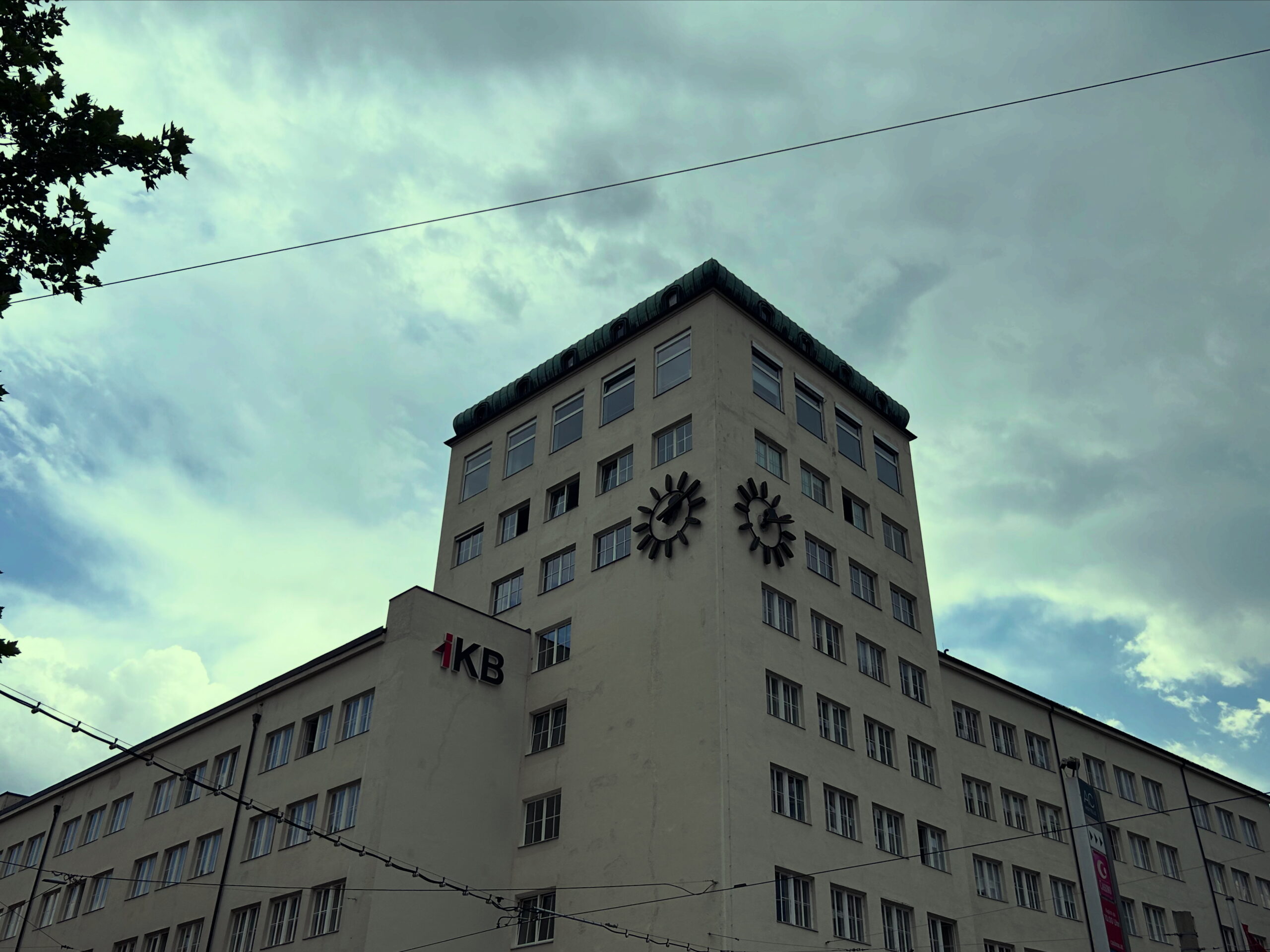
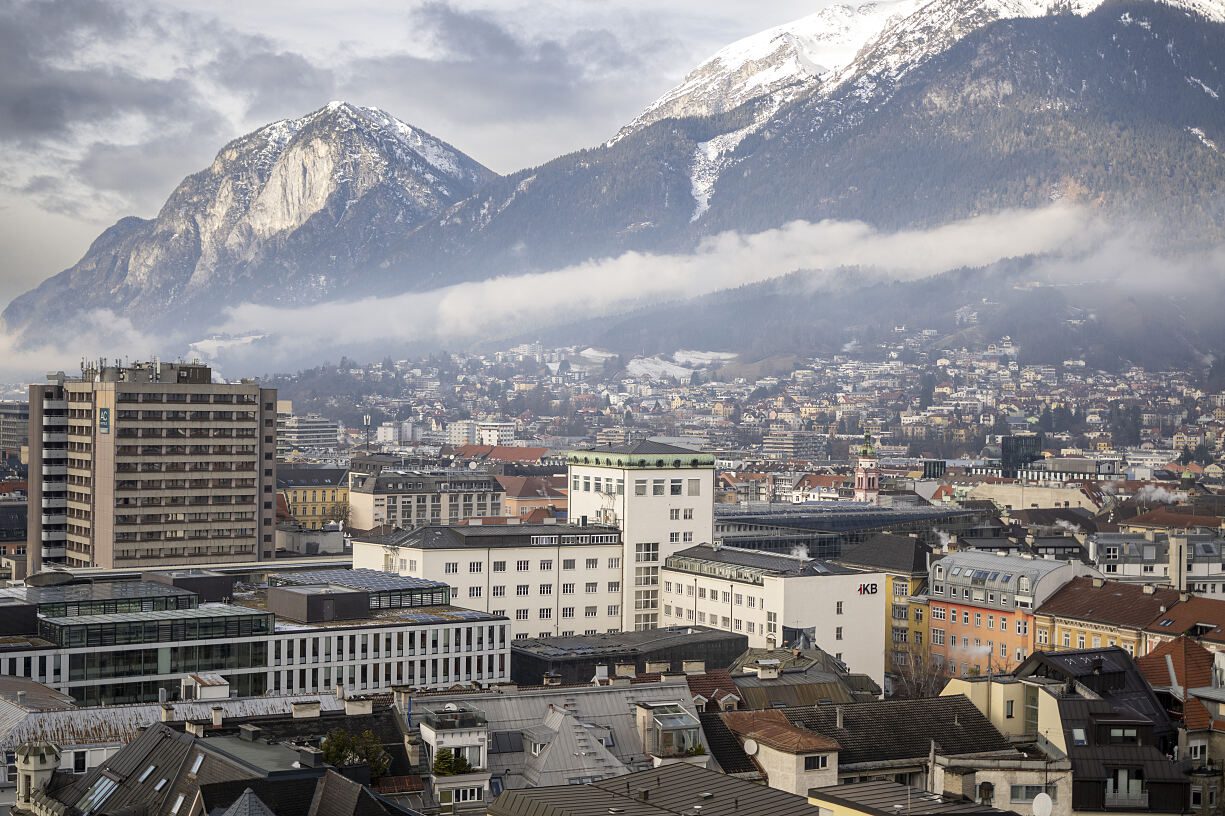
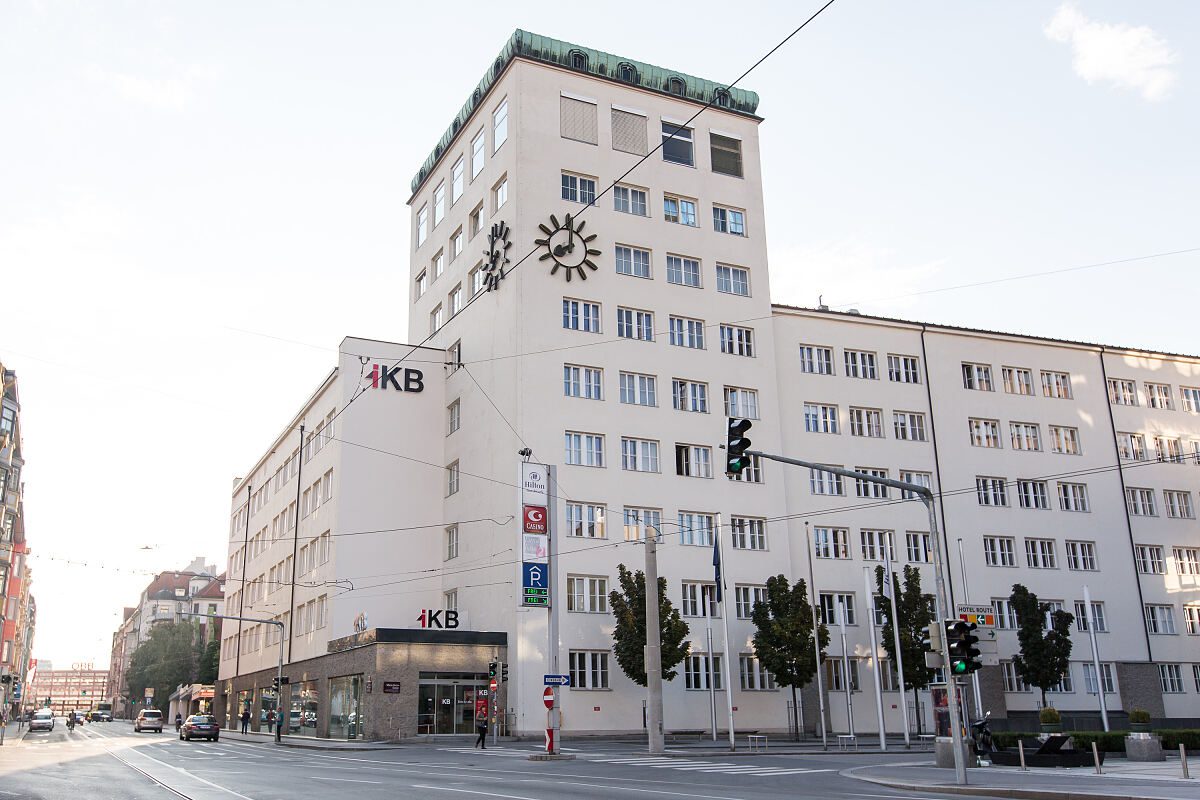
In 1911, under Mayor Wilhelm Greil, the city purchased the so-called Zelgergründe near the Triumphal Arch from the heirs of the Innsbruck entrepreneur Karl Zelger after years of negotiations. The Zelger family had accumulated a substantial fortune in the fashion and textile business since the early 19th century. The family estate, complete with a generous garden and park area, extended from Landhausplatz into present-day Salurner Straße. The debate carried out in the media over what should happen to this undeveloped plot of land between the city center and Wilten was already in full swing at the time. Over the preceding decades, the rapidly growing district around the railway station had been built over with business premises, factories, and residential buildings. Ideas ranged from a trade museum and a boarding school to a public park for the recreation of stressed city residents. Due to the outbreak of the war, none of the creative development proposals for Bismarckplatz—dedicated to the "Iron Chancellor" of the 1871 German unification—were initially implemented. In the early 1920s, Clemens Holzmeister submitted an initial proposal to modernize Innsbruck on this still undeveloped stretch of land. However, the time was not yet ripe for his megaproject, which encompassed a hotel, restaurants, offices, and apartments across 10 stories. Not only was there a lack of financial resources, but neighboring residents also protested fiercely against the planned new construction. By 1926, the shortage of money was temporarily resolved through the currency exchange replacing the Krone with the Schilling and state loans. Yet, the winning project from a competition submitted by Lois Welzenbacher did not silence the debates—quite the contrary. Instead of a park, the Innsbruck Electricity Works was built on the Zelgergründe. Not only the building itself, but also the way Welzenbacher had designed Innsbruck's first high-rise building stirred up heated emotions. A new town was to be set in contrast to the Old Town. City Councilor Richard Schober, himself an engineer, wrote in a 1929 article about the Verwaltungsgebäude der städtischen Licht- und Kraftwerke (Administrative Building of the Municipal Light and Power Works):
"When looking down at the city from the surrounding heights, a massive building complex rises up like an island out of the sea of houses, far towering over all other structures—defiant and strong, like a mighty medieval fortress."
The cubic elements in the style of *Neue Sachlichkeit* (New Objectivity), which had already divided opinions at the Municipal Indoor Pool on Amraser Straße, were considered an eyesore by many and a symbol of the city's entry into modernity by a few. Professor Josef Manfreda, an architect himself and a teacher at the State Trade School (*Staatsgewerbeschule*), raged against the disregard for the Tyrolean mountain landscape and the violation of the "healthy and simple sentiment of the population." Years later, the building was still a subject of contention, as Manfreda's 1930 article *"Das Hochhaus auf dem Bismarckplatz"* ("The High-Rise on Bismarckplatz") shows:
"the displeasure with the bare wall surfaces that is currently so frequently expressed in the assessment of buildings is a natural, reactionary feeling of our spoilt eye, which sees the streets predominantly overloaded with heavy cornices and window frames."
The plain building with its distinctive clock faces without numbers was not only a visual challenge for many contemporaries. Until then, church towers had dominated the skyline, their clocks regulating daily life. Now a secular utility building towered over the city. Modern architecture attracted the new authorities after 1938. During the Nazi era, the SS occupied the third floor of the office building. While the SA had its headquarters in a Gründerzeit house on Bürgerstraße 10, the Gestapo resided in the Old University on Herrengasse, and the Gauleitung erected the New Landhaus opposite Bismarckplatz in monumental classicism, the SS chose the high-rise as its base—symbolizing a break with the past. Allied air raids caused considerable damage to the building. Renovation began in 1947, which also involved structural changes. The striking asymmetrical corner tower disappeared, and the window fronts were completely redesigned. The onion dome crowning the building like a Baroque church was reinstalled during an additional floor extension. The high-rise remained an attraction. Visitors could enjoy refreshments on a terrace café overlooking the city rooftops. With the pre-Olympic construction boom for the second Winter Games, the square in front of Innsbruck’s first high-rise was redeveloped. Instead of enlivening the open space to highlight the main building of the city’s utilities, the area was densified. In 1970, construction began on a three-story, rather unadorned commercial and office building and a 15-story hotel. The high-rise in the Brutalist concrete style is considered one of the architectural sins of its time, which still negatively affects Innsbruck’s skyline.
In the boundless optimism of the early 1990s, the casino was added to the hotel. For its daring façade of green marble with an overhanging steel-and-glass structure beneath a slanted wing-shaped roof, the building received the Austrian Client Award from the Central Association of Architects in 1993. The fountain in front completes the ensemble on the former Bismarckplatz—an area that, more than a century ago, almost became an inner-city park.
Article 1930: the tower block on bismarckplatz
about 20 years ago, when architect adolf loos came onto the scene with the house on michaelerplatz in vienna, with its completely bare façade wall, in which only the square window holes were cut, a storm of indignation roared through the viennese art and lay world (there was a heated "loos house debate" in the viennese city council). i myself, although i had a prominent leader of modern austrian art as a teacher, could not initially warm to this architectural sobriety - today we say objectivity - either. there was no lack of mockers of this latest architecture, as it was written in a major viennese daily newspaper at the time: the most modern of architects walked through the streets of vienna brooding over art - loos was pictured below, standing in front of a canal grating and staring at it, and found what he had been searching for in vain for so long.
what was then considered an outburst of artlessness and was declared impossible by the public, the authorities and the press, is now taken for granted to an even greater extent by the public in all major cities in germany and france. even in innsbruck, some new buildings and conversions (tower block, farmhouse, etc.) have been built from this new point of view of practicality.) have emerged from this new point of view of objectivity. soon we will also have become friends with the clock, which shows only single strokes instead of numerals, and it will only be a matter of time before - just like the loos' purpose manifestation and the abstraction of the hour digits - only lower case letters will be used in our writing for rational and economic reasons. apart from the fact that such an implementation in german writing is not really new at all, but merely a regeneration, and that lower-case writing exists in many foreign languages without any signs of inadequacy, it would certainly be accepted by the business world without resistance (just think of the simplification of typewriter manipulation and typesetting work, the simplicity of language teaching, etc.).
what seemed outrageous to us art disciples at the time in our generally school-educated obsession with architectural finery due to the sensible but revolutionary idea of loos' house was soon brightened up by inner realisation. when i walked through the streets of innsbruck 10 years ago, coming from vienna, i already had the silent wish to see all the superfluous, meaningless, heavy cornices and stucco decorations with which our newer houses (anichstrasse, bürgerstrasse, etc.) are "stuck on" and "decorated" knocked down - which, by the way, happened after a few years in individual places (post office building, farmhouse, etc.).
the disapproval of bare wall surfaces that is so often expressed in the judgement of buildings at present is a natural, reactionary feeling of our spoilt eye, which sees the streets predominantly overloaded with heavy cornices and window frames. therefore, the strict rejection of the new architecture, unless it shows obvious violations of reason and taste, is also very unfair. one must not forget that the non-expert and the average person, even some artists, are mostly conventionally biased in their judgement and therefore cannot claim to be truly objective.
in order not to be misunderstood, i must expressly state at this point that, when it comes to the external design of residential buildings, i am resolutely opposed to the uniform bleakness of factory construction, which is also largely reflected in the tower block. we have plenty of examples in tyrol's old towns that show how a certain warmth and individuality can be achieved even with the simplest of designs. let us now try to judge the skyscraper from the spirit of our time. in doing so, however, we must free ourselves as far as possible from the ban of certain traditional views in order to exclude those one-sided judgements that no longer have any inner justification today. weren't the painters courbet and delacroix labelled as "not classical", leibl and liebermann as "too naturalistic" due to the public's habitual adherence to traditional aesthetic principles? and what did richard wagner's art have to suffer? of course a real, true critic must above all have a clear eye and a healthy sensibility coupled with reason and know how to defend himself against the artistic distortions and gimmicks of all "progressive" artists who try to pretend their work is visionary.
finally, let us remember that it is not a question of whether a building is good or bad, not of horizontal windows or a flat roof, nor of decorative romanticism or machine fanaticism, but of the honest, truly forward-looking attitude of an architect. welzenbacher is currently building in a modern Nordic style and has achieved the best success with it. his style was well received in germany and he was appointed there. it is therefore not surprising that the tower block, as a proud representative of the metropolitan architecture of the lowlands, does not fit into our mountain world - this is perhaps the greatest weakness of the building.
as i said, the essential thing about this high-rise issue is not so much whether or not the high-rise fits in with tirol, nor even the few fanciful additions, but the act that contributes to the emergence of a new style.
The municipal council and the Zelger heirs
Published: Innsbrucker Nachrichten / 2 April 1909
Immediately before the last meeting, the Zelger heirs sent a printed letter entitled „For clarification“ to all municipal councillors regarding the issue of building on the Zelger grounds and the construction of a public square on the south side of Maximilianstrasse.
Since this letter of clarification contains the reservation that it may be subject to further distribution, the Service and Legal Section has decided to read it out in public for the time being.
(This was followed by the reading of the rather extensive document.)
The Service and Legal Section has also decided to propose to the municipal council that the position of the municipality in this matter be characterised by a public statement, which should read as follows:
„The municipality is well aware that the building line, which provides for an extension of the square on the south side of Maximilianstraße, does not currently have any real existence and cannot have any, because no building has been erected on or in this building line. This building line really only exists on paper, but there it rightfully exists by virtue of the governor's authorisation, and if Zelger's heirs believe that they will soon be able to put an end to this paper existence, they must be aware that they have at their disposal aids that are completely unknown to the city council and its legal advisors.
The municipal council's intention to widen Maximilianstrasse with a bulge in the square does not appear to be a mere concern for urban „finery“, but rather the fulfilment of an urgent need recognised by the entire population, the fulfilment of which is moreover guaranteed by express legal provision. The Innsbruck Building Code (Law of 30 March 1896, § 3, paragraph 2) literally stipulates that when larger plots of land are divided up, care must be taken to ensure that correspondingly large and free spaces are left; and if the municipality complies with this legal provision, it can only be said that the municipality is liable for damages in gross disregard of public law principles.
It seems understandable and natural to the Zelger heirs that the construction of new roads, the construction and equipping of which with supply lines has already cost and will continue to cost the municipality large sums of money, has turned the Zelger plots into building plots with a much higher value. However, the Zelger heirs find it incomprehensible that the municipality, in consideration of the needs of the population and on the basis of explicit legal provisions, did not choose the exact building line that would be the most advantageous for Zelger's private assets when the issue of building development became topical due to the death of Mr Zelger, and they consider this to be an irresponsible encroachment on their private rights.
In response to the concession shown by the Zelger heirs at the opening of Maximilianstrasse and in order to enable them to utilise the building plots immediately, the municipal council voluntarily offered the Zelger heirs the sum of over 80,000 crowns for the square in question and the roads surrounding it, a price that far exceeds what the Zelger heirs would ever be able to obtain under the provisions of the Innsbruck building regulations, unless a decision were to be made that would constitute a manifest error of law. This offer was only able to arouse the amusement of the Zelger heirs and the municipality hereby withdraws it.
It goes without saying that nothing remains but to bring the matter before the competent authorities. However, the Zelger heirs should not expect the municipality to help them in the forthcoming dispute and take into account interests other than those of the municipality.“
The section's motion was adopted.
Franz Baumann and Tyrolean modernism
The First World War not only brought states and ruling dynasties to an end; it also marked a turning point for art, music, literature, and architecture. In Innsbruck, a handful of planners transformed the cityscape during the two decades of the First Republic. Inspired by new design movements such as the Bauhaus style from Germany, skyscrapers from the United States, Italian Futurism, and Soviet Modernism from the revolutionary USSR, remarkable architectural projects emerged in Innsbruck. The best-known representatives of the avant-garde who introduced this new approach to shaping public space in Tyrol were Lois Welzenbacher, Siegfried Mazagg, Theodor Prachensky, and Clemens Holzmeister. Each of these architects had distinct characteristics, making the Tyrolean Modern Movement (Tiroler Moderne) difficult to define precisely. Their common feature was a departure from the classical architecture of the pre-war era while retaining typical Alpine materials and architectural elements, following the principle of “Form Follows Function.” In a 1920 article for the magazine Tiroler Hochland, Lois Welzenbacher wrote about the architecture of his time:
"As far as we can judge today, it is clear that the 19th century lacked the strength to create its own distinct style. It is the age of stillness... Thus details were reproduced with historical accuracy, mostly without any particular meaning or purpose, and without a harmonious overall picture that would have arisen from factual or artistic necessity."
The most prominent and visually influential representative of the so-called Tyrolean Modern Movement in Innsbruck was Franz Baumann (1892–1974). Unlike Holzmeister or Welzenbacher, he never received an academic education. Baumann was born in Innsbruck in 1892, the son of a postal official. His religious education teacher, the now controversial theologian and writer Anton Müller, known by the pseudonym Brother Willram, recognized the young Franz Baumann’s talent for drawing and enabled him to attend the Imperial-Royal State Trade School (k.k. Staatsgewerbeschule) at the age of fourteen. There he met his future brother-in-law Theodor Prachensky, who would also play a significant role in his professional life. During his school years, Baumann gained practical experience as a bricklayer with the construction company Huter & Söhne and began producing landscape drawings around Innsbruck together with his sister Maria and Prachensky. In 1910, Baumann followed his friend to Merano to take up employment with the renowned construction firm Musch & Lun. The former Tyrolean capital was then the most important tourist destination in Tyrol, attracting an international clientele of spa visitors. Under Adalbert Erlebach, who would later play a key role in the development of Hungerburg, Baumann gained his first experience in planning large-scale projects such as hotels and cable cars. Important for his later career was not only his technical education but also his first encounters with the Tyrolean Heritage Protection Association (Tiroler Heimatschutzverband). Kunibert Zimmeter had founded this organization together with Gotthard Graf Trapp. Since building regulations were a provincial matter, the Tyrolean Heritage Protection Association, together with the district authorities, acted as the final authority responsible for evaluating and approving construction projects. In many Tyrolean villages, hotels had replaced churches as the largest buildings in the local skyline. The aim was to prevent tourism and industrial developments from overwhelming traditional village character. In Our Tyrol: A Homeland Protection Book, Zimmeter wrote:
"Let us look at the flattening of our private lives, our amusements, at the centre of which, significantly, is the cinema, at the literary ephemera of our newspaper reading, at the hopeless and costly excesses of fashion in the field of women's clothing, let us take a look at our homes with the miserable factory furniture and all the dreadful products of our so-called gallantry goods industry, Things that thousands of people work to produce, creating worthless bric-a-brac in the process, or let us look at our apartment blocks and villas with their cement façades simulating palaces, countless superfluous towers and gables, our hotels with their pompous façades, what a waste of the people's wealth, what an abundance of tastelessness we must find there."
After four years, Baumann’s career was abruptly interrupted. Like most of his generation, the First World War tore him away from both work and everyday life. While serving on the Italian Front, he suffered a gunshot wound to the abdomen and recovered in a military hospital in Prague. During this otherwise inactive period, he painted cityscapes depicting buildings in and around Prague. These urban views, which later helped him visualize architectural designs, were exhibited at his only exhibition in 1919. His breakthrough in construction came the following year. Baumann unexpectedly won the competitions for the renovation of the Weinhaus Happ in Innsbruck’s Old Town and for the Nordkette Cable Railway. Besides his creativity, his success stemmed from the alignment between his architectural philosophy and the requirements of both the Tyrolean Heritage Protection Association and the public tenders issued by the young First Republic. In the economic upswing of the late 1920s, a new class of customers and visitors emerged in tourism. The aristocratic distance toward the mountains had given way to a middle-class enthusiasm for sports. No longer were grand hotels built at elevations of 1,500 meters for health resorts; instead, functional infrastructure for skiers in high alpine terrain, such as on the Nordkette, was constructed. Buildings were expected to blend harmoniously into their surroundings while remaining attractive and practical. Despite the social and artistic innovations of the era, architects still had to take regional character into account. This was precisely where Baumann’s approach to holistic building in a Tyrolean context excelled. From exterior lighting to furniture, Baumann designed even the smallest details and integrated them into his overall concept of the Tyrolean Modern Movement. Every technical function and detail, as well as environmental conditions, topography, and sunlight, played a role for him. Although he was officially not permitted to use the professional title of architect, he followed the principles outlined by architect Adolf Loos (1870–1933) in his essay Rules for the Person Building in the Mountains:
Don't build picturesquely. Leave such effects to the walls, the mountains and the sun. The man who dresses picturesquely is not picturesque, but a buffoon. The farmer does not dress picturesquely. But he is...
Pay attention to the forms in which the farmer builds. For they are ancestral wisdom, congealed substance. But seek out the reason for the mould. If advances in technology have made it possible to improve the mould, then this improvement should always be used. The flail will be replaced by the threshing machine."
Beginning in 1927, Baumann operated his own studio on Schöpfstraße in the Wilten district. At the height of its success, his office employed fourteen staff members. Time and again, his professional path crossed with that of his friend and brother-in-law Theodor Prachensky. Together, beginning in 1929, they planned the new secondary school in Hötting on Fürstenweg. Although separate wings for boys and girls still had to be included according to contemporary conventions, the building otherwise fully embodied the style of New Objectivity (Neue Sachlichkeit) and the principle of “Light, Air, and Sun.” Thanks to his modern approach, which combined functionality, aesthetics, tradition, and economical construction, Baumann weathered the economic crisis that began in the late 1920s relatively well. It was only the 1,000-Mark Blockade, imposed by Hitler on Austria in 1933 in an attempt to place financial pressure on the Republic, that caused serious problems for his architectural practice. Not only did unemployment in the tourism sector triple within a short period of time, but the construction industry also entered a severe downturn. In 1935, Baumann became head of the Central Association of Architects, after receiving a special exemption allowing him to use the professional title of architect despite lacking a formal academic qualification. With Austria’s annexation by Germany in 1938, he quickly joined the National Socialist German Workers’ Party (NSDAP). On the one hand, like his colleague Lois Welzenbacher, he may have been sympathetic to certain ideas of National Socialism. On the other hand, membership enabled him to advance his career as chairman of the Reich Chamber of Fine Arts in Tyrol. In this position, however, he repeatedly opposed the radical alterations to Innsbruck’s cityscape that the Nazi authorities wished to implement. Innsbruck’s mayor, Egon Denz, wanted the Triumphal Arch and St. Anne’s Column removed in order to create more space for traffic in Maria-Theresien-Straße. At that time, the city center still served as the principal traffic route connecting the Brenner Pass in the south with the federal highway leading east and west along what is now the Innrain. A statue of Adolf Hitler was intended to replace St. Anne’s Column. Gauleiter Franz Hofer also planned to have the towers of the Court Church blown up. In his official capacity, Baumann assessed both projects negatively. When the matter eventually reached the desk of Albert Speer, Speer agreed with Baumann’s assessment. From that point onward, Gauleiter Hofer no longer awarded Baumann any public projects. However, this courageous stance probably spared him more serious consequences after the war. After being questioned during the denazification process following the war, Baumann began working in the municipal building department, likely also on the recommendation of his brother-in-law Theodor Prachensky. Although Baumann was fully exonerated, partly due to testimony from the abbot of Wilten, whose church towers he had helped save, his reputation as an architect could no longer be fully restored. Another setback was the destruction of his studio on Schöpfstraße, which was hit by a bomb in 1944. In his postwar career, Baumann became responsible for the restoration of buildings damaged during the war. Under his supervision, the Boznerplatz and its Rudolf Fountain were rebuilt, while the Burggraben area and the New City Halls (Neue Stadtsäle) behind the Tyrolean State Theatre were redesigned. Franz Baumann died in 1974. Today, his paintings, sketches, and drawings are highly sought after and command substantial prices on the art market. Anyone who carefully examines more recent large-scale projects in Innsbruck, such as the City Library, the PEMA Towers, and many of the city’s residential developments, can still recognize elements of the Tyrolean Modern Movement today.
A republic is born
Hardly any era is more difficult to grasp than the interwar period. The Roaring Twenties, jazz, and automobiles come to mind just as readily as inflation and economic crisis. In major cities like Berlin, young women carrying themselves as flappers with bobbed hair, cigarettes, and short skirts danced lasciviously to the new sounds. In Innsbruck, American drinks were served during Five O'Clock Tea at the bar in the Knights' Hall (Rittersaal) of the Cafe Gasthaus Zur Annasäule, which later became the Alt-Innsbruck. The suits of armor can still be admired in the bay window from Maria-Theresien-Straße. For the most part, however, as part of the young Republic of German-Austria, Innsbruck’s population belonged to the faction of poverty, economic crisis, and political polarization. Right from the start, the proclamation of the republic in front of the parliament in Vienna before more than 100,000 people—who were less enthusiastic than they were curious and unsettled—was anything but smooth, accompanied by riots, shootouts, two deaths, and 40 injuries. No one knew how things were supposed to continue after the end of the monarchy and the loss of a large part of the state territory. The new Austria seemed too small and incapable of surviving. The bureaucratic apparatus of the Austro-Hungarian Empire carried on seamlessly under a new flag and name. In the constitution, the federal states, as successors to the old crown lands, were granted a great deal of leeway in legislation and administration under the framework of federalism. However, enthusiasm for the new state among the population remained limited. Not only was the supply situation miserable after the loss of the vast majority of the former giant Habsburg empire, but people also distrusted the underlying concept of the republic. The monarchy had not been perfect, but very few people could relate to the idea of democracy. Instead of being subjects of the Emperor, people were now citizens, but only citizens of a dwarf state with an oversized capital that was little loved in the federal states, rather than citizens of a great empire. In the former crown lands, which were largely governed by the Christian Social Party, people frequently spoke of the "Viennese hydrocephalus" (Wiener Wasserkopf) that let itself be fed by the yields of the hardworking rural population. Other federal states also toyed with the idea of breaking away from the republic after the plan to join Germany, which was supported by all parties, was banned by the victorious powers of the First World War. The various Tyrolean plans, however, were particularly spectacular. From a neutral alpine state with other federal states, a free state consisting of Tyrol and Bavaria, or extending from Kufstein to Salurn, an annexation to Switzerland, all the way to a Catholic church-state under papal leadership, many options were considered. The most obvious solution was particularly popular. Feeling German was nothing new. So why not also attach oneself politically to the big brother to the north? This desire was highly pronounced, especially among urban elites and students. The annexation plan (Anschlussplan) received 98% approval in a vote in Tyrol, but it never came to fruition. In Innsbruck, the Tyrolean National Assembly (Tiroler Nationalversammlung) and the Tyrolean National Council (Tiroler Nationalrat)—a concentration government with members from all parties—constituted themselves in the autumn of 1918 from the members of the former provincial parliament (Landtag). The National Council had authority over the people's and citizens' militias (Volks- und Bürgerwehren), which had formed at the municipal level to maintain public order, at least on paper. Primarily between Innsbruck and the Brenner Pass, up to 50,000 soldiers were stationed at the railway stations, causing problems while waiting for their transport home.
Instead of becoming a part of Germany, Tyrol was occupied by the hated Wallsche (Italian forces). For nearly two years after the end of the war, Italian troops occupied Innsbruck. Following the complex and lengthy peace negotiations in Paris, it finally became a certainty: on October 10, 1920, the formal annexation of South Tyrol took place. At the Brenner Pass, the barrier gate went down. On the North Tyrolean side, only a few administrative and customs buildings were erected, but in the southern part of the village, large barracks shot out of the ground to secure the new border militarily. Historical Tyrol was split in two. In Innsbruck and many other Tyrolean municipalities, pompous mourning ceremonies were organized annually on this date for years. In 1924, the Innsbruck city council decided to name squares and streets around the main railway station after South Tyrolean cities. Bozner Platz as well as Brixner Straße and Salurner Straße still bear their names today. Many people on both sides of the Brenner felt betrayed. Although they had by no means won the war, they did not see themselves as losers to Italy. Hatred toward Italians reached its peak in the interwar period, even though the occupying forces acted with pronounced mildness. A passage from the 1930s short story collection "The Front Above the Peaks" (Die Front über den Gipfeln) by Karl Springenschmid reflects the general mood:
"The young girl says, 'Becoming Italian would be the worst thing.
Old Tappeiner just nods and grumbles: "I know it myself and we all know it: becoming a whale would be the worst thing."
Trouble was also brewing in domestic politics. The revolution in Russia and the subsequent civil war with millions of fatalities, expropriation, and a complete reversal of the system cast its long shadow all the way to Austria. The prospect of "Soviet conditions" terrified people. Austria was deeply divided. Capital and federal states, city and countryside, citizens, workers, and peasants—in the vacuum of the first postwar years, each group wanted to shape the future according to its own ideas. The cultural struggles of the late monarchy between conservatives, liberals, and socialists continued seamlessly. The rift existed not only on a political level. Morals, family, leisure activities, education, faith, legal understanding—every sphere of life was affected. Who should govern? How should wealth, rights, and duties be distributed? Liberals and the Tyrolean People's Party (Tiroler Volkspartei), which had emerged from the Peasants' League (Bauernbund), the People's Association (Volksverein), and the Catholic Working Class (Katholische Arbeiterschaft), were at least as hostile toward Social Democracy as they were toward the federal capital of Vienna and the Italian occupiers. A communist overthrow was not a real danger, especially in Tyrol, but it was effectively instrumentalized in the media as a threat to bring Social Democracy into disrepute. Although a workers', peasants', and soldiers' council (Arbeiter-, Bauern- und Soldatenrat) modeled on the Soviet system had proclaimed itself in Innsbruck in 1919, its influence remained minimal and it was supported by no political party. From 1920 onward, so-called soldiers' councils were officially formed, but like the rest of politics, they were dominated by the Christian Socials. The conservative peasant and bourgeois camp right of center militarized itself more professionally with the Tyrolean Homeland Guard (Tiroler Heimatwehr) and enjoyed a stronger influx of members than leftist groups, also thanks to church support. From church pulpits and in conservative media, Social Democracy was referred to as the "party of Jews" (Judenpartei) and homeless traitors to the fatherland. People were all too eager to blame them for the lost war and its consequences. The Tiroler Anzeiger summed up the public fears: "Woe to the Christian people if the Jew-Socialists win the elections!".
While the Tyrolean People's Party dominated in rural districts, Social Democracy in Innsbruck under the leadership of Martin Rapoldi always managed to win between 30% and 50% of the vote in elections from 1919 onward, despite the strong headwinds. Under the new municipal code of 1919, which provided for universal suffrage for all adults, the city council comprised 40 members. Out of 24,644 citizens called to the ballot box, an incredible 24,060 exercised their right to vote. A certain degree of emancipation also became noticeable. Right from the first city council with free elections, three women were represented. The fact that the Social Democrats did not secure the mayoral seat was due to the majorities in the city council formed by alliances among the other parties.
High politics, however, was merely the backdrop to the actual misery. Martin Rapoldi got straight to the point in September 1919: "Gentlemen, for the moment the constitutional question is completely secondary to the population, as is whether the province has more rights or fewer rights. More potatoes is the slogan in our province." Time and again, looting and hunger riots broke out in the provincial capital. Those who had money could supply themselves with food on the black market; the rest depended on charity from foreign aid shipments. Long after the war, the province of Tyrol still required outside help to feed its population. Under the headline "Significant Expansion of the American Child Relief Action in Tyrol," the Innsbrucker Nachrichten reported on April 9, 1921: "Taking into account the needs of the province of Tyrol, the American representatives for Austria have most generously increased the daily number of meals to 18,000 portions." Alongside hunger, medical care was a major issue. The epidemic that went down in history as the Spanish Flu also took its toll in Innsbruck in the years after the war. Exact numbers were not recorded; worldwide, the number of fatalities is estimated at 27 to 50 million. In Innsbruck, at the height of the Spanish Flu, around 100 victims are said to have succumbed to the disease daily. Many Innsbruckers had not returned home from the battlefields and were missing as fathers, husbands, and workers. Many of those who did make it back were wounded and scarred by the horrors of war. As late as February 1920, the "Tyrolean Committee of Siberians" (Tiroler Ausschuss der Sibirier) organized a benefit evening at the Gasthof Breinößl "…in favor of the fund for the repatriation of our prisoners of war…". On top of this came unemployment. Civil servants and public sector employees in particular had lost their jobs after the League of Nations tied its loan to harsh austerity measures. Public sector salaries were cut. Strikes occurred repeatedly. Tourism as an economic factor was nonexistent due to the problems in the surrounding countries, which were likewise ravaged by the war. The construction industry, which had been booming before the war, collapsed completely. Innsbruck’s largest company, Huter & Söhne, had over 700 employees in 1913; at the peak of the economic crisis in 1933, only 18 remained. The middle class largely collapsed. The average Innsbrucker was destitute and malnourished. Often, no more than 800 calories per day could be scraped together. In this climate of poverty, the crime rate was higher than ever before. Many people lost their homes. In 1922, 3,000 families in Innsbruck were looking for accommodation despite a municipal emergency housing program that had already been in effect for several years. Apartments were built into every available property. On February 11, 1921, a long list in the Innsbrucker Nachrichten detailing the individual projects under way included this item:
"The municipal hospital has vacated the epidemic barracks in Pradl and placed them at the disposal of the municipality for the creation of emergency housing. The necessary credit of 295 K (Editor's note: Kronen) was approved for the construction of 7 emergency apartments."
In the early years, there was hardly any improvement in people's everyday lives. The central government had little enforcement power in distant federal states like Tyrol. For a time, Innsbruck, like many other Austrian municipalities, even began printing its own money. The amount of money in circulation rose from 12 billion kronen to over 3 trillion kronen between 1920 and 1922. An epochal inflation was the result. Then, politics woke up from its lethargy. Under Chancellor Ignaz Seipel, the Republic managed to secure a League of Nations loan. The krone, a relic of the monarchy, was replaced by the schilling as the official currency of Austria on January 1, 1925. Between 1918 and 1922, the old currency had lost more than 95% of its value against the dollar relative to the pre-war exchange rate. With the currency stabilization following the League of Nations loan, however, not only did banks and citizens recover, but public sector construction orders also picked up again. Innsbruck modernized. What economists call a sham boom (Scheinblüte) occurred. This short-term economic recovery was a bubble, but it brought major residential construction and infrastructure projects to the city of Innsbruck. In Innsbruck, there are no deliberate places of remembrance dedicated to the creation of the First Republic. The heritage-protected residential complexes such as the Schlachthofblock, the Pembaurblock, the Mandelsbergerblock, the Pembaurschule, the municipal indoor swimming pool (Städtisches Hallenbad), the Höhenstraße up to the Hungerburg, and the cable cars onto the Patscherkofel and Nordkette are contemporary witnesses that remain in operation to this day. The city purchased the Achensee lake and, as the main shareholder of TIWAG, built the power plant in Jenbach. In 1930, the Universitätsbrücke bridge connected the clinic in Wilten with the Höttinger Au. On the Sill river, the Pembaurbrücke and the Prinz-Eugen-Brücke were constructed. In Reichenau, the first airfield opened on June 1, 1925, involving Innsbruck in air traffic 65 years after the opening of the railway line. Many interested onlookers gathered on the meadow east of the city to witness the event. A monument to the pilots who fell in the World War was unveiled before the German airline Aero Lloyd took off for Munich in a single-engine Fokker-Grulich F III. In the autumn, the integration of the new airfield into the Strasbourg – Zurich – Innsbruck – Vienna route by the French Compagnie Internationale de Navigation followed. Thanks to the daring efforts of pilot Raoul Stojsawljewic, remote regions and alpine mountain huts could now also be supplied with food from Innsbruck, as a report in the Innsbrucker Nachrichten from June 7, 1926, shows:
"In fine weather yesterday morning, Major Stojsawljewic from German Lufthansa took off with his aircraft and flew toward Kühtai, where he dropped free beer, donated by the 'Löwenbräu' brewery, by parachute from a low altitude. At 10 o'clock, the Patscherkofelhaus was approached and beer from the Zipf brewery was dropped..."
Trotz der kurzzeitigen Höhenflüge war die Erste Republik auch auf lokaler Ebene eine schwere Geburt und sie sollte nicht lange Bestand haben, obwohl viel Positives seinen Anfang nahm. Aus Untertanen wurden Bürger. Was in der Zeit Maria Theresias begann, wurde nun unter neuen Vorzeichen weitergeführt. Der Wechsel vom Untertanen zum Bürger zeichnete sich nicht nur durch ein neues Wahlrecht, sondern vor allem durch die verstärkte Obsorge des Staates aus. Staatliche Regelungen, Schulen, Kindergärten, Arbeitsämter, Krankenhäuser und städtische Wohnanlagen traten an die Stelle des Wohlwollens von Grundherrn, Landesfürsten, wohlhabender Bürger, der Monarchie und der Kirche. Bis heute basiert vieles im österreichischen Staatswesen sowie im Innsbrucker Stadtbild und der Infrastruktur auf dem, was nach dem Zusammenbruch der Monarchie entstanden war. Auch gesellschaftliche Bräuche und alltägliche Lebenseinstellungen veränderten sich in der Republik nach dem Zusammenbruch der Monarchie. Der 1925 eingeführte Weltspartag erinnert alljährlich an die Einführung des Schillings und die Mahnung an Kinder und Erwachsene zum verantwortungsvollen Umgang mit Geld. Die Handschrift der jungen Massenparteien und das neue Verhältnis zwischen Zentralstaat und Bürger sind bei allem Lokalpatriotismus unübersehbar.
Wilhelm Greil: DER Bürgermeister Innsbrucks
One of the most important figures in Innsbruck's municipal history was Wilhelm Greil (1850–1928). The entrepreneur held the office of mayor from 1896 to 1923, having previously helped shape the city's fortunes as vice mayor. His tenure was not only long, but also took place during a particularly dynamic era. The four decades between the economic crisis of 1873 and the First World War were marked by unprecedented growth and rapid modernization. It was a time of incorporating entire city districts, technical innovations, and new media. Private investments in infrastructure such as railways, energy, and electricity were encouraged by the state and given tax incentives in order to lead the provinces and cities of the struggling Danube Monarchy into modernity. The city's economy was booming. Businesses emerged in the new districts of Pradl and Wilten, attracting a labor force. Tourism also brought fresh capital into the city. Innsbruck's city council was dominated by the liberal and Pan-German nationalist 'Deutsche Volkspartei' (German People's Party), to which Greil also belonged. It was only with the incorporation of Wilten and Pradl in 1904 that the conservatives were able to gain ground, though they could not fully catch up. Social Democracy played almost no role until 1918. Due to an electoral system based on voting rights categorized by wealth classes, only about 10% of Innsbruck's population could step up to the ballot box. Women were fundamentally excluded. Furthermore, relative voting rights applied within the three electoral colleges, which effectively meant: winner takes it all. Appropriately enough, Mayor Greil lived much like a Renaissance prince. He hailed from the upper-class haute bourgeoisie. His father was able to afford establishing the family's home base in the Palais Lodron on Maria-Theresien-Straße. Thanks to this electoral statute, Mayor Greil could rely on 100% support in the city council well into the era of the First Republic, which naturally simplified decision-making and governance considerably. For all the efficiency that Innsbruck's mayors displayed on a superficial level, one should not forget that this was only possible because, as part of an elite composed of entrepreneurs, merchants, and professionals, they ruled through a form of elected dictatorship—without any significant opposition or consideration for other population groups such as workers, artisans, and employees. The Imperial Municipal Act of 1862 granted cities like Innsbruck, and thus its mayors, far-reaching powers. It is hardly surprising that the chain of office presented to Greil on his 60th birthday by his colleagues on the city council bore an astonishing resemblance to the collar orders of the old nobility. However, Greil was also a skillful politician who adeptly navigated the established power structures and media landscape of his time. Article 17 of the Austrian Basic Law of 1867, known as the December Constitution, secured freedom of expression in the press without prior censorship for the first time—excluding, of course, punishable content such as blasphemy or insulting the authorities. Consequently, a variety of newspapers established themselves, such as the conservative Neue Tiroler Stimme, the social democratic Volkszeitung, or the liberal Innsbrucker Nachrichten, shaping a worldview according to their publishers' preferences. Thanks to the reach of the Innsbrucker Nachrichten, Wilhelm Greil was able to effectively project his view of local politics. Despite his at times fierce speeches—modeled on the platform of Georg Ritter von Schönerer (1842–1921), the founding figure of the Pan-German nationalists—he managed to reach arrangements with conservative forces in the region, even if things frequently clashed in the media and elsewhere. Taxes, social policy, education, housing, and the design of public spaces were debated with passion and zeal, often enough with violence as the ultimate argument.
Unter Greils Ägide und dem allgemeinen wirtschaftlichen Aufschwung erweiterte sich Innsbruck im Eiltempo. Der Gemeinderat kaufte ganz im Stil eines Kaufmanns vorausschauend Grund an, um der Stadt Neuerungen zu ermöglichen. Der Politiker Greil konnte sich bei den großen Bauprojekten der Zeit auf die Beamten und Stadtplaner Eduard Klingler, Jakob Albert und Theodor Prachensky stützen. Infrastrukturprojekte wie das neue Rathaus in der Maria-Theresienstraße 1897, die Eröffnung der Mittelgebirgsbahn, die Hungerburgbahn und die Karwendelbahn wurden während seiner Regierungszeit umgesetzt. Weitere gut sichtbare Meilensteine waren die Erneuerung des Marktplatzes und der Bau der Markthalle. Neben den prestigeträchtigen Großprojekten revolutionierte vor allem Unsichtbares in den letzten Jahrzehnten des 19. Jahrhunderts das Leben vieler Innsbrucker. Bereits Greils Vorgänger Bürgermeister Heinrich Falk (1840 – 1917) hatte erheblich zur Modernisierung der Stadt und zur Besiedelung des Saggen beigetragen. Seit 1859 war die Beleuchtung der Stadt mit Gasrohrleitungen stetig vorangeschritten. Mit dem Wachstum der Stadt und der Modernisierung wurden die Senkgruben, die in Hinterhöfen der Häuser als Abort dienten und nach Entleerung an umliegende Landwirte als Dünger verkauft wurden, zu einer Unzumutbarkeit für immer mehr Menschen. 1880 wurde das Ragging, so der Name im Volksmund für die Entleerung der Aborte, in den Verantwortungsbereich der Stadt übertragen. Zwei pneumatische Maschinen sollten den Vorgang zumindest etwas hygienischer gestalten. Zwischen 1887 und 1891 wurde Innsbruck mit einer modernen Hochdruckwasserleitung ausgestattet, über die auch Wohnungen in höher gelegenen Stockwerken mit frischem Wasser versorgt werden konnten. Wer auf sich hielt und es sich leisten konnte, hatte damit erstmals die Gelegenheit eine Spültoilette im Eigenheim zu installieren. Greil setzte diesen Feldzug der Modernisierung mit einer Vielzahl an Infrastrukturprojekten fort. Die Ansammlung an Menschen auf enger werdendem Raum unter teils prekären Hygieneverhältnissen hatte viele Probleme mit sich. Die Randbezirke der Stadt und die umliegenden Dörfer wurden regelmäßig von Typhus heimgesucht. Nach jahrzehntelangen Diskussionen wurde 1903 mit dem Bau einer modernen Schwemmkanalisation begonnen. Ausgehend von der Innenstadt wurden immer mehr Stadtteile an diesen heute alltäglichen Luxus angeschlossen. 1908 waren nur die Koatlackler Mariahilf und St. Nikolaus nicht an das Kanalsystem angeschlossen. Auch der neue Schlachthof im Saggen erhöhte Hygiene und Sauberkeit in der Stadt. Schlecht kontrollierte Hofschlachtungen gehörten mit wenigen Ausnahmen der Vergangenheit an. Das Vieh kam im Zug am Sillspitz an und wurde in der modernen Anlage fachgerecht geschlachtet. Greil überführte das Gaswerk in Pradl und das Elektrizitätswerk in Mühlau in städtischen Besitz. Die Straßenbeleuchtung wurde im 20. Jahrhundert von den Gaslaternen auf elektrisches Licht umgestellt. 1888 übersiedelte das Krankenhaus von der Maria-Theresienstraße an seinen heutigen Standort. Bürgermeister und Gemeinderat konnten sich bei dieser Innsbrucker Renaissance neben der wachsenden Wirtschaftskraft in der Vorkriegszeit auch auf Mäzen aus dem Bürgertum stützen. Waren technische Neuerungen und Infrastruktur Sache der Liberalen, verblieb die Fürsorge der Ärmsten weiterhin bei klerikal gesinnten Kräften, wenn auch nicht mehr bei der Kirche selbst. Freiherr Johann von Sieberer stiftete das Greisenasyl und das Waisenhaus im Saggen. Leonhard Lang stiftete das Gebäude in der Maria-Theresienstraße, in der sich bis heute das Rathaus befindet gegen das Versprechen der Stadt ein Lehrlingsheim zu bauen.
In contrast to the booming pre-war era, Greil’s leadership after 1914 was marked by crisis management. In his final years in office, he guided Innsbruck through the transition from the Habsburg monarchy to the republic—a time characterized above all by hunger, hardship, scarcity of resources, and insecurity. He was 68 years old when Tyrol was divided at the Brenner Pass after the war. During his political career, Greil had often exploited general hostility toward Italians (“Walsche”) in a similarly populist manner to his Christian Social counterpart in Vienna, Karl Lueger, who used antisemitic rhetoric. At the end of his career, he had to witness the Italian occupation of Innsbruck. With the introduction of the republic, the census-based voting system was abolished, marking the beginning of the end of liberal dominance in the municipal council. In 1919, the Social Democrats won elections in Innsbruck for the first time. Only due to council majorities and a coalition of Greater German-liberal and conservative-clerical politicians did Greil remain mayor. He died in 1928 at the age of 78 as an honorary citizen of the city of Innsbruck. Wilhelm-Greil-Straße had already been named after him during his lifetime.
Innsbruck's industrial revolutions
Innsbruck has always seen itself primarily as a city of trade, tourism, and academia. In reality, however, manufacturing and productive industries have played a significant role in its history. As early as the fifteenth century, a proto‑industrial form of production began to emerge from traditional crafts. Metalworking flourished in the booming residential city, driven by the construction boom and the demand for weapons and armour. A combination of factors made this possible: the city’s favourable transport connections, the availability of water power, Innsbruck’s political rise, the craftsmanship of its artisans, and access to capital under Maximilian all contributed to the development of necessary infrastructure. Bell founders and armaments manufacturers such as the Löffler family established workshops in Hötting, Mühlau, and Dreiheiligen that ranked among the leading enterprises of their time in Europe. Along the Sill Canal, mills and workshops harnessed water power as an energy source. Powder mills and silver smelting works were located in Silbergasse, today’s Universitätsstraße. In what is now Adamgasse, close to the city, a munitions factory once stood, which exploded in 1636.
The wealth generated by metalworking stimulated other sectors of the economy. By the early seventeenth century, around 270 businesses were operating in Innsbruck, providing employment for masters, journeymen, and apprentices. Although most of the population was still engaged in administration, trade and craft industries—and the money they generated—began to attract a new social stratum. This led to a redistribution within the city. Citizens and businesses gradually displaced officials and members of the aristocracy from the Neustadt. Many of the Baroque palazzi that now line Maria‑Theresien‑Straße were built during this period, while districts such as Dreiheiligen and St. Nikolaus developed into industrial and working‑class quarters. In addition to metalworking in the Silbergasse area, tanners, carpenters, wagon makers, builders, stonemasons, and other crafts associated with early industrialisation settled here.
Industrial development reshaped not only the social structure through the influx of new workers and their families, but also the physical appearance of Innsbruck. Workers, unlike peasants, were not subjects bound to a feudal lord, even if they remained subordinate to the strict authority of their employers. Entrepreneurs were not of noble birth, yet often possessed greater financial resources than the aristocracy. Traditional hierarchies still existed but began to show signs of strain. The new bourgeoisie introduced new fashions and dressed differently. Capital from outside flowed into the city. Housing and churches were built for the incoming population. The working‑class districts outside the city walls were viewed with suspicion by long‑time residents, not least because overcrowded conditions were believed to foster outbreaks of plague. Large workshops altered both the smell and soundscape of the city. Industrial sites were noisy, and smoke from furnaces polluted the air. Innsbruck had evolved from a small settlement at the Inn Bridge into a proto‑industrial town.
Growth was interrupted for several decades at the end of the eighteenth century by the Napoleonic Wars. Compared to other parts of Europe, the second wave of industrialisation arrived relatively late in Innsbruck. One reason was the delayed development of a functioning banking system. For devout Catholics, bankers were still regarded as “usurers and moneylenders,” and financial dealings were considered morally questionable. Without access to credit, however, large enterprises could not be established. Although the Tyrolean provincial government had founded the Banko as early as 1715 and a private bank operated in Herzog‑Friedrich‑Straße, it was only with the establishment of a branch of the savings bank that people no longer had to keep their money hidden at home. From around 1850 onwards, credit became available, enabling the creation of larger local enterprises. Traditional crafts—both urban guild-based workshops and seasonal rural production—came under pressure from modern industrial manufacturing. Modern factories emerged in St. Nikolaus, Wilten, Mühlau, and Pradl along the Mühlbach and Sill Canal. Many innovative entrepreneurs came from outside Innsbruck. In what is now Innstraße 23, Peter Walde, who had moved from Lusatia to Innsbruck, founded a business in 1777 producing goods derived from fats, such as tallow candles and soap. Eight generations later, Walde remains one of Austria’s oldest family businesses, and its historic headquarters—with its Gothic vaulted ceilings—still sells soaps and candles today. Franz Josef Adam, originally from the Vinschgau, established what became the city’s largest brewery in a former aristocratic residence. In 1838, the spinning machine arrived in Pradl via the Dornbirn firm Herrburger & Rhomberg, bringing textile production into the region. The company had acquired land along the Sill floodplain, where water power provided ideal conditions for operating heavy machinery. Alongside wool, cotton was now also processed.
As 400 years earlier, the Second Industrial Revolution fundamentally transformed both the city and the daily lives of its inhabitants. Districts such as Mühlau, Pradl, and Wilten expanded rapidly. Factories were often located directly within residential areas. Around 1900, more than twenty enterprises were still using the Sill Canal. The Haidmühle in Salurnerstraße operated from 1315 to 1907. A textile factory in Dreiheiligenstraße was also powered by the canal. Noise and emissions from machinery placed heavy burdens on residents, as described in a newspaper article from 1912:
“The installation of an explosion engine in the Hibler fig‑coffee factory near the main railway station has caused outrage among the residents of the surrounding district. The noise produced by this machine throughout most of the day is extremely disturbing and diminishes the value of nearby dwellings. The once highly sought-after garden rooms in hotels on Bahnhofplatz are now scarcely rentable. Even worse than the noise, however, is the smoke and stench produced by the new machine…”
Aristocrats who had relied too long on inherited wealth were increasingly forced to sell their estates to the rising bourgeoisie. For example, Palais Sarnthein—originally built in 1689—was later used by a weapons manufacturer and merchant, Johann Peterlongo. Some members of the aristocracy adapted successfully, investing their resources in industrial ventures. The growing demand for labour was met by former farmhands and landless peasants. While wealthy entrepreneurs built villas in Wilten, Pradl, and Saggen, and middle-class employees occupied urban housing, workers were often accommodated in dormitories or mass housing. Twelve-hour shifts in cramped, noisy, and polluted conditions placed heavy demands on labourers. Child labour was not restricted until the 1840s, and women earned only a fraction of men’s wages. Workers were often dependent on company-owned housing and lacked legal protections. Social security systems did not yet exist; those unable to work depended on charitable support from their home communities. It should be noted that these harsh conditions were not entirely new but evolved from rural life, where inequality, child labour, and precarious work had been common.
However, industrialisation did not only affect everyday material life. Innsbruck experienced the kind of gentrification that can be observed today in trendy urban neighbourhoods such as Prenzlauer Berg in Berlin. The change from the rural life of the village to the city involved more than just a change of location. In one of his texts, the Innsbruck writer Josef Leitgeb tells us how people experienced the urbanisation of what was once a rural area:
“…a great many strangers, poorly dressed, crowded into growing housing blocks, filling the streets morning, noon, and evening as they went to and from work… faces pale and prematurely aged, lacking individuality in posture, speech, and clothing—no longer individuals, but a uniform, endlessly repeatable urban working class… The railway station and the gasworks seemed to be the core of this new and profoundly alien landscape.”
After 1848, many Innsbruck residents experienced a process of “bourgeoisification.” Stories of upward mobility through diligence, talent, and opportunity became more common. Notable examples still in existence include the Tyrolean glass painting workshop, the Hörtnagl food business, and the Walde soap factory. Successful entrepreneurs came to occupy roles once held by the landed nobility, forming вместе with academics a new influential social class. Even workers experienced a degree of bourgeois emancipation. Unlike peasants bound to feudal lords, they now received wages instead of subsistence and gained some autonomy over their private lives. Together with the many academics, they formed a new social class that increasingly gained political influence. As early as 1851, Beda Weber remarked approvingly: “Their social circles are unforced; one already senses something distinctly metropolitan, something not easily found elsewhere in Tyrol.”
The workers also became bourgeois. While the landlord in the countryside was still master of the private lives of his farmhands and maidservants and was able to determine their lifestyle up to and including sexuality via the release for marriage, the labourers were now at least somewhat freer individually. They were poorly paid, but at least they now received their own wages instead of board and lodging and were able to organise their private affairs for themselves without the landlord's guardianship.
However, the downside of this newly gained autonomy became particularly apparent in the early decades of industrialisation. There was little state infrastructure for healthcare or family support. Health insurance, pensions, retirement homes, and childcare facilities did not yet exist; previously, these functions had largely been fulfilled within extended rural families. In working-class districts, unsupervised children were a common sight during the day—especially the youngest, who were not yet subject to compulsory schooling. In response, a women’s association was founded in 1834 following an appeal by the Tyrolean provincial governor. It established childcare institutions in working-class districts such as St. Nikolaus, Dreiheiligen, and Angerzell (today’s Museumstraße). Their aim was not only to keep children off the streets and provide them with food and clothing, but also to instill manners, modest behaviour, and moral discipline. Under strict supervision, caretakers ensured “cleanliness, order, and obedience,” thereby providing at least a basic level of care. The former childcare institution in Paul‑Hofhaimer‑Gasse behind the Ferdinandeum still exists today. The neoclassical building now houses a Caritas integration kindergarten and a daycare center for employees of the State of Tyrol.
Innsbruck never became a traditional industrial working‑class city. Even so, a significant labour movement—such as that found in Vienna—never truly developed in Tyrol. While there were Social Democrats and a small number of Communists, the working class remained too small to exert substantial political influence. May Day marches, for example, are attended by many primarily for inexpensive food and free beer rather than political engagement. More broadly, there are few memorial sites dedicated to industrialisation and the achievements of the working class. Only in places such as St.-Nikolaus-Gasse or in some tenement buildings in Wilten and Pradl have structures survived that offer a glimpse into the everyday life of Innsbruck’s workers.
Innsbruck and National Socialism
In den 1920er und 30er wuchs und gedieh die NSDAP auch in Tirol. Die erste Ortsgruppe Innsbrucks wurde bereits 1923 gegründet. Mit „Der Nationalsozialist - Combat Gazette for Tyrol and Vorarlberg“ erschien ein eigenes Wochenblatt. 1933 erlebte die NSDAP mit dem Rückenwind aus Deutschland auch in Innsbruck einen kometenhaften Aufstieg. Die Modernität der und die Aufstiegsmöglichkeiten, die sie bot, sprach junge, ambitionierte Menschen an. Das Neue, das Aufräumen mit alten Hierarchien und Strukturen wie der katholischen Kirche und der allgemeine Um- und Aufbruch in eine neue Zeit waren mächtige Anziehungsfaktoren. Arbeiter, Angestellte und Unternehmer gleichermaßen sehnten sich nach dem Wirtschaftsaufschwung auch für das schwächelnde Österreich, der in Deutschland die Arbeitslosenzahlen massiv reduziert hatte. Akademiker hingegen sahen sich in der großdeutschen Zukunft dem politischen Ziel ihrer Träume entgegengehen. Die demokratische Republik war konservativen Eliten ein Gräuel. Wer bereits oben war, sehnte sich nach den Zeiten vor dem allgemeinen Wahlrecht zurück, als Sozialdemokraten noch nichts zu melden hatten. Dazu versprach der neue „deutsche Volkskörper“ den vielen auf der Strecke gebliebenen Menschen eine glanzvolle Zukunft in einer egalitären Gemeinschaft ähnlich den Sozialdemokraten. Das Versprechen, die deutschsprachigen Südtiroler Home to the realm zu holen und damit das Unrecht der Brennergrenze auszumerzen wurde von allen gerne gehört. Konnten die Nationalsozialisten bei ihrem ersten Antreten bei der Innsbrucker Gemeinderatswahl 1921 nur 2,8% der Stimmen erringen, waren es bei den Wahlen 1933 bereits 41%. Nicht nur die Wahl Hitlers zum Reichskanzler in Deutschland, auch Kampagnen, Fackelzüge, Spendenaktionen und Events aller Art verhalfen der ab 1934 in Österreich verbotenen Partei zu diesem Ergebnis. Neun Mandatare, darunter der spätere Innsbrucker Bürgermeister Egon Denz und Gauleiter Franz Hofer, zogen in den Gemeinderat ein.
Als der Anschluss Österreichs an Deutschland im März 1938 erfolgte, kam es in Innsbruck zu bürgerkriegsähnlichen Szenen. Über 1800 Innsbrucker waren Mitglied der SA, die ihr Quartier in der Bürgerstraße 10 hatte. Bereits im Vorfeld des Einmarsches war es immer wieder zu Aufmärschen und Kundgebungen der Nationalsozialisten gekommen, nachdem das Verbot der Partei aufgehoben worden war. Noch bevor Bundeskanzler Schuschnigg seine letzte Rede an das Volk vor der Machtübergabe an die Nationalsozialisten mit den Worten „God bless Austria“ am 11. März 1938 geschlossen hatte, rotteten sich bereits die Nationalsozialisten in der Innenstadt zusammen um den Einmarsch der deutschen Truppen vorzufeiern. Die Polizei war dem Aufruhr der organisierten Manifestationen teils gewogen, teils stand sie dem Treiben machtlos gegenüber. Landhaus und Maria-Theresien-Straße wurden zwar abgeriegelt und mit Maschinengewehrständen gesichert, an ein Durchgreifen seitens der Exekutive war aber nicht zu denken. „One people - one empire - one leader“ und das Horst-Wessel-Lied hallten durch die Stadt. Die Bedrohung des deutschen Militärs und der Aufmarsch von SA-Truppen beseitigten die letzten Zweifel. Mehr und mehr schloss sich die begeisterte Bevölkerung an. Am Tiroler Landhaus, damals noch in der Maria-Theresienstraße, sowie im provisorischen Hauptquartier der Nationalsozialisten im Gasthaus Old Innsprugg, wurde die Hakenkreuzfahne gehisst. Der Putsch, samt Festnahme amtsbekannter Unruhestifter und offiziellem Wechsel politischer Amtsträger geschah über Nacht. Am 12. März empfingen Tausende Innsbrucker das deutsche Militär frenetisch. Um die demonstrative Gastfreundschaft gegenüber den Nationalsozialisten sicherzustellen, ließ der neue Bürgermeister Egon Denz jedem Arbeiter einen Wochenlohn auszahlen. Am 5. April besuchte Adolf Hitler persönlich Innsbruck, um sich von einer euphorischen Menschenmenge als heilsversprechender Führer feiern zu lassen. Auf der Nordkette wurden Bergfeuer in Hakenkreuzform entzündet. Die Volksbefragung am 10. April ergab eine Zustimmung von über 99% zum Anschluss Österreichs an Deutschland. Die Menschen waren nach der wirtschaftlichen Not der Zwischenkriegszeit, der Wirtschaftskrise und den Regierungen unter Dollfuß und Schuschnigg müde und wollten Veränderung. Welche Art von Veränderung, war im ersten Moment weniger wichtig als die Veränderung an und für sich. Wehrmacht und Industrie boten jungen Menschen eine Perspektive, auch denen, die mit der Ideologie des Nationalsozialismus an und für sich wenig anfangen konnten. Die Arbeitslosenquote sank nach dem Anschluss tatsächlich rapide von knapp 25 auf unter drei Prozent. Dass es immer wieder zu Gewaltausbrüchen kam, war für die Zwischenkriegszeit in Österreich ohnehin nicht unüblich. Anders als heute war Demokratie nichts, woran sich jemand in der kurzen, von politischen Extremen geprägten Zeit zwischen der Monarchie 1918 bis zur Ausschaltung des Parlaments unter Dollfuß 1933 hätte gewöhnen können. Was faktisch nicht in den Köpfen der Bevölkerung existiert, muss man nicht abschaffen.
Tirol und Vorarlberg wurden in einem Reichsgau zusammengefasst mit Innsbruck als Hauptstadt. Auch wenn der Nationalsozialismus von einem guten Teil der Bevölkerung mit der Zeit immer skeptischer gesehen wurde, gab es kaum organisierten oder gar bewaffneten Widerstand, dazu waren der katholische Widerstand OE5 und die Linke in Tirol nicht stark genug. Unorganisiertes subversives Verhalten der Bevölkerung, vor allem in den Landgemeinden rund um Innsbruck gab es vereinzelt. Zu allumfassend dominierte der Machtapparat den Alltag der Menschen. Viele Arbeitsstellen und sonstige Annehmlichkeiten des Lebens waren an eine zumindest äußerlich parteitreue Gesinnung gebunden. Eine Inhaftierung blieb dem größten Teil der Bevölkerung zwar erspart, die Angst davor war aber allgegenwärtig. Das Regime unter Hofer und Gestapochef Werner Hilliges leistete ganze Arbeit bei der Unterdrückung. Regimegegner Nummer eins war der Klerus, die katholische Kirche wurde deshalb auf allen Ebenen bekämpft. Katholische Schulen wurden umfunktioniert, Jugendorganisationen und Vereine verboten, Klöster geschlossen, der Religionsunterricht abgeschafft und eine Kirchensteuer eingeführt. Besonders hartnäckige Pfarrer wie Otto Neururer wurden in Konzentrationslager gebracht. Auch Lokalpolitiker wie die späteren Innsbrucker Bürgermeister Franz Greiter und Anton Melzer, der im Ersten Weltkrieg für Gott, Kaiser und Vaterland einen Arm verloren hatte, mussten flüchten oder wurden verhaftet. Gewalt und die Verbrechen an der jüdischen Bevölkerung, dem Klerus, politisch Verdächtigen, Zivilpersonen und Kriegsgefangenen auch nur überblicksmäßig zusammenzufassen würde den Rahmen sprengen. In der Klinik Innsbruck wurden Behinderte und vom System als nicht genehm empfundene Menschen wie Homosexuelle zwangssterilisiert. 1941 wurde in der Rossau in der Nähe des Bauhofs Innsbruck das Arbeitslager Reichenau errichtet. Etwa 120 Personen fanden in diesem Barackenlager den Tod durch Krankheit, die schlechten Bedingungen, Arbeitsunfälle oder Hinrichtungen. Die meist jüdischen, russischen oder italienischen Zwangsarbeiter wurden in den Messerschmitt Werken in Kematen und auf den vielen Baustellen wie der Errichtung der South Tyrolean settlements oder der Stollen zum Schutz vor den Luftangriffen im Süden Innsbrucks eingesetzt. Die Erinnerungsorte an die Zeit des Nationalsozialismus sind rar gesät. Das auffälligste Denkmal ist wohl das Tiroler Landhaus mit dem Befreiungsdenkmal. An der Alten Universität in der Herrengasse prangt eine Bronzetafel, die daran erinnert, dass die Gestapo hier einst ihr Hauptquartier hatte, wo Verdächtige unter Folter verhört, schwer misshandelt und teils mit Fäusten zu Tode geprügelt wurden. Der Vorplatz der Universität und eine kleine Säule am südlichen Eingang der Klinik wurden ebenfalls im Gedenken an das wohl dunkelste Kapitel Österreichs Geschichte gestaltet. In der Rossau wurde ein Gedenkort an das Arbeitslager Reichenau errichtet.
Air raids on Innsbruck
The appearance of a city is subject to constant change. Certain eras left particularly visible changes in Innsbruck's cityscape. The political, economic, and social upheavals from the 15th century onward, as well as in the second half of the 19th century, are also reflected in buildings and monuments. However, the most drastic event with the greatest impact on the cityscape was likely the air raids on the city during World War II, when the "home front" became an actual theater of war. For centuries, its location at the foot of the Brenner Pass had been a blessing for the city; now, it became its undoing. Innsbruck was an important supply station for reinforcements for the Italian front. On the night of December 15–16, 1943, the first Allied air raid struck the ill-prepared city. 269 people fell victim to the bombs, 500 were injured, and more than 1,500 were left homeless. Over 300 buildings, primarily in Wilten and the inner city, were destroyed and damaged. On Monday, December 18, the front page of the Innsbrucker Nachrichten—the predecessor to the Tiroler Tageszeitung—featured all kinds of propagandistic reports about the successful and heroic defensive struggle of the German Wehrmacht on all fronts against the alliance of the "Anglo-Americans" and "the Russian," but made no mention of the bombing raid on Innsbruck.
"Bombing Terror over Innsbruck"
December 16 will remain recorded in the history of Innsbruck as the day on which the air terror of the Anglo-Americans struck the Gau capital with all the severity of this mean and brutal method of warfare, which can no longer be called conduct of war. In several waves, enemy bomber formations approached the city and directed their attacks with numerous high-explosive and incendiary bombs against residential areas. Severe damage to residential buildings, hospitals, and other community facilities was the sad result—exceeding all previous damage—of this criminal assault, which brought severe suffering to numerous families in our city, a heavy burden on their way of life, the bitter fate of the destruction of cherished property, the destruction of hearth and home, and homelessness. Boundless hatred and the burning desire to retaliate against this inhuman atrocity with relentless severity are the sole sentiments moving all minds, alongside dealing with personal and community hardships. We all look upon our soldiers with complete trust and await with confidence the day on which the Führer will give the command to deploy their concentrated power with new weapons against the enemy in the West, who through his terror of murder and arson against the defenseless has once again proven that he differs in no way from the Asiatic beasts in the East—unless it be through greater cowardice. The city's air-raid protection facilities have proven their worth, as has the air-raid discipline of the population. Up to this hour, 26 fallen have been reported, a number that in all likelihood should not increase significantly. Relief measures began immediately and effectively under the leadership of the Party and with the active cooperation of the Wehrmacht.
This imaginatively crafted report barely made it onto page 3. The city's poor preparation for the foreseeable bombardment was likely something they preferred not to display too prominently, given the immense scale of the damage to the city and the tragic personal losses among the population. That the mortal remains of the victims of the December 15, 1943 air raid were laid out in state on what is today's Landhausplatz, directly in front of the newly constructed *Gauhaus*—the symbol of National Socialist power—carries a sad irony of fate. In January 1944, construction began on air-raid shelters and other protective measures. A large portion of the work was carried out by prisoners from the Reichenau concentration camp.
In total, Innsbruck was attacked twenty-two times between 1943 and 1945. In the process, nearly 3,833—almost 50%—of the buildings in the city were damaged, and 504 people died. In the final months of the war, any sense of normalcy had ceased to exist. The population lived in constant fear. Schools were closed as early as the morning hours. A regular daily routine was out of the question. Fortunately, the city was only subject to targeted attacks. German cities like Hamburg or Dresden were completely flattened by Allied firestorms within a matter of hours, leaving tens of thousands dead. Nevertheless, the toll was devastating. Many buildings, such as the Jesuit Church, Wilten Abbey, the Servite Church, and the public indoor pool on Amraserstraße, were hit. The attack on December 16, 1944—one year after the first strike—devastated the Cathedral and the Town Hall. Historical buildings and monuments in Innsbruck received special care and protection. The *Golden Roof* was protected with a specialized structure, as was Maximilian's sarcophagus in the Court Church (*Hofkirche*). The statues of the Court Church, the "*Schwarze Mander*" (Black Men), were relocated to Kundl. The painting of the Virgin of Succor by Lucas Cranach from the Innsbruck Cathedral was transferred to the Ötztal during the war.
Many years after the war, the city was still characterized by the rubble and damage of the air raids; today, very little remains to remind us of these events that were traumatic for so many Innsbruck residents. The air-raid shelter south of Innsbruck along the Brennerstraße and the markings on houses indicating air-raid cellars—with their black squares, white circles, and arrows—can still be seen today. Two of the anti-aircraft gun positions, now merely overgrown masonry ruins, can be visited on the *Lanser Köpfl* above Innsbruck. In Pradl, where along with Wilten most of the buildings were damaged, bronze plaques on the affected houses point to their post-war reconstruction. On the old Innsbruck Town Hall, a wall painting commemorates the direct bomb hit in December 1944.
Innsbruck's Olympic renaissance
There are events that endure in a community’s collective memory across generations. You don't have to have been there—nor even born yet—to know how Franz Klammer raced to a gold medal in his yellow jumpsuit during the Olympic downhill at the Patscherkofel on February 5, 1976. Franz Joseph I may have climbed the Patscherkofel in 1848, but it was "Kaiser Franz" Klammer who became a legend on this mountain. "Jawoll! 1:45.73 for our Franzi Klammer!" echoed from countless TV sets across Austria that day. To allow people to watch national hero Klammer on his hell-for-leather run, schoolchildren were permitted to stay home on the day of the men's downhill—just as they had been in 1964. Elsewhere, the streets were completely deserted during this wild ride. Klammer accomplished what scores of emperors, kings, and politicians had failed to do: he united the nation of Austria. "Mi hats obageibtlt von oben bis unten, I hatt nie gedacht, dass i Bestzeit foa" ("I was thrown all over the place from top to bottom, I never thought I'd set the fastest time"), Klammer admitted in his Carinthian dialect during the winner's interview. Not a Tyrolean—nobody's perfect—but for host nation Austria, the Olympic Games were saved on just the second day. In 1976, the Olympic Winter Games were held in Innsbruck for the second time. Denver was originally slated to host, but withdrew as organizer following a referendum sparked by financial and environmental concerns. Innsbruck prevailed in its second hosting bid over Lake Placid, Chamonix, and Tampere. The city had previously hosted the Olympics 12 years earlier; from January 29 to February 9, 1964, Innsbruck had been the center of the world after winning its bid against Calgary and Lahti. A severe lack of snow caused major problems during several events in 1964. Only with the help of the Austrian Armed Forces, who hauled snow and ice down from the high mountains to the venues, could the 34 competitions take place. Archival footage offers a good glimpse of the opening ceremony in the packed Bergisel Stadium. Unlike the elaborate ceremonies of modern Olympic Games, proceedings in the 1960s were still relatively unspectacular. The Wiltener Stadtmusik entertained international guests with traditional Tyrolean brass music. During the parade of flags, visitors caught their first glimpse of the North Korean flag at an Olympic Games. The Tyrolean Schützen watched over the Olympic flame with eagle eyes. For the logo, the Olympic rings were simply superimposed over the city's coat of arms, and there was no mascot yet. The sporting competitions were far less professionally organized than today's Olympics. The bobsleigh race took place on an artificial ice track for the first time, though not yet in today's Igls Ice Canal. Some of the ice hockey games were held in the exhibition hall on a very modest scale. Alpine skiing events, such as the women's slalom and giant slalom—where French sisters Christine and Marielle Goitschel swept gold and silver in alternating order—took place in the Axamer Lizum. At Bergisel, an official crowd of 80,000 spectators watched the spectacle as Finland's Veikko Kankkonen secured gold in ski jumping. In the ice hockey final, the Soviet Union triumphed over Sweden. With 11 gold medals, the USSR also took top spot in the medal table, while Austria finished a sensational second with four golds.
The opening ceremony of the 1976 Games also took place at Bergisel. In memory of 1964, two Olympic flames were lit at Bergisel during the opening. This time around, the 37 events were largely held at the same venues in Innsbruck, Axams, Igls, and Seefeld as in 1964. The ice stadium and ski jumping arena were still up to Olympic standards. In Igls, a new artificial ice track was built. The Axamer Lizum received a new funicular railway to transport the athletes to the start at the *Hoadl*. Once again, snow was in short supply in the lead-up, leading to renewed anxieties, but the weather turned just in the nick of time, blessing Innsbruck with plenty of snowfall. *Schneemanndl*—a round snowman with a carrot nose and a Tyrolean hat, serving as the mascot for the 1976 Games—proved to be a good omen. The biggest change between the two Olympic Games within twelve years was the status of the athletes. While the first Games officially featured only amateurs—sportsmen and sportswomen who held regular jobs—1976 allowed professional athletes to compete. The broadcast and photo quality were also significantly higher than in the first Innsbruck edition, with television having superseded radio by then. German alpine skier Rosi Mittermaier was captured perfectly on screen as she raced to two gold medals and a silver in the women's events. The ice hockey tournament was won once again by the Soviet Union ahead of Sweden—their fourth consecutive title. The USSR also topped the final medal table once more, this time ahead of East Germany. Austria was only able to secure two golds, but with Klammer's downhill victory, that was merely a side note. The Patscherkofel and Austria's "*Franzi*" have been inextricably linked ever since. And even if the people of Innsbruck are not quite as athletic as they like to think, no one can argue away the title of Olympic City after hosting two Winter Games, plus a Universiade and the Youth Olympic Games.
Even when it came to non-sporting infrastructure, the city—backed by federal funds—spared no expense for either Games. Following the city's rapid postwar reconstruction, the run-up to the Games triggered a major wave of modernization. Innsbruck's first Olympic edition fell right in the era of the *Wirtschaftswunder* (economic miracle). On two occasions, an Olympic Village was built from scratch, creating housing that remains in use to this day. A portion of the former village of Arzl, which had been incorporated into Innsbruck in 1940, was chosen as the location. Today's *O-Dorf* district in the east of the city served as the Olympic Village for the athletes during the Games, connected to the city center and venues via the Reichenauer Bridge over the Inn River. Construction on the first apartment blocks began in 1961 in the sparsely populated Arzler Au. The Arzl shooting range, still visible on a 1960 map, was relocated one tier higher up the valley. Additional blocks were added in the 1970s. Today, despite its less-than-picturesque 1960s and 70s style high-rises, the O-Dorf is a livable neighborhood thanks to its location along the Inn, its green spaces, and its good public transport links. Many other buildings in Innsbruck that were used as media and press infrastructure during the Games also date back to the Olympics. The Teacher Training College (PÄDAK) in Wilten, the IVB hall, and the Landessportheim can all be considered part of this Olympic legacy. The far-from-splendid building housing the former *Hotel Holiday Inn* next to the Triumphal Arch, which has undergone numerous operator changes in recent decades, was likewise born out of this Olympic renaissance. Despite all the fine new buildings, improvisation was necessary at every turn. Visiting youths and many a lesser-ranked official found accommodation in one of the schools, which were closed to serve as dormitories. Another infrastructural legacy of the Olympic Games is something people are desperately trying to change today: the city's expansion during the 1960s and 70s coincided with the early boom of the automobile. The fact that the city grew during this specific period is likely a key reason why Innsbruck, relative to its size, is considered above-average car-centric. In 1963, the Olympiabrücke was built to connect the western part of the city with the venues. Until then, east-west traffic in Innsbruck had to navigate a convoluted route through the city center. The individual streets between Amraser-See-Straße in the east and Bachlechnerstraße in the west—which today make up the major traffic artery known as the *Südring*—were only expanded subsequently; until then, they had been quiet suburban roads surrounded by meadows and fields. Comparing aerial photographs from 1960 and 2020 is fascinating: in Amras, where daily rush-hour traffic plays out today, farms and scattered residential houses stood well into the 1970s. On what is now Egger-Lienz-Straße near the West Station, the railway viaduct of the Westbahn once ran. Old photos show the tracks flanked by trees and playing children. Around today's *Graßmayrkreuzung* intersection, a new district emerged almost casually with the opening of the *Kaufhaus Forum*.
For Innsbruck, however, the Olympic Games were not merely a launching pad into modernity regarding winter sports, tourism, and infrastructure. On a psychological level, the events also swept away the stale air of the somber postwar era, spreading a sense of renewal and helping the city shed its reputation as a provincial backwater. Less than 20 years after the end of the war, Innsbruck hosted one of the world's premier sporting events. Within a single generation, the *Olympic Village* reached into the sky on the grounds of the former Reichenau concentration camp. The city may no longer have been an imperial residence as in the days of Emperor Maximilian, but it was once again firmly on the international map. All thanks to "*Kaiser Franz*!"