South Tyrolean settlement Wilten West
Speckbacherstrasse / Egger-Lienz-Strasse
Worth knowing
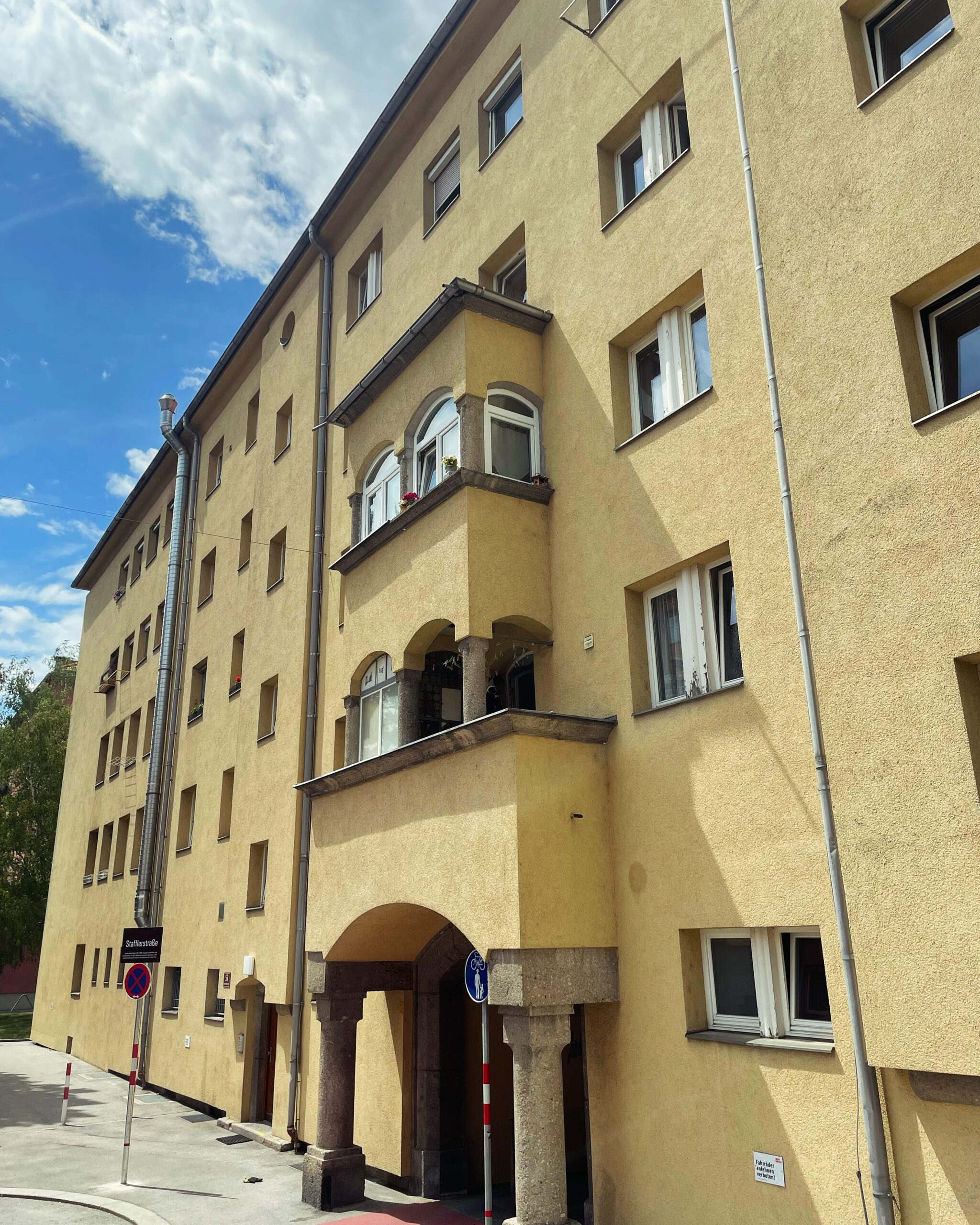
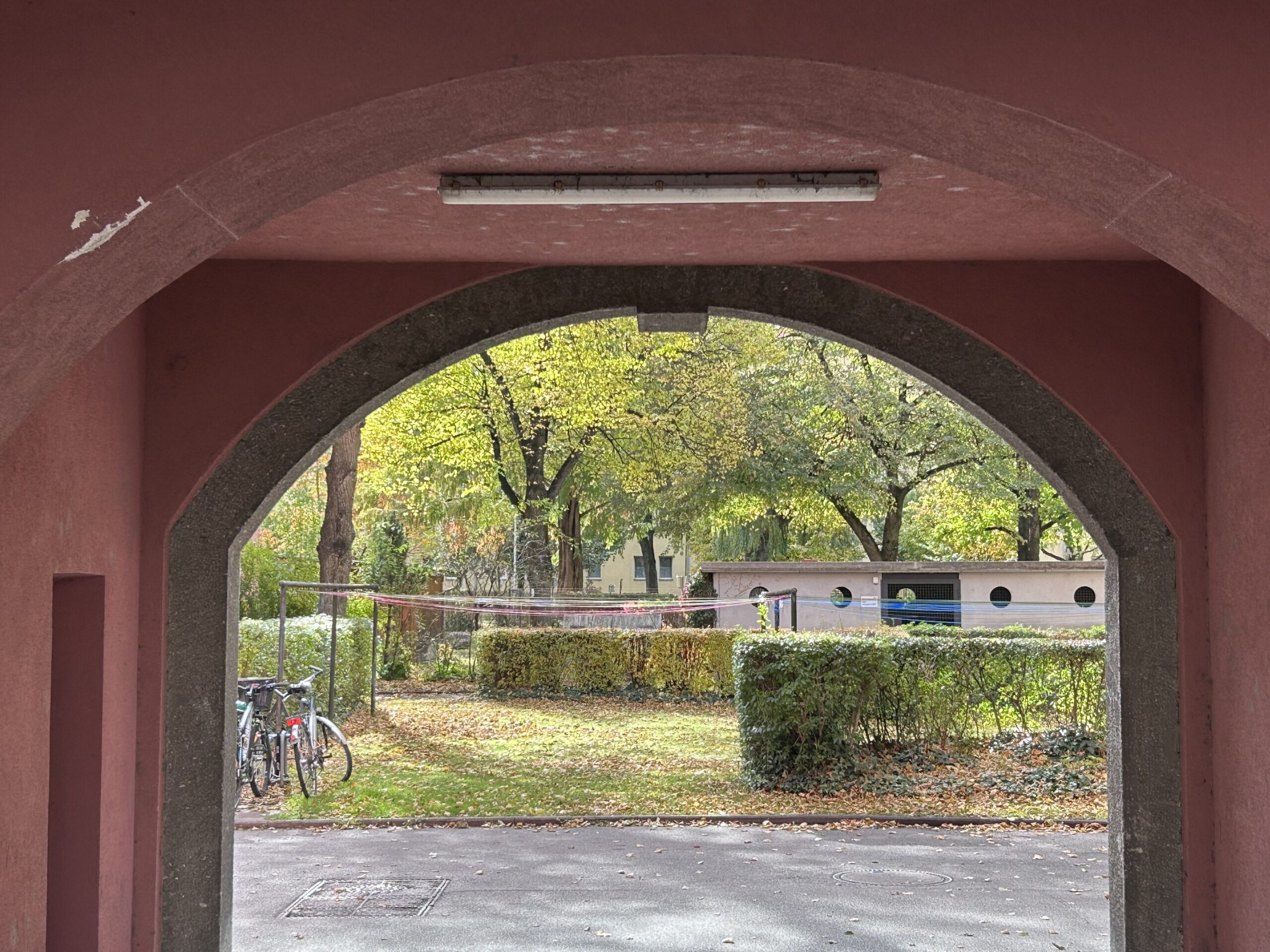
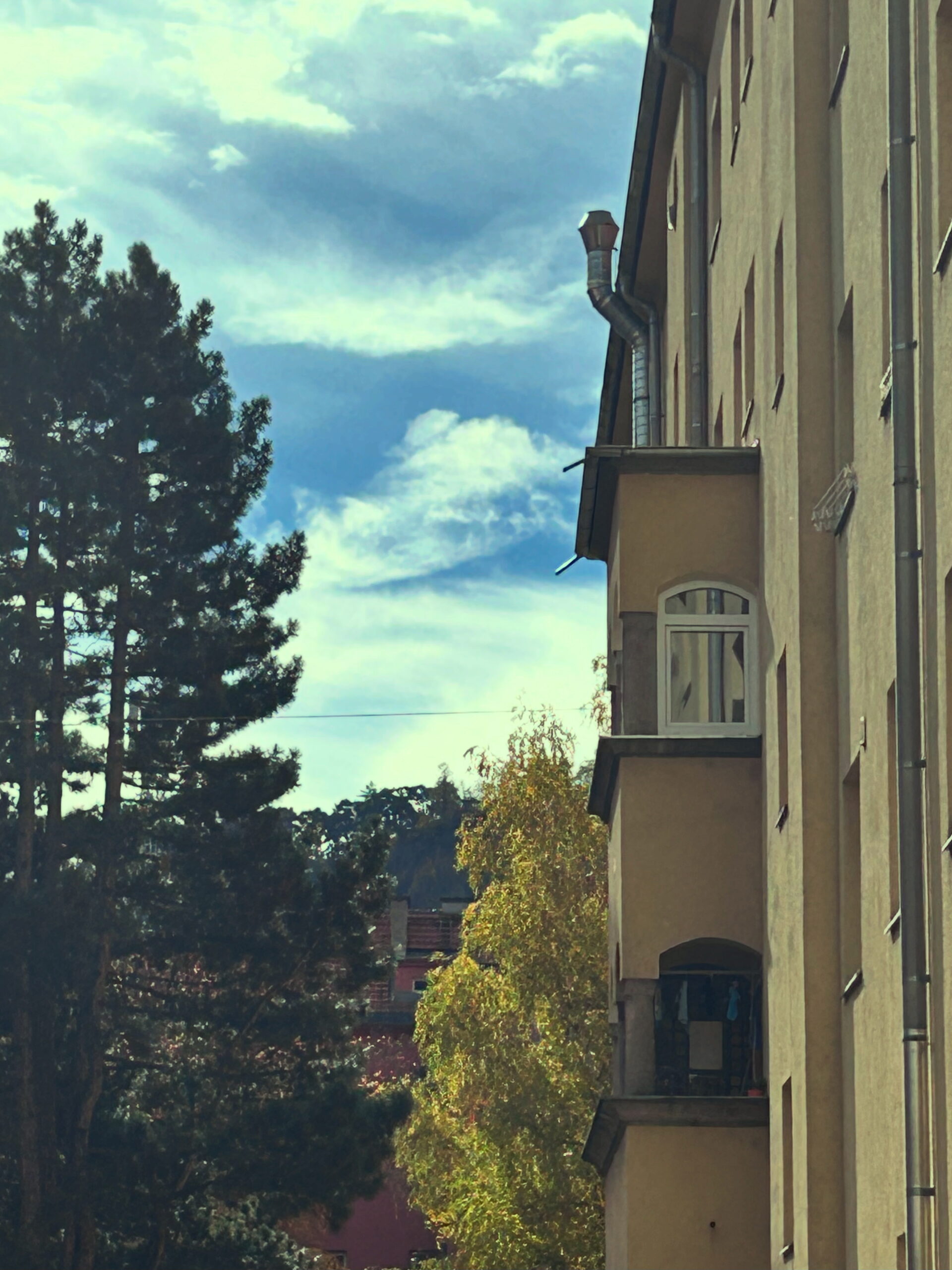
In 1939, the developer Neue Heimat (note: today’s Neue Heimat Tirol) constructed housing estates in Wilten, Pradl, Reichenau, and Saggen that are still known today as the South Tyrolean Settlements (Südtirolersiedlungen). The most imposing of these estates was built between Egger-Lienz-Straße and Franz-Fischer-Straße under the planning and execution of Theodor Prachensky and Jakob Albert. At first glance, the architecture may appear monotonous and unspectacular; however, from the urban-planning perspective of the 1930s and 1940s, what emerged here was not merely a housing complex but an entire new district. To understand the contrast created by Prachensky, one must recall Wilten in the late 1930s. To the east and north, the South Tyrolean settlement bordered the bourgeois Gründerzeit residential buildings; to the south, the Südring had not yet been built, and to the west toward Zollerstraße, the area was still largely undeveloped and empty. The scale and dimensions of the settlement are best appreciated from above, for example from the Ferrari curve on the Brenner federal road. The two- to three‑storey buildings—painted in vivid red and yellow since the most recent renovation instead of the original grey—are grouped around generous, interconnected inner courtyards. Individual green spaces are enclosed by low stone walls, giving the entire ensemble the character of an inner-city fortress. The entrance to the settlement from Stafflerstraße toward Speckbacherstraße, marked by Neo‑Romanesque columns, functions as a city gate through which one enters the complex. As with the Pembaur block, Prachensky likely sought here as well to establish a connection to Innsbruck’s history through the projecting bay window above the eastern side of the passage—the composition strongly recalls the Golden Roof in the Old Town. The use of Hötting breccia as a building material for the passage further emphasizes this local reference.
The origin of the South Tyrolean settlement reflects Tyrolean history in the first half of the 20th century. After the First World War, the historic region of Tyrol was divided at the Brenner border. Under Mussolini’s fascist regime, the German-speaking population of South Tyrol was subjected to increasing repression. This led to tensions between Benito Mussolini and Adolf Hitler. While Mussolini aimed to Italianize the German-speaking South Tyroleans, Hitler had promised to unite all German-speaking ethnic groups. In 1939, the two dictators agreed to offer the German-speaking population of South Tyrol the option of resettlement from Italy to the German Reich. German propaganda promoting the relocation under the slogan “Heim ins Reich” (“Home into the Reich”) proved effective.
"South Tyroleans, confess yourselves! A difficult but proud hour calls on you to confess for your blood and your people, to decide whether you will finally renounce your German nationality for yourselves and your descendants or whether you will proudly and freely confess your German identity. You are not choosing between your homeland and Galicia, but between a South Tyrol that has become alien to us and the land that the Führer will assign to us in the German Reich. The decision is difficult, but not in doubt for a moment, because we know what we owe to the call of our German blood, the German people and our Führer. We sacrifice the clod to the great goal, the great, holy German Reich."
A large portion of the German-speaking South Tyroleans chose emigration northward. Innsbruck, as the capital of the Reichsgau, was expected to accommodate many of these so‑called Optanten. Authorities anticipated between 20,000 and 50,000 new residents. Construction of the settlements began as early as August 1939 in many peripheral areas of the city, in a spirit of anticipatory obedience. In order to bring the resettlers “home” as quickly as possible, every lever was pulled despite the war. The German Labour Front (DAF) assumed organizational responsibility and founded the housing company Neue Heimat for this purpose. In the first construction phase of the special South Tyrol program, the City of Innsbruck planned 1,000 apartments; nearly 2,000 more were to follow by 1944. In addition to housing, shops, inns, schools, kindergartens, and administrative offices were planned. As the war continued, funds, building materials, and labor became scarce, yet just over 2,100 apartments were ultimately completed across the city. When the blocks between Egger-Lienz-Straße and Franz-Fischer-Straße became ready for occupancy in 1942, the situation had changed dramatically from the time of the plebiscite a few years earlier. The tide of war had turned, along with enthusiasm for the Heim ins Reich movement. There were now too many apartments for too few “returnees” willing to leave their Italian homeland. As a result, over 40% of the apartments were allocated not to South Tyroleans but to “deserving” subjects of the National Socialist system.
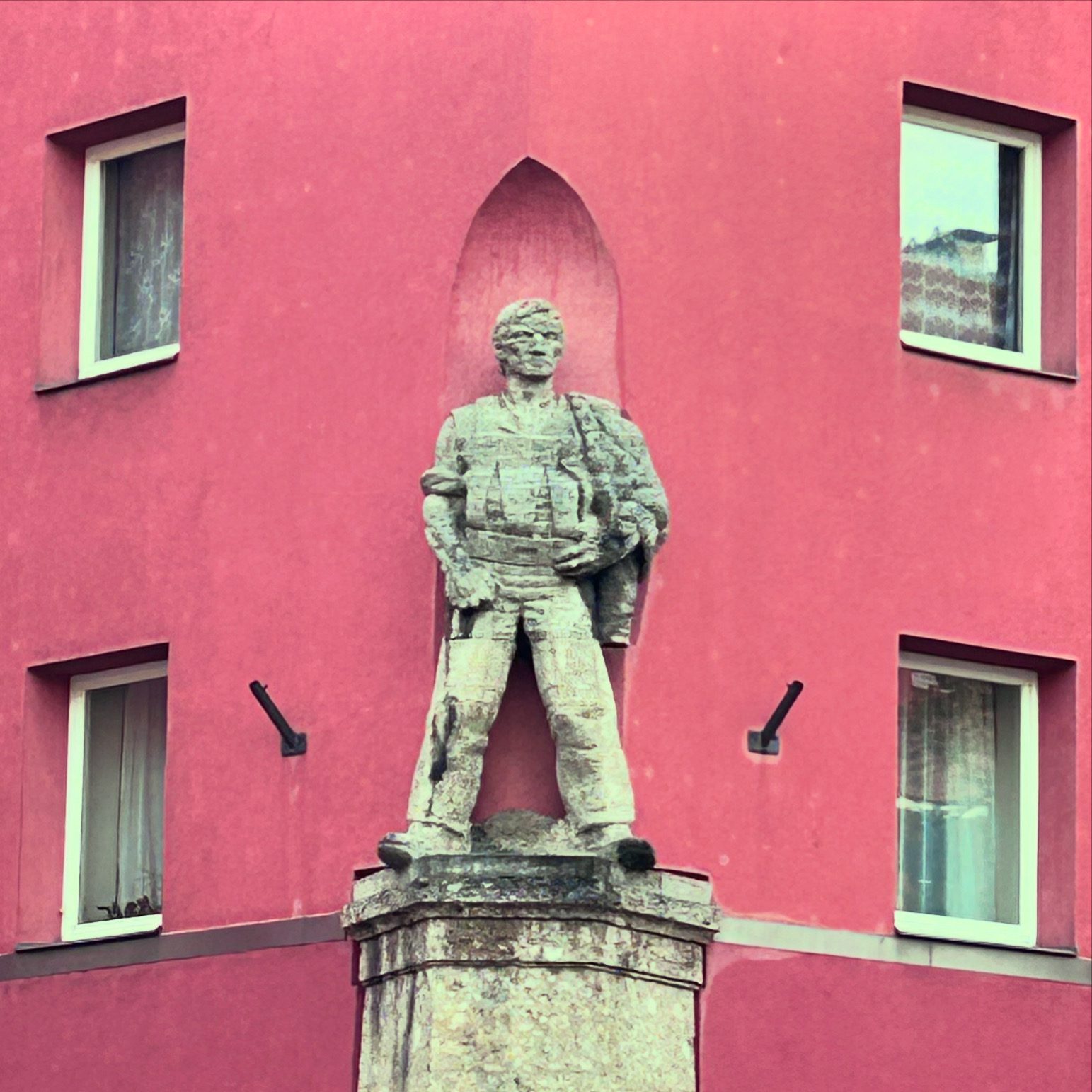
During Allied air raids between December 1943 and December 1944, several buildings on Speckbacherstraße were hit. None had to be demolished; the structural fabric largely remained intact. In the 1960s, the buildings were extended by two additional storeys, followed by renovations and a change in color from dreary grey to more vibrant hues. Between the blocks lies the traffic training park, where Innsbruck children earn their cycling license under police supervision. At the corner of Speckbacherstraße and Franz-Fischer-Straße, a silent witness to the construction of the South Tyrolean settlement has survived. At first-floor height stands a stone figure created by the South Tyrolean sculptor Alexander Lanner, who in Innsbruck also produced the Führer bust in the wedding hall of the Golden Roof and the Princess and the Frog King fountain sculpture in the Hofgarten. The man, standing rigidly and gazing resolutely northward toward the Old Reich, is intended to represent a typical South Tyrolean in Merano costume—a symbol of the Optanten who professed allegiance to the German ideology of blood and soil and left their homeland as a result.
As in Innsbruck’s other South Tyrolean settlements, the period following National Socialism and the war was marked by the reconquest of the Catholic Church. Between the housing blocks and the West Cemetery, the Parish of the Holy Family was established—some fifty years after an initial planning phase around the turn of the century—in response to the city’s growth and pastoral needs. For decades, Wilten residents who did not belong to the Sacred Heart parish on Maximilianstraße or to the Basilica had to attend services in provisional emergency churches. In 1957, Bishop Paulus Rusch consecrated the first church in a truly modern architectural style.
Theodor Prachensky: Beamter zwischen Kaiser und Republik
Copilot said: Innsbruck is home to many famous sights, monuments, and spectacular buildings. The Golden Roof and the Bergisel Ski Jump attract tens of thousands of visitors every year. Less imposing, but arguably more important for the city's development during the turbulent first half of the 20th century, were other buildings. From the second half of the 1920s onward, major projects were implemented to alleviate the greatest hardship faced by many Innsbruck residents, who were living in barracks or crowded together with relatives in extremely confined conditions. Entire new districts were created, complete with kindergartens, schools, parks, and recreational facilities. One of the master builders who left a lasting mark on Innsbruck during this period was Theodor Prachensky (1888–1970). The story of his forty-year career in the service of the City of Innsbruck reads like a summary of Austrian history in the early twentieth century. Prachensky worked as both an architect and a civil servant under five different political systems. The Austro-Hungarian Empire was followed by the First Republic, which in turn gave way to the authoritarian Corporate State. In 1938 came the annexation by Nazi Germany, and in 1945, with the end of the war, the Second Republic was proclaimed. Like many artists, architects, and builders of his generation, Prachensky laid the foundations for his career at what is today the Higher Technical College (HTL). In 1908, he graduated from the construction engineering department of the Imperial-Royal State Trade School (k.k. Staatsgewerbeschule) in Innsbruck. Just one year later, he moved to Merano to gain his first experience with large-scale building projects at the renowned architectural firm Musch & Lun. In 1913, he returned to Innsbruck. In the same year, he married Maria, the sister of his friend Franz Baumann, moved into the Prachensky House, which he had designed himself at Bergiselweg 20, and began his employment with the Innsbruck City Administration under Senior Building Councillor Jakob Albert. This decision to enter public service would prove fortunate during the economically difficult years after the war, even though it required him to curb some of his creative ambitions. First, however, he was called to the front. Although Prachensky opposed the war, he volunteered for military service in 1915 as a one-year volunteer with the Tyrolean Imperial Rifles (Tiroler Kaiserjäger). Whether he was motivated by expectations associated with his position as a civil servant or by the widespread patriotic enthusiasm of the time can no longer be determined.
Nach dem Krieg kehrte er ins wirtschaftlich schwer angeschlagene Innsbruck zurück. Seine wegweisenden, wohl auch vom sozialdemokratischen Gedankengut seines Vaters Josef beeinflussten Projekte konnten erst nach den ersten und schwierigsten Nachkriegsjahren begonnen werden. Den Anfang machte der Schlachthausblock im Saggen zwischen 1922 und 1925. Es folgten der Mandelsbergerblock, der Pembaurblock sowie Kindergarten und Hauptschule in der Pembaurstraße, die ebenfalls für die wachsende Arbeiterschaft gedacht waren. Auch das 1931 entworfene Arbeitsamt war eine wichtige Neuerung im Sozialwesen. Seit der Republikgründung 1918 half das Arbeitsamt bei der Vermittlung von Arbeitssuchenden und Arbeitgebern und der Eindämmung der Arbeitslosigkeit.
The next major turning point after the First World War and the economic crisis was the succession of changes in Austria’s political system. Despite Dollfuss’s seizure of power and the banning of the Social Democratic Party in 1933, followed by Austria’s annexation to the German Reich in 1938, Prachensky was able to remain a senior civil servant and continued to influence the appearance of Innsbruck. Together with Jakob Albert, he implemented the residential developments that became known as the South Tyrolean Settlements (Südtiroler Siedlungen) under the National Socialist regime from 1939 onward. Unlike several members of his family, he himself never became a member of the Nazi Party. The Social Democratic influence of his father remained too strong, and this influence is reflected in his architecture. After the Second World War, he remained in office as Senior Building Councillor of the City of Innsbruck for another eight years. In addition to his work as an urban planner and architect, Prachensky was a passionate painter. He died in Innsbruck at the age of eighty-two.
The projects realized by Prachensky are not as spectacular as the mountain stations designed by his brother-in-law Franz Baumann or Lois Welzenbacher’s high-rise building. His surviving structures often appear sober and purely functional, yet reveal their fascination upon closer inspection. Particularly remarkable is the symbolism that Prachensky repeatedly incorporated into his work. Looking at his drawings in the Archive of Architecture at the University of Innsbruck, one quickly recognizes that he was as much an artist as a technician. Many of his designs, such as the Social Democratic People’s House (Sozialdemokratisches Volkshaus) on Salurnerstraße, his Kaiserschützen Memorial, and the Peace and Heroes Church (Friedens- und Heldenkirche), were never built. Innsbruck nevertheless contains many of Prachensky’s buildings that document the history of the interwar period and the changing political and governmental influences under which he himself lived. These include the large residential complexes of the 1920s and 1930s, the War Memorial Chapel (Krieger-Gedächtniskapelle) at Pradl Cemetery, and the old employment office (note: today an annex of the University of Innsbruck, located behind the current AMS employment service building in Wilten). The War Memorial Chapel at Pradl Cemetery, the Kaiserschützen Chapel at Tummelplatz, designed together with Clemens Holzmeister, as well as his unrealized proposals for a Kaiserjäger memorial and the Peace and Heroes Church of Innsbruck, reflect both his own experiences of war and the longing for peace shared by many of his contemporaries. His sons, grandsons, and great-grandchildren carried forward his creative legacy as architects, designers, photographers, and painters in a variety of disciplines. In 2017, parts of the multi-generational body of work created by the Prachensky family of artists were honored in an exhibition at the former Adambräu Brewery.
Operation Greenup - Innsbrooklyn's rebirth
Following minor skirmishes in the Außerfern region and at the Porta Claudia in Scharnitz near Seefeld, the US Army's *Cactus Division* reached Zirl on May 3, 1945, standing at the gates of the Gau capital of Innsbruck. A few resistance fighters from the O5 group—centered around Fritz Molden and Karl Gruber, who later became Governor of Tyrol—had occupied barracks and official facilities in Innsbruck after the Gau leadership, Gestapo, and SS had fled. Nevertheless, the American troops did not know what to expect in Innsbruck, as Adolf Hitler had declared Tyrol part of the "Alpine Fortress" (*Alpenfestung*)—a retreat that was to be defended to the last man. Had Innsbruck become a battleground, as was the case in many other cities, it would have resulted in the destruction of the city. That it did not come to this and that Innsbruck was surrendered without a fight is thanks to a handful of brave women and men who paved the way for a peaceful surrender as part of the US espionage mission *Operation Greenup*. The main figures of this movie-worthy coup were Friedrich "*Fred*" Mayer (1921–2016), Hans Wijnberg (1922–2011), Franz Weber (1920–2001), and Anna Niederkircher (1895–1968). Mayer and Wijnberg, fleeing National Socialism in Europe with their Jewish families, had ended up in New York. They volunteered for military service and, thanks to their European background and language skills, joined the OSS, the US military intelligence agency. Weber had ended up in a prisoner-of-war camp in southern Italy as a Wehrmacht deserter. A devout Catholic, he wanted to help overthrow the Nazi regime in his Tyrolean homeland after his wartime experiences, where he was also recruited by the OSS. Together, operating out of Innsbruck, they were tasked with spying on the supply line over the Brenner Pass as well as key military infrastructure and industry, such as the Messerschmitt works in Kematen.
On February 26, the three men and their equipment parachuted out of a plane over the snow-covered Ötztal Alps. Traveling by sled and public transport, they made their way deep in enemy territory to Oberperfuss, Franz Weber's hometown. They found support in the village, which was Catholic and critical of the regime. Weber's sisters Eva, Margarete, and Luise, his neighbor Maria Hörtnagl, and especially his fiancée Anni Niederkircher and her mother Anna, the landlady of the *Gasthof zur Krone*, played invaluable roles in providing supplies, cover, and shelter. Franz Weber acted as the group's local guide. Fred Mayer blended in with the population in Oberperfuss, Innsbruck, and Kematen under various identities. His exploits—sneaking into the officers' mess disguised as a Wehrmacht soldier or into the Messerschmitt works as a French forced laborer—seem like something straight out of a spy movie. He established contacts with other resistance groups and gathered intelligence. Weber's sisters in Innsbruck housed him and provided him with everything imaginable, such as forged documents or a stolen Wehrmacht uniform. Anni Niederkircher served as the liaison between Oberperfuss and Innsbruck. As the radio operator, Hans Wijnberg maintained communications with the US forces' base in Bari. Everyone involved knew that if their risky operation were uncovered, they would be sentenced to death. In April, just a few days before the end of the war, this worst-case scenario occurred. Robert Moser, the radio dealer and resistance member who had employed Fred Mayer in his shop as cover, was exposed. At the Gestapo headquarters in Innsbruck's Herrengasse, he was interrogated, tortured, and ultimately whipped and beaten to death. On April 20, Fred Mayer was also arrested. Yet despite beatings and torture, he held firm—and did even more: After revealing himself as a member of US Military Intelligence, he managed in negotiations with *Gauleiter* Hofer to arrange for Innsbruck to be surrendered without a fight as an open city. In exchange for Mayer's assurance that he would be treated as a prisoner of war, Hofer issued an order to the population in a radio broadcast on May 2 to refrain from any combat actions. On May 3 at 2:00 PM, Fred Mayer—still bearing the scars of his treatment by the Gestapo—reached the US troops near Zirl with this news. A few hours later, the ceasefire came into effect. The vehicles and soldiers were able to enter the city without any further bloodshed or destruction.
For a long time, the memory of *Operation Greenup* and the heroic actions of all involved under extreme danger was overshadowed by the narrative of self-liberation by the brave Tyrolean population. It was not until 2010 that Fred Mayer, who had received the *Purple Heart*—one of the US military's highest decorations for valor—was finally honored by the State of Tyrol at almost 90 years of age. Hans Wijnberg was awarded a Medal of Merit by the City of Innsbruck ten years after his death. Franz Weber, who served as a member of both the State Parliament and the National Council after the war, received the *Decoration of Honor of the State of Tyrol* and the *Decoration of Honor for Services to the Republic of Austria*. A hard-to-find bronze plaque at the former Gestapo headquarters in Herrengasse commemorates Robert Moser, who was tortured to death. A small information board can be found at Anichstraße 19, the building where Mayer stayed during his time in Innsbruck. It was only with the publication of Peter Pirker's gripping book "*Codename Brooklyn*," which received widespread international attention, that what is perhaps the most impressive episode in Innsbruck's history became known to a broader audience. Yet Innsbruck may owe a lasting legacy to Wijnberg's radio transmissions: His codename for the city was *Brooklyn*, named after the New York borough where he and Mayer had lived for a long time. Following the end of National Socialism, Innsbruck was reborn as *Innsbrooklyn*.
Innsbruck and National Socialism
In den 1920er und 30er wuchs und gedieh die NSDAP auch in Tirol. Die erste Ortsgruppe Innsbrucks wurde bereits 1923 gegründet. Mit „Der Nationalsozialist - Combat Gazette for Tyrol and Vorarlberg“ erschien ein eigenes Wochenblatt. 1933 erlebte die NSDAP mit dem Rückenwind aus Deutschland auch in Innsbruck einen kometenhaften Aufstieg. Die Modernität der und die Aufstiegsmöglichkeiten, die sie bot, sprach junge, ambitionierte Menschen an. Das Neue, das Aufräumen mit alten Hierarchien und Strukturen wie der katholischen Kirche und der allgemeine Um- und Aufbruch in eine neue Zeit waren mächtige Anziehungsfaktoren. Arbeiter, Angestellte und Unternehmer gleichermaßen sehnten sich nach dem Wirtschaftsaufschwung auch für das schwächelnde Österreich, der in Deutschland die Arbeitslosenzahlen massiv reduziert hatte. Akademiker hingegen sahen sich in der großdeutschen Zukunft dem politischen Ziel ihrer Träume entgegengehen. Die demokratische Republik war konservativen Eliten ein Gräuel. Wer bereits oben war, sehnte sich nach den Zeiten vor dem allgemeinen Wahlrecht zurück, als Sozialdemokraten noch nichts zu melden hatten. Dazu versprach der neue „deutsche Volkskörper“ den vielen auf der Strecke gebliebenen Menschen eine glanzvolle Zukunft in einer egalitären Gemeinschaft ähnlich den Sozialdemokraten. Das Versprechen, die deutschsprachigen Südtiroler Home to the realm zu holen und damit das Unrecht der Brennergrenze auszumerzen wurde von allen gerne gehört. Konnten die Nationalsozialisten bei ihrem ersten Antreten bei der Innsbrucker Gemeinderatswahl 1921 nur 2,8% der Stimmen erringen, waren es bei den Wahlen 1933 bereits 41%. Nicht nur die Wahl Hitlers zum Reichskanzler in Deutschland, auch Kampagnen, Fackelzüge, Spendenaktionen und Events aller Art verhalfen der ab 1934 in Österreich verbotenen Partei zu diesem Ergebnis. Neun Mandatare, darunter der spätere Innsbrucker Bürgermeister Egon Denz und Gauleiter Franz Hofer, zogen in den Gemeinderat ein.
Als der Anschluss Österreichs an Deutschland im März 1938 erfolgte, kam es in Innsbruck zu bürgerkriegsähnlichen Szenen. Über 1800 Innsbrucker waren Mitglied der SA, die ihr Quartier in der Bürgerstraße 10 hatte. Bereits im Vorfeld des Einmarsches war es immer wieder zu Aufmärschen und Kundgebungen der Nationalsozialisten gekommen, nachdem das Verbot der Partei aufgehoben worden war. Noch bevor Bundeskanzler Schuschnigg seine letzte Rede an das Volk vor der Machtübergabe an die Nationalsozialisten mit den Worten „God bless Austria“ am 11. März 1938 geschlossen hatte, rotteten sich bereits die Nationalsozialisten in der Innenstadt zusammen um den Einmarsch der deutschen Truppen vorzufeiern. Die Polizei war dem Aufruhr der organisierten Manifestationen teils gewogen, teils stand sie dem Treiben machtlos gegenüber. Landhaus und Maria-Theresien-Straße wurden zwar abgeriegelt und mit Maschinengewehrständen gesichert, an ein Durchgreifen seitens der Exekutive war aber nicht zu denken. „One people - one empire - one leader“ und das Horst-Wessel-Lied hallten durch die Stadt. Die Bedrohung des deutschen Militärs und der Aufmarsch von SA-Truppen beseitigten die letzten Zweifel. Mehr und mehr schloss sich die begeisterte Bevölkerung an. Am Tiroler Landhaus, damals noch in der Maria-Theresienstraße, sowie im provisorischen Hauptquartier der Nationalsozialisten im Gasthaus Old Innsprugg, wurde die Hakenkreuzfahne gehisst. Der Putsch, samt Festnahme amtsbekannter Unruhestifter und offiziellem Wechsel politischer Amtsträger geschah über Nacht. Am 12. März empfingen Tausende Innsbrucker das deutsche Militär frenetisch. Um die demonstrative Gastfreundschaft gegenüber den Nationalsozialisten sicherzustellen, ließ der neue Bürgermeister Egon Denz jedem Arbeiter einen Wochenlohn auszahlen. Am 5. April besuchte Adolf Hitler persönlich Innsbruck, um sich von einer euphorischen Menschenmenge als heilsversprechender Führer feiern zu lassen. Auf der Nordkette wurden Bergfeuer in Hakenkreuzform entzündet. Die Volksbefragung am 10. April ergab eine Zustimmung von über 99% zum Anschluss Österreichs an Deutschland. Die Menschen waren nach der wirtschaftlichen Not der Zwischenkriegszeit, der Wirtschaftskrise und den Regierungen unter Dollfuß und Schuschnigg müde und wollten Veränderung. Welche Art von Veränderung, war im ersten Moment weniger wichtig als die Veränderung an und für sich. Wehrmacht und Industrie boten jungen Menschen eine Perspektive, auch denen, die mit der Ideologie des Nationalsozialismus an und für sich wenig anfangen konnten. Die Arbeitslosenquote sank nach dem Anschluss tatsächlich rapide von knapp 25 auf unter drei Prozent. Dass es immer wieder zu Gewaltausbrüchen kam, war für die Zwischenkriegszeit in Österreich ohnehin nicht unüblich. Anders als heute war Demokratie nichts, woran sich jemand in der kurzen, von politischen Extremen geprägten Zeit zwischen der Monarchie 1918 bis zur Ausschaltung des Parlaments unter Dollfuß 1933 hätte gewöhnen können. Was faktisch nicht in den Köpfen der Bevölkerung existiert, muss man nicht abschaffen.
Tirol und Vorarlberg wurden in einem Reichsgau zusammengefasst mit Innsbruck als Hauptstadt. Auch wenn der Nationalsozialismus von einem guten Teil der Bevölkerung mit der Zeit immer skeptischer gesehen wurde, gab es kaum organisierten oder gar bewaffneten Widerstand, dazu waren der katholische Widerstand OE5 und die Linke in Tirol nicht stark genug. Unorganisiertes subversives Verhalten der Bevölkerung, vor allem in den Landgemeinden rund um Innsbruck gab es vereinzelt. Zu allumfassend dominierte der Machtapparat den Alltag der Menschen. Viele Arbeitsstellen und sonstige Annehmlichkeiten des Lebens waren an eine zumindest äußerlich parteitreue Gesinnung gebunden. Eine Inhaftierung blieb dem größten Teil der Bevölkerung zwar erspart, die Angst davor war aber allgegenwärtig. Das Regime unter Hofer und Gestapochef Werner Hilliges leistete ganze Arbeit bei der Unterdrückung. Regimegegner Nummer eins war der Klerus, die katholische Kirche wurde deshalb auf allen Ebenen bekämpft. Katholische Schulen wurden umfunktioniert, Jugendorganisationen und Vereine verboten, Klöster geschlossen, der Religionsunterricht abgeschafft und eine Kirchensteuer eingeführt. Besonders hartnäckige Pfarrer wie Otto Neururer wurden in Konzentrationslager gebracht. Auch Lokalpolitiker wie die späteren Innsbrucker Bürgermeister Franz Greiter und Anton Melzer, der im Ersten Weltkrieg für Gott, Kaiser und Vaterland einen Arm verloren hatte, mussten flüchten oder wurden verhaftet. Gewalt und die Verbrechen an der jüdischen Bevölkerung, dem Klerus, politisch Verdächtigen, Zivilpersonen und Kriegsgefangenen auch nur überblicksmäßig zusammenzufassen würde den Rahmen sprengen. In der Klinik Innsbruck wurden Behinderte und vom System als nicht genehm empfundene Menschen wie Homosexuelle zwangssterilisiert. 1941 wurde in der Rossau in der Nähe des Bauhofs Innsbruck das Arbeitslager Reichenau errichtet. Etwa 120 Personen fanden in diesem Barackenlager den Tod durch Krankheit, die schlechten Bedingungen, Arbeitsunfälle oder Hinrichtungen. Die meist jüdischen, russischen oder italienischen Zwangsarbeiter wurden in den Messerschmitt Werken in Kematen und auf den vielen Baustellen wie der Errichtung der South Tyrolean settlements oder der Stollen zum Schutz vor den Luftangriffen im Süden Innsbrucks eingesetzt. Die Erinnerungsorte an die Zeit des Nationalsozialismus sind rar gesät. Das auffälligste Denkmal ist wohl das Tiroler Landhaus mit dem Befreiungsdenkmal. An der Alten Universität in der Herrengasse prangt eine Bronzetafel, die daran erinnert, dass die Gestapo hier einst ihr Hauptquartier hatte, wo Verdächtige unter Folter verhört, schwer misshandelt und teils mit Fäusten zu Tode geprügelt wurden. Der Vorplatz der Universität und eine kleine Säule am südlichen Eingang der Klinik wurden ebenfalls im Gedenken an das wohl dunkelste Kapitel Österreichs Geschichte gestaltet. In der Rossau wurde ein Gedenkort an das Arbeitslager Reichenau errichtet.
Air raids on Innsbruck
The appearance of a city is subject to constant change. Certain eras left particularly visible changes in Innsbruck's cityscape. The political, economic, and social upheavals from the 15th century onward, as well as in the second half of the 19th century, are also reflected in buildings and monuments. However, the most drastic event with the greatest impact on the cityscape was likely the air raids on the city during World War II, when the "home front" became an actual theater of war. For centuries, its location at the foot of the Brenner Pass had been a blessing for the city; now, it became its undoing. Innsbruck was an important supply station for reinforcements for the Italian front. On the night of December 15–16, 1943, the first Allied air raid struck the ill-prepared city. 269 people fell victim to the bombs, 500 were injured, and more than 1,500 were left homeless. Over 300 buildings, primarily in Wilten and the inner city, were destroyed and damaged. On Monday, December 18, the front page of the Innsbrucker Nachrichten—the predecessor to the Tiroler Tageszeitung—featured all kinds of propagandistic reports about the successful and heroic defensive struggle of the German Wehrmacht on all fronts against the alliance of the "Anglo-Americans" and "the Russian," but made no mention of the bombing raid on Innsbruck.
"Bombing Terror over Innsbruck"
December 16 will remain recorded in the history of Innsbruck as the day on which the air terror of the Anglo-Americans struck the Gau capital with all the severity of this mean and brutal method of warfare, which can no longer be called conduct of war. In several waves, enemy bomber formations approached the city and directed their attacks with numerous high-explosive and incendiary bombs against residential areas. Severe damage to residential buildings, hospitals, and other community facilities was the sad result—exceeding all previous damage—of this criminal assault, which brought severe suffering to numerous families in our city, a heavy burden on their way of life, the bitter fate of the destruction of cherished property, the destruction of hearth and home, and homelessness. Boundless hatred and the burning desire to retaliate against this inhuman atrocity with relentless severity are the sole sentiments moving all minds, alongside dealing with personal and community hardships. We all look upon our soldiers with complete trust and await with confidence the day on which the Führer will give the command to deploy their concentrated power with new weapons against the enemy in the West, who through his terror of murder and arson against the defenseless has once again proven that he differs in no way from the Asiatic beasts in the East—unless it be through greater cowardice. The city's air-raid protection facilities have proven their worth, as has the air-raid discipline of the population. Up to this hour, 26 fallen have been reported, a number that in all likelihood should not increase significantly. Relief measures began immediately and effectively under the leadership of the Party and with the active cooperation of the Wehrmacht.
This imaginatively crafted report barely made it onto page 3. The city's poor preparation for the foreseeable bombardment was likely something they preferred not to display too prominently, given the immense scale of the damage to the city and the tragic personal losses among the population. That the mortal remains of the victims of the December 15, 1943 air raid were laid out in state on what is today's Landhausplatz, directly in front of the newly constructed *Gauhaus*—the symbol of National Socialist power—carries a sad irony of fate. In January 1944, construction began on air-raid shelters and other protective measures. A large portion of the work was carried out by prisoners from the Reichenau concentration camp.
In total, Innsbruck was attacked twenty-two times between 1943 and 1945. In the process, nearly 3,833—almost 50%—of the buildings in the city were damaged, and 504 people died. In the final months of the war, any sense of normalcy had ceased to exist. The population lived in constant fear. Schools were closed as early as the morning hours. A regular daily routine was out of the question. Fortunately, the city was only subject to targeted attacks. German cities like Hamburg or Dresden were completely flattened by Allied firestorms within a matter of hours, leaving tens of thousands dead. Nevertheless, the toll was devastating. Many buildings, such as the Jesuit Church, Wilten Abbey, the Servite Church, and the public indoor pool on Amraserstraße, were hit. The attack on December 16, 1944—one year after the first strike—devastated the Cathedral and the Town Hall. Historical buildings and monuments in Innsbruck received special care and protection. The *Golden Roof* was protected with a specialized structure, as was Maximilian's sarcophagus in the Court Church (*Hofkirche*). The statues of the Court Church, the "*Schwarze Mander*" (Black Men), were relocated to Kundl. The painting of the Virgin of Succor by Lucas Cranach from the Innsbruck Cathedral was transferred to the Ötztal during the war.
Many years after the war, the city was still characterized by the rubble and damage of the air raids; today, very little remains to remind us of these events that were traumatic for so many Innsbruck residents. The air-raid shelter south of Innsbruck along the Brennerstraße and the markings on houses indicating air-raid cellars—with their black squares, white circles, and arrows—can still be seen today. Two of the anti-aircraft gun positions, now merely overgrown masonry ruins, can be visited on the *Lanser Köpfl* above Innsbruck. In Pradl, where along with Wilten most of the buildings were damaged, bronze plaques on the affected houses point to their post-war reconstruction. On the old Innsbruck Town Hall, a wall painting commemorates the direct bomb hit in December 1944.