The Rapoldis: local politics and resistance
The Rapoldis: hydropower and resistance
Martin Rapoldi (1880–1926) and his wife Maria (1884–1975) were among the most remarkable figures in Innsbruck’s municipal politics during the first half of the twentieth century. Martin Rapoldi had come to Innsbruck via Carinthia, Vienna, and Bohemia. During his apprenticeship as a carpenter, he was first exposed to socially critical ideas. Together with other apprentices, he founded a kind of anarchist trade union in Klagenfurt with youthful enthusiasm. In Vienna and Žatec, in what is now the Czech Republic, he became active in the trade union movement and in the Social Democratic Party, which had only recently been officially established. In 1904, he moved to Innsbruck, where the man in his mid-twenties soon distinguished himself as an ambitious organizer and an inspiring public speaker. Thanks to his linguistic talent, he took over the Volkszeitung, the mouthpiece of the Tyrolean Social Democrats, in the years that followed. Despite the initial enthusiasm for entering the war, which also existed within the Social Democratic movement, Rapoldi, who was known as an anti-clerical priest-hater, soon advocated for peace and for the introduction of universal suffrage at the municipal level as well. In the early years of the First Republic, he enjoyed a brief but steep political rise. He was elected to the Tyrolean Parliament and became a member of the first National Council in Vienna. In Innsbruck, he succeeded in making the Social Democrats the strongest party on the municipal council. However, due to the anti-socialist stance of the other factions on the council, he was never able to assume the office of mayor. His particular concerns were housing construction and the municipal energy supply. During Rapoldi’s time on the council, the major projects known as the Schlachthofblock in Dreiheiligen and the Pembaurblock in Pradl, together with a school and kindergarten, were built. He was also instrumental in establishing the Innsbruck Light Works, today’s Innsbrucker Kommunalbetriebe (Innsbruck Municipal Utilities). His greatest achievement was the acquisition of Lake Achensee and the Achensee Railway. As early as 1911, under Mayor Wilhelm Greil, the City of Innsbruck negotiated with the Bavarian monastery of Fiecht to purchase the lake for a hydroelectric power station serving the city’s electricity utility. The war interrupted these plans. In 1919, negotiations between the municipal council and the monastery concerning the purchase of Lake Achensee resumed. The purchase price was ultimately fixed at 1.2 million crowns, plus the monastery’s own electricity requirements. Financing proved difficult in the financially strained postwar period. Until 1924, the federal government granted tax relief for municipalities constructing hydroelectric power plants. At the last moment, TIWAG (Tyrolean Hydroelectric Power Company) was founded, with the City of Innsbruck as the majority shareholder, and the purchase could finally be completed. According to legend, because of the inflation between 1919 and 1924, the value of the purchase price at the time of payment was no longer enough to buy a lake, but only a gentleman’s suit. When the city sold the lake to TIWAG sixty years later, it generated nearly one billion Austrian schillings, enough to pay off the city’s debts. In 1926, the "Red Carpenter" died at the young age of 46 from the consequences of a kidney infection.
The biography of his wife Maria is no less impressive. In her parents’ household in Wörgl, she came into contact with Social Democratic ideas at an early age. Trained as a bookkeeper, she moved to Innsbruck. It was probably through her work for the health insurance fund that she met her future husband, whom she married in 1905. Despite raising two young daughters, Maria was already active in 1912 at the provincial women’s conference of the Social Democrats. After her husband’s death, she remained actively involved in the Social Democratic movement. As an employee of the Volkszeitung, she repeatedly came under the scrutiny of the Fatherland Front during the years of Austrofascism. After the Volkszeitung was banned as part of the regime’s censorship measures, she had to struggle to make a living as an unemployed widow. She opened a stamp shop in Innsbruck’s Old Town. At the same time, she was involved underground in the Red Aid (Rote Hilfe), an organization that supported the families of imprisoned members of the Republican Protection League (Republikanischer Schutzbund). During the National Socialist era, she was imprisoned for a short period. After the war, she emerged from the shadow of her husband Martin, who had died at a young age, and assumed official public responsibilities of her own. From 1946 to 1959, she served as a member of the Innsbruck City Council. She campaigned for social causes such as homes for the elderly, children’s homes, and improvements in food supplies and healthcare during the difficult postwar years. She also served as a member of the Tyrolean Relief Organization (Tiroler Hilfswerk), the City School Board, the Board of Trustees of the Sieberer Orphanage, and the Administrative Committee of the Innsbruck Girls’ Secondary School.
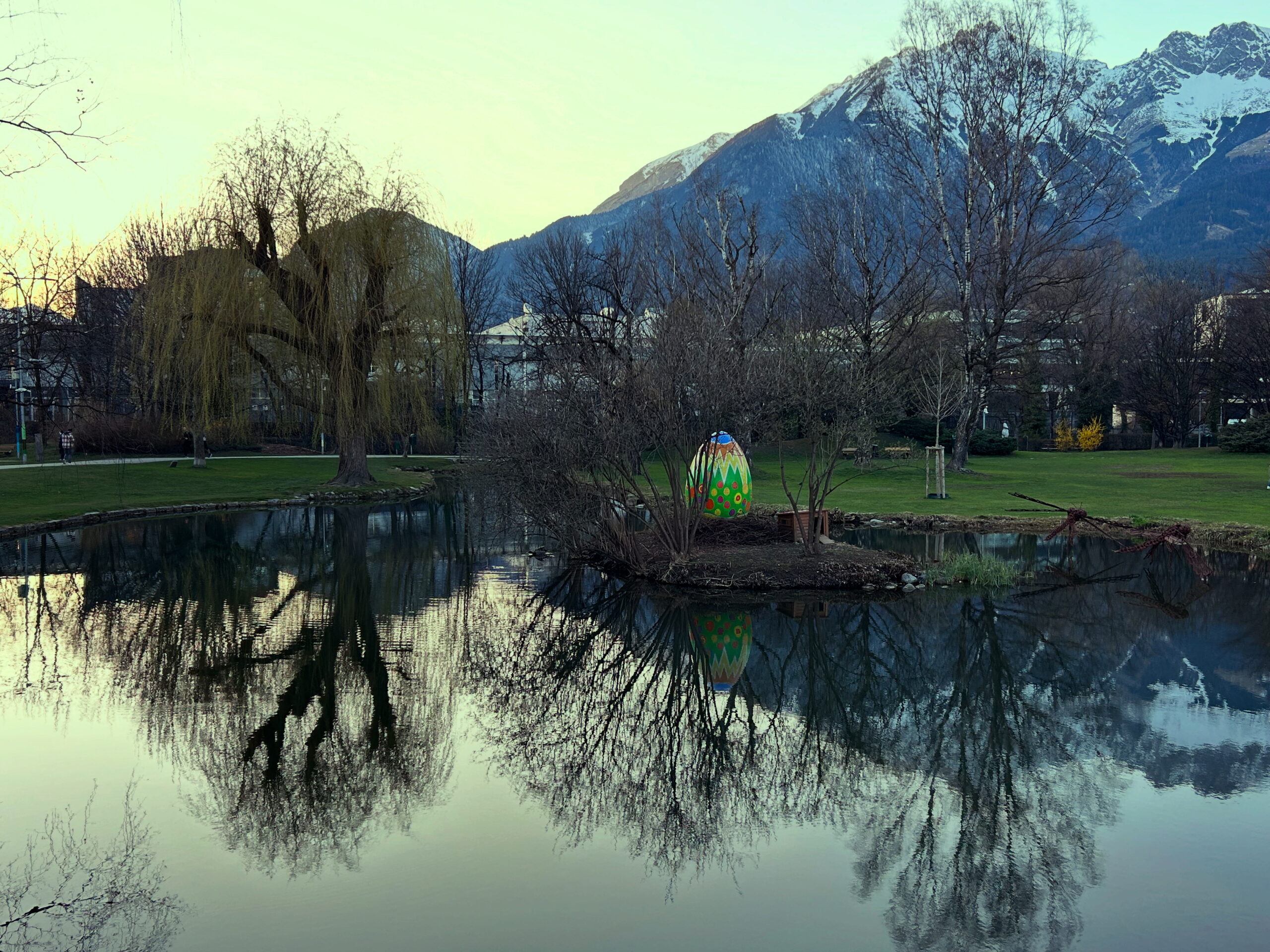
Martin and Maria Rapoldi are buried in a distinguished honorary grave at the Westfriedhof (Western Cemetery), which is well worth visiting. The park in Pradl, opened in 1927, also bears the names of these two memorable municipal politicians. Following Rapoldi’s early death, the Social Democratic Party erected a monument in his honor in Kranebitten. In 1934, however, the monument was destroyed by members of the Tyrolean Home Guard (Tiroler Heimwehr).
Sights to see...
Western cemetery
Fritz-Pregl-Straße
Slaughterhouse block
Erzherzog-Eugen-Straße 25 - 38
Racing school & kindergarten
Pembaurstraße 18 & 20
Rapoldi Park
Leipziger Platz
Pembaurblock
Pembaurstraße 31 – 41