The success story of the Innsbruck glass painters

The success story of the Innsbruck glass painters
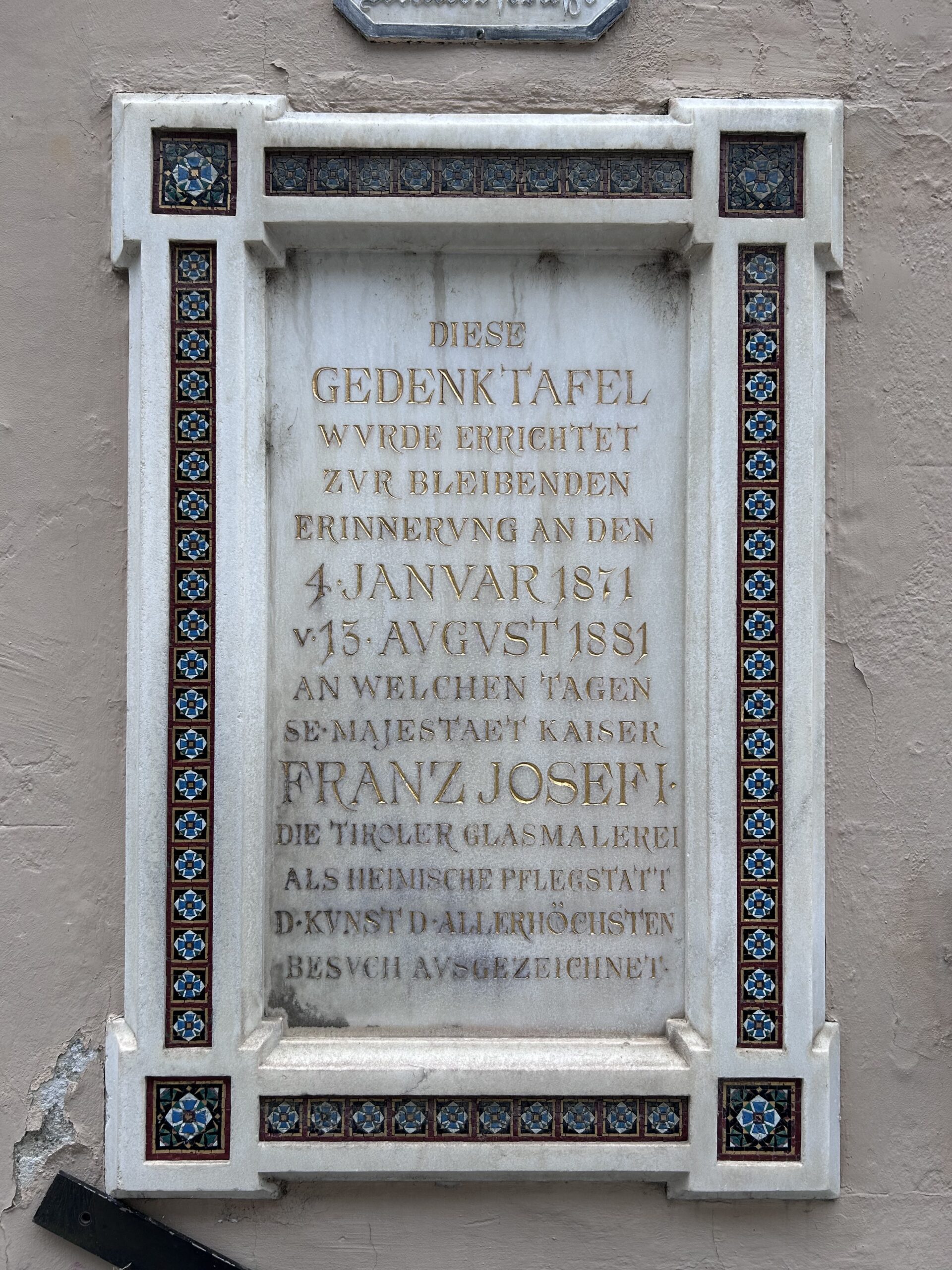
The United States of America were regarded in the pre-war period as the land of unlimited opportunity, where dishwashers could become millionaires. Yet such success stories are not exclusive to the New World. In the not yet fully regulated society of the Danube Monarchy, capable and diligent individuals from farming backgrounds, the working class, or artisanal trades—often without formal education, certification, or state approval—could achieve remarkable upward mobility. The three founders of the Tyrolean Stained Glass and Mosaic Institute, Josef von Stadl, Georg Mader, and Albert Neuhauser, are exemplary of such a success story from Innsbruck’s urban history. While most Innsbruck industrial and craft enterprises focused on supplying the local market with solid, well‑established goods and consumer products, stained glass production stood out as one of the few innovative and export‑oriented industries of its time.
Each of the founders’ personal histories, their differing skills and life paths, is noteworthy. Josef von Stadl (1828–1893) grew up on his parents’ farm and inn in Steinach am Brenner. From an early age, he had to help in the family business. This heavy labour resulted in an inflammation of the periosteum in his arm at the age of nine, making physical work impossible thereafter. Instead, the artistically talented boy attended the model secondary school in Innsbruck, today’s BORG. In 1848, he joined the Tyrolean sharpshooters of his hometown, though he was not deployed at the front. He later gained practical experience as a locksmith and turner. In 1853, he contributed to rebuilding the church in Steinach after a fire. His skills were soon recognised, and he steadily rose from labourer to master builder. Georg Mader (1824–1881), also from Steinach, began working as a farmhand at a young age. Through the patronage of his brother, a clergyman, the devout youth was able to train as a painter, though he initially had to abandon his passion to assist in the family mill. After completing his journeyman travels, he decided to devote himself fully to painting. In Munich, he refined his skills with the firms Kaulbach and Schraudolph. After working on the cathedral in Speyer, he returned to Tyrol, where he supported himself mainly through commissions for ecclesiastical art. Albert Neuhauser (1832–1901) trained in his father’s glazing and sheet‑metal workshop. However, he too had to abandon his intended career path early due to health issues—lung problems that appeared when he was just ten years old. Instead of continuing in the successful family business, he travelled to Venice. The island of Murano had been home for centuries to the finest glassmaking workshops. Fascinated by this craft, he defied his father’s wishes and attended a stained glass workshop in Munich. The products of the recently established Bavarian factory, however, did not meet his quality standards. Back in his father’s apartment in Herzog‑Friedrich‑Strasse, he began experimenting with glass—much like the “garage innovators” who, a century later, would lay the foundations for the personal computer.
Neuhauser’s experiments and tinkering aroused the curiosity of his friend von Stadl, who in turn introduced him to the artistically inclined Mader. In 1861, the three decided to combine their expertise in a formal business venture—what today might be called a startup. Neuhauser took responsibility for technical and commercial aspects as well as product development, von Stadl handled decorative design and contacts with builders, and Mader focused on figurative design, particularly for ecclesiastical commissions. Their first workshop, staffed by two painters and a kiln operator, was located on the third floor of the Gasthof zur Rose in the Old Town. Raw materials had to be imported from England, as domestic glass did not meet Neuhauser’s standards, and imports were subject to a 25% tariff. Together with a chemistry teacher, Neuhauser eventually succeeded—after a trip to Birmingham and extensive experimentation—in producing glass of the desired quality himself.
In 1867, Josef von Stadl married the painter Maria Pfefferer, the daughter of a physician. The former farmer’s son from the Wipptal had not only risen into the upper bourgeoisie; his wife’s dowry also gave him financial independence. In 1869, supported financially by Neuhauser’s father, the partners decided to expand their successful enterprise. The dynamism and lack of regulation characteristic of the Gründerzeit boom is illustrated by the example of the glassworks established in the fields of Wilten, which went into operation in 1872. Production began just 110 days after construction—officially never approved by the municipal authorities of Wilten—had commenced. Due to health reasons, Neuhauser withdrew from the company as early as 1874, and although the founders handed over management of their flourishing business relatively soon, they remained shareholders. At the same time, each continued to work successfully on independent projects within their respective fields.
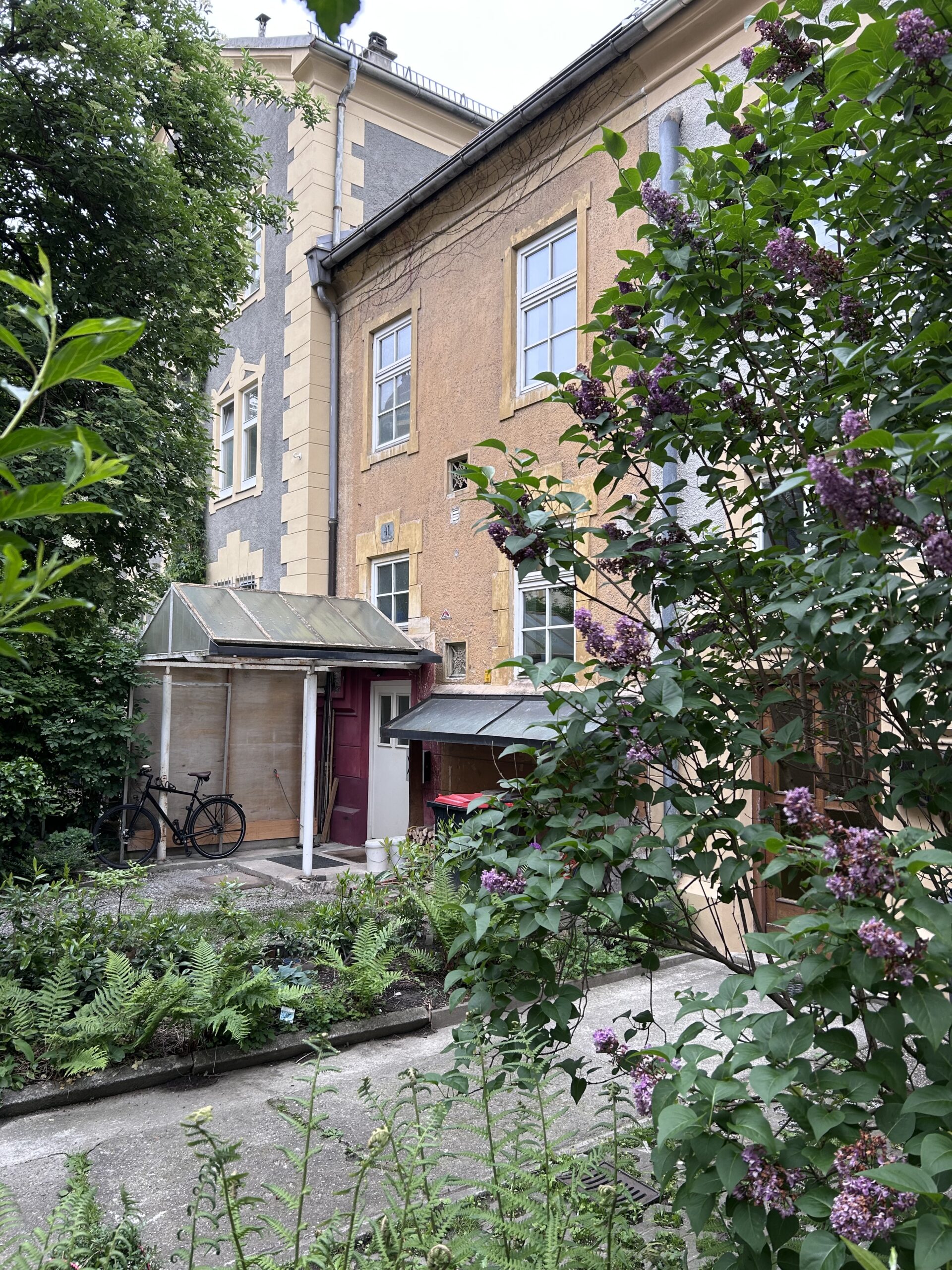
Von Stadl, in particular, left a lasting imprint on Innsbruck. At the height of its success, the stained glass workshop employed over 70 people. In 1878, according to von Stadl’s plans, housing was built for employees, workers, artists, and craftsmen associated with the company. This “Glassworks Settlement” included the buildings at Müllerstraße 39–57, Schöpfstraße 18–24, and Speckbacherstraße 14–16, which still exist today. Their architecture differs markedly from the surrounding Gründerzeit buildings: von Stadl used less ornamentation but placed emphasis on small front gardens. Workers and employees were meant to feel in no way inferior to the residents of the cottage‑style villas in Saggen. While it was not uncommon for large companies to build their own housing—Siemensstadt in Berlin being a well-known example—this development reflects a particular corporate self‑image and forward-looking vision: the company saw itself not only as an employer but also as a provider of housing and social support. Another major project by von Stadl in Innsbruck was the Provincial Maternity Clinic in Wilten. After completing the Vinzentinum in 1878, he was named an honorary citizen and diocesan architect of Brixen. Pope Leo XIII awarded him the Order of St. Gregory for his services. The St. Nikolaus Church—whose windows had been produced by the Tyrolean Glass Painting Institute—became his final resting place.
Georg Mader continued to work as a painter on sacred buildings. He became a member of the Vienna Academy of Art as early as 1868. When he suffered a stroke in 1881, he was taken to Badgastein for rehabilitation. The spa town in Salzburg was a meeting place for the European aristocracy and upper middle classes at the time. In the midst of high society, the former journeyman miller died a wealthy man.
The restless and creative Neuhauser returned to Venice after resigning as director and went on to establish Austria’s first mosaic institute. The merger of the two companies in 1900 expanded the range of artistic possibilities. For his achievements, he was awarded the Order of Franz Joseph. In Wilten, Neuhauserstraße was named in his honour. Franz-Josephs-Orden. In Wilten wurde die Neuhauserstraße nach ihm benannt.
Josef von Stadl building in Innsbruck
Landhaus Mader / Leopoldstraße 20
Façade of the Welsbergschlössl residence / Leopoldstraße 35
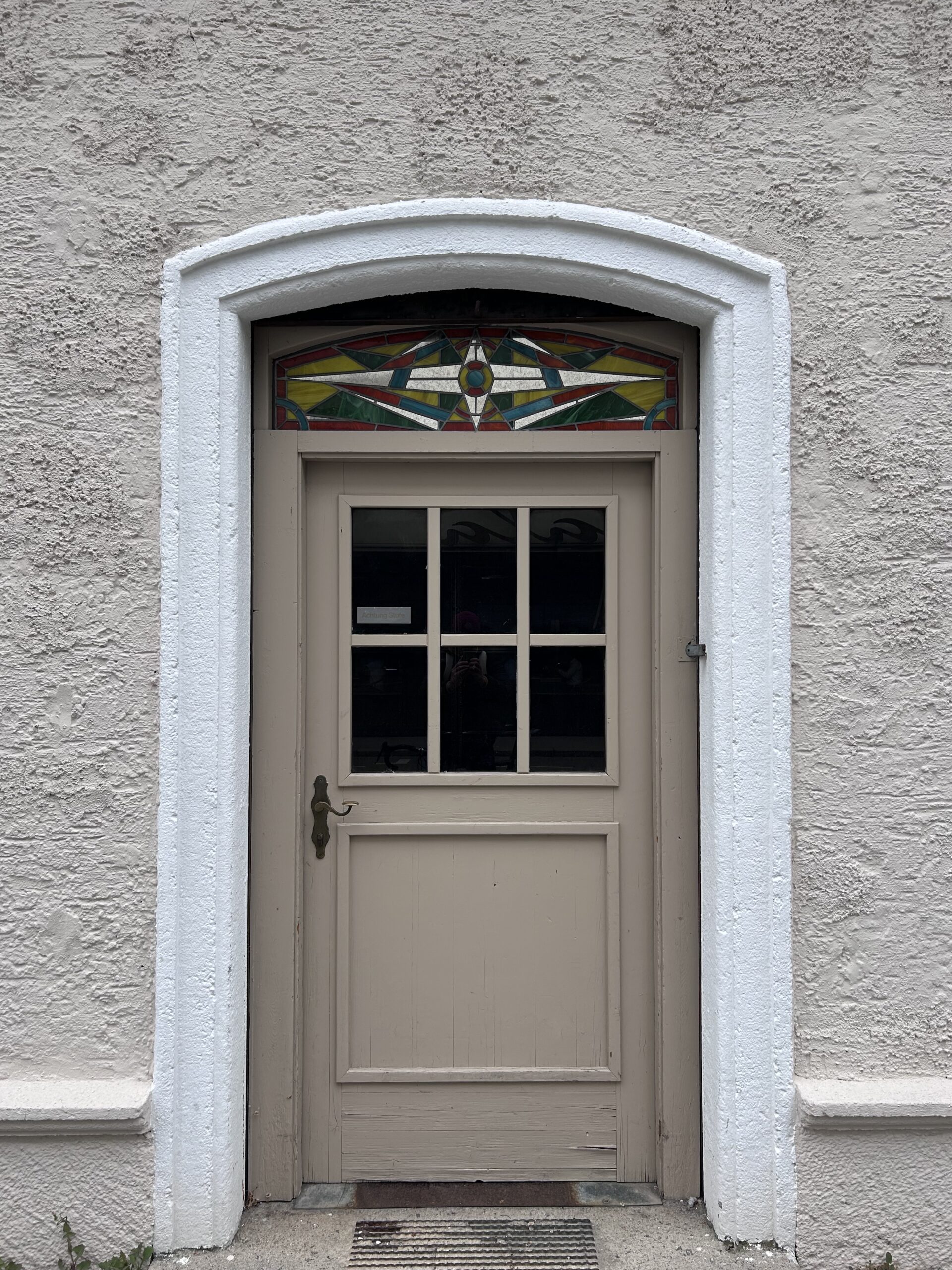
Stained glass / Müllerstraße 10
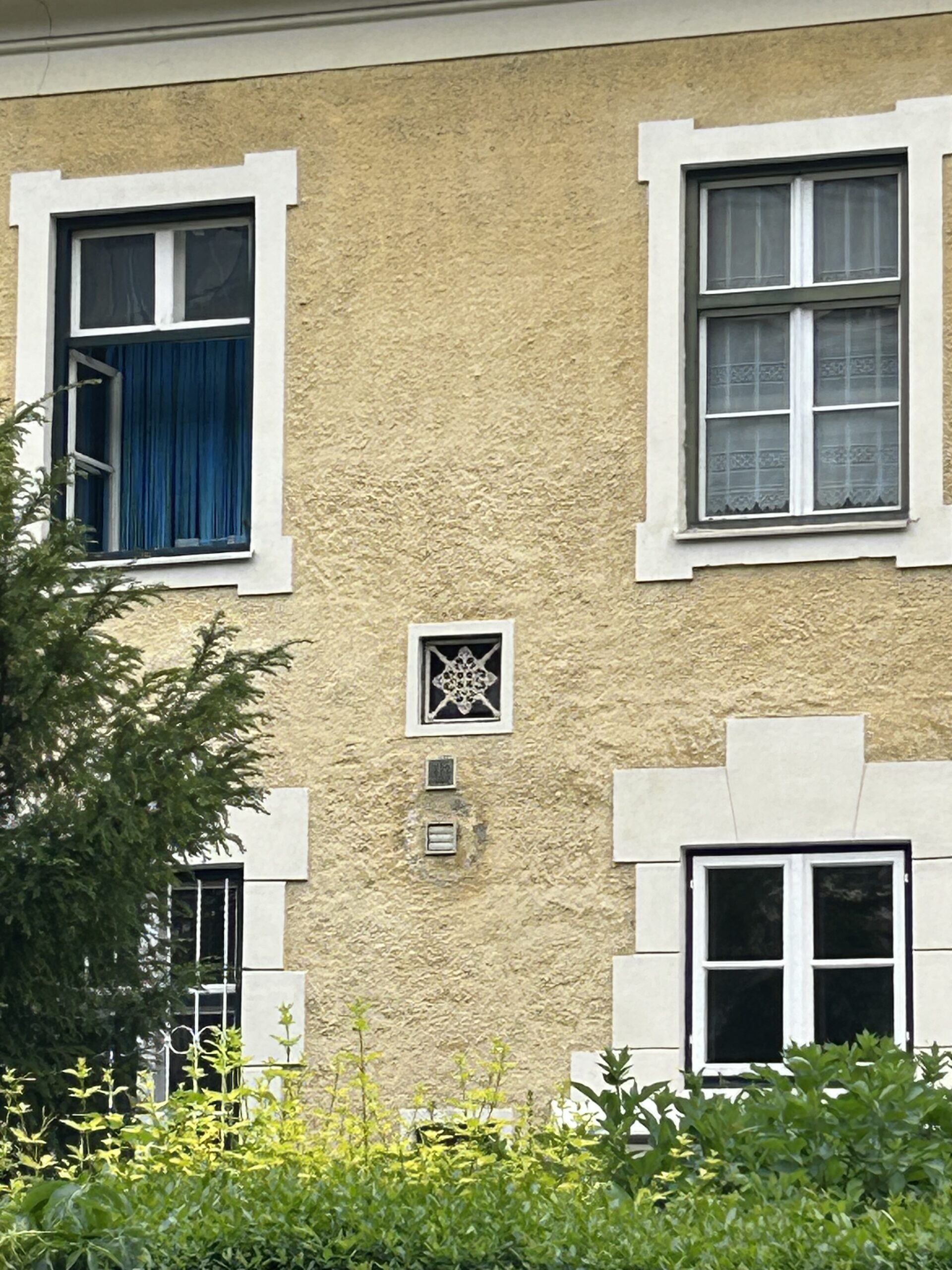
Glass painting estate / Müllerstrasse 39 - 57
Glass painting estate / Schöpfstraße 18 - 24
Glasmalereisiedlung / Speckbacherstraße 14 - 16
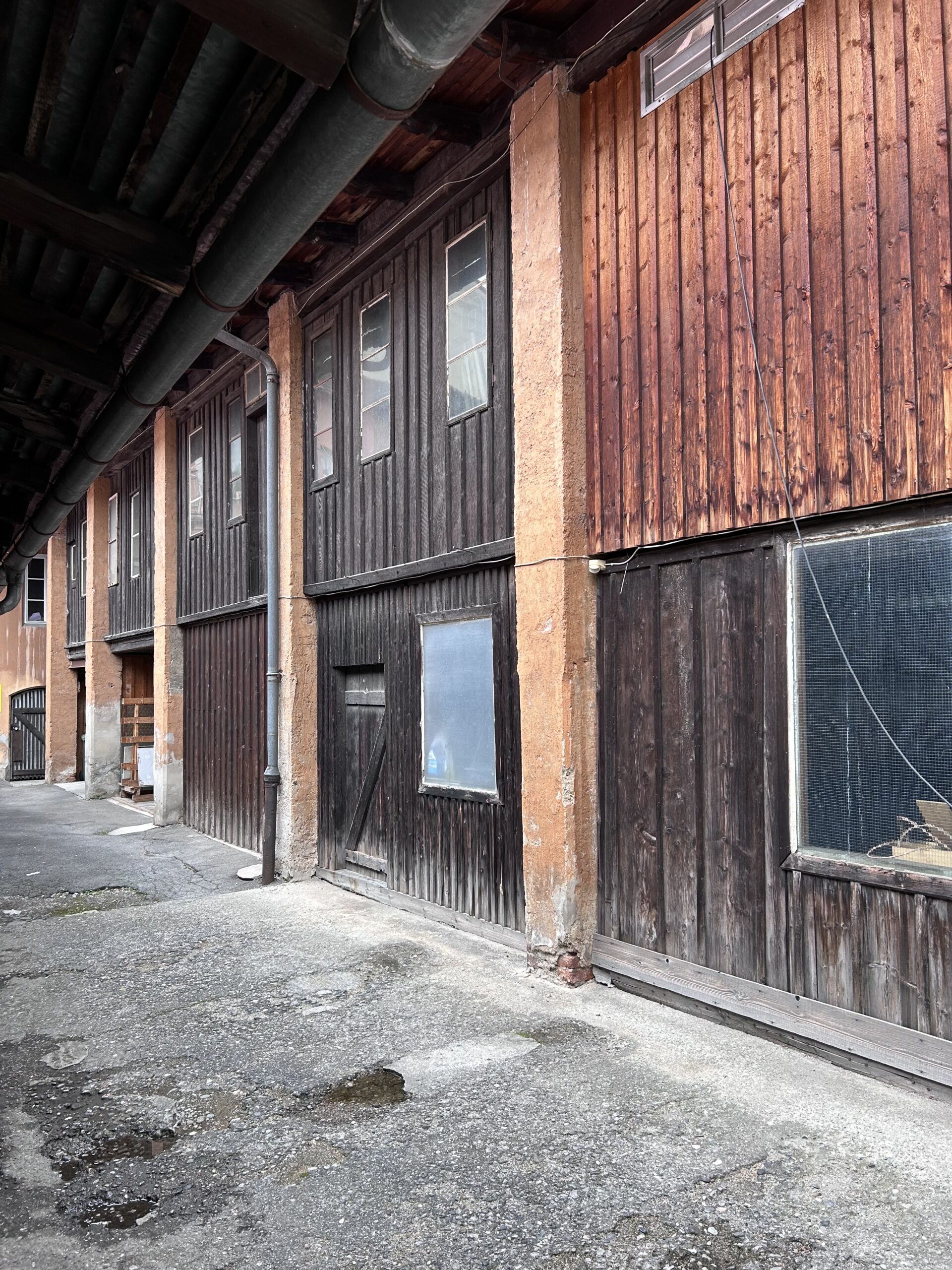
Workshop wing Glasmalereistraße / 3 - 5
Monastery Church of the Immaculate Conception / Rennweg 40
Regional Maternity Clinic / Michael Gaismair Straße 1
Sights to see...
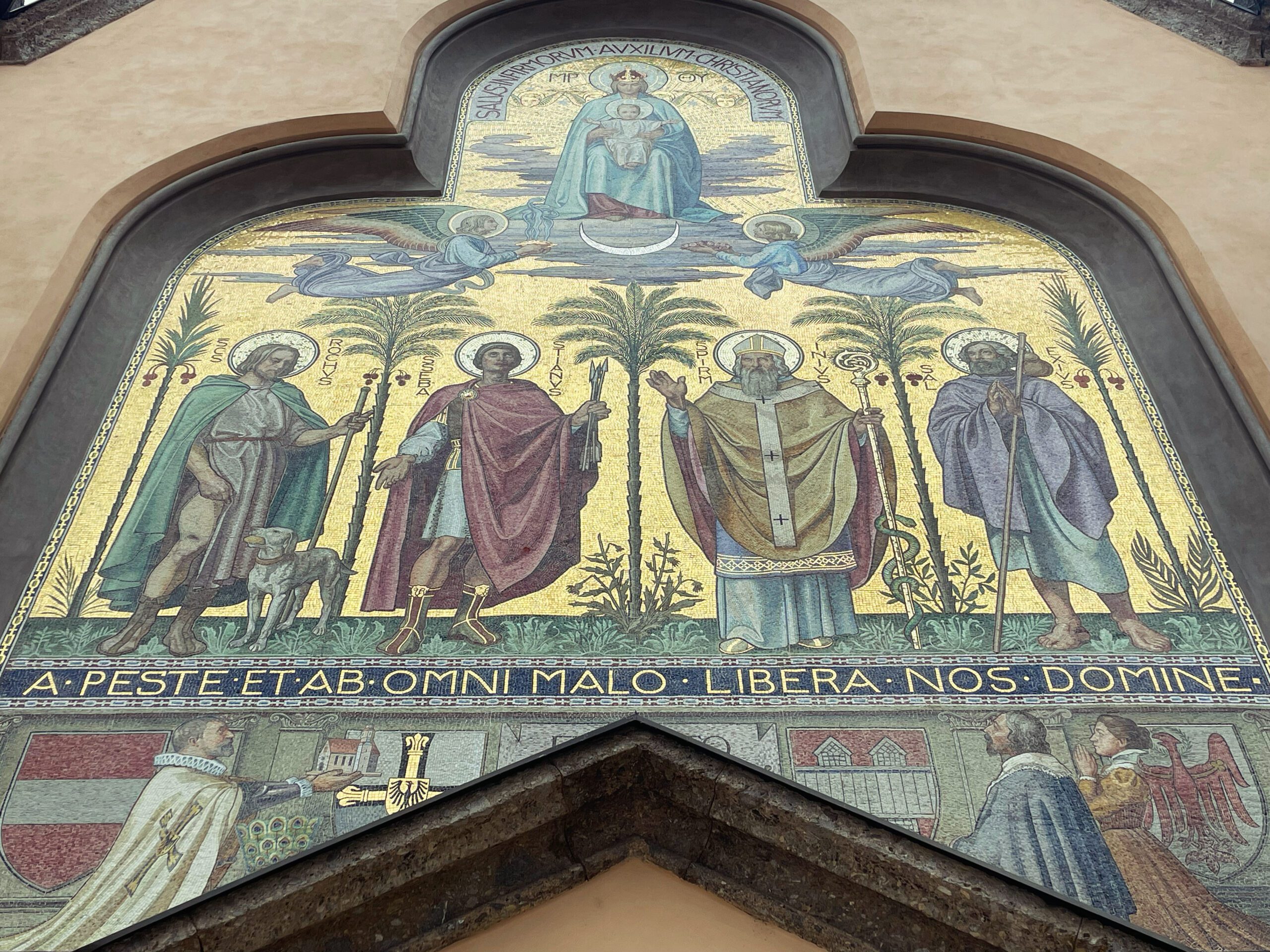
Old & New Hötting Parish Church / Plague Cemetery
Schulgasse / Schneeburggasse
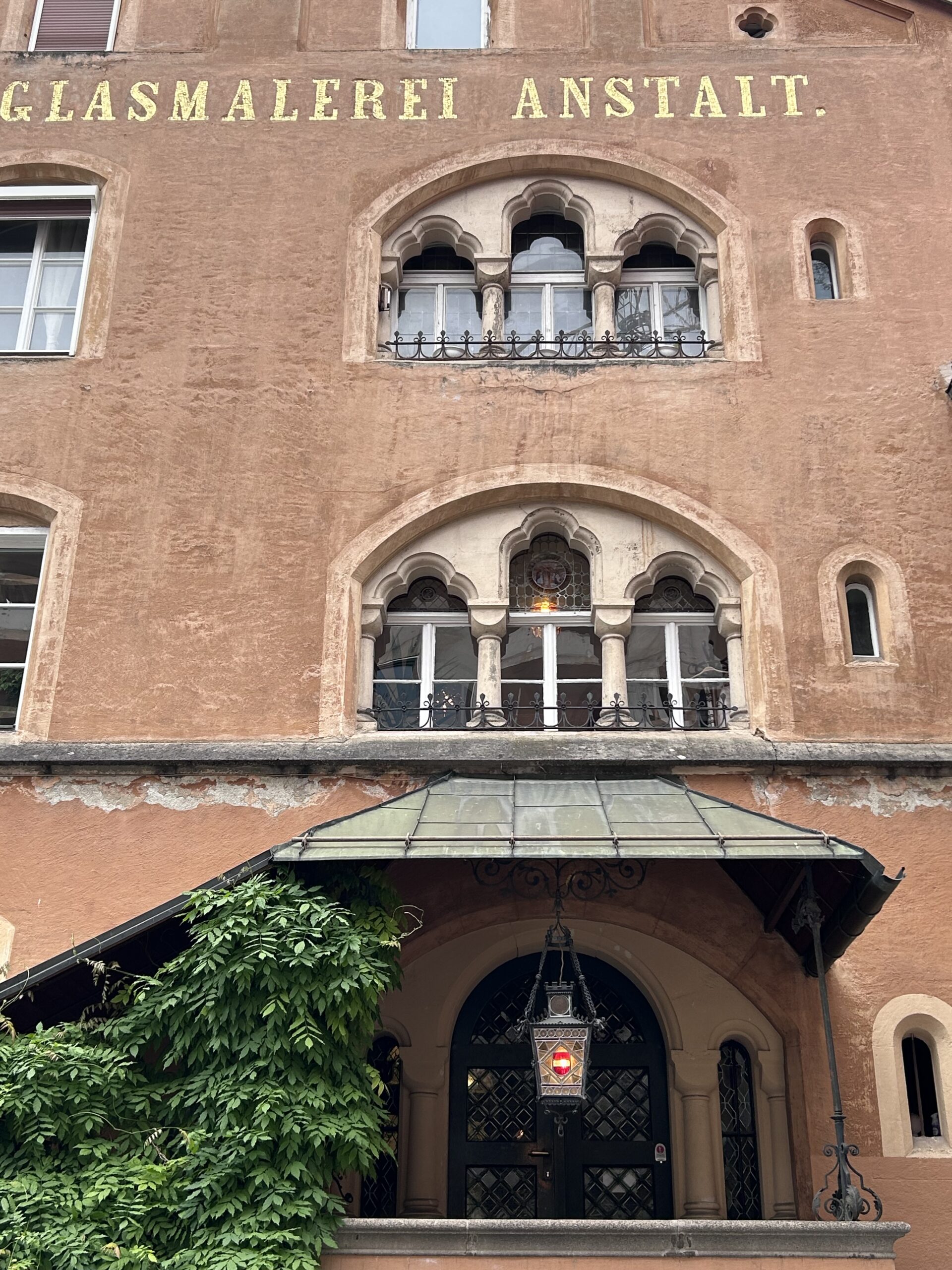
Tyrolean Glass Painting and Mosaic Institute
Müllerstrasse 10
St Nicholas Church & Cemetery
Schmelzergasse 1
Chamber of Commerce
Meinhardstraße 12
Winklerhaus
Leopoldstraße/Maximilianstraße
Lutheran Church of Jesus Christ
Richard-Wagner-Strasse 2
Monastery of Perpetual Adoration
Karl-Kapferer-Straße 7-11
Collegium Canisianum
Tschurtschenthalerstrasse 7
Church of the Holy Trinity
Dreiheiligenstraße 10