Innsbrucker Kulturkampf
Innsbrucker Kulturkampf
Media and politicians never tire of pointing out the societal division and polarization that characterize the 21st century. Usually, the culprit is delivered right along with the diagnosis: social media. Yet a look back at the late 19th century demonstrates just how long division and polarization accompanied society well before the invention of Facebook, Twitter, and the like. Simplified, the parliament of the late Austro-Hungarian Monarchy was shaped by Christian Socials, Social Democrats, and liberal-nationalist parties representing the individual ethnic groups of the multi-ethnic empire. The Social Democrats, Christian Socials, and Pan-German Nationalists were the predecessors of today's parliamentary parties SPÖ, ÖVP, and FPÖ. In the Tyrolean Landtag (regional parliament), Social Democrats played no role; the Catholic-conservative party had lost some of its influence, but formed a coalition block with the reform-Catholic Christian Socials in Tyrol. The Innsbruck city council, on the other hand, was dominated by Pan-German liberals thanks to the wealth-based census suffrage. The rivalry between Liberals, Conservatives, and the Social Democrats—who were disadvantaged by electoral law—created a highly explosive atmosphere in Innsbruck. As in other cities of the Habsburg Monarchy and the German Empire, this *Kulturkampf* (cultural struggle) rarely remained limited to verbal skirmishes. Politicians, intellectuals, and journalists fought especially bitterly over dominance at the universities, as these were the institutions training the elites of tomorrow. Yet the conflict did not stop at the higher education institutions. Following the press reforms of 1867, newspapers reached unprecedented levels of circulation. Conservatives, Catholics, Pan-German Nationalists, Liberals, and Social Democrats each had their own partisan papers. Readers of these publications lived in their own echo chambers. The polemical articles reached an audience willing to emphasize their opinions with physical force. Although dueling was officially prohibited by law, it was tolerated until well into the 20th century as a means of satisfaction in accordance with military and aristocratic notions of honor, serving as a common practice. Fencing student fraternities (*Burschenschaften*) adopted dueling and continue this tradition as an honorable duel, the *Mensur*, to this day. In other respects as well, fraternities had their origins in the military. The first corps emerged at German universities as seedbeds of nationalist thought following the Napoleonic Wars. While conservative subjects organized themselves into paramilitary units within the marksmen companies (*Schützen*), these student fraternities enjoyed immense popularity among academics. Like other associations, they increasingly took clear political stances. In doing so, two distinct poles emerged: Catholic, conservative, loyal to the Emperor; and liberal, Pan-German, nationalist. What appears contradictory today—liberal and nationalist—was a standard political pair of ideas in the 19th century. *Pan-Germanism* was not the peculiar political ideology of a far-right minority. Anyone who wished to be seen as modern did not view themselves as a subject of the traditional multi-ethnic state of the Habsburg Monarchy, but instead aspired toward the All-German *Nation*: a militarily and economically strong, not necessarily democratic, and ethnically uniform state that united all German-speaking lands after the Prussian model. In Innsbruck, students joined together in 1859 to form a corps in order to perform border service during the Second Italian War of Independence. The Corps *Rhaetia*, *Chinisia*, and *Athesia* were the first fraternities at the university to appear in public. Shortly thereafter, Catholic students gathered under the academic fraternity *Austria*, which exists to this day. Around the turn of the century, one-third of the students at the University of Innsbruck belonged to a fraternity, a corps, or a *Burschenschaft*. Unlike today, it was not unusual for them to appear in public in full regalia (*Wichs*) wearing their colors—uniforms complete with sabers, berets, and sashes. They were also frequently armed with walking sticks, brass knuckles, and revolvers. Half of the fraternities held a Pan-German nationalist orientation and bore telling names such as *Suevia* or *Germania*. They derived their ideology from the *Los-von-Rom* ("Away from Rome") movement led by the German radical Georg Ritter von Schönerer (1842–1921), who personally attended events in Innsbruck on several occasions. At the secular faculties, the majority of professors held Pan-German nationalist views. Relative to the city's total population—which in 1910 remained 96% Catholic—they constituted a numerical minority, but owing to their social influence, a highly powerful one. In the 1880s, later than at other Austrian universities, racial antisemitism spread in Innsbruck amid this climate, even though there were hardly any Jewish students or professors at the Leopold-Franzens-University. As radical opposition to the monarchy and clergy mounted at the university, the situation escalated irreversibly from the 1890s onward. Provocations and disagreements among professors made headlines and reached parliament, while conflicts between Catholic and Pan-German nationalist students frequently ended in outright brawls.
The *Wahrmund Affair*, which radiated outward from the University of Innsbruck across the entire Austro-Hungarian Monarchy in the early 20th century, was just one of many examples of this intense polarization. Ludwig Wahrmund (1860–1932) was a professor of canon law at the Faculty of Law at the University of Innsbruck. Originally chosen by the Governor of Tyrol to strengthen Catholicism at the University of Innsbruck—which was deemed too liberal—Wahrmund turned out to be a proponent of an enlightened theology. In contrast to conservative representatives in the clergy and politics, he was a reform Catholic who viewed the Pope solely as a spiritual leader rather than a worldly authority. In Wahrmund's view, students ought to narrow and reconcile the gaps between the Church and the modern world rather than cement them. Until 1906, Wahrmund was part of the *Leo-Gesellschaft*, which aimed to promote science and scholarship on a Catholic basis. In a transformation from a moderate Saul to a liberal Saul, he became chairman of the Innsbruck local chapter of the *Freie Schule* association, which advocated for the complete secularization of the entire educational system. From a reform Catholic, he evolved into a champion of the total separation of church and state. Amplified by the media, his lectures repeatedly drew the attention of the authorities. Conservative politicians and press outlets raged against his questioning of the indissolubility of marriage, while liberals and his supporters among professors and students applauded him. Pan-German nationalist academics received backing from Mayor Greil and the likewise anti-clerical Social Democrats, whereas the Tyrolean regional government stepped into the breach on the conservative side. The *Wahrmund Affair* reached the Imperial Council (*Reichsrat*) as a core debate of the *Kulturkampf*. For the Christian Socials, it was a *"struggle of freethinking Jewry against Christianity,"* in which *"Zionists, German cultural fighters, Czech and Ruthenian radicals"* presented themselves in an *"international coalition"* as a *"freethinking ring of Jewish radicalism and radical Slavdom."* Wahrmund, on the other hand, referred to Catholic students in the generally heated atmosphere as *"traitors and parasites."* When Wahrmund published one of his speeches in 1908 in which he questioned Christian morality and the Catholic veneration of saints, he was charged with blasphemy. Following further—and at times violent—rallies on both the conservative and anti-clerical sides, along with student riots and strikes, university operations briefly had to be suspended entirely. Wahrmund was initially placed on leave and later transferred to the German University in Prague.
In February 1910, civil-war-like scenes unfolded in Innsbruck, entering the city's history as the *Breinößlschlacht* (Battle of the Breinößl). The Catholic fraternities *Tirolia*, *Raeto Bavaria*, and *Leopoldina* had their headquarters in the *Gasthof Breinößl* on Maria-Theresien-Straße. Members of the rival Corps *Gothia* attacked several *Tirolia* students inside the inn. The innkeeper Franz Hofer—father of the future Gauleiter and himself likely holding Pan-German nationalist views—called the police to have the Catholic students thrown out of his establishment. The following day, fresh provocations erupted among the fraternities, culminating in a mass brawl involving over 100 combatants. Students fought each other and summoned police officers in a street battle that left several people injured and the interior of *Gasthof Breinößl* devastated. The next day, the wave of violence reached its end following a brawl involving 250 people, which resulted in the destruction of *Café Central* and the neighboring *Akademikerhaus* belonging to the Catholic fraternity. The tragic climax of the *Innsbruck Kulturkampf* turned fatal two years later. On the night of November 4, students from the *Raeto Bavaria* and *Austria* fraternities were walking home from a dance when they were attacked by Pan-German nationalist fraternity members. During the ensuing brawl in front of *Gasthof Breinößl* on Maria-Theresien-Straße, medical student Max Ghezze (1889–1912) suffered a blow to the back of his head. Police officers brought the unconscious student to a drunk tank, where he was found hours later by his fellow classmates. Ghezze died shortly thereafter at the Innsbruck hospital, due in part to his mistreatment by the police. The members of *Gothia* suspected of the crime were released for lack of evidence. Protests sent from Cortina to the governor's office criticized the city administration and the police, even demanding universal empire-wide suffrage at the municipal level. Such a reform likely would have brought an end to the exclusive rule of the *Deutsche Volkspartei* and Wilhelm Greil's corresponding influence over executive power on the city council.
The First World War brought a brief pause in the struggle for ideological supremacy at the university. The politics of the 1920s and 30s—characterized by civil-war-like tensions between Christian Socials, Social Democrats, and Pan-German Nationalists, which culminated first in the Catholic Corporate State (*Ständestaat*) and subsequently in the annexation (*Anschluss*) to National Socialist Germany—had their roots in the *Kulturkampf*. The fraternity students of the past had since become professors, lawyers, historians, teachers, and doctors. To their youthful political extremism, they had added the experiences of a world war, inflation, and multiple economic and political crises. What remained was authoritarian subservience to authority, a readiness for violence, and antisemitism, which were passed down to the next generation of young men.
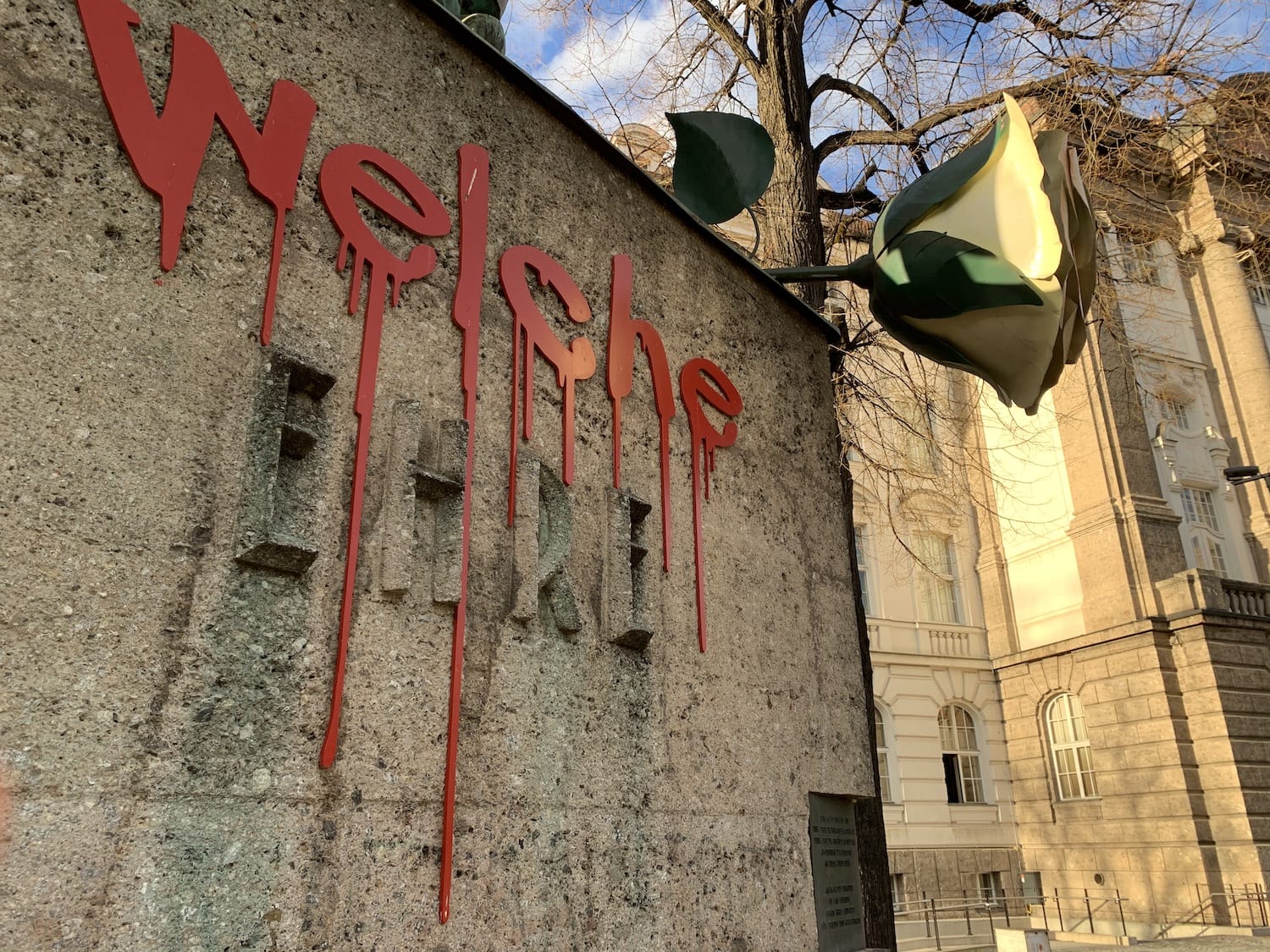
Sights to see...
Adolf-Pichler-Platz
Adolf-Pichler-Platz
Fraternity House Austria
Josef-Hirn-Straße
University of Innsbruck
Innrain 52