Siegmund der Münzreiche
Siegmund der Münzreiche
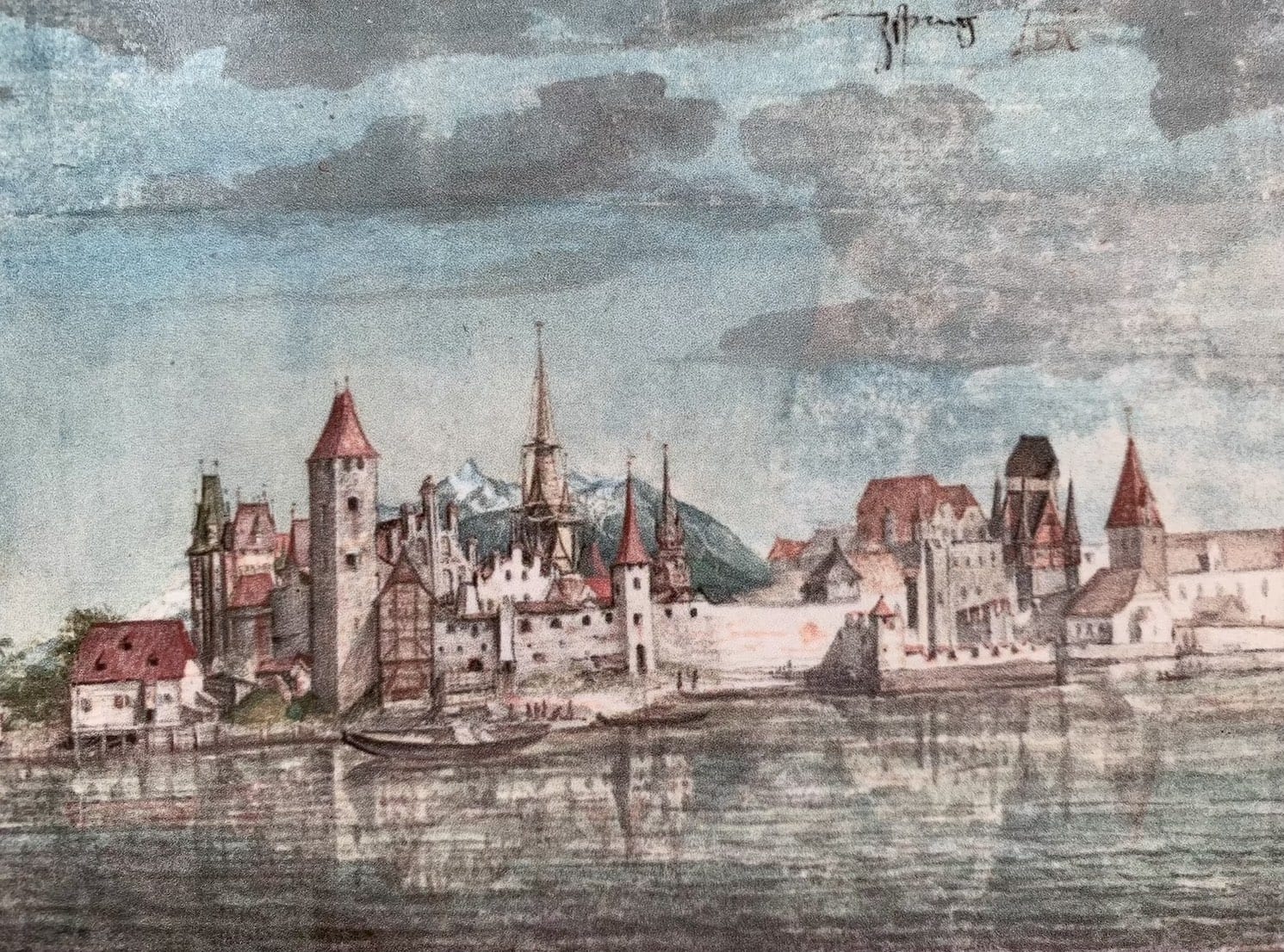
Auf den Landesfürsten Friedl mit der leeren Tasche folgte sein Sohn Siegmund der Münzreiche (1427 – 1496). Der Start des jungen Mannes an der Spitze des Landes war holprig. Als sein Vater starb, war Siegmund erst 12 Jahre alt. Deshalb nahm ihn sein Onkel Friedrich III., der Kaiser of the Holy Roman Empire und Vater Maximilians I., in unfreiwillige Obhut und Vormundschaft. Man könnte sagen, Siegmund startete seine Karriere als Geisel des Kaisers, seines eigenen Vetters. Tirol war mittlerweile eine reiche Grafschaft, die direkte Kontrolle darüber wollte der Kaiser nur ungern aufgeben. Der Tiroler Landtag hatte zwischenzeitlich die Regierungsgeschäfte in Ermangelung eines Landesfürsten übernommen und damit politisches Gewicht bewiesen. Erst als die Landstände gegen diese Bevormundung protestierten, konnte Siegmund sein Amt antreten. Mit 18 Jahren zog er in Innsbruck ein, um seine Karriere als CEO Tirols zu starten. Unter seiner Ägide kam es zu vielen Innovationen auf der einen Seite, zu einem aufgeblähten und teuren Hofstaat auf der anderen. In Innsbruck und Umgebung zog das städtische Leben neues Handwerk an. 1453 eröffnete in der heutigen Universitätsstraße die Landesfürstliche Silberschmelze. 1484 ließ Siegmund die Münzprägeanstalt von Meran in Südtirol nach Hall verlegen, was ihm den Beinamen Siegmund der Münzreiche brought in. Two years later, a princely mill was built on the Sill Canal, which was to form the basis for the early industrialisation that developed in the following years. He issued the Schwaz mountain regulations, die zum Vorbild für alle Bergwerke der Habsburger werden sollte. Den Bergbeamten wurden, ähnlich den Universitäten, mehr Rechte innerhalb ihres Wirkungsbereiches gegeben. Für die Bergarbeiter gab es Sonderregelungen innerhalb der Gesellschaft, waren sie doch heiß begehrte Arbeitskräfte. Man kann von einer frühen sozial- und arbeitsrechtlichen Vereinbarung sprechen. Die Bergleute arbeiteten hart, verdienten aber verhältnismäßig gut. Dasselbe galt für die Prägeanstalt und die Haller Salinen. Eine frühe Form bürgerlicher Mittelschicht begann sich durch diese Möglichkeiten am Arbeitsmarkt herauszubilden.
During his opulent reign, Innsbruck had become a centre of attraction for craftsmen, goldsmiths and artists. The immigrants often came from the aristocracy and did not want to give up their lifestyle in Innsbruck. A special form of metal industry established itself in Mühlau. Plattner schufen Rüstungen und Harnische für Adelige, die sich sowohl auf Kriegszügen wie auch auf Turnieren standesgemäß präsentieren wollten. Siegmund war ihr bester Kunde. Er kaufte etliche Turnierharnische für sich selbst und als anerkennende Geschenke für Aristokraten ausländischer Höfe und Ehrengäste. Die Werkstätten am Mühlaubach wurden zu den führenden Betrieben ihrer Art weltweit. Erst im 17. Jahrhundert kamen die reich verzierten Rüstungen aus der Mode. Der Stadtturm beim Alten Rathaus als Ausdruck des städtischen Wohlstands und erste Teile der Hofburg wurden unter Siegmund erbaut. Ein Glasmaler siedete sich in Innsbruck an. Dieses Mäzenatentum war wohl auch ein wenig Kompensation für Siegmunds Eheleben. Er hatte in seinen ersten Jahren als Landesfürst Eleonore von Schottland (1433 – 1480), die optisch wenig attraktive 16 Jahre alte Tochter Königs Jakob aus dem Hause Stewart, geheiratet. Die Ehe sollte ohne Kinder bleiben, dafür aber kulturell umso fruchtbarer sein. Die Hofbibliothek wuchs im Gleichschritt mit Siegmunds und Eleonores humanistisch gelehrten Gästen. Beide galten als kunstsinnig und literarisch interessiert. Bücher waren in der Zeit vor der Erfindung des Buchdrucks ein teures Hobby. Auch fahrendes Volk und Schausteller waren am Hof gerne gesehen, um die einheimischen und internationalen Gäste zu unterhalten.
During his opulent reign, Innsbruck became a magnet for craftsmen, goldsmiths, and artists. Many of the immigrants came from aristocratic backgrounds and did not wish to abandon their lifestyle upon settling in Innsbruck. In Mühlau, a special form of metalworking industry took hold. Armorers produced suits of armor for nobles who wanted to present themselves appropriately on military campaigns as well as at tournaments. Sigismund was their best customer. He purchased numerous tournament armors for himself and as tokens of appreciation for aristocrats from foreign courts and distinguished guests. The workshops along the Mühlau stream became the leading enterprises of their kind worldwide. Only in the seventeenth century did the richly decorated armors fall out of fashion. The city tower next to the Old Town Hall, as an expression of urban prosperity, and the first parts of the Hofburg were built under Sigismund’s rule. A glass painter settled in Innsbruck. This patronage was perhaps also a form of compensation for Sigismund’s married life. In his early years as territorial prince, he married Eleanor of Scotland (1433–1480), the sixteen-year-old, physically rather unattractive daughter of King James of the House of Stewart. The marriage would remain childless, but culturally it proved all the more fruitful. The court library grew in step with the humanistically educated guests welcomed by Sigismund and Eleanor. Both were considered artistically inclined and interested in literature. Books were an expensive hobby in the era before the invention of printing. Traveling performers and entertainers were also welcome at court, helping to amuse domestic and international guests. Sigismund’s opulent lifestyle cost him not only a great deal of money but also political reputation—and ultimately, probably, his princely throne. In his second marriage, he wed Catherine of Saxony (1468–1524), a lady from a high-ranking princely electoral house. It was likely due to the influence and courtly expenditures of Sigismund and his two wives that the Coin-Rich’s expenses eventually exceeded income from taxes, salt works, and mines. At the princely wedding in 1484, the bride’s procession alone consisted of fifty-four wagons. Guests had to be housed and fed in Innsbruck. Even with a wife forty years his junior, the now senile Sigismund was not granted a male heir—an especially bitter fact considering the thirty illegitimate children attributed to him. At the same time, conditions grew harsher for those unable to keep pace with the city’s new rhythm of life. At that time, Innsbruck had approximately 2,000 citizens. Sigismund’s court comprised 500 people, not including his wife’s household. These “outsiders” attracted considerable attention in Innsbruck. The gap between social classes widened, and the estates grew concerned about the strained state finances. By the end of his reign, Sigismund’s court had become excessively bloated and costly. A lost war against the Swiss Confederates obligated him to make payments, and a conflict with Venice also ended unfavorably. Sigismund was forced to mortgage Habsburg possessions in Alsace and the present-day Breisgau to Charles the Bold of Burgundy, the future father-in-law of Maximilian I. He sold the Austrian Forelands to the Duchy of Bavaria at a bargain price and pledged the Tyrolean silver mines to Jakob Fugger. The Bavarian Wittelsbachs sought to regain control of Tyrol through an inheritance treaty with the age-related mentally diminished Sigismund. Only imperial pressure and the swift intervention of the Tyrolean Estates and Maximilian made it possible for the country to remain in the hands of the House of Habsburg. In 1490, Maximilian assumed the office of territorial prince, even though Sigismund was still alive. This reunited all Habsburg hereditary lands under one ruler. Sigismund was not the most successful ruler Tyrol ever had, but thanks to his clearly visible contributions to Innsbruck’s cultural rise, he continues to enjoy a measure of respect in popular memory.
Sights to see...
Gasthaus Weisses Kreuz
Herzog-Friedrich-Straße 31
Goldenes Dachl
Herzog Friedrich Straße
Hofzwerg und Burgriese
Hofgasse 12