University City of Innsbruck
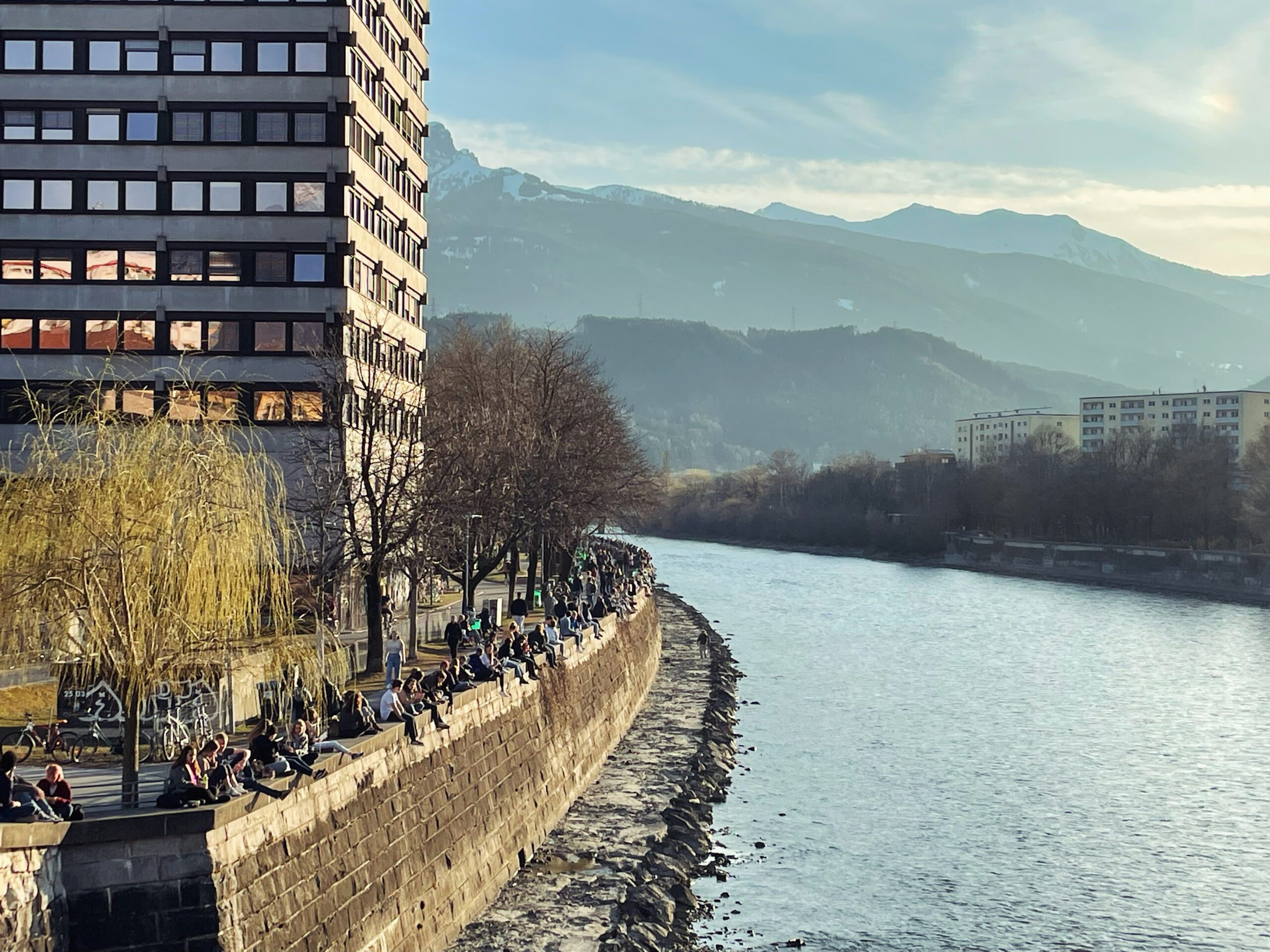
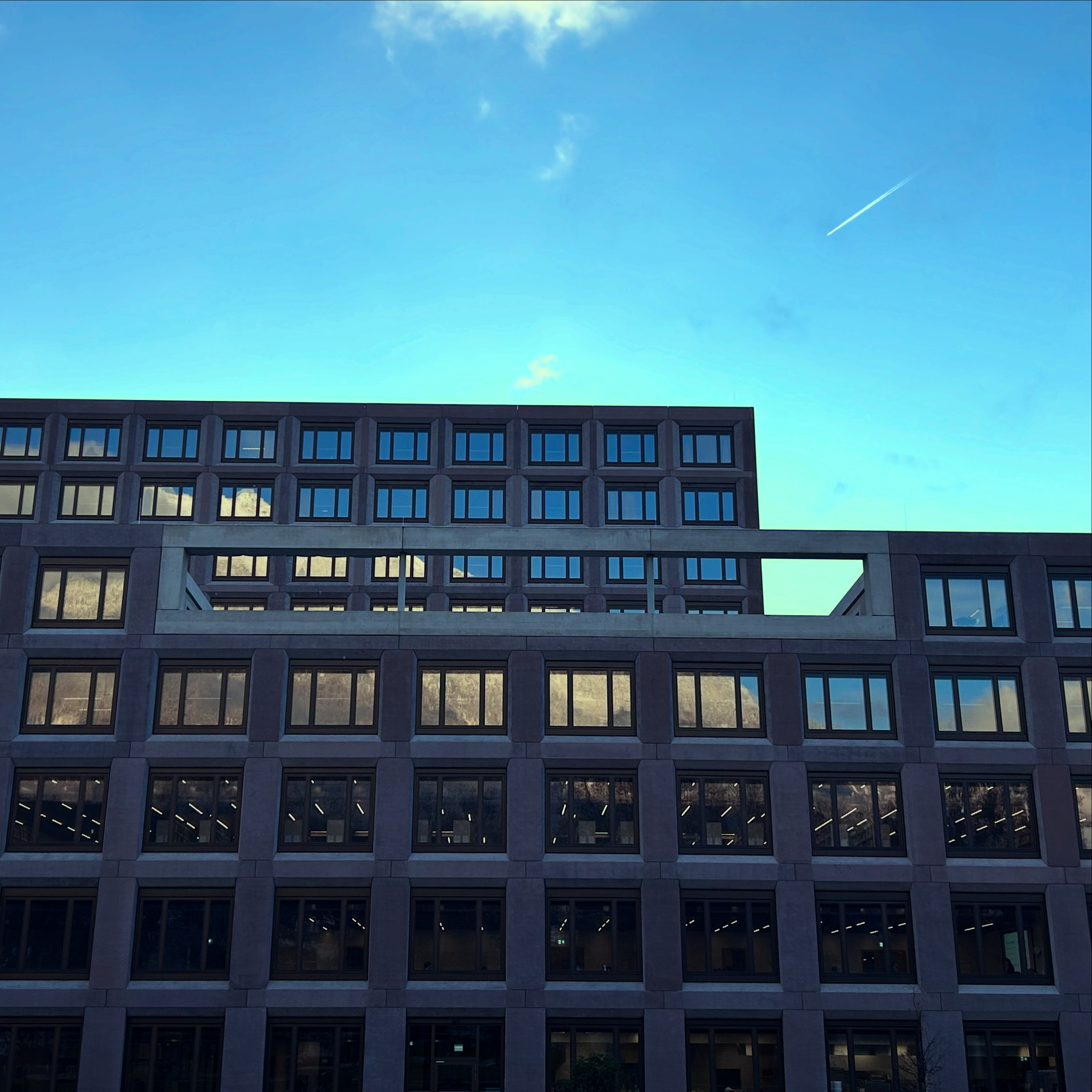
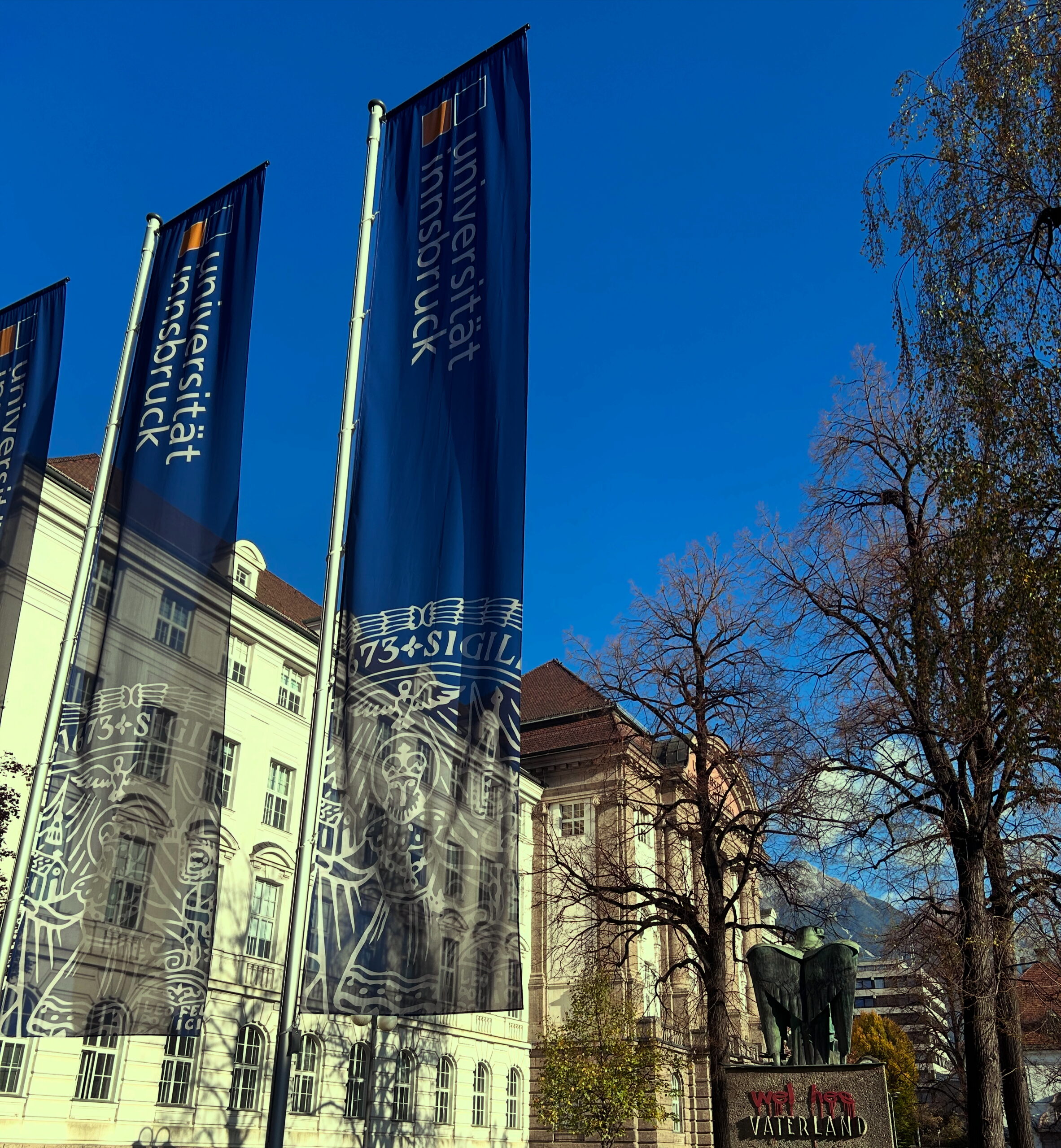
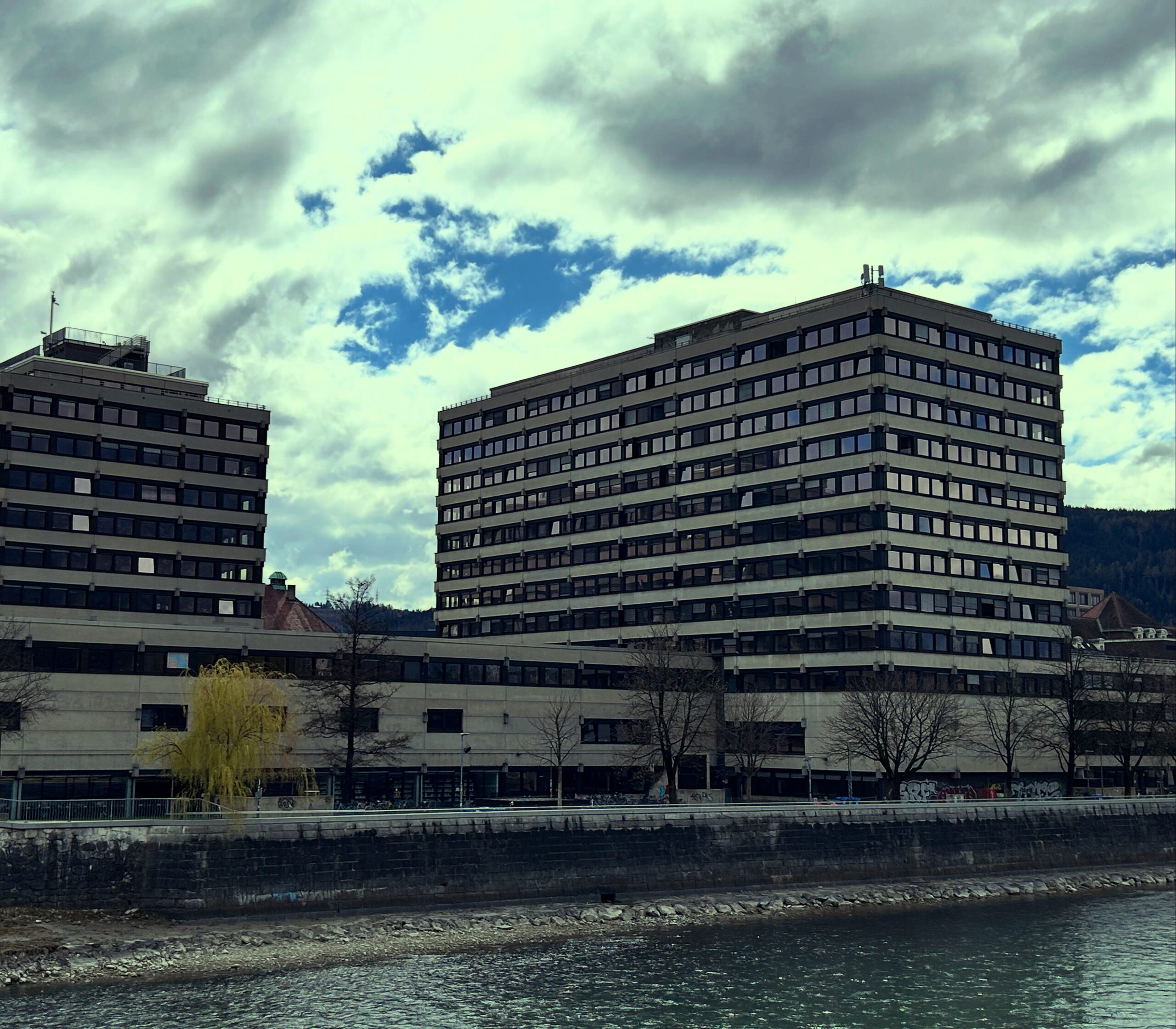
University City of Innsbruck
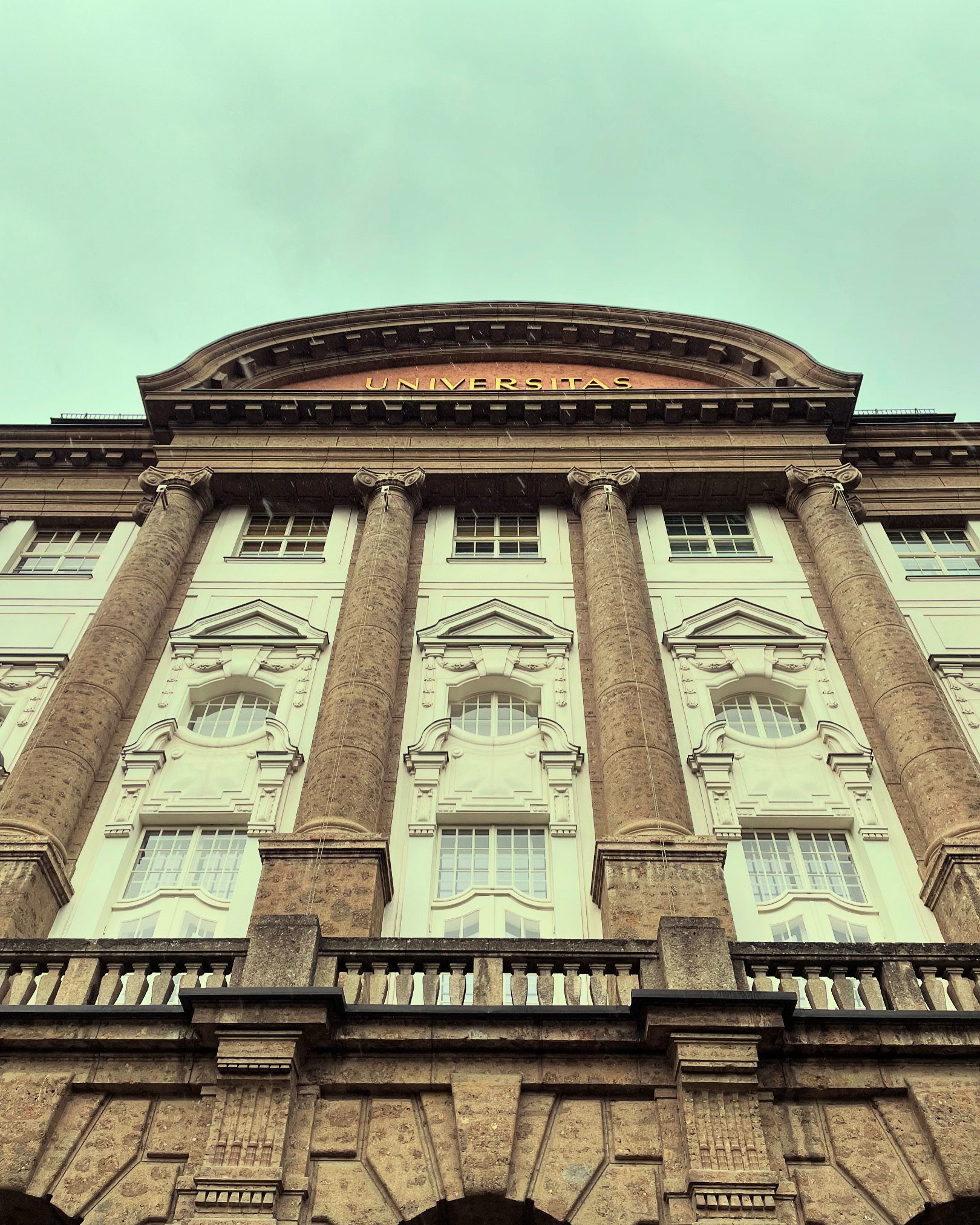
1669 is considered the official founding year of one of the most important institutions in Innsbruck's city history. On 15 October, Emperor Leopold I granted the Tyroleans the privilege of „Haller Salzaufschlags“. Diese Steuer auf die begehrte Handelsware aus der hauseigenen Saline machte es möglich, eine Universität zu finanzieren. Die Basis für eine Hochschule war zu diesem Zeitpunkt bereits gelegt. Die Universität ging aus der Lateinschule hervor, die von den Jesuiten etwas mehr als hundert Jahre zuvor unter Ferdinand I. gegründet worden war. Der Schwerpunkt am Gymnasium lag auf der klassischen humanistischen Bildung. Latein und Griechisch waren notwendige Schwerpunkte im Unterricht, um dem intellektuellen und politischen Diskurs folgen zu können. Wissenschaftliche Bücher und viele andere Schriftstücke wurden in der Frühen Neuzeit noch immer auf Latein verfasst. Auch für höhere Posten im öffentlichen Dienst war Latein Voraussetzung. Die Universität brachte neue Ausbildungsmöglichkeiten nach Innsbruck. Die erste Fakultät, die den Lehrbetrieb aufnahm, war die Philosophie. Theologie, Recht und Medizin folgten kurz darauf. Als Papst Innozenz XI. der Universität 1677 seinen Segen gab, war der Betrieb schon voll angelaufen. Professoren und Studenten verschiedenster Nationalität tummelten sich in Innsbruck. Der Jesuitenorden war mit mehreren Lehrstühlen vertreten, andere Professoren wurden von der Diözese Brixen bestellt. Das führte zu Spannungen innerhalb der Universität, vertraten doch die Jesuiten vor allem die Interessen des Landesfürsten und Monarchen, während die Professoren der Diözese die politischen Interessen des Bischofs wahren wollten. Von einer Trennung von Staat, Kirche und Wissenschaft war man in dieser frühen Phase der Aufklärung noch weit entfernt. Dabei ging es um Posten, Macht, Geld und Einfluss, nicht nur innerhalb der Stadt.
A university degree usually took seven years before the graduate was permitted to slip a ring onto his finger as a symbol of his doctoral status. During the first two years, every student had to dedicate himself to philosophy before selecting a specialized field. In addition to humanities coursework, church services, theatrical performances, music-making, and practical pursuits like fencing and horseback riding were integral components of an educated young man's life. The university, however, was far more than an educational institution. In 1665, Innsbruck lost its status as a residence city, relinquishing much of its prestige and splendor. The university's presence offset this downgrade to some extent, ensuring that the aristocracy remained present in the city, at least in the form of students. Students and professors reshaped the city's social fabric. In the first decade following its founding, roughly 50 different men from all corners of the world taught philosophy in Innsbruck to a student body of over 300. These intellectuals were a remarkable group. Internally, they organized themselves into Landsmannschaften—fraternities based on nationality or language group. Every Landsmannschaft with sufficient members had its own distinct attire, badges, and insignia, and maintained its own unique traditions. At public and social occasions such as processions, delegations like the Congregation of the Blessed Virgin, drawn from the Jesuit-influenced university, stood out prominently. Professors made a habit of appearing in velvet gowns, color-coded according to their respective faculties. Carrying a sword, the gladius deambulatoris, was granted to students upon completing their first year at the university. Unlike the strictly and demurely dressed locals of Innsbruck, these young men of privileged backgrounds made colorful, flamboyant appearances reminiscent of medieval dandies. They conversed in a jargon that sounded strange and unintelligible to outsiders, while official matters were conducted entirely in Latin.
The strictly supervised daily life of students in the assembly hall and lecture halls was lightened by booze-filled evening entertainment, excursions into the countryside surrounding Innsbruck, music-making, church processions, and theatrical performances. Time and again, friction arose between ordinary citizens and members of the university. Despite their social standing, students were frequently far from diligent model pupils; rather, they were young men accustomed to a certain lifestyle and status. To keep them under control, a dedicated legal system was required. Students were subject to university law, which was entirely separate from municipal law. The university itself could impose imprisonment, fines, and even banishment from the territory. Only cases involving capital punishment required appealing to the regional government. For instance, students were officially forbidden from drinking to excess. If this occurred in one of Innsbruck's taverns anyway, the young offender received an admonition. Should he be unable or unwilling to settle his bill, the aggrieved innkeeper could not file a formal complaint with the courts, as serving excessive amounts of alcohol to the student body was prohibited. Insults to honor within university circles could lead to duels, much like in the military. Especially when combined with alcohol, riots and disturbances were not uncommon. Thus, in January 1674, "not only were nuisances, rumors, and absurd acts committed at night," but "students of the university were apprehended carrying all kinds of forbidden weapons such as matchlocks, pistols, pocket pistols, stilettos, sabers, and knives..." To enforce the law, the university rectorate maintained its own force. The Scharwache (watchmen) was armed with halberds and tasked with preventing student disturbances as effectively as possible. Six armed men were on duty day and night to maintain order. There was even a dedicated university prison (Carcer) to detain wrongdoers on bread and water. The costs for this were split between the city of Innsbruck and the university.
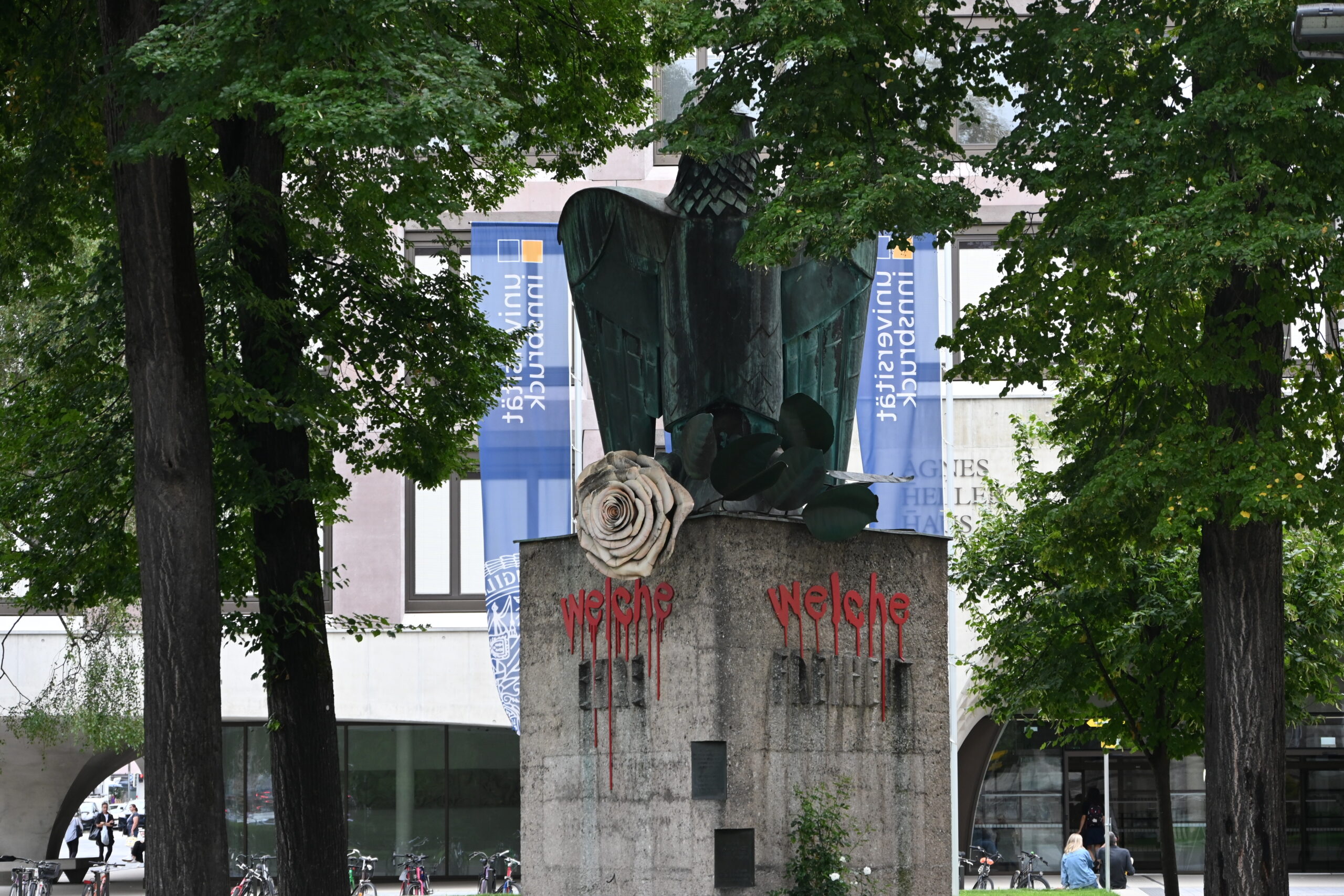
The university has always served as a political focal point and a reflection of the prevailing zeitgeist. Since the mid-18th century, its primary purpose was to train loyal, Catholic civil servants for the state. The name Leopold-Franzens-Universität traces back to the two emperors, Leopold I and Francis I, under whom it was originally founded and re-established, respectively. On two separate occasions, the university was downgraded to a lyceum or abolished entirely. Emperor Joseph II closed the gates of the Jesuit-influenced educational institution, as did the Bavarian administration during the Napoleonic Wars. Emperor Francis I, who pivoted back to the traditionally Catholic line of the Habsburgs during the Restoration, re-founded the institution in 1826. However, the university remained under close surveillance during Metternich's police state, as authorities feared nationalistic and liberal students who were beginning to form fraternities. Secret state police operated in lecture halls and student circles alike to nip the problematic ideas of young agitators in the bud as early as possible. Industrialization and its accompanying economic, political, and societal demands on education reshaped university life. Reflecting the spirit of the era, the inaugural address by the Dean of the Faculty of Philosophy, Prof. Dr. Joachim Suppan (1794–1864), addressed a practical physics problem aimed at achieving "a more precise knowledge of the so important and useful invention of the steam engine, also for domestic industry, where it has so far found no application." The fact that Suppan was an ordained priest alongside his degrees in philosophy and mathematics highlights the continuing influence of the Church on education during the 19th century. Suppan's closing admonition to the students—urging them "to one day render fruitful services to the fatherland through knowledge and virtue"—underscores how closely bound the university remained to state authority alongside ecclesiastical power. The nationalistic conflicts of the late monarchy were similarly mirrored in the university's history. Academic life in the late 19th century was defined by competing student corps, Burschenschaften, and fraternities. Students and professors grew increasingly radicalized, leading to recurring clashes between different factions and changing alliances. The only issues on which liberals, conservatives, and Pan-German nationalists could consistently agree were antisemitism and a shared hostility toward Italians. The interwar period brought a continuation of these old conflicts. Many students and faculty members had served in the First World War and were accustomed to resolving disputes through force. The apparatus of the Corporate State (Ständestaat) in the 1930s drew its ranks from Catholic fraternities, whereas Pan-German Burschenschaften served as a major pillar for National Socialism. The democratic Republic of Austria and the broader emancipation that accompanied it held little appeal for the traditionally elitist academics on both sides. Young men suddenly no longer had academia to themselves. While women and the sons of working-class artisan families had long been barred from university studies, it now became theoretically possible to advance socially through higher education. The university celebrated its first female Doctor of Law five years after the founding of the Republic. The press noted:
“This coming Saturday, Miss Mitzi Fischer will be awarded the degree of Doctor of Law at the University of Innsbruck. Miss Fischer is a native of Vienna. She also completed her secondary education in Vienna. After her matriculation examination, she pursued the study of law at the University of Innsbruck. The future doctor passed all examinations with distinction and would therefore, according to former custom, have to be promoted sub auspiciis imperatoris. In any case, Miss Fischer is the first woman to earn the doctoral degree in law at the University of Innsbruck.”
With the annexation to the German Reich in 1938, the university was renamed once again. After the war, the Deutsche Alpenuniversität reverted back to Leopold-Franzens-Universität. Surprisingly quiet, much like in 1848, were the students in Innsbruck during the year 1968. While students were the drivers of change in other European cities, Innsbruck remained calm. In Paris, cobblestones flew; in Innsbruck, people settled for boycotts and sit-ins. Although there were individual groups in the late 1960s and 1970s such as the Kommunistische Gruppe Innsbruck, the Committee for Solidarity with Vietnam, the socialist VSStÖ, or the liberal-Catholic Aktion within the ÖH (Austrian Students' Association), no mass movement materialized. The vast majority of students came from the upper class and had completed their Matura at a Catholic-oriented grammar school. Beethoven's old adage that "as long as the Austrian still has brown beer and sausages, he does not revolt" proved true. Only a few students could summon enthusiasm for solidarity with Vietnam, Mao Zedong, or Fidel Castro. Who wanted to risk their own career in a region dominated by the holy trinity of the Tiroler Tageszeitung, Bishop Paulus Rusch, and the regional parliament (Landtag) with an absolute majority held by the ÖVP? Anyone who dared to distribute rebellious flyers or leftist literature anyway had to expect media defamation, a reprimand from the rectorate, or even a visit from state authorities. The professors—who in the 20th century often still exuded the detachment and aloof aura of the Early Modern era or made little secret of their political leanings—were rarely criticized. Rather, criticism was directed at the inadequate equipment of the modest lecture halls for the ever-increasing number of students. The major transformation in universities was not fought for in Austria, but voted for. Under Chancellor Bruno Kreisky, tuition fees were abolished. Education became affordable and conceivable for a larger number of young people. As a result, the number of students at Austrian universities rose from 50,000 to over 73,000 between 1968 and 1974.
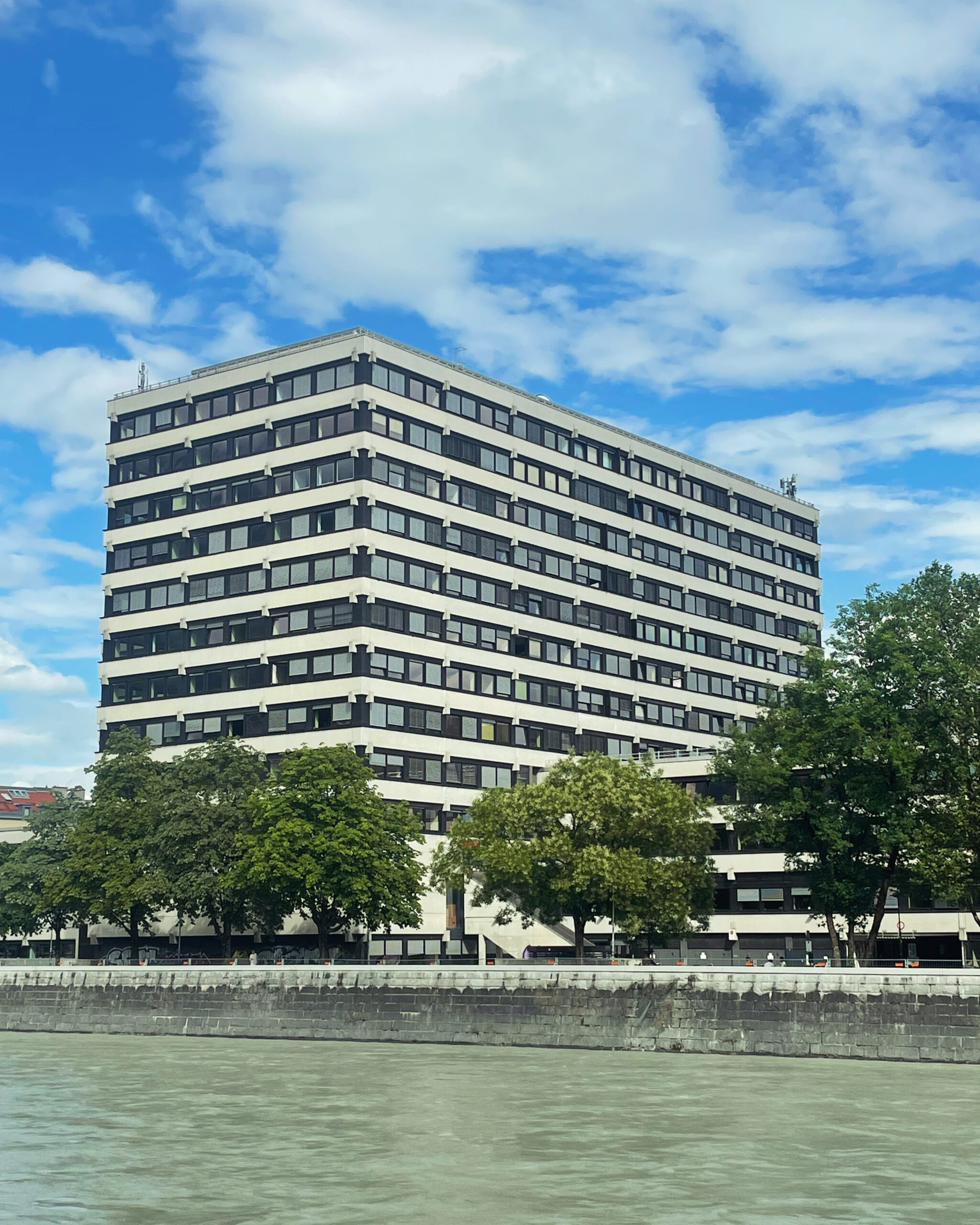
Despite all adversities and curiosities over the centuries, the University of Innsbruck has, since its earliest days, generally enjoyed an excellent reputation. In the 20th and 21st centuries, faculty and students repeatedly achieved internationally acclaimed research results. Victor Franz Hess was awarded the Nobel Prize in Physics for his work on cosmic radiation. Quantum physicist Anton Zeilinger was also associated with the University of Innsbruck, though not at the time of his award in 2022. Professors Fritz Pregl, Adolf Windaus, and Hans Fischer likewise received the Nobel Prize in Chemistry, though none of them were active in Innsbruck at the time. The university hospital has likewise delivered outstanding achievements in both research and education, as well as in the daily medical care of the city, and is considered one of Innsbruck’s flagship institutions. The university is of great importance to the city not only intellectually and economically. Around 30,000 students populate and shape life between the Nordkette mountain range and the Patscherkofel.
Sights to see...
Fraternity House Austria
Josef-Hirn-Straße
Pfarre Mariahilf
Dr.-Sigismund-Epp-Weg
Johanneskirche
Bischof-Reinhold-Stecher-Platz
University of Innsbruck
Innrain 52
Jesuit Church & Pfeifersberg Palace
Karl-Rahner-Platz / Sillgasse 6