The post-war period in Innsbruck
Risen from the ruins
Nach Kriegsende kontrollierten US-Truppen für zwei Monate Tirol. Anschließend übernahm die Siegermacht Frankreich die Verwaltung. Den Tirolern blieb die sowjetische Besatzung, die über Ostösterreich hereinbrach, erspart. Besonders in den ersten drei Nachkriegsjahren war der Hunger der größte Feind der Menschen. Der Mai 1945 brachte nicht nur das Kriegsende, sondern auch Schnee. Der Winter 1946/47 ging als besonders kalt und lang in die Tiroler Klimageschichte ein, der Sommer als besonders heiß und trocken. Es kam zu Ernteausfällen von bis zu 50%. Die Versorgungslage war vor allem in der Stadt in der unmittelbaren Nachkriegszeit katastrophal. Die tägliche Nahrungsmittelbeschaffung wurde zur lebensgefährlichen Sorge im Alltag der Innsbrucker. Neben den eigenen Bürgern mussten auch tausende von Displaced PersonsThe Tyrolean government had to feed a large number of people, freed forced labourers and occupying soldiers. To accomplish this task, the Tyrolean provincial government had to rely on outside help. The chairman of the UNRRA (Note: United Nations Relief and Rehabilitation Administration), which supplied war zones with essentials, Fiorello La Guardia counted Austria "to those peoples of the world who are closest to starvation." Milk, bread, eggs, sugar, flour, fat - there was too little of everything. The French occupation was unable to meet the demand for the required kilocalories per capita, as the local population and the emergency services often lacked supplies. Until 1946, they even took goods from the Tyrolean economy.
Die Lebensmittelversorgung erfolgte schon wenige Wochen nach Kriegsende über Lebensmittelkarten. Erwachsene mussten eine Bestätigung des Arbeitsamtes vorlegen, um an diese Karten zu kommen. Die Rationen unterschieden sich je nach Kategorie der Arbeiter. Schwerstarbeiter, Schwangere und stillende Mütter erhielten Lebensmittel im „Wert“ von 2700 Kalorien. Handwerker mit leichten Berufen, Beamte und Freiberufler erhielten 1850 Kilokalorien, Angestellte 1450 Kalorien. Hausfrauen und andere „Normalverbraucher“ konnten nur 1200 Kalorien beziehen. Zusätzlich gab es Initiativen wie Volksküchen oder Ausspeisungen für Schulkinder, die von ausländischen Hilfsorganisationen übernommen wurden. Aus Amerika kamen Carepakete von der Wohlfahrtsorganisation Cooperative for American Remittances to Europe. Many children were sent to foster homes in Switzerland in the summer to regain their strength and put a few extra kilos on their ribs.
However, all these measures were not enough for everyone. Housewives and other "normal consumers" in particular suffered from the low allocations. Despite the risk of being arrested, many Innsbruck residents travelled to the surrounding villages to hoard. Those who had money paid sometimes utopian prices to the farmers. Those who had none had to beg for food. In extreme cases, women whose husbands had been killed, captured or were missing saw no other way out than to prostitute themselves. These women, especially the unfortunate ones who became pregnant, had to endure the worst abuse for themselves and their offspring. Austria was still 30 years away from legalised abortion.
Politicians were largely powerless in the face of this. Even in normal times, it was impossible to pacify all interests. Many decisions between the parliament in Vienna, the Tyrolean provincial parliament and Innsbruck town hall were incomprehensible to the people. While children had to do without fruit and vitamins, some farmers legally distilled profitable schnapps. Official buildings and commercial enterprises were given free rein by the Innsbruck electricity company, while private households were restricted access to electricity at several times of the day from October 1945. The same disadvantage for households compared to businesses applied to the supply of coal. The old rifts between town and country grew wider and more hateful. Innsbruckers accused the surrounding population of deliberately withholding food for the black market. There were robberies, thefts and woodcutting. Transports at the railway station were guarded by armed units. Obtaining food from a camp was both illegal and commonplace. Children and young people roamed the city hungry and took every opportunity to get something to eat or fuel. The first Tyrolean governor Gruber, himself an illegal member of the resistance during the war, understood the situation of the people who rebelled against the system, but was unable to do anything about it. The mayor of Innsbruck, Anton Melzer, also had his hands tied. Not only was it difficult to reconcile the needs of all interest groups, there were repeated cases of corruption and favours to relatives and acquaintances among the civil servants. Gruber's successor in the provincial governor's chair, Alfons Weißgatterer, had to survive several small riots when popular anger was vented and stones were thrown in the direction of the Landhaus. Tiroler Tageszeitung. The paper was founded in 1945 under the administration of the US armed forces for the purposes of democratisation and denazification, but was transferred the following year to Schlüssel GmbH under the management of ÖVP politician Joseph Moser. Thanks to the high circulation and its almost direct influence on the content, the Tyrolean provincial government was able to steer the public mood:
„Are the broken windows that clattered from the country house into the street yesterday suitable arguments to prove our will to rebuild? Shouldn't we remember that economic difficulties have never been resolved by demonstrations and rallies in any country?“
The housing situation was at least as bad. An estimated 30,000 Innsbruck residents were homeless, living in cramped conditions with relatives or in shanty towns such as the former labour camp in Reichenau, the shanty town for displaced persons from the former German territories of Europe, popularly known as the "Ausländerlager", or the "Ausländerlager". Bocksiedlung. Weniges erinnert noch an den desaströsen Zustand, in dem sich Innsbruck nach den Luftangriffen der letzten Kriegsjahre in den ersten Nachkriegsjahren befand. Zehntausende Bürger halfen mit, Schutt und Trümmer von den Straßen zu schaffen. Die Maria-Theresien-Straße, die Museumstraße, das Bahnhofsviertel, Wilten oder die Pradlerstraße wären wohl um einiges ansehnlicher, hätte man nicht die Löcher im Straßenbild schnell stopfen müssen, um so schnell als möglich Wohnraum für die vielen Obdachlosen und Rückkehrer zu schaffen. Ästhetik aber war ein Luxus, den man sich in dieser Situation nicht leisten konnte. Die ausgezehrte Bevölkerung benötigte neuen Wohnraum, um den gesundheitsschädlichen Lebensbedingungen, in denen Großfamilien teils in Einraumwohnungen einquartiert waren, zu entfliehen.
"The emergency situation jeopardises the comfort of the home. It eats away at the roots of joie de vivre. No one suffers more than the woman whose happiness is to see a contented, cosy family circle around her. What a strain on mental strength is required by the daily gruelling struggle for a little shopping, the hardship of queuing, the disappointment of rejections and refusals and the look of discouragement on the faces of loved ones tormented by deprivation."
What is in the Tiroler Tageszeitung was only part of the harsh reality of everyday life. As after the First World War, when the Spanish flu claimed many victims, there was also an increase in dangerous infections in 1945. Vaccines against tuberculosis could not be delivered in the first winter. Hospital beds were also in short supply. Even though the situation eased after 1947, living conditions in Tyrol remained precarious. It took years before there were any noticeable improvements. Food rationing was discontinued on 1 July 1953. In the same year, Mayor Greiter was able to announce that all the buildings destroyed during the air raids had been repaired.
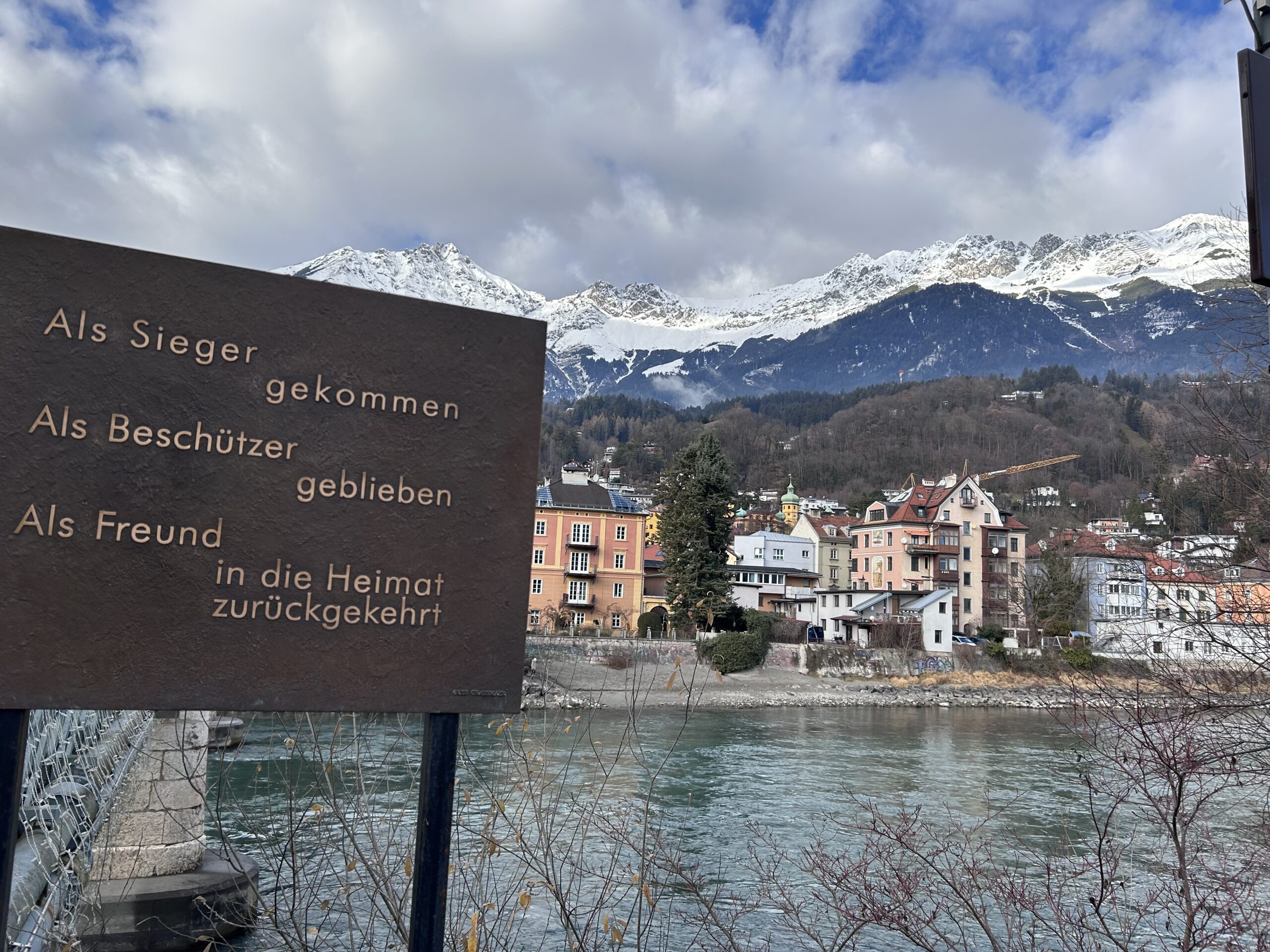
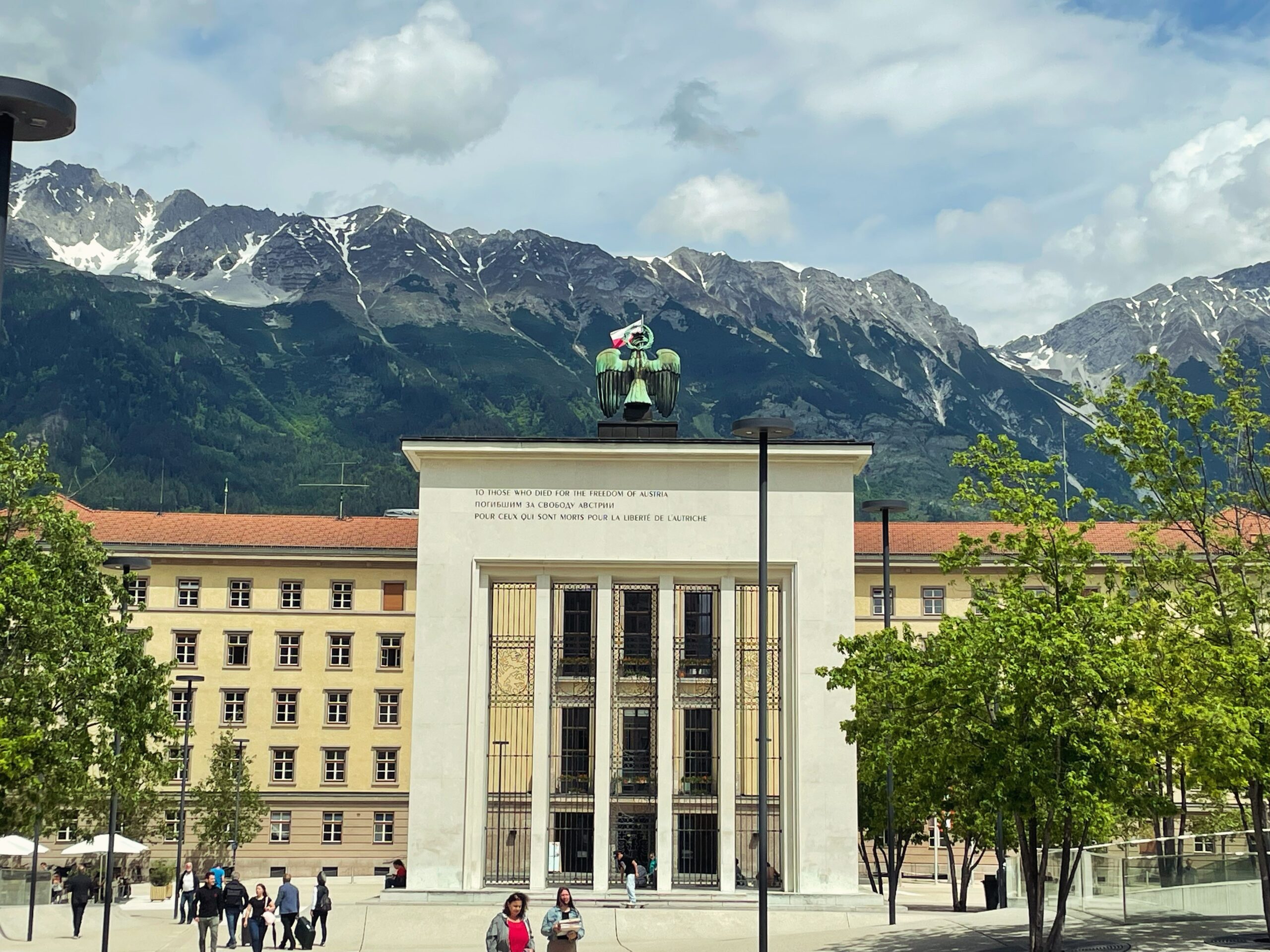
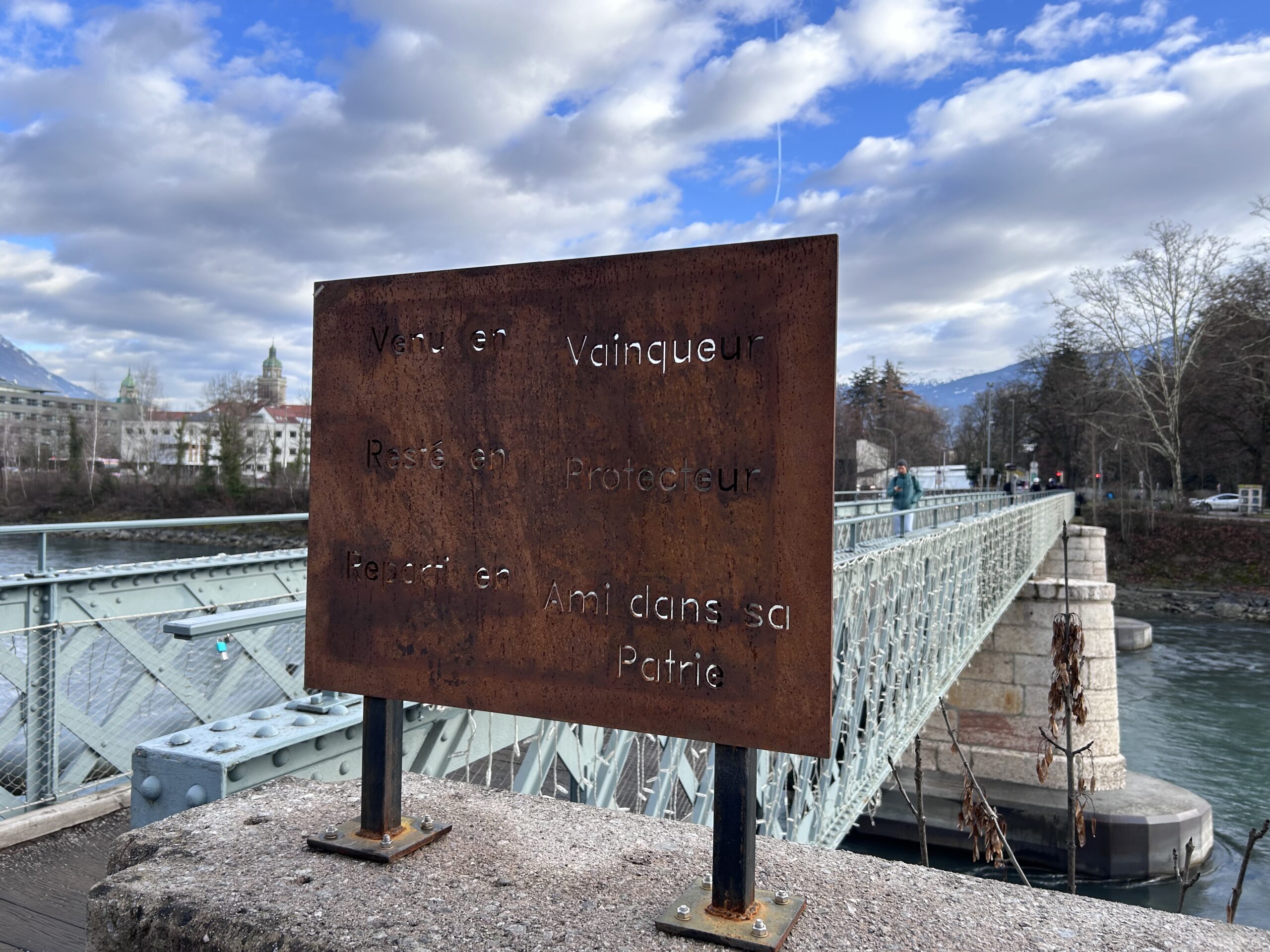
This was also thanks to the occupying forces. The French troops under Emile Bethouart behaved very mildly and co-operatively towards the former enemy and were friendly and open-minded towards the Tyrolean culture and population. Initially hostile towards the occupying power - yet another war had been lost - the scepticism of the people of Innsbruck gradually gave way. The soldiers were particularly popular with the children because of the chocolates and sweets they handed out. Many people were given jobs within the French administration. Thanks to the uniformed soldiers, many a Tyrolean saw of the 4th Moroccan Mountain Division, die bis September 1945 den Großteil der Soldaten stellten, zum ersten Mal dunkelhäutige Menschen. Die Besatzer stellten, soweit dies in ihren Möglichkeiten lag, auch die Versorgung sicher. Zeitzeugen erinnern sich mit Grauen an die Konservendosen, die sie als Hauptnahrungsmittel erhielten. Um die Logistik zu erleichtern legten die Franzosen bereits 1946 den Grundstein für den neuen Flughafen auf der Ulfiswiese in der Höttinger Au, der den 20 Jahre zuvor eröffneten in der Reichenau nach zwei Jahren Bauzeit ersetzte. Das Franzosendenkmal am Landhausplatz erinnert an die französische Besatzungszeit. Am Emile Bethouart footbridgeThe memorial plaque on the river Inn, which connects St. Nikolaus and the city centre, is a good expression of the relationship between the occupation and the population:
"Arrived as a winner.
Remained as a protector.
Returned home as a friend."
In addition to material hardship, society was characterised by the collective trauma of war. The adults of the 1950s were products of the education of the interwar period and National Socialism. Men who had fought at the front could only talk about their horrific experiences in certain circles as war losers; women usually had no forum at all to process their fears and worries. Domestic violence and alcoholism were widespread. Teachers, police officers, politicians and civil servants often came from National Socialist supporters, who did not simply disappear with the end of the war, but were merely hushed up in public. On Innsbruck People's Court Although there were a large number of trials against National Socialists under the direction of the victorious powers, the number of convictions did not reflect the extent of what had happened. The majority of those accused went free. Particularly incriminated representatives of the system were sent to prison for some time, but were able to resume their old lives relatively undisturbed after serving their sentences, at least professionally. It was not just a question of drawing a line under the past decades; yesterday's perpetrators were needed to keep today's society running.
The problem with this strategy of suppression was that no one took responsibility for what had happened, even if there was great enthusiasm and support for National Socialism, especially at the beginning. There was hardly a family that did not have at least one member with a less than glorious history between 1933 and 1945. Shame about what had happened since 1938 and in Austria's politics over the years was mixed with the fear of being treated as a war culprit by the occupying powers of the USA, Great Britain, France and the USSR in a similar way to 1918. A climate arose in which no one, neither those involved nor the following generation, spoke about what had happened. For a long time, this attitude prevented people from coming to terms with what had happened since 1933. The myth of Austria as the first victim of National Socialism, which only began to slowly crumble with the Waldheim affair in the 1980s, was born. Police officers, teachers, judges - they were all left in their jobs despite their political views. Society needed them to keep going.
An example of the generously spread cloak of oblivion with a strong connection to Innsbruck is the life of the doctor Burghard Breitner (1884-1956). Breitner grew up in a well-to-do middle-class household. The Villa Breitner at Mattsee was home to a museum about the German nationalist poet Josef Viktor Scheffel, who was honoured by his father. After graduating from high school, Breitner decided against a career in literature in favour of studying medicine. He then decided to do his military service and began his career as a doctor. In 1912/13 he served as a military doctor in the Balkan War. In 1914, he was sent to the Eastern Front, where he was taken prisoner of war by the Russians. As a doctor, he sacrificially cared for his comrades in the prison camp. It was not until 1920 that he was recognised as a hero and "Angel of Siberia" returned to Austria from the prison camp. In 1932, he began his career at the University of Innsbruck. In 1938, Breitner was faced with the problem that, due to his paternal grandmother's Jewish background, he had to take the "Great Aryan proof" could not provide. However, thanks to his good relationship with the Rector of Innsbruck University and important National Socialists, he was ultimately able to continue working at the university hospital. During the Nazi regime, Breitner was responsible for forced sterilisations and "Voluntary emasculation", even though he probably did not personally carry out any of the operations. After the war, the "Angel of Siberia" managed to wriggle through the denazification process with some difficulty. In 1951, he was nominated as a candidate for the VDUa political rallying point for staunch National Socialists, as a candidate for the federal presidential election. Breitner became Rector of the University of Innsbruck in 1952. After his death, the city of Innsbruck dedicated a grave of honour to him at Innsbruck West Cemetery. In Reichenau, a street is dedicated to him in the immediate vicinity of the site of the former concentration camp.
Denunciation before the Innsbruck People's Court
Published: Tiroler Tageszeitung / 14 June 1946
Chairman: OLGR. Dr Pfaundler
Assessor: Dr Sternbach.
Public prosecutor: Dr Riccabona
Secretary: Dr Gög1.
Representative of the French Directorate of Justice; Capt Hinsberger
Defence counsel: Dr Kellner, candidate lawyer.
Defendant: Franz Wolf, Federal Railway Secretary, 46 years old, resident in Innsbruck-Wilten.
Facts: The 46-year-old former federal railway secretary Franz Wolf from Innsbruck-Wilten has been a member of the NSDAP since 23 May 1938 with the number 7.295.000 and became block leader in the Wilten-Ost local group in August 1938, cell leader of the NSDAP in 1941 and was also a member of the SA since 1942. His wife, sister and brother-in-law were also party members. Wolf lived in the "Riesen Haymon" inn in Wilten and repeatedly reported the innkeeper Heinrich Pfeifer to the local group leader about political matters. He told him: "This black brood must be removed and reported to the local group leader that Pfeifer had not put up flags on Hitler's birthday and had displayed "cynical behaviour completely unworthy of a businessman" at party meetings; moreover, the "Riese Haymon" was a black stronghold and stomping ground for the black brothers and he urged him to take remedial action. Following repeated complaints from the block leader, the restaurant was closed on 1 April 1943 and Pfeifer's licence was revoked in March 1945 for political unreliability. The local group leader Machek, who frequented the "Riesen Haymon" a lot and was not rebellious towards the landlord, once said: "Pfeifer, what's with you and the wolf, he's always making reports. Why don't you get along?"
Responsibility: Admits at the outset that he used to work at the Free trade union and then at the Vaterländischen Front to have been. He had been an SA man from 1942 to 1944. Asked by the presiding judge why he had made the charges against Pfeifer, Wolf explained that this had been done on the orders of the then local group leader Feuerstein, to whom he then talked his way out during the further interrogation. Incidentally, he then had to admit that he had filed the various charges against Pfeifer. What was new was that Wolf also reported Pfeifer because there had been singing in Pfeifer's pub on the day of mourning for Stalingrad. He had not intended that his complaint should cause serious damage to Pfeifer.
Witness testimony: Innkeeper Pfeifer confirmed as a witness that he had suffered economic damage as a result of the closure and the subsequent revocation of his licence due to Wolf's reports. A flag was not flown on Hitler's birthday because the window frames were under reconstruction. The flagging of the building was the responsibility of the caretaker.
Another witness described the defendant as the "chequer of the whole Haymongasse", because Wolf ran to the local group with everything he thought was worth reporting.
Adjournment: By decision of the People's Court, the trial was adjourned indefinitely for the purpose of hearing further witnesses, obtaining new files and conducting further enquiries with the criminal investigation department.
Sights to see...
Adolf-Pichler-Platz
Adolf-Pichler-Platz
Guardian Angel Church
Gumppstrasse 67
Haymon Giant Inn
Haymongasse 4
Provincial vocational school
Mandelsbergerstrasse 16
Landhausplatz & Tiroler Landhaus
Eduard Wallnöfer Square
Servitenkirche
Maria-Theresienstrasse 42