The Reformation in Tyrol
The Reformation in Tyrol
The Reformation may appear today primarily as a matter of personal belief. Thanks to the liberal legislation we enjoy in this respect, everyone is free to choose their own confession. If, however, religion is viewed as an essential component of everyday life and personal identity in past centuries, it becomes clear that it was far more than merely an expression of spirituality. The Reformation, which erupted with particular violence between the fifteenth and seventeenth centuries, represented a comprehensive social rupture comparable to the years 1848 or 1968. The accompanying social and political transformation did not come to a halt at the borders of the Holy Land of Tyrol.
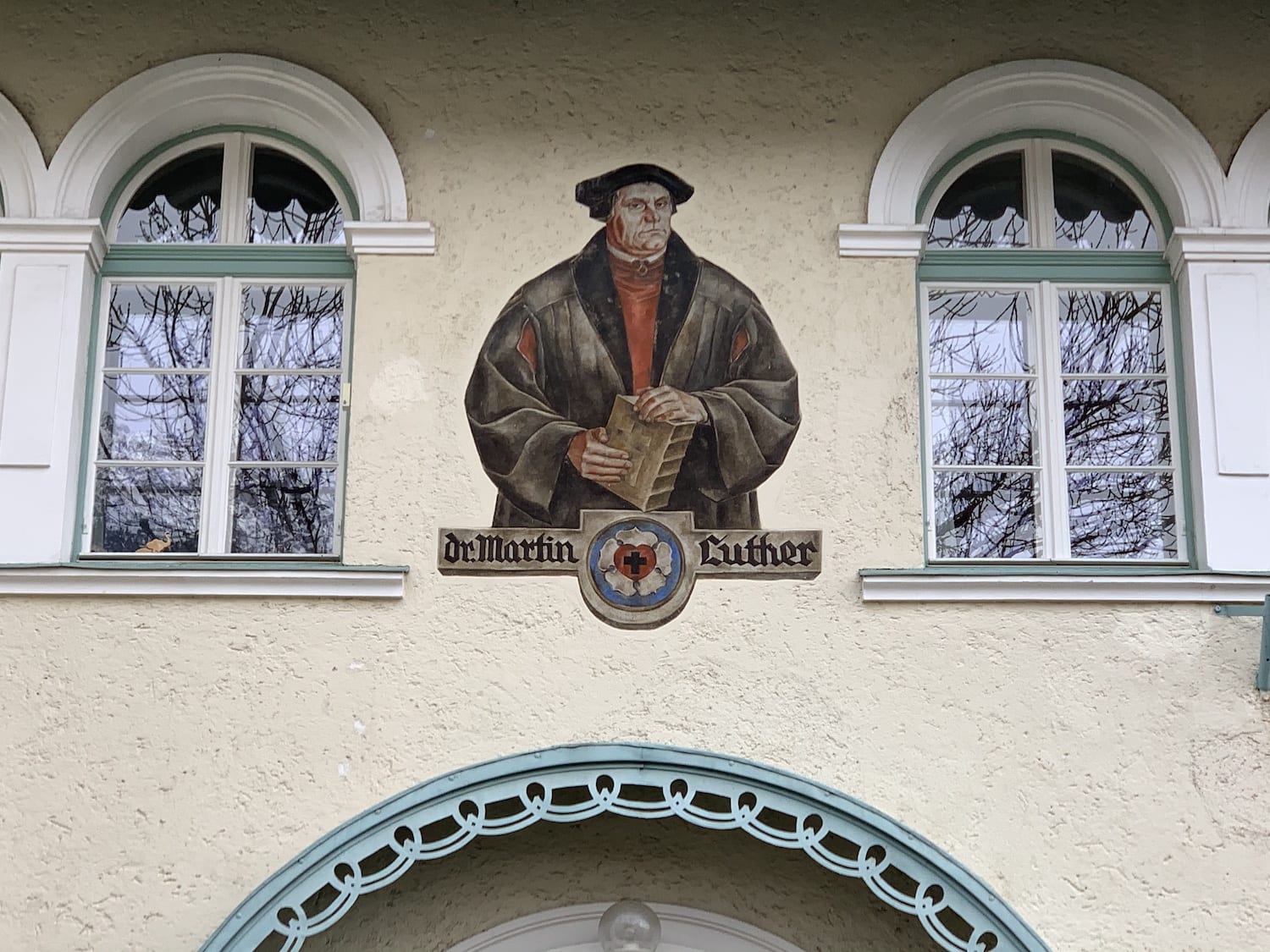
It is a chicken-and-egg question whether the Reformation changed the image of humankind or whether a changing perception of existence transformed Christianity. Around 1500, new discoveries and modes of thought began to usher in the end of the Middle Ages. Artists, scholars, and clerics across Europe started to question hierarchies, order, and systems of legitimacy. With the theological reformers of the fifteenth and sixteenth centuries, the feudal system—placing Church and nobility above the people and bourgeoisie—began to crumble. The Bohemian cleric Jan Hus was among the first on the European mainland to question the pope’s omnipotence in the fifteenth century and was burned at the stake for it at the Council of Constance. In France and Switzerland it was Jean Calvin (1509–1564), in the Holy Roman Empire Martin Luther (1483–1546) and Thomas Müntzer (1489–1525), who challenged the Roman Church in the sixteenth century. Reform-minded clergymen and pamphlets spread the new doctrines. In Tyrol, the mining towns of Hall and Schwaz were the main centers of the Reformation in the early sixteenth century. Many miners came from Saxony and brought their own ideas about faith and Church with them. The old liturgy, with sermons delivered in incomprehensible Latin, did not align with these expectations. Preachers such as Dr. Jacob Strauß addressed the population with Lutheran ideas, which also included criticism of the clergy and the system of rule. The religious crisis thus led to problems in the secular sphere beyond the walls of the churches as well. Faith and worldly matters were not separate domains. If miners were dissatisfied with pastoral care, they went on strike. Public order was endangered—not only because miners were permitted to carry weapons, but also because they were well connected among themselves. A general strike could trigger an economic crisis. Fugger capital and Habsburg political power were eager to prevent this and therefore granted the miners special rights. Not only miners, but also progressive segments of the bourgeoisie and the nobility took an interest in the new ways of living one’s faith, which was an important part of lifestyle. The new doctrines became a symbol of a new sense of self and of the social significance that craftsmen, skilled workers, and entrepreneurs in this emerging industry claimed in opposition to the old feudal system.
Ferdinand I and his successors were able to successfully push back the Reformation in Tyrol. Although the religious mandates with their numerous prohibitions were one of the reasons for the peasant wars, in the long term and with many coercive measures, the princely strategy bore fruit. Power politics may have been one reason, but in fact the ruling Habsburgs were pious people who, at least to a large extent, favoured Catholicism out of conviction. Ferdinand II described his motives with the words:
“…through the inspiration of God and the prompting of His Holy Spirit. All [done] to the glory of the Most High, out of a true and fervent zeal devoted to the holy, Catholic, and alone salvific religion.”
It was primarily priests of the Jesuit order who were to bring apostate parishes and citizens back into the fold of the Catholic Church. They began with reform measures such as better training for the clergy. Concubinage and post haggling were to be abolished. Priests and bishops were to concern themselves less with worldly matters and more with the salvation of their flocks. However, as this measure could not be implemented overnight - capable priests first had to be found and educated - coercive measures were introduced. The possession of Protestant books and pamphlets was punishable by law. The lower the status of the citizen, the more severe the punishment. Nobles, counsellors and key workers were often able to practise their Protestant faith discreetly. Under Ferdinand II, underlings had to confess at Easter. The priest drew up a list with the names of those who fulfilled their duty. Anyone who did not appear in the confessional despite repeated reminders could be expelled from the country.
In the seventeenth century, so-called religious reform commissions were established in Austria. If these “missionaries” discovered Protestant-leaning priests or subjects in possession of forbidden literature, they were arrested and expelled from the country, and not infrequently their houses and all possessions were set ablaze. Protestant officials were barred from practicing their professions and were forced either to convert or to emigrate. Particularly obstinate subjects were publicly chained. Maximilian III instituted a special religious surveillance agency that primarily monitored craftsmen and merchants. To prove their Catholic loyalty, they were required to regularly submit proof of confession. Under Maria Theresa in the eighteenth century, Tyrolean Protestants were forcibly resettled to distant parts of the Habsburg Empire. These relocations posed problems not only for the affected individuals. Labor and population numbers were key indicators of development in modern states, leading to what we would today call a brain drain: competencies and military strength were lost in the name of the Lord. In 1781, Enlightenment-minded Emperor Joseph II issued the Edict of Tolerance, partly for this reason, permitting the construction of Protestant churches—albeit under strict conditions. These prayer houses were not allowed to have towers or other architectural features; even windows facing the street were prohibited. In Tyrol, resistance arose against the Edict of Tolerance, as people feared for moral order and sought to avoid foreign religions, discord, and unrest of any kind. Converts were denied marriage and burial in Catholic cemeteries.
To this day, Tyrol regards itself as the self-proclaimed “Holy Land,” with “holy” referring explicitly to the Catholic faith. In 1837, Protestants were expelled from the Zillertal. The descendants of the so-called Zillertal “Inklinanten,” who emigrated under official pressure, still live in Germany today. Although tolerance gradually gained a foothold in the empire and its lands, the close bond between authority and the Catholic Church persisted well into the twentieth century in many areas of life, such as education. When it became known during the constitutional debates of 1848 that free exercise of religion was planned for the entire monarchy, public outrage in Tyrol was enormous. After media campaigns opposing this liberalization of faith, more than 120,000 signatures were collected. In 1861, Emperor Franz Joseph issued the Protestant Patent, which granted the Evangelical Church rights largely equivalent to those of the Catholic Church. The Tyroleans, however, remained steadfast. With the exception of two liberals, all members of the regional parliament voted to maintain confessional unity. The argument stated that there were no adherents of other faiths in Tyrol anyway, and therefore no tolerance toward non-Catholics was necessary. It was not until 1876 that an official Protestant parish was established in Innsbruck.
Sights to see...
New Schoolhouse
Kiebachgasse 10
Lutheran Church of Jesus Christ
Richard-Wagner-Strasse 2
Wilten Abbey & Basilica
Klostergasse 7 / Pastorgasse 2