Innsbruck - city of bureaucrats and civil servants
Innsbruck - city of bureaucrats and civil servants
Innsbrucker brüsten sich stolz der vielen Titulierungen ihrer Heimatstadt. Für jeden Geschmack ist etwas dabei: Hauptstadt der Alpen, Universitätsstadt, Österreichs Sportstadt oder Heimat des weltbesten Krankenhauses. Wirft man einen Blick auf die Liste der größten Arbeitgeber der Region oder in die Geschichte, ist Innsbruck vor allem eins: Beamtenstadt. Universität und Landeskrankenhaus sind zwar die größten einzelnen Arbeitgeber, rechnet man aber die öffentlichen Bediensteten aller Ebenen, Stadt, Land und Bund zusammen und nimmt die ausgelagerten Unternehmen im Besitz der öffentlichen Hand wie die ÖBB, TIWAG oder die Innsbrucker Kommunalbetriebe hinzu sowie Lehrer und Polizei, sind die Beamten klar in der Überzahl. Diese Titel hat auch die längste Tradition. Spätestens seit der Übersiedlung der landesfürstlichen Residenz unter Friedrich IV. machte die Beamtenschaft nicht nur einen beträchtlichen quantitativen Teil der Bürgerschaft aus, sie bestimmt die Geschicke der Stadt in einflussreicher, wenn auch unauffälliger Manier. Bis heute sind es Beamten, die den Laden am Laufen halten. Sie setzen Gesetze durch, kümmern sich um die Planung und Instandhaltung von Infrastruktur, machen eifrig Aufzeichnungen über die Bevölkerung, um Steuern ein- und Soldaten auszuheben. Die erste Welle der Bürokratie kam wohl bereits mit dem Roman Empire. Den Römern folgten im frühen Mittelalter die Brüder des Stiftes Wilten. Die schreibkundigen Männer verwalteten nicht nur die herzoglichen und eigenen Besitztümer durch ihre Urbare und hoben die Abgaben bei den bäuerlichen Untertanen ein, sondern legten Taufmatrikel, Heiratsverzeichnisse und Sterbebücher an. Die Feudalherrschaft erforderte zwar einen Panoramablick über das, was sich innerhalb ihres Herrschaftsbereichs abspielte, vor allem in der Stadt war das Leben aber eher von den Beschränkungen der Zünfte als von denen der Obrigkeit bestimmt. Ein Magistrat war nur oberflächlich vorhanden. Es gab Gesetze, aber keine Polizei, Steuern aber kein Finanzamt. Städtische Infrastruktur war praktisch nicht vorhanden, schließlich gab es weder fließend Wasser, elektrischen Strom, Kanalisation, städtische Kindergarten, ein Arbeitsamt oder eine Krankenkasse. Die zur Stadt erhobene Gemeinde Innsbruck wurde lange von einem Stadtrichter, ab dem 14. Jahrhundert von einem Bürgermeister mit Gemeinderat regiert. Es handelte sich dabei nicht um hauptberufliche Beamte, sondern Mitglieder der städtischen Elite. Nur wenige Menschen wie Zöllner, Kornmesser, Schreiber oder Turmwächter standen bei der Stadt unter Lohn und Brot.
In the 15th century, professional life and society became more differentiated, armies grew larger, and tax burdens increased. Traditional customary law was replaced by modern Roman law, which was more difficult for laypeople to understand. As the city grew, so did the bureaucratic apparatus. Between the early 15th century and the reign of Leopold V, Innsbruck had developed from a trading and transport settlement into a civil servants’ city. Of the approximately 5,500 inhabitants, more than half belonged to the court, the municipal administration, the university, or the clergy. Court life, administration, customs, taxation, long-distance trade, and finance required literate personnel. Administration had become the city’s most important economic sector, ahead of crafts, transport, and hospitality. Civil servants distinguished themselves socially. If at all, citizens usually encountered these foreign people only in unpleasant situations. The reins were tightened particularly firmly under Maximilian I. Laws decided centrally were implemented locally by the Imperial Circles. Salaried officials penetrated the lives of individuals in a way unknown in the Middle Ages. To make matters worse, these officials often came from abroad. Italians and Burgundians in particular were sought-after key personnel, but they remained alien to the local population. Not only did they often not speak German; they could read and write, were employees rather than subject peasants. They had more money, dressed differently, followed different customs, and ate different foods. Unlike the territorial prince, they did not invoke God, but rules written by humans and inspired by antiquity and reason. Depending on the fashions, customs, and moral concepts of the time, laws changed. Just as nature conservation or speed limits on motorways are repeatedly debated today despite their obvious sense, prohibitions against spitting, disposing of chamber pots, wooden buildings, and keeping livestock within the city walls were criticized at the time—even though they drastically improved hygiene and safety.
While it had long been customary for citizens to take certain liberties in the absence of the ruler—whether in logging, construction, hunting, or fishing—the bureaucracy was always present. Whereas the territorial prince was seen as a benevolent father of his subjects, and bishops and abbots, though strict landlords, could at least offer salvation in return, the new administrative authority appeared anonymous, aloof, faceless, foreign, and distant. The basis for negotiation that a subject once had in direct contact with his lord was buried by merciless law—at least if one could not pay bribes or did not know someone in a higher position. When the unconditional faith in an increasingly corrupt clergy began to crumble and Ferdinand I appointed the Spaniard Salamanca as the country’s supreme financial administrator, the simmering dissatisfaction erupted into open rebellion in 1525. The subjects did not demand the deposition of the prince, but a change in the rule of the clergy and the foreign bureaucracy. Even in the 17th century, it was the head of Wilhelm Biener, the highest-ranking official in the country, that rolled—not that of the sovereign.
Bureaucracy, the rule of the administration, also had advantages for the subjects. It established fixed rules where arbitrariness often prevailed. The law, harmonised across different territories, was more predictable. And with a bit of luck and talent, it was possible to climb the social ladder by serving the public authorities, even without belonging to the nobility. Michael Gaismair, one of the leaders of the 1525 rebellion, was the son of a mining entrepreneur and had been in the service of the provincial governor before his career as a revolutionary.
The next modernization of administration took place in the 18th century. Under the enlightened absolutist monarchs Maria Theresa and Joseph II, a new wind blew down to the municipal level. Innsbruck received a police force for the first time. The city administration was modernized in 1784. Instead of the old town council with its community assembly, a mayor now governed, supported by a council and above all by civil servants. This magistrate consisted of salaried experts who were still largely members of the lower nobility, but who now had to qualify for office through examinations. Bureaucracy gained more power at the operational political level. While the office of mayor was limited in time, civil servants enjoyed lifelong, non-terminable positions. This tenure and a renewed surge of new laws—often contradicting tradition—reinforced the image of civil servants as aloof and distant from citizens. When the element of foreign rule was added with the Bavarian occupation of Tyrol—modeled on French administration—another uprising broke out in 1809. The mass conscription of young men for military service, regulation of religious life, and compulsory vaccination, enforced by Bavarian officials, was too much for the Tyrolean psyche.
After 1809, bureaucracy expanded into ever more areas of life as part of industrialization and new technologies. Not only the state through taxation and the military, but also universities, schools, construction, railways, the postal system, and institutions such as the Chamber of Trade and Commerce required administrative staff. The city grew in population and businesses alike. New infrastructure—gas, sewer systems, and electricity—and new ideas about hygiene, food inspection, health, and education demanded new employees in the municipal administration. The old town hall in the Old Town became too small, and an extension proved impossible. In 1897, the civil servants moved into the new town hall on Maria-Theresien-Straße. The move was made possible by the generous donation of the industrialist and hotelier Leonhard Lang. He had converted the former Palais Künigl into the Hotel d’Autriche before the mayor and his entourage moved in.
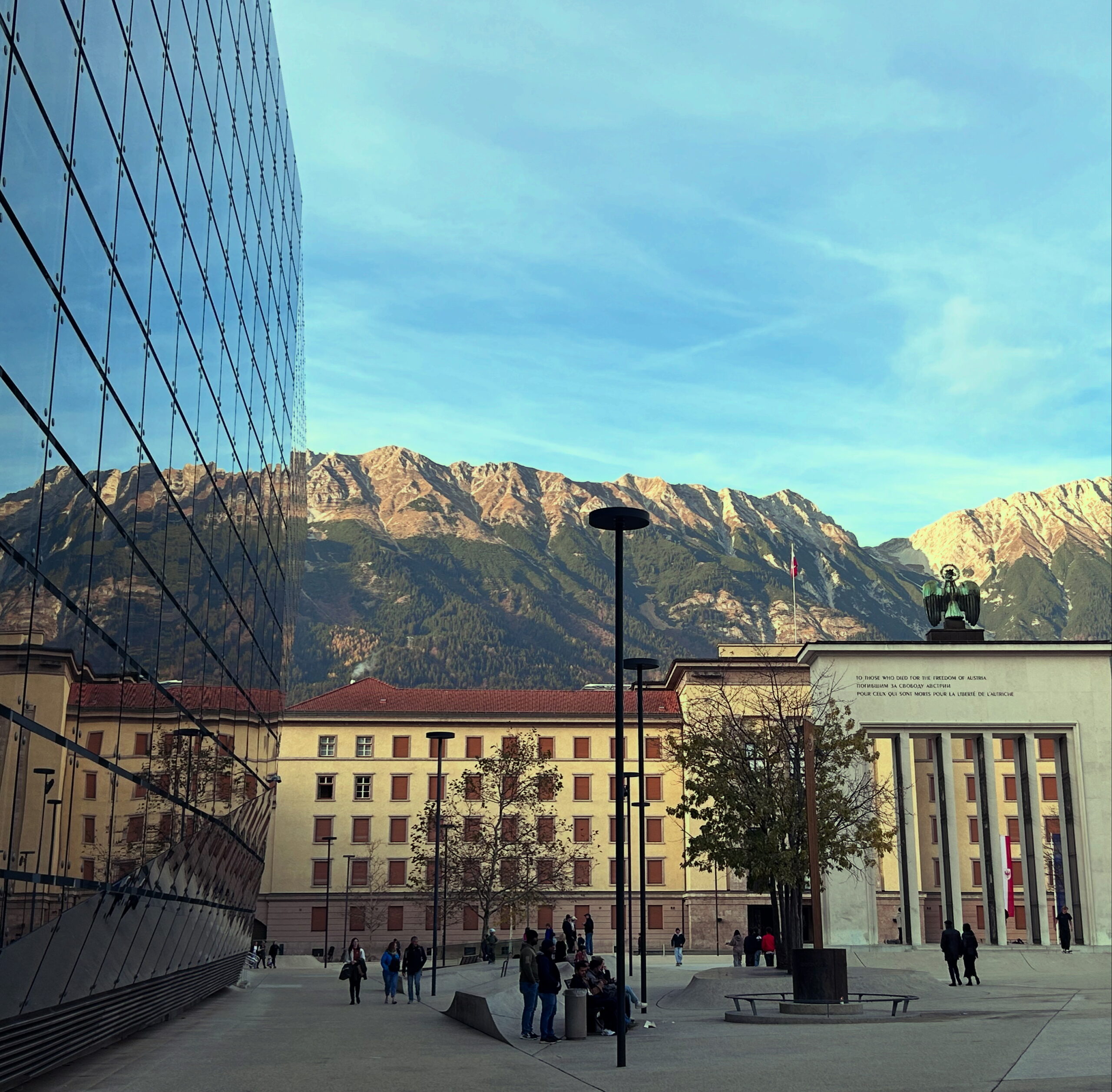
When the monarchy collapsed in 1918, the transition was not seamless, but thanks to the structures in place, it was unimaginably smooth. However, it was no longer the emperor who carried the burden of the state, but a host of civil servants and guardians of order who provided water, electricity and a functioning railway network. With Eduard Klingler and Theodor Prachensky, two heads of building authorities in the first half of the 20th century left their mark on Innsbruck's cityscape, which is still clearly visible today. With agendas such as public housing, the labour office, education, urban infrastructure, road construction, public transport, registration and weddings, the Republic took over more or less all the tasks of daily life from the monarchy and the church. So for anyone who is annoyed by excessive officialdom and agonisingly slow bureaucracy on their next visit to the New Town Hall, it is worth remembering that the welfare state in the person of its civil servants manages the social welfare and public infrastructure of thousands of people from the cradle to the grave, mostly unnoticed.
Sights to see...
Johanneskirche
Bischof-Reinhold-Stecher-Platz
Palais Fugger-Taxis & Altes Landhaus
Maria-Theresienstrasse 45 / 43
Landhausplatz & Tiroler Landhaus
Eduard Wallnöfer Square
ÖBB Administrative Building
Claudiastrasse 2
Wilten Abbey & Basilica
Klostergasse 7 / Pastorgasse 2
Claudiana – Altes Regierungsgebäude
Herzog-Friedrich-Straße 3
Stadtturm & Altes Rathaus
Herzog-Friedrich-Straße 21