Philippine Welser: Little Venice, cookery & herbalism
Philippine Welser: Little Venice, cookery & herbalism
Philippine Welser (1527–1580) was the wife of Archduke Ferdinand II and ranks among the most popular historical figures associated with Innsbruck. To this day, she is often portrayed as a woman of humble origins who rose to the highest social circles through the power of love. This portrayal, however, is not entirely accurate. The Welser family was among the wealthiest families of their time. Her uncle Bartholomäus Welser was comparable in financial stature to Jakob Fugger and likewise belonged to the class of merchants and financiers who amassed immense wealth around 1500. The pillars of his prosperity—comparable to that of today’s tech billionaires—were the spice trade with India, mining, and the metals trade with the American colonies. Welser had also extended loans to the Habsburgs, which he was to recover in a momentous way. Instead of repaying the debts, Emperor Charles V pledged part of the territories newly annexed from the Spanish crown in America to the Welser family. In return, they were permitted to secure and develop the land as the colony of Klein‑Venedig (Little Venice), present‑day Venezuela, by establishing fortresses and settlements. They equipped expeditions in search of the legendary land of gold, El Dorado. In order to maximize profits from their fief, they set up trading posts and participated in the lucrative transatlantic slave trade between Europe, West Africa, and the Americas. The first generation of conquistadors, acting in the service of early capitalism in South and Central America, proceeded with such brutality that the distant Spanish authorities were forced to intervene. After 1530, Charles V prohibited the trade in Indigenous people from South America; however, the use of enslaved Africans on plantations and in mines was not affected by this regulation. This continued inhumane conduct on the part of the Welser representatives led to complaints at the imperial court in 1546. As a result, their fief over Klein‑Venedig was revoked, although their trading networks remained intact.
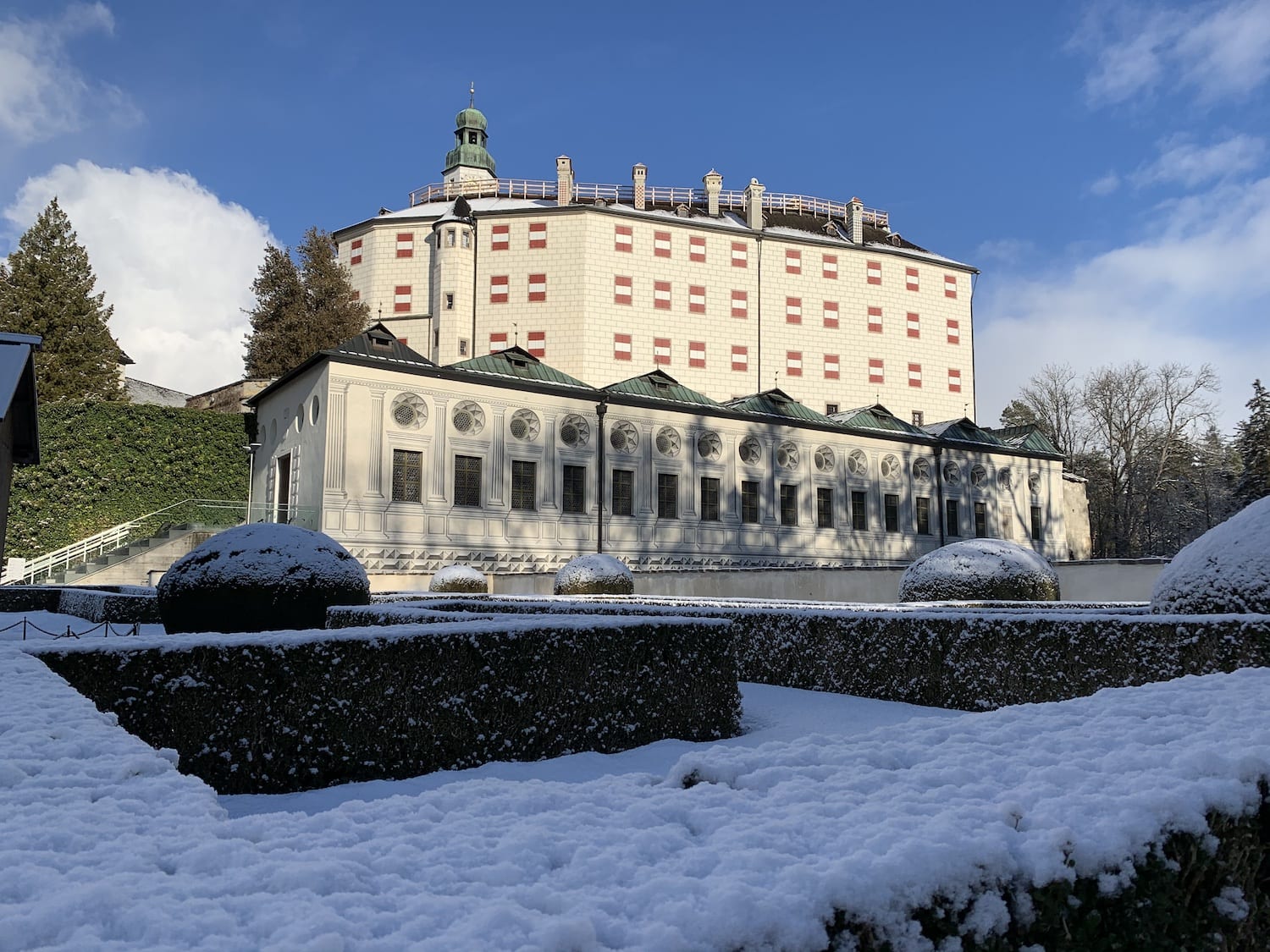
The young Philippine benefited from her family’s well‑established connections to the aristocracy. What followed was one of the most sensational celebrity marriages of the early modern period. Ferdinand and Philippine met at a Carnival ball in Pilsen. The Habsburg fell head over heels in love with the wealthy woman from Augsburg and married her. The secret marriage met with little enthusiasm within the House of Habsburg, even though business relations between the old nobility and the nouveau‑riche Augsburg merchant families had existed for decades and the Welser fortune was very welcome. Despite their wealth, marriages between commoners and nobles were considered scandalous and socially inappropriate. Ferdinand is said to have been utterly infatuated with his beautiful wife throughout his life and therefore to have disregarded all social conventions of the time. According to contemporary witnesses, her skin was so delicate that “one could see a sip of red wine flowing through her throat.” It comes as no surprise that the Tyrolean ruler had Ambras Castle lavishly remodelled for her. His brother Maximilian even remarked that Ferdinand was “enchanted” by the beautiful Philippine Welser, when Ferdinand withdrew his troops during the Turkish war to return home to his wife—though he added less charitably: “…I wish the wench were put into a sack and that no one knew where she was. God forgive me.” The Emperor only recognised the marriage after the couple had asked for forgiveness and pledged lifelong secrecy. The children of this morganatic marriage were therefore excluded from the line of succession.
Philippine Welser’s great passion was cooking. A collection of her recipes is still preserved today in the Austrian National Library. In the Middle Ages and the early modern period, the culinary arts were cultivated exclusively by the wealthy and the nobility, while the vast majority of subjects ate whatever was available. For centuries—indeed until the 1950s—people lived under conditions of chronic calorie deficiency. While today excessive consumption leads to illness, our ancestors suffered from diseases caused by malnutrition. Fruit was rarely part of the diet, as was meat. Food was monotonous and barely seasoned; spices such as exotic pepper were luxury goods beyond the reach of ordinary people. Whereas the daily fare of the common population was focused almost entirely on the most efficient intake of calories needed for physical labour, attitudes towards food and drink began to change in Innsbruck under Ferdinand II and Philippine Welser. Since the reign of Frederick IV, the court had already contributed to a gradual refinement of manners and customs in Innsbruck. Philippine Welser and Ferdinand elevated this development to new heights at Ambras Castle and the Weiherburg. The banquets they hosted were legendary and not infrequently degenerated into excesses. Her second great interest was herbal medicine. Philippine documented how plants and herbs could be used to alleviate physical ailments of all kinds. One of her recommendations read: “To make the teeth white and fresh and to kill the worms therein: take rosemary wood and burn it to charcoal, grind it into powder, bind it in a small silk cloth and rub the teeth with it.” For her studies and interests, she had a herb garden laid out at Ambras Castle in Innsbruck.
According to contemporary accounts, she was very popular among the Tyrolean population, as she showed great care for the poor and needy. Such charitable welfare, organised by the city council and sponsored by wealthy citizens and nobles, was not exceptional at the time but common practice. Nowhere, it was believed, could one come closer to salvation in the afterlife than through Christian charity (caritas). Philippine Welser found her final resting place after her death in 1580 in the Silver Chapel of the Court Church in Innsbruck, where she was buried together with her children who had died in infancy and with Ferdinand. Below Ambras Castle, the Philippine‑Welser‑Straße still commemorates her today.
Sights to see...
Philippine-Welser-Straße
Philippine-Welser-Straße
Weiherburg & Alpine Zoo
Weiherburggasse 37-39
Schloss Ambras
Schloßstraße 12-20