Thyrsus, Haymon and the Bavarians
Thyrsus, Haymon and the Bavarians
Following the collapse of the Western Roman Empire and its administration, Germanic tribes assumed control over the area of modern-day Innsbruck. In North Tyrol—between the reigns of the Imperium Romanum and Emperor Charlemagne (748–814), during the period known as the Migration Period, Late Antiquity, or the Early Middle Ages—a wide array of peoples rubbed shoulders. Alongside the Romanized Breuni, groups of Goths, Lombards, Bavarians, Suebi, and Slavs settled side by side, behind, and among one another in the regions north of the Brenner Pass. In the central Inn Valley, the Bavarians managed to establish themselves as the dominant regional power. Although the Roman Castrum Veldidena was destroyed during the settlement period, the transition for the Breunian-Romanized population was likely less sudden and violent, and instead far more gradual. The Bavarians were not barbaric destroyers; they had already been in contact with the Roman world in various forms for centuries. Armed conflicts were probably the exception—even if German-nationalist historians between the second half of the 19th century and 1945 viewed the matter differently, as demonstrated by Professor Otto Stolz's 1927 article, "Anfänge der deutschen Siedlung und Herrschaft" ("Beginnings of German Settlement and Rule"):
"The Roman Empire was shattered by the advance of the warlike Germanic peoples.... As a result, our Alpine region was severed from its hitherto close connection with the south of the continent, Italy, and brought into the closest spiritual and cultural affinity with the north, Germany."
In reality, the different cultures likely blended gradually during an era when power structures were rather loose in nature. The everyday language of the people was a form of Germanic, though Latin had established itself early on as the written language. The most important remnant of the Romans—and soon enough the unifying element—was Christianity. By the 8th century, the Bavarians had been Christianized. Under Emperor Charlemagne, the "barbaric" Bavarians became the Christian Dukes of Bavaria, and with them, the Inn Valley became part of the Holy Roman Empire, which spanned vast swathes of Central Europe and Northern Italy. In their administration, they relied on the ecclesiastical structures left behind by the Romans, as clerics were often the only literate individuals available. Instead of the regional magistrates of the Roman Emperors, an armored aristocracy now ruled as vassals over their subjects in the name of God—on behalf of the Frankish King Charlemagne, who had been anointed by the Pope. Unbothered by these higher political shifts, the common folk simply had to keep toiling away in agriculture. The Christian Church Father Paul laid the theological foundation for this system in his Epistle to the Romans:
Let everyone be subject to the governing authorities, for there is no authority except that which God has established. The authorities that exist have been established by God. Consequently, whoever rebels against authority is rebelling against what God has instituted, and those who do so will bring judgment on themselves. For rulers hold no terror for those who do right, but for those who do wrong. Do you want to be free from fear of the authority? Then do what is right and you will be commended. For the one in authority is God’s servant for your good. But if you do wrong, be afraid, for rulers do not bear the sword for no reason. They are God’s servants, agents of wrath to bring punishment on the wrongdoer. Therefore, it is necessary to submit to the authorities, not only because of possible punishment but also as a matter of conscience. This is also why you pay taxes, for the authorities are God’s servants, who give their full time to governing.
Culturally, Christianity in the Alpine region proved adaptable to existing traditions and customs. Christian martyrs and saints replaced pagan polytheism. Ancient festivals such as the winter solstice, harvest celebrations, or the beginning of spring were integrated into the Christian calendar and replaced by Christmas, All Saints’ Day, and Easter. Popular legends surrounding miraculous plants, ominous mountain peaks, magical beings such as the Salige Fräulein, enchanted kings, and other mythical figures could continue to be revered alongside Christianity without difficulty.
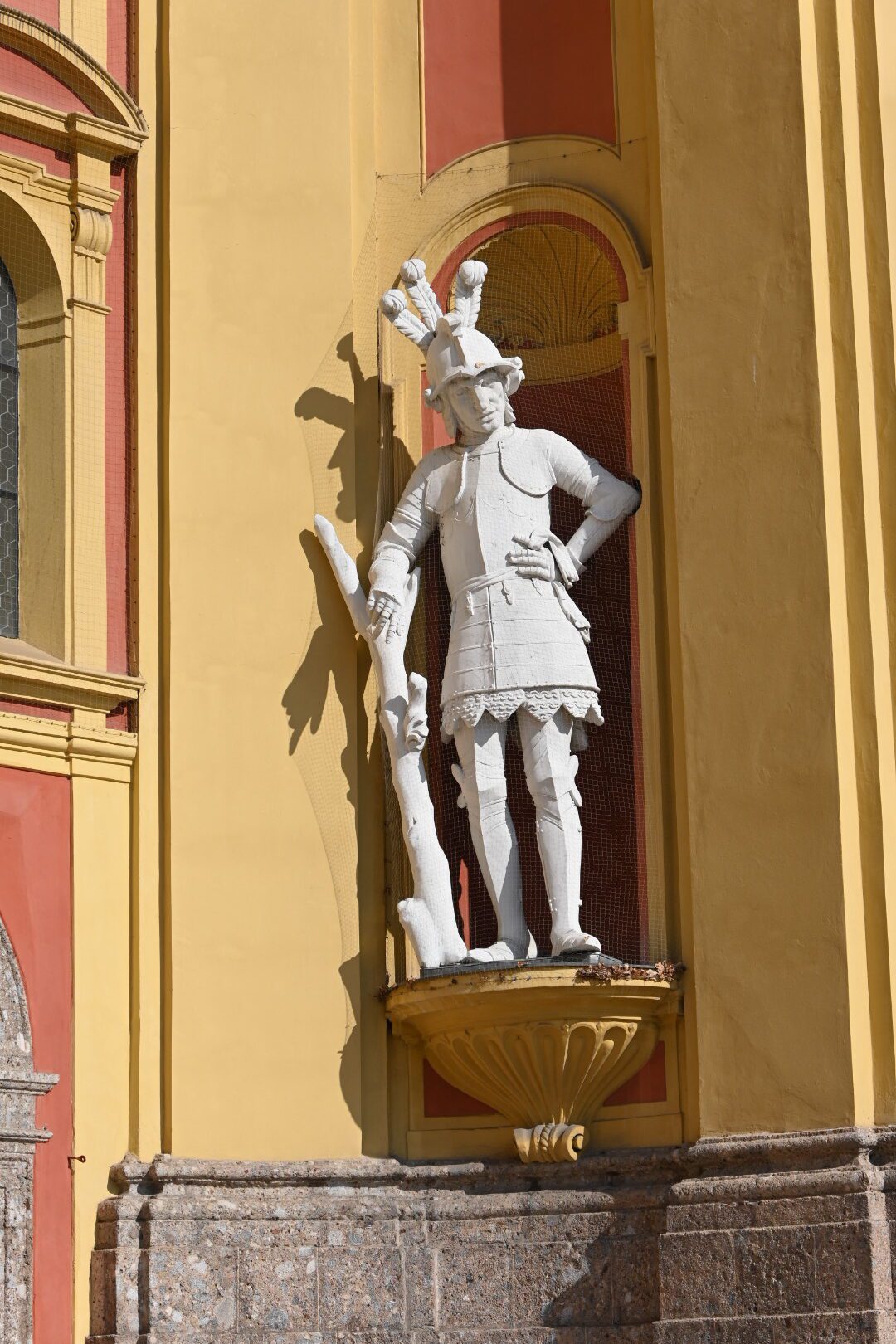
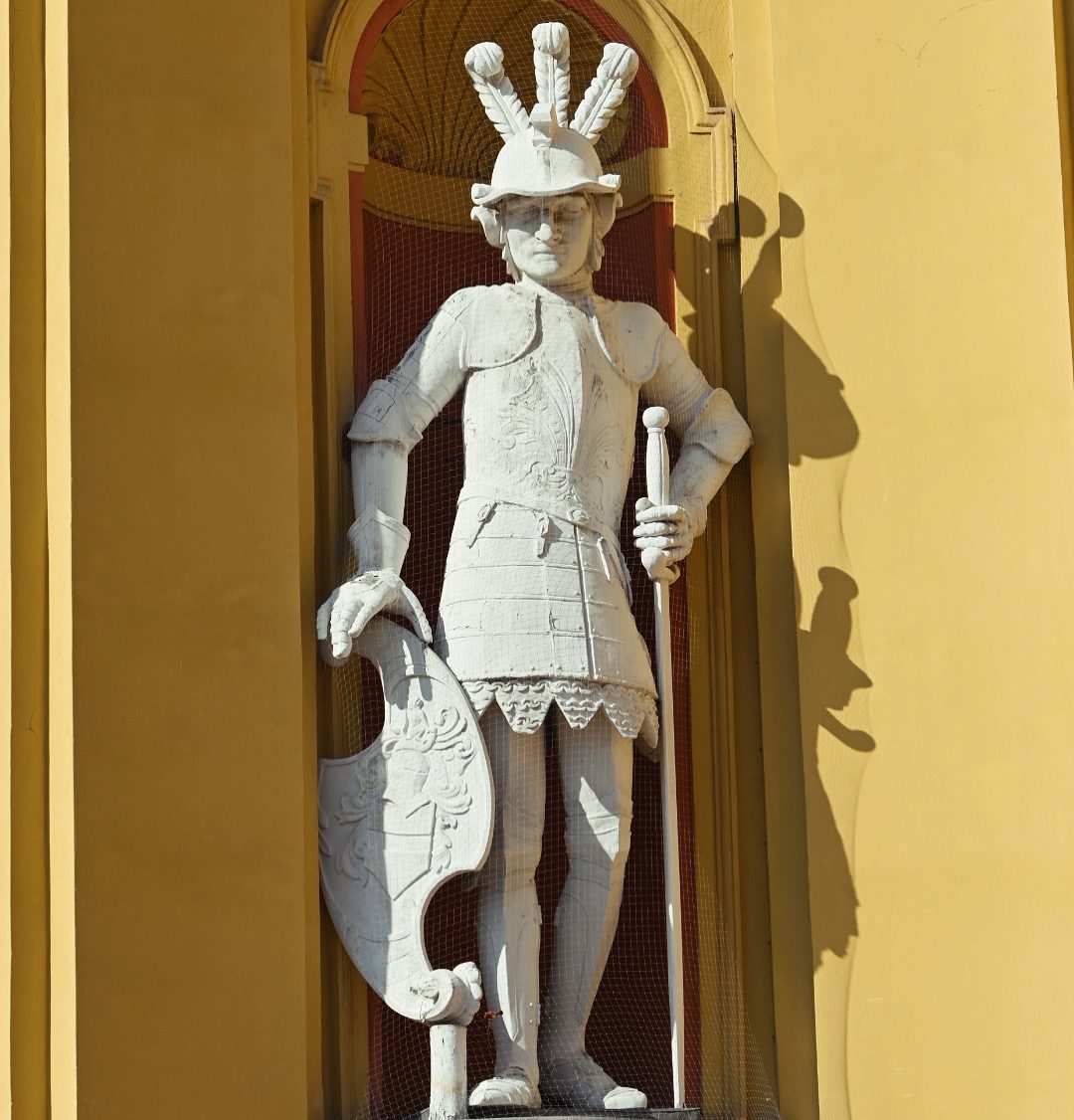
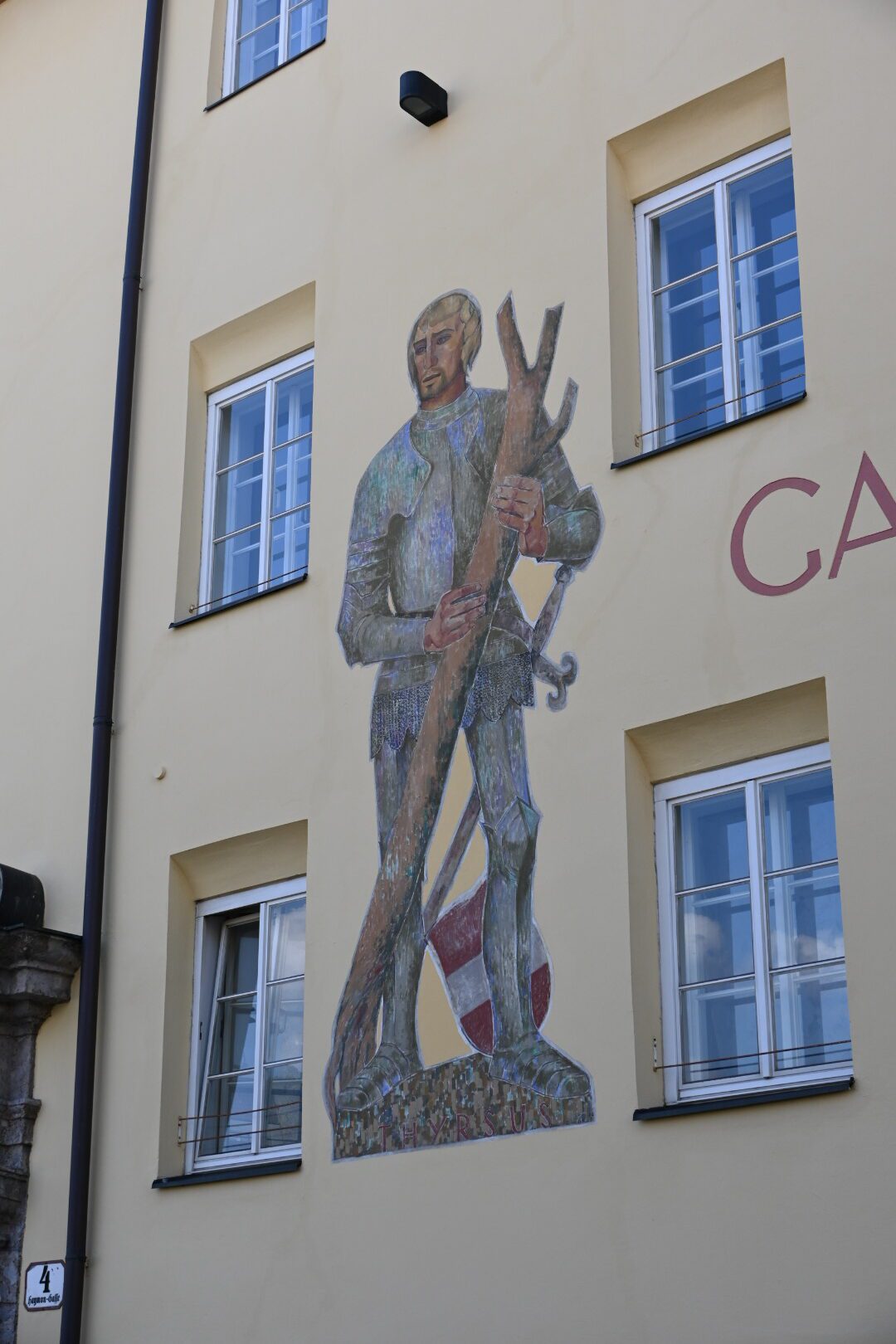
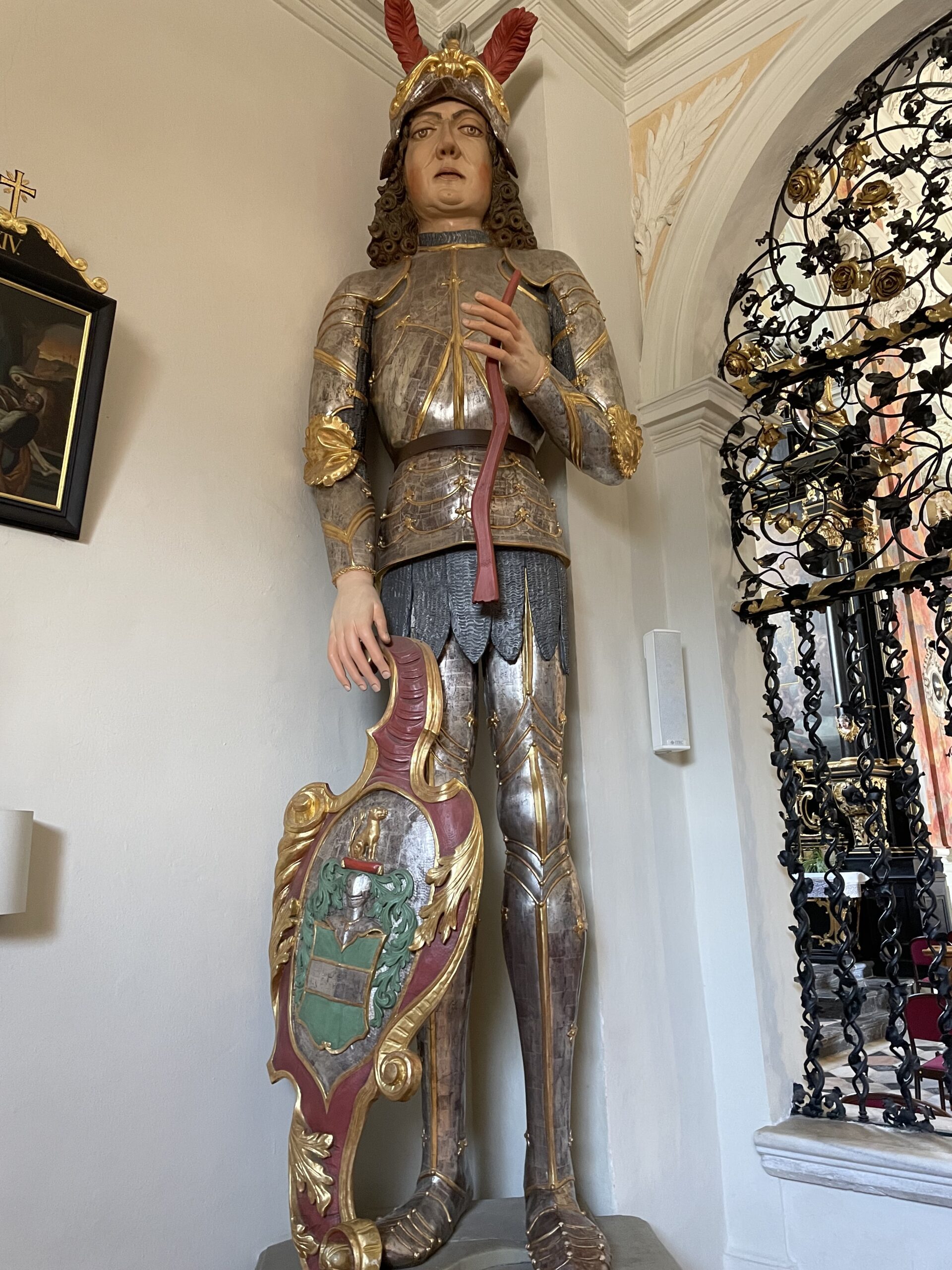
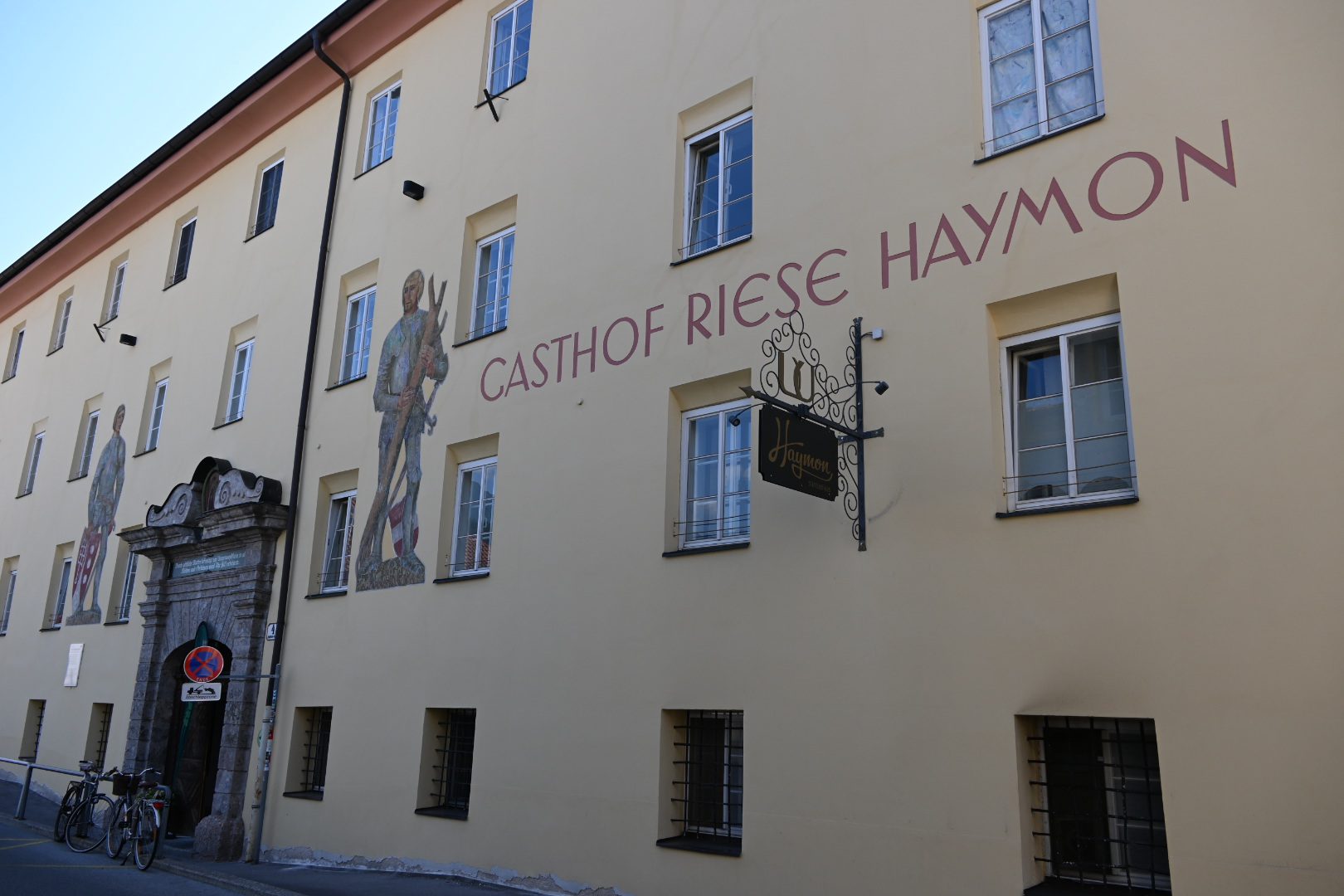
Two of the most popular legendary figures in Innsbruck to this day play the central roles in the foundation myth of Wilten Abbey. An extraordinarily strong knight, known as the giant Haymon, travelled to Tyrol at some point between Late Antiquity and the Early Middle Ages. There he encountered the long‑established giant Thyrsus of Seefeld. While the Germanic Haymon was equipped in modern fashion with sword and shield, Thyrsus—who bore a Romanised name but is portrayed in legend as a wild Alpine inhabitant—had only a tree trunk as his weapon. As fate would have it, the sword struck down the wooden club, and Thyrsus lay slain on the ground in his own blood. Filled with remorse over his deed, Haymon converted to Christianity and was baptised by the Bishop of Chur. Instead of constructing a military fortress as originally planned, the repentant warrior built a monastery on the ruins of the Roman fort of Veldidena. Despite his newfound piety, his time of heroic deeds was not yet over. In the nearby Sill Gorge there dwelled a fearsome dragon that not only devastated the new construction every night but also made meaningful settlement of the region impossible. Haymon slew the monster, cut out its tongue, and bequeathed it to his own foundation. After his career as a dragon slayer, Haymon handed the monastery over to the Benedictine monks from Tegernsee and himself entered the order as a lay brother. The people of the region were so grateful to the giant for liberating them from the dragon that they willingly placed themselves under the tithe‑paying protection of Wilten Abbey, cultivating the formerly wild land as farmers. And the moral of the story? Haymon represents the initially violent but later noble and benevolent Germanic settlers; Thyrsus stands for the brave and wild, yet ultimately defeated inhabitants of the region between the Seefeld Plateau and the Brenner Pass. The dragon symbolises the evil, destructive, and unchristian paganism that is eradicated by the converted German. The monastery brothers—richly endowed by the valiant knight—are the organising force without which nothing would function. Over the centuries, the Haymon legend and its moral proved just as flexible as Christianity itself during its introduction in Late Antiquity. At times, Haymon was portrayed as a nobleman from the Rhine who came to Tyrol after the death of Charlemagne; at other times, he appeared as a follower of the Ostrogothic king Theoderic—better known as Dietrich of Bern—travelling between Ravenna and Germany. From the Middle Ages until the 19th century, the focus lay on Haymon’s conversion, the protection of the peasant subjects by Christian knighthood, and the foundation of the monastery, all serving to legitimise the benevolent feudal system. In an article in the Innsbrucker Nachrichten of 2 October, however, the author Dr Franz Wöß almost entirely set aside the Catholic aspect of the monastery’s construction and instead emphasised the heroic German element, before turning to the healing properties of Thyrsus oil, which the farmers of Seefeld had extracted from oil‑bearing shale stones since the Middle Ages. In this version of the legend, after his heroic deeds Haymon withdrew into the wilderness of Seefeld as a hermit rather than ending his life as a cleric at Wilten Abbey. After the Second World War, there was once again a desire to distance oneself as much as possible from Germanic identity. The mural created in 1956 on the façade of the “Gasthaus zum Riesen Haymon” depicts the defeated Thyrsus, bearing the Austrian coat of arms—entirely in keeping with the post‑war victim narrative.
From the healing power of ash oil
As legend has it, Dietrich von Bern, who travelled along the old Roman road from the south to Tyrol, was also accompanied by the Giant Haymona nobleman from the Rhenish family who was "very pious". He killed another giant, the wild man, in a fight, who devastated the fields and the farmers asked him to continue to protect them as their lord. Haymon's young lordship, however, wanted a local giant from the Seefeld region, Thyrsusnot tolerate.
The battle between the two giants took place where the small village of Zirl lies today on the Oberinntal road. They met at the Reschenfuhrung, as shown in the beautiful painting in the Wilten Abbey Church in Innsbruck. Haymonthe Christian knight with sword and shield, Thyrsusthe heathen brutes, with a monstrous, sharp-toothed Swiss stone pine wood. Haymon was victorious. Thyrsus, struck to death, fled to the mountains outside Seefeld, where, dying, he let his blood flow into the rock so that his peasants could draw healing power from it:
"Go to it, liquid blood,
That's good for animals and people!"
With these last words, Thyrsus honoured the Seefeld and Reither farmers with a valuable asset, the "Thyrsus blood" or Deer oilthe later Ichthyol.
Haymon repented of his misdeed and, as atonement, built the holy and silent work on the site of his battle: Wilten Abbey. He then continued to live as a penitent in a cave on the mountain cone. At the death of his rampart, he once bared the precious oil, as the reconciled place also prophesied.
The farmers of the Seefeld area used this thyrsus remedy as a "local" one by the above deification word. The frequent slate shards with their oil-containing thyrsus liquid vessels were placed on a hearth where they were heated by vapourisation and sweating. Ichthyol The oil, which was obtained from the Seefeld oil fishermen for centuries, was used as a healing oil, for heating ointments such as the Maximilian rooms ointments and rollers used in Brixen or in the Vienna hospital. But ichthyol, stripped of its fine petroleum and resinous residues, unleashes the innermost primal being.
That from Deer oil The idea that it was the blood of the slain giant Thyrsus, as the Seefeld farmers believed when they painstakingly extracted it from the stone high above the Inn Valley, symbolising the struggle between the Germanic tribes with their culture and mountain skills and the indigenous population, is hard to grasp. Ichthyol - according to the Greek text on fish oil - does not give off a toxic or sweet and sour odour, which often occurs with stinky oils.
Just as in the depiction that this valuable healing oil is from a Christian giant, which the giant Thyrsus left him, the idea that organic life was the basis of this lifeblood, the fish and other aquatic creatures, is also prevalent in the naming of ichthyol in the shale putty for human use. However, such fish remains are not usually found in the actual ichthyol shale, but only in the rock; the name ichthyol can therefore not be regarded as so justified because this rock shale and crude oil are undoubtedly particularly rich in sulphur. The Seefeld shale contains up to 10 % crude oil and, despite a lot of resin and fat, little sulphur. The sulphur is said to have completed the healing effect.
The German pharmacopoeia recommends ichthyol against inflammatory processes on the skin and limbs. It also belongs to a noble stock of urotropin therapy, but ichthyol is also widely used in veterinary medicine.
Sights to see...
Sill Gorge
Wilten
Haymon Giant Inn
Haymongasse 4
Wilten Abbey & Basilica
Klostergasse 7 / Pastorgasse 2