The First World War and the time afterwards
The First World War
An Innsbruck student nearly changed the course of world history instead of Gavrilo Princip. In 1913, the young man boasted to a waitress about his plans to shoot the heir to the throne, but he was arrested before he could carry them out. Only when the world-changing shots were actually fired in Sarajevo a year later did an article appear in the Innsbrucker Nachrichten on June 30 about the events. The consequences that the First World War, which subsequently broke out, would have for the world and for people's everyday lives could not yet be foreseen after the assassination of Franz Ferdinand on June 28. Two days after the murder of the Habsburg heir in Sarajevo, readers in Innsbruck were already reading prophetic words in their newspaper: “We have arrived at a turning point – perhaps the turning point – in the destiny of this empire.” In Innsbruck, too, enthusiasm for war was widespread in 1914. Driven by the slogan of the time, “God, Emperor, and Fatherland,” the vast majority of people unanimously welcomed the attack on Serbia. Politicians, the clergy, and the press fuelled the general jubilation. Particularly “deserving” in promoting the war were the two theologians Joseph Seeber (1856–1919) and Anton Müllner, known as Brother Willram (1870–1919), who, through their sermons and writings such as The Bloody Year, elevated the war into a crusade against France and Italy. In addition to the imperial proclamation To My Peoples, which appeared throughout the media of the Empire, the Innsbrucker Nachrichten published an article on July 29, the day after Austria-Hungary declared war on Serbia, about Prince Eugene's capture of Belgrade in 1717. The tone in the media was celebratory, although not entirely without dark forebodings of what was to come.
"The Emperor's appeal to his people will be deeply felt. The internal strife has been silenced and the speculations of our enemies about unrest and similar things have been miserably put to shame. Above all, the Germans stand by the Emperor and the Empire in their old and well-tried loyalty: this time, too, they are ready to stand up for dynasty and fatherland with their blood. We are facing difficult days; no one can even guess what fate will bring us, what it will bring to Europe, what it will bring to the world. We can only trust with our old Emperor in our strength and in God and cherish the confidence that, if we find unity and stick together, we must be granted victory, for we did not want war and our cause is that of justice!"
Many Innsbruck residents volunteered for the campaign against Serbia, which was believed to be a matter of only a few weeks or months. So many volunteers poured into Innsbruck from outside the city to report to the recruitment commissions that the city was almost bursting at the seams. No one could imagine how differently things would turn out. After the first battles in distant Galicia, it became clear that this would not be over within a few months. The Imperial Riflemen (Kaiserjäger) and other Tyrolean troops were effectively sacrificed. Poor equipment, inadequate supplies, and the catastrophic leadership of the High Command under Conrad von Hötzendorf led thousands either to their deaths or into captivity, where hunger, abuse, and forced labour awaited them. In 1915, Italy entered the war on the side of France and Britain. Under the infamous secret Treaty of London, the young kingdom had been promised generous territorial gains in return for supporting the Entente against Germany and Austria. On May 23, the former ally declared war on the Habsburg Empire. Until regular troops could be transferred from the Eastern Front, regional defence depended on the Standschützen, a force consisting of men under 21, over 42, or those deemed unfit for regular military service. Correspondingly, casualties were high. Fighting in the mountain war stretched from the Ortler in the west across the northern shore of Lake Garda to the Sexten Dolomites. Innsbruck itself was not directly affected by military operations. At the very least, however, the sounds of war could be heard in the provincial capital, as reported in the newspaper of July 7, 1915:
“Soon after the Italians commenced hostilities, cannon fire could clearly be heard in the region of the Serles peak, coming from one of the battlefields in southern Tyrol, probably the Vielgereut plateau. In recent days, the sound of artillery fire has also undoubtedly been detected in Innsbruck itself and in the northeastern parts of the city — individual powerful blasts, dull rather than rolling and resonant, echoing across the Brenner Pass. There can be no mistake. In Innsbruck itself, the thunder of the guns is more difficult to detect because of the noise of the city, but on one occasion, around 9 p.m., when there was some degree of quiet, this unmistakable thunder, originating from our mortars, was clearly heard.”
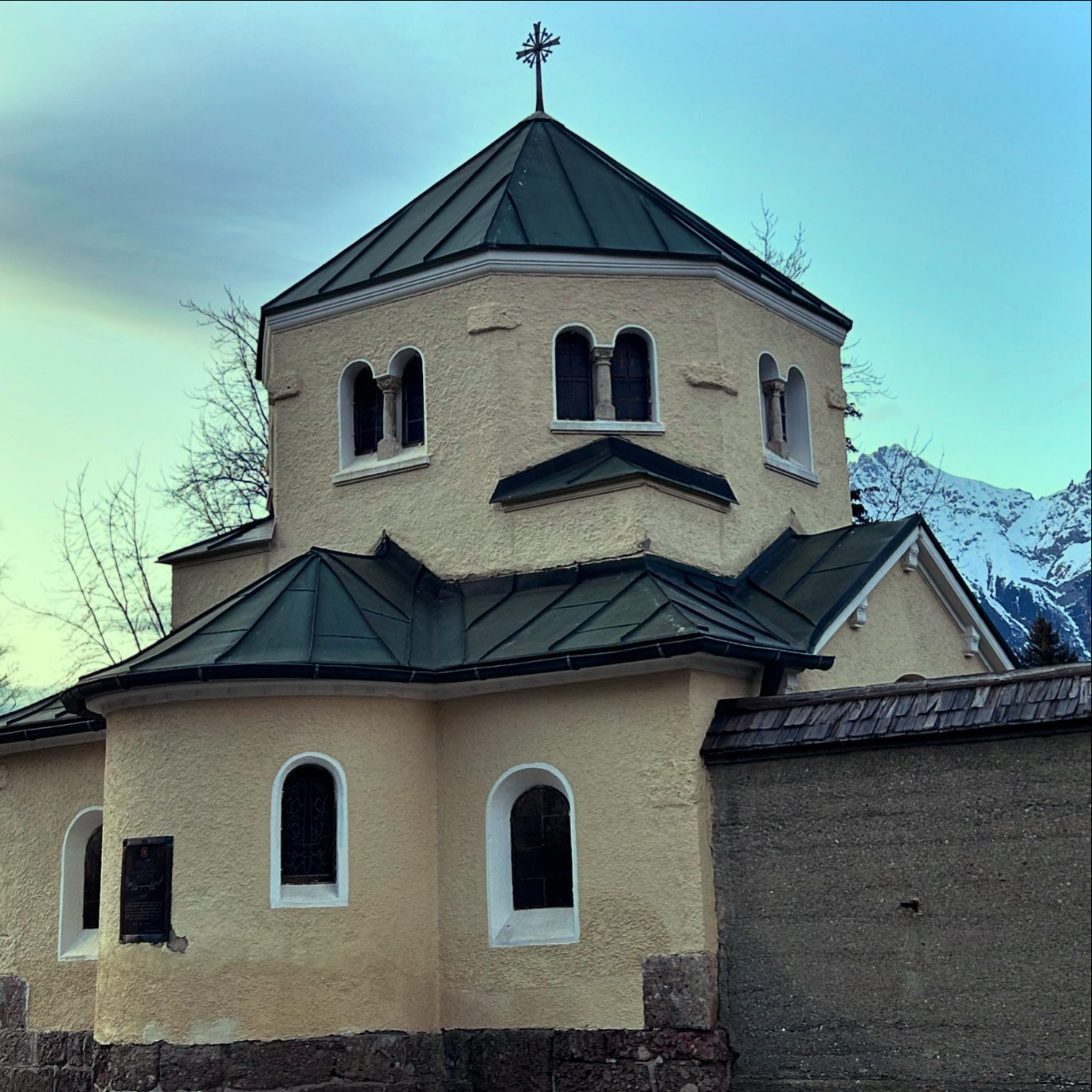
Although the front was far away, the war increasingly penetrated civilian life. This total involvement of society in warfare was a new phenomenon. The mass mobilization of a large proportion of the working male population brought many businesses to a complete standstill. Shop shelves remained empty, public transport services ceased, and craftsmen and labourers were called up for military service. Companies still able to operate were subordinated to the wartime economy. By the “Hunger Winter” of 1917, Innsbruck’s economy had almost completely collapsed. Food, coal, and firewood were in short supply, and hunger and cold became bitter enemies of women, children, the wounded, and those unfit for military service. During the final years of the war, provisions were distributed through ration cards. The basic weekly allowance per person amounted to 500 grams of meat, 60 grams of butter, and 2 kilograms of potatoes. Archive photographs show long queues of desperate and hungry people outside food shops. Protests and strikes repeatedly broke out. Politicians, trade unionists, workers, and returning soldiers saw an opportunity for change. Under the slogan “Peace, Bread, and Suffrage,” parties of many different political backgrounds united in opposition to the war. The cityscape also changed. Barracks were erected in Höttinger Au to house prisoners of war. Wounded soldiers arrived in such large numbers that civilian buildings, including the university library then under construction and Ambras Castle, were converted into military hospitals. A predecessor of today’s Tram Line 3 was established to transport the wounded from the railway station to the new garrison hospital, today’s Conrad Barracks in Pradl. To cope with the large number of fallen soldiers, the Pradl Military Cemetery was created.
As the war neared its end, the front also drew closer. In February 1918, the Italian air force succeeded in dropping three bombs on Innsbruck. The Neue Freie Presse reported for the first time on the secret Treaty of London, heightening Tyrolean anxiety over the threatened loss of territory south of the Brenner Pass. By then, most people already knew the war was lost and sensed the fate that awaited Tyrol, as this article of October 6, 1918, demonstrates:
“External and internal enemies are gambling today with the land of Andreas Hofer. The latest throw of the dice is even more cruel; never before has a free land been bartered away so disgracefully. The blood of our fathers, sons, and brothers has been shed in vain if this shameful plan becomes reality. The final throw has not yet been made. Therefore, Tyroleans, attend the Tyrolean People’s Assembly in Brixen on October 13, 1918 (next Sunday). German soil must remain German; Tyrolean soil must remain Tyrolean. Tyroleans, decide your own future!”
On November 4, Austria-Hungary and the Kingdom of Italy finally agreed to an armistice. Part of the agreement granted Italy the right to occupy territory of the monarchy. Alarm bells immediately rang among Austria-Hungary’s allies in the German Empire. On the very next day, Bavarian troops entered Innsbruck. Germany was still at war with Italy and feared that the front might shift into North Tyrol, bringing it closer to German territory. Fortunately for Innsbruck and the surrounding region, Germany also capitulated one week later on November 11. As a result, major military engagements between regular armies were avoided.
Nevertheless, Innsbruck remained in danger. Massive convoys of military vehicles, trains packed with soldiers, and thousands of exhausted troops making their way home on foot passed through the city. Anyone who could jumped onto overcrowded trains or military vehicles to leave the front behind and return home. In November 1918 alone, more than 270 soldiers lost their lives during these reckless attempts or had to be admitted to one of the city’s hospitals. The city not only had to maintain order among its own citizens and ensure food supplies but also protect itself against looting. To preserve public order, the Tyrolean National Council established a citizens’ militia on November 5 composed of pupils, students, workers, and ordinary citizens. On November 23, 1918, Italian troops occupied the city and its surroundings. More than 80,000 Italian soldiers were stationed in Tyrol, around 5,000 of whom required accommodation in the starving and destitute city. Schools were turned into barracks. Mayor Greil’s conciliatory appeal to surrender the city peacefully succeeded. There were isolated disturbances, food riots, and incidents of looting, but there were no armed clashes with the occupation troops and no Bolshevik revolution such as the one that occurred in Munich.
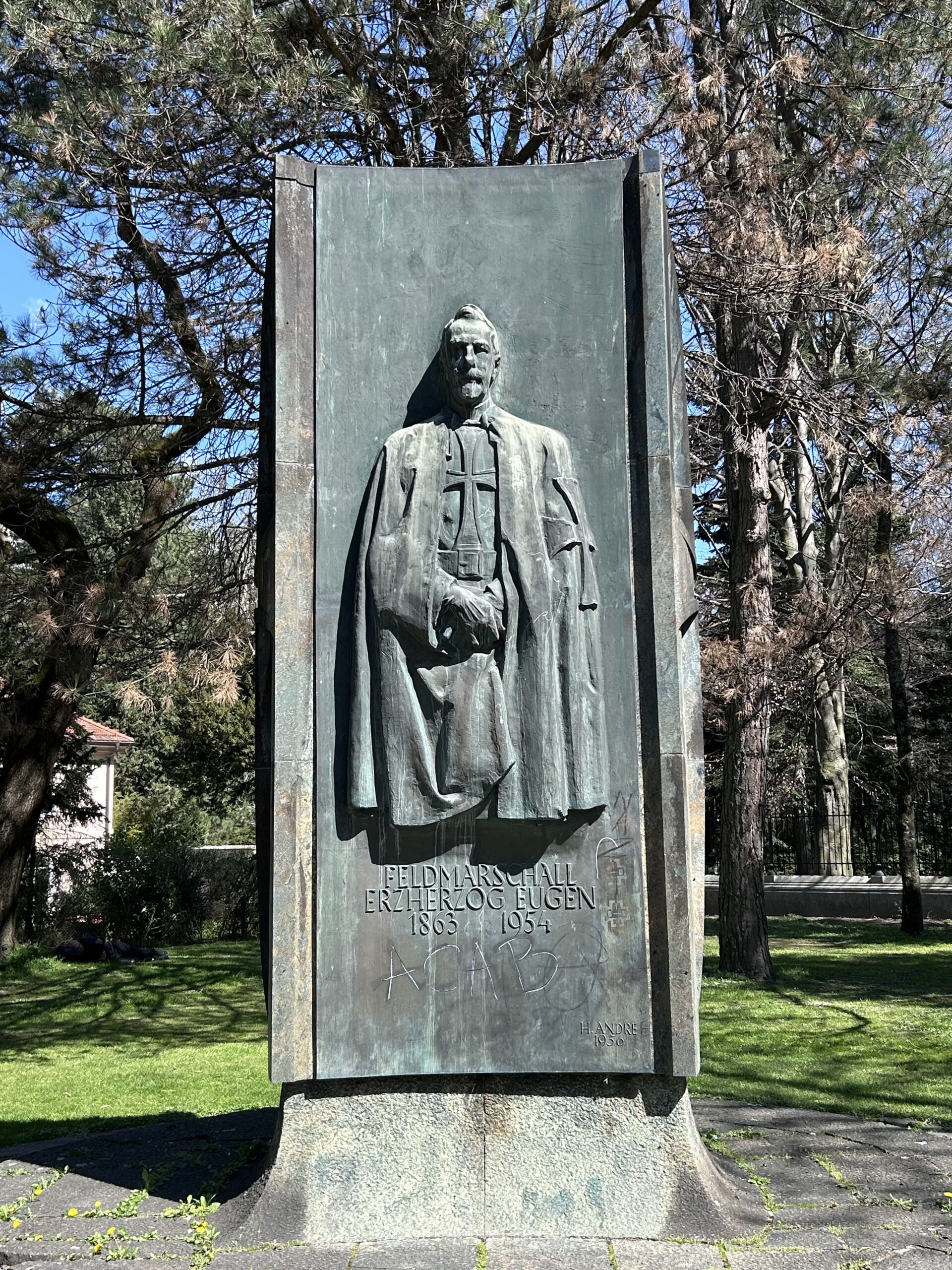
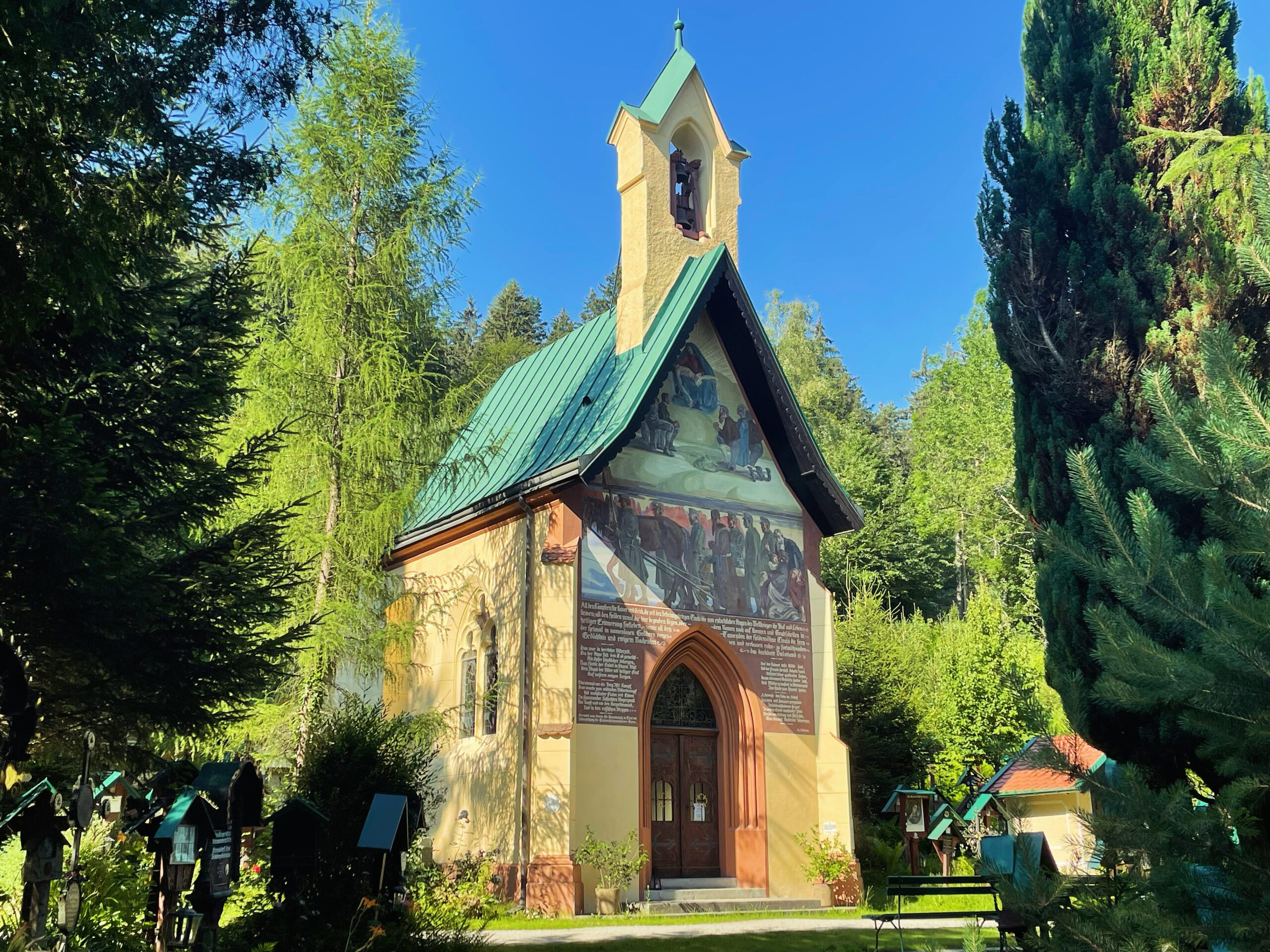
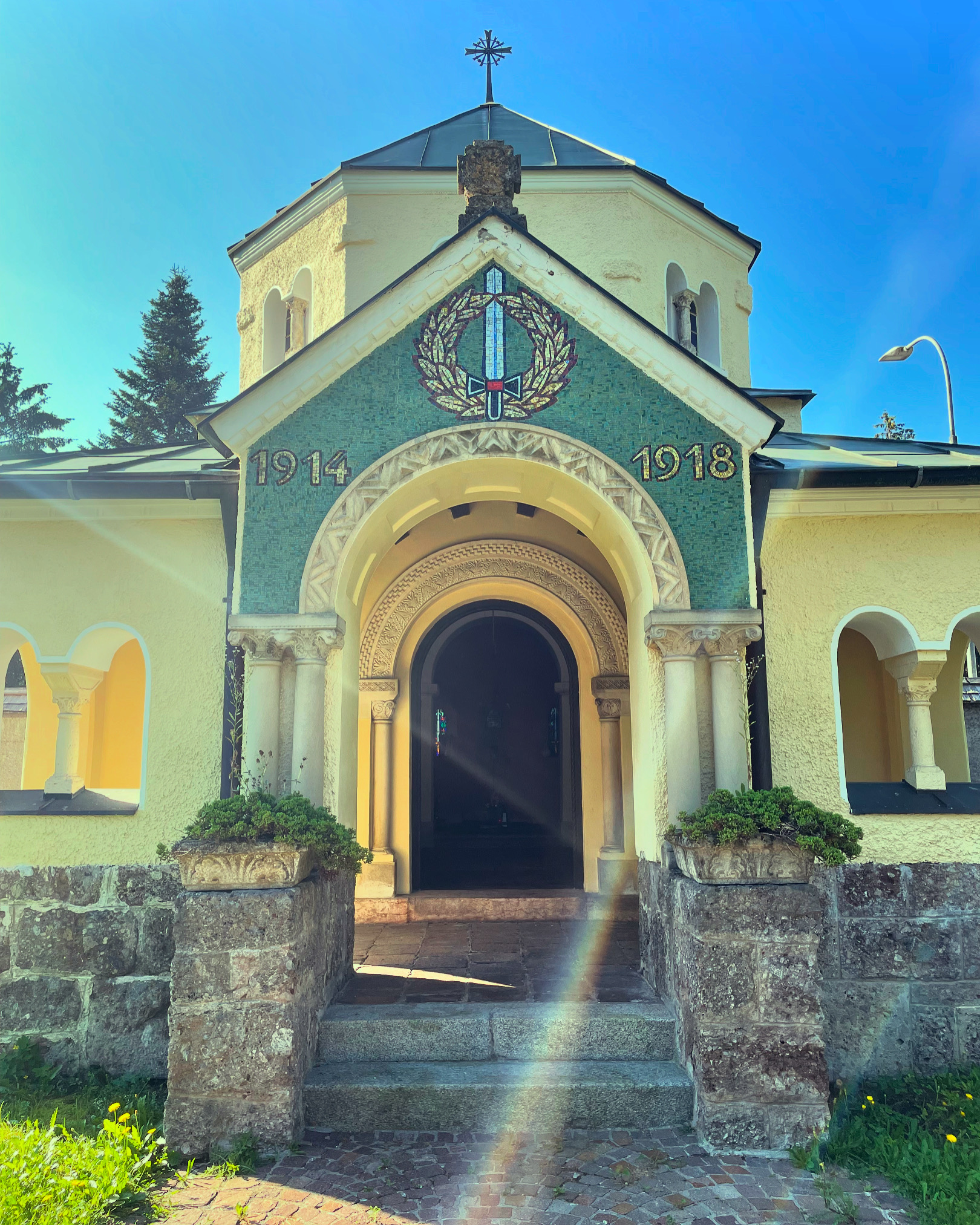
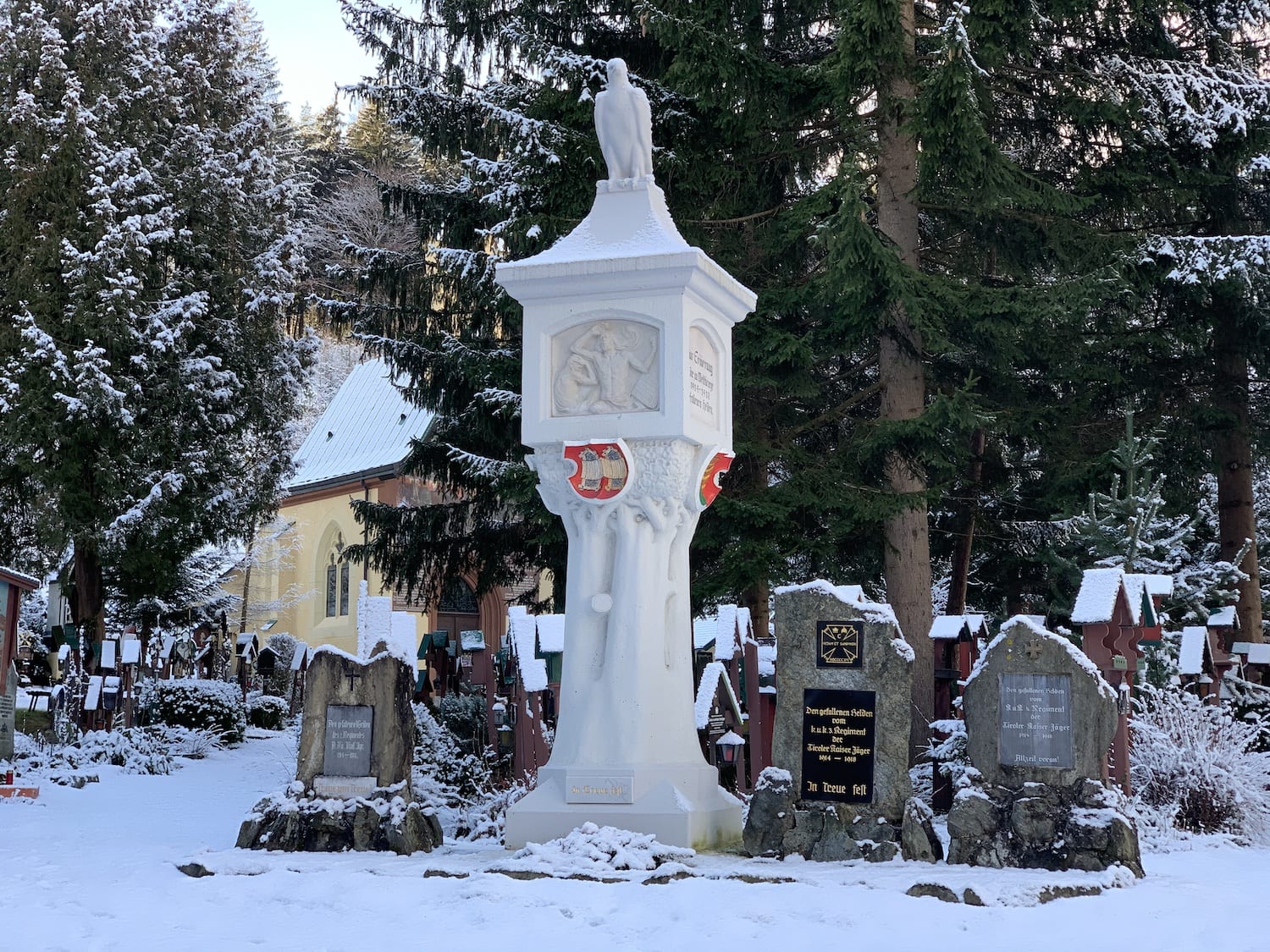
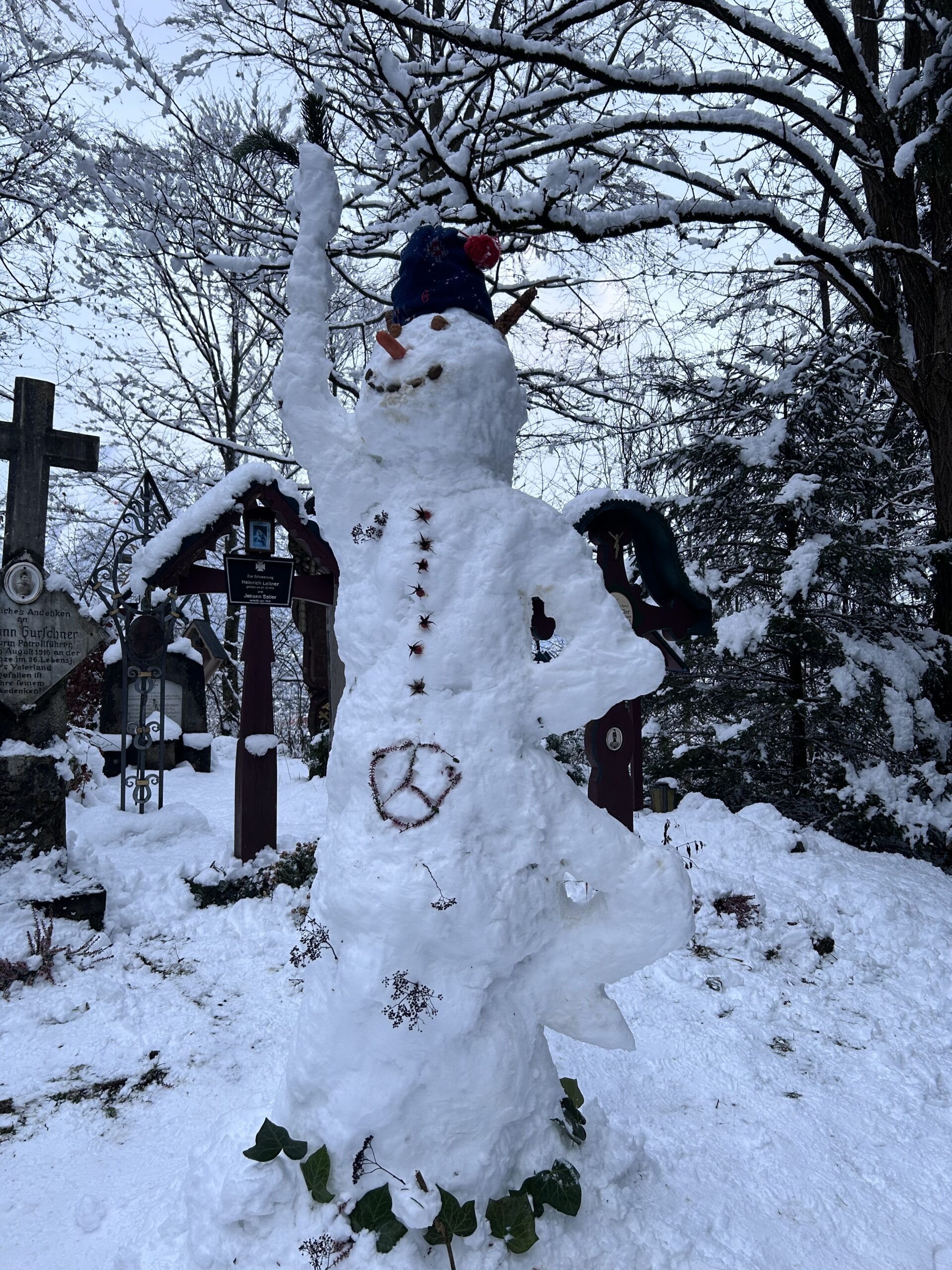
The consequences of the First World War for Innsbruck’s population were devastating. More than 1,200 people lost their lives on battlefields or in military hospitals, while approximately 600 were wounded. Memorials to the First World War and its victims can be found throughout Innsbruck, particularly at churches and cemeteries. The Kaiserjäger Museum on Bergisel displays uniforms, weapons, and photographs from the war. The theologians Anton Müllner and Josef Seeber have streets named after them in Innsbruck. A street was also named after Archduke Eugene, commander-in-chief of the Austro-Hungarian Army on the Southern Front. A monument to the unsuccessful military leader stands in front of the Hofgarten. The eastern section of the Amras Military Cemetery commemorates the Italian occupation.
The assassination planned for years
Daß sich die großserbischen Agitationsstellen schon seit Jahren mit dem Pläne einer Ermordung des Thronfolgers beschäftigten, beweist am besten eine Episode, die sich vor ungefähr anderthalb Jahren in Innsbruck zutrug und im vorigen Sommer ihr gerichtliches Nachspiel hatte. Die an der hiesigen medizinischen Fakultät inskribierten südslawischen-Studenten versammelten sich damals regelmäßig in einem Lokale im Zentrum der Stadt. Einer von ihnen, der 20 jährige Mediziner Stankovic aus Belgrad, bewarb sich um die Gunst der dort angestellten Kellnerin W. Um bei ihr Eindruck zu machen, erzählte er ihr in einem unbedachten Augenblicke, daß er bald sterben müsse, weil er berufen sei, nach Wien zu reisen und eine hohe Persönlichkeit zu ermorden. Als das Mädchen ihn erschrocken fragte, ob
er den Kaiser töten wolle, verneinte dies Stankovic mit den Worten: Nein, den Nächsten!" Gleichzeitig zeigte er dem Mädchen einen scharf geladenen Browning, den er stets bei sich hatte. Die Behörde gelangte erst viele Wochen später Kenntnis von dem Vorfalle, verhaftete
nicht nur Stankovic, sondern auch noch zehn seiner Freunde. Die Hausdurchsuchungen, die bei diesen, aus der Zahl der hier studierenden Serben beim Mangel jeglichen Anhaltspunktes nur
willkürlich herausgegriffenen jungen Leuten vorgenommen wurden, hatten kein Ergebnis, hingegen gelang es, beim Hauptbeschuldigten den scharf geladenen Browning, den dieser immer bei sich trug, zu finden. Bei der Einvernahme gab Stankovic an, nur im Scherze gesprochen zu haben, doch gab er unumwunden zu, mit der Fabrikation von Bomben vertraut und auch geübt im Werfen .zu sein, weil er schon im Gymnasium, (Stankovic stand im ersten Semester), diese Fertigkeiten erlernt habe. Der Prozeß Stankovic, der mit Rücksicht auf das spärliche Ergebnis der Untersuchung nur wegen Beleidigung eines Mitgliedes des kaiserlichen Hauses angeklagt worden war, endete mit einem
Freispruche, weil es der Verteidigung gelang, darzutun, daß die Kronzeugin den nur gebrochen deutsch sprechenden Studenten schlecht verstanden haben könnte. Die behördlichen-Organe blieben trotzdem bei der Ansicht, daß Stankovie doch kein so harmloser Mensch sei und verfügten seine Verweisung aus Oesterreich. Die ungarischen Behörden taten dasselbe. Heute zweifelt wohl kein Mensch daran, daß die dem jungen Studenten entschlüpften Worte ernst gemeint waren. Sie sind wohl ein untrüglicher Beweis, daß die Mordtat in Sarajewo nicht wenigen Fanatikern zur Last zu schreiben ist, sondern daß sie als ein Produkt angesehen werden muß, der jahrelangen bewußten und systematischen Verhetzung, die von Belgrad ausgehend, die gesamte südslawische Jugend vergiftet.
To my peoples
This proclamation by Emperor Franz Josef I appeared in all the newspapers of the Empire on 29 July 1914, the day after the start of the war.
It was My most ardent wish to dedicate the years that are still granted to Me by God's grace to works of peace and to protect My peoples from the heavy sacrifices and burdens of war.
It was decided differently in the Council of Providence.
The machinations of a hateful adversary force Me to take up the sword after long years of peace in order to preserve the honour of My monarchy, to protect its reputation and its position of power, and to secure its possessions.
With quickly forgotten ingratitude, the Kingdom of Serbia, which had been supported and promoted by My ancestors and Me from the first beginnings of its state independence to the most recent times, set out on the path of open hostility against Austria-Hungary years ago.
When, after three decades of blessed peace work in Bosnia and Hercegovina, I extended My sovereign rights to these countries, this decree of Mine provoked outbursts of unbridled passion and bitter hatred in the Kingdom of Serbia, whose rights were in no way violated. At that time, My Government made use of the fine prerogative of the strongest and, with the utmost forbearance and leniency, demanded from Serbia only the reduction of its army to the level of peace and the promise to pursue the path of peace and friendship in the future.
Guided by the same spirit of moderation, my government, when Serbia was engaged in battle with the Turkish Empire two years ago, confined itself to safeguarding the most important living conditions of the monarchy. Serbia owed the achievement of the purpose of the war primarily to this attitude.
The hope that the Serbian kingdom would honour the patience and love of peace of my government and keep its word has not been fulfilled.
The hatred against Me and My House is flaring up ever higher, the endeavour to tear apart inseparable territories of Austria-Hungary by force is becoming more and more obvious.
Criminal activity is spreading across the border to undermine the foundations of state order in the south-east of the monarchy, to make the people, to whom I devote My full care in paternal love, waver in their loyalty to the ruling house and the fatherland, to mislead the growing youth and to incite them to sacrilegious acts of madness and high treason. A series of assassination attempts, a conspiracy prepared and carried out according to plan, the terrible success of which has struck Me and My people to the heart, forms the widely visible bloody trail of those secret machinations which were set in motion and directed from Serbia.
This intolerable activity must be stopped, an end must be put to Serbia's incessant challenges if the honour and dignity of My Monarchy are to be preserved intact and its state, economic and military development protected from constant upheaval.
In vain did my government make one last attempt to achieve this goal by peaceful means, to persuade Serbia to change its ways with a stern warning.
Serbia has rejected the moderate and just demands of My Government and refused to fulfil those duties whose fulfilment is the natural and necessary basis of peace in the life of peoples and states.
So I must then proceed to create the indispensable guarantees by force of arms, which are to secure peace within My states and lasting peace without.
In this serious hour I am fully aware of the full extent of My decision and My responsibility before the Almighty.
I have checked and considered everything.
With a clear conscience, I tread the path that duty shows me.
I trust in My peoples, who have always rallied around My throne in unity and loyalty in all storms and have always been prepared to make the heaviest sacrifices for the honour, greatness and power of the Fatherland.
I have faith in Austria-Hungary's valiant and enthusiastic armed forces.
And I trust in the Almighty that He will give victory to My weapons.
Sights to see...
Adolf-Pichler-Platz
Adolf-Pichler-Platz
Old & New Hötting Parish Church / Plague Cemetery
Schulgasse / Schneeburggasse
Adambräu & Ansitz Windegg
Adamgasse 23
Fraternity House Austria
Josef-Hirn-Straße
Johanneskirche
Bischof-Reinhold-Stecher-Platz
Militärfriedhof & Pradler Friedhof
Kaufmannstraße / Wiesengasse
Alter Militärfriedhof Pradl
Anzengruberstraße
Turnusvereinshaus & Waltherpark
Innstraße 2
St Nicholas Church & Cemetery
Schmelzergasse 1
University of Innsbruck
Innrain 52
Panoramagebäude
Rennweg 39
Tummelplatz
Haltestelle Tummelplatz