The Counts of Andechs and the foundation of Innsbruck
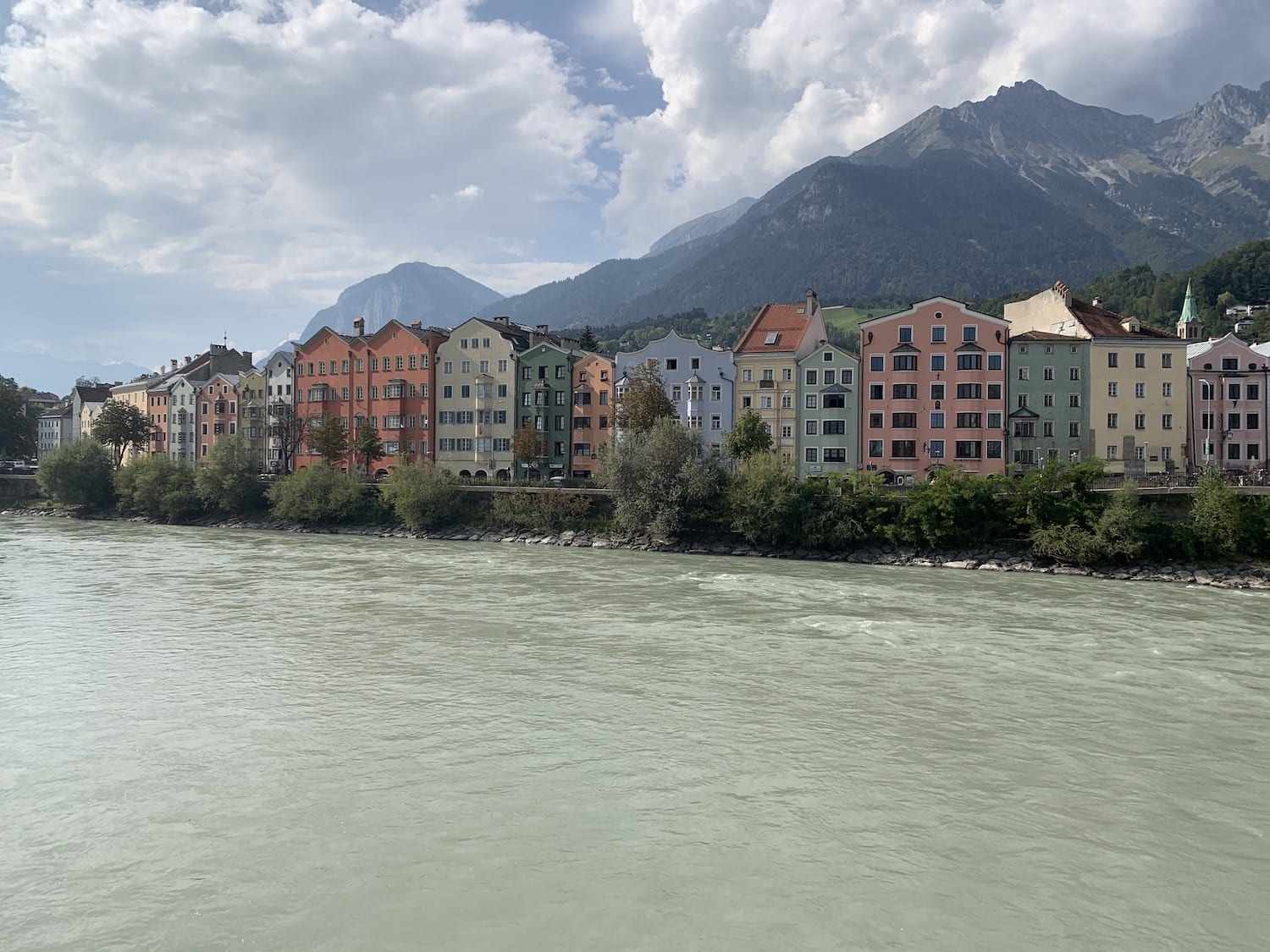
The Counts of Andechs and the foundation of Innsbruck
The 12th century brought economic, scientific, and social growth to Europe and is regarded as a kind of early medieval Renaissance. Through the indirect route of the Crusades, intensified exchange took place with the cultures of the Near East, which were more highly developed in many respects. Via southern Spain and Italy, Arab scholars brought translations of Greek thinkers such as Aristotle to Europe. Roman law was rediscovered at the first universities south of the Alps. New agricultural knowledge, technical innovations, and a favourable climate—which was to last until the mid‑14th century—enabled the emergence of towns and larger settlements. One of these settlements lay between the Roman road over the Brenner Pass, the River Inn, and the Nordkette mountain range. Politically and economically, the importance of the Inn Valley was largely limited to transit. The two relatively low and therefore easily passable Alpine crossings—the Reschen Pass and the Brenner Pass—between the German lands and the possessions of the German kings in Italy converged in the wide valley basin. A dispute over control of this part of the Holy Roman Empire gave rise to the political constellation that would shape Tyrol and Innsbruck well into the modern era. In 1024, Conrad II of the Salian dynasty was elected king. He found himself in competition with the Bavarian dukes of the House of Wittelsbach, under whose control the coveted Alpine passes lay at the time. In order to wrest the territory away from his Bavarian rivals and place it under the control of the Reich Church loyal to him, Conrad II granted the territory of Tyrol as a fief in 1027 to the bishops of Brixen and Trento. The bishops, in turn, required so‑called Vögte (advocates) to administer these lands and exercise jurisdiction. These advocates of the Bishop of Brixen were the Counts of Andechs. Although today the Andechs family stands in the shadow of the Welfs, Hohenstaufen, Wittelsbachs, and Habsburgs, they were a powerful dynasty in the High Middle Ages. They originated from the region around Lake Ammersee in Bavaria and owned estates in Upper Bavaria between the Lech and Isar rivers as well as east of Munich. Through skilful marriage policies, they acquired the titles of Dukes of Merania—a region on the Dalmatian coast—and Margraves of Istria, thereby rising in rank within the Holy Roman Empire. To secure both administration and eventual salvation, they founded Dießen Abbey and the monastery on the Holy Mountain of Andechs above Lake Ammersee in the 12th century. In 1165, Otto V of Andechs ascended to the episcopal seat of Brixen and granted the advocacy over this prince‑bishopric to his brother. In this way, the Andechs family gained control over the administration of the central Inn Valley, the Wipp Valley, the Puster Valley, and the Eisack Valley.
But this was far from the end of the dynastic entanglements and political complications that stood in the way of Innsbruck’s founding. Today, the city stretches across both sides of the River Inn. In the 12th century, however, this area was under the influence of two different landlords. Much of the Inn Valley was densely forested, and the banks of the broad river consisted of marshy terrain. South of the Inn, manorial authority was exercised by Wilten Abbey, while the land north of the river was administered by the Counts of Andechs. Whereas the southern part of the later city around the abbey had been used for agriculture for centuries, the floodplain around the unregulated river remained largely unsettled before the High Middle Ages. The region was not one of the hotspots of Europe’s cultural landscape. Most people worked in agriculture under their landlord’s control. They lived in poor huts made of clay and wood. Medical care was almost non‑existent, child mortality was high, and few people lived beyond the age of fifty.
As every good property developer is keen to point out even today, location already mattered greatly when it came to the potential of a new construction project. Around the year 1133, the Counts of Andechs founded the market settlement of Anbruggen in what is now St. Nikolaus, taking advantage of the site’s excellent transport connections, and linked the northern and southern banks of the Inn with a bridge. What had been agriculturally unusable land at the foot of the Nordkette was transformed into a trading hub by this transport link. The small wooden bridge facilitated the movement of goods across the Eastern Alps between Italian and German trading cities. The Brenner route, long considered too steep for large trading convoys, became more attractive thanks to one of the innovations of the medieval Renaissance: new harness systems made it possible for wagons to negotiate steep inclines. The shorter Via Raetia replaced the Via Claudia Augusta over the Reschen Pass as the main Alpine transit route. The farsighted Andechs market benefited from this development. Toll revenues generated by trade between German and Italian cities allowed the settlement to prosper. Soon blacksmiths, innkeepers, wagon operators, tailors, carpenters, rope makers, wheelwrights, and tanners settled there. Horses, merchants, and their retinues had to be fed and accommodated, wagons repaired. Larger enterprises employed workers and servants. What had once been a remote, swampy wasteland became a service centre. The transformation from a purely agrarian area into a town could begin. Anbruggen grew rapidly, but space between the Nordkette and the Inn was limited. In 1180, Berchtold V of Andechs acquired a parcel of land on the southern side of the Inn from Wilten Abbey to expand his trading post. The abbot was unwilling to relinquish his foothold entirely, as the new settlement was flourishing thanks to toll revenues. The deed mentions three houses within the new settlement that were reserved for Wilten Abbey. As part of the construction of the city walls, the Counts of Andechs built Andechs Castle and moved their ancestral seat from Merano to Innsbruck. At some point between 1187 and 1204, the citizens of Innsbruck were granted town privileges. The year 1239 is often cited as the official founding date, when the last count of the Andechs dynasty, Otto VIII, formally confirmed the town charter in a document. At this time, Innsbruck was already the minting site of the Andechs family and would likely have become the capital of their principality. However, events took a different turn. In 1246, the Bavarian Wittelsbachs—the Andechs’ greatest rivals in southern Germany—destroyed their ancestral castle on Lake Ammersee. Otto, the last count of the House of Andechs‑Merania, died in 1248 without heirs. Twelve years earlier, he had married Elisabeth, the daughter of Count Albert VIII of Tyrol. This noble family, whose ancestral seat lay in Merano, thus inherited the fiefs and parts of the Andechs possessions, including the city on the Inn—along with the longstanding enmity with the Bavarian Wittelsbachs.
Sights to see...
Farmhouses in Pradl
Pradlerstrasse / Egerdachstrasse
Wilten Abbey & Basilica
Klostergasse 7 / Pastorgasse 2
Schloss Ambras
Schloßstraße 12-20
Andechsburg
Innrain 1
Inn bridge
Innstraße 5 / Innrain 1
Mariahilfzeile & Marketplace
Mariahilfstraße / Marketplace