Maria Hilf Innsbruck!
Maria help Innsbruck!
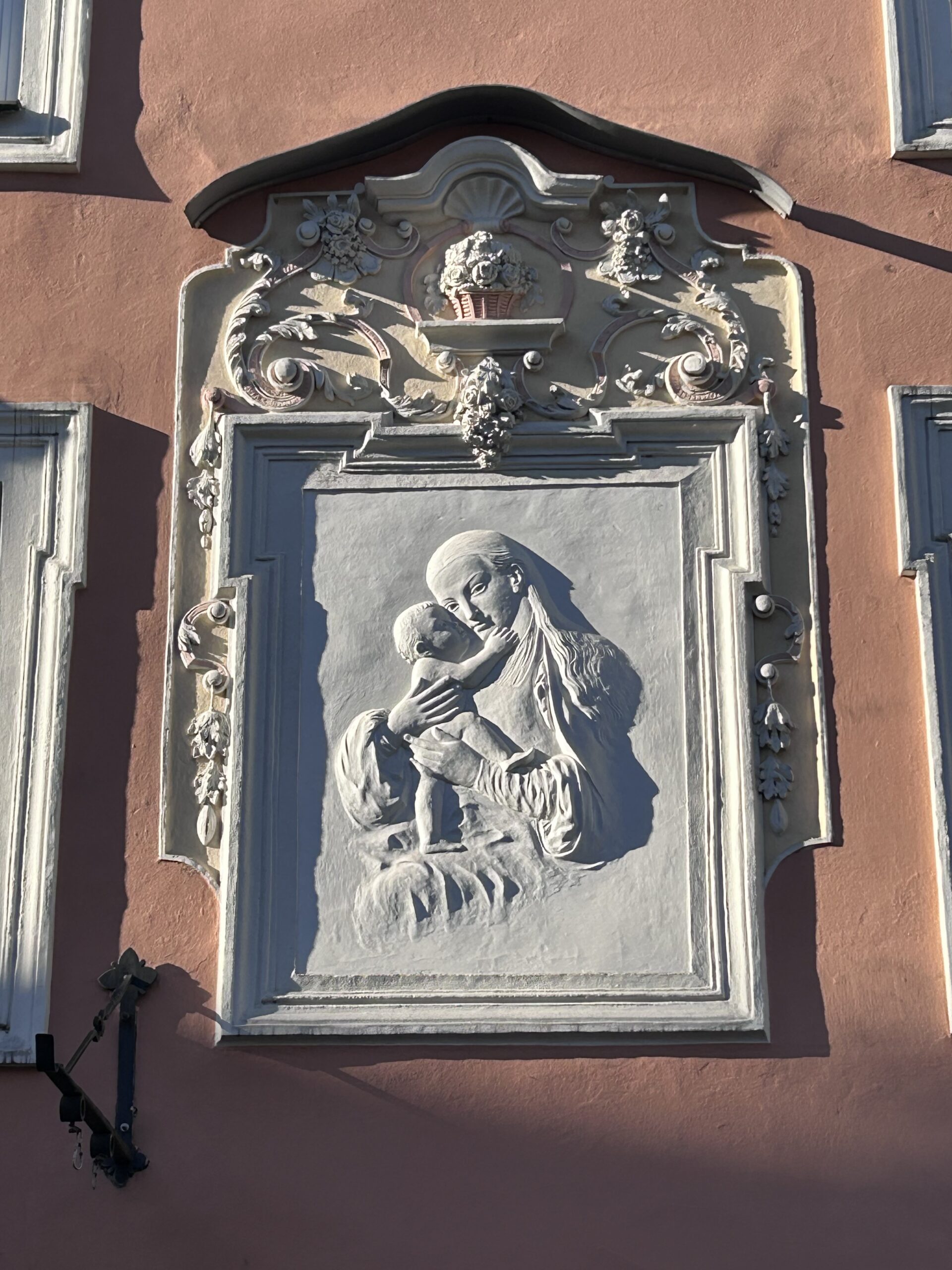
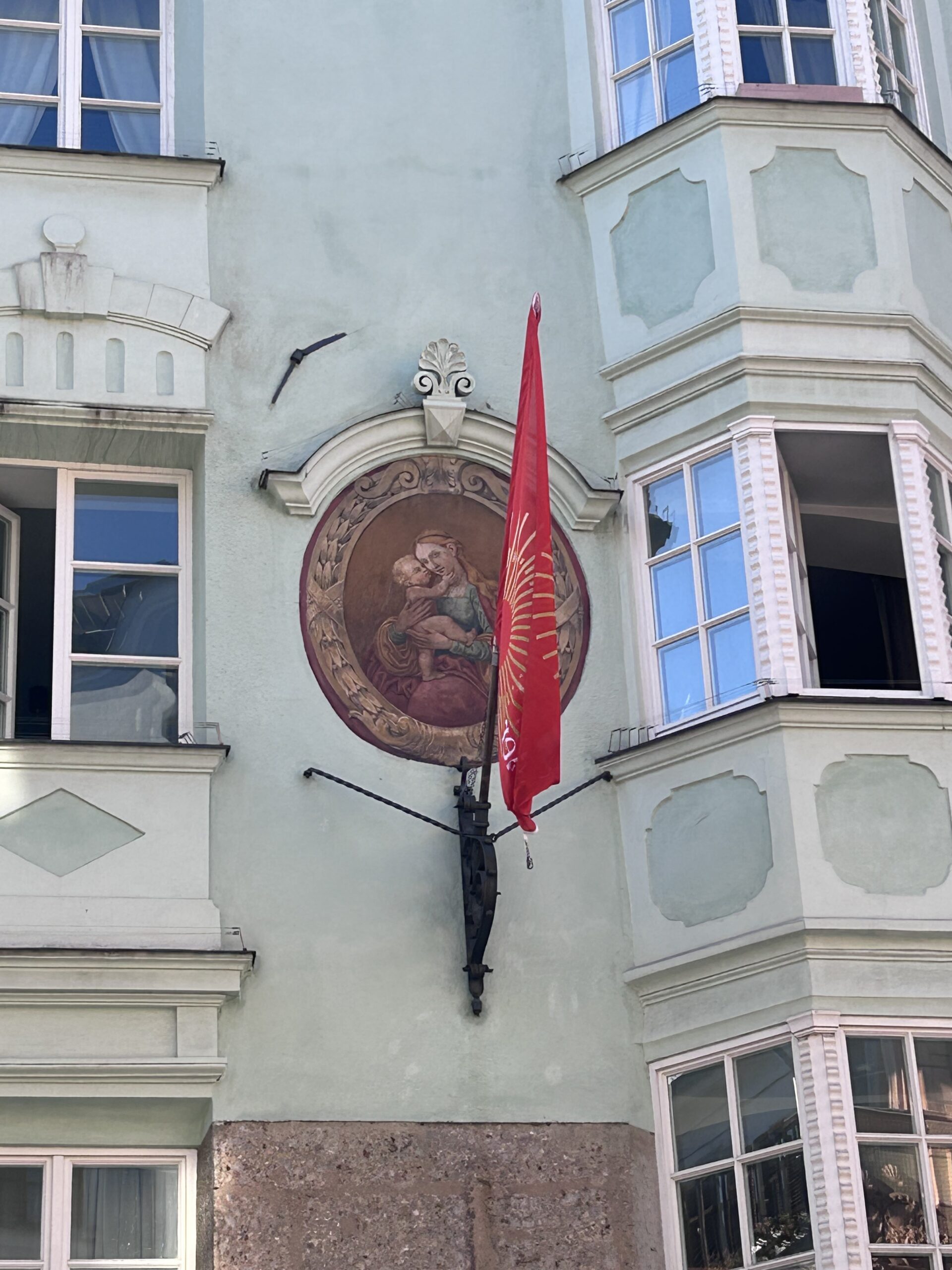
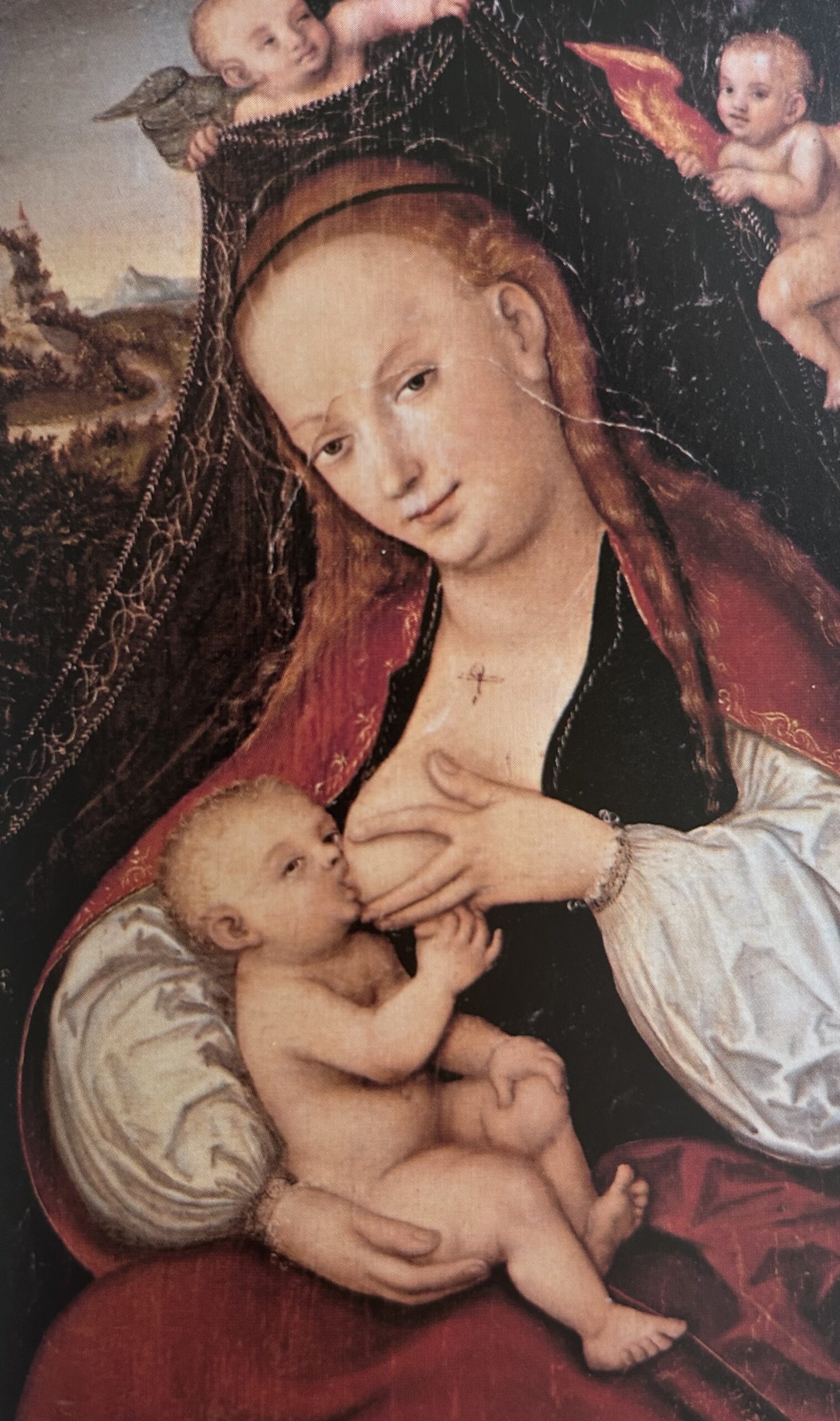
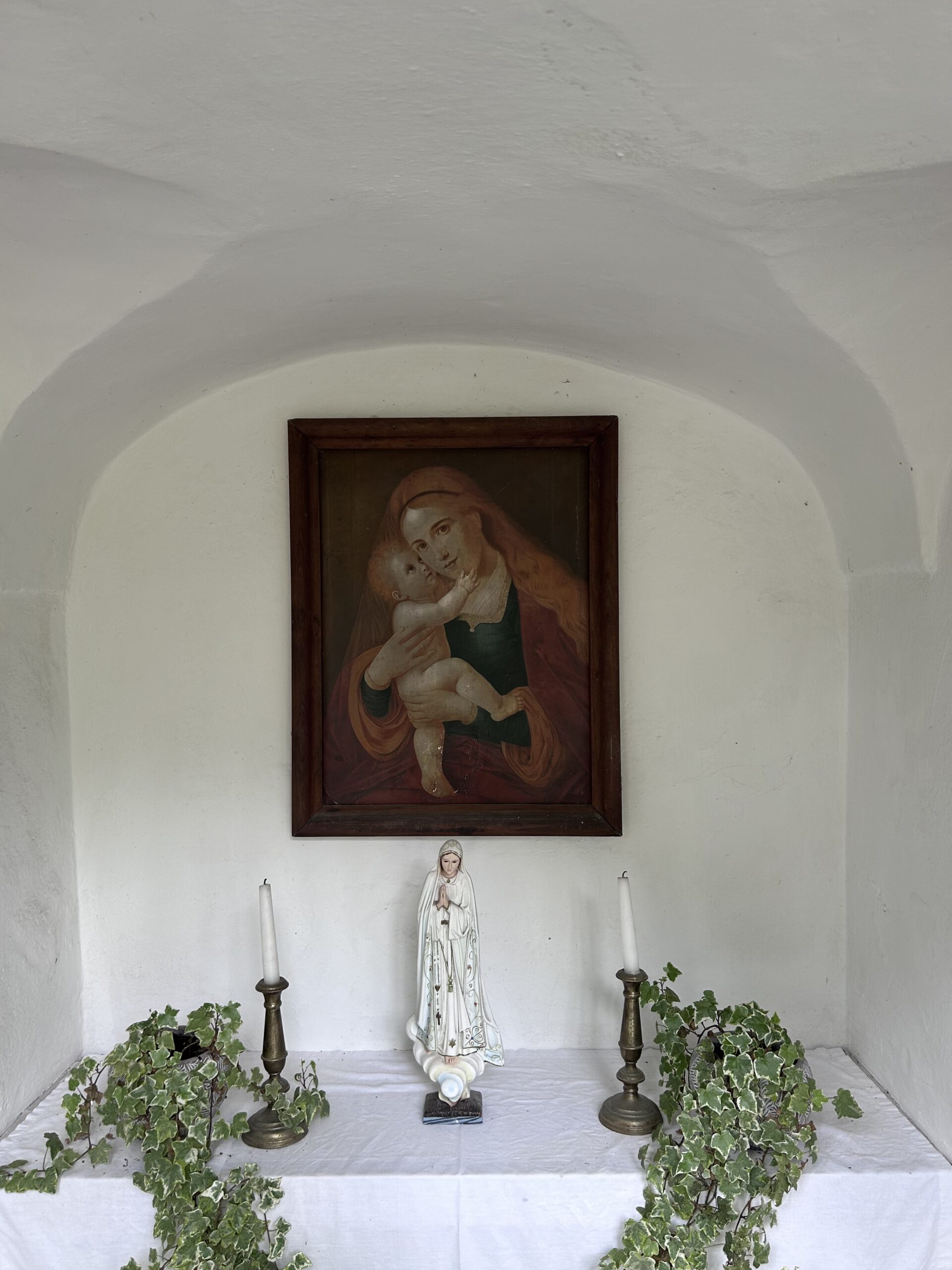
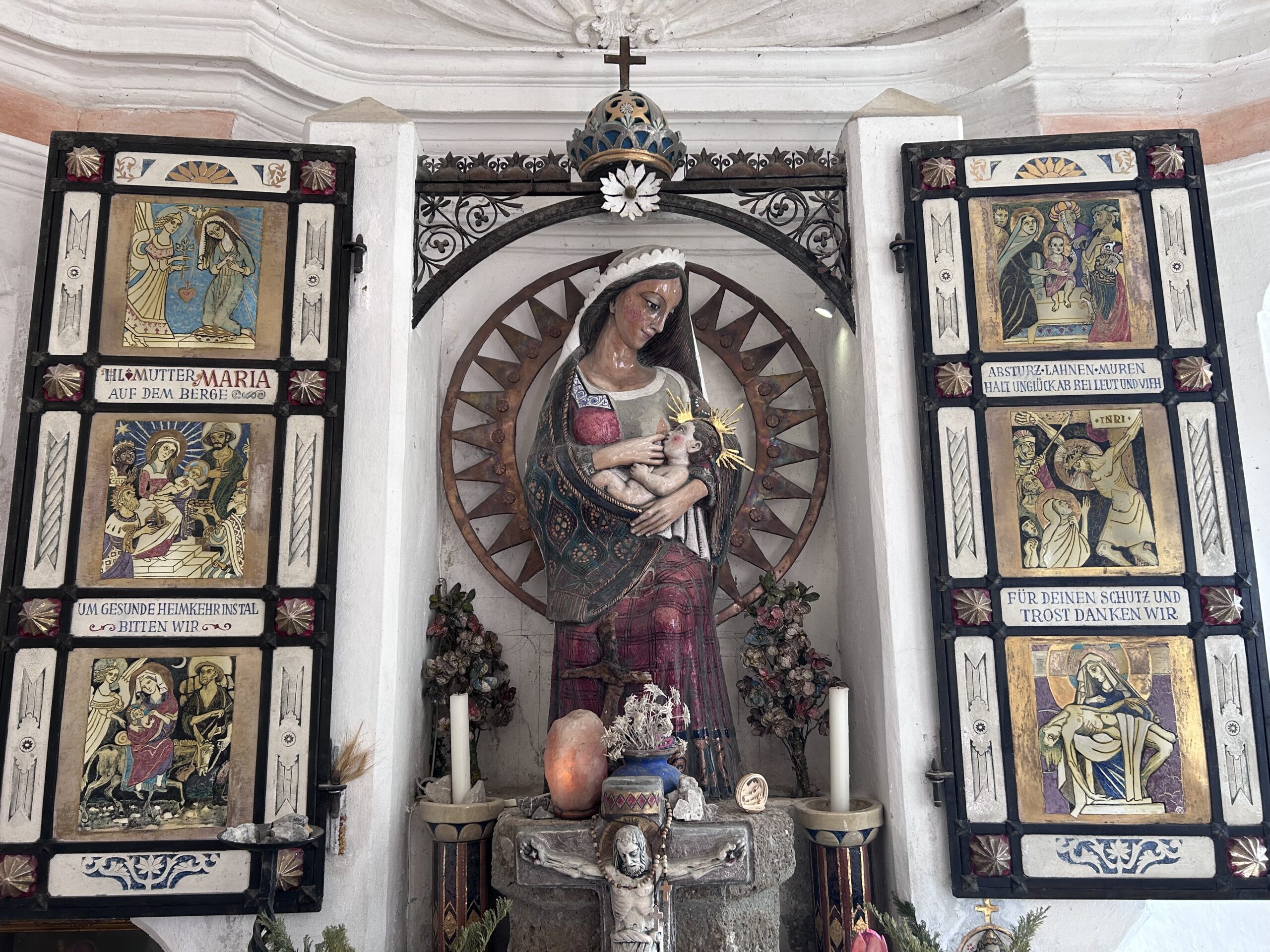
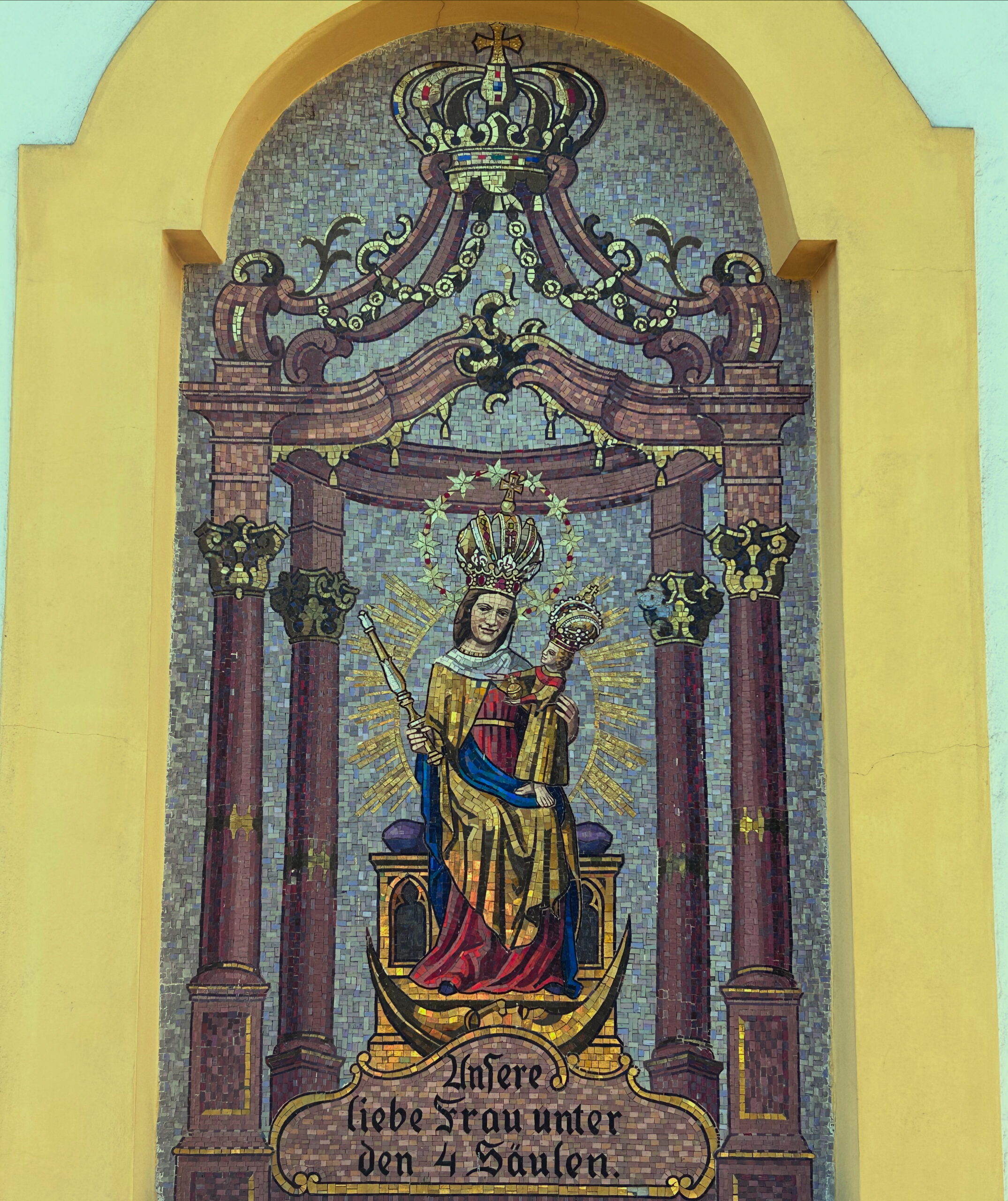
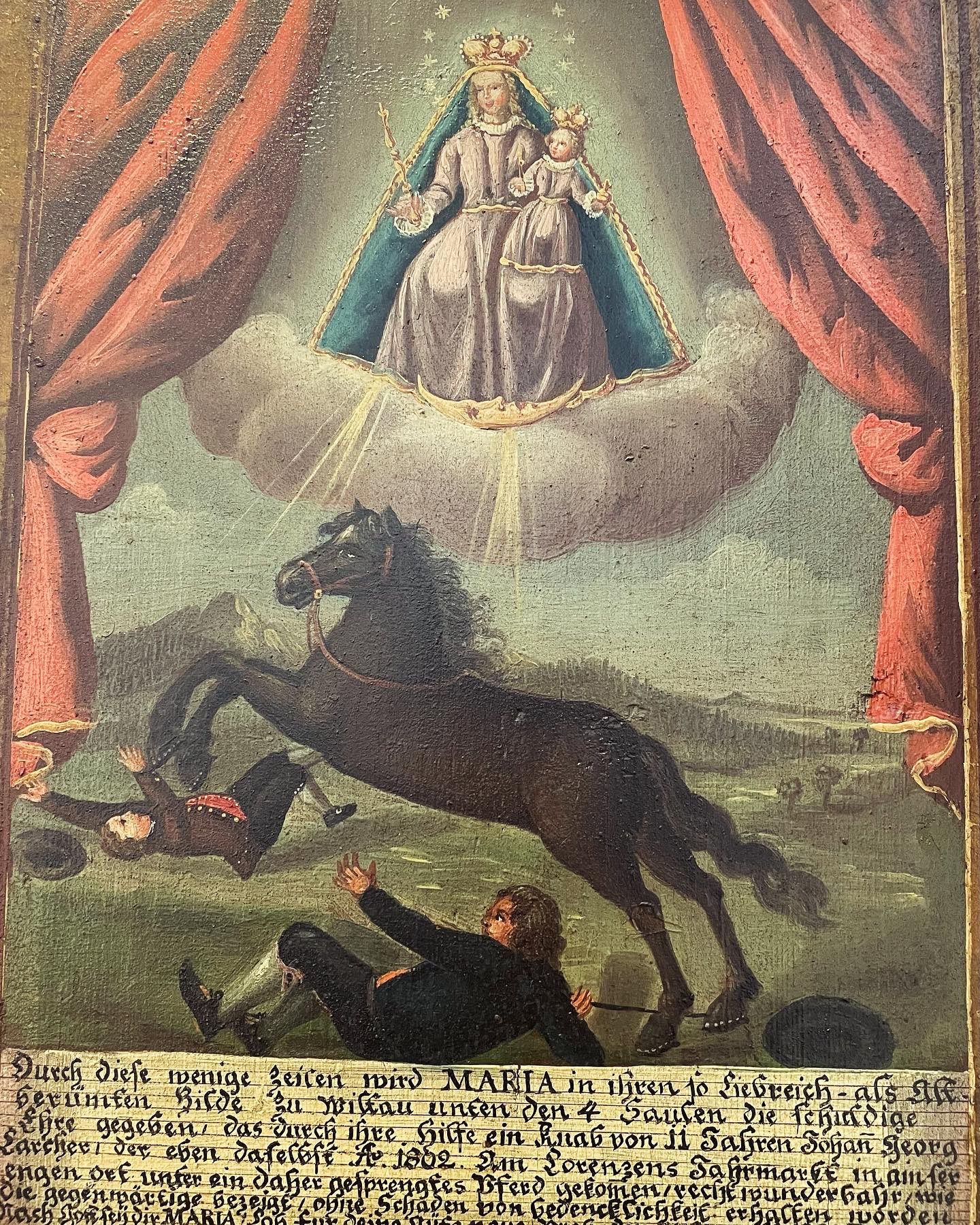
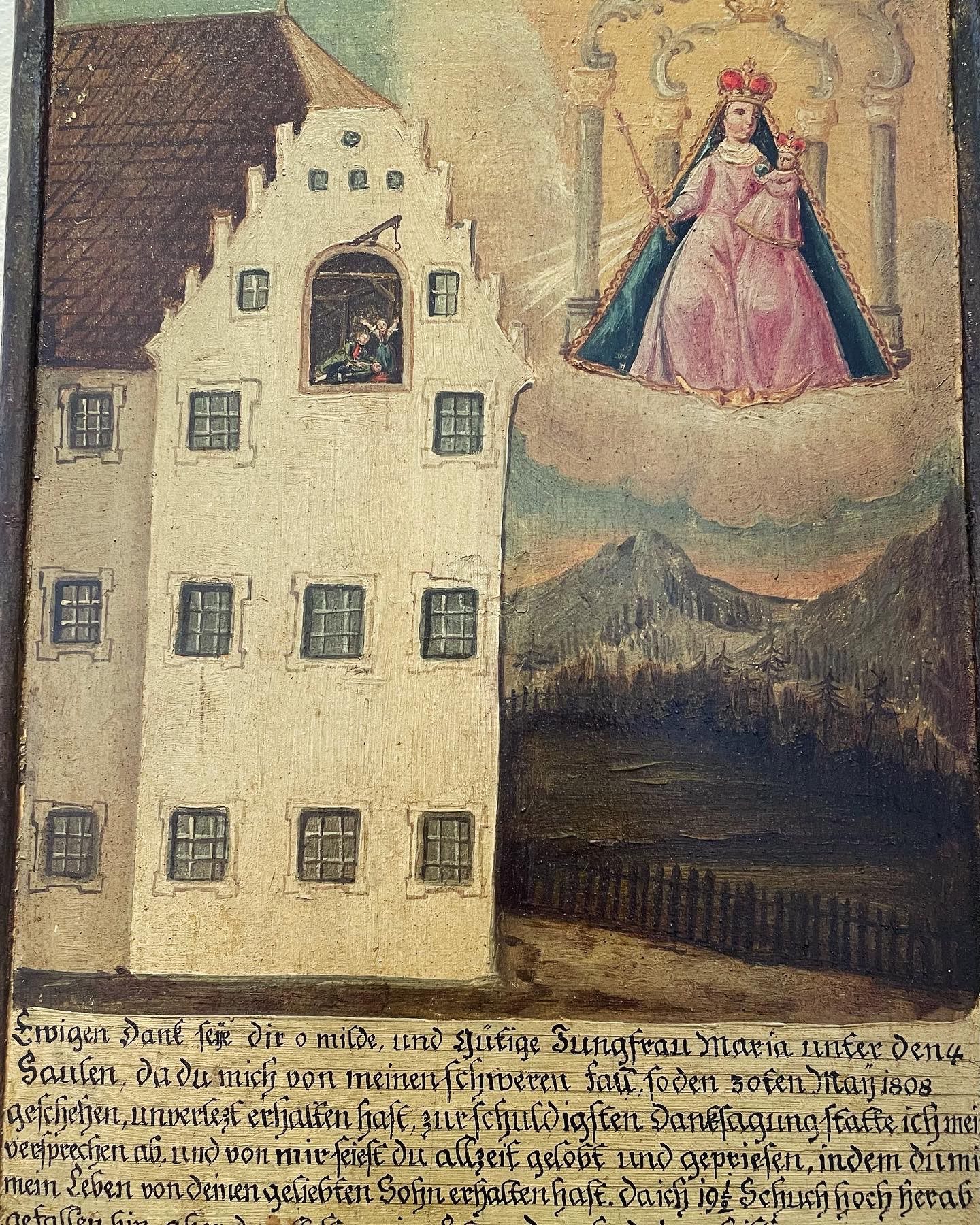
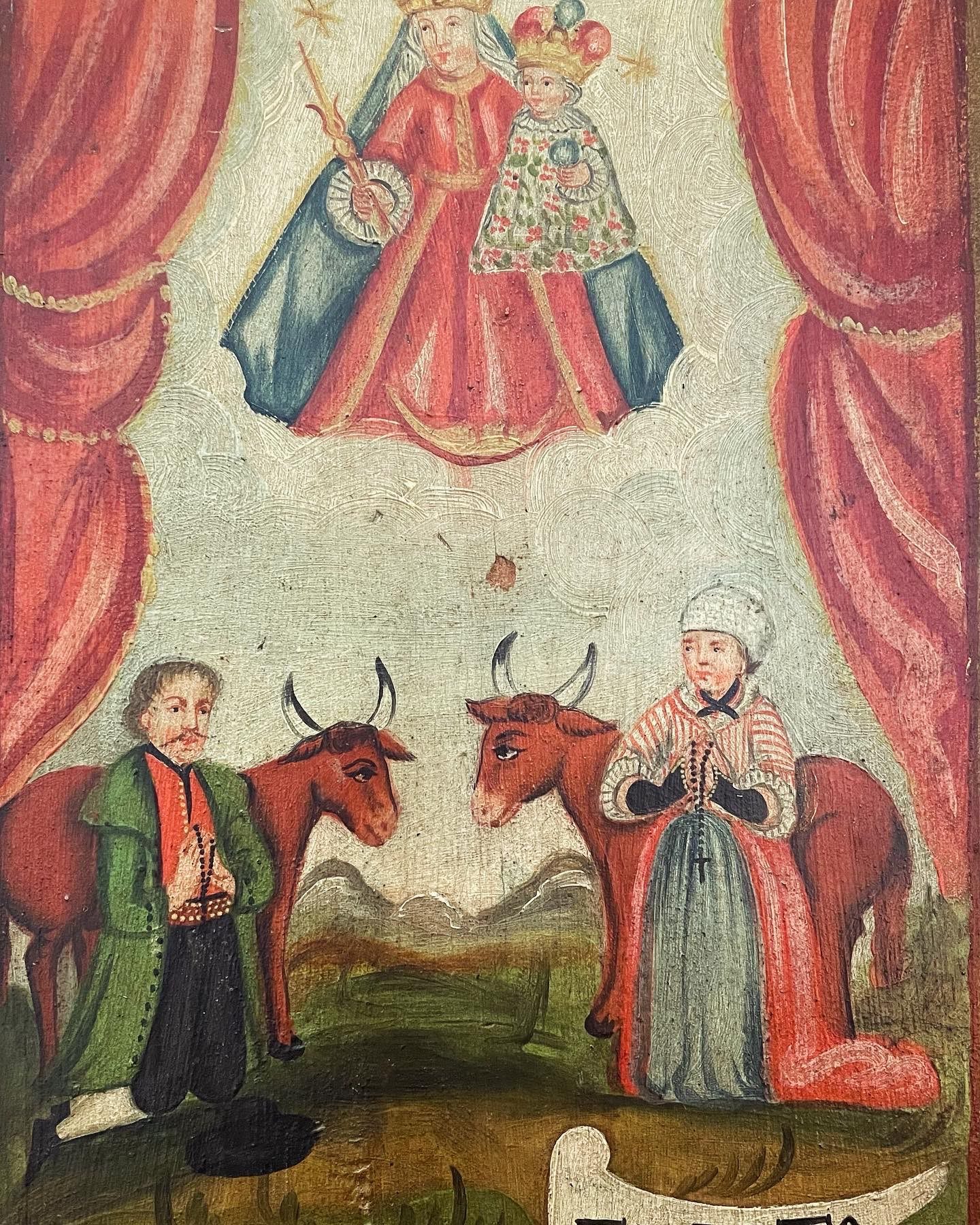
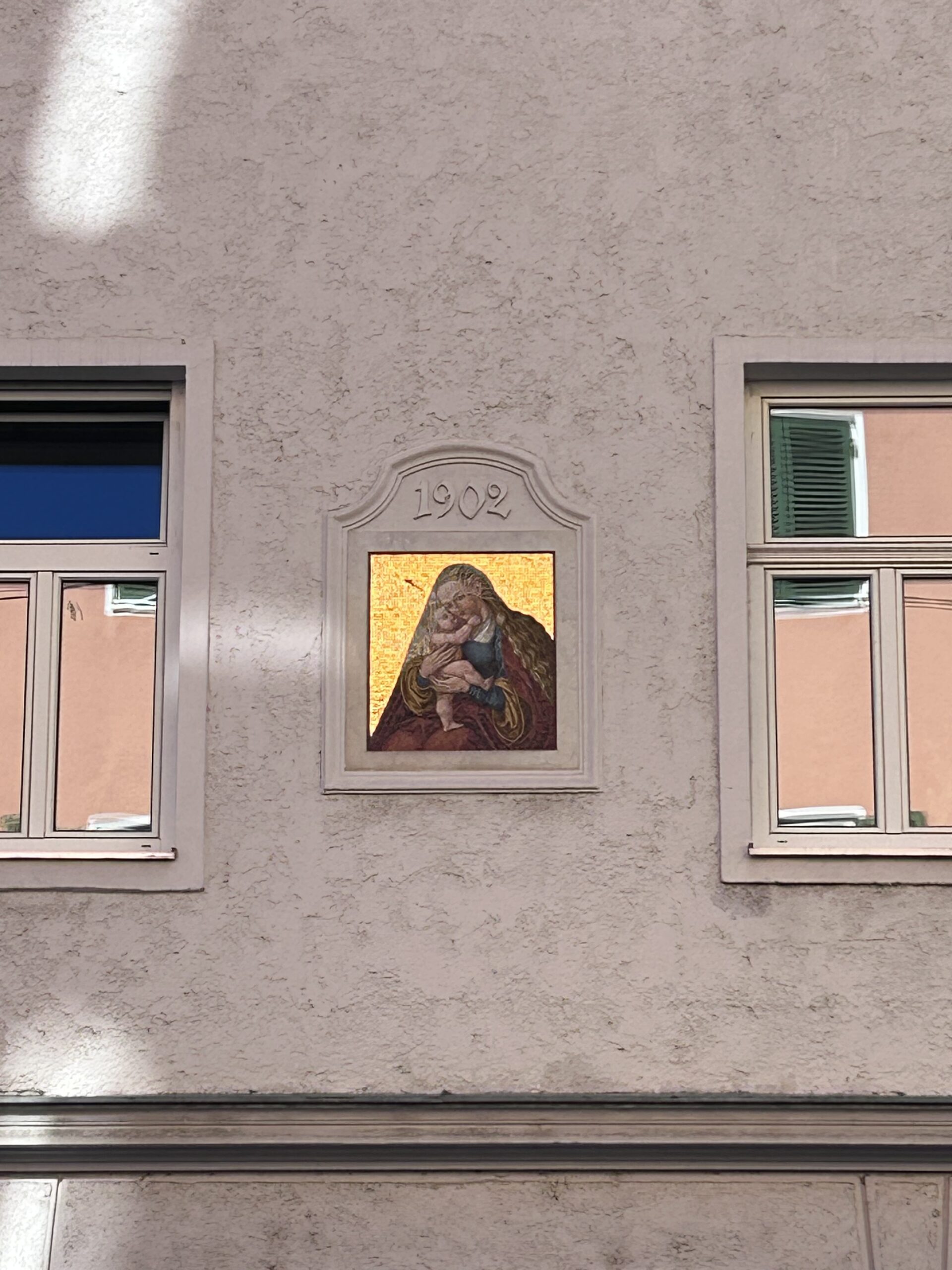
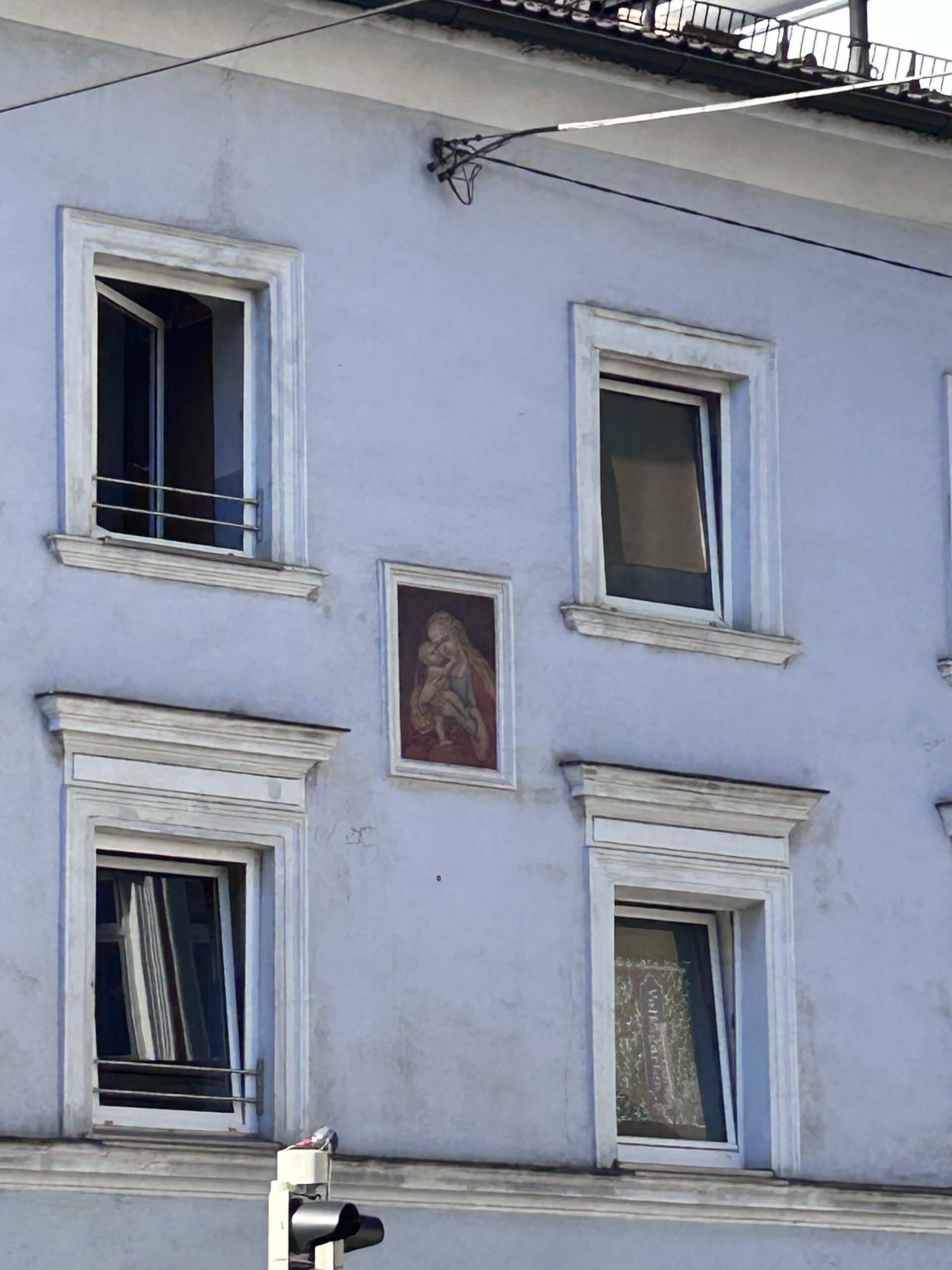
Veneration of saints and popular piety have always walked a narrow line between faith, superstition, and magic. In the Alpine regions, where people were exposed to a largely inexplicable natural environment to a greater extent than in many other areas, these forms of belief developed remarkable and locally distinctive expressions. Saints were invoked for help with a wide range of everyday concerns. Saint Anne was asked to protect the house and hearth, while prayers for a good harvest were addressed to Saint Notburga of Rattenberg, who was particularly popular in Tyrol. As the use of fertilizer and agricultural machinery increased, she later became the patron saint of women wearing traditional costume. Miners entrusted their fate in their dangerous underground work to Saint Barbara and Saint Bernard. The chapel near the manor houses in the Hall Valley (Halltal) close to Innsbruck offers a fascinating insight into a spiritual world that oscillates between the legendary figure of the Bettelwurf spirit and the worship of various local patron saints. The saint who continues to eclipse all others in veneration, however, is Mary. From the blessing of herbs on the Feast of the Assumption to the clockwise-flowing water at the monastery and pilgrimage site of Maria Waldrast at the foot of Mount Serles, and from votive paintings in churches and chapels, she is a constant and beloved presence in popular devotion. Anyone strolling attentively through Innsbruck will repeatedly encounter a particular image on building façades: the Mariahilf devotional image by Lucas Cranach the Elder (c. 1472–1553). Cranach’s Madonna is one of the most popular and frequently copied Marian images in the Alpine region. It represents a reinterpretation of the classical iconography of the Mother of God. Similar to Leonardo da Vinci’s Mona Lisa, which was created around the same time, Mary smiles enigmatically at the viewer. Cranach dispensed with all traditional forms of sacralization such as the crescent moon or halo and portrayed her in contemporary everyday clothing. The reddish-blond hair of both mother and child relocates them from Palestine to Europe. The holy and virginal Mary thus became an ordinary woman with her child, belonging to the upper middle class of the sixteenth century.
The origin, journey, and veneration of the Mariahilf devotional image encapsulate, on a small scale, the history of the Reformation, the Counter-Reformation, and popular piety in the German territories. The odyssey of this modestly sized painting (measuring just 78 × 47 cm) began in what is today Thuringia, at the princely court of the land, one of the cultural centers of Europe at the time. Elector Frederick III of Saxony (1463–1525) was a deeply devout man and possessed one of the most extensive collections of relics of his era. Despite his profound rootedness in popular belief in relics and his strong devotion to Mary, in 1518 he supported Martin Luther not only for religious reasons but also for reasons of power politics. The safe conduct granted by this powerful territorial prince and Luther’s accommodation at Wartburg Castle enabled the reformer to work on the German translation of the Holy Scriptures and on his vision of a new, reformed Church. As was customary at the time, Frederick also maintained an “art director” in his entourage: Lucas Cranach, who had served as court painter in Wittenberg since 1515. Like many artists of his time, Cranach was not only extraordinarily productive but also highly business‑minded. In addition to his artistic work, he ran both a pharmacy and a wine tavern in Wittenberg. Thanks to his wealth and social standing, he served as mayor of the town from 1528 onward. Cranach was renowned for painting quickly and in large quantities. He recognized art as a medium for capturing and disseminating both time and zeitgeist. Much like Albrecht Dürer, he produced widely circulated works of great popular appeal. His portraits of the contemporary elite continue to shape our image of early modern celebrities such as his patron Frederick, Emperor Maximilian I, Martin Luther, and his fellow artist Dürer.
At the latest through his acquaintance with the church critics Philipp Melanchthon and Martin Luther at Wittenberg Castle, Cranach became a follower of the new reformed Christianity, which at that time still lacked an official institutional form. The ambiguities in religious beliefs and practices during the period before the formal split of the Church are reflected in Cranach’s works. Despite Luther’s and Melanchthon’s rejection of the veneration of saints, Marian devotion, and iconographic imagery in churches, Cranach continued to paint according to the tastes of his patrons. Just as fluid as the confessional boundaries of the sixteenth century is the date of origin of the Mariahilf image. Cranach created it sometime between 1510 and 1537, either for the private household altar of Frederick’s sister‑in‑law, Duchess Barbara of Saxony, or for the Church of the Holy Cross in Dresden. Art historians remain divided on the issue to this day. Cranach’s close friendship with Martin Luther suggests that he may have painted the work after his conversion to Lutheranism, and that this secularized depiction of a mother and child reflects a new religious worldview. Nevertheless, it is equally plausible that the pragmatic artist produced the painting earlier, in accordance with the wishes of the patron and the fashion of the time, entirely without ideological intent and before Luther’s arrival in Wittenberg.
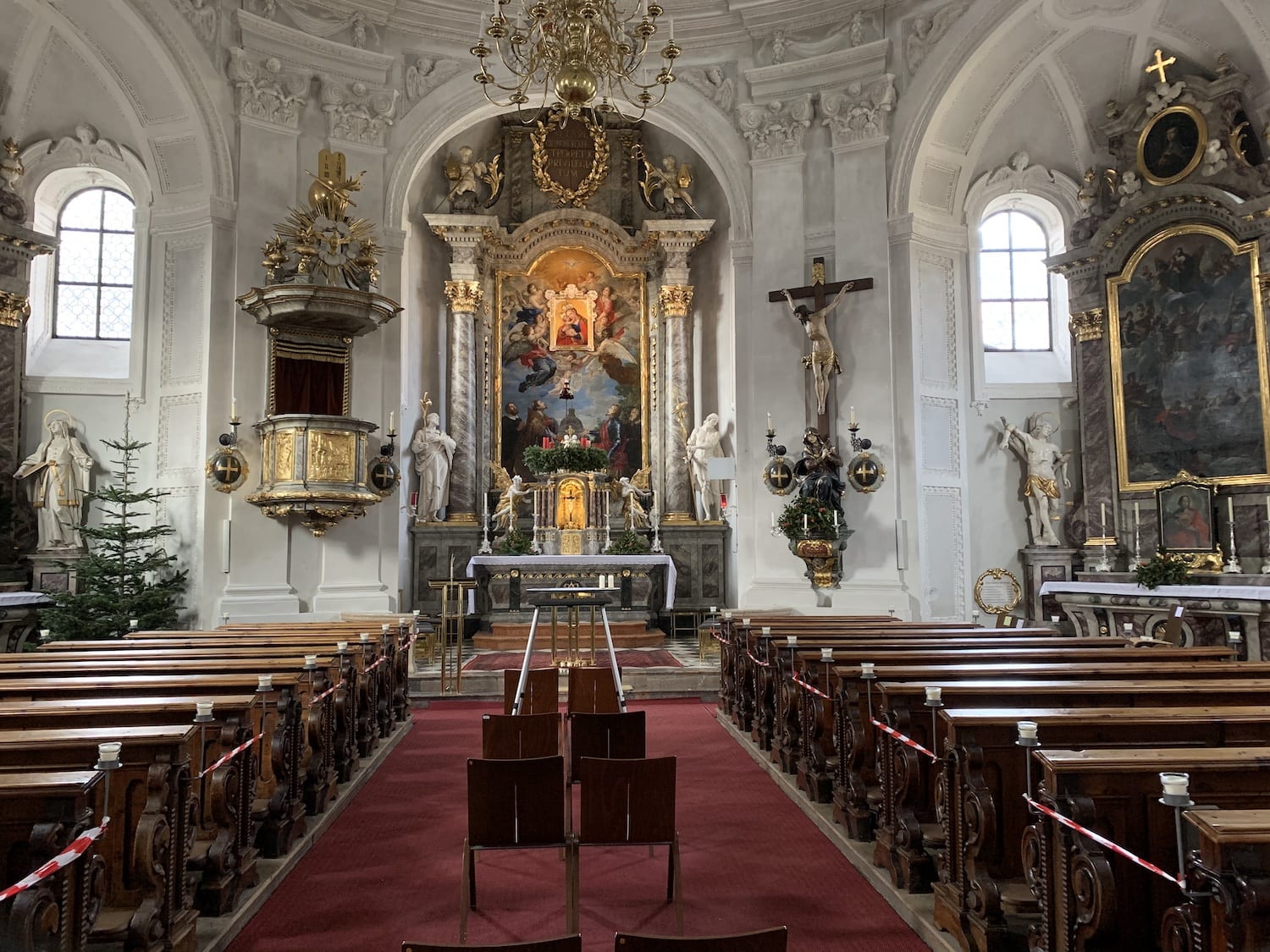
After Frederick’s death, Cranach entered the service of his successor, John Frederick I of Saxony. When his patron was taken captive by the Emperor following the Battle of Mühlberg in 1547, Cranach, despite his advanced age, followed him into captivity as far as Augsburg and Innsbruck. After five years in the retinue of this comparatively luxuriously housed hostage, Cranach returned to Wittenberg, where he died at what was, by contemporary standards, a biblical age. The Mariahilf image was probably transferred to the art chamber of the Saxon ruler during the turbulent years of the confessional wars, likely to protect it from destruction during iconoclastic outbreaks. Almost sixty-five years later, the painting, like its creator before it, would make its way to Innsbruck along circuitous paths. When the art‑loving Bishop of Passau from the House of Habsburg visited the Dresden court in 1611, he selected Cranach’s Mariahilf image as a diplomatic gift and brought it to his princely episcopal residence on the Danube. There, the cathedral dean saw the painting and was so taken with it that he commissioned a copy for his household altar. A pilgrimage cult quickly developed around the image. When, seven years later, the Bishop of Passau became Archduke Leopold V of Austria and sovereign of Tyrol, the increasingly popular painting moved with him to the Innsbruck court. His Tuscan wife, Claudia de’ Medici, diligently sustained Marian devotion in the Italian tradition even after his death. Both the Servite church and the Capuchin monastery received altars and images of the Holy Mother of God. Nonetheless, nothing surpassed the popularity of Cranach’s Mariahilf image. During the Thirty Years’ War, the painting was frequently removed from the court chapel and publicly displayed in order to protect the city. At these mass prayers, the desperate population of Innsbruck loudly implored the small image with the cry “Maria, help!”, a formula that had entered popular devotion through the Jesuits. In 1647, at a moment of greatest peril, the Tyrolean Estates vowed to build a church around the image should Mary’s protection spare the land from devastation by Bavarian and Swedish troops. That a reformed depiction of the Virgin Mary, painted by a friend of Martin Luther, was invoked to protect the city from Protestant forces is not without a certain irony.
Although the Church of Mariahilf was indeed built, the original painting was installed in 1650 in the parish church of St. James (St. Jakob) within the secure city walls, while the new church received a copy created by Michael Waldmann. This was not to be the last of its kind. Cranach’s motif and representation of the Mother of God enjoyed extraordinary popularity and can still be found today not only in churches, but also on countless private houses. Through these reproductions, art became a mass phenomenon. The Marian image had migrated from the private possession of a Saxon prince into public space. Centuries before Andy Warhol and Roy Lichtenstein, Cranach and Dürer had become intensely copied artists, and their works became part of everyday life and the visual fabric of the city. While the original Mariahilf image may hang in St. James’s Cathedral, it is the copy—and the parish that grew up around it—that gave an entire district its name.
Sights to see...
Pfarre Mariahilf
Dr.-Sigismund-Epp-Weg
Pradlerstraße
Pradlerstraße
Helblinghaus
Herzog-Friedrich-Straße 10
Mariahilfzeile & Marketplace
Mariahilfstraße / Marketplace
Dom Sankt Jakob
Domplatz
Annasäule
Maria-Theresienstrasse 31