Tyrol as a tourist destination
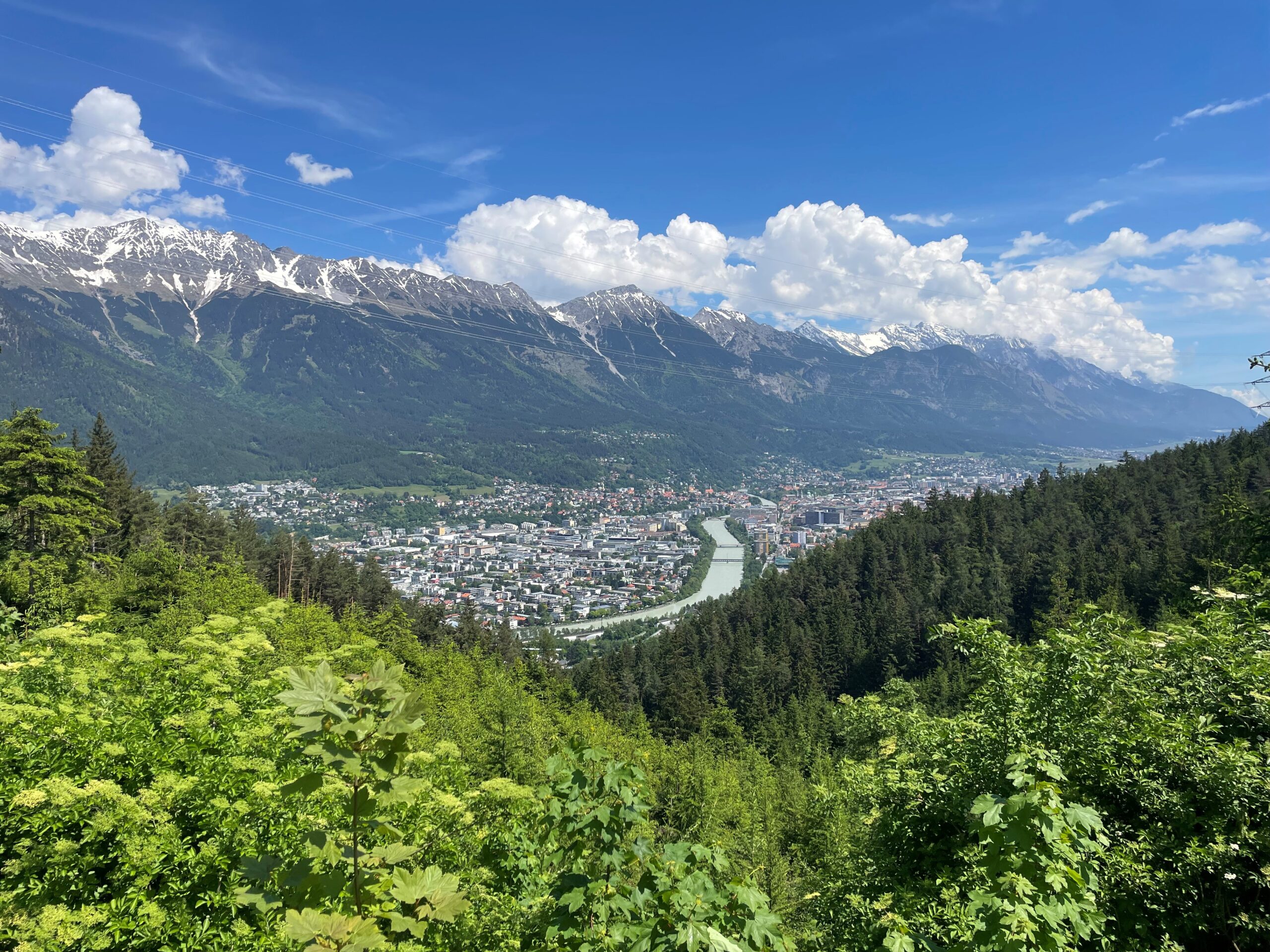
Tourism: From Alpine summer retreat to Piefke Saga
In the 1990s, an Austrian television series caused a scandal. Die Piefke Saga, written by the Tyrolean author Felix Mitterer, portrayed in four darkly humorous and revealing episodes the relationship between the German tourist family Sattmann and their hosts in a fictional Tyrolean holiday resort. Despite all justified criticism of modern tourism and its sometimes extreme excesses, one should not forget that tourism in the nineteenth century was an important driving force for the development of Innsbruck and its surroundings—not only economically. The first travellers to visit Innsbruck were pilgrims and “business people” of the early modern period. Merchants, journeymen on their travels, officials, soldiers, entourages of visiting nobility, skilled labourers, miners, clergy, pilgrims, and scholars were the earliest “tourists” attracted to the city between Italy and the German lands. Travel was expensive, dangerous, and arduous. Moreover, many subjects were not permitted to leave their place of origin without the consent of their feudal lord or abbot. Those who travelled usually did so on foot. Although Innsbruck’s inns and taverns profited from travellers as early as the Middle Ages and the early modern period, tourism in the modern sense did not yet exist. This began only when a few eccentrics were first drawn to mountain peaks. For this to happen, not only was a growing middle class required, but also a new perception of the Alps. For a long time, mountains had been regarded purely as a threat. It was primarily the British who, having explored the world’s oceans, now sought to conquer its mountain ranges as well. From the late eighteenth century onward, during the Romantic period, travel accounts began to spread the idea of the natural beauty of the Alps. The first foreign-language travel guide to Tyrol, Travels through the Rhaetian Alps by Jean François Beaumont, appeared in 1796. In addition to the alpine scenery, it was also the “wild and exotic natives” of Tyrol that fascinated international audiences. The bearded rebel Andreas Hofer, who had managed to challenge Napoleon’s army with a peasant force, attracted as much attention in Britain—the traditional enemy of France—as among German nationalists north of the Alps, who saw in him a kind of proto-German figure. Tyroleans were perceived as a stubborn, archetypal, and untamed people, comparable to the Germanic tribes under Arminius who had once resisted the Roman Empire. Descriptions of Innsbruck by authors such as Beda Weber (1798–1858), along with other travel accounts in the rapidly expanding press landscape, helped shape an attractive image of the city.
The next step was to make the wild Alpine environment accessible to a growing number of tourists who wished to emulate early adventurers, even if their willingness to take risks and their physical fitness fell short. In 1869, the German Alpine Club established a section in Innsbruck, following the relatively unsuccessful founding of the Austrian Alpine Club in 1862. Driven by the Greater German idea shared by many members, the two associations merged in 1873. To this day, the Alpine Club retains a largely bourgeois character, while its social-democratic counterpart is the organisation Naturfreunde. The network of hiking trails expanded, as did the number of mountain huts capable of hosting guests. As a transit region, Tyrol already possessed numerous mule tracks and footpaths that had existed for centuries and now formed the basis for alpine tourism. Small inns, farms, and stations along postal routes served as accommodation. Key figures such as the Tyrolean theologian Franz Senn (1831–1884) and Adolf Pichler (1819–1900) were instrumental in surveying Tyrol and creating maps. Contrary to popular belief, the Tyroleans were not born mountaineers but had to learn how to master the alpine environment; previously, mountains had been viewed mainly as dangerous obstacles in agricultural life. The Alpine clubs also trained mountain guides. Around the turn of the century, skiing began to gain popularity alongside hiking and mountaineering. Ski lifts did not yet exist; to climb mountains, skins were attached to skis—a practice still used in ski touring today. Only from the 1920s onward, with the construction of cable cars to the Nordkette and Patscherkofel, did a wealthier clientele begin to enjoy the modern luxury of mechanised mountain access.
This development required new hotels, cafés, inns, shops, and modes of transport to meet the needs of visitors. Guests accustomed to running water and telephones in cities like London or Paris were not willing to accept basic conditions such as outdoor toilets. Inns of the first and second class were suitable for transit travellers but not equipped for more discerning tourists. Until the nineteenth century, innkeepers in Innsbruck and the surrounding villages belonged to the upper middle class in terms of income, but their profession was not considered particularly prestigious. Many were farmers who supplemented their income by serving food and drink. As local meeting points and hubs in postal and goods networks, inns were centres of information, yet innkeeping did not carry the status of a guild profession or bourgeois occupation. This changed with the professionalisation of tourism. Entrepreneurs such as Robert Nißl, who acquired Büchsenhausen Castle in 1865 and transformed it into a brewery, or Johann Gruber of the inn Zum Riesen Haymon, invested in tourism infrastructure. Former aristocratic estates such as Weiherburg were converted into inns and hotels. In Innsbruck, the true transformation did not occur on the barricades of 1848 but later, within the tourism sector, as ambitious citizens replaced aristocrats as owners of estates.
The Österreichischer Hof, opened in 1849, dominated early modern hospitality but was not yet a true grand hotel. That distinction only came with the opening of the Grand Hotel Europa in 1869. In 1892, the Habsburger Hof followed, offering modern comforts such as electric lighting—a sensation at the time. Hotels like the Kaiserhof and Arlberger Hof were located near the railway station, which at the time represented the centre of modern urban life rather than the congested traffic hubs of today.
Visitor numbers grew steadily. Shortly before the First World War, Innsbruck recorded around 200,000 guests annually. A report from June 1896 noted:
“Tourism in Innsbruck in the month of May amounted to 5,647 persons, including 2,763 from Austria-Hungary, 1,974 from the German Empire, 282 English, 65 Italians, 68 French, 53 Americans, 51 Russians, and 388 from various other countries.”
In addition to the sheer number of travellers influencing life in the small town of Innsbruck, it was also the international character of its visitors that gradually gave the city a new face. Beyond purely tourist infrastructure, general modern developments were also accelerated. Wealthy guests could hardly be expected to frequent inns with cesspits behind the building. While a sewage system would inevitably have been built sooner or later, the economic importance of tourism enabled and accelerated the allocation of funds for the major infrastructure projects of the turn of the century. This transformation affected not only the city’s appearance but also the everyday lives and working conditions of its inhabitants. Enterprising individuals such as Heinrich Menardi succeeded in expanding the value chain by offering paid leisure activities in addition to accommodation and food. In 1880, he founded the carriage hire and later automobile rental service Heinrich Menardi for excursions into the Alpine surroundings. Initially using horse-drawn carriages, and after the First World War buses and cars, affluent tourists were transported as far as Venice. The company still exists today and is now headquartered in the Menardi building at Wilhelm‑Greil‑Straße 17, opposite Landhausplatz, although it has since shifted from transport and trade to the more lucrative real estate sector. Local retail also benefited from the affluent international clientele. By 1909, there were already three dedicated tourist equipment shops in the city, alongside the fashionable department stores that had opened just a few years earlier.
Innsbruck and its surrounding areas also became known for spa tourism—the precursor of today’s wellness industry—where wealthy guests recovered from a wide range of ailments in an alpine environment. Spa facilities existed in Egerdach near Amras, in Mentlberg, and in Mühlau. Establishments such as the Igler Hof (then the Grand Hotel Igler Hof) and the Sporthotel Igls still retain some of the charm of that era. Michael Obexer, founder of the spa resort in Igls and owner of the grand hotel, was a pioneer of tourism. Although these facilities never achieved the international fame of major spa destinations such as Bad Ischl, Marienbad, or Baden near Vienna—as evidenced by historical photographs and postcards—the treatments offered, including brine baths, steam therapies, gymnastics, and even “magnetism,” corresponded to what was considered state of the art at the time and still partially resonates in today’s wellness practices. Perhaps the most spectacular tourism project Innsbruck ever experienced was “Hoch‑Innsbruck,” today known as the Hungerburg. Not only the funicular railway and hotels were built there; even an artificial lake was created after the turn of the century to attract visitors.
One of the former landowners in the Hungerburg area and a pioneer of Innsbruck tourism, Richard von Attlmayr, played a key role in the predecessor organisation of today’s tourism association. Since 1881, the Innsbruck Beautification Association had been concerned with meeting the growing needs of visitors. The association developed walking and hiking paths, installed benches, and opened up hard-to-access areas such as the Mühlauer Gorge and the Sill Gorge. The distinctive green benches along many paths still serve as a reminder of this organisation, which continues to exist today. Seven years later, in 1888, those benefiting from tourism in Innsbruck founded the Commission for the Promotion of Tourism, the predecessor of today’s tourism board. Through joint efforts in marketing and quality assurance among accommodation providers, businesses hoped to further stimulate tourism.
“Each year the number of overseas pilgrims visiting our country and its glacier-crowned mountains increases, much to the annoyance of our friendly Swiss neighbours, and many a fine dollar is left behind. The English are beginning to find Tyrol just as interesting as Switzerland, and the number of French and Dutch visitors spending the summer here grows year by year.”
Postcards became the first mass-market “influencers” in the history of tourism. Many businesses produced their own postcards, and publishers created countless images of the city’s most popular sights. It is striking what was considered worth seeing at the time. Unlike today, it was primarily the modern achievements of the city that were depicted: the Leopold Fountain, the city café near the theatre, the chain bridge, the cog railway to the Hungerburg, or the Stefansbrücke (opened in 1845), a stone arch bridge crossing the Sill. Andreas Hofer also served as an effective testimonial on postcards: the Schupfen inn, where he had established his headquarters, and the Bergisel with the large Andreas Hofer monument were popular motifs.
In 1914, Innsbruck had 17 hotels attracting visitors, supplemented by summer and winter holidaymakers in Igls and the Stubai Valley. The First World War abruptly brought this first wave of tourism to an end. Just as tourism began to recover in the late 1920s, the global economic crisis and Hitler’s 1,000-mark travel restriction in 1933—introduced to pressure the Austrian government into lifting the ban on the Nazi Party—dealt further blows.
It took the economic boom of the 1950s and 1960s to revive tourism in Innsbruck after the destruction. Between 1955 and 1972, overnight stays in Tyrol increased fivefold. Following the hardships of the war years and the reconstruction of Europe’s economy, tourism became a stable source of income for Tyrol and Innsbruck, extending even beyond official hotels and guesthouses. Many Innsbruck families crowded more tightly into their already small apartments in order to rent out beds to foreign guests and supplement their income. Tourism not only brought foreign currency but also enabled locals to develop a new sense of identity, both internally and externally. At the same time, increasing prosperity allowed more Innsbruck residents to travel abroad themselves. The beaches of Italy became particularly popular destinations. Former wartime enemies thus became guests and hosts to one another.
Sights to see...
Tram line 6
Stops: Mühlau - Igls
Sill Gorge
Wilten
Haymon Giant Inn
Haymongasse 4
Villa Blanka & Voliere
Weiherburggasse 31
Mentlberg Castle & Pilgrimage Church
Mentlberg 23
Mountain Isel
Mountain Isel 1
Weiherburg & Alpine Zoo
Weiherburggasse 37-39
Büchsenhausen Castle
Weiherburggasse 3-13
ÖBB Administrative Building
Claudiastrasse 2
Hungerburgbahn & Nordkettenbahn
Congress Centre / Rennweg 39
Gasthof Goldener Adler
Herzog-Friedrich-Straße 6