Innsbruck's industrial revolutions
Innsbruck's industrial revolutions
Innsbruck has always seen itself primarily as a city of trade, tourism, and academia. In reality, however, manufacturing and productive industries have played a significant role in its history. As early as the fifteenth century, a proto‑industrial form of production began to emerge from traditional crafts. Metalworking flourished in the booming residential city, driven by the construction boom and the demand for weapons and armour. A combination of factors made this possible: the city’s favourable transport connections, the availability of water power, Innsbruck’s political rise, the craftsmanship of its artisans, and access to capital under Maximilian all contributed to the development of necessary infrastructure. Bell founders and armaments manufacturers such as the Löffler family established workshops in Hötting, Mühlau, and Dreiheiligen that ranked among the leading enterprises of their time in Europe. Along the Sill Canal, mills and workshops harnessed water power as an energy source. Powder mills and silver smelting works were located in Silbergasse, today’s Universitätsstraße. In what is now Adamgasse, close to the city, a munitions factory once stood, which exploded in 1636.
The wealth generated by metalworking stimulated other sectors of the economy. By the early seventeenth century, around 270 businesses were operating in Innsbruck, providing employment for masters, journeymen, and apprentices. Although most of the population was still engaged in administration, trade and craft industries—and the money they generated—began to attract a new social stratum. This led to a redistribution within the city. Citizens and businesses gradually displaced officials and members of the aristocracy from the Neustadt. Many of the Baroque palazzi that now line Maria‑Theresien‑Straße were built during this period, while districts such as Dreiheiligen and St. Nikolaus developed into industrial and working‑class quarters. In addition to metalworking in the Silbergasse area, tanners, carpenters, wagon makers, builders, stonemasons, and other crafts associated with early industrialisation settled here.
Industrial development reshaped not only the social structure through the influx of new workers and their families, but also the physical appearance of Innsbruck. Workers, unlike peasants, were not subjects bound to a feudal lord, even if they remained subordinate to the strict authority of their employers. Entrepreneurs were not of noble birth, yet often possessed greater financial resources than the aristocracy. Traditional hierarchies still existed but began to show signs of strain. The new bourgeoisie introduced new fashions and dressed differently. Capital from outside flowed into the city. Housing and churches were built for the incoming population. The working‑class districts outside the city walls were viewed with suspicion by long‑time residents, not least because overcrowded conditions were believed to foster outbreaks of plague. Large workshops altered both the smell and soundscape of the city. Industrial sites were noisy, and smoke from furnaces polluted the air. Innsbruck had evolved from a small settlement at the Inn Bridge into a proto‑industrial town.
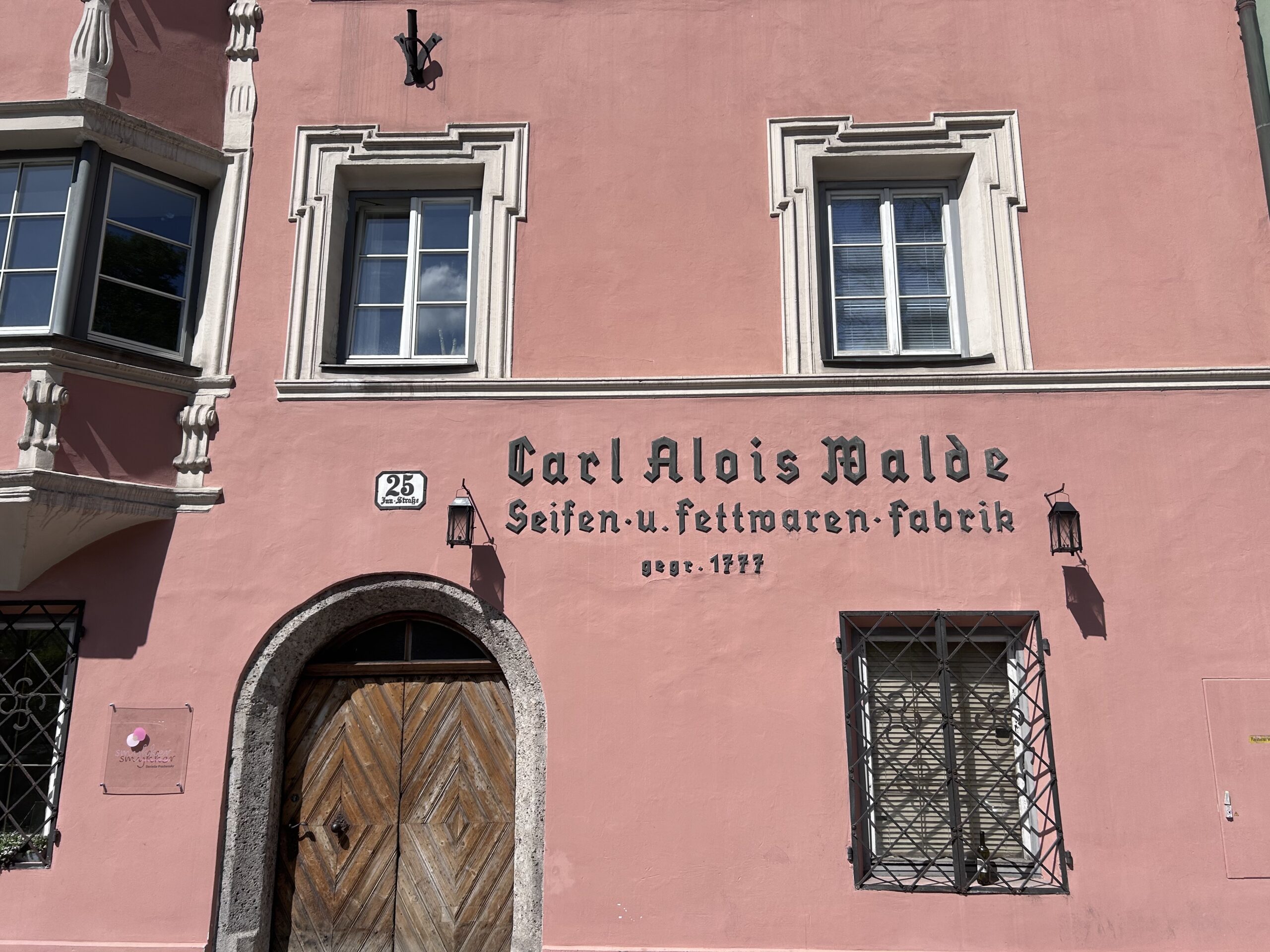
Growth was interrupted for several decades at the end of the eighteenth century by the Napoleonic Wars. Compared to other parts of Europe, the second wave of industrialisation arrived relatively late in Innsbruck. One reason was the delayed development of a functioning banking system. For devout Catholics, bankers were still regarded as “usurers and moneylenders,” and financial dealings were considered morally questionable. Without access to credit, however, large enterprises could not be established. Although the Tyrolean provincial government had founded the Banko as early as 1715 and a private bank operated in Herzog‑Friedrich‑Straße, it was only with the establishment of a branch of the savings bank that people no longer had to keep their money hidden at home. From around 1850 onwards, credit became available, enabling the creation of larger local enterprises. Traditional crafts—both urban guild-based workshops and seasonal rural production—came under pressure from modern industrial manufacturing. Modern factories emerged in St. Nikolaus, Wilten, Mühlau, and Pradl along the Mühlbach and Sill Canal. Many innovative entrepreneurs came from outside Innsbruck. In what is now Innstraße 23, Peter Walde, who had moved from Lusatia to Innsbruck, founded a business in 1777 producing goods derived from fats, such as tallow candles and soap. Eight generations later, Walde remains one of Austria’s oldest family businesses, and its historic headquarters—with its Gothic vaulted ceilings—still sells soaps and candles today. Franz Josef Adam, originally from the Vinschgau, established what became the city’s largest brewery in a former aristocratic residence. In 1838, the spinning machine arrived in Pradl via the Dornbirn firm Herrburger & Rhomberg, bringing textile production into the region. The company had acquired land along the Sill floodplain, where water power provided ideal conditions for operating heavy machinery. Alongside wool, cotton was now also processed.
As 400 years earlier, the Second Industrial Revolution fundamentally transformed both the city and the daily lives of its inhabitants. Districts such as Mühlau, Pradl, and Wilten expanded rapidly. Factories were often located directly within residential areas. Around 1900, more than twenty enterprises were still using the Sill Canal. The Haidmühle in Salurnerstraße operated from 1315 to 1907. A textile factory in Dreiheiligenstraße was also powered by the canal. Noise and emissions from machinery placed heavy burdens on residents, as described in a newspaper article from 1912:
“The installation of an explosion engine in the Hibler fig‑coffee factory near the main railway station has caused outrage among the residents of the surrounding district. The noise produced by this machine throughout most of the day is extremely disturbing and diminishes the value of nearby dwellings. The once highly sought-after garden rooms in hotels on Bahnhofplatz are now scarcely rentable. Even worse than the noise, however, is the smoke and stench produced by the new machine…”
Aristocrats who had relied too long on inherited wealth were increasingly forced to sell their estates to the rising bourgeoisie. For example, Palais Sarnthein—originally built in 1689—was later used by a weapons manufacturer and merchant, Johann Peterlongo. Some members of the aristocracy adapted successfully, investing their resources in industrial ventures. The growing demand for labour was met by former farmhands and landless peasants. While wealthy entrepreneurs built villas in Wilten, Pradl, and Saggen, and middle-class employees occupied urban housing, workers were often accommodated in dormitories or mass housing. Twelve-hour shifts in cramped, noisy, and polluted conditions placed heavy demands on labourers. Child labour was not restricted until the 1840s, and women earned only a fraction of men’s wages. Workers were often dependent on company-owned housing and lacked legal protections. Social security systems did not yet exist; those unable to work depended on charitable support from their home communities. It should be noted that these harsh conditions were not entirely new but evolved from rural life, where inequality, child labour, and precarious work had been common.
However, industrialisation did not only affect everyday material life. Innsbruck experienced the kind of gentrification that can be observed today in trendy urban neighbourhoods such as Prenzlauer Berg in Berlin. The change from the rural life of the village to the city involved more than just a change of location. In one of his texts, the Innsbruck writer Josef Leitgeb tells us how people experienced the urbanisation of what was once a rural area:
“…a great many strangers, poorly dressed, crowded into growing housing blocks, filling the streets morning, noon, and evening as they went to and from work… faces pale and prematurely aged, lacking individuality in posture, speech, and clothing—no longer individuals, but a uniform, endlessly repeatable urban working class… The railway station and the gasworks seemed to be the core of this new and profoundly alien landscape.”
After 1848, many Innsbruck residents experienced a process of “bourgeoisification.” Stories of upward mobility through diligence, talent, and opportunity became more common. Notable examples still in existence include the Tyrolean glass painting workshop, the Hörtnagl food business, and the Walde soap factory. Successful entrepreneurs came to occupy roles once held by the landed nobility, forming вместе with academics a new influential social class. Even workers experienced a degree of bourgeois emancipation. Unlike peasants bound to feudal lords, they now received wages instead of subsistence and gained some autonomy over their private lives. Together with the many academics, they formed a new social class that increasingly gained political influence. As early as 1851, Beda Weber remarked approvingly: “Their social circles are unforced; one already senses something distinctly metropolitan, something not easily found elsewhere in Tyrol.”
The workers also became bourgeois. While the landlord in the countryside was still master of the private lives of his farmhands and maidservants and was able to determine their lifestyle up to and including sexuality via the release for marriage, the labourers were now at least somewhat freer individually. They were poorly paid, but at least they now received their own wages instead of board and lodging and were able to organise their private affairs for themselves without the landlord's guardianship.
However, the downside of this newly gained autonomy became particularly apparent in the early decades of industrialisation. There was little state infrastructure for healthcare or family support. Health insurance, pensions, retirement homes, and childcare facilities did not yet exist; previously, these functions had largely been fulfilled within extended rural families. In working-class districts, unsupervised children were a common sight during the day—especially the youngest, who were not yet subject to compulsory schooling. In response, a women’s association was founded in 1834 following an appeal by the Tyrolean provincial governor. It established childcare institutions in working-class districts such as St. Nikolaus, Dreiheiligen, and Angerzell (today’s Museumstraße). Their aim was not only to keep children off the streets and provide them with food and clothing, but also to instill manners, modest behaviour, and moral discipline. Under strict supervision, caretakers ensured “cleanliness, order, and obedience,” thereby providing at least a basic level of care. The former childcare institution in Paul‑Hofhaimer‑Gasse behind the Ferdinandeum still exists today. The neoclassical building now houses a Caritas integration kindergarten and a daycare center for employees of the State of Tyrol.
Innsbruck never became a traditional industrial working‑class city. Even so, a significant labour movement—such as that found in Vienna—never truly developed in Tyrol. While there were Social Democrats and a small number of Communists, the working class remained too small to exert substantial political influence. May Day marches, for example, are attended by many primarily for inexpensive food and free beer rather than political engagement. More broadly, there are few memorial sites dedicated to industrialisation and the achievements of the working class. Only in places such as St.-Nikolaus-Gasse or in some tenement buildings in Wilten and Pradl have structures survived that offer a glimpse into the everyday life of Innsbruck’s workers.
Sights to see...
Adambräu & Ansitz Windegg
Adamgasse 23
Tyrolean Glass Painting and Mosaic Institute
Müllerstrasse 10
Rapoldi Park
Leipziger Platz
Power station & Casino
Salurnerstrasse 11 - 15
Leopoldstraße & Wiltener Platzl
Leopoldstrasse
Villa Epp
Hunoldstraße 10
Pradlerstraße
Pradlerstraße
Büchsenhausen Castle
Weiherburggasse 3-13
Workers' housing & Weyrer area
Ferdinand-Weyrer-Straße
Chamber of Commerce
Meinhardstraße 12
Church of the Holy Trinity
Dreiheiligenstraße 10
Armoury
Zeughausgasse 1