The master builders Gumpp and the baroqueisation of Innsbruck
The master builders Gumpp and the baroqueisation of Innsbruck
The works of the Gumpp family still strongly characterise the appearance of Innsbruck today. The baroque parts of the city in particular can be traced back to them. The founder of the dynasty in Tyrol, Christoph Gumpp (1600-1672), was actually a carpenter. However, his talent had chosen him for higher honours. The profession of architect or artist did not yet exist at that time; even Michelangelo and Leonardo da Vinci were considered craftsmen. After working on the Holy Trinity Church, the Swabian-born Gumpp followed in the footsteps of the Italian master builders who had set the tone under Ferdinand II. At the behest of Leopold V, Gumpp travelled to Italy to study theatre buildings and to learn from his contemporary style-setting colleagues his expertise for the planned royal palace. Comedihaus aufzupolieren. Seine offizielle Tätigkeit als Hofbaumeister begann 1633. Neue Zeiten bedurften eines neuen Designs, abseits des architektonisch von der Gotik geprägten Mittelalters und den Schrecken des Dreißigjährigen Krieges. Über die folgenden Jahrzehnte wurde Innsbruck unter der Regentschaft Claudia de Medicis einer kompletten Renovierung unterzogen. Gumpp vererbte seinen Titel an die nächsten beiden Generationen innerhalb der Familie weiter. Die Gumpps traten nicht nur als Baumeister in Erscheinung. Sie waren Tischler, Maler, Kupferstecher und Architekten, was ihnen erlaubte, ähnlich der Bewegung der Tiroler Moderne rund um Franz Baumann und Clemens Holzmeister Anfang des 20. Jahrhunderts, Projekte ganzheitlich umzusetzen. Auch bei der Errichtung der Schanzwerke zur Landesverteidigung während des Dreißigjährigen Krieges waren sie als Planer beteiligt. Christoph Gumpps Meisterstück aber war die Errichtung des Comedihaus im ehemaligen Ballhaus. Die überdimensionierten Maße des damals richtungsweisenden Theaters, das in Europa zu den ersten seiner Art überhaupt gehörte, erlaubte nicht nur die Aufführung von Theaterstücken, sondern auch Wasserspiele mit echten Schiffen und aufwändige Pferdeballettaufführungen. Das Comedihaus war ein Gesamtkunstwerk an und für sich, das in seiner damaligen Bedeutung wohl mit dem Festspielhaus in Bayreuth des 19. Jahrhunderts oder der Elbphilharmonie in Hamburg heute verglichen werden muss.
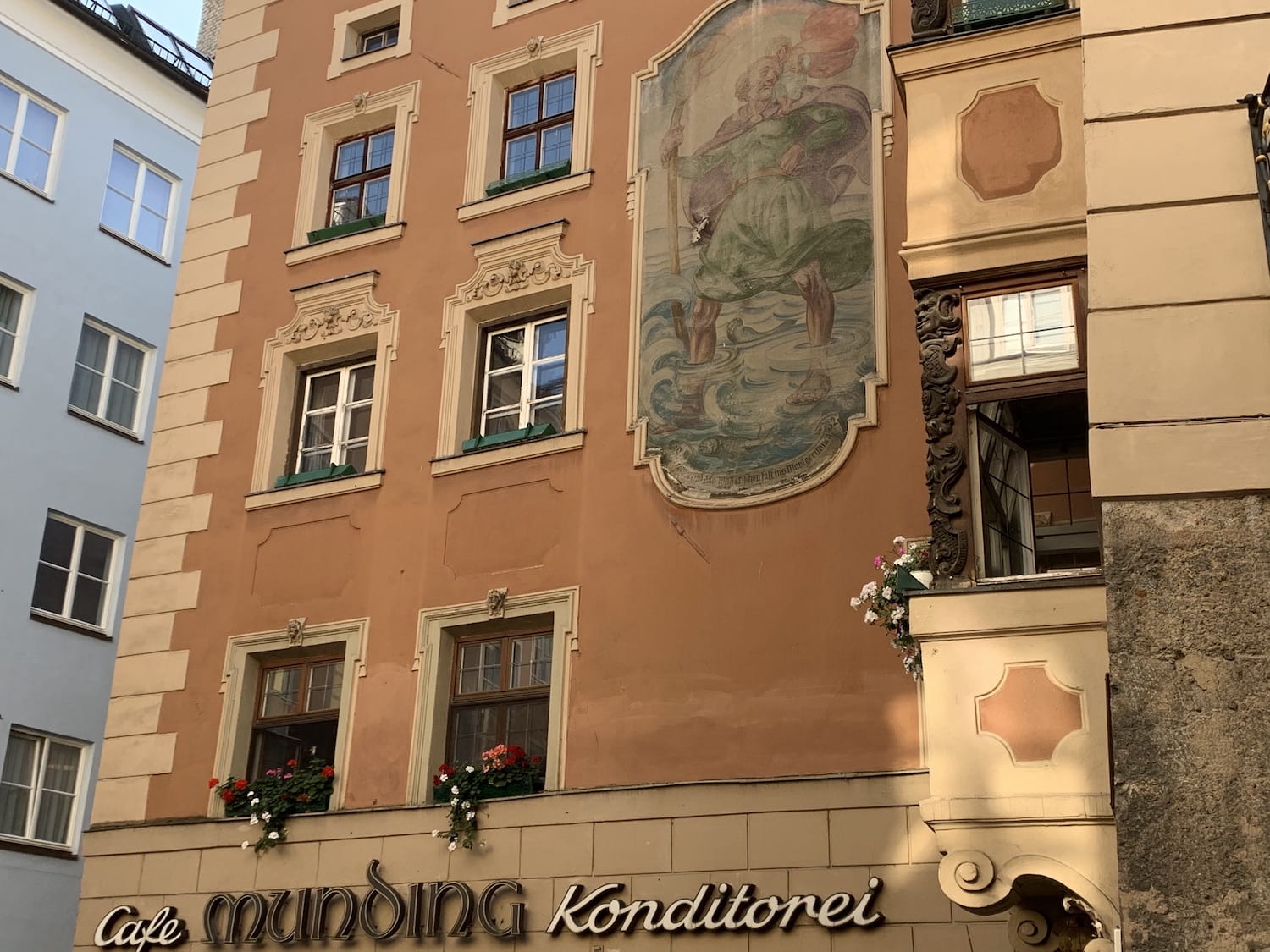
His descendants Johann Martin Gumpp the Elder, Georg Anton Gumpp and Johann Martin Gumpp the Younger were responsible for many of the buildings that still characterise the townscape today. The Wilten collegiate church, the Mariahilfkirche, the Johanneskirche and the Spitalskirche were all designed by the Gumpps. In addition to designing churches and their work as court architects, they also made a name for themselves as planners of secular buildings. Many of Innsbruck's town houses and city palaces, such as the Taxispalais or the Altes Landhaus in Maria-Theresien-Straße, were designed by them. With the loss of the city's status as a royal seat, the magnificent large-scale commissions declined and with them the fame of the Gumpp family. Their former home is now home to the Munding confectionery in the historic city centre. In the Pradl district, Gumppstraße commemorates the Innsbruck dynasty of master builders.
Sights to see...
Palais Ferrari & Old Garrison Hospital
Weinhartstrasse 2 - 4
Pfarre Mariahilf
Dr.-Sigismund-Epp-Weg
Johanneskirche
Bischof-Reinhold-Stecher-Platz
Büchsenhausen Castle
Weiherburggasse 3-13
Palais Fugger-Taxis & Altes Landhaus
Maria-Theresienstrasse 45 / 43
Wilten Abbey & Basilica
Klostergasse 7 / Pastorgasse 2
Cafe Munding
Kiebachgasse 16 / Mundingplatz
Claudiana – Altes Regierungsgebäude
Herzog-Friedrich-Straße 3
Servitenkirche
Maria-Theresienstrasse 42
Tyrolean State Theatre & Congress Centre
Rennweg 3
Hofburg
Rennweg 1
Hospital church & old city hospital
Maria-Theresien-Strasse 2