
The power of geography
Die Innsbrucker Stadtgeschichte wird von einigen nicht verhandelbaren und unveränderbaren Faktoren streng beeinflusst.
Die Innsbrucker Stadtgeschichte wird von einigen nicht verhandelbaren und unveränderbaren Faktoren streng beeinflusst.

As part of the Roman Empire, Innsbruck was integrated into the European economic area.

Über Jahrhunderte prägte der Abt des Stiftes Wilten das Leben im Inntal auch in politischer Hinsicht.

Of giants, the foundation of Wilten Abbey and the Bavarian conquest of land after the end of the Roman Empire.

The Counts of Andechs were bailiffs of the Bishop of Brixen and are considered the founders of the city of Innsbruck.

The abundance of churches, Christian buildings, monuments and symbols in Innsbruck's public spaces is astonishing for many visitors from other countries.

So what exactly is this Holy Roman Empire of the German Nation?

Innsbruck, today a self-proclaimed cosmopolitan city, had developed from a Roman castle into a town.

Innsbruck had been part of the House of Habsburg since 1363
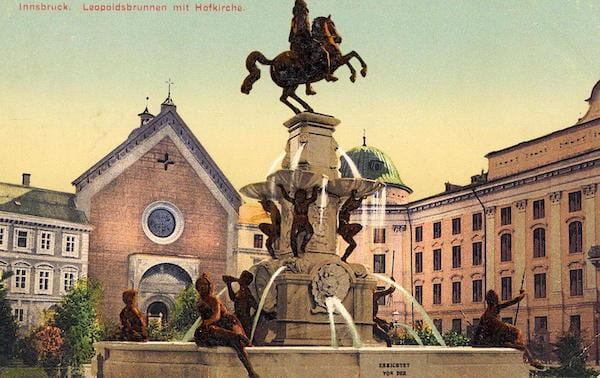
The Habsburgs shaped Europe for over 700 years. Innsbruck was repeatedly the centre of this ruling dynasty.

Many Tyroleans still like to see themselves as a separate nation.

Frederick IV made Innsbruck the residential city of the Tyrolean provincial government

On the underestimated role of bureaucracy and administration over the centuries.

One of the most popular Habsburgs in Innsbruck's history bears the nickname "the rich in coin"
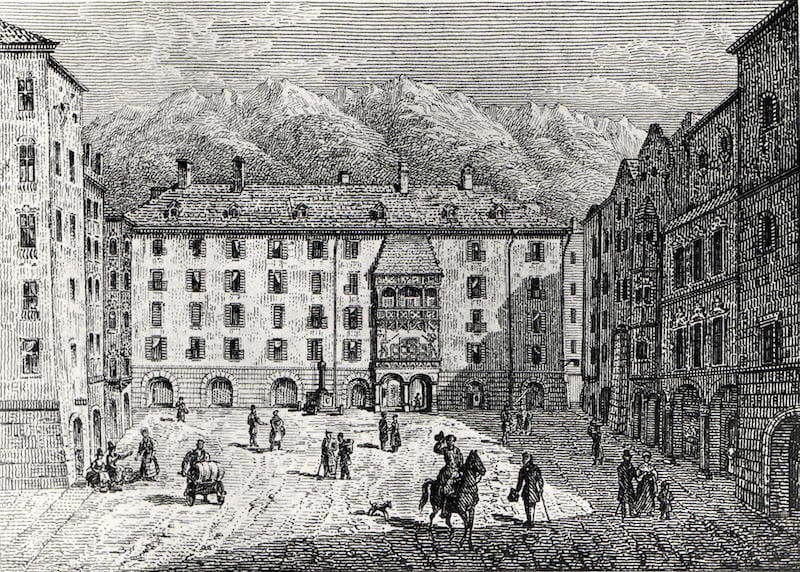
In 1485, a curiosity took place in Innsbruck that was to have a major impact on a dark chapter in European history for centuries to come.

For centuries, the vast majority of people worked in agriculture. On the outskirts of Innsbruck we can still find evidence of the farming community.

The Türings were a family of stonemasons and master builders who completely transformed Innsbruck in the 15th century.

Maximilian I is perhaps the most popular figure in Innsbruck's history.
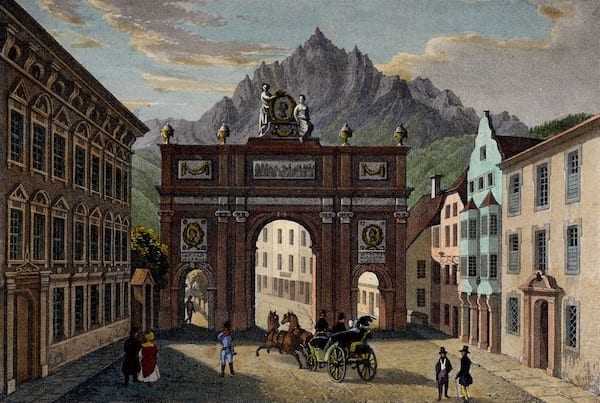
The Thurn und Taxis family is an example of the rise of a company in the period around 1500.

Jakob Fugger was not only the emperor's court banker, he also influenced the history of Tyrol and Innsbruck.

Around 1500, new ideas in all areas of life began to herald the end of the Middle Ages.

Jakob Hutter and Michael Gaismair acted as theological and social reformers and revolutionaries.
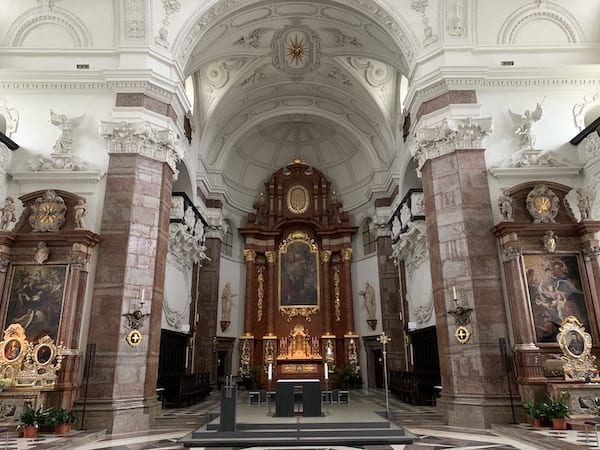
No order exerted greater influence on the fate of the city than the soldiers of Christ

Archduke Ferdinand II of Austria is one of the most colourful figures in Tyrolean history.

The commoner Philippine Welser is one of the most popular members of the House of Habsburg in Innsbruck's history.
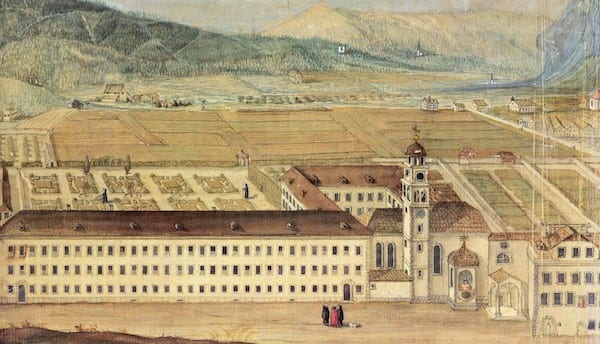
Anna Catarina Gonzaga's life was characterised by the Counter-Reformation and the constraints of the European high aristocracy

Two influential Grand Masters of the Teutonic Order have a strong connection to Innsbruck.

Baroque was not just a style, it was an attitude to life that began in the middle of the 17th century.

The works of the Gumpp family still strongly characterise the appearance of Innsbruck today.
Under Leopold and Claudia de Medici, Innsbruck finally acquired its Baroque appearance.

The Mariahilf miraculous image tells the story of the confessional conflicts of the early modern period in Europe.
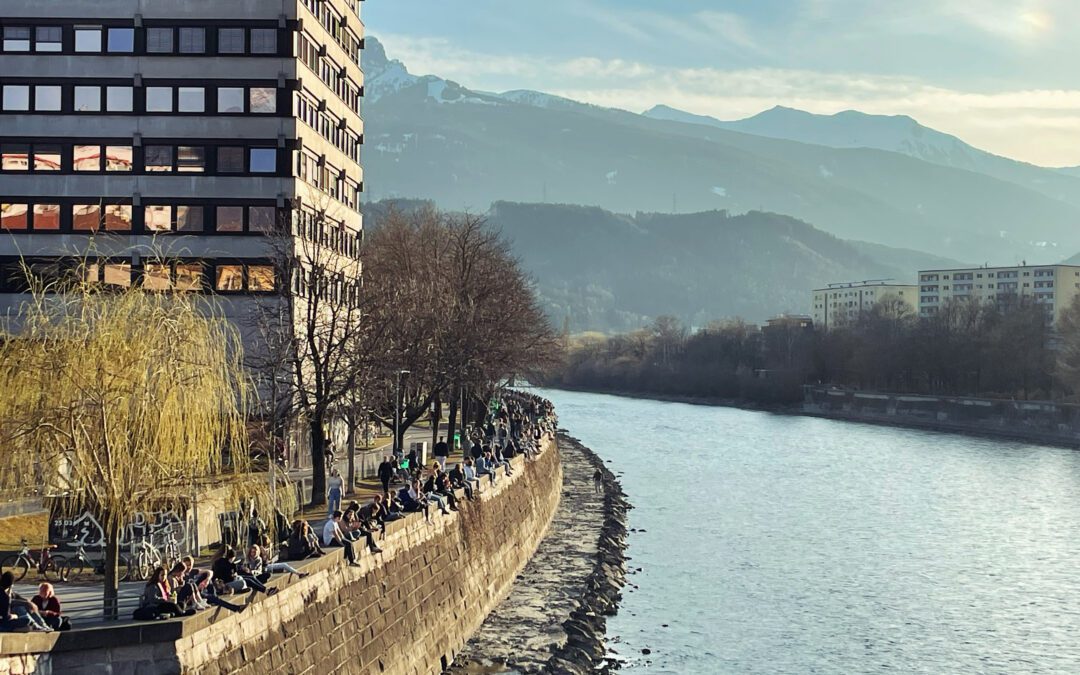
Since 1669, the university has been more than just an educational institution. In many respects, Innsbruck would not be the same city without its students.
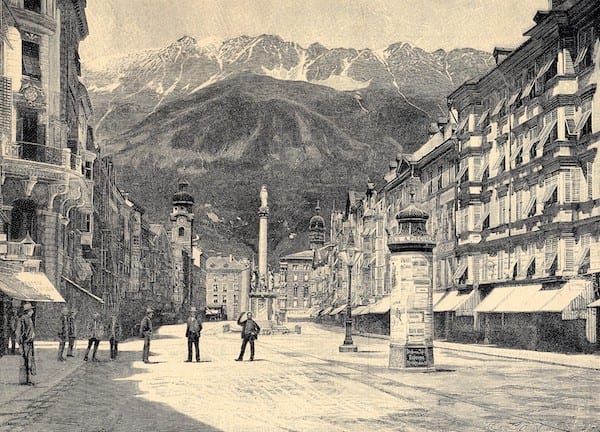
The Boarische Rummel illustrates how a small town like Innsbruck could get caught up in the turmoil of world politics.
Austria's most famous monarch also contributed to Innsbruck's image.

From the beginnings of the enlightened, bourgeois age and coffee house culture in Innsbruck

The first half of the 19th century was characterised by many wars.

The Napoleonic Wars gave the province of Tyrol a national epic and a hero whose splendour still shines today.

The time after the Napoleonic Wars was hard.

Tyrol was a long way from civil war and uprisings, but the March Revolutions nevertheless brought about many changes in the political and social structure.

Adolf Pichler legte in seinem langen Leben eine bemerkenswerte Karriere in vielerlei Hinsicht hin.

The city of Innsbruck was significantly shaped by two industrial revolutions.

In the society of the Danube Monarchy, which was not yet regulated down to the last detail, hard-working and capable people from the peasantry, the working classes or craftsmen were able to make astonishing progress without formal training, qualifying examinations or state authorisation.

Kaum etwas hatte größeren Einfluss auf Innsbruck als die Anbindung Tirols an die Eisenbahn.
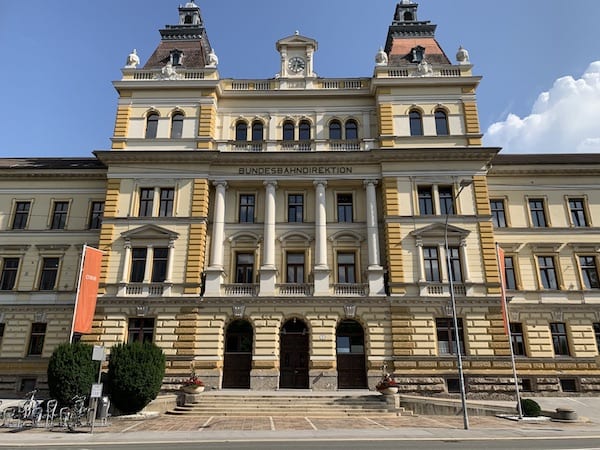
Since the late 18th century, Tyrol has gradually developed from a transit country into a tourist destination.

Innsbruck can look back on a long tradition as a city of sport.

The self-made millionaire was probably Innsbruck's biggest private patron.
The intelligent, liberal-minded and sensitive Crown Prince Rudolf (1858 - 1889) was regarded as the favourite of the peoples of the Habsburg Empire.

"Light, air and sun" was the motto of the Lebensreform, which began in the late 19th century in step with the development of social democracy and the rise of the bourgeoisie.
Von Burschenschaften, Unruhen und der Affäre Wahrmund.

One of the most important figures in the city's history was the mayor of Innsbruck, Wilhelm Greil